Eunhwa Yang

Eunhwa Yang's profile picture
eunhwa.yang@design.gatech.edu

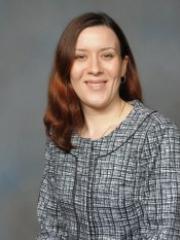
Eunhwa Yang is an associate professor at the School of Building Construction, researching the reciprocal relationship between the built environment and human outcomes across various settings, including workplaces, university campuses, and homes. She employs Bronfenbrenner’s ecological systems theory, which proposes that human outcomes are constantly influenced by the nested structures of environments. Her contributions include workplace studies, facility operation and maintenance, sustainable building practices and operations, and cognitive aging-in-place. Eunhwa's work supports a diverse range of stakeholders, including office workers, university students, and older adults, as well as facility managers/owners, corporate real estate directors, and designers, in identifying optimal spatial design, usage, and operation.

Eunhwa has been actively involved with the International Facility Management Association (IFMA) and CoreNet Global. She has received a young researcher's best paper award and a workshop grant from International Association for People-Environmental Studies (IAPS) and multiple fellowships from the International Facility Management Association (IFMA). Eunhwa has taught and developed facility management-related courses at GT. She is an advocate of utilizing and exploring diverse teaching methods, including active learning, experiential learning, and service learning. She was a fellow at the Center for Teaching and Learning at GT and the Center for Teaching Excellence at Cornell and led workshops on student engagement, collaborative learning, and rubric development. Her master’s and doctoral students have been recognized in the field, winning the IFMA Foundation scholarships and CoreNet Global Academic Challenges. Eunhwa holds an MS in Building Construction and Facility Management from Georgia Tech and a Ph.D. in Human Behavior and Design from Cornell University.

Teaching Interest:

Dr. Yang’s teaching focuses on the principles of facility management service delivery; building operation and maintenance and their associated data analytics; safety and environmental issues that protect and promote occupant health and well-being; and research methods.

Research Interest:

Dr. Yang’s research can be organized into four primary threads: 1) workplace management and strategies for workplace optimization/efficiency, 2) smart facility operation and maintenance through data integration and post-occupancy evaluation (POE), 3) the adoption of sustainable building practices and operations, and 4) design and construction for aging and aging-in-place. Her research has made theoretical, methodological, and practical contributions to these topics, addressing human outcomes and the built environment in various settings, such as workplaces, university campuses, and homes.

List of Recent Scholarly Work:

1. Bilau, I., Koo, B., Fu, E., Chau, W., Kwon, H., & Yang, E. (2025). Visual accessibility through open shelving: Impacts on cognitive load, motivation, physical activity, and user perception in older adults with mild cognitive impairment. Journal of Aging and Environment, 1–28. https://doi.org/10.1080/26892618.2025.2576213

2. Shagar, M., Zeng, Q., Baru, A., Yang, E., & Pishdad, P. (2025). Systematic review of residential indoor environmental quality assessment surveys and the development of an exemplary novel survey identifying and analyzing tool. Building and Environment, 284, 113448. https://doi.org/10.1016/j.buildenv.2025.113448

3. Ma, J.H., Erdogmus, E., & Yang, E. (2025). A user-centered building design approach using immersive virtual reality and discrete choice modeling. Building and Environment, 284, 113400. https://doi.org/10.1016/j.buildenv.2025.113400  

4. Koo, B., Bilau, I., Rodriguez, A. D., Yang, E., & Kwon, H. (2025). Quantifying mild cognitive impairments in older adults using multi-model wearable sensor data in a kitchen environment. medRxiv: the preprint server for health sciences. https://doi.org/10.1101/2025.05.24.25328107

5. Machary, H., Motamed Rastegar, R., Gholami, Y., Yang, E., Little, E., Burke, M. A. M., Bilau, I., DuBose, J., & Zimring, C. (2025). Cognitive-aging-in-place: Home design factors influencing instrumental activities of daily living for older adults facing mild cognitive impairment. Journal of Aging and Environment, 1-27. https://doi.org/10.1080/26892618.2025.2506060

6. Yang, E., Chen, C., Li, K., Guo, K., Hua, Y., & Zhang, L. (2025). Challenges and strategies for energy performance contracting: A critical review. Journal of Building Design and Environment, 3(1), 202510. https://doi.org/10.70401/jbde.2025.0001

7. Zhang, X., Wang, Y., Yang, E., Xu, S., & Yu, Y. (2025). Sale to list ratio, for sale inventory, sale count, and housing value. International Journal of Housing Markets and Analysis, 18(2), 416-432. https://doi.org/10.1108/IJHMA-08-2023-0113

8. Zhang, X., Yang, E., & Wang, Y. (2025). Time series observation of relationship between United States private residential construction spending and its indicators. International Journal of Housing Markets and Analysis, 18(2), 317-333. https://doi.org/10.1108/IJHMA-07-2023-0096

9. Zhang, X., & Yang, E. (2025). Observation of relationship between housing value and the number of building permits in the United States using time series method. International Journal of Housing Markets and Analysis, 18(1), 106-122. https://doi.org/10.1108/IJHMA-06-2023-0085

10. Zhang, X., Yang, E., Huang, L., & Wang, Y. (2025). Incremental population density improvement via missing middle housing under density-based and form-based zoning ordinances. International Journal of Housing Markets and Analysis, 18(1), 87-105. https://doi.org/10.1108/IJHMA-06-2023-0074

11. Ma, J. H., Erdogmus, E., Kangisser, S. J., & Yang, E. (2025). A comparative analysis of the effectiveness of immersive virtual reality on end-user design review. Building and Environment, 267, 112237. https://doi.org/10.1016/j.buildenv.2024.112237


Degrees with Year of Award:

Ph.D. in Human Behavior and Design, Cornell University, February 2016
M.S. in Building Construction and Facility Management, Georgia Institute of Technology, December 2009
B.S. in Architectural Engineering, SungKyunKwan University, February 2005

Areas of Expertise

  • Energy efficiency in tenanted properties
  • Green leasing
  • Stakeholder engagement
  • Data analytics and facility management
  • Optimization of facility operation and maintenance
  • Healthy workplaces: occupant satisfaction, health, and well-being
  • Workplace strategies
  • Coworking spaces
Associate Professor, School of Building Construction
Phone
(404) 894-7103
Additional Research

Building Technologies

Martin Maldovan

Martin Maldovan's profile picture
maldovan@gatech.edu

Martin Maldovan is an associate professor in the School of Chemical and Biomolecular Engineering and the School of Physics at the Georgia Institute of Technology. He received his Ph.D. at the Massachusetts Institute of Technology (MIT) in the Department of Materials Science and Engineering. He was also a postdoctoral associate and research scientist at MIT.  Maldovan’s group is developing novel heat and mass transport processes as an enabling technology for energy converter materials and devices, micro and nanoelectronics, chemical and biological separations, and catalysis. His group focuses on designing, predicting, and controlling heat and mass transfer in rationally engineered systems with length scales ranging from macro to nano, to advance new paradigms for energy saving materials and devices.  

Associate Professor, School of Chemical and Biomolecular Engineering and School of Physics
Phone
404.385.3753
Office
ES&T L1226
Additional Research

Thermal Management; Energy Storage; Energy Conversion; Thermal Systems

University, College, and School/Department
Google Scholar
https://scholar.google.com/citations?hl=en&user=kEMlX3sAAAAJ&view_op=list_works&sortby=pubdate

Ajeet Rohatgi

Ajeet Rohatgi's profile picture
ajeet.rohatgi@ece.gatech.edu

Ajeet Rohatgi received the B.S. (E.E.) degree from Indian Institute of Technology in 1971, the M.S. (Materials Engineering) from Virginia Polytechnic Institute and State University in 1973, and the Ph.D. in Metallurgy and Materials Science from Lehigh University in 1977. He joined the Westinghouse Research and Development Center in Pittsburgh, Pennsylvania in 1977 and became a Westinghouse Fellow while working on the science and technology of photovoltaic and microelectronic devices. Rohatgi joined the ECE faculty at Georgia Tech in 1985 and started a program on photovoltaics, which has become one of the best in the country. He has become an internationally recognized leader in photovoltaics. He is the founding director of the first university-based DOE Center of Excellence in Photovoltaic Research and Education. He is the author of more than 300 publications and holds 10 U.S. patents. Rohatgi has received numerous awards and distinctions from professional societies and Georgia Tech. He is the founder and CTO for Suniva.

Regents' Professor, School of Electrical and Computer Engineering
John H. Weitnauer, Jr. Chair, College of Engineering
Georgia Research Alliance Eminent Scholar
Phone
404.894.7692
Office
VL W121
Additional Research

silicon devices; solar cells; dielectrics; Compund Semiconductors; solar energy

Google Scholar
https://scholar.google.com/citations?hl=en&user=qJ98P7EAAAAJ&view_op=list_works&sortby=pubdate

Gleb Yushin

Gleb Yushin's profile picture
gleb.yushin@mse.gatech.edu

Gleb Yushin is a Professor at the School of Materials Science and Engineering at Georgia Institute of Technology and a Co-Founder of several companies, including Sila Nanotechnologies, Inc.. For his contributions to materials science, Yushin has received numerous awards and recognitions, including Kavli Fellow Award, R&D 100 Award (Y-Carbon's application), Honda Initiation Grant Award, National Science Foundation CAREER Award, Air Force Office of Scientific Research Young Investigator Award, and several distinctions from National Aeronautics and Space Administration (NASA), such as Nano 50 Award. Dr. Yushin has co-authored over 30 patents and patent applications, over 100 invited presentations and seminars and over 100 publications on nanostructured Electronic Materials related applications, including papers in Science, Nature Materials and other leading journals. His current research is focused on advancing energy storage materials and devices for electronics, transportation and grid applications.

Professor, School of Materials Science and Engineering
Phone
404.385.3261
Office
Love 371
Additional Research

CharacterizationMeasurementsPhotovoltaicsPolymersProcessing, Fabrication, & ManufacturingSynthesis

Google Scholar
https://scholar.google.com/citations?hl=en&user=TwX62mwAAAAJ&view_op=list_works&sortby=pubdate

W. Jud Ready

Jud Ready
jud.ready@gtri.gatech.edu

W. Jud Ready is the executive director of the Space Research Institute. Prior to this role, he served as associate director of external engagement for the Georgia Tech Institute for Matter and Systems and director of the Georgia Tech Center for Space Technology and Research. He has also been an adjunct professor in the School of Materials Science and Engineering at Georgia Tech and a principal research engineer on the research faculty of Georgia Tech Research Institute (GTRI) for over a dozen years. Prior to joining the Georgia Tech faculty, he worked for a major military contractor (General Dynamics) as well as in small business (MicroCoating Technologies). He has served as PI or co-PI for grants totaling ~$17M awarded by the Army, Navy, Air Force, DARPA, NASA, NSF, NIST, industry, charitable foundations and the States of Georgia and Florida. His current research focuses primarily on energy, aerospace, nanomaterial applications, and electronics reliability.

Executive Director, Space Research Institute
Principal Research Engineer, Georgia Tech Research Institute
Phone
404.407.6036
Additional Research

Materials Failure and Reliability; Carbon Nanotubes; Integrated photonics; Photovoltaics; Solar

GTRI
Geogia Tech Research Institute > Electro-Optical Systems Laboratory
Google Scholar
https://scholar.google.com/citations?hl=en&user=Hf8dRC4AAAAJ&view_op=list_works&sortby=pubdate

Anna Erickson

Anna  Erickson's profile picture
anna.erickson@me.gatech.edu
Professor, Woodruff School of Mechanical Engineering
Woodruff Professor
Additional Research

Nuclear

Akanksha Menon

Akanksha Menon's profile picture
akanksha.menon@me.gatech.edu

Dr. Akanksha Menon is an Assistant Professor in the Woodruff School of Mechanical Engineering at Georgia Tech. Prior to this, she was a Rosenfeld Postdoctoral Fellow at Lawrence Berkeley National Laboratory, where she performed research on hybrid membrane-thermal desalination processes using solar energy, and she also contributed to the development of thermal energy storage materials. Dr. Menon completed her Ph.D. at Georgia Tech, where she focused on developing semiconducting polymers and new device architectures for thermoelectric energy harvesting. She holds a bachelor's degree from Texas A&M University at Qatar, as well as a master’s degree in Mechanical Engineering from Georgia Tech.

Her research group at Georgia Tech is working on technologies for the water-energy nexus.

Assistant Professor, Woodruff School of Mechanical Engineering
Research Focus Areas

Lauren Garten

Lauren Garten's profile picture
lauren.garten@mse.gatech.edu

Lauren Garten joined the School of Materials Science and Engineering as an assistant professor in Fall 2021. Her group focuses on developing new materials for energy and electronic applications, particularly at the nexus between ferroelectricity, ferromagnetism, electronics, and photovoltaics. 

Garten received her B.S. in ceramic engineering from the Missouri University of Science and Technology. She then went on to earn a Ph.D. in material science from the Pennsylvania State University for her work on ferroelectric, piezoelectric, and dielectric synthesis and characterization with Prof. Susan Trolier-McKinstry. She then became a post-doc at the National Renewable Energy Laboratory working on metastable materials for energy applications. After a very short stint as a material scientist at Sandia National Laboratory, she won the NRC Research Associateship from the National Academies of Science, Engineering, and Math which was hosted at the U.S. Naval Research Lab (NRL). She then received the Jerome and Isabella Karle Distinguished Scholar Fellowship from NRL to work on lead-free multiferroic materials and devices.

Assistant Professor, School of Materials Science and Engineering
Phone
404-894-5748
Office
Pettit 210
Additional Research

Electronics, Energy Harvesting, Energy Storage, Solar

University, College, and School/Department

Preet Singh

Preet Singh's profile picture
preet.singh@mse.gatech.edu

Prior to joining MSE in July 2003 Professor Singh was a faculty member in Corrosion and Materials Engineering Group at The Institute of Paper Science and Technology (IPST) since 1996.  While in IPST Singh worked on fundamental as well as applied research projects related to the corrosion problems in the pulp and paper industry. From 1990 to 1996, he was a Senior Research Associate at Case Western Reserve University, Cleveland, Ohio, working on various materials and corrosion related research projects, including damage accumulation in metal matrix composites (MMCs), Environmental sensitive fracture of Al-alloys MMCs, and High temperature oxidation of Nb/Nb5Si3 composites. He received the Alcan International's Fellowship in 1988-90 to work on "Effects of Low Melting Point Impurities on Slow Crack Growth in Al Alloys,"  He has published over 50 papers in reputed scientific journals and conference proceedings. He is active member of NACE, TMS, TAPPI and has co-organized a number of international symposiums.

Reliable performance of the materials is very important for any industrial process and especially for the chemical process industry for the manufacture of a high quality product. Material selection is generally based on the required material properties, low initial capital investment, and minimum maintenance. Changes in the process parameters to improve products can often lead to higher corrosion susceptibilities of the plant materials. Moreover, with increase in capital cost, there is pressure to extend the life of existing plant equipment beyond its original design life. Corrosion and Materials Engineers are also playing a key role in selecting, maintaining, and modifying materials for changing needs for every industry. Corrosion Science and Engineering research includes understanding the basic mechanisms involved in material degradation in given environments and using that knowledge to develop a mitigation strategy against environment-induced failures

Professor, School of Materials Science and Engineering
Associate Chair of Graduate Studies, School of Materials Science and Engineering
Phone
404.894.6641
Office
IPST 246
Additional Research

Composites; fracture and fatigue; stress corrosion; Materials Failure and Reliability; Biofuels; Chemical Recovery; Environmental Processes; Sustainable Manufacturing; Energy & Water; Corrosion & Reliability

Google Scholar
https://scholar.google.com/citations?hl=en&user=AqrDFI8AAAAJ&view_op=list_works&sortby=pubdate

Mark Losego

Mark Losego's profile picture
losego@gatech.edu

Mark D. Losego is a professor in the School of Materials Science and Engineering at Georgia Tech. The Losego research lab focuses on materials processing to develop novel organic-inorganic hybrid materials and interfaces for microelectronics, sustainable energy devices, national security technologies, and advanced textiles. The Losego Lab combines a unique set of solution and vapor phase processing methods to convert organic polymers into organic-inorganic hybrid materials, including developing the science to scale these processes for manufacturing.  Prof. Losego’s work is primarily experimental, and researchers in his lab gain expertise in the vapor phase processing of materials (atomic layer deposition, physical vapor deposition, vapor phase infiltration, etc.), the design and construction of vacuum equipment, interfacial and surface science, and materials and surface characterization. Depending on the project, Losego Lab researchers explore a variety of properties ranging from electrical to electrochemical to optical to thermal to sorptive to catalytic and more.

Professor, MSE Faculty Fellow, and Dean’s Education Innovation Professor
Phone
404.385.3630
Additional Research

Catalysis; Cellulose Nanomaterials; Coatings; Coatings and Barriers; Corrosion & Materials Engineering; Corrosion and Reliability; Energy; Films and Coatings; Microporous Materials; Nanocellulose Applications; Nanomaterials; New Materials; Polymers; Vapor Phase Processing