Natalie Stingelin

Natalie  Stingelin's profile picture
natalie.stingelin@mse.gatech.edu

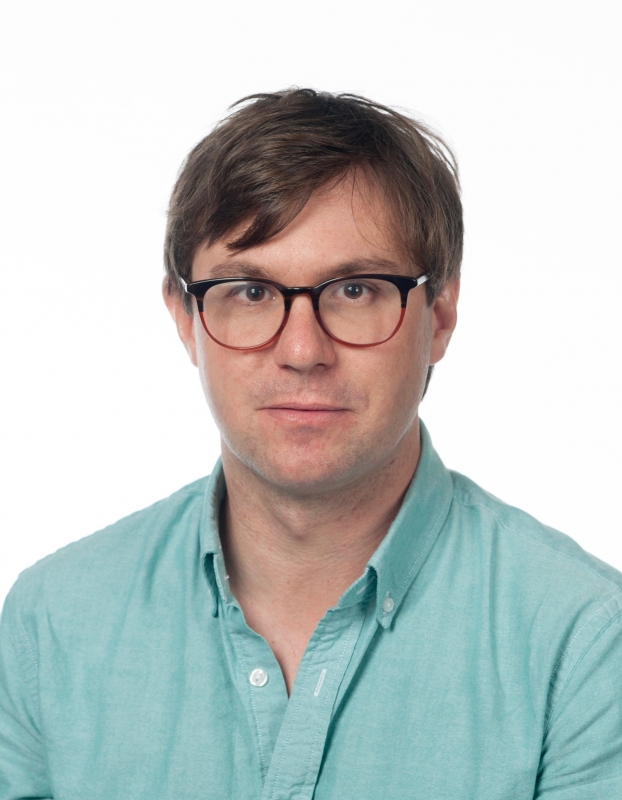
Previously a professor of organic functional materials at the Department of Materials, Imperial College of London, Natalie Stingelin joined Georgia Tech in 2016. She focuses her research on the broad field of organic functional materials, including organic electronics; multifunctional inorganic/organic hybrids; smart, advanced optical systems based on organic matter; and bioelectronics. Associate Editor of the Journal of Materials Chemistry, she has published more than 130 papers and 6 issued patents. She is a co-investigator of the newly established EPSRC Centre for Innovative Manufacturing in Large Area Electronics, and she leads the EC Marie-Curie Training Network 'INFORM' that involves 11 European partners. She was awarded the Institute of Materials, Minerals & Mining's Rosenhain Medal and Prize (2014) and the Chinese Academy of Sciences (CAS) President's International Fellowship Initiative (PIFI) Award for Visiting Scientists (2015).

Professor, School of Chemical and Biomolecular Engineering
Phone
404.894.5192
Office
ES&T L1220
Additional Research

Organic electronics; Bioelectronics
Research Focus Areas
University, College, and School/Department
Google Scholar
https://scholar.google.com/citations?hl=en&user=ZILIcOwAAAAJ&view_op=list_works&sortby=pubdate

Martin Mourigal

Martin Mourigal's profile picture
mourigal@gatech.edu

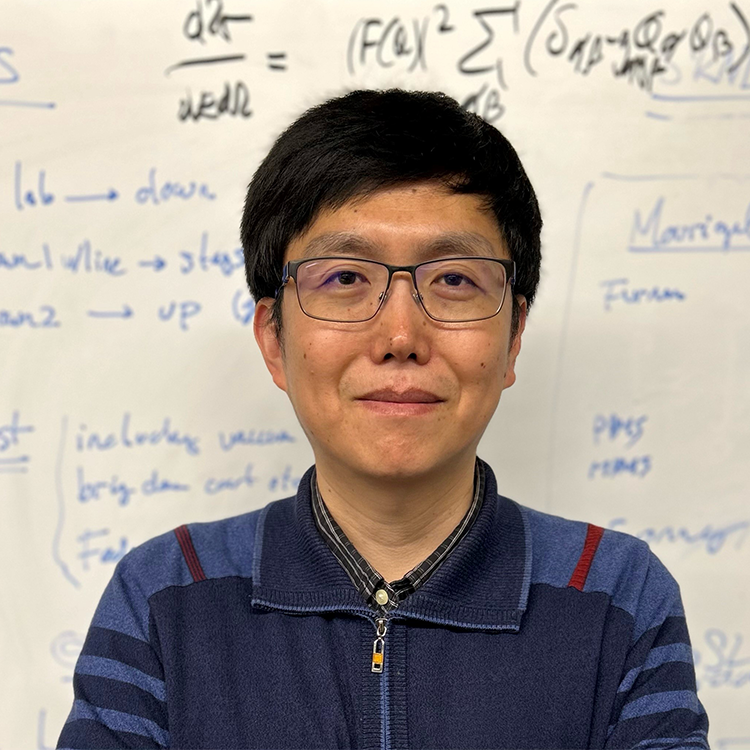
Martin Mourigal is a Professor in the School of Physics and currently holds the Dunn Family Professorship. He received his undergraduate degree in materials science from École des Mines de Nancy in 2007 and his M.S. and Ph.D. in physics from École Polytechnique Fédérale de Lausanne in 2008 and 2011, respectively. He was a postdoctoral fellow at Johns Hopkins University from 2011 to 2014 and joined Georgia Tech in 2015. 

Mourigal is a condensed matter physicist specializing in quantum magnetism and neutron scattering. His group combines materials synthesis, neutron spectroscopy, and theoretical modeling to investigate exotic magnetic phases, including quantum spin liquids and multipolar states. Mourigal and his group regularly conduct experiments at U.S. Department of Energy national user facilities and other major neutron facilities in the United States and abroad. He also advances and advocates for neutron-scattering science. He has contributed to community reports on quantum materials, high magnetic fields, next-generation instrumentation, and the future of neutron scattering, and currently serves in the chair line of the American Physical Society’s Topical Group on Magnetism. 

His honors include a 2018 National Science Foundation CAREER Award, a 2019 Kavli Fellowship by the U.S. National Academy of Sciences, and the 2022 Science Prize from the Neutron Scattering Society of America. 

Mourigal also contributes to Georgia Tech’s quantum research ecosystem through interdisciplinary initiatives connecting quantum materials, quantum sensing, quantum information science, and applications of quantum technologies. He supports university-wide efforts that bring together researchers across physics, engineering, computing, chemistry, and materials science.

Dunn Family Professor, School of Physics
Phone
404.385.5669
Office
Howey C202
Additional Research
  • Quantum Materials
  • Micro and Nanomechanics
  • Ferroelectronic Materials
  • Materials Data Sciences
  • Electronics
University, College, and School/Department
Google Scholar
https://scholar.google.com/citations?hl=en&user=utYY3jYAAAAJ&view_op=list_works&sortby=pubdate

Zhigang Jiang

Zhigang Jiang's profile picture
zhigang.jiang@physics.gatech.edu

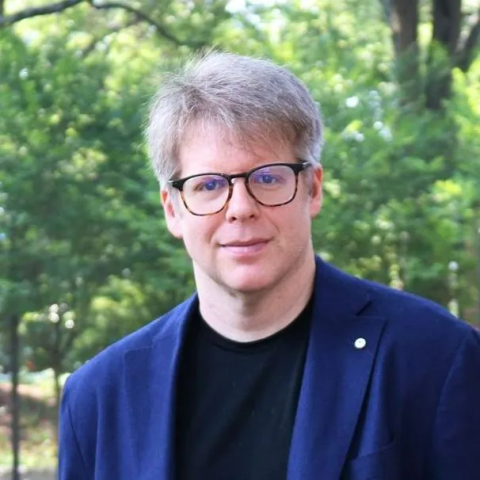
Zhigang Jiang received his B.S. in physics in 1999 from Beijing University and his Ph.D. in 2005 from Northwestern University. He was also a postdoctoral research associate at Columbia University jointly with Princeton University and NHMFL from 2005 till 2008. Jiang is interested in the quantum transport and infrared optical properties of low dimensional condensed matter systems. The current ongoing projects include: (1) infrared spectroscopy study of graphene and topological insulators, (2) spin transport in graphene devices, and (3) Andreev reflection spectroscopy of candidate topological superconductors.

Professor, School of Physics
Phone
404.385.3906
Office
Boggs B-18
Additional Research

quantum materials; nanoelectronics; Graphene; Epitaxial Growth

University, College, and School/Department
Google Scholar
https://scholar.google.com/citations?hl=en&user=6MNSoU8AAAAJ&view_op=list_works&sortby=pubdate

Aaron Levine

Aaron Levine's profile picture
aaron.levine@pubpolicy.gatech.edu

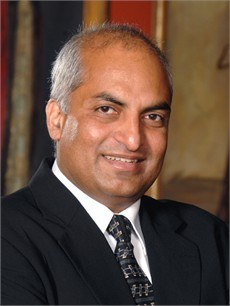
Aaron D. Levine is Associate Dean for Research and Outreach in the Ivan Allen College of Liberal Arts and Professor in the School of Public Policy at Georgia Tech. He also holds an appointment as a Guest Researcher in the Division of Reproductive Health at the Centers for Disease Control and Prevention. He is a member of the leadership team for the NSF Engineering Research Center for Cell Manufacturing Technologies (CMaT), leading ethics and policy research for the center. He seved as Co-Director for CMaT's Engineering Workforce Development activities from 2017 to 2022. His research focuses on the intersection between public policy and bioethics. Much of his work has examined the development of stem cell science, particularly research using human embryonic stem cells, and the translation of novel cell therapies. He also writes extensively on the oversight of contentious areas of medicine, such as assisted reproductive technology. In 2012, he received a NSF CAREER award to examine the impact of ethical controversy on graduate science education and the development of scientific careers.  He serves as Vice-Chair for Bioethics on the International Society for Cell & Genel Therapy’s Committee on the Ethics of Cell and Gene Therapy and recently completed a three-year term as an elected member of the Board of Directors of the American Society for Bioethics and Humanities. He is also a long-time member of the International Society for Stem Cell Research, the Association for Public Policy Analysis and Management, and the American Association for the Advancement of Science.

Aaron has a long-standing interest in science communication and is the author of Cloning: A Beginner's Guide (Oneworld Publications, 2007), an accessible introduction to the science of cloning and embryonic stem cells and the ethical and policy controversies this science inspires. He was an AAAS Leshner Leadership Institute Public Engagement Fellow for 2019-2020. You can follow Aaron on twitter at @aarondlevine.

He completed his Ph.D. in Public Affairs at Princeton University, where his dissertation research examined the impact of public policy on the development of human embryonic stem cell science.  He also holds an M. Phil. from the University of Cambridge, where, as a Churchill Scholar, he studied computational biology at the Sanger Centre and developed algorithms to help analyze the human genome sequence, and a B.S. in Biology from the University of North Carolina at Chapel Hill, where he was a Morehead Scholar.

Professor, School of Public Policy
Associate Dean for Research and Outreach, Ivan Allen College of Liberal Arts
Phone
404-385-3329
Office
DM Smith 216
Additional Research

The impact of ethical controversy on scientific research, with a particular emphasis on emerging biomedical technologies.Recent work has focused on a range of issues related to stem cell policy (including state-level science policy and the rise of unproven stem cell therapies) as well as the oversight of assisted reproduction.

Google Scholar
http://scholar.google.com/citations?user=PPRGxBgAAAAJ&hl=en

Yogendra Joshi

Yogendra Joshi's profile picture
yogendra.joshi@me.gatech.edu

Prior to joining the Georgia Tech faculty in 2001 as a Professor, Yogendra Joshi held academic positions at the University of Maryland, College Park, and the Naval Postgraduate School, Monterey, California. He also worked in the semiconductor assembly industry on process thermal model development. He was named to the McKenney/Shiver Chair in 2004.

Education

  • Ph.D., University of Pennsylvania, 1984
  • M.S., State University of New York, Buffalo, 1981
  • B. Tech., Indian Institute of Technology, Kanpur, 1979

Teaching Interests

Professor Joshi's teaching interests encompass core mechanical engineering subjects at both undergraduate and graduate levels. These include materials behavior, thermodynamics, and micro/nanoscale materials science. He emphasizes foundational understanding and practical application, aiming to equip students with the skills to analyze and solve complex engineering problems related to materials and manufacturing processes.

Research Interests

Professor Joshi's research focuses on understanding the microstructural behavior of materials under various conditions to inform the design of advanced materials and manufacturing techniques. His work integrates experimental and theoretical approaches to study deformation, damage, and reliability of heterogeneous materials, including composites and nanostructured systems, with the goal of improving performance and durability.

Recent Publications

  • AM Muslu, Y Joshi, Unlocking the Potential of Integrated Cooling and Power Delivery in Multi-chip Power Electronics Packages with Triply Periodic Minimal Surfaces (TPMS), International Journal of Heat and Mass Transfer 255, 127866, 2026
  • Y Joshi, S Graham, S Kumar, Device-and System-Level Thermal Packaging for Electric-Drive Technologies (Final Technical Report), National Energy Technology Laboratory (NETL), Pittsburgh, PA, Morgantown, WV …, 2025
  • YK Joshi, AH Smith, RC Eden, SK De, Three Decades of Thermal Management Research at DARPA, Journal of Electronic Packaging 147 (3), 030802, 2025
  • M Belinson, JM Brown, Y Joshi, Modelling Transient Pressure and Temperature Signatures in Gasketed Outdoor Digital Displays, International Electronic Packaging Technical Conference and Exhibition 89299 …, 2025
  • U Kemerli, G Moreno, R Chaudhary, S Narumanchi, Y Joshi, Thermal Performance of Triply Periodic Minimal Surface Lattice Structures in Single-Phase Dielectric Fluid Cooling of Power Electronics, ASME Journal of Heat and Mass Transfer 147 (11), 111501, 2025
John M. McKenney and Warren D. Shiver Distinguished Chair, George W. Woodruff School of Mechanical Engineering
Professor, George W. Woodruff School of Mechanical Engineering and School of Electrical and Computer Engineering
Phone
404.385.2810
Office
Love 338
Additional Research

Thermal SystemsSystem Design & Optimization

Google Scholar
https://scholar.google.com/citations?hl=en&user=YIW1IqcAAAAJ&view_op=list_works&sortby=pubdate

Henry La Pierre

Henry La Pierre's profile picture
la_pierre@chemistry.gatech.edu

Henry La Pierre, also known by his nickname Pete, was born in St. Louis. During his undergraduate studies at Harvard University, he worked with Jared Shaw at the Broad Institute on the synthesis of antibiotics and with Masahiro Murakami at Kyoto University on main-group organometallics.

His graduate work with John Arnold, Robert Bergman, and Dean Toste at the University of California, Berkeley focused on developing a Z-selective alkyne semihydrogenation catalyst. After earning his doctorate, he studied ligand control of reactive low- and high-valent uranium complexes as a postdoctoral scholar with Karsten Meyer at Friedrich-Alexander University Erlangen-Nürnberg.

He later served as a Director's Postdoctoral Fellow at Los Alamos National Laboratory, where he worked with Stosh Kozimor on ligand K-edge X-ray absorption spectroscopic studies of transuranic complexes.

Since joining Georgia Tech in 2016, his research has been recognized with the Arnold and Mabel Beckman Young Investigator Award, the National Science Foundation CAREER Award, and the Ralph E. Powe Junior Faculty Enhancement Award. His group's research is also supported by the American Chemical Society Petroleum Research Fund and the U.S. Department of Energy Heavy Element Chemistry Program.

Professor, School of Chemistry & Biochemistry
SEI Lead: Nuclear Initiative
Phone
(404) 385-3258
Additional Research

Inorganic, Radiological, f-Element and Materials Chemistry; Molecular Magnetism, Spectroscopy,  Energy and National Security, Nuclear, Critical Minerals 

Richard Simmons

Richard Simmons's profile picture
richard.simmons@me.gatech.edu

Richard Simmons is currently a Principal Research Engineer and the Director of Research and Studies at Georgia Tech’s Strategic Energy Institute (SEI) where he directs cross-cutting energy projects with an emphasis on clean electric power, vehicle efficiency and alternative fuels. He is also an instructor in Georgia Tech’s Woodruff School of Mechanical Engineering, with a specialization in design, mechatronics, and thermal systems. 

Simmons received his bachelor's degree from Georgia Tech, and masters and Ph.D. from Purdue, all in Mechanical Engineering. He is a licensed professional engineer (PE) with more than 20 years of RD&D experience in automotive, advanced materials, and alternative energy and fuels. 

From 2009 to 2012, he served a prestigious American Association for the Advancement of Science S&T (Science and Technology) Policy Fellowship at the U.S. Department of State, providing technical analysis on international policy issues related to renewable energy. He has recently authored numerous publications including an open-access eBook entitled “Understanding the Global Energy Crisis” (Purdue Press, 2014), several book chapters and journal articles related to advanced energy technologies, transportation energy technology, and future energy policy strategies.

Director of Research and Studies, Strategic Energy Institute
Principal Research Engineer
Phone
(404) 385-6326
Additional Research

Biofuels

Research Focus Areas
University, College, and School/Department

Raphaël Pestourie

Raphaël Pestourie's profile picture
rpestourie3@gatech.edu

Raphaël Pestourie earned his Ph.D. in Applied Mathematics and an AM in Statistics from Harvard University in 2020. Prior to Georgia Tech, he was a postdoctoral associate at MIT Mathematics, where he worked closely with the MIT-IBM Watson AI Lab. Raphaël’s research focuses on scientific machine learning at the intersection of applied mathematics and machine learning and inverse design via scientific machine learning and large-scale electromagnetic design. 

Assistant Professor, School of Computer Science
Additional Research
  • Scientific Machine Learning
  • Inverse Design in Electromagnetism
Research Focus Areas
Google Scholar
https://scholar.google.com/citations?hl=en&user=Lxv3W74AAAAJ&view_op=list_works&sortby=pubdate

Surya Kalidindi

Surya Kalidindi's profile picture
surya.kalidindi@me.gatech.edu

Surya Kalidindi is a Regents Professor, and Rae S. and Frank H. Neely Chair Professor in the Woodruff School of Mechanical Engineering at Georgia Institute of Technology, Georgia, USA with joint appointments in the School of Materials Science and Engineering as well as the School of Computational Science and Engineering. Surya earned a Ph.D. in Mechanical Engineering from Massachusetts Institute of Technology in 1992, and joined the Department of Materials Science and Engineering at Drexel University as an Assistant Professor. After twenty years at Drexel University, Surya moved into his current position at Georgia Tech. Surya’s research efforts have made seminal contributions to the fields of crystal plasticity, microstructure design, and materials informatics. Surya has been elected a Fellow of ASM International, TMS, and ASME. In 2016, he and his group members have been awarded the top prize as well as one of the runner-up prizes in the national Materials Science and Engineering Data Challenge sponsored by the Air Force Research Lab in partnership with the National Institute of Standards and Technology and the U.S. National Science Foundation. He has also been awarded the Alexander von Humboldt Research Award, the Vannever Bush Faculty Fellow, the Government of India’s Vajra Faculty Award, and the Khan International Award.

Regents' Professor, School of Mechanical Engineering and Materials Science and Engineering
Rae S. & Frank H. Neely Chair, Woodruff School of Mechanical Engineering
Phone
404.385.2886
Office
B-H 192
Additional Research
  • Multiscale Modeling
  • Crystallization
  • Computational mechanics
  • Materials Informatics
  • Data Analytics
Research Focus Areas
Google Scholar
https://scholar.google.com/citations?hl=en&user=C2k6mYwAAAAJ&view_op=list_works&sortby=pubdate

Tushar Krishna

Tushar Krishna's profile picture
tushar@ece.gatech.edu

Tushar Krishna is an Associate Professor in the School of Electrical and Computer Engineering at Georgia Tech. He also holds the ON Semiconductor Junior Professorship. He has a Ph.D. in Electrical Engineering and Computer Science from MIT (2014), a M.S.E in Electrical Engineering from Princeton University (2009), and a B.Tech in Electrical Engineering from the Indian Institute of Technology (IIT) Delhi (2007). Before joining Georgia Tech in 2015, Krishna spent a year as a researcher at the VSSAD group at Intel, Massachusetts.

Krishna’s research spans computer architecture, interconnection networks, networks-on-chip (NoC) and deep learning accelerators – with a focus on optimizing data movement in modern computing systems. Three of his papers have been selected for IEEE Micro’s Top Picks from Computer Architecture, one more received an honorable mention, and three have won best paper awards. He received the National Science Foundation (NSF) CRII award in 2018, a Google Faculty Award in 2019, and a Facebook Faculty Award in 2019 and 2020.

ON Semiconductor Junior Professor, School of Electrical and Computer Engineering
Phone
404.894.9483
Office
Klaus 2318
Additional Research
  • Networks-on-Chip (NoC)
  • Interconnection Networks
  • Reconfigurable Computing and FPGAs
  • Heterogeneous Architectures
  • Deep Learning Accelerators
Google Scholar
https://scholar.google.com/citations?hl=en&user=P__ztgcAAAAJ&view_op=list_works&sortby=pubdate