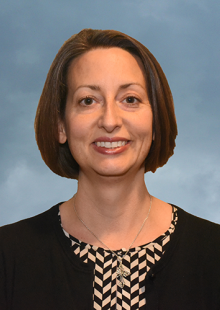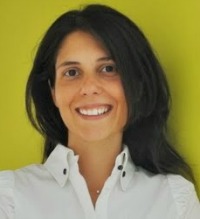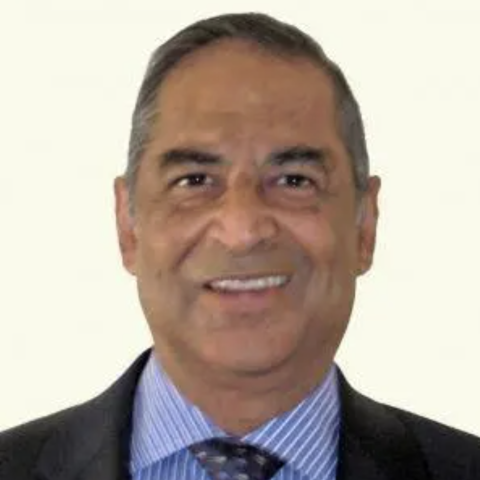
Andreas Bommarius

Andreas Bommarius's profile picture
andreas.bommarius@chbe.gatech.edu

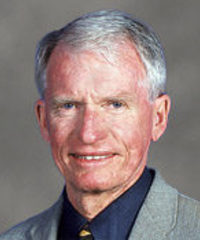
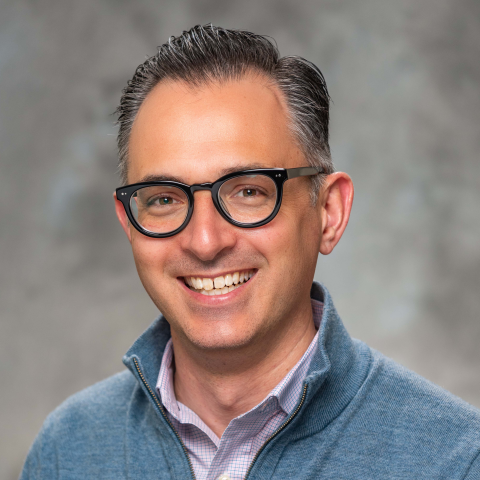
Andreas (Andy) S. Bommarius is a professor of Chemical and Biomolecular Engineering as well of Chemistry and Biochemistry at the Georgia Institute of Technology in Atlanta, GA.  He received his diploma in Chemistry in 1984 at the Technical University of Munich, Germany and his Chemical Engineering B.S. and Ph.D. degrees in 1982 and 1989 at MIT, Cambridge, MA.

From 1990-2000, he led the Laboratory of Enzyme Catalysis at Degussa (now Evonik) in Wolfgang, Germany, where his work ranged from immobilizing homogenous catalysts in membrane reactors to large-scale cofactor-regenerated redox reactions to pharma intermediates.

At Georgia Tech since 2000, his research interests cover green chemistry and biomolecular engineering, specifically biocatalyst development and protein stability studies.  His lab applies data-driven protein engineering to improve protein properties on catalysts ranging from ene and nitro reductases to cellobiohydrolases.  Bommarius has guided the repositioning of the curriculum towards Chemical and Biomolecular Engineering by developing new courses in Process Design, Biocatalysis and Metabolic Engineering, as well as Drug Design, Development, and Delivery (D4), an interdisciplinary course with Mark Prausnitz.

Andy Bommarius in 2008 became a Fellow of the American Institute of Medical and Biological Engineering.  Since 2010, he is Director of the NSF-I/UCR Center for Pharmaceutical Development (CPD), a Center focusing on process development, drug substance and product stability, and novel analytical methods for the characterization of drug substances and excipients.

Professor, School of Chemical and Biomolecular Engineering, School of Chemistry and Biochemistry
RBI Initiative Lead: A Renewables-based Economy from WOOD (ReWOOD)
Phone
404-385-1334
Office
EBB 5018
Additional Research

Biomolecular engineering, especially biocatalysis, biotransformations, and biocatalyst stability. Biofuels. Enzymatic Processing; Biochemicals; Chip Activation.
Google Scholar
https://scholar.google.com/citations?user=rH4O5RQAAAAJ&hl=en&oi=ao

Michael Filler

Michael Filler's profile picture
michael.filler@chbe.gatech.edu

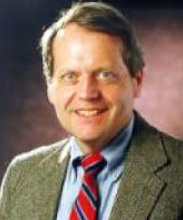
Michael Filler is a professor and the Traylor Faculty Fellow in the School of Chemical and Biomolecular Engineering at the Georgia Institute of Technology. He earned his undergraduate and graduate degrees from Cornell University and Stanford University, respectively, prior to completing postdoctoral studies at the California Institute of Technology. Filler has been recognized for his research and teaching with the National Science Foundation CAREER Award, Georgia Tech Sigma Xi Young Faculty Award, CETL/BP Junior Faculty Teaching Excellence Award, and AVS Dorothy M. and Earl S. Hoffman Award. Filler also heads Nanovation, a forum to address the big questions, big challenges, and big opportunities of nanotechnology.

Professor and Traylor Faculty Fellow, School of Chemical and Biomolecular Engineering
Director, The Filler Lab
Phone
404.894.0430
Office
Marcus 2135
Additional Research

Integrated photonics, carbon nanotubes, nanomanufacturing, thermal management, silicon devices

Google Scholar
https://scholar.google.com/citations?hl=en&user=5nt6qx8AAAAJ&view_op=list_works&sortby=pubdate

Valerie Thomas

Valerie Thomas's profile picture
valerie.thomas@isye.gatech.edu

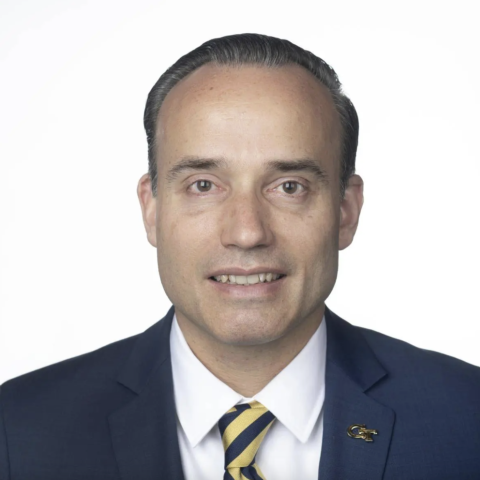
Valerie Thomas is the Anderson-Interface Chair of Natural Systems and Professor in the H. Milton School of Industrial and Systems Engineering, with a joint appointment in the School of Public Policy. 

Dr. Thomas's research interests are energy and materials efficiency, sustainability, industrial ecology, technology assessment, international security, and science and technology policy. Current research projects include low carbon transportation fuels, carbon capture, building construction, and electricity system development. Dr. Thomas is a Fellow of the American Association for the Advancement of Science, and of the American Physical Society. She has been an American Physical Society Congressional Science Fellow, a Member of the U.S. EPA Science Advisory Board, and a Member of the USDA/DOE Biomass Research and Development Technical Advisory Committee. 

She has worked at Princeton University in the Princeton Environmental Institute and in the Center for Energy and Environmental Studies, and at Carnegie Mellon University in the Department of Engineering and Public Policy.

Dr. Thomas received a B. A. in physics from Swarthmore College and a Ph.D. in theoretical physics from Cornell University.

Anderson-Interface Chair of Natural Systems
Professor, School of Industrial and Systems Engineering
RBI Initiative Lead: Sustainability Analysis
Phone
(404) 894-0390
Additional Research

Hydrogen Transport/Storage; Biofuels; ClIMaTe/Environment; Electric Vehicles; System Design & Optimization; Energy and Materials Efficiency; Sustainability; Industrial Ecology; Technology Assessment; Science and Technology Policy

Meisha Shofner

Meisha Shofner's profile picture
meisha.shofner@mse.gatech.edu

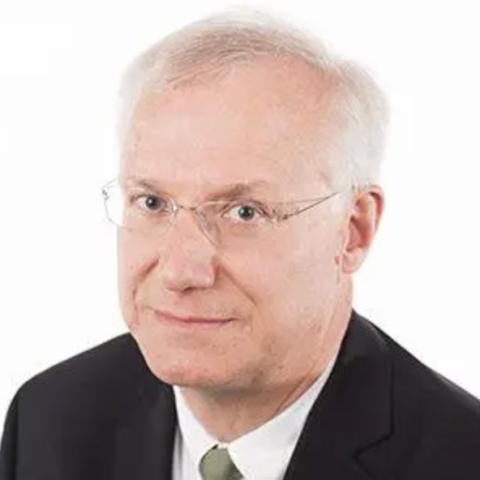
Meisha L. Shofner is a professor in the School of Materials Science and Engineering at Georgia Institute of Technology, joining the faculty following post-doctoral training at Rensselaer Polytechnic Institute. She received her B.S. in Mechanical Engineering from The University of Texas at Austin and her Ph.D. in Materials Science from Rice University. Prior to beginning graduate school, she was employed as a design engineer at FMC in the Subsea Engineering Division, working at two plant locations (Houston, Texas and the Republic of Singapore), and she is a registered Professional Engineer in Georgia.

Shofner’s research area is processing-structure-property relationships of polymers and composites. Specifically, she designs processing strategies to attain hierarchical structures in these materials to improve properties and has discovered scalable processing methods to produce auxetic structures and tensegrity-inspired structures. Additionally, she works with bioderived materials to produce composites with reduced environmental impact.  

Professor, School of Materials Science and Engineering
Phone
404.385.7216
Office
MRDC 4409
Additional Research

Biomolecular-Solids; Biomaterials; Composites; Polymers; Nanomaterials; Biofuels; Structure-property relationships in polymer nanocomposite materials; producing structural hierarchy in these materials for structural and functional applications.

Google Scholar
https://scholar.google.com/citations?hl=en&user=BrXwtO4AAAAJ&view_op=list_works&sortby=pubdate

Lakshmi Sankar

Lakshmi Sankar's profile picture
sankar@aerospace.gatech.edu

Professor Sankar is a Regents Professor and Sikorsky Professor in the Guggenheim School of Aerospace Engineering at the Georgia Institute of Technology. As Director of the School's Computational Fluid Dynamics Lab, he leads a research and education program focused on the modeling and simulation of unsteady viscous flow around aircraft, helicopters, horizontal axis wind turbines, and turbo-machinery components. He teaches undergraduate and graduate level courses in the areas of aerodynamics, helicopter theory, wind energy, aerodynamic design, and computational aerodynamics. Prior to joining the Georgia Tech faculty in 1982, Dr. Sankar worked at Lockheed Martin in Marietta, GA. While at Lockheed, he contributed to the development of 2-D and 3-D flow analyses that solve 3-D unsteady transonic flow over airfoils, wing-alone, wing-body, and complete aircraft configurations. He also extended 2-D transonic design methodologies to 3-D transonic wing and wing-body configurations. He also worked closely with researchers at Ford Motor Co on 3-D Navier-Stokes simulations of next generation automobile configurations. Dr. Sankar is the author or co-author of more than 400 technical publications in the fields of spatially and temporally high-order algorithm development, 3-D unsteady transonic flow over aircraft configurations, helicopter aerodynamics, compressor stall and surge, and aerodynamic design. He is an AIAA Fellow, a Technical Fellow of the American Helicopter Society, and a member of the American Society of Mechanical Engineers.

Teaching Interests

Professor Sankar's teaching interests encompass fundamental aerospace engineering and mechanical engineering topics at both undergraduate and graduate levels. These include solid mechanics, structural analysis, composite materials, and fracture mechanics. His instruction emphasizes the integration of theoretical principles with practical applications to prepare students for advanced study and professional practice. He is committed to engaging students through research-informed teaching and fostering critical thinking skills in engineering mechanics and materials behavior.

Research Interests

Professor Sankar's research focuses on the mechanics of materials and structures with particular emphasis on the behavior and failure of advanced composites and multifunctional materials. His work includes the development of micromechanical models, characterization of damage and fracture processes, and the study of multifunctional materials under mechanical and environmental loading. He applies computational and experimental methods to understand material response and to inform the design of lightweight, durable aerospace structures.

Research

Lab/Collaborations:

  • Vertical Lift Research Center of Excellence (VLRCOE)
  • Computational Fluid Dynamics Laboratory (CFD)
  • Center for 21st Century Universities

Disciplines:

  • Aerodynamics & Fluid Mechanics

AE Multidisciplinary Research Areas:

  • Large-Scale Computations, Data, and Analytics

Education

  • Education Ph.D., Aerospace Engineering, Georgia Institute of Technology, 1977.
  • MSAE, Aerospace Engineering, Georgia Institute of Technology, 1975.
  • B. Tech., Aeronautical Engineering, Indian Institute of Technology, Madras, India, 1973.

Distinctions & Awards

o Fellow, AIAA

o Technical Fellow, AHS 

o Georgia Tech Award for Development of Graduate Research Assistants, 1997 

o Sigma Gamma Tau Most valuable Professor Award 2005, 2006, 2007, 2015 

o NASA Group Achievement Award, UH60 Airloads Workshop, June 2007 

Regents' Professor, Guggenheim School of Aerospace Engineering
Director, Computational Fluid Dynamics Lab
Phone
(404) 894-3014
Additional Research

Wind

Research Focus Areas

Sam Shelton

Sam Shelton's profile picture
sam.shelton@energy.gatech.edu

Dr. Sam Shelton is a nationally recognized expert in energy systems. He is the founding director of the Georgia Tech Strategic Energy Institute, an interdisciplinary technology development-based resource. The institute is actively engaged with industry to facilitate near-term, high-impact solutions to national and regional energy challenges. As a professor for 35 years, he developed in-class and web delivered undergraduate and graduate level energy technology courses. He taught 30,000 students enrolled in a MOOCs course, Energy 101, with a focus on energy supplies, independence, economics, and society’s demands. 

His primary research focus has been the development and commercialization of sustainable energy technology. He has received over $30 million in R&D funding for this work. Dr. Shelton holds eight patents in sustainable energy technologies and founded two companies developing, manufacturing and marketing energy-efficient products. Starting in the 1980s, he was among the pioneers developing commercial solar energy technologies and the assessment of offshore wind farms. His favorite hobby is flying experimental airplanes

Director Emeritus
Additional Research

Thermal Systems; Wind; System Design & Optimization; Biofuels

IRI And Role

Sheldon Jeter

Sheldon Jeter's profile picture
sheldon.jeter@me.gatech.edu

Dr. Jeter's research background includes systems and theoretical thermo-dynamics, and heat and mass transfer, thermal and fluid energy systems, engineering education, and advanced engineering thermodynamics. He began at Tech in 1978 as a Research Engineer.

Research

Dr. Jeter's research interests include both basic and applied research. His basic research is focused on two-phase heat and mass transfer, such as the experimental investigation of heat transfer to boiling liquids, whereas his theoretical basic research includes work on the thermodynamics of mixtures and radiation.

Dr. Jeter's applied research is largely devoted to improving the performance of existing energy systems and developing innovative energy systems, particularly fluid and thermal energy systems.

Distinctions & Awards

  • Registered Professional Engineer in Georgia

Patents

  • Electrode Arrangement for Electrohydrodynamic Enhancement of Heat and Mass Transfer, with S.I. Abdel-Khalik, U.S. Patent No. 6,374,909, April 23, 2002.
  • A Film Pump for Applying a Monolayer Film Over Water Surfaces, U. S. Patent No. 5,558,845, with M. T. Pauken and S. I. Abdel-Khalik, October 1996.
  • Loop Timing Chain, U. S. Patent 4,027,792, June 7, 1977
  • Tufting Needle, U. S. Patent 4,015551, April 5, 1977

Representative Publications

  • F. F. Abedelall, et al. 2005. Pressure Drop Caused by Abrupt Flow Area Changes in Small Channels. Experimental Thermal and Fluid Science 29, 425-434.
  • S. M. Jeter and Hany A. M. Al-Ansary. 2004. Numerical and Experimental Analysis of Single-Phase and Two-Phase Flow in Ejectors. The International Journal of HVAC Research 10(4), 521-538.
  • S. M. Jeter, C. C. Pascual and S. I. Abdel-Khalik. 2002. Visualization of Boiling Bubble Dynamics Using a Flat Uniformly Heated Transparent Surface. International Journal of Heat and Mass Transfer 45, 691-696.
  • R. M. Stoddard, et al. 2002. Onset of Flow Instability and Critical Heat Flux in Thin Horizontal Annuli. Experimental Thermal and Fluid Sciences 26, 1-14.
  • T. M. Remley, et al. 2001. Validation of EHD-Enhanced Nucleate Boiling Correlations. ASHRAE Transactions 107, 326-336.
Associate Professor, Woodruff School of Mechanical Engineering
Phone
(404) 894-3211
Additional Research

Energy Storage; Solar; Thermal Systems

University, College, and School/Department

Hermann Fritz

Hermann Fritz's profile picture
fritz@gatech.edu

Biography

Dr. Hermann Fritz is a professor of civil engineering at the Georgia Institute of Technology (Georgia Tech). He is an expert on coastal hazards, such as tsunamis, hurricane storm surge and storm waves, landslides and submarine volcanic eruptions. Dr. Fritz has led or participated in more than a dozen post-disaster reconnaissance campaigns encompassing tsunami, hurricane, landslide, and earthquake events. Tsunami Surveys: 2004 Indian Ocean (Indonesia, Sri Lanka, Maldives, Somalia, Madagascar, Oman, Yemen, Comoros), 2006 Java, 2007 Solomon Islands and Peru, 2009 Samoa, American Samoa, and Tonga, 2010 Solomon Islands, Haiti, Chile, and Mentawai Islands, 2011 Japan, 2012 El Salvador, 2013 Solomon Islands, 2014 and 2015 Chile, 2017 Greenland, 2018 Sulawesi and Krakatau. Hurricane Surveys: 2005 Hurricane Katrina, 2007 Tropical Cyclone Gonu (Oman), 2008 Tropical Cyclone Nargis (Myanmar), 2013 Typhoon Haiyan (Philippines), 2015 Tropical Cyclone Pam (Vanuatu), 2017 Hurricane Nate. Dr. Fritz's research centers on fluid dynamic aspects of natural hazards as well as their mitigation and coastal protection. Dr. Fritz obtained his Doctorate degree (Dr. sc. ETH Zurich) in 2002 from the Swiss Federal Institute of Technology in Zurich (Switzerland).

Research

Dr. Fritz has developed a strong research effort covering experimental (both field and laboratory) and computational methods in fluid dynamics, hydraulics and geophysics. His research focuses on coastal hazards such as tsunamis, hurricanes, landslides, and volcanoes. Dr. Fritz’s work encompasses non-linear and breaking water waves; subaerial and submarine mass flows such as landslides, avalanches, island collapses, and submarine volcanic eruptions; floods, river engineering and morphologic processes; hydraulic and coastal structures such as seawalls, breakwaters, levees and dams along with their failure and breaching mechanisms; hydropower, wave, tidal and ocean current energy. His research is significantly enhancing the hazard prevention, mitigation and protection of coastal and mountainous areas on a truly global scale.

Education

Ph.D. in Civil Engineering (Dr. sc. techn. ETH)

ETH (Swiss Federal Institute of Technology) 2002

M.S. in Civil Engineering (Dipl.-Ing. ETH)

ETH (Swiss Federal Institute of Technology) 1997

Teaching

Professor Fritz’ teaching focuses on civil and environmental engineering at undergraduate and graduate levels, emphasizing dynamics, fluid mechanics, hydraulic engineering, coastal hazards, coastal structures, and experimental methods. His instruction integrates fundamental principles with practical applications to prepare students for research and professional practice. Professor Fritz is committed to fostering student engagement through hands-on learning and critical thinking in courses related to hydraulic and coastal engineering.

Distinctions & Awards

  • Plinius Medal, Natural Hazards Division, European Geosciences Union (EGU), 2014
  • CIOS Honor Roll
  • Excellence in Research Award, CEE, Georgia Tech, 2005
  • Research Excellence Award, Georgia Tech Savannah, 2005
Professor, School of Civil and Environmental Engineering
Phone
(404) 385-1803
Additional Research

Water; Wind

Research Focus Areas
University, College, and School/Department