Marilyn Brown

Marilyn Brown's profile picture
marilyn.brown@pubpolicy.gatech.edu

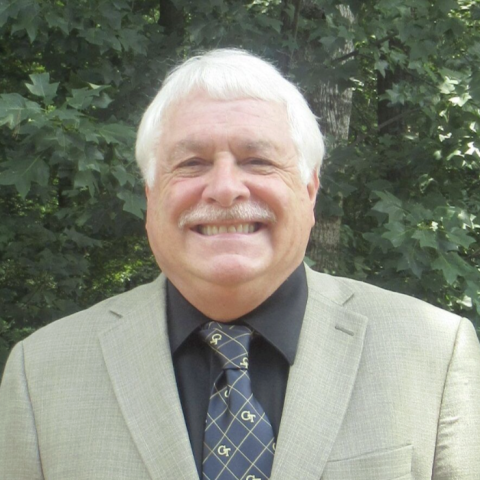
Marilyn Brown is a Regents' and Brook Byers Professor of Sustainable Systems in the School of Public Policy. She joined Georgia Tech in 2006 after a distinguished career at the U.S. Department of Energy's Oak Ridge National Laboratory, where she led several national climate change mitigation studies and became a leader in the analysis and interpretation of energy futures in the United States. 

Her research focuses on the design and impact of policies aimed at accelerating the development and deployment of sustainable energy technologies, with an emphasis on the electric utility industry, the integration of energy efficiency, demand response, and solar resources, and ways of improving resiliency to disruptions. Her books include Fact and Fiction in Global Energy Policy (Johns Hopkins University Press, 2016), Green Savings: How Policies and Markets Drive Energy Efficiency (Praeger, 2015), and Climate Change and Global Energy Security (MIT Press, 2011). She has authored more than 250 publications. Her work has had significant visibility in the policy arena as evidenced by her numerous briefings and testimonies before state legislative bodies and Committees of both the U.S. House of Representatives and Senate.

Dr. Brown co-founded the Southeast Energy Efficiency Alliance and chaired its Board of Directors for several years. She has served on the Boards of the American Council for an Energy-Efficient Economy and the Alliance to Save Energy, and was a commissioner with the Bipartisan Policy Center. She has served on eight National Academies committees and is an Editor of Energy Policy and an Editorial Board member of Energy Efficiency and Energy Research and Social Science. She served two terms (2010-2017) as a Presidential appointee and regulator on the Board of Directors of the Tennessee Valley Authority, the nation’s largest public power provider. From 2014-2018 she served on DOE’s Electricity Advisory Committee, where she led the Smart Grid Subcommittee.

Regents' Professor, School of Public Policy
Brook Byers Professor
Phone
(404) 385-0303
Additional Research

Hydrogen Equity; ClIMaTe/Environment; Electrical Grid; Policy/Economics; Energy & Water
Google Scholar
https://scholar.google.com/citations?hl=en&user=OHwBAssAAAAJ&view_op=list_works&sortby=pubdate

Saïd Abdel-Khalik

Saïd Abdel-Khalik's profile picture
said.abdelkhalik@me.gatech.edu

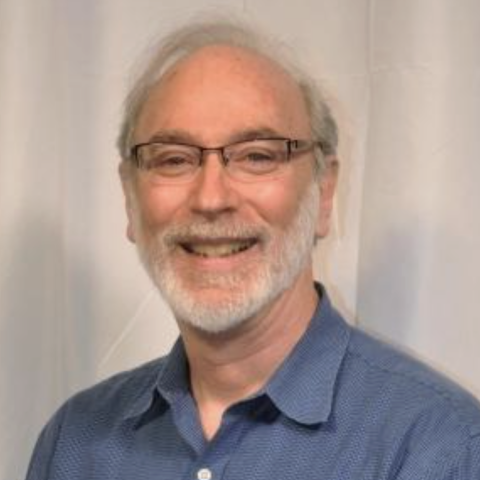
Abdel-Khalik joined the Georgia Tech faculty as the Georgia Power Distinguished Professor in 1987. He was appointed to his current position as the Southern Nuclear Distinguished Professor in 1993. He served as Associate Director of the Woodruff School of Mechanical Engineering between 1990 and 1992 and as the Georgia Tech Secretary of the Faculty between 2002 and 2006. He served as a member of the USNRC Advisory Committee on Reactor Safeguards (ACRS) between 2006 and 2012, including two years as Chairman (2009-2011).  Prior to joining the Georgia Tech faculty, Abdel-Khalik served as a faculty member in the Nuclear Engineering and Engineering Physics Department (1976-1987) and as a Postdoctoral Fellow in Chemical Engineering (1973-1975) at the University of Wisconsin-Madison. Abdel-Khalik also served as a Senior Engineer at Babcock and Wilcox Nuclear Power Generation Division (1975); as a Guest Research Scientist at the Nuclear Research Center in Karlsruhe, Germany (1979); and as an Invited Professor at EPFL, Lausanne, Switzerland (1982).

Abdel-Khalik currently serves as a member of the External Advisory Boards for the School of Nuclear Engineering at Purdue University and the Mechanical Engineering Department of King Saud University in Riyadh, Saudi Arabia. He also serves as a member of the Board of Trustees for Badr University in Cairo, Egypt.

Professor, Woodruff School of Mechanical Engineering
Southern Nuclear Distinguished Professor
Phone
(404) 894-3719
Additional Research

Thermal Systems; Nuclear

University, College, and School/Department

Suresh Menon

Suresh Menon's profile picture
suresh.menon@aerospace.gatech.edu

Professor Menon joined Flow Industries, Kent, Washington, as a research scientist, and in 1988, became a senior scientist and program manager for the computational fluid dynamics group in Quest Integrated, Inc. (formerly called Flow Research, Inc.). At Quest, Menon led research teams in various research projects such as the active control of combustion instability in ramjet engines, supersonic mixing studies, vertical takeoff and landing (VTOL) aircraft fluid dynamics, and hypersonic reentry problems. In 1992, he joined Georgia Institute of Technology as an associate professor and became a professor in 1997. He is currently the Hightower Professor of Engineering in Georgia Tech. Professor Menon is a world renowned expert in large-eddy simulation of turbulent reacting and non-reacting flows and has developed unique simulation capabilities to study pollutant formation, ozone depletion in high-altitude aircraft jet plumes and combustion in gas turbine and ramjet engines. He has been (and is currently) a principal investigator for a wide range of research projects funded by NASA, Department of Energy, Air Force Office of Scientific Research, Office of Naval Research, Defense Threat Reduction Agency. His work has been (and is also) supported by many industries including General Electric, Pratt & Whitney, Solar Turbines, Boeing, Safran (France), Hyundai (S. Korea), JAXA (Japan), IHI (Japan) and Rocketdyne-Aerojet. He has published and/or presented over 395 papers. Professor Menon is a Fellow of AAAS, Associate Fellow of AIAA, and a member of the American Physical Society, the American Society of Mechanical Engineers, the Combustion Institute and the Sigma Xi. He is a peer reviewer for numerous archival journals, NASA, NSF, DoD and DOE research proposals.

Professor, Guggenheim School of Aerospace Engineering
Phone
(404) 894-9126
Additional Research
  • Combustion
  • Data Driven Discovery
  • Energy Generation
  • Energy Storage, and Distribution

Jian Luo

Jian Luo's profile picture
jian.luo@ce.gatech.edu

Dr. Jian Luo completed his undergraduate and M.S. studies at Tsinghua University, Beijing, where he received a B.Sc.(Eng.) and a M.S. degree in Environmental Engineering in 1998 and 2000, respectively. He completed his Ph.D. in 2006 in Department of Civil and Environmental Engineering at Stanford University, California. The research Dr. Luo is conducting involves field, theoretical, and computational investigations of flow and reactive transport in subsurface; development and application of geostatistical methods for the spatial and temporal analysis of hydrogeologic and biochemistry data; development of computational algorithms and programs to simulate subsurface flow and reactive transport, and to assess the associated uncertainty; inverse modeling to estimate flow and transport parameters under uncertainty; and use of such computational methods and models to assess subsurface contamination, and to aid the optimal design of groundwater remediation operations.

Professor, School of Civil and Environmental Engineering
Phone
(404) 385-6390
Additional Research
  • Geosystem
  • Water

Devesh Ranjan

Devesh Ranjan's profile picture
devesh.ranjan@me.gatech.edu

Devesh Ranjan was named the Eugene C. Gwaltney, Jr. School Chair in the Woodruff School of Mechanical Engineering at Georgia Tech and took over the role on January 1, 2022. He previously served as the Associate Chair for Research, and Ring Family Chair in the Woodruff School. He also holds a courtesy appointment in the Daniel Guggenheim School of Aerospace Engineering and serves as a co-director of the $100M Department of Defense-funded University Consortium for Applied Hypersonics (UCAH). At Georgia Tech, Ranjan has held several leadership positions including chairing ME’s Fluid Mechanics Research Area Group (2017 - 2018), serving as ME’s Associate Chair for Research (2019-present), and as co-chair of the “Hypersonics as a System” task-force, and serving as Interim Vice-President for Interdisciplinary Research (Feb 2021-June 2021). 

Ranjan joined the faculty at Georgia Tech in 2014. Before coming to Georgia Tech, he was a director’s research fellow at Los Alamos National Laboratory (2008) and Morris E. Foster Assistant Professor in the Mechanical Engineering department at Texas A&M University (2009-2014). He earned a bachelor's degree from the NIT-Trichy (India) in 2003, and master's and Ph.D. degrees from the UW-Madison in 2005 and 2007 respectively, all in mechanical engineering. 

Ranjan’s research focuses on the interdisciplinary area of power conversion, complex fluid flows involving shock and hydrodynamic instabilities, and the turbulent mixing of materials in extreme conditions, such as supersonic and hypersonic flows. Ranjan is a Fellow of the American Society of Mechanical Engineers (ASME), and has received numerous awards for his scientific contributions, including the DOE-Early Career Award (first GT recipient), the NSF CAREER Award, and the US AFOSR Young Investigator award. He was also named the J. Erskine Love Jr. Faculty Fellow in 2015. He was invited to participate in the National Academy of Engineering’s 2016 US Frontiers in Engineering Symposium. For his educational efforts and mentorship activity, he has received CATERPILLAR Teaching Excellence Award from College of Engineering at Texas A&M, as well as 2013 TAMU ASME Professor Mentorship Award from TAMU student chapter of the ASME. At Georgia Tech, Ranjan served as a Provost’s Teaching and Learning Fellow (PTLF) from 2018-2020, and was named 2021 Governor’s Teaching Fellow. He was also named Diversity, Equity and Inclusion (DEI) Fellow for 2020-21. 

Ranjan is currently part of a 10-member Technical Screening Committee of the NAE’s COVID-19 Call for Engineering Action taskforce, an initiative to help fight the coronavirus pandemic. He currently serves on the Editorial Board of Shock Waves and was a former Associate Editor for the ASME Journal of Fluids Engineering.

Professor, Woodruff School of Mechanical Engineering
Phone
(404) 385-2922
Additional Research

Nuclear; Thermal Systems

Ching-Hua Huang, Ph.D.

Ching-Hua Huang, Ph.D. 's profile picture
ching-hua.huang@ce.gatech.edu

Ching-Hua Huang, Ph.D., is the Turnipseed Family Chair and Professor in the School of Civil and Environmental Engineering at Georgia Institute of Technology. Huang received her Ph.D. and M.S. degrees in environmental engineering from Johns Hopkins University. Huang’s expertise includes environmental chemistry, advanced water/wastewater treatment technology, contaminants of emerging concern, sustainable water reuse, waste remediation and resource recovery. Huang has supervised many research projects sponsored by various agencies, and has published more than 170 peer-reviewed journal papers, book chapters and conference proceeding papers. She is the Associate Editor of the American Chemical Society's Environmental Science & Technology Water and the Editorial Advisory Board member of Environmental Science & Technology. 

Turnipseed Family Chair and Professor, School of Civil and Environmental Engineering
Phone
404.893.7694
Office
School of Civil and Environmental Engineering

Sheng Dai

Sheng Dai's profile picture
sheng.dai@ce.gatech.edu

Sheng Dai, Ph.D., P.E., earned his degrees from Tongji University and Georgia Tech. He worked as an ORISE postdoc at the National Energy Technology Laboratory of the U.S. Department of Energy, and returned to Georgia Tech as a faculty member in 2015. He is currently an associate professor in the School of Civil and Environmental Engineering, Ocean Science and Engineering. and holds a courtesy appointment at the School of Earth and Atmospheric Sciences at Georgia Tech.

Dr. Dai's group addresses emerging energy and environment challenges through studying subsurface geomechanics, geomaterials characterization, energy geotechnics, bio-inspired geotechnics, flow in porous media, and granular dynamics. His research has been funded by federal funding agencies (DOE, NSF, NASA, DOT), national labs (INL, NETL), and industry (AECOM, GTI, Leidos).  Dr. Dai has been recognized for his research and teaching, including being a recipient of the NSF CAREER award, the ORISE Fellowship, the Bill Schutz Junior Faculty Teaching Award, and the Class of 1969 Teaching Fellows at Georgia Tech.

He is an associated editor of the Journal of Geophysical Research: Solid Earth and Advances in Geo-Energy Research, an editorial advisor of Geomechanics for Energy and Environment, and serves on the Pressure Core Advisory Board for U.S. Geological Survey, the GOM2 Marine Test Technical Advisory Committee for UT/DOE, the National Gas Hydrate Program for NETL, and the Task Force Leader of TC308 Energy Geotechnics of ISSMGE. 

Assistant Professor, School of Civil and Environmental Engineering
Phone
(404)385-4757
Additional Research

Oil/Gas; Combustion; Electronics; Energy Harvesting; Energy Storage; Thermal Systems

University, College, and School/Department

Paul Mayne

Paul Mayne's profile picture
paul.mayne@ce.gatech.edu

Professor Paul W. Mayne is an international researcher with a focus on in-situ testing, geotechnical site characterization, foundation systems, and the evaluation of soil & rock properties. Particular interests include the use, conduct, and interpretation of the cone penetrometer, seismic piezocone, and flat dilatometer, evaluation of shallow and deep foundation systems, and ground modification techniques. From 1977-1987, Paul served in geotechnical consulting practice in the Washington DC-Virginia-Maryland region. After receiving a doctorate from Cornell University, he joined the civil & environmental engineering faculty at Georgia Tech in 1990. He served as the Geosystems Engineering Team Leader from 2000 to 2010, 2012-2014, and 2016. During his residency at GT, Paul served as the chair (2001-2013) of the ISSMGE Technical Committee TC 102 (formerly TC16): Ground Property Characterization by In-Situ Tests (http://www.webforum.com/tc102) and later served as ISSMGE Vice President for North America (www.issmge.org). With Dr. Peter Robertson, Dr. Mayne hosted and co-edited the two-volume proceedings entitled Geotechnical Site Characterization (ISC-1, 1998) held in Atlanta. In 2000, he co-edited the ASCE GSP No. 97 entitled Innovations & Applications in Geotechnical Site Characterization for the Geo-Institute conference held in Denver. He is the senior author of the National Highway Institute manual on Subsurface Investigations: Geotechnical Site Characterization (2002) and a co-author on the FHWA Geotechnical Engineering Circular (2002) on Evaluation of Soil & Rock Properties and GSP 124 GeoSupport 2004 on foundations. In September 2004, the 2nd Intl. Conf. on Site Characterization (ISC) held in Portugal resulted in the two-volume proceedings: Geotechnical & Geophysical Site Characterization, for which he was a co-editor. Paul served as senior editor for GSP 138 on Site Characterization & Modeling at the 2005 ASCE GeoFrontiers Conference in Austin. Dr. Mayne was selected by the National Academies to prepare the NCHRP Synthesis 368 on the Cone Penetration Test (2007) which is available at:www.trb.org.  He co-edited the proceedings Geotechnical & Geophysical Site Characterization 2008 (ISC-3, Taipei, 2008) and served as host chair and co-editor for two volumes entitled:  Deformational Characteristics of Geomaterials (2008).  In 2009, he prepared GeoEngineering Design Using the CPT for ConeTec. Together with Dr. Peter K. Robertson, Paul co-edited the 3-volume proceedings for the Second International Symposium on Cone Penetration Testing (CPT’10) that was held in Huntington Beach/CA (www.usucger.org).  He also co-edited the proceedings for the 4th International Conference on Site Characterization (ISC-4) held in Pernambuco, Brazil (2012). Most recently, Paul contributed 4 of the 11 chapters to the new NCHRP 258 Document Subsurface Investigations Manual (2019) published by the National Academies Press for the Transportation Research Board (www.trb.org). Dr. Mayne has delivered international lectures, including a number of invited keynotes presentations, and participated in over 125 continuing education courses.  Paul Mayne is an active member of ASCE, ASTM, TRB, USUCGER, DFI, ADSC, CGS, and ISSMGE and has served as a recent consultant on projects located in the USA, Canada, Australia, Europe, and Asia. He is licensed as a professional registered engineering in Virginia. He is married, has one daughter, and plays bass guitar. 

Research

In-situ testing, Site characterization, Geotechnical parameter identification, Foundation systems, Soil properties determination, Geostatic stress state, Ground improvement by dynamic compaction and plasma arc vitrification

Professor Emeritus, School of Civil and Environmental Engineering
Phone
(404) 894-6226
Additional Research

Geosystems

University, College, and School/Department

Jerry Seitzman

Jerry Seitzman's profile picture
jerry.seitzman@aerospace.gatech.edu

Dr. Seitzman joined Georgia Tech in 1994. He has expertise in the fields of optical flow diagnostics and sensors, combustion and combustion control, high temperature gas dynamics, laser spectroscopy, flow-field imaging and solid propellant combustion. He has authored more than 150 papers on these subjects. His experience includes development of optical sensors and diagnostics based on planar laser-induced fluorescence, line-of-sight absorption, chemiluminescence, particle image velocimetry, Raman scattering and laser-induced incandescence of soot, and their application in systems ranging from laboratory flames to high pressure combustors. Dr. Seitzman helped pioneer the development of planar laser-induced fluorescence (PLIF) and laser-induced incandescence as quantitative measurement techniques, and optical sensing of flame emission for active combustion control. The applications for this work include aircraft and spacecraft propulsion, ground-based power production, and heating systems.

Teaching Interests

Professor Seitzman's teaching interests include core aerospace engineering subjects with emphasis on propulsion, thermodynamics, fluid mechanics, physical gas dynamics, combustion processes and technical communications at both undergraduate and graduate levels. His instruction integrates fundamental engineering principles and practical applications. He actively involves students in problem-solving and critical analysis to foster a deeper understanding of these subjects.

Research Interests

Professor Seitzman's research centers on  combustion, optical flow diagnostics and sensors, and high temperature gas dynamics, and involves both experimental and modeling approaches. His work aims to improve the robustness, reliability and emissions performance of combustion-based propulsion systems and energy conversion devices,  as well as improving experimental techniques used to measure reacting and compressible flow fields. Research efforts engage both graduate and undergraduate students in advancing knowledge and developing novel methods in these areas.

Research

Lab/Collaborations:

  • Ben T. Zinn Combustion Laboratory

Disciplines:

  • Propulsion & Combustion
  • Aerodynamics & Fluid Mechanics

AE Multidisciplinary Research Areas:

  • Sustainable Transportation and Energy Systems

Education

B.S., Mechanical Engineering, 1982, University of Texas at Austin; M.S., Mechanical Engineering, 1983, Stanford University; Ph.D., Mechanical Engineering, 1991, Stanford University;

Distinctions & Awards

AIAA Associate Fellow; Associate Editor of AIAA Journal of Propulsion and Power; School of Aerospace Engineering Most Valuable Faculty Award (6 times in last 11 years); NASA/DoD UAPT Outstanding Researcher (2007); Billiee Pendleton-Parker Faculty Freshman Partner of the Year (2004); National Science Foundation CAREER Award (1995);

Recent Publications

  • R. K. Bompelly and J. Seitzman, “Lean Blowout Proximity Sensing in a Low Emission Liquid-Fueled Combustor, Combustion Science and Technology 1-27, https://doi.org/10.1080/00102202.2024.2372433.
  • M. L. Passarelli, S. E. Wonfor, A. X. Zheng, S. R. Manikandan, Y. C. Mazumdar, J. M. Seitzman, A. M. Steinberg, H. Bower, J. Hong, K. Venkatesan and M. Benjamin, “Experimental Characterization of a Lean Prevaporized Premixed Combustor for Supersonic Transport Applications,” AIAA 2022-2347, https://doi.org/10.2514/6.2022-2347.
  • E. Goh , T. Lieuwen and J. Seitzman, “Finite Entrainment Effects on Nitrogen Oxide (NOx) Emissions in Staged Combustors, Combustion and Flame 230, https://doi.org/10.1016/j.combustflame.2021.111434.
  • S. Adusumilli and J. Seitzman, “Laminar Flame Speed Measurements of Ethylene at High Preheat Temperatures and for Diluted Oxidizers,” Combustion and Flame 233, https://doi.org/10.1016/j.combustflame.2021.111564.
  • Y. Tang, M. Hassanaly, V. Raman, B. Sforzo, J. Seitzman, “Probabilistic Modeling of Forced Ignition of Alternative Jet Fuels,” Proc. Combust. Inst., 38, The Combustion Institute, https://doi.org/10.1016/j.proci.2020.06.309.
Professor, Guggenheim School of Aerospace Engineering
Phone
(404) 894-0013
Additional Research

Combustion

Manos Antonakakis

Manos Antonakakis's profile picture
manos@gatech.edu

Dr. Manos Antonakakis (PhD’12) is an Associate Professor in the School of Electrical and Computer Engineering (ECE) and an adjunct faculty member in the College of Computing (CoC), at the Georgia Institute of Technology. He is responsible for the Astrolavos Lab, where students conduct research in the areas of Attack Attribution, Network Security and Privacy, Intrusion Detection, and Data Mining. In May 2012, he received his Ph.D. in Computer Science from Georgia Tech.

Before joining the Georgia Tech ECE faculty ranks, Dr. Antonakakis held the Chief Scientist role at Damballa. He currently serves as the co-chair of the Academic Committee for the Messaging Anti-Abuse Working Group (MAAWG). In his tenure at Georgia Tech ECE, Dr. Antonakakis has raised several tens of millions in research funding as Primary Investigator from government agencies and the private sector. He is the author of several U.S. patents and more than 20 academic publications in top academic conferences. He has served as a program committee member for all top tier security conferences.

Associate Professor, School of Electrical and Computer Engineering
Dean's Professorship
Phone
(404) 385-2534
Office
Klaus 3366
Additional Research

Cyber Technology