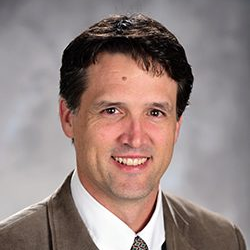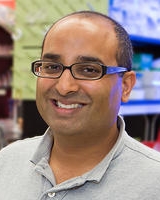
Lewis Wheaton

Lewis Wheaton's profile picture
lewis.wheaton@ap.gatech.edu

Dr. Lewis A. Wheaton received his Ph.D. in Neuroscience and Cognitive Sciences from the University of Maryland, College Park in 2005. He was a fellow at the National Institutes of Health (Medical Neurology Branch, 2001-2005) studying neural function and recovery of motor control after stroke. In mid-2005 he was awarded a post-doctoral fellowship at the Baltimore Veterans Affairs Medical Center (Maryland) where he performed neuroscience research in aging and stroke motor control in Veterans.

In 2008, Dr. Wheaton joined the School of Applied Physiology at Georgia Tech as an Assistant Professor. He became tenured in 2014 and is currently an Associate Professor in Biological Sciences. Dr. Wheaton is the Director of the Cognitive Motor Control Laboratory at Georgia Tech, engaged in over $1 million in state and federal research funding focused on understanding aspects of human motor control rehabilitation in aging, stroke and amputation. His lab has employed numerous high school, undergraduate, graduate, and post-doctoral fellows. He is the course director for 4 courses in the School of Biological Sciences (Human Neuroimaging, Movement Disorders, Human Neuroanatomy, and the History of Neuroscience). He has Chaired/Co-Chaired 3 international conferences focused on motor control research and clinical outcomes, obtaining funding by federal and private sources. His research has yielded several manuscript publications in the field of motor control neuroscience, several focused expert reviews, and numerous conference presentations both in the US and abroad.

Dr. Wheaton is also an adjunct Associate Professor in the Department of Rehabilitation at Emory School of Medicine and a Member of the Children’s Center for Neurosciences Research at the Emory Children’s Pediatric Research Center.

Dr. Wheaton earned a BS (Biology) degree at Radford University (VA). He is an active parent volunteer at his children's schools and in the local community.

Associate Professor
Adjunct Associate Professor, Department of Rehabilitation Medicine, Emory University
Phone
404-385-2339
Office
555 14th Street 1309E
Additional Research

The Cognitive Motor Control Laboratory seeks to understand neurophysiology guiding skillful human-object interactions in upper extremity motor control. We use neuroimaging to identify anatomical and physiological circuits in humans that guide successful skilled behavior. Our clinical studies consider neural systems that can suffer injury or dysfunction related to deficits in skillful motor control, and how to utilize surrogate neural circuits in restorative motor therapies in stroke and upper limb amputation.

Research Focus Areas
Google Scholar
https://scholar.google.com/citations?user=Z_kEGKcAAAAJ&hl=en

Hyojung Choo

Hyojung Choo 's profile picture
hyojung.choo@emory.edu
Assistant Professor
Phone
404-727-3727
Office
542 Whitehead Research Building, Emory School of Medicine
Additional Research

"Craniofacial muscles are essential muscles for normal daily life. They are involved in facial expressions (facial muscles), blinking and eye movement (eye muscles), as well as speaking and eating (tongue and pharyngeal muscles). Interestingly, craniofacial muscles have differential susceptibility to several muscular dystrophies. For example, craniofacial muscles are the most affected muscles in oculopharyngeal muscular dystrophy but the least affected muscles in Duchenne muscular dystrophy. Among craniofacial muscles, dysfunction of tongue and pharyngeal muscles could cause an eating disability, called dysphagia, afflicts almost 15 million Americans including elderly, neuronal (Parkinson's disease and bulbar-onset amyotrophic lateral sclerosis) and muscular disease (oculopharyngeal muscular dystrophy) patients. However, no cure or therapeutic treatment exists for dysphagia caused by muscular dystrophy. Elucidation of the mechanism(s) behind these differing susceptibilities of craniofacial muscles could lead to development of potential therapeutics targeted to specific skeletal muscles involved in particular types of muscular dystrophy. The mechanisms of skeletal muscles are of interest here because skeletal muscle cells are multinucleated cells. Typically, skeletal muscle cells contain hundreds of nuclei in a single cell since they are generated by fusion of muscle precursor cells during development or by fusion of muscle specific stem cells, called satellite cells, in adult skeletal muscles. However, it is unclear how skeletal muscle cells regulate the quantity and quality of these multi-nuclei. Since craniofacial skeletal muscles, such as extraocular and pharyngeal muscles, have active satellite cell fusion in comparison to limb muscles, they are therefore suitable models to study myonuclear addition and homeostasis."

University, College, and School/Department

Josiah Hester

Josiah Hester's profile picture
josiah@gatech.edu

Josiah Hester works broadly in computer engineering, with a special focus on wearable devices, edge computing, and cyber-physical systems. His Ph.D. work focused on energy harvesting and battery-free devices that failed intermittentently. He now focuses on sustainable approaches to computing, via designing health wearables, interactive devices, and large-scale sensing for conservation. 
   
His work in health is focused on increasing accessibility and lowering the burden of getting preventive and acute healthcare. In both situations, he designs low-burden, high-fidelity wearable devices that monitor aspects of physiology and behavior, and use machine learning techniques to suggest or deliver adaptive and in-situ interventions ranging from pharmacological to behavioral. 
   
His work is supported by multiple grants from the NSF, NIH, and DARPA. He was named a Sloan Fellow in Computer Science and won his NSF CAREER in 2022. He was named one of Popular Science's Brilliant Ten, won the American Indian Science and Engineering Society Most Promising Scientist/Engineer Award, and the 3M Non-tenured Faculty Award in 2021. His work has been featured in the Wall Street Journal, Scientific American, BBC, Popular Science, Communications of the ACM, and the Guinness Book of World Records, among many others.

BBISS Faculty Director for Civic Innovation and AI
Catherine M. and James E. Allchin Early Career Professor
Professor
Director, Ka Moamoa – Ubiquitous and Mobile Computing Lab
Office
TSRB 246

Animesh Garg

Animesh Garg's profile picture
animesh.garg@gatech.edu

Animesh Garg is a Stephen Fleming Early Career Assistant Professor at School of Interactive Computing at Georgia Tech. He leads the People, AI, and Robotics (PAIR) research group. He is on the core faculty in the Robotics and Machine Learning programs. Animesh is also a Senior Researcher at Nvidia Research. Animesh earned a Ph.D. from UC Berkeley and was a postdoc at the Stanford AI Lab. He is on leave from the department of Computer Science at University of Toronto and CIFAR Chair position at the Vector Institute.

Garg earned his M.S. in Computer Science and Ph.D. in Operations Research from UC, Berkeley. He worked with Ken Goldberg at Berkeley AI Research (BAIR). He also worked closely with Pieter Abbeel, Alper Atamturk & UCSF Radiation Oncology. Animesh was later a postdoc at Stanford AI Lab with Fei-Fei Li and Silvio Savarese.

Garg's research vision is to build the Algorithmic Foundations for Generalizable Autonomy, that enables robots to acquire skills, at both cognitive & dexterous levels, and to seamlessly interact & collaborate with humans in novel environments. His group focuses on understanding structured inductive biases and causality on a quest for general-purpose embodied intelligence that learns from imprecise information and achieves flexibility & efficiency of human reasoning.

Assistant Professor
Additional Research

Robot Learning3D Vision and Video ModelsCausal InferenceReinforcement LearningCurrent Applications: Mobile-Manipulation in Retail/Warehouse, personal, and surgical robotics

Google Scholar
https://scholar.google.com/citations?hl=en&user=zp8V7ZMAAAAJ&view_op=list_works&sortby=pubdate

Daniel Goldman

Daniel Goldman's profile picture
dgoldman3@gatech.edu

My research integrates my work in complex fluids and granular media and the biomechanics of locomotion of organisms and robots to address problems in nonequilibrium systems that involve interaction of matter with complex media. For example, how do organisms like lizards, crabs, and cockroaches cope with locomotion on complex terrestrial substrates (e.g. sand, bark, leaves, and grass). I seek to discover how biological locomotion on challenging terrain results from the nonlinear, many degree of freedom interaction of the musculoskeletal and nervous systems of organisms with materials with complex physical behavior. The study of novel biological and physical interactions with complex media can lead to the discovery of principles that govern the physics of the media. My approach is to integrate laboratory and field studies of organism biomechanics with systematic laboratory studies of physics of the substrates, as well as to create mathematical and physical (robot) models of both organism and substrate. Discovery of the principles of locomotion on such materials will enhance robot agility on such substrates

Dunn Family Professor; School of Physics
Director; Complex Rheology And Biomechanics (CRAB) Lab
Phone
404.894.0993
Office
Howey C202
Additional Research

biomechanics; neuromechanics; granular media; robotics; robophysics

University, College, and School/Department
Google Scholar
https://scholar.google.com/citations?hl=en&user=r7wE4M4AAAAJ&view_op=list_works&sortby=pubdate

Omer Inan

Omer Inan's profile picture
omer.inan@ece.gatech.edu

Omer T. Inan received his B.S., M.S., and Ph.D. degrees in Electrical Engineering from Stanford University in 2004, 2005, and 2009, respectively.

He worked at ALZA Corporation in 2006 in the Drug Device Research and Development Group. From 2007-2013, he was chief engineer at Countryman Associates, Inc., designing and developing several high-end professional audio products. From 2009-2013, he was a visiting scholar in the Department of Electrical Engineering at Stanford. In 2013, he joined the School of ECE at Georgia Tech as an assistant professor.

Inan is generally interested in designing clinically relevant medical devices and systems, and translating them from the lab to patient care applications. One strong focus of his research is in developing new technologies for monitoring chronic diseases at home, such as heart failure.

He and his wife were both varsity athletes at Stanford, competing in the discus and javelin throw events respectively.

Professor, School of Electrical and Computer Engineering
Linda J. and Mark C. Smith Chair, School of Electrical and Computer Engineering
Phone
404.385.1724
Office
TSRB 417
Additional Research
  • Medical devices for clinically-relevant applications
  • Non-invasive physiological monitoring
  • Home monitoring of chronic disease
  • Cardiomechanical signals
  • Medical instrumentation
Google Scholar
https://scholar.google.com/citations?hl=en&user=CURXz5UAAAAJ&view_op=list_works&sortby=pubdate

Brian Gunter

Brian Gunter's profile picture
brian.gunter@ae.gatech.edu

Brian Gunter is an Assistant Professor in Aerospace Engineering at the Georgia Institute of Technology. He received his B.S. in mechanical engineering from Rice University, and later his M.S. and Ph.D. in aerospace engineering from the University of Texas at Austin, specializing in orbital mechanics. Prior to joining Georgia Tech, Gunter was on the faculty of the Delft University of Technology (TU-Delft) in the Netherlands, as a member of the Physical and Space Geodesy section. His research activities involve various aspects of spacecraft missions and their applications, such as investigations into current and future laser altimetry missions, monitoring changes in the polar ice sheets using satellite data, applications of satellite constellations/formations, and topics surrounding kinematic orbit determination. He has been responsible for both undergraduate and graduate courses on topics such as satellite orbit determination, Earth and planetary observation, scientific applications of GPS, and space systems design. He is currently a member of the AIAA Astrodynamics Technical Committee, and also serves as the Geodesy chair for the Fall AGU Meeting Program Committee. He has received a NASA group achievement award for his work on the GRACE mission, and he is also a former recipient of a NASA Earth System Science Graduate Fellowship. He is a member of the American Institute of Aeronautics and Astronautics (AIAA), the American Geophysical Union (AGU), and the International Association of Geodesy (IAG).

Education

  • B.S., Mechanical Engineering, 1994, Rice University
  • M.S., Aerospace Engineering, 2000, The University of Texas at Austin;
  • Ph.D., Aerospace Engineering, 2004, The University of Texas at Austin;

Distinctions & Awards

Elected in 2020 to the status of Associate Fellow of the American Institute of Aeronautics and Astronautics; Visiting Research Fellow, Newcastle University, Newcastle-Upon-Tyne, UK, 2011; NASA Earth System Science Graduate Fellowship, 2002-2004; NASA Group Achievement Award, GRACE Project Team, 2004; Dolores Zohr b Liebmann Graduate Fellowship, 2000-2003; Earl Wright Endowed Presidential Scholarship in Engineering, 2000-2001

Associate Professor
Phone
404.385.2345
Office
ESM 205
Additional Research

satellite geodesy; space systems; orbital mechanics; Earth and planetary observation; remote sensing

Research Focus Areas
Google Scholar
https://scholar.google.com/citations?hl=en&user=ba8fWHIAAAAJ&view_op=list_works&sortby=pubdate

Eunhwa Yang

Eunhwa Yang's profile picture
eunhwa.yang@design.gatech.edu

Eunhwa Yang is an associate professor at the School of Building Construction, researching the reciprocal relationship between the built environment and human outcomes across various settings, including workplaces, university campuses, and homes. She employs Bronfenbrenner’s ecological systems theory, which proposes that human outcomes are constantly influenced by the nested structures of environments. Her contributions include workplace studies, facility operation and maintenance, sustainable building practices and operations, and cognitive aging-in-place. Eunhwa's work supports a diverse range of stakeholders, including office workers, university students, and older adults, as well as facility managers/owners, corporate real estate directors, and designers, in identifying optimal spatial design, usage, and operation.

Eunhwa has been actively involved with the International Facility Management Association (IFMA) and CoreNet Global. She has received a young researcher's best paper award and a workshop grant from International Association for People-Environmental Studies (IAPS) and multiple fellowships from the International Facility Management Association (IFMA). Eunhwa has taught and developed facility management-related courses at GT. She is an advocate of utilizing and exploring diverse teaching methods, including active learning, experiential learning, and service learning. She was a fellow at the Center for Teaching and Learning at GT and the Center for Teaching Excellence at Cornell and led workshops on student engagement, collaborative learning, and rubric development. Her master’s and doctoral students have been recognized in the field, winning the IFMA Foundation scholarships and CoreNet Global Academic Challenges. Eunhwa holds an MS in Building Construction and Facility Management from Georgia Tech and a Ph.D. in Human Behavior and Design from Cornell University.

Teaching Interest:

Dr. Yang’s teaching focuses on the principles of facility management service delivery; building operation and maintenance and their associated data analytics; safety and environmental issues that protect and promote occupant health and well-being; and research methods.

Research Interest:

Dr. Yang’s research can be organized into four primary threads: 1) workplace management and strategies for workplace optimization/efficiency, 2) smart facility operation and maintenance through data integration and post-occupancy evaluation (POE), 3) the adoption of sustainable building practices and operations, and 4) design and construction for aging and aging-in-place. Her research has made theoretical, methodological, and practical contributions to these topics, addressing human outcomes and the built environment in various settings, such as workplaces, university campuses, and homes.

List of Recent Scholarly Work:

1. Bilau, I., Koo, B., Fu, E., Chau, W., Kwon, H., & Yang, E. (2025). Visual accessibility through open shelving: Impacts on cognitive load, motivation, physical activity, and user perception in older adults with mild cognitive impairment. Journal of Aging and Environment, 1–28. https://doi.org/10.1080/26892618.2025.2576213

2. Shagar, M., Zeng, Q., Baru, A., Yang, E., & Pishdad, P. (2025). Systematic review of residential indoor environmental quality assessment surveys and the development of an exemplary novel survey identifying and analyzing tool. Building and Environment, 284, 113448. https://doi.org/10.1016/j.buildenv.2025.113448

3. Ma, J.H., Erdogmus, E., & Yang, E. (2025). A user-centered building design approach using immersive virtual reality and discrete choice modeling. Building and Environment, 284, 113400. https://doi.org/10.1016/j.buildenv.2025.113400  

4. Koo, B., Bilau, I., Rodriguez, A. D., Yang, E., & Kwon, H. (2025). Quantifying mild cognitive impairments in older adults using multi-model wearable sensor data in a kitchen environment. medRxiv: the preprint server for health sciences. https://doi.org/10.1101/2025.05.24.25328107

5. Machary, H., Motamed Rastegar, R., Gholami, Y., Yang, E., Little, E., Burke, M. A. M., Bilau, I., DuBose, J., & Zimring, C. (2025). Cognitive-aging-in-place: Home design factors influencing instrumental activities of daily living for older adults facing mild cognitive impairment. Journal of Aging and Environment, 1-27. https://doi.org/10.1080/26892618.2025.2506060

6. Yang, E., Chen, C., Li, K., Guo, K., Hua, Y., & Zhang, L. (2025). Challenges and strategies for energy performance contracting: A critical review. Journal of Building Design and Environment, 3(1), 202510. https://doi.org/10.70401/jbde.2025.0001

7. Zhang, X., Wang, Y., Yang, E., Xu, S., & Yu, Y. (2025). Sale to list ratio, for sale inventory, sale count, and housing value. International Journal of Housing Markets and Analysis, 18(2), 416-432. https://doi.org/10.1108/IJHMA-08-2023-0113

8. Zhang, X., Yang, E., & Wang, Y. (2025). Time series observation of relationship between United States private residential construction spending and its indicators. International Journal of Housing Markets and Analysis, 18(2), 317-333. https://doi.org/10.1108/IJHMA-07-2023-0096

9. Zhang, X., & Yang, E. (2025). Observation of relationship between housing value and the number of building permits in the United States using time series method. International Journal of Housing Markets and Analysis, 18(1), 106-122. https://doi.org/10.1108/IJHMA-06-2023-0085

10. Zhang, X., Yang, E., Huang, L., & Wang, Y. (2025). Incremental population density improvement via missing middle housing under density-based and form-based zoning ordinances. International Journal of Housing Markets and Analysis, 18(1), 87-105. https://doi.org/10.1108/IJHMA-06-2023-0074

11. Ma, J. H., Erdogmus, E., Kangisser, S. J., & Yang, E. (2025). A comparative analysis of the effectiveness of immersive virtual reality on end-user design review. Building and Environment, 267, 112237. https://doi.org/10.1016/j.buildenv.2024.112237


Degrees with Year of Award:

Ph.D. in Human Behavior and Design, Cornell University, February 2016
M.S. in Building Construction and Facility Management, Georgia Institute of Technology, December 2009
B.S. in Architectural Engineering, SungKyunKwan University, February 2005

Areas of Expertise

  • Energy efficiency in tenanted properties
  • Green leasing
  • Stakeholder engagement
  • Data analytics and facility management
  • Optimization of facility operation and maintenance
  • Healthy workplaces: occupant satisfaction, health, and well-being
  • Workplace strategies
  • Coworking spaces
Associate Professor, School of Building Construction
Phone
(404) 894-7103
Additional Research

Building Technologies

Martin Maldovan

Martin Maldovan's profile picture
maldovan@gatech.edu

Martin Maldovan is an associate professor in the School of Chemical and Biomolecular Engineering and the School of Physics at the Georgia Institute of Technology. He received his Ph.D. at the Massachusetts Institute of Technology (MIT) in the Department of Materials Science and Engineering. He was also a postdoctoral associate and research scientist at MIT.  Maldovan’s group is developing novel heat and mass transport processes as an enabling technology for energy converter materials and devices, micro and nanoelectronics, chemical and biological separations, and catalysis. His group focuses on designing, predicting, and controlling heat and mass transfer in rationally engineered systems with length scales ranging from macro to nano, to advance new paradigms for energy saving materials and devices.  

Associate Professor, School of Chemical and Biomolecular Engineering and School of Physics
Phone
404.385.3753
Office
ES&T L1226
Additional Research

Thermal Management; Energy Storage; Energy Conversion; Thermal Systems

University, College, and School/Department
Google Scholar
https://scholar.google.com/citations?hl=en&user=kEMlX3sAAAAJ&view_op=list_works&sortby=pubdate

Ajeet Rohatgi

Ajeet Rohatgi's profile picture
ajeet.rohatgi@ece.gatech.edu

Ajeet Rohatgi received the B.S. (E.E.) degree from Indian Institute of Technology in 1971, the M.S. (Materials Engineering) from Virginia Polytechnic Institute and State University in 1973, and the Ph.D. in Metallurgy and Materials Science from Lehigh University in 1977. He joined the Westinghouse Research and Development Center in Pittsburgh, Pennsylvania in 1977 and became a Westinghouse Fellow while working on the science and technology of photovoltaic and microelectronic devices. Rohatgi joined the ECE faculty at Georgia Tech in 1985 and started a program on photovoltaics, which has become one of the best in the country. He has become an internationally recognized leader in photovoltaics. He is the founding director of the first university-based DOE Center of Excellence in Photovoltaic Research and Education. He is the author of more than 300 publications and holds 10 U.S. patents. Rohatgi has received numerous awards and distinctions from professional societies and Georgia Tech. He is the founder and CTO for Suniva.

Regents' Professor, School of Electrical and Computer Engineering
John H. Weitnauer, Jr. Chair, College of Engineering
Georgia Research Alliance Eminent Scholar
Phone
404.894.7692
Office
VL W121
Additional Research

silicon devices; solar cells; dielectrics; Compund Semiconductors; solar energy

Google Scholar
https://scholar.google.com/citations?hl=en&user=qJ98P7EAAAAJ&view_op=list_works&sortby=pubdate