Karthik Menon

Karthik
karthik.menon@me.gatech.edu

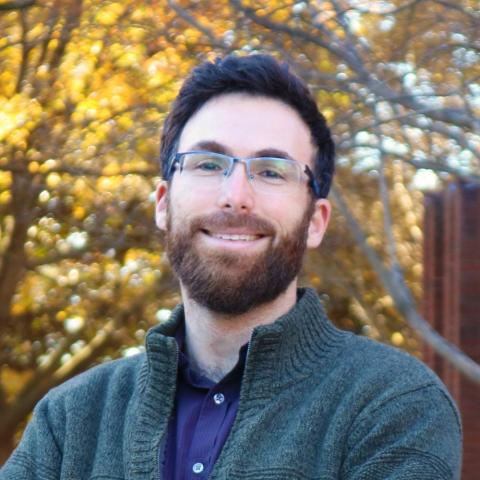
Karthik Menon is an Assistant Professor with a joint appointment in the Woodruff School and the Coulter Department of Biomedical Engineering. Menon graduated with a Ph.D. in Mechanical Engineering from Johns Hopkins University in 2021, where his doctoral work focused on the flow physics of fluid-structure interactions and vortex-dominated flows. Before joining Georgia Tech, he was a postdoctoral scholar in the Department of Pediatrics and the Institute for Computational and Mathematical Engineering at Stanford University. At Stanford, he worked on computational methods for accurate patient-specific cardio­vascular blood flow simulations and uncertainty quantification. Menon’s broad research interests include fluid mechanics, computational modeling, and data-driven methods. His research aims to advance interdisciplinary technology in a wide range of healthcare, engineering and energy applications. Fluid dynamics is central to some of the biggest challenges and opportunities in these domains – such as personalized treatments for cardiovascular disease, extracting renewable energy from flowing water and wind, and developing bio-mimetic flying and swimming robots. Menon’s work tackles these challenges by uncovering new physics and combining high-performance computing with data-enabled techniques.

Assistant Professor
Office
Love 115
Additional Research
  • Aerospace, Energy Harvesting, Renewable Energy
  • Bioengineering
  • Diagnostics
  • Healthcare
  • High Performance Computing
  • Machine Learning
  • Molecular, Cellular and Tissue Biomechanics
University, College, and School/Department

Anju Toor

Anju Toor's profile picture
anju.toor@mse.gatech.edu

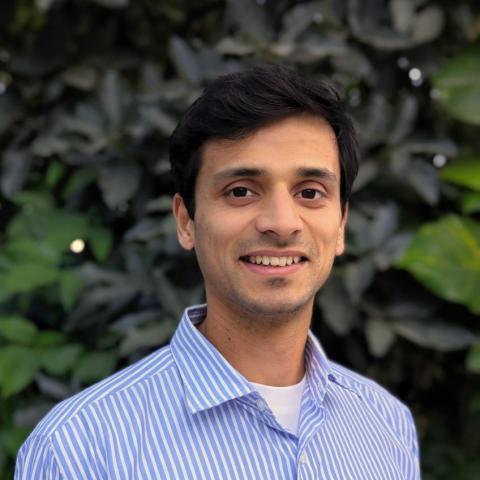
Anju Toor is a researcher in nanomaterials for energy systems. She was a Bakar Innovation Fellow at the University of California, Berkeley, and worked on printed on-chip integrated micro batteries. She earned an M.S. in Electrical Engineering and a Ph.D. in Mechanical Engineering at University of California, Berkeley.

Her research focuses on advanced energy materials, printed electronics, energy storage systems, and nanoparticle self-assembly. She has led research on flexible and stretchable batteries for next-generation Augmented/Virtual Reality applications at Meta Reality Labs. She was named EECS Rising Star and selected for The Rising Stars Women in Engineering Workshop in Asia.

As an expert in self-assembly and energy materials, she has published over 20 research publications in the most reputed platforms in the field.

Assistant Professor, School of Materials Science and Engineering
Additional Research

Research Areas: Composites, Fibers, Nanostructures, Polymers

Research Challenges: Electronics and Communications, Energy, Environment

Research Activity: Measurements, Processing, Fabrication, & Manufacturing, Synthesis

Erin L. Ratcliff

Portrait of Erin L. Ratcliff
eratcliff8@gatech.edu

Erin L. Ratcliff is a Full Professor in the School of Materials Science and Engineering and the School of Chemistry and Biochemistry at the Georgia Institute of Technology and holds a joint appointment at the National Renewable Energy Laboratory.  Prof. Ratliff is also the Associate Director of Scientific Continuity for Director of the currently funded Energy Frontier Research Center (EFRC) entitled “Center for Soft PhotoElectroChemical Systems (SPECS)”, a center which she directed at her prior appointment at University of Arizona.  

Her group “Laboratory for Interface Science for Printable Electronic Materials” uses a combination of applications and devices with electrochemistry, spectroscopies, microscopies, and synchrotron-based techniques to understand fundamental structure-property relationships of next-generation materials for energy conversion and storage and biosensing. Materials of interest include metal halide perovskites, π-conjugated materials, colloidal quantum dots, and metal oxides. Current research is focused on mechanisms of electron transfer and transport across interfaces, including semiconductor/electrolyte interfaces and durability of printable electronic materials.

Her research program has been funded by the Department of Energy Basic Energy Sciences, the Solar Energy Technology Office, Office of Naval Research, National Science Foundation, and the Nano Bio Materials Consortium.

Professor, School of Materials Science and Engineering
Professor, School of Chemistry and Biochemistry

Richard Neu

Richard Neu's profile picture
rick.neu@me.gatech.edu

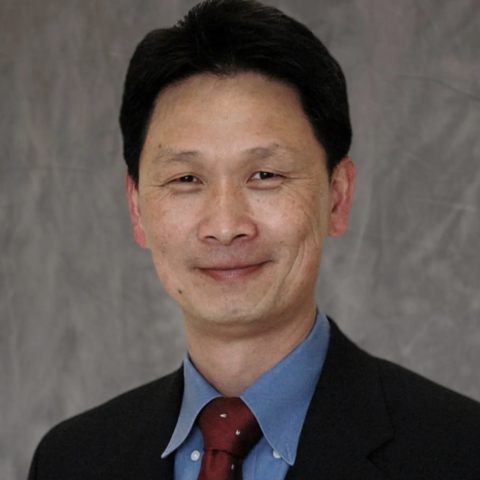
Neu's research involves the understanding and prediction of the fatigue behavior of materials and closely related topics, typically when the material must resist degradation and failure in harsh environments. Specifically, he has published in areas involving thermomechanical fatigue, fretting fatigue, creep and environmental effects, viscoplastic deformation and damage development, and related constitutive and finite-element modeling with a particular emphasis on the role of the materials microstructure on the physical deformation and degradation processes. He has investigated a broad range of structural materials including steels, titanium alloys, nickel-base superalloys, metal matrix composites, molybdenum alloys, high entropy alloys, medical device materials, and solder alloys used in electronic packaging. His research has widespread applications in aerospace, surface transportation, power generation, machinery components, medical devices, and electronic packaging. His work involves the prediction of the long-term reliability of components operating in extreme environments such as the hot section of a gas turbine system for propulsion or energy generation. His research is funded by some of these industries as well as government funding agencies.

Professor, School of Materials Science and Engineering, Woodruff School of Mechanical Engineering
Director, Mechanical Properties Characterization Facility
Phone
404.894.3074
Office
MRDC 4104
Additional Research

Nanomaterials; micro and nanomechanics; Thermoelectric Materials; fracture and fatigue

Research Focus Areas
Google Scholar
https://scholar.google.com/citations?hl=en&user=60ZYazgAAAAJ&view_op=list_works&sortby=pubdate

Scott Danielsen

Scott Danielsen's profile picture
scott.danielsen@mse.gatech.edu

Scott Danielsen is an Assistant Professor in the School of Materials Science and Engineering at the Georgia Institute of Technology. He obtained his Ph.D. in chemical engineering at the University of California, Santa Barbara in 2018 and his B.S.E. in chemical and biomolecular engineering at the University of Pennsylvania in 2014. He then spent five years as a postdoctoral associate at Duke University and as a visiting scholar at the University of North Carolina School of Medicine from 2019-2023. 

Prof. Danielsen’s group uses a combination of theoretical, computational, and experimental methods to reveal structure–property–processing relationships of soft materials. Their current primary research interests are the structure and dynamics of nonideal structured fluids, particularly polymer gels and biological fluids, with a focus on designing new materials and processing conditions for functional materials.

Assistant Professor, School of Materials Science and Engineering

Ching-Hua Huang, Ph.D.

Ching-Hua Huang, Ph.D. 's profile picture
ching-hua.huang@ce.gatech.edu

Ching-Hua Huang, Ph.D., is the Turnipseed Family Chair and Professor in the School of Civil and Environmental Engineering at Georgia Institute of Technology. Huang received her Ph.D. and M.S. degrees in environmental engineering from Johns Hopkins University. Huang’s expertise includes environmental chemistry, advanced water/wastewater treatment technology, contaminants of emerging concern, sustainable water reuse, waste remediation and resource recovery. Huang has supervised many research projects sponsored by various agencies, and has published more than 170 peer-reviewed journal papers, book chapters and conference proceeding papers. She is the Associate Editor of the American Chemical Society's Environmental Science & Technology Water and the Editorial Advisory Board member of Environmental Science & Technology. 

Turnipseed Family Chair and Professor, School of Civil and Environmental Engineering
Phone
404.893.7694
Office
School of Civil and Environmental Engineering

Eunhwa Yang

Eunhwa Yang's profile picture
eunhwa.yang@design.gatech.edu

Eunhwa Yang is an associate professor at the School of Building Construction, researching the reciprocal relationship between the built environment and human outcomes across various settings, including workplaces, university campuses, and homes. She employs Bronfenbrenner’s ecological systems theory, which proposes that human outcomes are constantly influenced by the nested structures of environments. Her contributions include workplace studies, facility operation and maintenance, sustainable building practices and operations, and cognitive aging-in-place. Eunhwa's work supports a diverse range of stakeholders, including office workers, university students, and older adults, as well as facility managers/owners, corporate real estate directors, and designers, in identifying optimal spatial design, usage, and operation.

Eunhwa has been actively involved with the International Facility Management Association (IFMA) and CoreNet Global. She has received a young researcher's best paper award and a workshop grant from International Association for People-Environmental Studies (IAPS) and multiple fellowships from the International Facility Management Association (IFMA). Eunhwa has taught and developed facility management-related courses at GT. She is an advocate of utilizing and exploring diverse teaching methods, including active learning, experiential learning, and service learning. She was a fellow at the Center for Teaching and Learning at GT and the Center for Teaching Excellence at Cornell and led workshops on student engagement, collaborative learning, and rubric development. Her master’s and doctoral students have been recognized in the field, winning the IFMA Foundation scholarships and CoreNet Global Academic Challenges. Eunhwa holds an MS in Building Construction and Facility Management from Georgia Tech and a Ph.D. in Human Behavior and Design from Cornell University.

Teaching Interest:

Dr. Yang’s teaching focuses on the principles of facility management service delivery; building operation and maintenance and their associated data analytics; safety and environmental issues that protect and promote occupant health and well-being; and research methods.

Research Interest:

Dr. Yang’s research can be organized into four primary threads: 1) workplace management and strategies for workplace optimization/efficiency, 2) smart facility operation and maintenance through data integration and post-occupancy evaluation (POE), 3) the adoption of sustainable building practices and operations, and 4) design and construction for aging and aging-in-place. Her research has made theoretical, methodological, and practical contributions to these topics, addressing human outcomes and the built environment in various settings, such as workplaces, university campuses, and homes.

List of Recent Scholarly Work:

1. Bilau, I., Koo, B., Fu, E., Chau, W., Kwon, H., & Yang, E. (2025). Visual accessibility through open shelving: Impacts on cognitive load, motivation, physical activity, and user perception in older adults with mild cognitive impairment. Journal of Aging and Environment, 1–28. https://doi.org/10.1080/26892618.2025.2576213

2. Shagar, M., Zeng, Q., Baru, A., Yang, E., & Pishdad, P. (2025). Systematic review of residential indoor environmental quality assessment surveys and the development of an exemplary novel survey identifying and analyzing tool. Building and Environment, 284, 113448. https://doi.org/10.1016/j.buildenv.2025.113448

3. Ma, J.H., Erdogmus, E., & Yang, E. (2025). A user-centered building design approach using immersive virtual reality and discrete choice modeling. Building and Environment, 284, 113400. https://doi.org/10.1016/j.buildenv.2025.113400  

4. Koo, B., Bilau, I., Rodriguez, A. D., Yang, E., & Kwon, H. (2025). Quantifying mild cognitive impairments in older adults using multi-model wearable sensor data in a kitchen environment. medRxiv: the preprint server for health sciences. https://doi.org/10.1101/2025.05.24.25328107

5. Machary, H., Motamed Rastegar, R., Gholami, Y., Yang, E., Little, E., Burke, M. A. M., Bilau, I., DuBose, J., & Zimring, C. (2025). Cognitive-aging-in-place: Home design factors influencing instrumental activities of daily living for older adults facing mild cognitive impairment. Journal of Aging and Environment, 1-27. https://doi.org/10.1080/26892618.2025.2506060

6. Yang, E., Chen, C., Li, K., Guo, K., Hua, Y., & Zhang, L. (2025). Challenges and strategies for energy performance contracting: A critical review. Journal of Building Design and Environment, 3(1), 202510. https://doi.org/10.70401/jbde.2025.0001

7. Zhang, X., Wang, Y., Yang, E., Xu, S., & Yu, Y. (2025). Sale to list ratio, for sale inventory, sale count, and housing value. International Journal of Housing Markets and Analysis, 18(2), 416-432. https://doi.org/10.1108/IJHMA-08-2023-0113

8. Zhang, X., Yang, E., & Wang, Y. (2025). Time series observation of relationship between United States private residential construction spending and its indicators. International Journal of Housing Markets and Analysis, 18(2), 317-333. https://doi.org/10.1108/IJHMA-07-2023-0096

9. Zhang, X., & Yang, E. (2025). Observation of relationship between housing value and the number of building permits in the United States using time series method. International Journal of Housing Markets and Analysis, 18(1), 106-122. https://doi.org/10.1108/IJHMA-06-2023-0085

10. Zhang, X., Yang, E., Huang, L., & Wang, Y. (2025). Incremental population density improvement via missing middle housing under density-based and form-based zoning ordinances. International Journal of Housing Markets and Analysis, 18(1), 87-105. https://doi.org/10.1108/IJHMA-06-2023-0074

11. Ma, J. H., Erdogmus, E., Kangisser, S. J., & Yang, E. (2025). A comparative analysis of the effectiveness of immersive virtual reality on end-user design review. Building and Environment, 267, 112237. https://doi.org/10.1016/j.buildenv.2024.112237


Degrees with Year of Award:

Ph.D. in Human Behavior and Design, Cornell University, February 2016
M.S. in Building Construction and Facility Management, Georgia Institute of Technology, December 2009
B.S. in Architectural Engineering, SungKyunKwan University, February 2005

Areas of Expertise

  • Energy efficiency in tenanted properties
  • Green leasing
  • Stakeholder engagement
  • Data analytics and facility management
  • Optimization of facility operation and maintenance
  • Healthy workplaces: occupant satisfaction, health, and well-being
  • Workplace strategies
  • Coworking spaces
Associate Professor, School of Building Construction
Phone
(404) 894-7103
Additional Research

Building Technologies

Victor Fung

Victor Fung's profile picture
victorfung@gatech.edu

Victor Fung is an Assistant Professor in the School of Computational Science and Engineering. Prior to this position, he was a Wigner Fellow and a member of the Nanomaterials Theory Insitute in the Center for Nanophase Materials Sciences at Oak Ridge National Laboratory. A physical chemist by training, Fung now works at the intersection of scientific artificial intelligence, computing, and materials science/chemistry.

Assistant Professor of Computational Science and Engineering
Office
E1354B | CODA Building, 756 W Peachtree St NW, Atlanta, GA 30308
Additional Research
  • Quantum chemistry
  • Surrogate models for quantum chemistry
  • Data-driven inverse design
  • Chemically-informed machine learning
  • High-throughput computational simulations
Google Scholar
https://scholar.google.com/citations?hl=en&user=2QsddMIAAAAJ&view_op=list_works&sortby=pubdate

Dylan Brewer

Dylan Brewer's profile picture
brewer@gatech.edu

Dylan Brewer joined the faculty at the School of Economics in 2019. He received his PhD in Economics with a dual major in Environmental Science and Policy from Michigan State University in May 2019 as well as a Master of Arts degree in Economics from the same institution in 2016. Prior to his graduate studies, Dylan completed a Bachelor of Arts degree with majors in Economics and International Relations at the University of Virginia in 2014. Dylan's research uses the tools of applied econometrics and machine learning to answer questions in energy and environmental economics. He has published research on household energy consumption, the economics of thermostat settings, recycling, electricity demand, machine learning methodology, and air quality among other topics. He teaches courses on environmental economics at the graduate and undergraduate level, and his Principles of Microeconomics course has won awards at Georgia Tech.

Assistant Professor, School of Economics