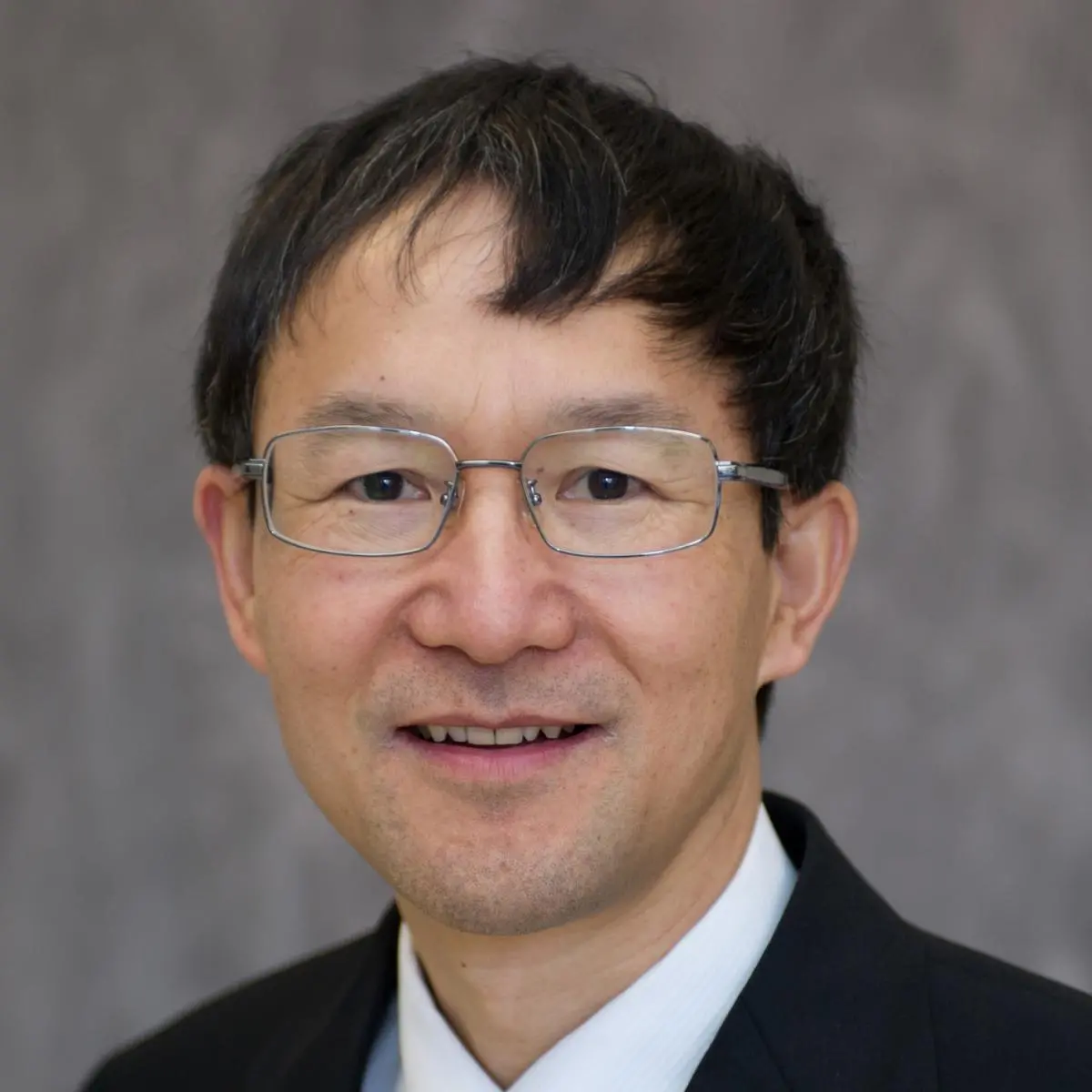
Yongsheng Chen

Yongsheng Chen's profile picture
yongsheng.chen@ce.gatech.edu

Chen has an extensive research interests in environmental science and engineering. More specifically, he is a leading researcher in the environmental applications of nanomaterials and their potential fate, transport, transformation, bioaccumulation and toxicity in the environment. His interests in environmental nanomaterials dated back in his graduate research in 1992. He has also been active on algae based bio-renewable energy and sustainable urban development. Chen has been principle and co-principal investigators for 28 research projects (by June 2010) funded by the National Science Foundation, U.S. Environmental Protection Agency, NASA, Boeing and other organizations. The total funds are $7 million. He has also served as a review member or panel review member in the U.S. National Science Foundation, the U.S. Environmental Protection Agency, the U.S. Department of Energy evaluation committee. He has also been invited to serve as an abroad review expert for the China Changjiang Scholars Program (which is to awarded to the top researchers in China). He has published more than 40 papers and two book chapters in this field.

Chen received his Ph.D in Nankai University, China. He joined the Georgia Tech School of Civil and Environmental Engineering in May 2009.

Bonnie W. and Charles W. Moorman IV Professor, School of Civil and Environmental Engineering
Phone
(404) 894-3089
Office
Daniel Environmental Engineering Laboratory, Room 206
Additional Research

Biofuels; Separations Technology; Water

University, College, and School/Department

Marilyn Brown

Marilyn Brown's profile picture
marilyn.brown@pubpolicy.gatech.edu

Marilyn Brown is a Regents' and Brook Byers Professor of Sustainable Systems in the School of Public Policy. She joined Georgia Tech in 2006 after a distinguished career at the U.S. Department of Energy's Oak Ridge National Laboratory, where she led several national climate change mitigation studies and became a leader in the analysis and interpretation of energy futures in the United States. 

Her research focuses on the design and impact of policies aimed at accelerating the development and deployment of sustainable energy technologies, with an emphasis on the electric utility industry, the integration of energy efficiency, demand response, and solar resources, and ways of improving resiliency to disruptions. Her books include Fact and Fiction in Global Energy Policy (Johns Hopkins University Press, 2016), Green Savings: How Policies and Markets Drive Energy Efficiency (Praeger, 2015), and Climate Change and Global Energy Security (MIT Press, 2011). She has authored more than 250 publications. Her work has had significant visibility in the policy arena as evidenced by her numerous briefings and testimonies before state legislative bodies and Committees of both the U.S. House of Representatives and Senate.

Dr. Brown co-founded the Southeast Energy Efficiency Alliance and chaired its Board of Directors for several years. She has served on the Boards of the American Council for an Energy-Efficient Economy and the Alliance to Save Energy, and was a commissioner with the Bipartisan Policy Center. She has served on eight National Academies committees and is an Editor of Energy Policy and an Editorial Board member of Energy Efficiency and Energy Research and Social Science. She served two terms (2010-2017) as a Presidential appointee and regulator on the Board of Directors of the Tennessee Valley Authority, the nation’s largest public power provider. From 2014-2018 she served on DOE’s Electricity Advisory Committee, where she led the Smart Grid Subcommittee.

Regents' Professor, School of Public Policy
Brook Byers Professor
Phone
(404) 385-0303
Additional Research

Hydrogen Equity; ClIMaTe/Environment; Electrical Grid; Policy/Economics; Energy & Water

Google Scholar
https://scholar.google.com/citations?hl=en&user=OHwBAssAAAAJ&view_op=list_works&sortby=pubdate

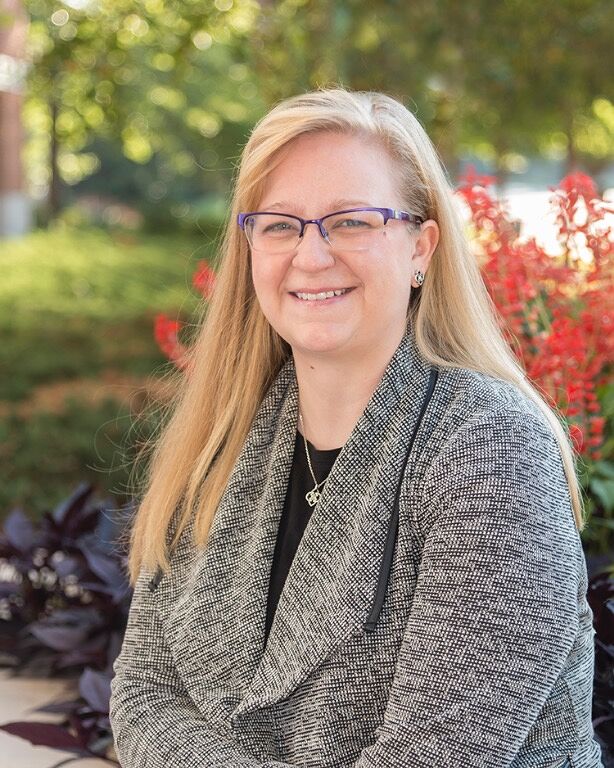
Fani Boukouvala

Fani Boukouvala's profile picture
fani.boukouvala@chbe.gatech.edu

Dr. Boukouvala is originally from Piraeus, which is the port of Athens in Greece. As the daughter of an airforce pilot, she travelled a lot with her family. Her first international move was actually to the USA, where she spent one year in Montgomery, Alabama. She later on lived in Riyadh, Saudi Arabia and Crete, Greece, before returning to Athens to get her B.S Degree in Chemical Engineering from the National Technical University in Athens. In 2008, she moved back to the US to obtain a PhD in Chemical Engineering at Rutgers University in NJ. She then worked as a Postdoctoral Associate in both Princeton University and Texas A&M University. In August 2016, Dr. Boukouvala returned to the South East US, as an Assistant Professor in the School of Chemical & Biomolecular Engineering at Georgia Tech. 

Her research interest in Process Systems Engineering (PSE) started during her PhD years, where she worked under the supervision of Dr. Marianthi Ierapetritou, on modeling and optimization of continuous pharmaceutical manufacturing. Her background on optimization and data-driven modeling was enhanced during her years as a postdoc with the late Christodoulos A. Floudas. Dr. Boukouvala is a proud 4th generation member of the academic family tree of the father of PSE, Roger Sargent.

Associate Professor, School of Chemical and Biomolecular Engineering
Phone
(404) 385-5371
Additional Research

System Design & Optimization; Energy; Sustainability

Google Scholar
https://scholar.google.com/citations?hl=en&user=tyO6KxAAAAAJ&view_op=list_works&sortby=pubdate

Jian Luo

Jian Luo's profile picture
jian.luo@ce.gatech.edu

Dr. Jian Luo completed his undergraduate and M.S. studies at Tsinghua University, Beijing, where he received a B.Sc.(Eng.) and a M.S. degree in Environmental Engineering in 1998 and 2000, respectively. He completed his Ph.D. in 2006 in Department of Civil and Environmental Engineering at Stanford University, California. The research Dr. Luo is conducting involves field, theoretical, and computational investigations of flow and reactive transport in subsurface; development and application of geostatistical methods for the spatial and temporal analysis of hydrogeologic and biochemistry data; development of computational algorithms and programs to simulate subsurface flow and reactive transport, and to assess the associated uncertainty; inverse modeling to estimate flow and transport parameters under uncertainty; and use of such computational methods and models to assess subsurface contamination, and to aid the optimal design of groundwater remediation operations.

Professor, School of Civil and Environmental Engineering
Phone
(404) 385-6390
Additional Research
  • Geosystem
  • Water

Ashok Goel

Ashok Goel's profile picture
ashok.goel@cc.gatech.edu

Ashok Goel is a Professor of Computer Science in the School of Interactive Computing at Georgia Institute of Technology in Atlanta, USA. He obtained his Ph.D. from The Ohio State University. At Georgia Tech, he is also the Director of the Ph.D. Program in Human-Centered Computing, a Co-Director of the Center for Biologically Inspired Design, and a Fellow of Brook Byers Institute for Sustainable Systems. For more than thirty years, Ashok has conducted research into artificial intelligence, cognitive science and human-centered computing, with a focus on computational design, modeling and creativity. His recent work has explored design thinking, analogical thinking and systems thinking in biological inspired design (https://www.youtube.com/watch?v=wiRDQ4hr9i8), and his research is now developing virtual research assistants for modeling biological systems. Ashok teaches a popular course on knowledge-based AI as part of Georgia Tech's program on Online Masters of Science in Computer Science. He has pioneered the development of virtual teaching assistants, such as Jill Watson, for answering questions in online discussion forums (https://www.youtube.com/watch?v=WbCguICyfTA). Chronicle of Higher Education recently called virtual assistants exemplified by Jill Watson as one of the most transformative educational technologies in the digital era. Ashok is the Editor-in-Chief of AAAI's AI Magazine.

Professor; School of Interactive Computing
Director| Ph.D. program in Human-Centered Computing; College of Computing
Co-Director; Center for Biologically Inspired Design
Fellow; Brook Byers Institute for Sustainable Systems
Office
GVU/TSRB
Additional Research
  • Artificial Intelligence
  • Cognitive Science
  • Computational Design
  • Computational Creativity
  • Educational Technology
  • Design Science
  • Learning Science and Technology
  • Human-Centered Computing
Google Scholar
https://scholar.google.com/citations?hl=en&user=VjNg25EAAAAJ&view_op=list_works&sortby=pubdate

Ching-Hua Huang, Ph.D.

Ching-Hua Huang, Ph.D. 's profile picture
ching-hua.huang@ce.gatech.edu

Ching-Hua Huang, Ph.D., is the Turnipseed Family Chair and Professor in the School of Civil and Environmental Engineering at Georgia Institute of Technology. Huang received her Ph.D. and M.S. degrees in environmental engineering from Johns Hopkins University. Huang’s expertise includes environmental chemistry, advanced water/wastewater treatment technology, contaminants of emerging concern, sustainable water reuse, waste remediation and resource recovery. Huang has supervised many research projects sponsored by various agencies, and has published more than 170 peer-reviewed journal papers, book chapters and conference proceeding papers. She is the Associate Editor of the American Chemical Society's Environmental Science & Technology Water and the Editorial Advisory Board member of Environmental Science & Technology. 

Turnipseed Family Chair and Professor, School of Civil and Environmental Engineering
Phone
404.893.7694
Office
School of Civil and Environmental Engineering

Danielle Willkens

Danielle Willkens's profile picture
danielle.willkens@design.gatech.edu

She is an Associate Professor at Georgia Institute of Technology's School of Architecture and a practicing designer, researcher, and educator who is particularly interested in bringing architectural engagement to diverse audiences through interactive projects. Her experiences in practice and research include design/build projects, public installations, and on-site investigations as well as extensive archival work in several countries. As an avid photographer and illustrator, her work has been recognized in the American Institute of Architects National Photography Competition and she has contributed graphics to several exhibitions and publications. As an educator, she was recognized as one of two recipients of the 2017-2018 American Institute of Architecture Students (AIAS)/ Association of Collegiate Schools of Architecture (ACSA) New Faculty Teaching Award and a 2021 AIAS Educator Honor Award. 

Her research and practice experiences span design/build, early intervention design education, transatlantic studies, and historic site documentation and visualization. She was an inaugural Mellon History Teaching Fellow at Dumbarton Oaks in fall 2021 for the project "From Plantation to Protest: Visualizing Cultural Landscapes of Conflict in the American South," supporting research and development of the Race, Space, and Architecture in the United States seminar at Georgia Tech. 

Expanding experiences abroad to enrich both teaching and research agendas , she was the 2015 Society of Architectural Historians’ H. Allen Brooks Travelling Fellow. Between June 2016 and May 2017, she traveled to Iceland, the Faroe Islands, Cuba, and Japan to research the impact of tourism on cultural heritage sites; research blog posts can be found here. 

Currently, she is working with Auburn University Associate Professor Liu and an interdisciplinary team from the McWhorter School of Building Science, the Department of History, and the Media Production Group on “Walking in the Footsteps of History”, an experimental survey and modeling project to digitally reconstruct the area south of the Edmund Pettus Bridge during the 'Bloody Sunday' events of March 7, 1965. This project is working to record and represent the built environment through the use of 3D LiDAR scans, UAV photogrammetry, and digital modeling. The team was awarded a $50,000 grant 2019 National Park Service African American Civil Rights Grant Program to compile a Historic Structures Report on the Edmund Pettus Bridge in Selma, Alabama.

Willkens serves as a Georgia Tech Institute for People and Technology initiative lead for research activities related to just, resilient, and informed communities.

Associate Professor
Research Focus Areas
University, College, and School/Department

Marc Weissburg

Marc Weissburg's profile picture
marc.weissburg@biology.gatech.edu
Professor, School of Biological Sciences
Brook Byers Professor
Phone
404.894.8433
Office
ES&T 2238
Additional Research

Bio-inspired materials

Research Focus Areas
Google Scholar
https://scholar.google.com/citations?hl=en&user=z5dzCHUAAAAJ&view_op=list_works&sortby=pubdate

Constance Crozier

Constance Crozier's profile picture
constance.crozier@isye.gatech.edu

I am an Assistant Professor at Georgia Tech ISyE. My research concerns the control and operation of decarbonized power systems, particularly with the integration of flexible loads such as electric vehicles. I got my Ph.D. from the University of Oxford in the Energy and Power Group, and completed my postdoc in the GRIFFIN Lab at CU Boulder.

Assistant Professor, School of Industrial Systems Engineering
Additional Research

Power systems and Electric vehicles

Research Focus Areas

Randall Guensler

Randall Guensler
randall.guensler@ce.gatech.edu

Randall Guensler is a Professor in the School of Civil and Environmental Engineering at the Georgia Institute of Technology. After working for the California Air Resources Board for seven years, and completing his Ph.D. in Civil Engineering at the University of California at Davis, Dr. Guensler joined Georgia Tech in 1994. During his years with the State of California, Dr. Guensler worked for four years in Compliance Assistance and for three years in the Executive Office, evaluating the design and implementation of transportation control measures by regional air quality management agencies. Since arriving at Georgia Tech, Dr. Guensler's main research focus has been the development of new monitoring and modeling tools to assess the air quality impacts of transportation policies. Dr. Guensler was the Chairman of the Transportation Research Board committee on Transportation and Air Quality from 1997 to 2002. From 1995 to 2001, Dr. Guensler served on the Environmental Protection Agency's Mobile Source Technical Advisory Subcommittee. Over the past ten years, he has served on various National Academy of Sciences committees and panels charged with the assessment of vehicle emissions impacts and identification of research needs. Dr. Guensler is the director of Commute Atlanta, a $2.3 million joint value pricing initiative sponsored by the Federal Highway Administration and Georgia Department of Transportation. Commute Atlanta includes the collection and analysis of second-by-second vehicle speed, position, and engine operating data from 470 vehicles in representative Atlanta households. The researchers have monitored more than 1.4 million vehicle trips (more than 350,000 vehicle-miles per month). In 2005, the Commute Atlanta households began participating in road pricing experiments (cent/mile pricing, as well as real-time congestion pricing). Dr. Guensler's research team is assessing consumer response to these pricing mechanisms. A secondary focus of the research is the enhancement of monitoring technologies and services to support future transportation planning, safety, and operations policy initiatives. Development of tools for data management, data analysis, and privacy protection became major research activities. Secondary research has also included analysis of speeding, journey to work route choice, trip chaining, activity-based demand, household tripmaking variability, household and vehicle range of travel, long-distance travel, freeway operations, engine load, start and soak distributions, transit bus operations, etc.

Research

Dr. Guensler's research focuses on transportation systems analysis, travel behavior modeling, and sustainable transportation strategies. His work involves the development and application of data-driven methodologies to understand and improve mobility, traffic operations, and environmental impacts of transportation networks. He investigates the integration of emerging transportation technologies and policies to enhance efficiency and sustainability in urban and regional transportation systems. His research actively involves collaboration with students at both undergraduate and graduate levels.

Education

Ph.D., Civil Engineering, Transportation

University of California, Davis

1993

M.S., Civil/Environmental Engineering

University of California, Davis

1989  

B.S., Individualized Engineering (Civil Engineering, Urban Planning, Environ. Studies)

University of California, Davis

1985


Teaching

Dr. Guensler's teaching interests encompass transportation engineering and planning, with an emphasis on traffic operations, transportation systems analysis, and energy/emissions modeling. He engages both undergraduate and graduate students in foundational and advanced courses that address transportation infrastructure, travel behavior, and the societal impacts of transportation technologies. Professor Guensler also integrates quantitative methods and policy considerations into his instruction to prepare students for multidisciplinary challenges in civil engineering.

Publications

  1. Lu, H., D. Kim, H. Liu, T. Xia, W. Reichard, M.O. Rodgers, R. Guensler (2024). Sensitivity of AERMOD (v21112) RLINEXT Dispersion Model Outputs by Source Type to Variability in Single Noise Barrier Height and Separation Distance. Atmospheric Pollution Research. https://doi.org/10.1016/j.apr.2024.102318. December 2024.
  2. Passmore, R., K.E. Watkins, and R. Guensler (2024). Using Shortest Path Routing to Assess Cycling Networks. https://doi.org/10.1016/j.jtrangeo.2024.103864. Journal of Transport Geography. Volume 117. May 2024.
  3. Lu, H., and R. Guensler (2024). MOVES-Matrix 3.0: On-Road Energy and Emission Modeling with High-Performance Supercomputing. Research Report from the National Center for Sustainable Transportation. October 2024.
  4. Lu, H, D Hunsaker, Z Liu, A Puppala, M McGurk, A Guin, R Guensler, Vehicle Occupancy, Vehicle Throughput, and Person Throughput Assessment of Atlanta’s HOV Managed Lane Facilities, 2025
  5. Xu, X, HC Yang, H Laarabi, C Poliziani, A Birky, K Jeong, H Lu, ..., Improving commercial truck fleet composition in emission modeling using 2021 US VIUS data, International Journal of Sustainable Transportation 19 (12), 1162-1180, 2025
Professor, School of Civil and Environmental Engineering
Phone
(404) 894-0405
Additional Research

Electric Vehicles; Smart Infrastructure

University, College, and School/Department