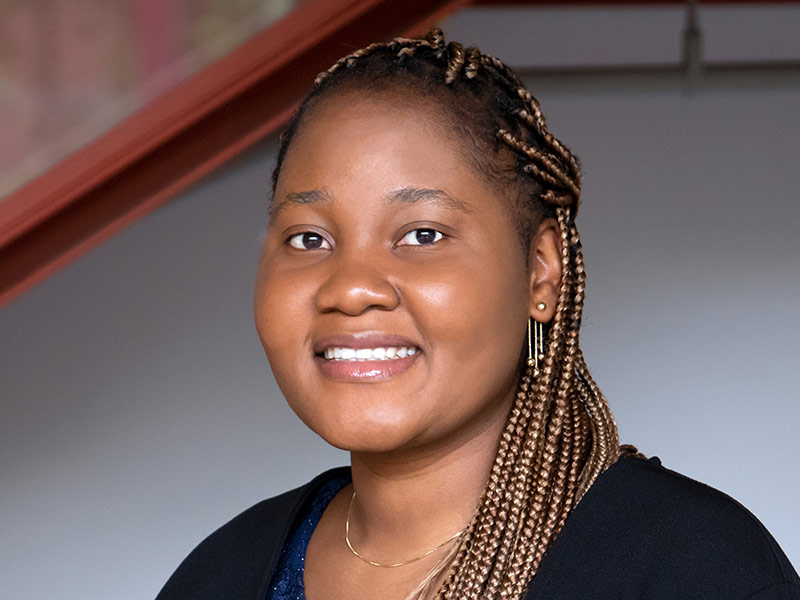
Ebenezer Fanijo

Ebenezer Fanijo's profile picture
ebenezer.fanijo@design.gatech.edu

Fanijo’s research centres around sustainable and smart-resilient buildings/civil infrastructure with a particular interest in decarbonizing infrastructure using novel low-carbon construction materials and alternative energy sources. Buildings contribute to more than one-third (39%) of the global energy-related CO2 emissions and 35% of global energy consumption, mainly from manufacturing, building materials and transportation. As such, advanced research on developing innovative construction materials is urgently required to address the carbon emissions from materials and construction processes of buildings' life cycle. His research approach includes examining the fresh properties and rheology, early-age cracking, microstructure evaluation, mechanical and durability performance, and life cycle assessment of building systems (particularly cementitious composites) made with these sustainable construction materials. 

He has also conducted research across different disciplines, including cementitious and concrete composites; corrosion monitoring and mitigation; concrete durability; green concrete technology using recycled and by-product materials; 3D printing of cementitious materials; highway pavement; geopolymers; fibre-reinforced concrete; advanced sensing technologies and automation; and non-destructive structural monitoring and evaluation. 

Fanijo received his B.S. in Building Construction with first-class honours from the Obafemi Awolowo University, Nigeria. In 2019, He earned an M.S. in Civil Engineering from the University of Idaho. Subsequently, he got his PhD in Civil Engineering (with a simultaneous Master’s degree – MEng in Material Science and Engineering) from Virginia Tech in 2022. He has worked on numerous funded research projects and published in various peer-reviewed journals and proceedings. Fanijo has also received numerous national and international awards for his excellence in research, with his recent NSBE Golden Torch Award recognized as the graduate student of the year 2022. 

At Georgia Tech, he is passionate about teaching construction materials and methods and their critical role in the design and construction of buildings. Fanijo developed and currently teaching the Construction Materials and Methods Course so that Building Construction students can have in-depth knowledge of building materials and systems, their properties, and their intrinsic relationship to structural systems and environmental performance. He also develops and teaches courses on Green Construction Technology, Concrete Durability and Sustainable Construction Materials and Techniques. 

Fanijo is a Professional Engineer (P.E.) and LEED Green Associate with more than five years of working experience in the construction sector.

Assistant Professor, School of Building Construction
Office
Caddell Building, 223

Eunhwa Yang

Eunhwa Yang's profile picture
eunhwa.yang@design.gatech.edu

Eunhwa Yang is an associate professor at the School of Building Construction, researching the reciprocal relationship between the built environment and human outcomes across various settings, including workplaces, university campuses, and homes. She employs Bronfenbrenner’s ecological systems theory, which proposes that human outcomes are constantly influenced by the nested structures of environments. Her contributions include workplace studies, facility operation and maintenance, sustainable building practices and operations, and cognitive aging-in-place. Eunhwa's work supports a diverse range of stakeholders, including office workers, university students, and older adults, as well as facility managers/owners, corporate real estate directors, and designers, in identifying optimal spatial design, usage, and operation.

Eunhwa has been actively involved with the International Facility Management Association (IFMA) and CoreNet Global. She has received a young researcher's best paper award and a workshop grant from International Association for People-Environmental Studies (IAPS) and multiple fellowships from the International Facility Management Association (IFMA). Eunhwa has taught and developed facility management-related courses at GT. She is an advocate of utilizing and exploring diverse teaching methods, including active learning, experiential learning, and service learning. She was a fellow at the Center for Teaching and Learning at GT and the Center for Teaching Excellence at Cornell and led workshops on student engagement, collaborative learning, and rubric development. Her master’s and doctoral students have been recognized in the field, winning the IFMA Foundation scholarships and CoreNet Global Academic Challenges. Eunhwa holds an MS in Building Construction and Facility Management from Georgia Tech and a Ph.D. in Human Behavior and Design from Cornell University.

Teaching Interest:

Dr. Yang’s teaching focuses on the principles of facility management service delivery; building operation and maintenance and their associated data analytics; safety and environmental issues that protect and promote occupant health and well-being; and research methods.

Research Interest:

Dr. Yang’s research can be organized into four primary threads: 1) workplace management and strategies for workplace optimization/efficiency, 2) smart facility operation and maintenance through data integration and post-occupancy evaluation (POE), 3) the adoption of sustainable building practices and operations, and 4) design and construction for aging and aging-in-place. Her research has made theoretical, methodological, and practical contributions to these topics, addressing human outcomes and the built environment in various settings, such as workplaces, university campuses, and homes.

List of Recent Scholarly Work:

1. Bilau, I., Koo, B., Fu, E., Chau, W., Kwon, H., & Yang, E. (2025). Visual accessibility through open shelving: Impacts on cognitive load, motivation, physical activity, and user perception in older adults with mild cognitive impairment. Journal of Aging and Environment, 1–28. https://doi.org/10.1080/26892618.2025.2576213

2. Shagar, M., Zeng, Q., Baru, A., Yang, E., & Pishdad, P. (2025). Systematic review of residential indoor environmental quality assessment surveys and the development of an exemplary novel survey identifying and analyzing tool. Building and Environment, 284, 113448. https://doi.org/10.1016/j.buildenv.2025.113448

3. Ma, J.H., Erdogmus, E., & Yang, E. (2025). A user-centered building design approach using immersive virtual reality and discrete choice modeling. Building and Environment, 284, 113400. https://doi.org/10.1016/j.buildenv.2025.113400  

4. Koo, B., Bilau, I., Rodriguez, A. D., Yang, E., & Kwon, H. (2025). Quantifying mild cognitive impairments in older adults using multi-model wearable sensor data in a kitchen environment. medRxiv: the preprint server for health sciences. https://doi.org/10.1101/2025.05.24.25328107

5. Machary, H., Motamed Rastegar, R., Gholami, Y., Yang, E., Little, E., Burke, M. A. M., Bilau, I., DuBose, J., & Zimring, C. (2025). Cognitive-aging-in-place: Home design factors influencing instrumental activities of daily living for older adults facing mild cognitive impairment. Journal of Aging and Environment, 1-27. https://doi.org/10.1080/26892618.2025.2506060

6. Yang, E., Chen, C., Li, K., Guo, K., Hua, Y., & Zhang, L. (2025). Challenges and strategies for energy performance contracting: A critical review. Journal of Building Design and Environment, 3(1), 202510. https://doi.org/10.70401/jbde.2025.0001

7. Zhang, X., Wang, Y., Yang, E., Xu, S., & Yu, Y. (2025). Sale to list ratio, for sale inventory, sale count, and housing value. International Journal of Housing Markets and Analysis, 18(2), 416-432. https://doi.org/10.1108/IJHMA-08-2023-0113

8. Zhang, X., Yang, E., & Wang, Y. (2025). Time series observation of relationship between United States private residential construction spending and its indicators. International Journal of Housing Markets and Analysis, 18(2), 317-333. https://doi.org/10.1108/IJHMA-07-2023-0096

9. Zhang, X., & Yang, E. (2025). Observation of relationship between housing value and the number of building permits in the United States using time series method. International Journal of Housing Markets and Analysis, 18(1), 106-122. https://doi.org/10.1108/IJHMA-06-2023-0085

10. Zhang, X., Yang, E., Huang, L., & Wang, Y. (2025). Incremental population density improvement via missing middle housing under density-based and form-based zoning ordinances. International Journal of Housing Markets and Analysis, 18(1), 87-105. https://doi.org/10.1108/IJHMA-06-2023-0074

11. Ma, J. H., Erdogmus, E., Kangisser, S. J., & Yang, E. (2025). A comparative analysis of the effectiveness of immersive virtual reality on end-user design review. Building and Environment, 267, 112237. https://doi.org/10.1016/j.buildenv.2024.112237


Degrees with Year of Award:

Ph.D. in Human Behavior and Design, Cornell University, February 2016
M.S. in Building Construction and Facility Management, Georgia Institute of Technology, December 2009
B.S. in Architectural Engineering, SungKyunKwan University, February 2005

Areas of Expertise

  • Energy efficiency in tenanted properties
  • Green leasing
  • Stakeholder engagement
  • Data analytics and facility management
  • Optimization of facility operation and maintenance
  • Healthy workplaces: occupant satisfaction, health, and well-being
  • Workplace strategies
  • Coworking spaces
Associate Professor, School of Building Construction
Phone
(404) 894-7103
Additional Research

Building Technologies

Baabak Ashuri

Baabak Ashuri's profile picture
baabak.ashuri@coa.gatech.edu

Baabak Ashuri is Executive Director of the Professional Master’s in Occupational Safety and Health (PMOSH), Professor of Civil and Environmental Engineering, Professor of Building Construction, and Fellow of the Brook Byers Institute for Sustainable Systems (BBISS) at Georgia Tech.  Dr. Ashuri’s research has advanced theoretical foundations and applications of data analytics, economic decision analysis, and quantitative methods for infrastructure systems and construction engineering and management, allowing other researchers to use his findings for enhancing the performance of infrastructure operations on several subdomains directly related to pre-construction decisions, e.g., artificial intelligence (AI) and design automation, alternative contracting methods (ACMs), infrastructure finance and public-private partnership (P3), and energy technology investments. Dr. Ashuri has 242 publications in these fields, including 86 refereed journal articles, 103 peer-reviewed conference papers, 50 research reports and guidebooks, 1 co-edited book, and 2 referred book chapters. Dr. Ashuri secured a funding amount of over $17M from the National Science Foundation (NSF), Federal Highway Administration (FHWA), Department of Energy (DOE), Build America Beurre (BAC), Georgia Department of Transportation (Georgia DOT), South Carolina Department of Transportation (SCDOT), Construction Industry Institute (CII), Royal Institution of Chartered Surveyors (RICS), Southeast Transportation Consortium (STC), Louisiana Transportation Research Center (LTRC), Turner Construction, and Perkins + Will, to name a few. Dr. Ashuri received many awards including the American Society of Civil Engineers (ASCE) (Thomas Fitch Rowland paper award), the American Association of State Highway and Transportation Officials (AASHTO) High Value Research “Sweet Sixteen” Award, and the Design-Build Institute of America (DBIA) (Distinguished Leadership – Faculty). Dr. Ashuri has chaired the ASCE Construction Research Council (CRC) and served on the ASCE Construction Institute (CI) Board of Governors. Dr. Ashuri serves as the Southern Region Director of the USDOT Build America Center (BAC), which leads cutting-edge research on the use of innovative financing, funding, and project delivery solutions.

Professor, School of Civil and Environmental Engineering, School of Building Construction
Phone
(404) 385-7608
Additional Research

Building Technologies; System Design & Optimization

Javier Irizarry

Javier Irizarry
javier.irizarry@coa.gatech.edu

Javier  Irizarry is a Professor, Director of CONECTech Lab, and Associate Dean for Academic Affairs and Outreach in the Georgia Tech School of Building Construction. As Associate Dean, Javier Irizarry has oversight of programs and initiatives for the College in the areas of academic affairs and outreach. In this role, Javier oversees the development and continuous improvement of academic offerings in the College through assessment and accreditation. Javier also oversees the College’s recruitment activities such as the pre-college summer program and is focused on addressing issues of diversity and inclusion in the College of Design academic disciplines.  

A pioneer of research on Uncrewed Aerial System applications in the built environment, Javier is Director of the CONECTech Lab at Georgia Tech, which aims to establish the Construction 4.0 framework for developing next-generation technology-enhanced solutions for construction problems. He has over 20 years of academic and industry experience and has authored over 100 academic articles. His research has been nationally and internationally recognized and focuses on construction information technologies including virtual and augmented reality, reality capture technology, and Uncrewed Aerial Systems application in the AEC domain. Javier is a registered Professional Engineer (PE) as well as a FAA Licensed Drone Pilot.

Research Interests:

Professor Irizarry’s research focuses on construction information technologies including virtual and augmented reality, reality capture technology, and Uncrewed Aerial Systems application in the AEC domain.

Teaching Interests:

Professor Irizarry’ teaching is focused on technology applications in the AEC domain at the undergraduate and graduate levels. Dr. Irizarry also teaches traditional construction management topics including construction safety, and project management. 

Educational Background:

  • Ph.D. (Civil Engineering), Purdue University, May 2005
  • Masters in Engineering Management, Polytechnic University of Puerto Rico, May 2000
  • B.S. (Civil Engineering), University of Puerto Rico, Mayagüez, May 1995

Recent Scholarly Output:

  1. Haonan Qi, Zhipeng Zhou,Javier Irizarry, Xiaopeng Deng, Yifan Yang, Nan Li, and Jianliang Zhou (2024) “Modification of HFACS model for path identification of causal factors of collapse accidents in the construction industry”Engineering, Construction and Architectural Management Journal, DOI 10.1108/ECAM-02-2023-0101
  2. Paes, D., Irizarry, J., Billinghurst, M., and Pujoni, D. (2023) “Investigating the relationship between Three-Dimensional Perception and Presence in Virtual Environments” Applied Ergonomics 109 (2023) 103953.
  3. Arantes, E., Andery, PRP., Andrade F., Paes, D., and Irizarry, J. (2022) “Development and analysis of an automated performance code checking workflow” Ambiente Construido.
  4. Mark Kahoush, Yosuke Yajima, Seongyong Kim, Jingdao Chen, Jisoo Park, Steven Kangisser, Javier Irizarry, Yong K Cho (2022) Analysis of Flight Parameters on UAV Semantic Segmentation Performance for Highway Infrastructure Monitoring Computing in Civil Engineering 2021
  5. Ruiz, R.D.B., Lordsleem Jr., A.C., Rocha, J.H.A. and Irizarry, J. (2021), “Unmanned aerial vehicles (UAV) as a tool for visual inspection of building facades in AEC+FM industry”, Construction Innovation, Vol. ahead-of-print No. ahead-of-print. https://doi.org/10.1108/CI-07-2021-0129
Professor, School of Building Construction
Associate Dean for Academic Affairs and Outreach, College of Design
Director, CONECTech Lab
Phone
(404) 385-7609
Additional Research

Building Technologies

Research Focus Areas

Pardis Pishdad

Pardis Pishdad's profile picture
pardis.pishdad@design.gatech.edu

Pardis Pishdad is a professor in the School of Building Construction in Georgia Tech's College of Design. She is the Director of the Smart Built Environment Eco-System (Smart Bees) Laboratory, which carries out research at the nexus of the cyber, physical, and behavioral systems.   

Pishdad’s research centers on innovative integrated strategies for sustainably creating and operating smart built-environments. She deploys life-cycle and holistic approaches to integrating Architecture/Engineering/Construction/Facility Management (AECFM) practices through the use of both innovative processes and technologies. Specifically, her research focuses on Innovative Project Delivery Methods (e.g., Integrated Project Delivery method (IPD), Flash Tracking, Lean), Digital Twin and Cyber-Physical Systems (e.g., Building Information Modeling (BIM), Internet of Things (IoT), Blockchain), Trust, and Supply Chain integration.

Pishdad holds a PhD degree in Environmental Design and Planning (Virginia Tech), three Master’s degrees in the fields of Civil Engineering (Virginia Tech), Design Studies on Project Management (Harvard), Architecture (University of Tehran), a Bachelor degree in Architectural Engineering (Azad University of Shiraz), a Diploma in Science from the National Organization for Development of Exceptional Talents (NODET).

Pishdad has been the recipient of numerous international, national, and regional awards for her excellence in research and teaching, namely: Construction Management Association of America National Educator of the Year Award (2018), Engineering News-Record (ENR) National Top 20 Under 40 Professionals (2018), ENR Southeast Young Professionals (2018), Construction Industry Institute (CII) National Outstanding Researcher Award (2016), Georgia Tech College of Design Outstanding Faculty Award (2016), Associated Schools of Construction (ASC) National Excellence Teaching Award (2014), ASC Regional Excellence Teaching Award (2013), and Virginia Tech VCEMP Alumni Award (2019), Georgia Tech  Provost Teaching Learning Fellow (2020-2022).

Her industry experience includes her employment with Turner Construction Company and Tishman Construction Corporation. Pishdad’s sponsored research projects—with the Construction Industry Institute (CII), The Georgia Department of Transportation (GDOT), and The Virginia Department of Transportation (VDOT)—have kept her closely involved with industry professionals. Her research on Flash Tracking is integrated into practice by these sponsors.

Pishdad is currently the Academic Advisor for the Construction Industry Institute’s (CII) Community of Business Advancement (CBA) on Supply Chain Management. She is also appointed as the Vice Chair for 5D Modeling Estimating Taskforce of BIM Forum of BuildingSMART International. She had also served as the Academic Advisor to the Construction Management Association of America’s Board of Directors for two years 2016-2018.

Areas of Expertise

  • Integrated Project Delivery (IPD)
  • Flash Tracking
  • BIM for Facility Management
  • Internet-of-Things and Smart Built Environment
  • Alternative Project delivery and contracting strategies
  • Trust-building in construction contracting
  • BIM 3D/4D/5D design
  • Life cycle Cost Analysis and Machine Learning
  • Lean construction
Professor, School of Building Construction
Director, Smart Built Environment Eco-System (Smart Bees) Laboratory
Graduate Program Director, School of Building Construction
Phone
(404) 894-7100

Omobolanle Ogunseiju

Omobolanle Ogunseiju's profile picture
omobolanle@gatech.edu

Omobolanle Ogunseiju is an assistant professor in the School of Building Construction, at Georgia Tech. Omobolanle received her Ph.D. in Environmental Design and Planning, from the Department of Building Construction, at Virginia Tech.

Her research interests focus on advancing workforce development (safety, health, and well-being), and developing smart communities through the application of wearable robots and Artificial Intelligence (enabled by digital twin, cyber-physical systems, data sensing, and reality capture technologies). She is particularly interested in understanding and shaping the human–technological dynamics involved in workforce development, safety, and health, especially within the construction sector. This includes understanding the ethical concerns of automation and robotics in the construction industry.

Omobolanle is an active member of the Diversity and Inclusion Council at the College of Design. During her Ph.D. studies, Omobolanle was recognized as the outstanding doctoral candidate at the Myers Lawson school of construction, and the outstanding doctoral student in the College of Architecture and Urban Studies at Virginia Tech.

She believes that the next generation of construction engineers should be trained to serve as innovators, risk managers, and leaders that shape public policy. As such, Omobolanle believes that teaching should be based on promoting experiential learning amongst students, applying a variety of engagement techniques, and providing hierarchical learning assessments. Omobolanle developed and teaches Construction Cost Management at the School of Building Construction, Georgia Tech, and will teach and develop Construction Technology courses in the coming semesters. She had the opportunity to teach course sections and conduct laboratories in Smart Construction, Building Systems Technology, and Wireless Sensing in Construction Management as a graduate teaching assistant at Virginia Tech.

Assistant Professor
Phone
404.894.7102
Office
Caddell Building, Rm 233
Additional Research
  • Construction Automation
  • Construction Robotics
  • Construction Safety 
  • Data Analytics 
  • Workforce Development
IRI And Role
Google Scholar
https://scholar.google.com/citations?hl=en&user=LrB4zNsAAAAJ&view_op=list_works&sortby=pubdate