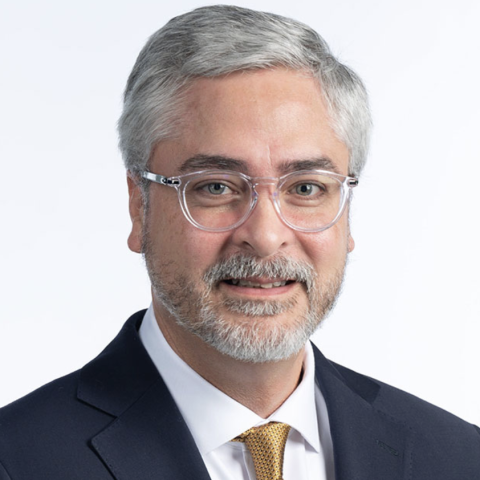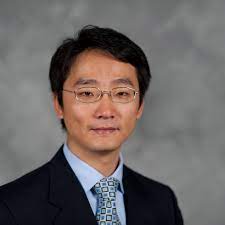
Rusty Roberts

Rusty  Roberts's profile picture
rusty.roberts@gtri.gatech.edu

Rusty Roberts is the Director of the Aerospace, Transportation and Advanced Systems (ATAS) Laboratory at the Georgia Tech Research Institute (GTRI). ATAS develops advanced systems concepts, builds system prototypes, and performs research on technologies related to aerospace, transportation, power and energy, threat systems, and food processing. A nationally recognized expert in test and evaluation, Roberts has held the position of the President of the International Test and Evaluation Association (ITEA). He also started and presently leads a GTRI-wide test and evaluation initiative that brought together the resources to provide Science & Technology support to the Office of the Secretary of Defense Test Resource Management Center. Mr. Roberts has also worked with U.S. government officials to establish key requirements for the testing of U.S. electronic countermeasures against surface-to-air missile threats and has been able to provide solutions developed by GTRI. Solutions included the threat replica of a medium range surface-to-air missile (SAM) acquisition radar for the U.S. Army and the Advanced Airborne Interceptor Simulator (AAIS) for the U.S. Air Force. He also led the efforts that developed the Missle-on-a-Mountain program at the Electronic Combat Range in China Lake, California. This one-of-a-kind simulation facility has been called a key national asset in testing electronic countermeasures against surface-to-air missle systems. The facility is in high demand by the U.S. Navy, U.S. Air Force, and allied air forces. Prior to joining GTRI, Mr. Roberts served as an active duty U.S. Army Signal Corps officer for ten years, with assignments at Fort Gordon, GA and Kaiserslautern, Germany. His last assignment was at the U.S. Military Academy at West Point as an Assistant Professor in the Department of Electrical Engineering teaching Electronic Circuit Design. During his tour at West Point he became the Course Director for the Senior-level, two-semester electronics course for the Department. Mr. Roberts continued to serve in the Army Reserve after leaving Active Duty while at GTRI. Roberts holds a Bachelor of Science degree in Electrical Engineering from West Point, a Master of Science degree in Electrical Engineering from the Georgia Institute of Technology, and a Maste

Director, Aerospace, Transportation and Advanced Systems (ATAS) Laboratory, Georgia Tech Research Institute
Phone
404.407.7826
Additional Research

Autonomy; Transportation; Smart Infrastructure

Research Focus Areas
GTRI
Geogia Tech Research Institute

Edmond Chow

 Edmond Chow's profile picture
echow@cc.gatech.edu

Edmond Chow is a Professor in the School of Computational Science in the College of Computing. He previously held positions at D. E. Shaw Research and Lawrence Livermore National Laboratory. His research is in developing and applying numerical methods and high-performance computing to solve large-scale scientific computing problems and seeks to enable scientists and engineers to solve larger problems more efficiently using physical simulation. Specific interests include numerical linear algebra (preconditioning, multilevel methods, sparse matrix computations) and parallel methods for quantum chemistry, molecular dynamics, and Brownian/Stokesian dynamics.  Chow earned an Honors B.A.Sc. in systems design engineering from the University of Waterloo, Canada, in 1993, and a Ph.D. in computer science with a minor in aerospace engineering from the University of Minnesota in 1997. Chow was awarded the 2009 ACM Gordon Bell prize and the 2002 Presidential Early Career Award for Scientists and Engineers (PECASE).

Professor, School of Computational Science and Engineering
Phone
404.894.3086
Office
CODA S1311
Additional Research

High performance computing, materials, data Sciences, cyber/ information technology, quantum information sciences

Google Scholar
https://scholar.google.com/citations?hl=en&user=jGqGKGMAAAAJ&view_op=list_works&sortby=pubdate

Peter Loutzenhiser

Peter Loutzenhiser's profile picture
peter.loutzenhiser@me.gatech.edu
Professor, Woodruff School of Mechanical Engineering
Interim Director of Graduate Studies, Woodruff School of Mechanical Engineering
Phone
(404) 894-3012
Additional Research

Energy Storage; Gasification; Hydrogen; Solar

University, College, and School/Department

J. David Frost

J. David Frost's profile picture
david.frost@ce.gatech.edu

James David Frost is the Elizabeth and Bill Higginbotham Professor of civil engineering. He received B.A.I and B.A. degrees in civil engineering and mathematics, respectively, from Trinity College, Dublin, Ireland in 1980 and M.S. and Ph.D. degrees in civil engineering in 1986 and 1989 from Purdue University. Prior to serving as a member of the faculty at Purdue University and Georgia Tech, he worked in industry in Ireland and Canada on a range of natural resource related projects ranging from tailings impoundments to artificial sand islands in the Arctic for oil exploration. At Georgia Tech, where he has been for almost 20 years, he has served as head of the Geosystems Engineering Group and as founding director of the Georgia Tech Regional Engineering Program and subsequently the Georgia Tech Savannah campus.

Elizabeth and Bill Higginbotham Professor, School of Civil and Environmental Engineering
Group Coordinator, Geosystems Engineering Group
Phone
404.894.2280
Office
Mason 2285
Additional Research

Micro and nanomechanics, geomaterials, composites, sustainable communities

Research Focus Areas
Google Scholar
https://scholar.google.com/citations?hl=en&user=OX7qw9MAAAAJ&view_op=list_works&sortby=pubdate

Martin Mourigal

Martin Mourigal's profile picture
mourigal@gatech.edu

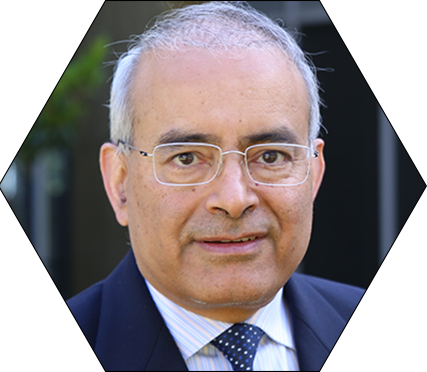
Martin Mourigal received the B.S in Materials from Ecole des Mines de Nancy in 2004. He later received his M.S. and Ph.D. in physics from Ecole Polytechnique Federale (EPFL) located in Lausanne, Switzerland in 2007 and 2011, respectively. He was also a postdoctoral research fellow in John Hopkins University from 2011 until 2014. He joined Georgia Tech in 2015 and is currently an assistant professor in the School of Physics. Mourigal's lab focuses on the study of collective electronic and magnetic phenomena in quantum materials. His research exploits the unique strengths of neutron and X-ray scattering to probe the organization and the dynamics of matter at the nanoscale.In addition to his own lab research, Mourigal is the co-director of the Georgia Tech Quantum Alliance, a university wide program that will work towards solving problems in optimization, cryptography, and artificial intelligence. Mourigal was awarded the Cullen Peck Faculty Scholar Award from Georgia Tech in 2019. He was also awarded the National Science Foundation CAREER Award for excellence as a young educator and researcher in 2018.

Professor, School of Physics
Initiative Lead, Georgia Tech Quantum Alliance
Phone
404.385.5669
Office
Howey C202
Additional Research

Quantum Materials, Micro and Nanomechanics, Ferroelectronic Materials, Materials Data Sciences, Electronics

University, College, and School/Department
Google Scholar
https://scholar.google.com/citations?hl=en&user=utYY3jYAAAAJ&view_op=list_works&sortby=pubdate

Rampi Ramprasad

Rampi Ramprasad's profile picture
rampi.ramprasad@mse.gatech.edu

Ramprasad joined the School of Materials Science and Engineering at Georgia Tech in February 2018. Prior to joining Georgia Tech, he was the Centennial Term Professor of Materials Science and Engineering at the University of Connecticut. He joined the University of Connecticut in Fall 2004 after a 6-year stint with Motorola’s R&D laboratories at Tempe, AZ. Ramprasad received his B. Tech. in Metallurgical Engineering at the Indian Institute of Technology, Madras, India, an M.S. degree in Materials Science and Engineering at the Washington State University, and a Ph.D. degree also in Materials Science and Engineering at the University of Illinois, Urbana-Champaign.

Ramprasad’s area of expertise is in the development and utilization of computational and data-driven (machine learning) methods aimed at the design and discovery of new materials. Materials classes under study include polymers, metals and ceramics (mainly dielectrics and catalysts), and application areas include energy production and energy storage. Prof. Ramprasad’s research has been funded by the Office of Naval Research (ONR), the National Science Foundation (NSF), the Department of Energy (DOE), the Army Research Office (ARO), and Toyota Research Institute (TRI). He has lead a ONR-sponsored Multi-disciplinary University Research Initiative (MURI) in the past to accelerate the discovery of polymeric capacitor dielectrics for energy storage, and is presently leading another MURI aimed at the understanding and design of dielectrics tolerant to enormous electric fields.

Ramprasad is a Fellow of the American Physical Society, an elected member of the Connecticut Academy of Science and Engineering, and the recipient of the Alexander von Humboldt Fellowship and the Max Planck Society Fellowship for Distinguished Scientists.

Michael E. Tennenbaum Family Chair, Materials Science and Engineering
Georgia Research Alliance Eminent Scholar in Energy Sustainability
Phone
404.385.2471
Office
Love 366
Additional Research

Data Analytics; Materials discovery; Energy Storage; Modeling; Electronic Materials; Electronics

University, College, and School/Department