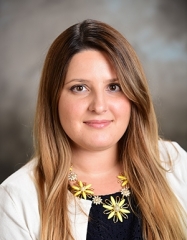
Nazanin Bassiri-Gharb

Nazanin Bassiri-Gharb's profile picture
nazanin.bassirigharb@me.gatech.edu

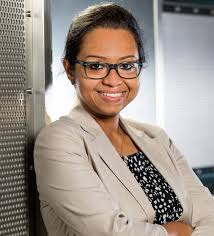
Nazanin Bassiri-Gharb joined Georgia Tech in summer 2007 as an assistant professor at the George W. Woodruff School of Mechanical Engineering. Prior to this, she was a senior engineer in the materials and device R&D group of MEMS Research and Innovation Center at QUALCOMM MEMS Technologies, Inc. Her work included characterization and optimization of optical and electric response of IMOD displays and research on novel materials for improved processing and reliability of IMOD. Bassiri-Gharb's research interests are in smart and energy-related materials (e.g. ferroelectric and multiferroic materials) and their application to nano- and micro-electromechanical systems. Her research projects integrate novel micro and nanofabrication techniques and processes and study of the fundamental science of these materials at the nanoscale, at the interface of physical and electrochemical phenomena.

Harris Saunders, Jr. Chair and Professor, School of Mechanical Engineering
Phone
404.385.0667
Office
Love 315
Additional Research
  • Ferroelectronic Materials
  • Functional Materials
  • In-Situ Characterization
  • Piezoelectronic Materials
  • Multiscale Modeling
  • Organic Electronics
Google Scholar
https://scholar.google.com/citations?hl=en&user=2hwd9xAAAAAJ

Rosa Arriaga

Rosa Arriaga's profile picture
arriaga@cc.gatech.edu

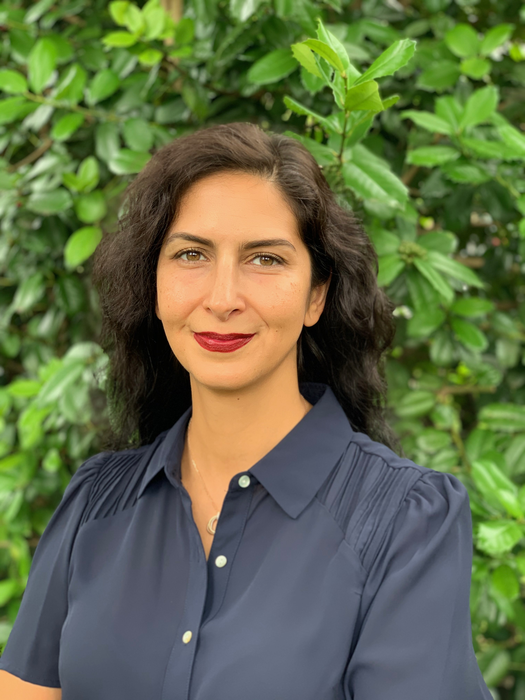
Arriaga is a Human Computer Interaction (HCI) researcher in the School of Interactive Computing. She uses psychological concepts, theories and methods to address fundamental topics of HCI and Social Computing. Her current research interests are in the area of chronic care management and mental health. She designs mHealth systems that address gaps in chronic care and mental health management. The computational systems she designs: foster engagement, facilitate continuity of care, promote patient self-advocacy, and mediate communication between patient and healthcare providers.

Associate Professor
Phone
404-385-4239
Additional Research
  • Bioinformatics
  • Chronic Care Management
  • Developmental Psychology
  • Human-Computer Interaction
Research Focus Areas

Srinivas Aluru

Srinivas Aluru's profile picture
aluru@cc.gatech.edu

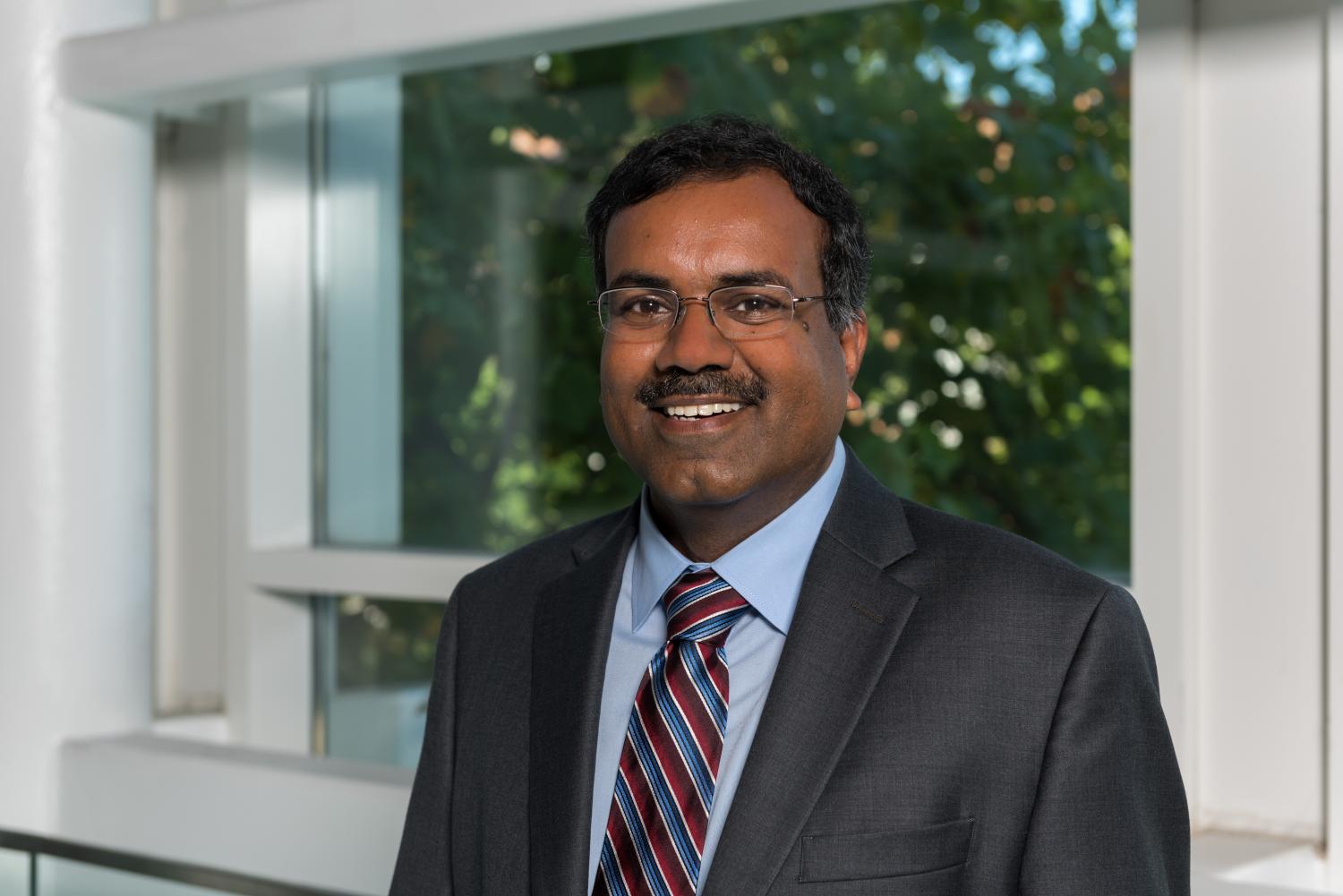
Srinivas Aluru is executive director of the Institute for Data Engineering and Science (IDEaS) and professor in the School of Computational Science and Engineering at Georgia Institute of Technology. He co-leads the NSF South Big Data Regional Innovation Hub which nurtures big data partnerships between organizations in the 16 Southern States and Washington D.C., and the NSF Transdisciplinary Research Institute for Advancing Data Science. Aluru conducts research in high performance computing, large-scale data analysis, bioinformatics and systems biology, combinatorial scientific computing, and applied algorithms. An early pioneer in big data, Aluru led one of the eight inaugural mid-scale NSF-NIH Big Data projects awarded in the first round of federal big data investments in 2012. He has contributed to NITRD and OSTP led white house workshops, and NSF and DOE led efforts to create and nurture research in big data and exascale computing. He is a recipient of the NSF Career award, IBM faculty award, Swarnajayanti Fellowship from the Government of India, the John. V. Atanasoff Discovery Award from Iowa State University, and the Outstanding Senior Faculty Research Award, Dean's award for faculty excellence, and the Outstanding Research Program Development Award at Georgia Tech. He is a Fellow of AAAS, IEEE, and SIAM, and is a recipient of the IEEE Computer Society Golden Core and Meritorious Service awards.

Sr. Assoc. Dean, College of Computing
Professor, College of Computing
Co-Lead PI, NSF South Big Data Regional Innovation Hub
Phone
404.385.1486
Additional Research
  • Bioinformatics
  • Systems Biology
  • Combinatorial Scientific Computing
  • Applied Algorithms
Google Scholar
https://scholar.google.com/citations?hl=en&user=YOGOScoAAAAJ&view_op=list_works&sortby=pubdate

Ghassan AlRegib

Ghassan AlRegib's profile picture
alregib@gatech.edu

Prof. AlRegib is currently the John and Marilu McCarty Chair Professor in the School of Electrical and Computer Engineering at the Georgia Institute of Technology. His group is the Omni Lab for Intelligent Visual Engineering and Science (OLIVES) at Georgia Tech. In 2012, he was named the Director of Georgia Tech’s Center for Energy and Geo Processing (CeGP). He is the director of the Center for Signal and Information Processing (CSIP). He also served as the Director of Georgia Tech’s Initiatives and Programs in MENA between 2015 and 2018. He has authored and co-authored more than 300 articles in international journals and conference proceedings. He has been issued several U.S. patents and invention disclosures. He is a Fellow of the IEEE.

Prof. AlRegib received the ECE Outstanding Graduate Teaching Award in 2001 and both the CSIP Research and the CSIP Service Awards in 2003. In 2008, he received the ECE Outstanding Junior Faculty Member Award. In 2017, he received the 2017 Denning Faculty Award for Global Engagement. He and his students received the Beat Paper Award in ICIP 2019. He received the 2024 ECE Distinguished Faculty Achievement Award at Georgia Tech. He and his students received the Best Paper Award in ICIP 2019 and the 2023 EURASIP Best Paper Award for Image communication Journal.

Prof. AlRegib participated in a number of activities. He has served as Technical Program co-Chair for ICIP 2020 and ICIP 2024. He served two terms as a member of the IEEE SPS Technical Committees on Multimedia Signal Processing (MMSP) and Image, Video, and Multidimensional Signal Processing (IVMSP), 2015-2017 and 2018-2020. He was a member of the Editorial Boards of both the IEEE Transactions on Image Processing (TIP), 2009-2022, and the Elsevier Journal Signal Processing: Image Communications, 2014-2022. He was a member of the editorial board of the Wireless Networks Journal (WiNET), 2009-2016 and the IEEE Transaction on Circuits and Systems for Video Technology (CSVT), 2014-2016. He was an Area Chair for ICME 2016/17 and the Tutorial Chair for ICIP 2016. He served as the chair of the Special Sessions Program at ICIP’06, the area editor for Columns and Forums in the IEEE Signal Processing Magazine (SPM), 2009–12, the associate editor for IEEE SPM, 2007-09, the Tutorials co-chair in ICIP’09, a guest editor for IEEE J-STSP, 2012, a track chair in ICME’11, the co-chair of the IEEE MMTC Interest Group on 3D Rendering, Processing, and Communications, 2010-12, the chair of the Speech and Video Processing Track at Asilomar 2012, and the Technical Program co-Chair of IEEE GlobalSIP, 2014. He lead a team that organized the IEEE VIP Cup, 2017 and the 2023 IEEEE VIP Cup. He delivered short courses and several tutorials at international events such as BigData, NeurIPS, ICIP, ICME, CVPR, AAAI, and WACV.

In the Omni Lab for Intelligent Visual Engineering and Science (OLIVES), he and his group work on robust and interpretable machine learning algorithms, uncertainty and trust, and human in the loop algorithms. The group studies interventions into AI systems to enhance their trustworthiness. The group has demonstrated their work on a wide range of applications such as Autonomous Systems, Medical Imaging, and Subsurface Imaging. The group is interested in advancing the fundamentals as well as the deployment of such systems in real-world scenarios. His research group is working on projects related to machine learning, image and video processing, image and video understanding, subsurface imaging, perception in visual data processing, healthcare intelligence, and video analytics. The primary applications of the research span from Autonomous Vehicles to Portable AI-based Ophthalmology and Eye Exam and from Microscopic Imaging to Seismic Interpretation. The group was the first to introduce modern machine learning to seismic interpretation.

In 2024, and after more than three years of continuous work, he co-founded Georgia Tech’s AI Makerspace. The AI Makerspace is a resource for the entire campus community to access AI. Its purpose is to democratize access to AI. Together with his team, they are developing tools and services for the AI Makerspace via a VIP Team called AI Makerspace Nexus. In addition, he created two AI classes from scratch with innovative hands-on exercises using the AI Makerspace. One class is the ECE4252/8803 FunML class (Fundamentals of Machine Learning) where students learn the basics of Machine Learning as well as eight weeks of Deep learning both mathematically and using hands-on exercises on real-world data. The second class is a sophomore-level AI Foundations class (AI First) that teaches any student from any college the basics of AI such as data literacy, learning, decision, planning, and ethics using theory and hands-on exercises on the AI Makerspace. Prof. AlRegib wrote two textbooks for both classes.

Prof. AlRegib has provided services and consultation to several firms, companies, and international educational and R&D organizations. He has been a witness expert in a number of patents infringement cases and Inter Partes Review (IRP) cases.

John and Marilu McCarty Chair Professor, School of Electrical and Computer Engineering
Center Director
Phone
404-894-7005
Office
Centergy-One Room 5224
Additional Research
  • Machine learning
  • Trustworthy AI
  • Explainable AI (XAI)
  • Robust Learning Systems
  • Multimodal Learning
  • Annotations Diversity in AI Systems
Google Scholar
https://scholar.google.com/citations?hl=en&user=7k5QSdoAAAAJ&view_op=list_works

Raheem Beyah

Raheem Beyah's profile picture
rbeyah@ece.gatech.edu

Raheem Beyah, Ph.D., is associate chair for Strategic Initiatives and Innovation, and the Motorola Foundation Professor in the School of Electrical & Computer Engineering at the Georgia Institute of Technology. His research is at the intersection of the networking and security fields. He leads the Georgia Tech Communications Assurance and Performance Group (CAP), which develops algorithms that enable a more secure network infrastructure with computer systems that are more accountable and less vulnerable to attacks. Through experimentation, simulation, and theoretical analysis, CAP provides solutions to current network security problems and to long-range challenges as current networks and threats evolve. Dr. Beyah has served as guest editor and associate editor of several journals in the areas of network security, wireless networks, and network traffic characterization and performance. He received the National Science Foundation CAREER award in 2009 and was selected for DARPA's Computer Science Study Panel in 2010. He is a member of NSBE, ASEE, and is a senior member of IEEE and ACM. Beyah is a native of Atlanta, Georgia. He received his Bachelor of Science in Electrical Engineering from North Carolina A&T State University in 1998. He received his Master's and Ph.D. in Electrical and Computer Engineering from Georgia Tech in 1999 and 2003, respectively. Prior to returning to Georgia Tech, Dr. Beyah was a faculty member in the Department of Computer Science at Georgia State University, a research faculty member with the Georgia Tech Communications Systems Center (CSC), and a consultant in Andersen Consulting's (now Accenture) Network Solutions Group.

Dean, College of Engineering
Motorola Foundation Professor
Phone
404.894.2531
Office
KACB 2308
Additional Research
  • Mobile & Wireless Communications
  • Network Science

Yongsheng Chen

Yongsheng Chen's profile picture
yongsheng.chen@ce.gatech.edu

Chen has an extensive research interests in environmental science and engineering. More specifically, he is a leading researcher in the environmental applications of nanomaterials and their potential fate, transport, transformation, bioaccumulation and toxicity in the environment. His interests in environmental nanomaterials dated back in his graduate research in 1992. He has also been active on algae based bio-renewable energy and sustainable urban development. Chen has been principle and co-principal investigators for 28 research projects (by June 2010) funded by the National Science Foundation, U.S. Environmental Protection Agency, NASA, Boeing and other organizations. The total funds are $7 million. He has also served as a review member or panel review member in the U.S. National Science Foundation, the U.S. Environmental Protection Agency, the U.S. Department of Energy evaluation committee. He has also been invited to serve as an abroad review expert for the China Changjiang Scholars Program (which is to awarded to the top researchers in China). He has published more than 40 papers and two book chapters in this field.

Chen received his Ph.D in Nankai University, China. He joined the Georgia Tech School of Civil and Environmental Engineering in May 2009.

Bonnie W. and Charles W. Moorman IV Professor, School of Civil and Environmental Engineering
Phone
(404) 894-3089
Office
Daniel Environmental Engineering Laboratory, Room 206
Additional Research

Biofuels; Separations Technology; Water

University, College, and School/Department

Polo Chau

Polo Chau's profile picture
polo@gatech.edu

Duen Horng "Polo" Chau, Ph.D., is a professor at Georgia Tech’s School of Computational Science and Engineering, and an Associate Director of the MS Analytics program. He holds a Ph.D. and Master's in Machine Learning from Carnegie Mellon University, where his doctoral thesis won CMU’s Computer Science Dissertation Award, Honorable Mention. Chau has received faculty awards from Google, Yahoo, and LexisNexis. He also received the Raytheon Faculty Fellowship, Edenfield Faculty Fellowship, Outstanding Junior Faculty Award. He is the only two-time Symantec fellow and an award-winning designer. Chau’s research lab  -- the Polo Club of Data Science -- bridges data mining and HCI to solve large-scale, real-world problems by developing scalable, interactive, and interpretable tools for big data analytics. The group's "Polonium" malware detection technology (patented with Symantec) protects 120 million people worldwide. Its auction fraud detection research was widely covered by media, and its fake-review-detection research received the “Best Student Paper” award at the 2014 SIAM Data Mining Conference. Other work has addressed content spam, insider trading, and unauthorized mobile device access. He co-organized the IDEA workshop series at KDD that facilitate cross-pollination across HCI and data mining. He served as general chair for ACM IUI 2015 and was a steering committee member of the conference.

Professor
Associate Director, MS in Analytics
Phone
404.385.7682
Office
KACB 1324
Additional Research
  • Data Mining & Analytics
  • Machine Learning; Threat Intelligence
  • Cyber/ Information Technology
  • Computer Interaction
  • Cybersecurity
  • Visualization
University, College, and School/Department

Robert Butera

Robert Butera's profile picture
rbutera@gatech.edu
Chief Research Operations Officer
Professor
Phone
404-894-2935
Office
UAW 3111
Additional Research

Neuromodulation of peripheral nerve activity real-time control methods applied to electrophysiology measurements Autonomic modulation of visceral organs. Our laboratory combines engineering and neuroscience to tackle real-world problems. We utilize techniques including intracellular and extracellular electrophysiology, computational modeling, and real-time computing.

Research Focus Areas
Google Scholar
https://scholar.google.com/citations?hl=en&user=_DT8jHD7dGYJ&view_op=list_works&sortby=pubdate

Fani Boukouvala

Fani Boukouvala's profile picture
fani.boukouvala@chbe.gatech.edu

Dr. Boukouvala is originally from Piraeus, which is the port of Athens in Greece. As the daughter of an airforce pilot, she travelled a lot with her family. Her first international move was actually to the USA, where she spent one year in Montgomery, Alabama. She later on lived in Riyadh, Saudi Arabia and Crete, Greece, before returning to Athens to get her B.S Degree in Chemical Engineering from the National Technical University in Athens. In 2008, she moved back to the US to obtain a PhD in Chemical Engineering at Rutgers University in NJ. She then worked as a Postdoctoral Associate in both Princeton University and Texas A&M University. In August 2016, Dr. Boukouvala returned to the South East US, as an Assistant Professor in the School of Chemical & Biomolecular Engineering at Georgia Tech. 

Her research interest in Process Systems Engineering (PSE) started during her PhD years, where she worked under the supervision of Dr. Marianthi Ierapetritou, on modeling and optimization of continuous pharmaceutical manufacturing. Her background on optimization and data-driven modeling was enhanced during her years as a postdoc with the late Christodoulos A. Floudas. Dr. Boukouvala is a proud 4th generation member of the academic family tree of the father of PSE, Roger Sargent.

Associate Professor, School of Chemical and Biomolecular Engineering
Phone
(404) 385-5371
Additional Research

System Design & Optimization; Energy; Sustainability

Google Scholar
https://scholar.google.com/citations?hl=en&user=tyO6KxAAAAAJ&view_op=list_works&sortby=pubdate

Mark Borodovsky

Mark Borodovsky's profile picture
borodovsky@gatech.edu

Dr. Borodovsky and his group develop machine learning algorithms for computational analysis of biological sequences: DNA, RNA and proteins. Our primary focus is on prediction of protein-coding genes and regulatory sites in genomic DNA. Probabilistic models play an important role in the algorithm framework, given the probabilistic nature of biological sequence evolution.

Regents' Professor
Director, Center for Bioinformatics and Computational Genomics
Senior Advisor in Bioinformatics, Division of High Consequence Pathogens and Pathology, Centers for Disease Control and Prevention in Atlanta
Phone
404-894-8432
Office
EBB 2105
Additional Research
  • ML and pattern recognition methods in bioinformatics and biological systems
  • Chromatin
  • Epigenetics
  • Bioinformatics
Google Scholar
https://scholar.google.com/citations?user=ciQ3dn0AAAAJ&hl=en&oi=ao