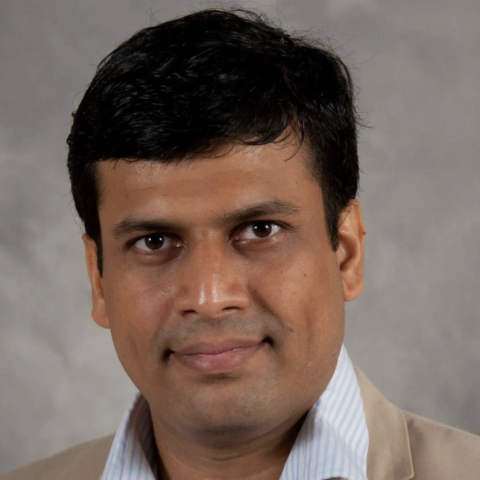
Pascal Van Hentenryck

Pascal Van Hentenryck's profile picture
pascal.vanhentenryck@isye.gatech.edu

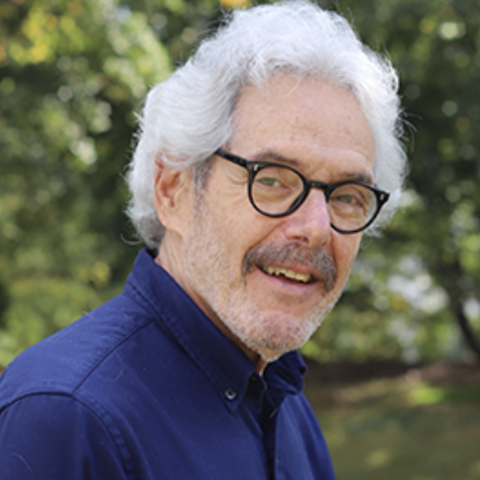
Pascal Van Hentenryck is an A. Russell Chandler III Chair and Professor in the H. Milton Stewart School of Industrial and Systems Engineering at Georgia Tech. Prior to this appointment, he was a professor of Computer Science at Brown University for about 20 years, he led the optimization research group (about 70 people) at National ICT Australia (NICTA) (until its merger with CSIRO), and was the Seth Bonder Collegiate Professor of Engineering at the University of Michigan. Van Hentenryck is also an Honorary Professor at the Australian National University.

Van Hentenryck is a Fellow of AAAI (the Association for the Advancement of Artificial Intelligence) and INFORMS (the Institute for Operations Research and Management Science). He has been awarded two honorary doctoral degrees from the University of Louvain and the university of Nantes, the IFORS Distinguished Lecturer Award, the Philip J. Bray Award for teaching excellence in the physical sciences at Brown University, the ACP Award for Research Excellence in Constraint Programming, the ICS INFORMS Prize for Research Excellence at the Intersection of Computer Science and Operations Research, and an NSF National Young Investigator Award. He received a Test of Time Award (20 years) from the Association of Logic Programming and numerous best paper awards, including at IJCAI and AAAI. Van Hentenryck has given plenary/semi-plenary talks at the International Joint Conference on Artificial Intelligence (twice), the International Symposium on Mathematical Programming, the SIAM Optimization Conference, the Annual INFORMS Conference, NIPS, and many other conferences. Van Hentenryck is program co-chair of the AAAI’19 conference, a premier conference in Artificial Intelligence.

Van Hentenryck’s research focuses in Artificial Intelligence, Data Science, and Operations Research. His current focus is to develop methodologies, algorithms, and systems for addressing challenging problems in mobility, energy systems, resilience, and privacy. In the past, his research focused on optimization and the design and implementation of innovative optimization systems, including the CHIP programming system (a Cosytec product), the foundation of all modern constraint programming systems and the optimization programming language OPL (now an IBM Product). Van Hentenryck has also worked on computational biology, numerical analysis, and programming languages, publishing in premier journals in these areas.

Van Hentenryck runs the Seth Bonder summer Camp in Computational and Data Science for middle- and high-school students every summer. 

Director, AI Institute for Advances in Optimization
A. Russell Chandler III Chair, School of Industrial and Systems Engineering
Professor, School of Industrial and Systems Engineering
Phone
(404) 385-5538
Additional Research

Electric Vehicles

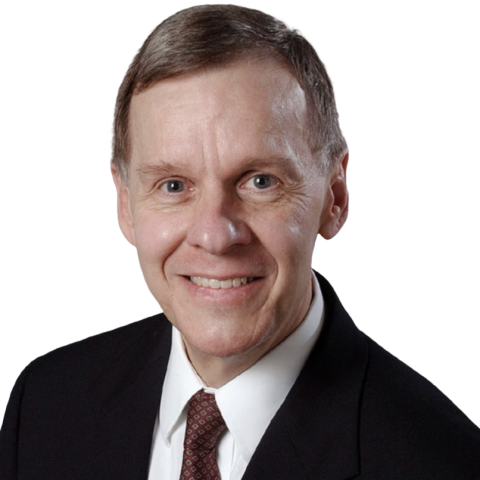
T. Robert Harris

T. Robert Harris's profile picture

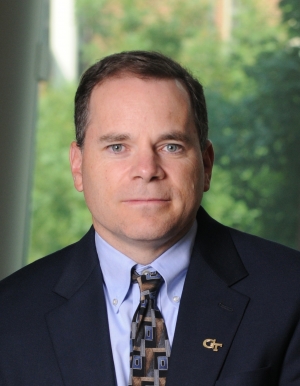
Robert Harris' background is in semiconductors and microelectronics. He serves as research faculty at the Georgia Tech Research Institute in the Electro-Optical Systems Laboratory and teach in the School of Electrical and Computer Engineering at Georgia Tech. His research focus is on photonic integrated circuits, heterogeneous integration, electronic warfare, and RF electronics.

Senior Research Engineer, Georgia Tech Research Institute
Phone
404.407.8290
Additional Research

Thermoelectric materials, integrated photonics, advanced characterization, compund semiconductors

Research Focus Areas
University, College, and School/Department

Dimitri Mavris

Dimitri Mavris's profile picture
dimitri.mavris@aerospace.gatech.edu

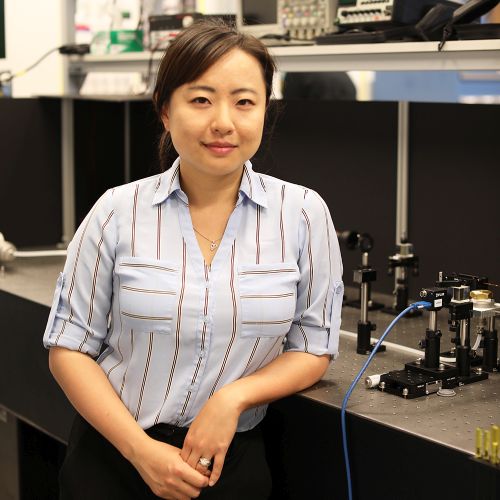
Dimitri Mavris is a Regents’ Professor, Boeing Professor of Advanced Aerospace Systems Analysis, and an S.P. Langley Distinguished Professor. He also serves as the director of the Aerospace Systems Design Laboratory (ASDL) and executive director of the Professional Master’s in Applied Systems Engineering (PMASE). Dr. Mavris received his B.S., M.S., and Ph.D. in aerospace engineering from the Georgia Institute of Technology. His primary areas of research interest include: advanced design methods, aircraft conceptual and preliminary design, air-breathing propulsion design, multi-disciplinary analysis, design and optimization, system of systems, and non-deterministic design theory. Dr. Mavris has actively pursued closer ties between the academic and industrial communities in order to foster research opportunities and tailor the aerospace engineering curriculum towards meeting the future needs of the US aerospace industry. He has also co-authored with his students in excess of 1,000 publications. During his tenure at Georgia Tech, Dr. Mavris has chaired and served in several Technical and Program Committees for the American Institute of Aeronautics and Astronautics (AIAA) and served on the AIAA Board of Directors and Institute Development Committee. He is the President of the International Council of the Aeronautical Sciences (ICAS). He is the Georgia Tech technical point of contact for the FAA Center of Excellence for Alternative Jet Fuels & Environment (ASCENT), the Georgia Tech site director for the FAA Partnership to Enhance General Aviation Safety, Accessibility, and Sustainability (PEGASAS), and the principal investigator for the Airbus/Georgia Tech Center for MBSE-enabled Overall Aircraft Design and the Siemens Center of Excellence for Simulation and Digital Twin.

Regents' Professor, Guggenheim School of Aerospace Engineering
Boeing Professor of Advanced Aerospace Systems Analysis
Director, Aerospace Systems Design Laboratory
Executive Director, Professional Master’s in Applied Systems Engineering (PMASE)
Phone
(404) 894-1557
Additional Research

System Design & Optimization

Bernard Kippelen

Bernard Kippelen's profile picture
bernard.kippelen@ece.gatech.edu

Bernard Kippelen was born and raised in Alsace, France. He studied at the University Louis Pasteur in Strasbourg where he received a Maitrise in Solid-State Physics in 1985, and a Ph.D. in Nonlinear Optics in 1990. From 1990 to 1997 he was Charge de Recherches at the CNRS, France. In 1994, he joined the faculty of the Optical Sciences Center at the University of Arizona. There, he developed a research and teaching program on polymer optics and plastic electronics. In August 2003, Dr. Kippelen joined the School of Electrical and Computer Engineering at the Georgia Institute of Technology where his research ranges from the investigation of fundamental physical processes (nonlinear optical activity, charge transport, light harvesting and emission), to the design, fabrication and testing of light-weight flexible optoelectronic devices and circuits based on nanostructured organic materials. He currently serves as director of the Center for Organic Photonics and Electronics, and as co-president of the Lafayette Institute, a major optoelectronics commercialization initiative that is based at Georgia Tech-Lorraine in Metz, France. He currently holds 25 patents and has co-authored over 270 refereed publications and 14 book chapters. His publications have received over 20,000 citations and his h-index is 73 (Google Scholar). He served as chair and co-chair of numerous international conferences on organic optoelectronic materials and devices and as deputy editor of Energy Express. He was the founding editor of Energy Express.

Professor, School of Electrical and Computer Engineering
Director, Center for Organic Photonics and Electronics
Vice Provost for International Initiatives
Steven A. Denning Chair for Global Engagement
Phone
404.385.5163
Office
MoSE 4239
Additional Research

Photovoltaics; Organic Photonics and Electronics; Integrated Photonics; Flexible Electronics; Optical Materials; Nanocellulose Applications; Films & Coatings; Sustainable Manufacturing; Biomaterials

Google Scholar
https://scholar.google.com/citations?hl=en&user=aAfyDCsAAAAJ&view_op=list_works&sortby=pubdate

Pardis Pishdad

Pardis Pishdad's profile picture
pardis.pishdad@design.gatech.edu

Pardis Pishdad is a professor in the School of Building Construction in Georgia Tech's College of Design. She is the Director of the Smart Built Environment Eco-System (Smart Bees) Laboratory, which carries out research at the nexus of the cyber, physical, and behavioral systems.   

Pishdad’s research centers on innovative integrated strategies for sustainably creating and operating smart built-environments. She deploys life-cycle and holistic approaches to integrating Architecture/Engineering/Construction/Facility Management (AECFM) practices through the use of both innovative processes and technologies. Specifically, her research focuses on Innovative Project Delivery Methods (e.g., Integrated Project Delivery method (IPD), Flash Tracking, Lean), Digital Twin and Cyber-Physical Systems (e.g., Building Information Modeling (BIM), Internet of Things (IoT), Blockchain), Trust, and Supply Chain integration.

Pishdad holds a PhD degree in Environmental Design and Planning (Virginia Tech), three Master’s degrees in the fields of Civil Engineering (Virginia Tech), Design Studies on Project Management (Harvard), Architecture (University of Tehran), a Bachelor degree in Architectural Engineering (Azad University of Shiraz), a Diploma in Science from the National Organization for Development of Exceptional Talents (NODET).

Pishdad has been the recipient of numerous international, national, and regional awards for her excellence in research and teaching, namely: Construction Management Association of America National Educator of the Year Award (2018), Engineering News-Record (ENR) National Top 20 Under 40 Professionals (2018), ENR Southeast Young Professionals (2018), Construction Industry Institute (CII) National Outstanding Researcher Award (2016), Georgia Tech College of Design Outstanding Faculty Award (2016), Associated Schools of Construction (ASC) National Excellence Teaching Award (2014), ASC Regional Excellence Teaching Award (2013), and Virginia Tech VCEMP Alumni Award (2019), Georgia Tech  Provost Teaching Learning Fellow (2020-2022).

Her industry experience includes her employment with Turner Construction Company and Tishman Construction Corporation. Pishdad’s sponsored research projects—with the Construction Industry Institute (CII), The Georgia Department of Transportation (GDOT), and The Virginia Department of Transportation (VDOT)—have kept her closely involved with industry professionals. Her research on Flash Tracking is integrated into practice by these sponsors.

Pishdad is currently the Academic Advisor for the Construction Industry Institute’s (CII) Community of Business Advancement (CBA) on Supply Chain Management. She is also appointed as the Vice Chair for 5D Modeling Estimating Taskforce of BIM Forum of BuildingSMART International. She had also served as the Academic Advisor to the Construction Management Association of America’s Board of Directors for two years 2016-2018.

Areas of Expertise

  • Integrated Project Delivery (IPD)
  • Flash Tracking
  • BIM for Facility Management
  • Internet-of-Things and Smart Built Environment
  • Alternative Project delivery and contracting strategies
  • Trust-building in construction contracting
  • BIM 3D/4D/5D design
  • Life cycle Cost Analysis and Machine Learning
  • Lean construction
Professor, School of Building Construction
Director, Smart Built Environment Eco-System (Smart Bees) Laboratory
Graduate Program Director, School of Building Construction
Phone
(404) 894-7100

Steven Biegalski

Steven Biegalski's profile picture
steven.biegalski@me.gatech.edu

Steven Biegalski is the Chair of Nuclear and Radiological Engineering and Medical Physics Program at Georgia Institute of Technology. He has three degrees in nuclear engineering from University of Maryland, University of Florida, and University of Illinois, respectively. Early in his career Dr. Biegalski was the Director of Radionuclide Operations at the Center for Monitoring Research. In this position Dr. Biegalski led international efforts to develop and implement radionuclide effluent monitoring technologies. This work supported both US national capabilities and international treaties. Dr. Biegalski was a faculty member at The University of Texas at Austin for 15 years and held the position of Reactor Director for The University of Texas at Austin TRIGA reactor for over a decade. He has advised 25 Ph.D. students to graduation and holds Professional Engineering licenses in the states of Texas and Virginia.


Program Chair, Nuclear and Radiological Engineering and Medical Physics
Phone
(404) 894-3718
Additional Research

Nuclear

University, College, and School/Department

Ari Glezer

Ari Glezer's profile picture
ari.glezer@me.gatech.edu

Dr. Glezer began at Tech in 1992 as an Associate Professor. He was named to the Woodruff Chair in Thermal Systems in 2002. Prior, he was an Assistant and Associate Professor at the University of Arizona.

Teaching Interests

Professor Glezer's teaching interests encompass core mechanical engineering subjects at both undergraduate and graduate levels, including fluid mechanics, aerodynamics, heat transfer, and energy systems. His courses emphasize fundamental principles, analytical methods, and experimental techniques. He fosters an interactive learning environment and actively engages graduate and undergraduate students in research-driven projects to deepen their understanding of fluid dynamics and energy conversion.

Research Interests

Professor Glezer's research focuses on fluid mechanics and aerodynamics with an emphasis on flow control, fluid-structure interactions, and energy transport phenomena. His work explores the fundamental physics of turbulence, vortex dynamics, and aerodynamic performance enhancement, employing experimental and computational approaches to address challenges in aerodynamics, propulsion systems, energy systems, and thermal management.

Recent Publications

  • Nichols, D. A., Vukasinovic, B., and Glezer, A., “On the Formation of a Ground Vortex In Crossflow,” J. Fluid Mech., 1012, 2025. 
  • Peterson, C. J., Vukasinovic, B., and Glezer, A., “The Evolution and Scaling of Controlled Flow Separation at the Inlet of a Diverging Channel,” Exp. Fluids, 66, 2025. 
  • Burrows, T.J., Vukasinovic, B., Glezer, A., Lakebrink, M.T., and Mani, M., “Controlled Flow in a Serpentine Diffuser with a Cowl Inlet,” J. Aircraft, 62, 2025.
  • Vukasinovic, B., Funk, R. B., and Glezer, A., “Circulation Control using Arrays of Fluidically Oscillating Jets,” AIAA J., 63, 2025.
  • Boziuk, T. R., Smith, M. K., and Glezer, A., “Dynamics of Vapor Bubble Condensation under Directional Ultrasonic Actuation,” Phys. Fluids, 35, 2023.
Professor, Woodruff School of Mechanical Engineering
Woodruff Chair, Thermal Systems
Phone
404.894.3266
Office
Love Building, Room 239
Additional Research

Wind; Fluid Mechanics and Heat Transfer; Combustion; and Energy Systems; Fluid mechanics; turbulent shear flows; flow control; diagnostics

Research Focus Areas
University, College, and School/Department

David S. Sholl

David S.  Sholl's profile picture
david.sholl@chbe.gatech.edu

Sholl’s research focuses on materials whose macroscopic dynamic and thermodynamic properties are strongly influenced by their atomic-scale structure. Much of this research involves applying computational techniques such as molecular dynamics, Monte Carlo simulations and quantum chemistry methods to materials of interest. Although the group's work is centered on computational methods, it involves extensive collaboration with experimental groups and industrial partners.

David Sholl is the Executive Director and Vice Provost for the University of Tennessee-Oak Ridge Innovation Institute (UT-ORII). More information about UT-ORII is available at utorii.com. David also leads ORNL’s Transformational Decarbonization Initiative. From 2013-2021 David was the School Chair of Chemical & Biomolecular Engineering at Georgia Tech. In 2022-2023, he was a Portfolio Strategy Advisor for DOE’s Office of Clean Energy Demonstrations (OCED), where he was the lead author OCED’s inaugural multiyear program plan. He is a Fellow of AIChE and AAAS and in 2024 was elected to the National Academy of Engineering. 

Dr. Sholl has published hundreds of peer-reviewed articles and several books, including Density Functional Theory: A Practical Introduction (with Jan Steckel, 2009) and Success and Creativity in Scientific Research: Amaze Your Friends and Surprise Yourself (2021). His research has primarily focused on using materials modeling methods to develop new materials and processes for chemical separations and energy applications. He has advised over 80 PhD students and postdoctoral researchers.

View Sholl’s ORNL bio here.

Education

B.Sc. 1992, The Australian National UniversityM.Sc. 1993, University of ColoradoPh.D. 1995, University of Colorado

Professor, School of Chemical and Biomolecular Engineering
Phone
404.894.2822
Office
ES&T 2214
Additional Research
  • Metal-Organic Frameworks
  • Separation Membranes
  • Separations Technology
  • Carbon Capture
  • Hydrogen
  • SMART Manufacturing
  • Sustainable Manufacturing
  • Biochemicals
Google Scholar
https://scholar.google.com/citations?hl=en&user=BR7UkKYAAAAJ&view_op=list_works&sortby=pubdate

Ellen Yi Chen Mazumdar

Ellen Yi  Chen Mazumdar's profile picture
ychen3161@gatech.edu

Dr. Mazumdar started at the Woodruff School of Mechanical Engineering at Georgia Tech in January of 2019 and currently has a courtesy appointment with the Guggenheim School of Aerospace Engineering. She graduated with her Ph.D. from Massachusetts Institute of Technology and completed a postdoctoral appointment at Sandia National Laboratories in the Diagnostic Science and Engineering group. Her research interests include the design of new diagnostic techniques and sensor systems for studying combustion, multiphase flows, hypersonic flows, and energetic materials. Her group utilizes new composite sensing materials, optical diagnostics, magnetostatics, and system identification methods to study these complex physical phenomena.

Assistant Professor; School of Mechanical Engineering
Director; The Sensing Technologies Lab
Phone
404.894.3242
Office
Love 229
Additional Research
  • New sensor systems diagnostic technique
  • Biomedical materials
  • Hypersonics

Donald White

Donald White's profile picture
don.white@ce.gatech.edu

Don White is a professor in the School of Civil and Environmental Engineering (CEE). He has been a member of the CEE faculty at Georgia Tech since 1997. Prior to joining Georgia Tech, White served on the faculty at the Purdue University School of Civil Engineering from 1987 to 1996. He received his doctorate in Structural Engineering from Cornell University in 1988, and is an alumnus of North Carolina State University. Prior to graduate study, White worked as a structural engineer in Raleigh, NC.

White’s research covers a broad area of design and behavior of steel and composite steel-concrete structures as well as computational mechanics, methods of nonlinear analysis and applications to design. White is a member of the AISC Technical Committees 4, Member Design, and 10, Loads, Analysis and Stability, the AISI Bridge Design Advisory Group, the AISC Specification Committee, and several AASHTO/NSBA Steel Bridge Collaboration Task Groups. He is past Chair of the SSRC Task Group 29, Second-Order Inelastic Analysis of Frames and currently serves on the Executive Committee of the SSRC.

White has served as a major contributor to the steel design and structural analysis sections of the AASHTO LRFD Bridge Design Specifications and the ANSI/AISC Specification for Structural Steel Build­ings during the past 20 years. He was a lead author on the 1997 ASCE publication Effective Length and Notional Load Approaches for Assessing Frame Stability: Implications for American Steel Design, which was a precursor of the development of the AISC Direct analysis Method of design, referred to as the DM. Furthermore, White was a major participant ad hoc task group efforts leading to the development of the DM, which is the preferred method of stability design in the AISC Specification for Design of Steel Building Structures. Subsequent to these developments, the Metal Building Manufacturers Association (MBMA) provided White the opportunity to extend a number of these developments to updated procedures for design of frames using web-tapered members, which is captured within the AISC/MBMA Design Guide 25. White received the 2005 Special Achievement Award and the 2009 T.R. Higgins lectureship award from AISC for his research on design criteria for steel and composite steel-concrete members in bridge and building construction. He received the 2006 Shortridge Hardesty Award from ASCE for his research on advanced frame stability concepts and practical design formulations. For efforts leading to the comprehensive update to the 2005 AASHTO LRFD provisions for steel I- and box-girder bridge design, and unification of AASHTO LRFD provisions for straight and curved girder bridge design, White received the 2007 Richard S. Fountain Bridge Task Force Award and, with M. Grubb and W. Wright, the 2006 Richardson Medal from the Engineers’ Society of Western Pennsylvania.

White has conducted research on a wide range of topics relating to stability analysis and design and construction engineering of steel bridge structures. This includes work on construction simulation of curved and skewed steel bridges, investigation of the behavior of thin-web girders, and stability of components and structural systems during construction and in their final constructed condition. He was one of several researchers privileged to be involved closely with curved steel bridge experimental testing at the FHWA Turner Fairbank Highway Research Center from 1997 through 2005. White was P.I. and lead author of the NCHRP Report 725, Guidelines for Analytical Methods and Construction Engineering of Curved and Skewed Steel Girder Bridges. This work contributed additional substantive advances to the state-of-the-art in the engineering of curved and skewed steel girder bridge structures. White is currently P.I. on a multi-year FHWA-sponsored effort with the goal of modernizing the AASHTO LRFD provisions pertaining to all types of noncomposite box-section members including truss members, edge girders in cable-stayed spans, arch ribs, arch ties, and tower legs.

Professor, School of Civil and Environmental Engineering
Phone
404.894.5839
Office
Mason 5139B
Additional Research

Computer-Aided Engineering; computational mechanics; Structural Materials

Research Focus Areas
Google Scholar
https://scholar.google.com/citations?hl=en&user=XMsIVW0AAAAJ&view_op=list_works&sortby=pubdate