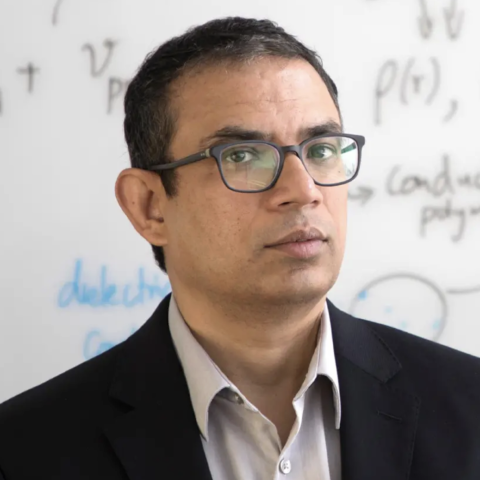
Randall Guensler is a Professor in the School of Civil and Environmental Engineering at the Georgia Institute of Technology. After working for the California Air Resources Board for seven years, and completing his Ph.D. in Civil Engineering at the University of California at Davis, Dr. Guensler joined Georgia Tech in 1994. During his years with the State of California, Dr. Guensler worked for four years in Compliance Assistance and for three years in the Executive Office, evaluating the design and implementation of transportation control measures by regional air quality management agencies. Since arriving at Georgia Tech, Dr. Guensler's main research focus has been the development of new monitoring and modeling tools to assess the air quality impacts of transportation policies. Dr. Guensler was the Chairman of the Transportation Research Board committee on Transportation and Air Quality from 1997 to 2002. From 1995 to 2001, Dr. Guensler served on the Environmental Protection Agency's Mobile Source Technical Advisory Subcommittee. Over the past ten years, he has served on various National Academy of Sciences committees and panels charged with the assessment of vehicle emissions impacts and identification of research needs. Dr. Guensler is the director of Commute Atlanta, a $2.3 million joint value pricing initiative sponsored by the Federal Highway Administration and Georgia Department of Transportation. Commute Atlanta includes the collection and analysis of second-by-second vehicle speed, position, and engine operating data from 470 vehicles in representative Atlanta households. The researchers have monitored more than 1.4 million vehicle trips (more than 350,000 vehicle-miles per month). In 2005, the Commute Atlanta households began participating in road pricing experiments (cent/mile pricing, as well as real-time congestion pricing). Dr. Guensler's research team is assessing consumer response to these pricing mechanisms. A secondary focus of the research is the enhancement of monitoring technologies and services to support future transportation planning, safety, and operations policy initiatives. Development of tools for data management, data analysis, and privacy protection became major research activities. Secondary research has also included analysis of speeding, journey to work route choice, trip chaining, activity-based demand, household tripmaking variability, household and vehicle range of travel, long-distance travel, freeway operations, engine load, start and soak distributions, transit bus operations, etc.
Research
Dr. Guensler's research focuses on transportation systems analysis, travel behavior modeling, and sustainable transportation strategies. His work involves the development and application of data-driven methodologies to understand and improve mobility, traffic operations, and environmental impacts of transportation networks. He investigates the integration of emerging transportation technologies and policies to enhance efficiency and sustainability in urban and regional transportation systems. His research actively involves collaboration with students at both undergraduate and graduate levels.
Education
Ph.D., Civil Engineering, Transportation
University of California, Davis
1993
M.S., Civil/Environmental Engineering
University of California, Davis
1989
B.S., Individualized Engineering (Civil Engineering, Urban Planning, Environ. Studies)
University of California, Davis
1985
Teaching
Dr. Guensler's teaching interests encompass transportation engineering and planning, with an emphasis on traffic operations, transportation systems analysis, and energy/emissions modeling. He engages both undergraduate and graduate students in foundational and advanced courses that address transportation infrastructure, travel behavior, and the societal impacts of transportation technologies. Professor Guensler also integrates quantitative methods and policy considerations into his instruction to prepare students for multidisciplinary challenges in civil engineering.
Publications
- Lu, H., D. Kim, H. Liu, T. Xia, W. Reichard, M.O. Rodgers, R. Guensler (2024). Sensitivity of AERMOD (v21112) RLINEXT Dispersion Model Outputs by Source Type to Variability in Single Noise Barrier Height and Separation Distance. Atmospheric Pollution Research. https://doi.org/10.1016/j.apr.2024.102318. December 2024.
- Passmore, R., K.E. Watkins, and R. Guensler (2024). Using Shortest Path Routing to Assess Cycling Networks. https://doi.org/10.1016/j.jtrangeo.2024.103864. Journal of Transport Geography. Volume 117. May 2024.
- Lu, H., and R. Guensler (2024). MOVES-Matrix 3.0: On-Road Energy and Emission Modeling with High-Performance Supercomputing. Research Report from the National Center for Sustainable Transportation. October 2024.
- Lu, H, D Hunsaker, Z Liu, A Puppala, M McGurk, A Guin, R Guensler, Vehicle Occupancy, Vehicle Throughput, and Person Throughput Assessment of Atlanta’s HOV Managed Lane Facilities, 2025
- Xu, X, HC Yang, H Laarabi, C Poliziani, A Birky, K Jeong, H Lu, ..., Improving commercial truck fleet composition in emission modeling using 2021 US VIUS data, International Journal of Sustainable Transportation 19 (12), 1162-1180, 2025
Additional Research
Electric Vehicles; Smart Infrastructure