Siddharth Karamcheti

Siddharth Karamcheti is an Assistant Professor in the School of Interactive Computing
skaramcheti@gatech.edu

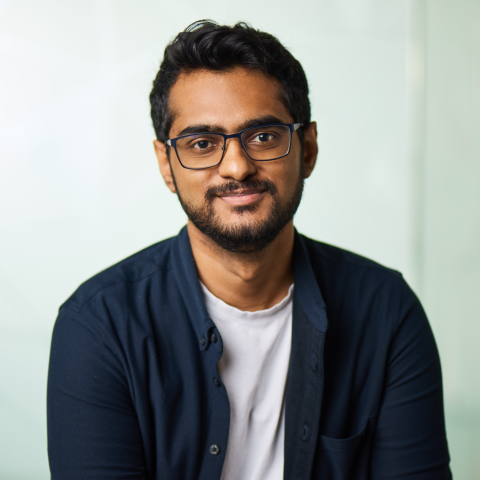
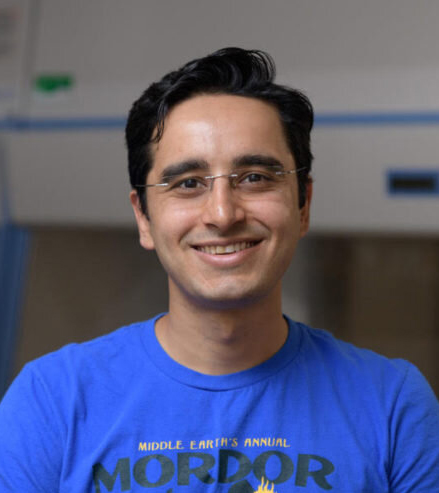
Siddharth Karamcheti is an Assistant Professor in the School of Interactive Computing at Georgia Tech. He received his bachelor’s degree in Computer Science and Literary Arts from Brown University in 2018, and a Ph.D. in Computer Science from Stanford University in 2025. His research focuses on robot learning, multimodal machine learning, and human-robot interaction, with a goal of developing scalable approaches for human-robot collaboration. During his research career he has worked at multiple leading industry labs, including Facebook AI Research, Hugging Face, the Toyota Research Institute, and most recently as the Autonomy Research Lead at Walden Robotics. He is a recipient of the Open Philanthropy AI Fellowship (2018), is an RSS Pioneer (2024), and his research has won paper awards at conferences such as RSS, CoRL, ICRA, and ACL.

Assistant Professor; School of Interactive Computing
Office
Klaus 1326
Research Affiliations
Machine Learning @ GT
Additional Research
  • Multimodal Machine Learning at Scale
  • Robot Learning
IRI And Role
Google Scholar
https://scholar.google.com/citations?hl=en&user=L5v2PHAAAAAJ&view_op=list_works&sortby=pubdate

Jiachen Li

Jiachen Li is a Coca-Cola Foundation Early Career Professor and Assistant Professor in the H. Milton Stewart School of Industrial and Systems Engineering (ISyE) and the George W. Woodruff School of Mechanical Engineering (ME) at Georgia Tech
jiachen_li@gatech.edu

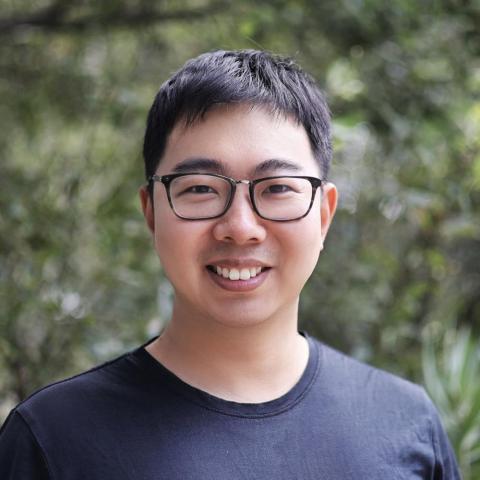
Jiachen Li is a Coca-Cola Foundation Early Career Professor and Assistant Professor in the H. Milton Stewart School of Industrial and Systems Engineering (ISyE) and the George W. Woodruff School of Mechanical Engineering (ME) at Georgia Tech. He leads the Trustworthy Autonomous Systems Laboratory (TASL). Before joining Georgia Tech, he received his Ph.D. from the University of California, Berkeley, followed by a Postdoctoral Scholar appointment at Stanford University. Dr. Li was recognized an RSS Robotics Pioneer and an ASME DSCD Rising Star. He currently serves as Co-Chair of the IEEE RAS Technical Committee on Robot Learning and as an Associate Editor or Area Chair for more than ten leading journals and conferences. Professor Li’s research aims to enable trustworthy, interactive, and human-centered embodied intelligence that can perceive, understand, and reason about the physical world; safely interact and collaborate with humans; and effectively coordinate with other intelligent agents to benefit society in everyday life. Toward this vision, his group pursues interdisciplinary research that develops fundamental theories and practical algorithms at the intersection of robotics, trustworthy AI/ML, foundation models, reinforcement learning, computer vision, control, and optimization, with particularly focuses on safe robot learning, human-robot interaction, and multi-agent systems, with methods extensively validated on a wide range of real-world robotic platforms.

Coca-Cola Foundation Early Career Professor
Assistant Professor
Office
ISyE George Tower 1107
Additional Research
  • Robot Learning for Navigation and (Mobile) Manipulation
  • Trustworthy Embodied/Physical AI (e.g., Safety, Robustness, Generalizability, Explainability, Verification)
  • Foundation Models & Agentic AI
  • Deep Reinforcement Learning & Sequential Decision Making & Controls
  • Human-AI/Robot Interaction/Collaboration & Human-Centered AI
  • Multi-Agent Systems (e.g., Coordination, Learning, Planning, Swarm Intelligence) 
  • Intelligent Transportation Systems & Autonomous Driving & Smart City
IRI And Role
Google Scholar
https://scholar.google.com/citations?hl=en&user=1_f79vUAAAAJ&view_op=list_works&sortby=pubdate

Azadeh Ansari

Azadeh Ansari's profile picture
azadeh.ansari@ece.gatech.edu

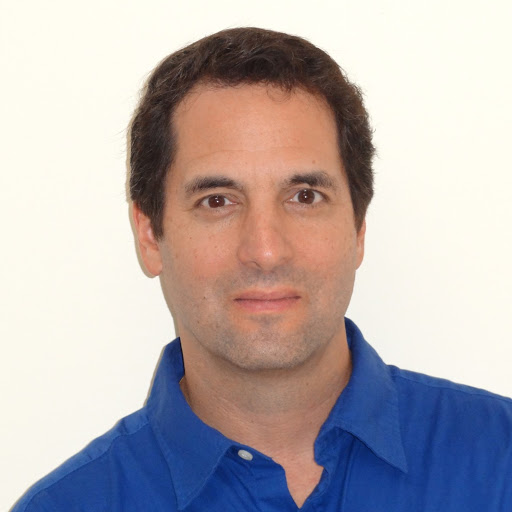
Azadeh Ansari received the B.S. degree in Electrical Engineering from Sharif University of Technology, Iran in 2010. She earned the M.S and Ph.D. degrees in Electrical Engineering from University of Michigan, Ann Arbor in 2013 and 2016 respectively, focusing upon III-V piezoelectric semiconductor materials and MEMS devices and microsystems for RF applications. Prior to joining the ECE faculty at Georgia Tech, she was a postdoctoral scholar in the Physics Department at Caltech from 2016 to 2017. Ansari is the recipient of a 2017 ProQuest Distinguished Dissertation Award from the University of Michigan for her research on "Gallium Nitride integrated microsystems for RF applications." She received the University of Michigan Richard and Eleanor Towner Prize for outstanding Ph.D. research in 2016. She is a member of IEEE, IEEE Sensor's young professional committee and serves as a technical program committee member of IEEE IFCS 2018.

Sutterfield Family Early Career Professor, School of Electrical and Computer Engineering
Assistant Professor, School of Electrical and Computer Engineering
Phone
404.385.5994
Office
TSRB 544
Additional Research
  • Sensors and actuators
  • MEMS and NEMSIII-V Semiconductor devices
Google Scholar
https://scholar.google.com/citations?hl=en&user=-TpfHUoAAAAJ&view_op=list_works&sortby=pubdate

Ferdous Alam

Ferdous Alam
ferdous@gatech.edu

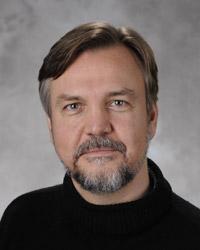
Dr. Alam joined the George W. Woodruff School of Mechanical Engineering as an assistant professor in January 2026. His primary research interests include efficient algorithms and methods for AI-native engineering applications. His group, Inference Lab, focuses on foundational AI for engineering tasks, physics-integrated AI, and robot learning for unstructured manufacturing tasks. Before joining Georgia Tech, he was a postdoctoral associate at MIT. Dr. Alam has received several national and international awards including Google research scholar awards in Applied science in 2024, Ford Best Paper award at IDECTC 2025, SEIKM Best paper award at IDETC 2025, Best paper award at MSEC 2020.

Assistant Professor
Additional Research
  • AI and Informatics
  • Automation
  • CAE and Design
  • Manufacturing
  • Robotics and Control
IRI And Role
Google Scholar
https://scholar.google.com/citations?hl=en&user=m5ofw-YAAAAJ&view_op=list_works&sortby=pubdate

Dhruv Batra

Dhruv Batra's profile picture
dbatra@gatech.edu

Dhruv Batra is an Associate Professor in the School of Interactive Computing at Georgia Tech. His research interests lie at the intersection of machine learning, computer vision, natural language processing, and AI, with a focus on developing intelligent systems that are able to concisely summarize their beliefs about the world with diverse predictions, integrate information and beliefs across different sub-components or `modules' of AI (vision, language, reasoning, dialog), and interpretable AI systems that provide explanations and justifications for why they believe what they believe. In past, he has also worked on topics such as interactive co-segmentation of large image collections, human body pose estIMaTion, action recognition, depth estIMaTion, and distributed optimization for inference and learning in probabilistic graphical models. He is a recipient of the Office of Naval Research (ONR) Young Investigator Program (YIP) award (2016), the National Science Foundation (NSF) CAREER award (2014), Army Research Office (ARO) Young Investigator Program (YIP) award (2014), Virginia Tech College of Engineering Outstanding New Assistant Professor award (2015), two Google Faculty Research Awards (2013, 2015), Amazon Academic Research award (2016), Carnegie Mellon Dean's Fellowship (2007), and several best paper awards (EMNLP 2017, ICML workshop on Visualization for Deep Learning 2016, ICCV workshop Object Understanding for Interaction 2016) and teaching commendations at Virginia Tech. His research is supported by NSF, ARO, ARL, ONR, DARPA, Amazon, Google, Microsoft, and NVIDIA. Research from his lab has been extensively covered in the media (with varying levels of accuracy) at CNN, BBC, CNBC, Bloomberg Business, The Boston Globe, MIT Technology Review, Newsweek, The Verge, New Scientist, and NPR. From 2013-2016, he was an Assistant Professor in the Bradley Department of Electrical and Computer Engineering at Virginia Tech, where he led the VT Machine Learning & Perception group and was a member of the Virginia Center for Autonomous Systems (VaCAS) and the VT Discovery Analytics Center (DAC). From 2010-2012, he was a Research Assistant Professor at Toyota Technological Institute at Chicago (TTIC), a philanthropically endowed academic computer science institute located on the University of Chicago campus. He received his M.S. and Ph.D. degrees from Carnegie Mellon University in 2007 and 2010 respectively, advised by Tsuhan Chen. In past, he has held visiting positions at the Machine Learning Department at CMU, CSAIL MIT, Microsoft Research, and Facebook AI Research.

Associate Professor; School of Interactive Computing
Additional Research

Machine Learning; Computer Vision; Artificial Intelligence

Google Scholar
https://scholar.google.com/citations?hl=en&user=_bs7PqgAAAAJ&view_op=list_works&sortby=pubdate

Stephen Balakirsky

Stephen Balakirsky's profile picture
stephen.balakirsky@gtri.gatech.edu

Stephen Balakirsky is the Chief Scientist for the Aerospace, Transportation & Advanced Systems Laboratory at the Georgia Tech Research Institute (GTRI), and the Director of Technical Initiatives at the Petit Institute for Bioengineering and Bioscience (IBB) at Georgia Tech.

Balakirsky’s research interests include robotic architectures, planning, bio-automation, robotic standards, and autonomous systems testing. His work in knowledge driven robotics couples real-time sensors and knowledge repositories to allow for flexibility and agility in robotic systems ranging from assembly and manufacturing systems to surveillance and logistics systems. The framework promotes software reuse and the ability to detect and correct for execution errors.

Previously, Balakirsky worked as a project manager at the National Institute of Standards and Technology (NIST) and was a senior research engineer at the Army Research Laboratory (ARL). At ARL, Balakirsky performed mobile robotics research in several areas, including command and control, mapping, human-computer interfaces, target tracking, vision processing and tele-operated control.

Regents' Researcher; Georgia Tech Research Institute
Director of Technical Initiatives; IBB
Chief Scientist | Aerospace, Transportation & Advanced Systems Laboratory (ATAS); GTRI
Phone
404.407.8547
Office
Food Processing Technology Building, 640 Strong St, Atlanta, GA 30318
Additional Research

Robotics; Planning; Knowledge Representation; Ontologies

Research Focus Areas
GTRI
Geogia Tech Research Institute > Aerospace, Transportation & Advanced Systems Laboratory
Google Scholar
https://scholar.google.com/citations?hl=en&user=mMANqk8AAAAJ&view_op=list_works&sortby=pubdate

Frank Dellaert

Frank  Dellaert's profile picture
frank.dellaert@cc.gatech.edu

Dr. Dellaert does research in the areas of robotics and computer vision, which present some of the most exciting challenges to anyone interested in artificial intelligence. He is especially keen on Bayesian inference approaches to the difficult inverse problems that keep popping up in these areas. In many cases, exact solutions to these problems are intractable, and as such he is interested in examining whether Monte Carlo (sampling-based) approxIMaTions are applicable in those cases.

Professor; School of Interactive Computing
Robotics Ph.D. Coordinator; College of Computing
Phone
404.385.2923
Office
GVU Center
Additional Research

Advanced sequential Monte Carlo methods; Spatio-Temporal Reconstruction from Images; Simultaneous Localization and Mapping; Robotics; Computer Vision

Google Scholar
https://scholar.google.com/citations?hl=en&user=ZxXBaswAAAAJ&view_op=list_works&sortby=pubdate

Sonia Chernova

Sonia Chernova's profile picture
chernova@cc.gatech.edu

I am an Associate Professor in the School of Interactive Computing at Georgia Tech. I received my Ph.D. and B.S. degrees in Computer Science from Carnegie Mellon University, and held positions as a Postdoctoral Associate at the MIT Media Lab and as Assistant Professor at Worcester Polytechnic Institute prior to joining Georgia Tech. I direct the Robot Autonomy and Interactive Learning (RAIL) lab, where we work on developing robots that are able to effectively operate in human environments. My research interests span robotics and artificial intelligence, including semantic reasoning, adjustable autonomy, human computation and cloud robotics. Please visit the RAIL lab website for a description of our latest projects.

Associate Professor; School of Interactive Computing
Director; Robot Autonomy and Interactive Learning (RAIL) Lab
Phone
404.385.4753
Additional Research

Robotics; Artificial Intelligence; Semantic Reasoning; Adjustable Autonomy; Human Computation and Cloud Robotics.

Google Scholar
https://scholar.google.com/citations?hl=en&user=EYo_WkEAAAAJ&view_op=list_works&sortby=pubdate

Saad Bhamla

Saad Bhamla's profile picture
saadb@chbe.gatech.edu

Saad Bhamla studies biomechanics across species to engineer knowledge and tools that inspire curiosity.

Saad Bhamla is an assistant professor of biomolecular engineering at Georgia Tech. A self-proclaimed "tinkerer," his lab is a trove of discoveries and inventions that span biology, physics and engineering. His current projects include studying the hydrodynamics of insect urine, worm blob locomotion and ultra-low-cost devices for global health. His work has appeared in the New York Times, the Economist, CNN, Wired, NPR, the Wall Street Journal and more.

Saad is a prolific inventor and his most notable inventions includes a 20-cent paper centrifuge, a 23-cent electroporator, and the 96-cent hearing aid. Saad's work is recognised by numerous awards including a NIH R35 Outstanding Investigator Award, NSF CAREER Award, CTL/BP Junior Faculty Teaching Excellence Award, and INDEX: Design to Improve Life Award. Saad is also a National Geographic Explorer and a TED speaker. Newsweek recognized Saad as 1 of 10 Innovators disrupting healthcare.

Saad is a co-founder of Piezo Therapeutics.

Outside of the lab, Saad loves to go hiking with his partner and two dogs (Ollie and Bella).

Assistant Professor
Phone
404-894-2856
Office
ES&T L1224
Additional Research
  • Biotechnology
  • Complex Systems
  • Materials and Nanotechnology
Google Scholar
https://scholar.google.com/citations?user=1tRXS9gAAAAJ&hl=en

Tony G. Chen

Tony G. Chen is an Assistant Professor at Georgia Tech
tonygchen@gatech.edu

Tony G. Chen is an Assistant Professor at Georgia Tech. His research focuses on designing mechanical intelligent mechanisms for various robotics applications. Mechanical intelligence focuses on developing mechanisms and robotic platforms that make challenges for perception, control, and autonomy easier or more robust for natural, unstructured, and often unpredictable environments by virtue of their physical designs. To achieve this design approach, two main and common methods are often deployed: rapid prototyping and bio-inspiration. Chen is especially interested in three major research application areas: (i) field robotics where designing new robotic mobility platforms or equipping existing platforms with capabilities of manipulation, (ii) manipulation tasks in home and industrial environments, and (iii) biomimetic robotics for biological study.

Assistant Professor
Office
Callaway 438
Google Scholar
https://scholar.google.com/citations?hl=en&user=KrsLD7oAAAAJ&view_op=list_works&sortby=pubdate