Susan Burns
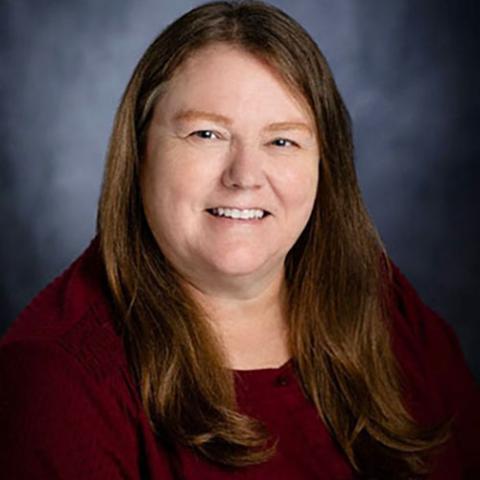
Susan E. Burns, Ph.D., P.E., F.ASCE is a professor in the School of Civil and Environmental Engineering and associate chair for administration and finance at the Georgia Institute of Technology in Atlanta, Georgia, USA. Burns earned a B.C.E. in civil engineering (1990), an M.S. in civil engineering (1996), an M.S. in environmental engineering (1996), and Ph.D. in civil engineering (1997), all from Georgia Tech. After completing her Ph.D., Professor Burns joined the faculty at the University of Virginia where she served for over seven years. In 2004, she joined the faculty at Georgia Tech as an associate professor.
Burns' research focuses on applications in geoenvironmental engineering, with particular emphasis on the productive reuse of waste materials including dredged sediments, fly ash, and biomass fly ash, treatment of highway stormwater runoff using engineered materials, erosion control of soils on highway rights-of-way, interfacial behavior of organic- and inorganic-coated soils, the transport and behavior of microbubbles in otherwise saturated porous media, and the hydraulic conductivity and consolidation properties of fine-grained soils using seismic piezocone penetration testing (SPCPT). Funding for her research group has come from federal, state, and industry sources, including a CAREER Award from the National Science Foundation in 2000. Burns has also received major funding from the US Department of Energy, the US Army Corps of Engineers, the US Department of Education, the Virginia Transportation Research Council, the Georgia Department of Transportation, Southern Company, and other industrial sources.
Burns is a recipient of the National Science Foundation CAREER award, the Arthur Casagrande Professional Development Award (ASCE), the Edmund Friedman Young Engineer Award (ASCE), the Alumni Board of Trustees Teaching Award (University of Virginia), and the David Harrison III Award for Undergraduate Advising (University of Virginia). She was awarded a University Teaching Fellowship (University of Virginia), and was named a Class of 1969 Teaching Scholar (Georgia Tech) and a Class of 1969 Teaching Fellow (Georgia Tech). Most recently, she was selected as the recipient of the 2012 CEE appreciation award (CEE, Georgia Tech) and a 2012 Class of 1934 Teaching Effectiveness Award. She was elected Fellow of the American Society of Civil Engineers in 2013.
Burns has served as the president of the United States Universities Council on Geotechnical Education and Research (USUCGER), an organization of approximately 400 professors of geotechnical engineering in the US and abroad (www.usucger.org). She is a past member of the National Research Council's (NRC) Standing Committee on Geological and Geotechnical Engineering, and a past member of the NRC's Committee on Assessment of the Performance of Engineered Waste Containment Barriers. She has chaired the American Society of Civil Engineers/GeoInstitute Geoenvironmental Engineering Committee, and is a past member of the GeoInstitute Awards Committee, and the Transportation Research Board's Committee on Physicochemical Phenomena in Soils. Additionally, she served as an editorial board member for ASCE's Journal of Geotechnical and Geoenvironmental Engineering. She served on the organizing committee for the International Symposium on Deformational Characteristics of Geomaterials (IS Atlanta 2008) and the Fifth International Conference on Scour and Erosion, and served as the editor for proceedings at both conferences.
At Georgia Tech, Burns has chaired the School of Civil and Environmental Engineering's graduate committee, served on the School's statutory advisory committee, served as the graduate coordinator for the Geosystems Group, and served as the group leader for the geosystems group in the School of Civil and Environmental Engineering. She was the School's associate chair for undergraduate programs for five years before taking over as associate chair for finance and administration in 2018. At the Institute level, she has served as a member of the Academic Senate and General Faculty Assembly and the Student Academic and Financial Affairs Committee.
Geosystems; Geomaterials; Materials Design; Nanocomposites; Transport of Microbubbles