Anthony J. “Bo” Arduengo

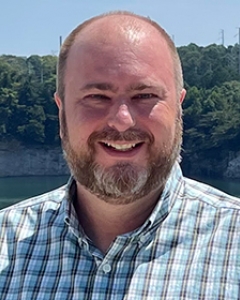
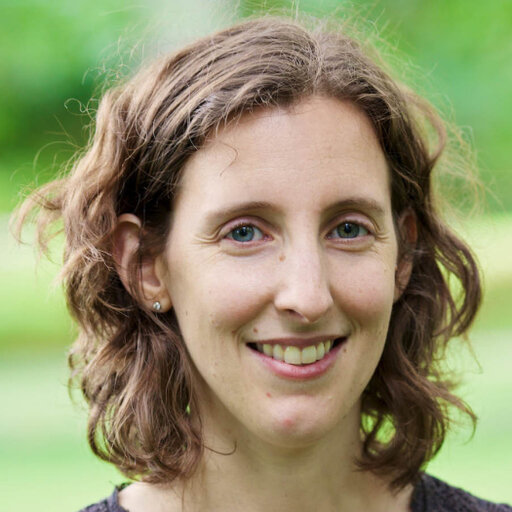
Headshot of Anthony J. “Bo” Arduengo
AJ.Arduengo@Chemistry.GaTech.edu

Awards

Charles M. Knight Lectureship, University of Akron, April 2013

Fellow of the American Association for the Advancement of Science, October 2007

Walter J. Chute Lectureship 1999–2000

Gold Medal for "Excellence in Main Group Chemistry Research" from The International Council on Main Group Chemistry, 1996

Alexander von Humboldt Senior Research Prize, 1996

Education

B.S., Chemistry, Georgia Institute of Technology, 1974; Ph.D., Georgia Institute of Technology, 1976

Research

Our group’s research interests span the interfaces of organic, inorganic chemistry, and material science. They focus largely on the chemistry of new or unusual bonding arrangements and seek to take advantage of unusual valency to develop new materials and sustainable synthetic methodology. Applications of chemistry developed in our group can be found in diverse areas ranging from electronic materials, thermochromic materials, industrially important catalytic transformations, high-end environmentally-friendly automotive paints, and most recently advanced pharmaceutical intermediates and pharmaceutical products. In connection with resource sustainability, we have a long-standing collaboration with the Opatz group at the University of Mainz, Germany to develop technology to rebuilt the chemical manufacturing infrastructure on renewable bio-mass, specifically wood – what we refer to as “Xylochemistry.”

Our group also participates with an international team providing advances in pharmaceutical syntheses to allow implementation of sustainable, low-cost, manufacturing strategies to critically important medicines.  The ultimate goal of the research is to provide ready access to important pharmaceuticals that improve global human health and quality of life.  Recently, this latter effort has expanded through our involvement with Biomedical Advanced Research and Development Authority (BARDA) programs directed to the development of new chemical technologies enabling the repatriation critical chemical and pharmaceutical capabilities to U.S. shores.  More details are available on the group’s web pages.

Professor of the Practice
Phone
(404) 385-4986
Office
MoSE 2100N

Vinayak Agarwal

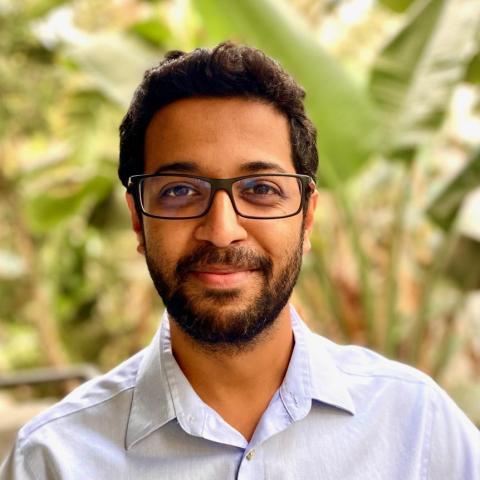
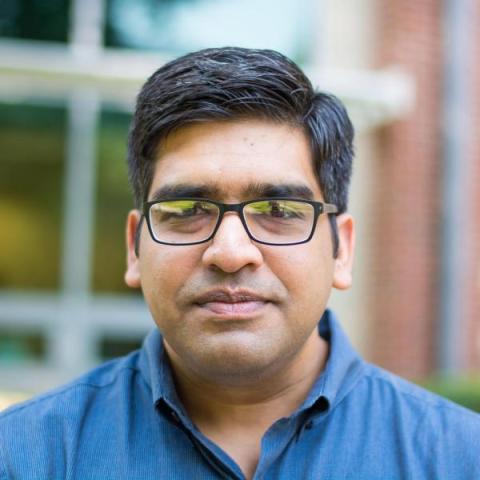
Headshot of Vinayak Agarwal
vagarwal@gatech.edu

Awards

  • 2024 - ASP Matt Suffness Young Investigator
  • 2023 - Camille Dreyfus Teacher Scholar
  • 2022 - ACS Academic Young Investigator (Division of Organic Chemistry)
  • 2021 - Cottrell Scholar
  • 2019 - Kavli Frontiers in Science Fellow
  • 2018 - Alfred P. Sloan Foundation Fellow
  • 2016 - NIH K99/R00 Pathway to Independence Award
  • 2014 - Helen Hay Whitney Foundation Fellow

Education

B.Tech. M.Tech. Indian Institute of Technology Delhi (2007); Ph.D. University of Illinois at Urbana-Champaign (2012); Postdoc. University of California San Diego (2017)

Research

A majority of antibiotics and drugs that we use in the clinic are derived or inspired from small organic molecules called Natural Products that are produced by living organisms such as bacteria and plants. Natural Products are at the forefront of fighting the global epidemic of antibiotic resistant pathogens, and keeping the inventory of clinically applicable pharmaceuticals stocked up. Some Natural Products are also potent human toxins and pollutants, and we need to understand how these toxins are produced to minimize our and the environmental exposure to them.

We as biochemists ask some simple questions- how and why are Natural Products produced in Nature, what we can learn from Natural Product biosynthetic processes, and how we can exploit Nature's synthetic capabilities for interesting applications?

Broadly, we are interested in questions involving (meta)genomics, biochemistry, structural and mechanistic enzymology, mass spectrometry, analytical chemistry, and how natural product chemistry dictates biology.

Research Keywords

(Bio)Organic Chemistry; Discovery and Biosynthesis of Natural Products; Enzymology; Structural Biology; Metabolomics; (Meta)Genomics
Associate Professor
Phone
(404) 385-3798
Office
IBB 3315
IRI And Role
Google Scholar
https://scholar.google.com/citations?user=9R7lf3AAAAAJ&hl=en

Abigail Lind

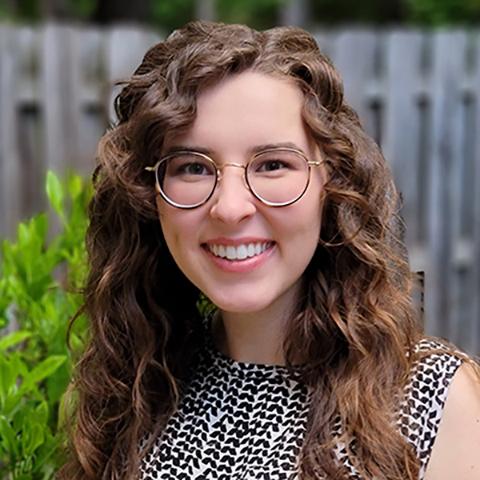
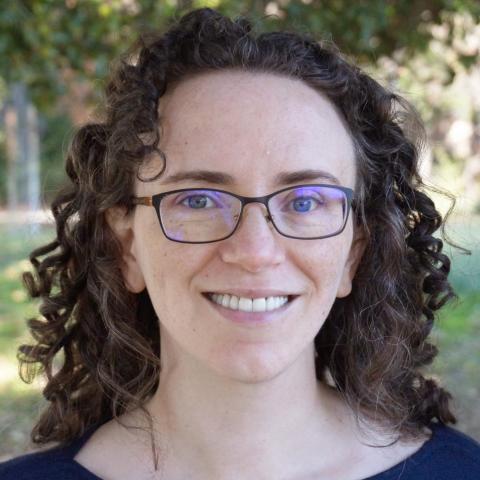
A woman with dark curly hair and glasses wearing a dark blouse smiles for a photo with grass and trees in the background.
abigail.lind@gatech.edu

The Lind lab studies microbes that live in the gut of humans and other animals, focusing on single-celled protists and how they interact with the host and other microbes. We use approaches from computational genomics, evolutionary biology, and microbiology.
 

Assistant Professor
Additional Research

Bioinformatics

Computational Genomics

Sam Brown

Sam Brown's profile picture
sam.brown@biology.gatech.edu

Sam Brown's lab studies the multi-scale dynamics of infectious disease. Their goal is to improve the treatment and control of infectious diseases through a multi-scale understanding of microbial interactions. Their approach is highly interdisciplinary, combining theory and experiment, evolution, ecology and molecular microbiology in order to understand and control the multi-scale dynamics of bacteria pathogens.

Professor
Office
ES&T 2244
Additional Research
Evolutionary microbiology, bacterial social life, virulence and drug resistance
Google Scholar
https://scholar.google.co.uk/citations?user=ZgN-OgMAAAAJ&hl=en

Sarah Roney

Portrait of Sarah Roney

Sarah Roney is a Ph.D. candidate in the Ocean Science and Engineering program in the School of Biological Sciences. She studies the chemical communication pathways of marine organisms. Her current project is to investigate reducing the predation of oysters in engineered “living shoreline” systems where they are being established to mitigate waterway erosion due to maritime activities, such as those near the port of Savannah, Georgia.

Sarah makes outreach a priority in her work by developing strong connections with researchers and institutions outside of her program, by incorporating “citizen science” approaches to her research, by mentoring younger students, as well as by engaging with media about her work.

Sarah earned a Bachelor of Science in Biology from Georgia Southern University, where she graduated, Summa Cum Laude.

Advisor: Marc Weissburg

BBISS Graduate Fellow - Second Cohort

Joseph Lachance

Joseph Lachance's profile picture
joseph.lachance@biology.gatech.edu

Joe Lachance is an Assistant Professor in the School of Biological Sciences at Georgia Institute of Technology and a member of the Cell and Molecular Biology Research Program at Winship Cancer Institute.

Lachance received his Ph.D. in Genetics from Stony Brook University in Stony Brook, New York. He conducted his postdoctoral studies as a NIH Kirschstein postdoctoral fellow at the University of Pennsylvania.

Lachance's research is in the areas of human evolutionary genomics, population genetics, and health disparities. His lab integrates large genome-scale datasets with evolutionary theory and computer simulations. They have found evidence of ancient introgression in Africa, inferred that the leading edge of the out-of-Africa migration involved an excess of males, discovered that genetic risks of cancer have decreased over evolutionary time, and identified novel targets of positive selection.

Associate Professor
Phone
404-894-0794
Office
EBB 2103
Research Focus Areas
Google Scholar
https://scholar.google.com/citations?user=xedYbeEAAAAJ&hl=en

Saumya Jain

Saumya Jain's profile picture
sjain738@gatech.edu

Saumya Jain is an Assistant Professor in the School of Biological Sciences. He received a B.Tech and an M.Tech in Biochemical Engineering and Biotechnology from the Indian Institute of Technology, Delhi and a Ph.D. in Molecular and Cellular Biology from the University of Arizona. He conducted postdoctoral work at the University of California, Los Angeles as a Helen Hay Whitney Fellow in the lab of Dr. Larry Zipursky. His research focuses on the regulation of gene expression in developing nervous systems across space and time.

Animal brains consist of a vast number of neurons (~100 billion in humans, ~100 million in mice), and thousands of neuron-types. These neurons generated at different times and locations in the developing brain come together in precise ways to form specific connections (~100 trillion connections in the human brain). Even subtle defects in wiring are associated with conditions such as autism, schizophrenia and epilepsy. How does biology ensure the assembly of such a complex structure? A key piece of this puzzle is ensuring that the right set of genes are expressed at the right time and in the right place. The Jain lab is trying to address the following questions: 1) How are the timing and cell-type specificity of gene expression controlled in developing neurons to ensure proper circuit formation? 2) How are these mechanisms perturbed in neurodevelopmental disorders? To address these questions, the lab applies single-cell genomics, genetics and molecular biology approaches in the developing mouse and fruit fly visual systems.

Assistant Professor
Phone
4043858531
Office
EBB 3015
Additional Research
  • Bioinformatics
  • Computational Genomics
  • Neuroscience


Jung Choi

Jung Choi's profile picture
jung.choi@biology.gatech.edu

Jung Choi is an associate professor in the School of Biology at Georgia Tech and director of the Professional Masters program in Bioinformatics. He has been at Georgia Tech since 1986. Choi has done research on plant protein kinases with calmodulin-like domains, and some research with yeast lipid metabolism that has yet to bear fruit. He has taught a wide variety of courses, but most enjoys teaching large intro lecture courses – which he finds both challenging and rewarding.

Associate Professor, School of Biological Sciences
Director, M.S. Program in Bioinformatics
Phone
404.894.8423
Office
Cherry Emerson 213
Additional Research

Bioinformatics; Kinetics; Materials Testing; Materials Synthesis and Processing

Research Focus Areas
Google Scholar
https://scholar.google.com/citations?hl=en&user=MRLeMUsAAAAJ&view_op=list_works&sortby=pubdate

Sharon Sonenblum

Sharon Sonenblum's profile picture
sharon.sonenblum@coa.gatech.edu

Educational Experience:
Doctor of Philosophy, December 2009, Georgia Institute of Technology (Bioengineering), Masters of Science, May 2003, Brown University (Bioengineering), Bachelor of Science, May 2002, Brown University (Mechanical Engineering)
Research Interests:
Wheeled mobility and seating, Pressure ulcer prevention and early detection, Assistive technology, Rehabilitation engineering.

Senior Research Scientist
Phone
404-385-0633

Farzaneh Najafi

Farzaneh Najafi's profile picture
fnajafi3@gatech.edu

Overview:
Our brain not only processes sensory signals but also makes predictions about the world. Generating and updating predictions are essential for our survival in a rapidly changing environment. Multiple brain regions including the cerebellum and the cortex are thought to be involved in the processing of prediction signals (aka predictive processing). However, it is not clear what circuit mechanisms and computations underlie predictive processing in each region, and how the cortical and cerebellar prediction signals interact to support cognitive and sensorimotor behavior. Our lab is interested in figuring out these questions by using advanced experimental and computational techniques in systems neuroscience.

Assistant Professor
Phone
2672519137
Office
IBB 3314
Additional Research

Research Interests: Systems and behavioral neuroscience; Computational neuroscience; Predictive processing; Brain area interactions; Cortex and cerebellum; Population coding