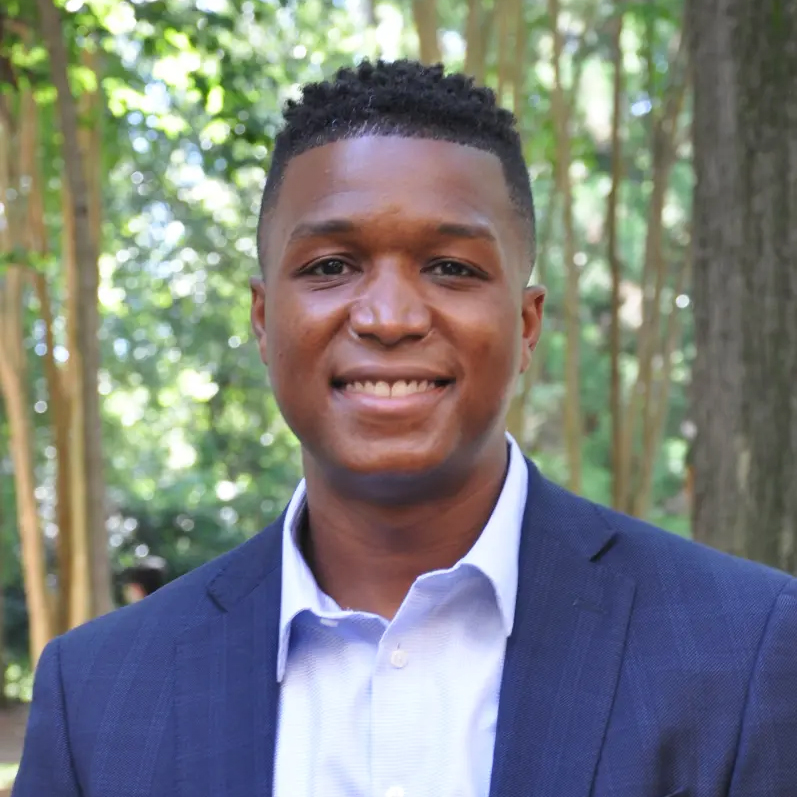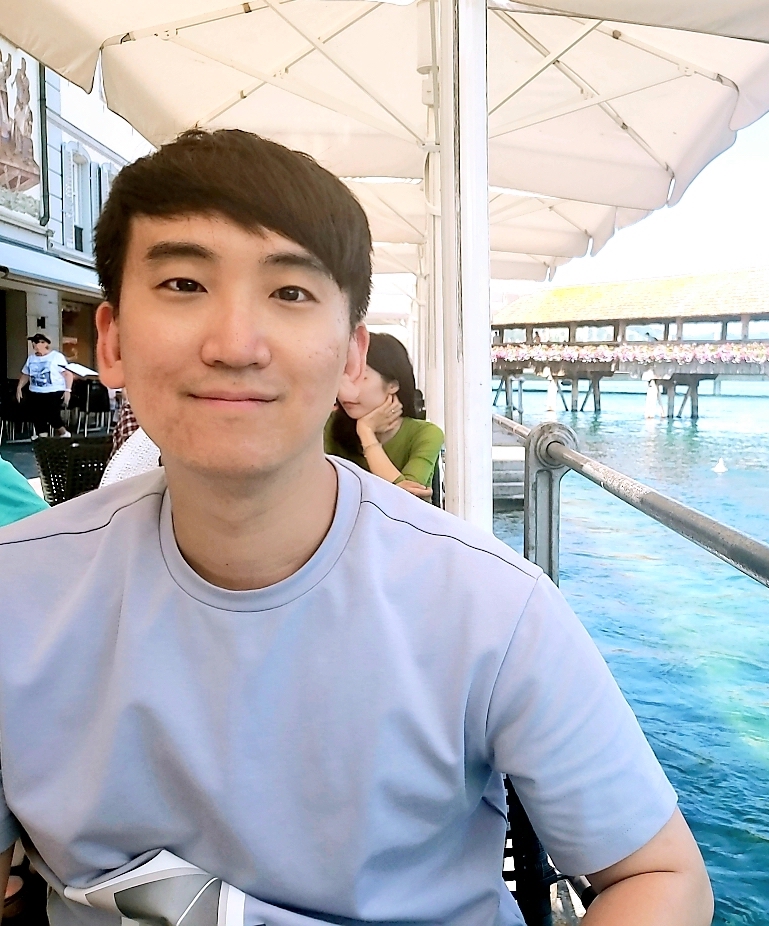
Aaron Stebner

Aaron Stebner's profile picture
aaron.stebner@gatech.edu

Aarn Stebner works at the intersection of manufacturing, machine learning, materials, and mechanics. He joined the Georgia Tech faculty as an associate professor of Mechanical Engineering and Materials Science and Engineering in 2020.

Previously, he was the Rowlinson Associate Professor of Mechanical Engineering and Materials Science at the Colorado School of Mines (2013 – 2020), a postdoctoral scholar at the Graduate Aerospace Laboratories of the California Institute of Technology (2012 – 2013), a Lecturer in the Segal Design Institute at Northwestern University (2009 – 2012), a Research Scientist at Telezygology Inc. establishing manufacturing and “internet of things” technologies for shape memory alloy-secured latching devices (2008-2009), a Research Fellow at the NASA Glenn Research Center developing smart materials technologies for morphing aircraft structures (2006 – 2008), and a Mechanical Engineer at the Electric Device Corporation in Canfield, OH developing manufacturing and automation technologies for the circuit breaker industry (1995 – 2000).
Associate Professor, School of Mechanical Engineering and Materials Science and Engineering
Phone
404.894.5167
Google Scholar
https://scholar.google.com/citations?hl=en&user=OpRg9IsAAAAJ&view_op=list_works&sortby=pubdate

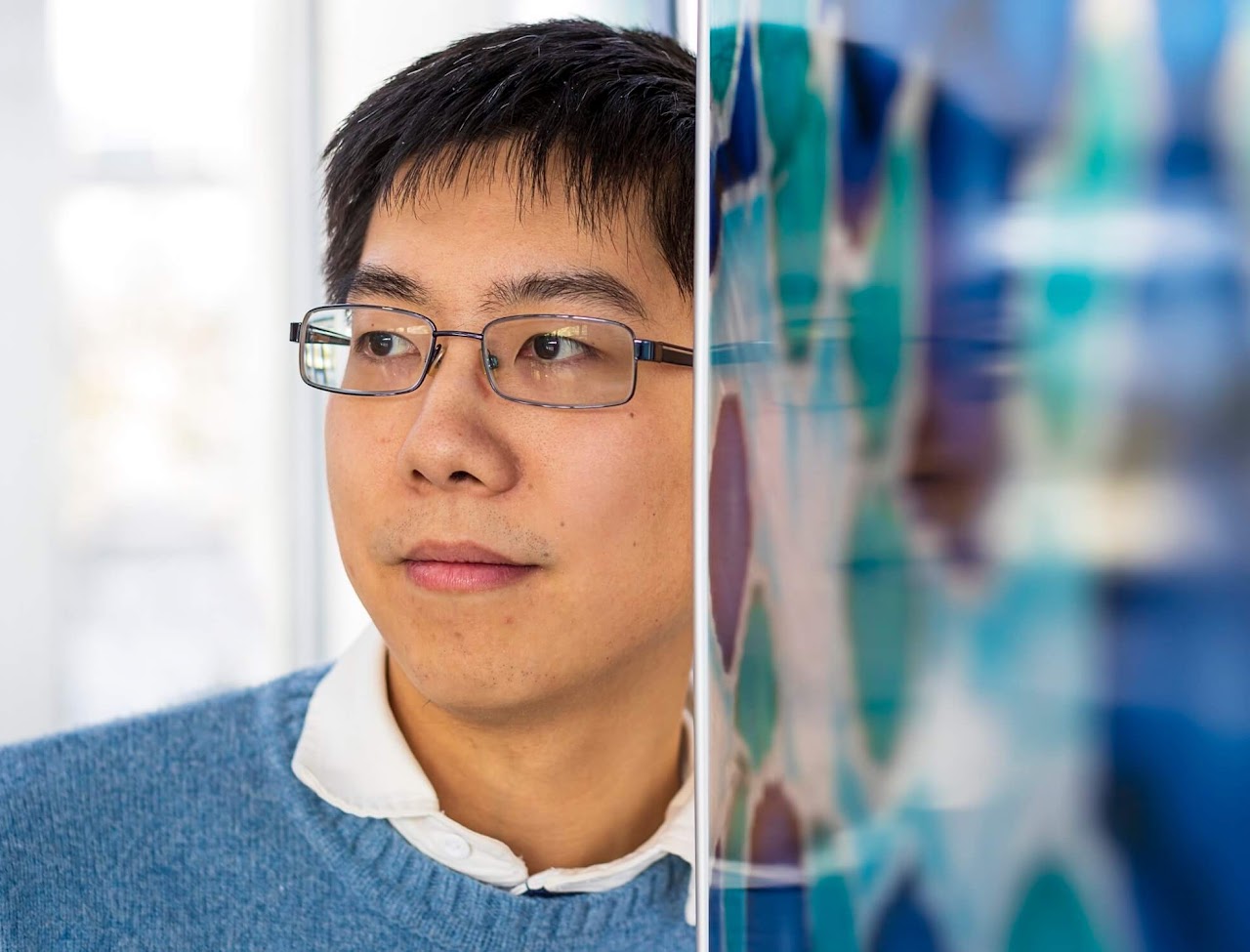
Yan Wang

Yan Wang's profile picture
yan.wang@me.gatech.edu

Wang's research is in the areas of design, manufacturing, and Integrated computational materials engineering. He is interested in computer-aided design, geometric modeling and processing, computer-aided manufacturing, multiscale simulation, and uncertainty quantification.

Currently, Wang studies integrated product-materials design and manufacturing process design, where process-structure-property relationships are established with physics-based data-driven approaches for design optimization. The Multiscale Systems Engineering research group led by him develops new methodologies and computational schemes to solve the technical challenges of high dimensionality, high complexity, and uncertainty associated with product, process, and systems design at multiple length and time scales.

Computational design tools for multiscale systems with sizes ranging from nanometers to kilometers will be indispensable for engineers' daily work in the near future. The research mission of the Multiscale Systems Engineering group is to create new modeling and simulation mechanisms and tools with underlying scientific rigor that are suitable for multiscale systems engineering for better and faster product innovation. Our education mission is to train engineers of the future to gain necessary knowledge as well as analytical, computational, communication, and self-learning skills for future work in a collaborative environment as knowledge creators and integrators. 

Professor, Woodruff School of Mechanical Engineering
Phone
404.894.4714
Office
Callaway 472
Additional Research

Computer-aided engineering and design and manufacturing, modeling and simulation, nanoscale cad/cam/cae, product lifecycle management, applied algorithms, uncertainty modeling, multiscale modeling, materials design

Google Scholar
https://scholar.google.com/citations?hl=en&user=rK2ow1kAAAAJ&view_op=list_works&sortby=pubdate

Victor Fung

Victor Fung's profile picture
victorfung@gatech.edu

Victor Fung is an Assistant Professor in the School of Computational Science and Engineering. Prior to this position, he was a Wigner Fellow and a member of the Nanomaterials Theory Insitute in the Center for Nanophase Materials Sciences at Oak Ridge National Laboratory. A physical chemist by training, Fung now works at the intersection of scientific artificial intelligence, computing, and materials science/chemistry.

Assistant Professor of Computational Science and Engineering
Office
E1354B | CODA Building, 756 W Peachtree St NW, Atlanta, GA 30308
Additional Research
  • Quantum chemistry
  • Surrogate models for quantum chemistry
  • Data-driven inverse design
  • Chemically-informed machine learning
  • High-throughput computational simulations
Google Scholar
https://scholar.google.com/citations?hl=en&user=2QsddMIAAAAJ&view_op=list_works&sortby=pubdate

Joe F. Bozeman III

Joe F. Bozeman III's profile picture
joe.bozeman@ce.gatech.edu
Assistant Professor, Civil and Environmental Engineering, Public Policy
SEI Lead: Ethics in Energy Transition
Additional Research

industrial ecology; climate change adaptation and mitigation strategies; sociodemographic impacts of the food-energy-water nexus; ethical applications in energy and environmental systems; urban carbon management strategies; life cycle assessment; scenario analysis; and survey administration; addressing the complex and ‘wicked’ challenges of our time

Thomas Fuller

Thomas Fuller's profile picture
tom.fuller@chbe.gatech.edu

Tom Fuller is Professor of Chemical Engineering at the Georgia Tech. Dr. Fuller received a BS from the University of Utah in Chemical Engineering in 1982. Dr. Fuller then served for five years in the U.S. Navy working as a Nuclear Engineer. In 1992 he obtained a Ph.D. from UC, Berkeley also in Chemical Engineering. 

Subsequently, Dr. Fuller developed advanced lithium batteries while working as a postdoctoral fellow at Lawrence Berkeley National Laboratory. He then moved to United Technologies. He was responsible for technology development, design, assembly, and test of cell stacks for UTC Fuel Cells. 

His research group at Georgia Tech is focused on durability challenges for electrochemical systems. For the last eight years Dr. Fuller has been a Technical Editor for the Journal of the Electrochemical Society. In 2009 Dr. Fuller was named a Fellow of the Electrochemical Society.

Professor, School of Chemical and Biomolecular Engineering
Phone
(404) 894-2898
Additional Research

Electric Vehicles; Energy Storage; Hydrogen; Modeling; Materials Failure and Reliability; Energy Conversion; Energy Storage; Batteries; fuel cells

University, College, and School/Department
Google Scholar
https://scholar.google.com/citations?hl=en&user=I1RqBRoAAAAJ&view_op=list_works&sortby=pubdate

Hailong Chen

Hailong Chen
hailong.chen@me.gatech.edu

Hailong Chen received his B.S. in Materials Science and Engineering from Tsinghua University in 1999, his M.S. in Chemistry from Tsinghua University in 2002, and his Ph.D. in Chemistry from Stony Brook University in 2009. Following his doctoral studies, he conducted postdoctoral research in the Department of Materials Science and Engineering (DMSE) at the Massachusetts Institute of Technology (MIT). Chen joined the faculty of Georgia Tech in November 2013, was promoted to Associate Professor with tenure in 2020, and to Professor in 2026.
 

Professor, George W. Woodruff School of Mechanical Engineering
Courtesy faculty appointment, School of Materials Science and Engineering
Courtesy faculty appointment, School of Chemistry and Biochemistry
Phone
404.385.5598
Office
Love 329
Additional Research

Chen’s research lies at the intersection of materials science, chemistry, and engineering, with a focus on the design, synthesis, and characterization of materials for electrochemical energy storage, functional and structural metals and alloys, and emerging quantum materials. His group combines solid-state chemistry, electrochemistry, and materials synthesis with advanced in situ and operando characterization, including X-ray diffraction and synchrotron-based techniques, to understand and control relationships among materials synthesis, structure, properties, and performance. A major emphasis of his research is the development of high-throughput and autonomous approaches for materials discovery and synthesis, integrating advanced characterization with AI- and machine-learning-driven materials design. An emerging research direction focuses on high-throughput synthesis and operando mapping of quantum materials phase space, with the goal of accelerating the discovery of synthesis–structure–property relationships in quantum and quantum-enabling materials. His group also develops novel synthesis strategies for nanostructured and functional materials, with broader interests in energy storage, sustainability, and emerging materials technologies.
 

Google Scholar
https://scholar.google.com/citations?user=M0ZEwtEAAAAJ&hl=en

Juan-Pablo Correa-Baena

Juan-Pablo Correa-Baena's profile picture
jpcorrea@gatech.edu

Juan-Pablo Correa-Baena is a scientist and educator developing emerging materials for the future of sensing, communications, computing, and energy. He is the Goizueta Early Career Faculty Chair and an associate professor in the School of Materials Science and Engineering and the School of Chemistry and Biochemistry at Georgia Tech.

His research focuses on the discovery, processing, and engineering of emerging semiconductor and quantum materials with unique optical and electronic properties. His group explores how these materials interact with light and how their chemistry and structure can be controlled to enable new technologies, including advanced sensors and photodetectors, optoelectronic and quantum devices, and next-generation solar cells.

Correa-Baena has authored more than 150 scientific publications that have received more than 46,000 citations. His contributions have been recognized with the Presidential Early Career Award for Scientists and Engineers in 2025 and a Sloan Research Fellowship in 2024.

He is active in service and leadership across the international scientific community, including organizing conferences and workshops, serving as an editor of EES Solar, and building collaborations across materials science, chemistry, physics, and engineering.

At Georgia Tech, he co-directs the Center for Organic Photonics and Electronics and contributes to interdisciplinary research initiatives spanning energy, optoelectronics, and quantum science. Beyond traditional scientific activities, he collaborates with artists to explore how science and technology can inspire new ways of thinking and creative expression.

Associate Professor, Materials Science and Engineering ; Chemistry and Biochemistry
IMS/SEI Initiative Lead: Materials for Solar Energy Harvesting and Conversion
Phone
203-219-9755
Additional Research

Optoelectronic and Photonic Materials
Quantum Materials and Light–Matter Interactions
Semiconductor Materials and Interfaces
Materials for Sensing and Communications
Advanced Materials Processing and Manufacturing

University, College, and School/Department

Matthew McDowell

Matthew McDowell's profile picture
mattmcdowell@gatech.edu

Matthew McDowell joined Georgia Tech in the fall of 2015 as an assistant professor with a joint appointment in the George W. Woodruff School of Mechanical Engineering and the School of Materials Science and Engineering. Prior to this appointment, he was a postdoctoral scholar in the Division of Chemistry and Chemical Engineering at the California Institute of Technology. McDowell received his Ph.D. in 2013 from the Department of Materials Science and Engineering at Stanford University.

McDowell’s research group focuses on understanding how materials for energy and electronic devices change and transform during operation, and how these transformations impact properties. The group uses in situ experimental techniques to probe materials transformations under realistic conditions. The fundamental scientific advances made by the group guide the engineering of materials for breakthrough new devices. Current projects in the group are focused on i) electrode materials for alkali ion batteries, ii) materials for solid-state batteries, iii) interfaces in chalcogenide materials for electronics and catalysis, and iv) new methods for creating nanostructured metals.

Professor, Woodruff School of Mechanical Engineering
Woodruff Faculty Fellow
Director, Georgia Tech Advanced Battery Center
SEI Senior Advisor: Energy Storage
Phone
404.894.8341
Office
MRDC 4408
Additional Research

Batteries; Nanostructured Materials; Composites; Fabrication; Energy Storage; Thermal Systems

Google Scholar
https://scholar.google.com/citations?hl=en&user=VRZVDH8AAAAJ&view_op=list_works&sortby=pubdate

Tequila A. L. Harris

Tequila A. L. Harris's profile picture
tequila.harris@me.gatech.edu

Tequila A. L. Harris is a Professor in the George W. Woodruff School of Mechanical Engineering, and is the director of the Highly Advanced Roll-to-Roll iManufacturing Systems (HARRiS) group. Her research focuses on investigating the fundamental science associated with manufacture of polymer thin films from fluids (e.g., solutions, dispersions, slurries, etc.) as they are coated onto permeable or impermeable surfaces to make components or devices. She explores the connectivity between thin film functionality, based on their manufacture or structure, and their life expectancy, to elucidate mechanisms by which performance or durability can be predicted. In addition to conducting computational analysis, developing analytical models and running experiments, Harris also develops new manufacturing technologies to fabricate thin films, in wide area or discrete patterns. Target applications are well-suited for a variety of industries including food, energy, electronic, and environmental systems to name a few. In conjunction with her research activities, she is committed to the education, mentoring, and advisement of students towards scholarly achievements. She has published over fifty peer-reviewed articles. Harris has several awards including the National Science Foundation's young investigator CAREER Award and the Lockheed Inspirational Young Faculty Award.

Professor, Woodruff School of Mechanical Engineering
Director, Highly Advanced Roll-to-Roll iManufacturing Systems (HARRiS) group
SEI Lead: Energy & Manufacturing
Phone
404.385.6335
Office
MARC 436
Additional Research

Additive/Advanced Manufacturing; Flexible Electronics; Polymers; micro and nanomechanics; Thin Films; Electronics; Energy Storage; Thermal Systems; Manufacturing and Fluid Mechanics; Polymer processing; mechanical system design; fluid flow; mechanical and physical property characterization of thin film

Sehoon Ha

Sehoon Ha's profile picture
sehoonha@gatech.edu

I'm an assistant professor at Georgia Institute of Technology. Before joining Georgia Tech, I was a research scientist at Google and Disney Research Pittsburgh. I received my Ph.D. in Computer Science from the Georgia Institute of Technology in 2015. My advisor was Dr. C. Karen Liu. I have a B.S. degree in Computer Science from KAIST in 2009. I am interested in character animation, robotics, and artificial intelligence.

Assistant Professor; School of Interactive Computing
Office
TSRB 230A
Additional Research

robotics; computer graphics; machine learning

Research Focus Areas
Google Scholar
https://scholar.google.com/citations?hl=en&user=Q6F3O0sAAAAJ&view_op=list_works&sortby=pubdate