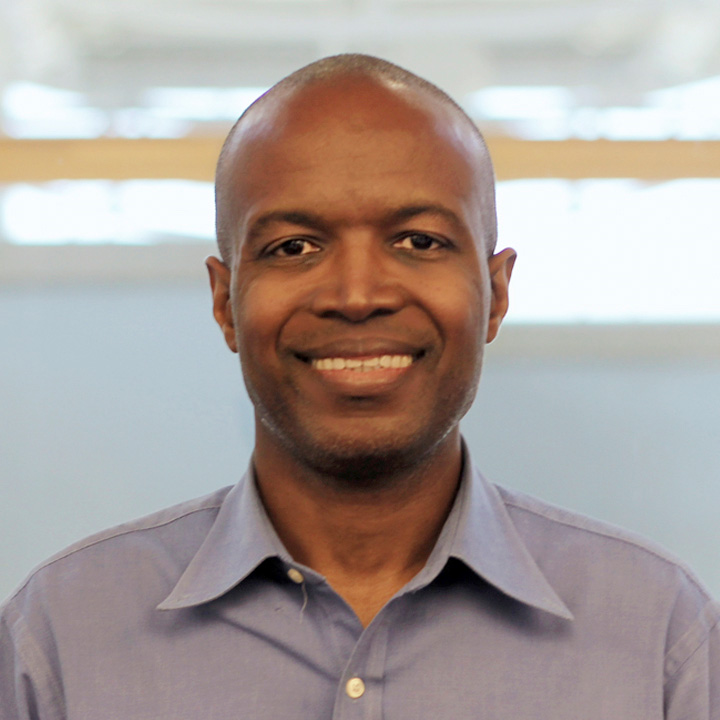
Comas Haynes
Building Technologies; System Design & Optimization; Thermal Systems
Juan-Pablo Correa-Baena is an Assistant Professor and the Goizueta Junior Faculty Rotating Chair in the School of Materials Science and Engineering at the Georgia Institute of Technology in Atlanta, USA.
His group focuses on understanding and control of crystallographic structure and effects on electronic dynamics at the nanoscale of low-cost semiconductors for optoelectronic applications. Juan-Pablo’s group works on advanced deposition techniques, with emphasis on low-cost and high throughput, as well as advanced characterization methods that include synchrotron-based mapping and imaging approaches with nanoscale resolution.
His research program at Georgia Tech has attracted funding from the Department of Energy and the Department of Defense, which funds cutting-edge research on new materials for solar energy conversion.
His work has been cited over 28,000 times (h-index of 59) making him a top cited researcher as recognized by the Web of Science Group, Highly Cited Researchers-cross-field (2019, 2021) and Chemistry (2020), and Nature Index, Leading early career researcher in materials science (2019).
Litchfield received both his Bachelor's and Master's Degree from Georgia Tech in Computer Engineering. Working in cybersecurity since 2012, he has worked in Cyber-Physical System security, network protocol reverse engineering, and large-scale systems vulnerability assessments.
Machine Learning; Modeling & Simulation; Computer Engineering; Architecture & Design; Defense / National Security;
Tarek Rakha is a researcher, educator, and entrepreneur who integrates building design technology and environmental sustainability with the needs of underserved communities. He is Associate Professor of Architecture and Director of the High Performance Building Lab (HPBL) at Georgia Tech, and Co-founder and CEO of Lamarr.AI, a startup that commercializes technology developed through his funded academic research. Tarek is an architect by training, and before joining Georgia Tech in 2019 he was Assistant Professor at Syracuse University, after earning a Ph.D. in Building Technology from MIT in 2015.
Tarek develops novel areas of scholarship focusing on aerial data and robotics for building envelope diagnostics using computer-vision drones, urban energy sensing and computational informatics, as well as heat vulnerability and outdoor thermal comfort modeling at the building and neighborhood scales. His research received support worth over $4M (total project volume ~$7M) from federal agencies such as the US DOE, ARPA-E, and the NSF. His work was also funded by state authorities such as NYSERDA and both NYSDOT and GDOT, philanthropies such as the Sloan Foundation, as well as corporate sponsors including the Coca-Cola Company. He has published his work as author and co-author in more than 70 peer-reviewed journal and conference papers and two have won best paper awards in conferences. He was recently nationally recognized by the Emerging Contributor Award from IBPSA-USA.
As an educator, Tarek connects design, technology, and climate change-centered studios and courses with social justice and the needs of marginalized communities. He was awarded the Georgia Tech Student Recognition of Excellence in Teaching: Class of 1934 Award based on exceptional student evaluation surveys. In 2022, He mentored the DOE’s Solar Decathlon Design Challenge Residential Division Grand Winner team. The team also took home first place in the contest's new Retrofit Housing division. In addition, student groups in his co-taught design studio competed against 400+ submissions in the AIA and ACSA’s 2019 International Design Competition: Here+Now, and won 1st Place and an Honorable Mention (2/6 awards). Furthermore, he coalesces service with his scholarship. He was invited to the Symposium on Simulation for Architecture and Urban Design’s board (SimAUD), and co-edited two conference proceedings as the 2018 General Chair in TU Delft and as the 2019 Program Chair and host of the 10-year anniversary at Georgia Tech.
Dr. Realff’s broad research interests are in the areas of process design, simulation, and scheduling. His current research is focused on the design and operation of processes that minimize waste production by recovery of useful products from waste streams, and the design of processes based on biomass inputs. In particular, he is interested in carbon capture processes both from flue gas and dilute capture from air as well as the analysis and design of processes that use biomass.
Biofuels; Carbon Capture; Separations Technology; System Design & Optimization; SMART Manufacturing; Energy & Water; Separation Technologies; Biochemicals; Chemical Feedstocks; Sugars; Lignin & Hemicellulose; Biofuels
Matthew McDowell joined Georgia Tech in the fall of 2015 as an assistant professor with a joint appointment in the George W. Woodruff School of Mechanical Engineering and the School of Materials Science and Engineering. Prior to this appointment, he was a postdoctoral scholar in the Division of Chemistry and Chemical Engineering at the California Institute of Technology. McDowell received his Ph.D. in 2013 from the Department of Materials Science and Engineering at Stanford University.
McDowell’s research group focuses on understanding how materials for energy and electronic devices change and transform during operation, and how these transformations impact properties. The group uses in situ experimental techniques to probe materials transformations under realistic conditions. The fundamental scientific advances made by the group guide the engineering of materials for breakthrough new devices. Current projects in the group are focused on i) electrode materials for alkali ion batteries, ii) materials for solid-state batteries, iii) interfaces in chalcogenide materials for electronics and catalysis, and iv) new methods for creating nanostructured metals.
Batteries; Nanostructured Materials; Composites; Fabrication; Energy Storage; Thermal Systems
Tequila A. L. Harris is a Professor in the George W. Woodruff School of Mechanical Engineering, and is the director of the Highly Advanced Roll-to-Roll iManufacturing Systems (HARRiS) group. Her research focuses on investigating the fundamental science associated with manufacture of polymer thin films from fluids (e.g., solutions, dispersions, slurries, etc.) as they are coated onto permeable or impermeable surfaces to make components or devices. She explores the connectivity between thin film functionality, based on their manufacture or structure, and their life expectancy, to elucidate mechanisms by which performance or durability can be predicted. In addition to conducting computational analysis, developing analytical models and running experiments, Harris also develops new manufacturing technologies to fabricate thin films, in wide area or discrete patterns. Target applications are well-suited for a variety of industries including food, energy, electronic, and environmental systems to name a few. In conjunction with her research activities, she is committed to the education, mentoring, and advisement of students towards scholarly achievements. She has published over fifty peer-reviewed articles. Harris has several awards including the National Science Foundation's young investigator CAREER Award and the Lockheed Inspirational Young Faculty Award.
Additive/Advanced Manufacturing; Flexible Electronics; Polymers; micro and nanomechanics; Thin Films; Electronics; Energy Storage; Thermal Systems; Manufacturing and Fluid Mechanics; Polymer processing; mechanical system design; fluid flow; mechanical and physical property characterization of thin film
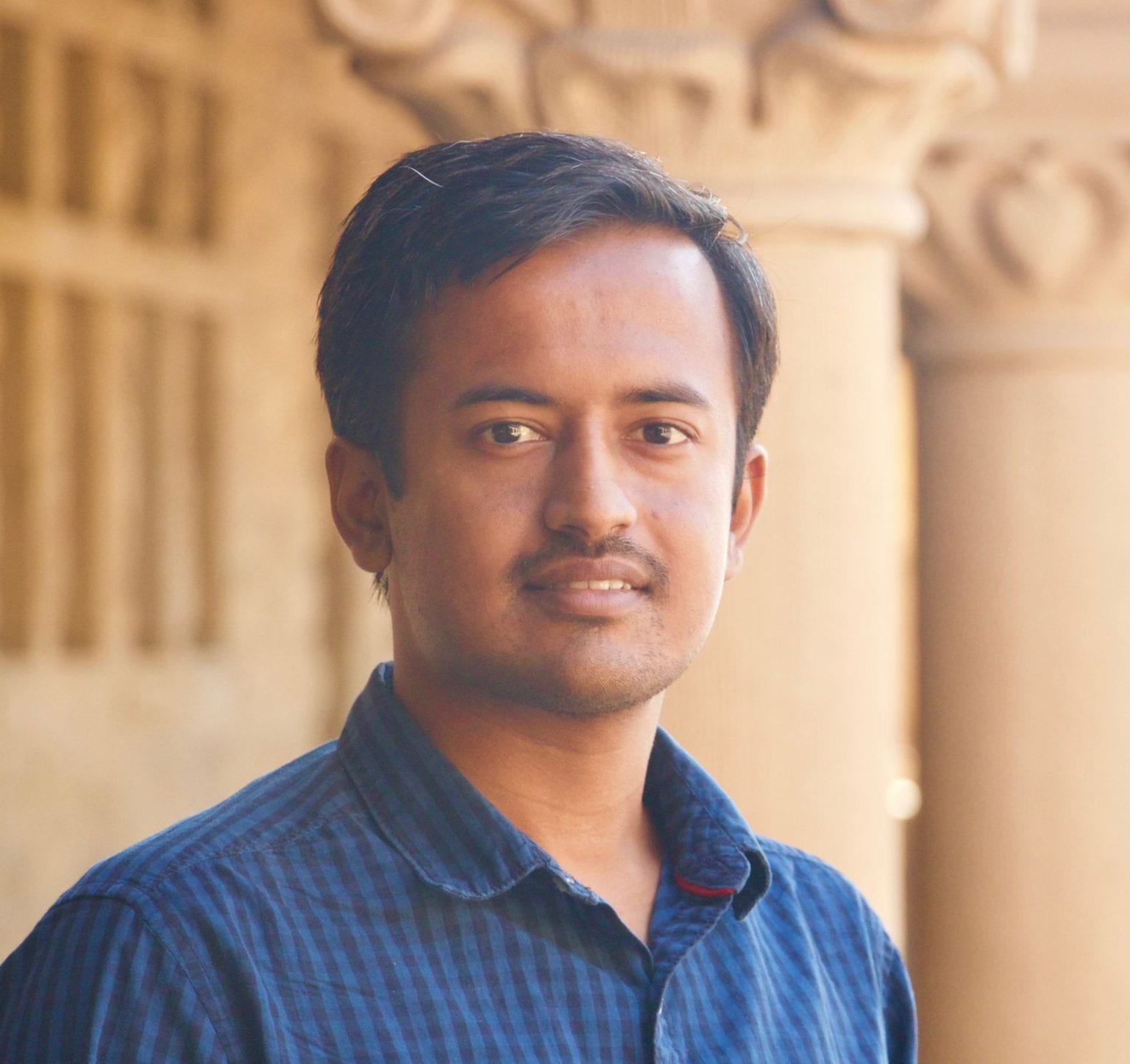
Suhas S. Jain is an Assistant Professor in the Woodruff School of Mechanical Engineering at Georgia Tech. He received his bachelor’s from NIT-Karnataka (India) in 2014, M.S. and Ph.D. from Stanford University in 2018 and 2022, respectively, all in mechanical engineering. Before coming to Georgia Tech, he was a postdoctoral fellow at the Center for Turbulence Research, Stanford University (2022-2023), a researcher at the Institute of Fluid Dynamics, Helmholtz-Zentrum Dresden-Rossendorf, Germany (2014-2015), and a project assistant at the Indian Institute of Science (2015-2016).
His research interests include computational modeling of fluid flows (multiphase flows; turbulent flows; compressible flows; and fluid-structure interaction) with a current focus on modeling atomization, sprays, and phase change for propulsion applications; ice accretion and aerodynamics for sustainable energy and aerospace design; and air-sea interaction modeling for understanding climate change; and modeling of fluid-solid and solid-solid systems for biomedical and high-speed applications. Through the integration of numerical modeling, high-performance computing, and data-driven approaches, Suhas and his group aim to address key challenges in these areas.
Environmental remediation, Renewable energy sources, Lifecycle Impact Assessment & Techno-economic Assessment of Sustainable Technologies, Processes & Products
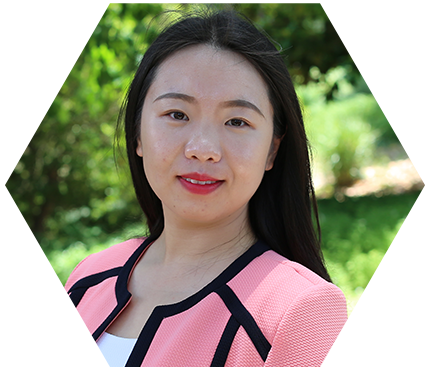
Dr. Fan Zhang received her Ph.D. in Nuclear Engineering and M.S. in Statistics from UTK in 2019. She is the recipient of the 2021 Ted Quinn Early Career Award from the American Nuclear Society and joined the Woodruff School in July, 2021. She is actively involved with multiple international collaborations on improving nuclear cybersecurity through the International Atomic Energy Agency (IAEA) and the DOE Office of International Nuclear Security (INS). Dr. Zhang’s research primarily focuses on the cybersecurity of nuclear facilities, online monitoring & fault detection using data analytics methods, instrumentation & control, and nuclear systems modeling & simulation. She has developed multiple testbeds using both simulators and physical components to investigate different aspects of cybersecurity as well as process health management.
Research interests include instrumentation & control, autonomous control, cybersecurity, online monitoring, fault detection, prognostics, risk assessment, nuclear system simulation, data-driven models, and artificial intelligence applications.