Seymour Goodman

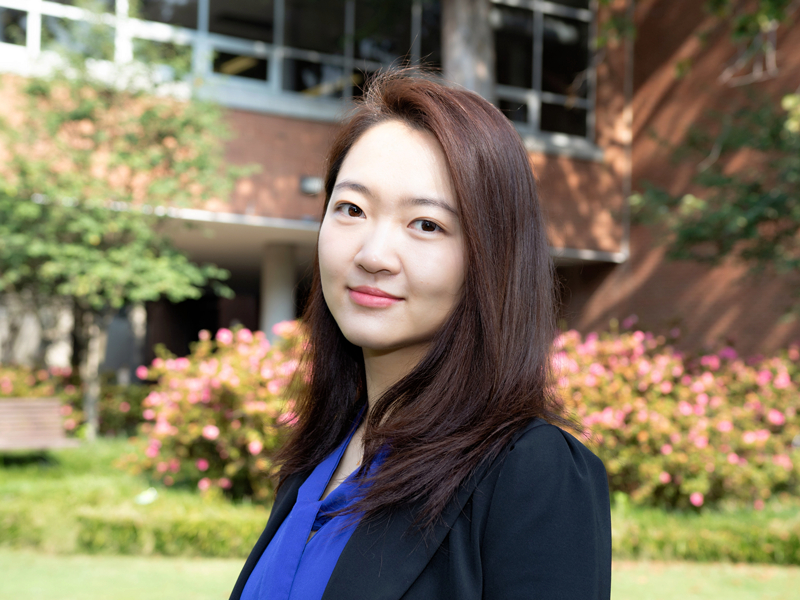
Seymour Goodman's profile picture
goodman@cc.gatech.edu

Seymour E. Goodman, Ph.D., joined the Georgia Tech faculty in 2000 as Professor of International Affairs and Computing and Co-Director of the Georgia Tech Information Security Center, jointly in the Sam Nunn School of International Affairs and the College of Computing. Prof. Goodman's research interests include international developments in the information technologies (IT), technology diffusion, IT and national security, critical infrastructure protection, and related public policy issues. Areas of geographic interest include the former Soviet Union and Eastern Europe, Latin America, the Middle East, South and East Asia, and parts of Africa. Earlier research had been in areas of statistical and continuum physics, combinatorial algorithms, and software engineering. He is the author or co-author of about 150 publications in these subjects, and serves in various editorial capacities for several academic journals, including contributing editor for International Perspectives for the Communications of the ACM since 1990. He has served on numerous study and advisory committees for the ACM, the Departments of Commerce, Defense, and State, the US Congress, and the National Research Council. Prof. Goodman's work has been supported by almost three dozen funding sources, most recently by multi-year grants from the National Science Foundation and the MacArthur Foundation. He teaches several undergraduate and graduate courses in science and technology and national and international security.  In 2010, he was appointed to the Computer Science and Telecommunications Board of the National Research Council of the National Academies. Secondary research interests include the impact of S&T on the American Civil War, World War II, and the Cold War. Prof. Goodman was an undergraduate at Columbia University and obtained his Ph.D. from the California Institute of Technology.

Regents' Professor, School of Computer Science
Professor, Sam Nunn School of International Affairs
Phone
404.385.1461
Office
Habersham 302
Additional Research

Software & Applications; Algorithms; Defense / National Security; Cyber Technology
Santiago Grijalva

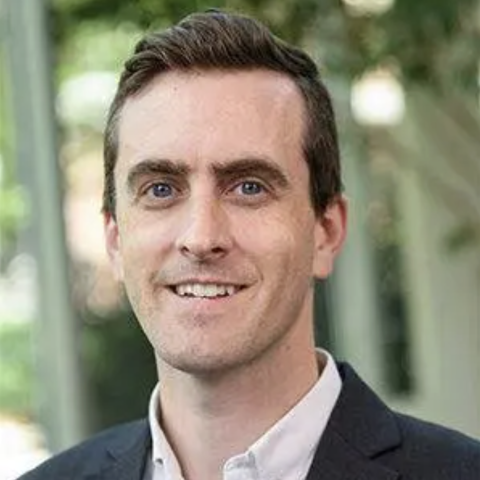
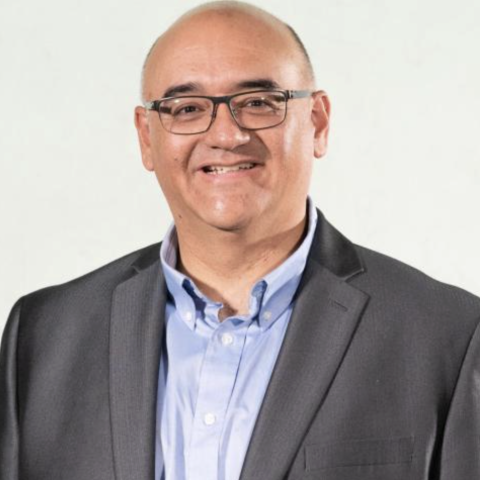
Santiago Grijalva's profile picture
sgrijalva@ece.gatech.edu

Dr. Grijalva joined the Georgia Institute of Technology in the summer of 2009 as Associate Professor of Electrical and Computer Engineering. He is the Director of the Advanced Computational Electricity Systems (ACES) Laboratory, where he conducts research on real-time power system control, informatics, and economics, and renewable energy integration in power. From 2012-2015, Dr. Grijalva served as the Strategic Energy Institute (SEI) Associate Director for Electricity Systems, responsible for coordinating large efforts on electricity research and policy at Georgia Tech. Dr. Grijalva received the Electrical Engineer degree from EPN-Ecuador in 1994, the M.S. Certificate in Information Systems from ESPE-Ecuador in 1997, and the M.S. and Ph.D. degrees in Electrical Engineering from the University of Illinois at Urbana-Champaign in 1999 and 2002, respectively. He was a post-doctoral fellow in Power and Energy Systems at the University of Illinois from 2003 to 2004. From 1995 to 1997, he was with the Ecuadorian National Center for Energy Control (CENACE) as engineer and manager of the Real-Time EMS Software Department. From 2002 to 2009, he was with PowerWorld Corporation as a senior software architect and developer of innovative real-time and optimization applications used today by utilities, control centers, and universities in more than 60 countries. Dr. Grijalva is a leading researcher on ultra-reliable architectures for critical energy infrastructures. He has pioneered work on de-centralized and autonomous power system control, renewable energy integration in power, and unified network models and applications. He is currently the principal investigator of various future electricity grid research projects for the US Department of Energy, ARPA-E, EPRI, PSERC as well as other Government organizations, research consortia, and industrial sponsors. Research interests: Power system and smart grid computation De-centralized and autonomous power control architectures Ultra-reliable electricity internetworks Seamless integration of large-scale renewable energy Electricity markets design and power system economics

Georgia Power Distinguished Professor, School of Electrical and Computer Engineering
Phone
(404) 894-2974
Office
VL E284
Additional Research
  • AI for Power Generation
  • Electrical Grid
  • Energy Storage
  • System Design & Optimization

Richard Simmons

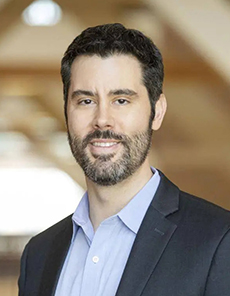
Richard Simmons's profile picture
richard.simmons@me.gatech.edu

Richard Simmons is currently a Principal Research Engineer and the Director of Research and Studies at Georgia Tech’s Strategic Energy Institute (SEI) where he directs cross-cutting energy projects with an emphasis on clean electric power, vehicle efficiency and alternative fuels. He is also an instructor in Georgia Tech’s Woodruff School of Mechanical Engineering, with a specialization in design, mechatronics, and thermal systems. 

Simmons received his bachelor's degree from Georgia Tech, and masters and Ph.D. from Purdue, all in Mechanical Engineering. He is a licensed professional engineer (PE) with more than 20 years of RD&D experience in automotive, advanced materials, and alternative energy and fuels. 

From 2009 to 2012, he served a prestigious American Association for the Advancement of Science S&T (Science and Technology) Policy Fellowship at the U.S. Department of State, providing technical analysis on international policy issues related to renewable energy. He has recently authored numerous publications including an open-access eBook entitled “Understanding the Global Energy Crisis” (Purdue Press, 2014), several book chapters and journal articles related to advanced energy technologies, transportation energy technology, and future energy policy strategies.

Director of Research and Studies, Strategic Energy Institute
Principal Research Engineer
Phone
(404) 385-6326
Additional Research

Biofuels

Research Focus Areas
University, College, and School/Department

Yiyi He

Yiyi He's profile picture
yiyi.he@design.gatech.edu

Yiyi He is an assistant professor in the School of City and Regional Planning (SCaRP) at the College of Design at Georgia Tech. Her research centers on the interdisciplinary fields of urban planning, GIScience, climate science, and artificial intelligence. She is interested in building a better understanding of the uncertainty and asymmetric impacts of climate-change-induced extreme weather events (e.g., flooding, wildfires, extreme heat) on critical components of the built environment (e.g., lifeline infrastructure networks, vulnerable neighborhoods). She leverages data-driven approaches, such as GIS, network science, hyperspectral remote sensing, machine learning, and spatial statistics to tackle complex challenges in climate change and resilience research and to inform more intelligent planning and policy directives.

Her previous work involves using 3D hydrodynamic flood models to simulate flooding under different climate change scenarios and analyze the impact of both coastal and inland flooding on critical infrastructure networks. She received her bachelor’s degree from Nanjing University and her master’s and Ph.D. degree from UC Berkeley.

Assistant Professor, School of City and Regional Planning
Additional Research
  • GI Science Network Science
  • Environmental Planning
Google Scholar
https://scholar.google.com/citations?hl=en&user=xoUOI-wAAAAJ&view_op=list_works&sortby=pubdate

Raphaël Pestourie

Raphaël Pestourie's profile picture
rpestourie3@gatech.edu

Raphaël Pestourie earned his Ph.D. in Applied Mathematics and an AM in Statistics from Harvard University in 2020. Prior to Georgia Tech, he was a postdoctoral associate at MIT Mathematics, where he worked closely with the MIT-IBM Watson AI Lab. Raphaël’s research focuses on scientific machine learning at the intersection of applied mathematics and machine learning and inverse design via scientific machine learning and large-scale electromagnetic design. 

Assistant Professor, School of Computer Science
Additional Research
  • Scientific Machine Learning
  • Inverse Design in Electromagnetism
Research Focus Areas
Google Scholar
https://scholar.google.com/citations?hl=en&user=Lxv3W74AAAAJ&view_op=list_works&sortby=pubdate

Aaron Stebner

Aaron Stebner's profile picture
aaron.stebner@gatech.edu

Aarn Stebner works at the intersection of manufacturing, machine learning, materials, and mechanics. He joined the Georgia Tech faculty as an associate professor of Mechanical Engineering and Materials Science and Engineering in 2020.

Previously, he was the Rowlinson Associate Professor of Mechanical Engineering and Materials Science at the Colorado School of Mines (2013 – 2020), a postdoctoral scholar at the Graduate Aerospace Laboratories of the California Institute of Technology (2012 – 2013), a Lecturer in the Segal Design Institute at Northwestern University (2009 – 2012), a Research Scientist at Telezygology Inc. establishing manufacturing and “internet of things” technologies for shape memory alloy-secured latching devices (2008-2009), a Research Fellow at the NASA Glenn Research Center developing smart materials technologies for morphing aircraft structures (2006 – 2008), and a Mechanical Engineer at the Electric Device Corporation in Canfield, OH developing manufacturing and automation technologies for the circuit breaker industry (1995 – 2000).

Associate Professor, School of Mechanical Engineering and Materials Science and Engineering
Phone
404.894.5167
Google Scholar
https://scholar.google.com/citations?hl=en&user=OpRg9IsAAAAJ&view_op=list_works&sortby=pubdate

Dylan Brewer

Dylan Brewer's profile picture
brewer@gatech.edu

Dylan Brewer joined the faculty at the School of Economics in 2019. He received his PhD in Economics with a dual major in Environmental Science and Policy from Michigan State University in May 2019 as well as a Master of Arts degree in Economics from the same institution in 2016. Prior to his graduate studies, Dylan completed a Bachelor of Arts degree with majors in Economics and International Relations at the University of Virginia in 2014. Dylan's research uses the tools of applied econometrics and machine learning to answer questions in energy and environmental economics. He has published research on household energy consumption, the economics of thermostat settings, recycling, electricity demand, machine learning methodology, and air quality among other topics. He teaches courses on environmental economics at the graduate and undergraduate level, and his Principles of Microeconomics course has won awards at Georgia Tech.

Assistant Professor, School of Economics

Ryan Lively

Ryan Lively's profile picture
ryan.lively@chbe.gatech.edu

Ryan Lively was born in 1984. He spent approximately 16 years in Gainesville, FL and attended almost every home football game at The Swamp. He enrolled at Georgia Tech in 2002 as an eager Chemical Engineering student and has been a Yellow Jacket at heart ever since. During his studies at Georgia Tech, Ryan worked on research projects as diverse as ab initio quantum mechanical methods to estimate molecular binding energies, fresh Georgia peach preservation, composite spinneret design, dual-layer hollow fiber membrane spinning, and sorbent-loaded fiber spinning. Ryan introduced a rapid temperature swing adsorption (RTSA) approach for post-combustion CO2 capture, which was successfully demonstrated by adapting knowledge developed in membrane science to design unique nanoscale composite adsorbent/heat exchangers. After his Ph.D. (awarded in 2010), he spent almost 3 years as a post-doctoral research engineer at Algenol Biofuels, where he published 25 papers and filed two U.S. patent applications. His work at Algenol focused on developing energy-efficient liquid and vapor separation systems for downstream biofuel purification. 

He is now the Thomas C. DeLoach Professor in the School of Chemical & Biomolecular Engineering at the Georgia Institute of Technology. His current research seeks to revolutionize fluid separation processes critical to the global energy and carbon infrastructure. He has a specific focus on membrane- and adsorbent-based science and technology to address some of the most difficult chemical separations. His group’s research activities range from fundamental material science and discovery to translational engineering applications focusing on making and testing separation devices. 

Ryan has received a variety of awards for his research efforts including the 2020 Allan P. Colburn Award from AIChE, and the 2022 Curtis W. McGraw Award from ASEE. He is currently an Editor for the Journal of Membrane Science and is the Secretary of the North American Membrane Society. He is the Director of the Center for Understanding & Controlling Accelerated and Gradual Evolution of Materials for Energy (UNCAGE-ME), an Energy Frontier Research Center of the US Department of Energy. He has over 160 publications in the field of separations including articles in Science, Nature and other impactful venues.

Professor, School of Chemical and Biomolecular Engineering
Thomas C. DeLoach Jr. Endowed Professorship
Phone
(404) 894-8795
Additional Research

Biofuels; Carbon Capture; Separations Technology; Membranes; Adsorbents;Polymers; Microporous Materials

Google Scholar
https://scholar.google.com/citations?hl=en&user=1ktJriEAAAAJ&view_op=list_works&sortby=pubdate

Laura Taylor

Laura Taylor's profile picture
laura.taylor@gatech.edu

Laura Taylor is the director of Energy Policy and Innovation Center (EPIcenter) at Georgia Tech. 

Taylor has more than 30 years of experience in economics research, outreach, and policy engagement in the Southeast. Her research focuses on policy evaluation and the valuation of natural resources and the environment, including measuring the broader economic benefits associated with improved air, water, and ecosystem quality. Recent applications include understanding the land-use and community impacts of renewable energy deployment; quantifying the health effects of air pollution; and improving benefits estimation for policies designed to reduce human mortality. Her research has received funding from a variety of sources including the U.S. EPA, USDA, U.S. Department of Interior and the National Science Foundation.    

Prior to her leadership role at the EPIcenter, Taylor served as the chair of the School of Economics at Georgia Tech from 2018-2024. During her time as chair, the School of Economics increased its size significantly, hiring 19 new faculty members, and the number of students pursuing a major in economics increased by more than 50%. Economics also expanded its teaching and research in several areas including health, energy, environment, globalization, theory, and data analytics. The school’s bachelor’s, master’s, and Ph.D. programs achieved federal STEM designation in 2019, reflecting the curriculum’s tech-centered approach to liberal arts education and emphasis on using mathematical and statistical models. The school’s undergraduate economics program is ranked No. 1 among public universities in Georgia and No. 21 among public universities nationally in the 2025 U.S. News & World Report Best Colleges rankings. Prior to joining the faculty at Georgia Tech in 2018, Taylor was director of the Center for Environmental and Resource Economic Policy at North Carolina State University from 2007-2018.  

Taylor is an elected fellow and past president of the Association of Environmental and Resource Economists. She has held numerous advisory board positions, including the environmental economics subcommittee of the U.S. Environmental Protection Agency’s science advisory board and the legislative research commission advisory subcommittee on offshore energy exploration for the North Carolina General Assembly. 

Director, Energy Policy and Innovation Center (EPIcenter)
Professor, School of Economics
Additional Research

Environmental Economics Policy Analysis

David Flaherty

David Flaherty's profile picture
dflaherty3@gatech.edu

David Flaherty, PhD is a Professor in the School of Chemical and Biomolecular Engineering at Georgia Tech since June 2023 (starting Summer 2023, previously at the University of Illinois, Urbana-Champaign). His research focuses on developing the science and application of catalysis in the pursuit of sustainability. In recent years, his group’s contributions have been featured in Science, Nature Catalysis, Journal of the American Chemical Society, ACS Catalysis, Journal of Catalysis and other prestigious journals. Dr. Flaherty has received several recognitions for excellence and innovation in catalysis including the Eastman Foundation Distinguished Lecturer in Catalysis, Department of Energy Early Career Award, and the National Science Foundation CAREER Award. Dr. Flaherty engages frequently with industry to translate the groups scientific achievements from the lab into practice. Through university-industry partnerships, the group has filed multiple patents disclosing synthesis of catalytic materials and development of processes. Beyond his research activities, Dr. Flaherty enjoys teaching topics in chemical engineering in the classroom (kinetics, separations, transport, reaction engineering) and mentoring the next generation of research leaders and educators.

Prof. Flaherty received his B.S. in Chemical Engineering from the University of California, Berkeley and his Ph.D. in Chemical Engineering from the University of Texas at Austin under the direction of Prof. C. Buddie Mullins. He conducted postdoctoral work at the University of California, Berkeley with Prof. Enrique Iglesia.

Thomas C. DeLoach Jr. Professor, School of Chemical and Biomolecular Engineering
Phone
404-894-5922
Office
Ford ES&T 2204