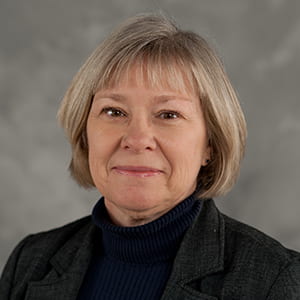
Ari Glezer

Ari Glezer's profile picture
ari.glezer@me.gatech.edu

Dr. Glezer began at Tech in 1992 as an Associate Professor. He was named to the Woodruff Chair in Thermal Systems in 2002. Prior, he was an Assistant and Associate Professor at the University of Arizona.

Teaching Interests

Professor Glezer's teaching interests encompass core mechanical engineering subjects at both undergraduate and graduate levels, including fluid mechanics, aerodynamics, heat transfer, and energy systems. His courses emphasize fundamental principles, analytical methods, and experimental techniques. He fosters an interactive learning environment and actively engages graduate and undergraduate students in research-driven projects to deepen their understanding of fluid dynamics and energy conversion.

Research Interests

Professor Glezer's research focuses on fluid mechanics and aerodynamics with an emphasis on flow control, fluid-structure interactions, and energy transport phenomena. His work explores the fundamental physics of turbulence, vortex dynamics, and aerodynamic performance enhancement, employing experimental and computational approaches to address challenges in aerodynamics, propulsion systems, energy systems, and thermal management.

Recent Publications

  • Nichols, D. A., Vukasinovic, B., and Glezer, A., “On the Formation of a Ground Vortex In Crossflow,” J. Fluid Mech., 1012, 2025. 
  • Peterson, C. J., Vukasinovic, B., and Glezer, A., “The Evolution and Scaling of Controlled Flow Separation at the Inlet of a Diverging Channel,” Exp. Fluids, 66, 2025. 
  • Burrows, T.J., Vukasinovic, B., Glezer, A., Lakebrink, M.T., and Mani, M., “Controlled Flow in a Serpentine Diffuser with a Cowl Inlet,” J. Aircraft, 62, 2025.
  • Vukasinovic, B., Funk, R. B., and Glezer, A., “Circulation Control using Arrays of Fluidically Oscillating Jets,” AIAA J., 63, 2025.
  • Boziuk, T. R., Smith, M. K., and Glezer, A., “Dynamics of Vapor Bubble Condensation under Directional Ultrasonic Actuation,” Phys. Fluids, 35, 2023.
Professor, Woodruff School of Mechanical Engineering
Woodruff Chair, Thermal Systems
Phone
404.894.3266
Office
Love Building, Room 239
Additional Research

Wind; Fluid Mechanics and Heat Transfer; Combustion; and Energy Systems; Fluid mechanics; turbulent shear flows; flow control; diagnostics

Research Focus Areas
University, College, and School/Department

David S. Sholl

David S.  Sholl's profile picture
david.sholl@chbe.gatech.edu

Sholl’s research focuses on materials whose macroscopic dynamic and thermodynamic properties are strongly influenced by their atomic-scale structure. Much of this research involves applying computational techniques such as molecular dynamics, Monte Carlo simulations and quantum chemistry methods to materials of interest. Although the group's work is centered on computational methods, it involves extensive collaboration with experimental groups and industrial partners.

David Sholl is the Executive Director and Vice Provost for the University of Tennessee-Oak Ridge Innovation Institute (UT-ORII). More information about UT-ORII is available at utorii.com. David also leads ORNL’s Transformational Decarbonization Initiative. From 2013-2021 David was the School Chair of Chemical & Biomolecular Engineering at Georgia Tech. In 2022-2023, he was a Portfolio Strategy Advisor for DOE’s Office of Clean Energy Demonstrations (OCED), where he was the lead author OCED’s inaugural multiyear program plan. He is a Fellow of AIChE and AAAS and in 2024 was elected to the National Academy of Engineering. 

Dr. Sholl has published hundreds of peer-reviewed articles and several books, including Density Functional Theory: A Practical Introduction (with Jan Steckel, 2009) and Success and Creativity in Scientific Research: Amaze Your Friends and Surprise Yourself (2021). His research has primarily focused on using materials modeling methods to develop new materials and processes for chemical separations and energy applications. He has advised over 80 PhD students and postdoctoral researchers.

View Sholl’s ORNL bio here.

Education

B.Sc. 1992, The Australian National UniversityM.Sc. 1993, University of ColoradoPh.D. 1995, University of Colorado

Professor, School of Chemical and Biomolecular Engineering
Phone
404.894.2822
Office
ES&T 2214
Additional Research
  • Metal-Organic Frameworks
  • Separation Membranes
  • Separations Technology
  • Carbon Capture
  • Hydrogen
  • SMART Manufacturing
  • Sustainable Manufacturing
  • Biochemicals
Google Scholar
https://scholar.google.com/citations?hl=en&user=BR7UkKYAAAAJ&view_op=list_works&sortby=pubdate

Ellen Yi Chen Mazumdar

Ellen Yi  Chen Mazumdar's profile picture
ychen3161@gatech.edu

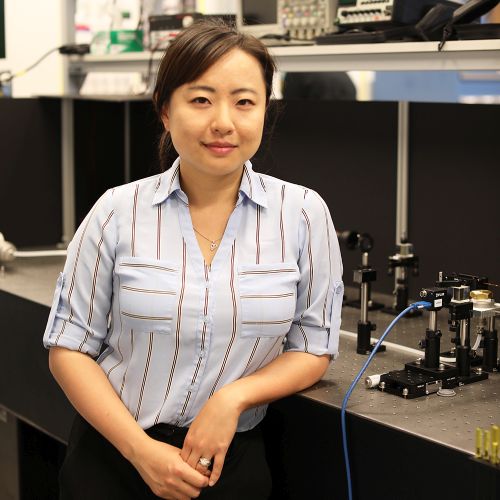
Dr. Mazumdar started at the Woodruff School of Mechanical Engineering at Georgia Tech in January of 2019 and currently has a courtesy appointment with the Guggenheim School of Aerospace Engineering. She graduated with her Ph.D. from Massachusetts Institute of Technology and completed a postdoctoral appointment at Sandia National Laboratories in the Diagnostic Science and Engineering group. Her research interests include the design of new diagnostic techniques and sensor systems for studying combustion, multiphase flows, hypersonic flows, and energetic materials. Her group utilizes new composite sensing materials, optical diagnostics, magnetostatics, and system identification methods to study these complex physical phenomena.

Assistant Professor; School of Mechanical Engineering
Director; The Sensing Technologies Lab
Phone
404.894.3242
Office
Love 229
Additional Research
  • New sensor systems diagnostic technique
  • Biomedical materials
  • Hypersonics

Donald White

Donald White's profile picture
don.white@ce.gatech.edu

Don White is a professor in the School of Civil and Environmental Engineering (CEE). He has been a member of the CEE faculty at Georgia Tech since 1997. Prior to joining Georgia Tech, White served on the faculty at the Purdue University School of Civil Engineering from 1987 to 1996. He received his doctorate in Structural Engineering from Cornell University in 1988, and is an alumnus of North Carolina State University. Prior to graduate study, White worked as a structural engineer in Raleigh, NC.

White’s research covers a broad area of design and behavior of steel and composite steel-concrete structures as well as computational mechanics, methods of nonlinear analysis and applications to design. White is a member of the AISC Technical Committees 4, Member Design, and 10, Loads, Analysis and Stability, the AISI Bridge Design Advisory Group, the AISC Specification Committee, and several AASHTO/NSBA Steel Bridge Collaboration Task Groups. He is past Chair of the SSRC Task Group 29, Second-Order Inelastic Analysis of Frames and currently serves on the Executive Committee of the SSRC.

White has served as a major contributor to the steel design and structural analysis sections of the AASHTO LRFD Bridge Design Specifications and the ANSI/AISC Specification for Structural Steel Build­ings during the past 20 years. He was a lead author on the 1997 ASCE publication Effective Length and Notional Load Approaches for Assessing Frame Stability: Implications for American Steel Design, which was a precursor of the development of the AISC Direct analysis Method of design, referred to as the DM. Furthermore, White was a major participant ad hoc task group efforts leading to the development of the DM, which is the preferred method of stability design in the AISC Specification for Design of Steel Building Structures. Subsequent to these developments, the Metal Building Manufacturers Association (MBMA) provided White the opportunity to extend a number of these developments to updated procedures for design of frames using web-tapered members, which is captured within the AISC/MBMA Design Guide 25. White received the 2005 Special Achievement Award and the 2009 T.R. Higgins lectureship award from AISC for his research on design criteria for steel and composite steel-concrete members in bridge and building construction. He received the 2006 Shortridge Hardesty Award from ASCE for his research on advanced frame stability concepts and practical design formulations. For efforts leading to the comprehensive update to the 2005 AASHTO LRFD provisions for steel I- and box-girder bridge design, and unification of AASHTO LRFD provisions for straight and curved girder bridge design, White received the 2007 Richard S. Fountain Bridge Task Force Award and, with M. Grubb and W. Wright, the 2006 Richardson Medal from the Engineers’ Society of Western Pennsylvania.

White has conducted research on a wide range of topics relating to stability analysis and design and construction engineering of steel bridge structures. This includes work on construction simulation of curved and skewed steel bridges, investigation of the behavior of thin-web girders, and stability of components and structural systems during construction and in their final constructed condition. He was one of several researchers privileged to be involved closely with curved steel bridge experimental testing at the FHWA Turner Fairbank Highway Research Center from 1997 through 2005. White was P.I. and lead author of the NCHRP Report 725, Guidelines for Analytical Methods and Construction Engineering of Curved and Skewed Steel Girder Bridges. This work contributed additional substantive advances to the state-of-the-art in the engineering of curved and skewed steel girder bridge structures. White is currently P.I. on a multi-year FHWA-sponsored effort with the goal of modernizing the AASHTO LRFD provisions pertaining to all types of noncomposite box-section members including truss members, edge girders in cable-stayed spans, arch ribs, arch ties, and tower legs.

Professor, School of Civil and Environmental Engineering
Phone
404.894.5839
Office
Mason 5139B
Additional Research

Computer-Aided Engineering; computational mechanics; Structural Materials

Research Focus Areas
Google Scholar
https://scholar.google.com/citations?hl=en&user=XMsIVW0AAAAJ&view_op=list_works&sortby=pubdate

Spyros Pavlostathis

Spyros Pavlostathis's profile picture
spyros.pavlostathis@ce.gatech.edu

Dr. Spyros G. Pavlostathis is Professor Emeritus of Environmental Engineering at the School of Civil and Environmental Engineering, Georgia Institute of Technology, Atlanta, GA. A recipient of the Fulbright Scholarship, Dr. Pavlostathis completed his MS and Ph.D. in Environmental Engineering at Cornell University after obtaining his Diploma in Agricultural Engineering at the Agricultural University of Athens, Greece. He is also the recipient of an Honorary Doctorate Degree from the Hellenic Open University, Greece. Dr. Pavlostathis is a Board Certified Environmental Engineer Member of the American Academy of Environmental Engineers and Scientists (AAEES), and a Fellow of International Water Association (IWA), Water Environment Federation (WEF), and American Society of Civil Engineers (ASCE).

Dr. Pavlostathis is internationally recognized for his research and expertise in the areas of environmental biotechnology and bioprocess engineering. His recent research focused on bioenergy production via co-digestion of high-strength waste and municipal sludge, as well as bioelectrochemical systems for hydrogen production and the upgrade of anaerobic digestion biogas. His research was funded by NSF, EPA, USDA, DOE, USGS, DOD, SERDP, EPRI, NY State ERDA, State of Georgia TIP, as well as numerous industrial foundations, municipalities and companies. Dr. Pavlostathis has published over 200 peer-reviewed papers and authored over 250 publications including books or book chapters. Dr. Pavlostathis has organized or chaired over 50 conferences and conference sessions and frequently serves as a consultant, invited speaker and panelist on behalf of city, county, state and federal agencies in the US and abroad. An active member of several professional organizations, Dr. Pavlostathis has served on the Editorial Boards of the Journal of Environmental Engineering, Water Science & Technology, Biotechnology Letters, Journal of Hazardous Materials, Water Environment Research, Water Quality Research Journal, and Environment International.

Dr. Pavlostathis is the recipient of numerous fellowships, awards and distinctions. Throughout his academic career, Dr. Pavlostathis has been a dedicated educator of future environmental engineers, teaching at both the undergraduate and graduate level. Committed to the mission of teaching, he was actively engaged in the development of curriculum and was involved in the advisement of both graduate and undergraduate engineering students. In recognition of his experience and high standing in the education of aspiring engineers he has been invited to give over 50 short courses and lectures both nationally and worldwide. He has served abroad as an evaluator of engineering curricula and programs, as well as an external thesis reviewer. Through his research activities, he has mentored 23 post-doctoral fellows and visiting scholars, 17 Ph.D. and 25 MS students, who have gone on to work in consulting, state and federal regulatory agencies, as well as academia, and provided many research opportunities for undergraduate students.

Research

  • Environmental biotechnology and bioprocess engineering for the bioremediation of contaminated natural systems and the treatment of industrial and municipal wastewater
  • Fate and biotransformation of recalcitrant organic compounds and emerging environmental contaminants
  • Disinfectant-induced antibiotic resistance
  • Bioenergy and biofuels from biomass and waste streams
  • Microbial fuel cell and bioelectrochemical technology
  • Kinetics, modeling and simulation of biotransformation and biotreatment processes

Education

  • Ph.D.: Environmental Engineering (Major)/Biochemical Engineering (Minor), Cornell University, 1985
  • M.S.:  Environmental Engineering (Major)/Agricultural Waste Management (Minor), Cornell University, 1982
  • Diploma: Agricultural Engineering, Agricultural University of Athens, Greece, 1974

Distinctions & Awards

(2013 onwards)

  • Georgia Institute of Technology/School of Civil & Environmental Engineering – Sustained Research Award (2013)
  • Association of Environmental Engineers and Scientists (AEES), Georgia Institute of Technology – Outstanding Faculty Award (2014)
  • Co-advisor, Georgia Institute of Technology/AEES Best Ph.D. Thesis Award (P. Sun; 2014)
  • Co-advisor, ACS/Division of Environmental Chemistry – Graduate Student Best Paper Award (P. Sun; 2014)
  • Honorary Professorship in Innovative Pollution Control and Resources Reuse, Chinese Ministry of Education (111 Program); Tongji University, College of Environmental Science & Engineering, Shanghai, P. R. China (2014 – 2017)
Professor, School of Civil and Environmental Engineering
Phone
(404) 894-9367
Additional Research

Energy Storage; Biofuels

Research Focus Areas
University, College, and School/Department

Phanish Suryanarayana

Phanish Suryanarayana's profile picture
phanish.suryanarayana@ce.gatech.edu

Phanish Suryanarayana joined the School of Civil and Environmental Engineering at the Georgia Institute of Technology in August 2011. He received his B.Tech. from Indian Institute of Technology, Madras, India in 2005. He obtained his M.S. in Aeronautics from California Institute of Technology in 2006. Subsequently, he received his Ph.D. in Aeronautics from California Institute of Technology in 2011 for his thesis titled "Coarse-graining Kohn-Sham Density Functional Theory". His research interests are in the areas of multiscale modeling, ab-initio calculations, density functional theory, continuum mechanics and smart materials. Overall, he is interested in developing efficient numerical methods for solving problems arising in a variety of fields. On a personal level, Dr. Suryanarayana is a sports enthusiast. He plays badminton, cricket, waterpolo, and ultimate frisbee. He also is an avid gamer (PC) and enjoys playing bridge and other board game

Professor, School of Civil and Environmental Engineering
Phone
404.894.2773
Office
Mason 5139A
Additional Research
  • Computational Materials Science
  • Energy Use & Conservation
  • High Performance Computing
Google Scholar
https://scholar.google.com/citations?hl=en&user=emIr7xQAAAAJ&view_op=list_works&sortby=pubdate

Henry La Pierre

Henry La Pierre's profile picture
la_pierre@chemistry.gatech.edu
Professor, School of Chemistry & Biochemistry
SEI Lead: Nuclear Initiative
Phone
(404) 385-3258
Additional Research

Nuclear

Chip White

Chip White's profile picture
cwhite@isye.gatech.edu
Schneider National Chair in Transportation and Logistics
Professor, School of Industrial and Systems Engineering
Phone
(404) 894-2301
Additional Research

Smart Infrastructure; System Design & Optimization

Marilyn Smith

Marilyn Smith's profile picture
marilyn.smith@ae.gatech.edu

Marilyn Smith is a Professor in the School of Daniel Guggenheim School of Aerospace Engineering at the Georgia Institute of Technology. She is director of Georgia Tech's Vertical Lift Research Center of Excellence (VLRCOE), where she leads a seven-university team of experts in vertical lift research for the U.S. Army, U.S. Navy and NASA. She has partnered with the Georgia Tech Research Institute (GTRI) to successfully win multiple research funding mechanisms for both organizations that total more than $200 million dollars. As the director of the AE School's Computational Nonlinear Computational Aeroelasticity Lab, Prof. Smith leads an internationally recognized and award-winning research team in the areas of unsteady aerodynamics and computational aeroelasticity using Computational Fluid Dynamics (CFD) across rotary-wing, fixed wing and launch vehicles, as well as sustainable energy. As a member of the NASA FUN3D development team, Prof. Smith contributes to state-of-the-art unstructured algorithm development, in particular for overset, moving frames. As an affiliate of the Aerospace Systems Design Lab (ASDL), she helps to integrate high performance computing with the design process. Prof. Smith is the author or co-author of more than 200 technical publications, and her research products are in active use by the US Government and other organizations, including the Drone Racing League. She is active internationally on three NATO AVT Panels investigating nonlinear gusts behaviors on UAVs and collaboration of experimental/computational aerodynamics. She is on Board of Directors of the Vertical Lift Consortium (VLC) and the Vertical Flight Society (VFS). She is also the Deputy Technical Director for Aeromechanics for the VFS. Prof. Smith has demonstrated her leadership as ARO Dynamic Stall Workshop Chair (2019); 70th AHS Annual Forum Technical Chairperson (2014); 69th AHS Annual Forum Technical Deputy Chairperson (2013); and 2014 Overset Grid Symposium (OGS) Chairperson. She was a member on the first International Aeroelastic Prediction Workshop Organizing Committee and is a member of the OGS organizing committee. Prof. Smith has been a guest expert in aviation for National Geographic, PBS, and NPR, as well as local television and numerous publications.

Professor, Guggenheim School of Aerospace Engineering
Director, Vertical Lift Research Center of Excellence
Phone
404.894.3065
Office
Weber 202
Additional Research

aeroelasticity; aerodynamics; computational fluid dynamics

Research Focus Areas
Google Scholar
https://scholar.google.com/citations?hl=en&user=lEKsoQIAAAAJ&view_op=list_works&sortby=pubdate

Christopher Jones

Christopher Jones's profile picture
cjones@chbe.gatech.edu

Chris Jones was born in suburban Detroit, Michigan in July of 1973. After his primary and secondary schooling and 14 years living Troy, Michigan, he enrolled as a chemical engineering student at the University of Michigan. In route to earning a BSE in chemical engineering, Chris carried out research on transition metal carbide and nitride catalytic materials under the direction of Levi Thompson. After graduating in 1995, Chris moved to Pasadena, California, to study inorganic materials chemistry and catalysis under Mark E. Davis at Caltech. There he earned M.S. and Ph.D. degrees in chemical engineering in 1997 and 1999, respectively. Subsequently, he studied organometallic chemistry and olefin polymerization under the direction of both Davis and John E Bercaw at Caltech. He started as an assistant professor at Georgia Tech in the summer of 2000 and was promoted to associate professor in July 2005. In May, 2005, he was appointed the J. Carl and Sheila Pirkle Faculty Fellow, followed by a promotion to professor in July 2008. He was named New-Vision Professor of Chemical and Biomolecular Engineering in July 2011. In 2015, he became the Love Family Professor of Chemical and Biomolecular Engineering, and in 2019 the William R. McLain Chair. Chris was named the associate vice president for research at Georgia Tech in November 2013. In this role, he directed 50% of his time on campus-wide research administration with a primary focus on interdisciplinary research efforts and policy related to research institutes, centers and research core facilities. In 2018, he served as the interim executive vice-president for research, before returning full time to his research and teaching roles in chemical and biomolecular engineering in 2019.

Jones directs a research program focused primarily on catalysis and CO2 separation, sequestration and utilization. A major focus of his laboratory is the development of materials and processes for the removal of CO2 from air, or “direct air capture” (DAC). In 2010 he was honored with the Ipatieff Prize from the American Chemical Society for his work on palladium catalyzed Heck and Suzuki coupling reactions. That same year, he was selected as the founding Editor-in-Chief of ACS Catalysis, a new multi-disciplinary catalysis journal published by the American Chemical Society. In 2013, Chris was recognized by the North American Catalysis Society with the Paul E. Emmett Award in Fundamental Catalysis and by the American Society of Engineering Education with the Curtis W. McGraw Research Award. In 2016 he was recognized by the American Institute of Chemical Engineers with the Andreas Acrivos Award for Professional Progress in Chemical Engineering, distinguishing him as one of the top academic chemical engineers under 45. In 2020, after ten years building and leading ACS Catalysis, he was selected as the founding Editor-in-Chief of JACS Au by an international editorial search committee commissioned by the ACS. Dr. Jones has been PI or co-PI on over $72M in sponsored research in the last seventeen years, and as of December 2020, has published over 300 papers that have been cited >28,000 times. He has an H-Index of 82 (Google Scholar).

Professor and John F. Brock III School Chair, School of Chemical and Biomolecular Engineering
Phone
404.385.1683
Office
ES&T 2202
Additional Research

CO2 capture, catalysis, membrane and separations, separations technology, catalysis, carbon capture, biofuels

Google Scholar
https://scholar.google.com/citations?hl=en&user=ltWKpYgAAAAJ&view_op=list_works&sortby=pubdate