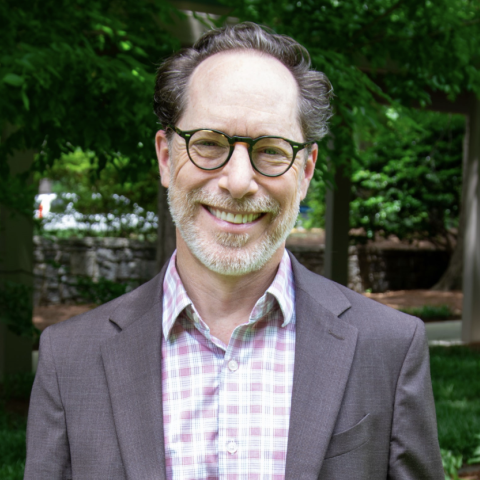
Emily Barrett

Portrait of Emily Barrett
emily.barrett@design.gatech.edu

Emily Barrett is an Assistant Professor of City and Regional Planning at Georgia Tech, where her work focuses on the intersection of community-based geographic information systems (GIS), economic geography, and urban development.

Her latest research examines spatial inequities across U.S. cities, focusing on municipal budgets as pivotal sites of debate for economic democracy. As a dedicated community-based researcher, Barrett has a history of partnering with organizations like the Nashville People’s Budget Coalition and Stand Up Nashville. Through this work, she contributes to broad debates in urban planning, revealing how organizers are reimagining public finance to create more affordable cities.

She holds a Ph.D. in Community, Research and Action from Vanderbilt University and a master’s degree in Geography from the University of Kentucky.

Assistant Professor
IRI And Role

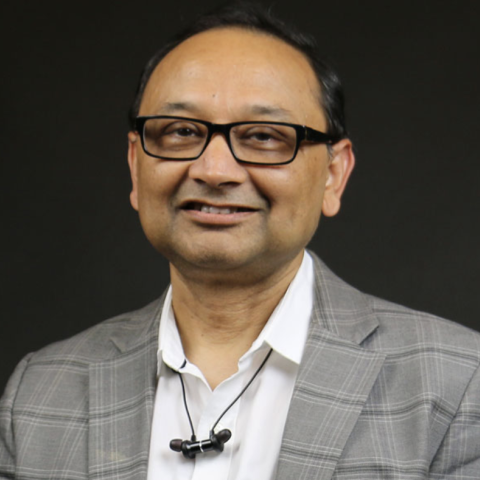
Megan Conville

Megan Conville portrait

Megan Conville is a Ph.D. candidate in the School of City and Regional Planning in the College of Design. Her research focuses on the sustainable social development of affordable housing through the lens of the tenant selection process. Megan recently completed an internship in the Department of Community Affairs in the City of Atlanta where she was able to see firsthand how policy and regulation impact low-income households. In her time at Georgia Tech, she has served as both a Graduate Research Assistant and a Graduate Teaching Assistant. She received the Georgia Institute of Technology President’s Fellowship for the 2020 – 21 academic year.

Megan received a Master’s degree in Global Economic Governance and Policy from the School of Oriental and African Studies, University of London, and a Bachelor’s in Business Administration and International Business from Seattle University, where she graduated cum laude.

Advisor: Elora Raymond

BBISS Graduate Fellow - Second Cohort

Gregory Randolph

Gregory Randolph's profile picture
gregory.randolph@design.gatech.edu

Gregory F. Randolph is an Assistant Professor in the School of City and Regional Planning. His research examines how local economies and urbanization patterns are shaped by major 21st-century transitions—technological, energy, and demographic—with a focus on inequality. He is currently writing a book on agrarian-to-urban transformations in India, under contract with Oxford University Press. He is also a research lead for FutureWORKS, a five-year program on the future of work in the Global South funded by the International Development Research Centre (Canada), through which he is examining the impact of decarbonization on spatial inequalities.

In addition to his academic research, Professor Randolph works with both governmental and non-profit institutions in their efforts to create inclusive urban economies. A decade ago, he co-founded the Just Jobs Network, a non-profit institute based in New Delhi that advises governments across the Global South on labor and employment policies. He is a Senior Research Fellow at Kindred Futures, an Atlanta-based organization working to build collective wealth in Black communities in the American South. He has also served as a policy advisor to the Los Angeles City Council and consults with multilateral organizations such as the World Bank on issues of sustainable development.

Professor Randolph's research has been supported by a range of academic institutions and foundations: the International Development Research Centre (Canada), London School of Economics, Asian Development Bank, U.S. Departments of Education and State, USC Lusk Center, Solidarity Center, and German Marshall Fund. He has been awarded the Fulbright-Hays and Fulbright-Nehru research fellowships. His opinion writing has appeared in media outlets such as The Washington Post, The Wall Street Journal, The Hindustan Times, Indian Express, and The Jakarta Post.

Dr. Randolph obtained his PhD in urban planning and development from the University of Southern California and his undergraduate degree from the University of North Carolina at Chapel Hill, where he was a Morehead-Cain Scholar. He speaks Hindi and Bahasa Indonesia.

Assistant Professor, School of City and Regional Planning
Office
Architecture-East Building, 204-N
IRI And Role
Google Scholar
https://scholar.google.com/citations?hl=en&user=LzsZrdgAAAAJ&view_op=list_works&gmla=AP6z3OahXPHFCc5snaQLxpmlTBW8Z9qtPF929cvSiQ1IHvEFrjPUaqnAdrYAxyiy6xjgF2srFpJPY42OjyfNE4I5q5lVVC8i5M5ERgTNOEAWks4Ev6Svn6hsu5zQKuj1vikK6q2CkGsM9-wAo-hSDOmofa0tML_G0cM8XqtydO

Clio Andris

Clio Andris's profile picture
clio.andris@design.gatech.edu

Clio Andris is an associate professor in the School of City and Regional Planning and the School of Interactive Computing at Georgia Tech. Her research is on mathematical models of social networks, social flows, and interpersonal relationships in geographic space, applied to issues of urban planning, visualization, transportation and geography. She teaches GIScience classes at multiple levels including Environmental GIS and Spatial Network Analysis, as well as classes on Information Visualization. She is a member of the Center for Spatial Planning Analytics and Visualization (CSPAV) and an affiliate of the Center for Quality Growth and Regional Development (CQGRD). She is also a member of the School of Interactive Computing's Information Visualization research group. She received her PhD from MIT in 2011 in Urban Information Systems where she was an NDSEG fellow and member of the Senseable City Lab. She held postdoctoral positions at the Singapore-MIT Alliance for Research and Technology (SMART) at the Santa Fe Institute.

Academic Specialty: 
Geographic Information Science and Technology

Associate Professor, City & Regional Planning and Interactive Computing
Director, MS-GIST Program
Phone
404.385.7215
Office
Architecture-East Building, 204-M

Paige Clayton

Paige Clayton's profile picture
paigeclayton@gatech.edu

Paige Clayton is an Assistant Professor in the School of City and Regional Planning at Georgia Tech. She is also affiliated with the CREATE Economic Development Research Center at UNC Kenan-Flagler Business School’s Kenan Institute of Private Enterprise. Dr. Clayton joined Georgia Tech in 2020 after completing her Ph.D. in Public Policy at the University of North Carolina at Chapel Hill with a concentration on entrepreneurship and innovation, regional economic development, and science and technology policy. At the University of North Carolina, Dr. Clayton received the Nancy W. Stegman Fellowship and the Dissertation Completion Fellowship. During her PhD, she held visiting positions at SKEMA Business School (Sophia Antipolis, France) and at UCLA’s Department of Geography. 

Dr. Clayton’s research focuses on regional patterns of economic development and how entrepreneurship and innovation influence local economies. Key themes include entrepreneurial support organizations, social network analysis, entrepreneurial ecosystems, university technology transfer, research & development, and institutions, and the connections between these factors which help support local entrepreneurship and innovation. Her research has been published in Research Policy, Industrial & Corporate Change, Academy of Management Perspectives, the Journal of Technology Transfer, Industrial Labor & Relations Review, International Regional Science Review, and the Oxford Handbook on Entrepreneurship and Collaboration, among others. 

Paige is an alumna of Georgia Tech’s School of Public Policy and a native Atlantan.

Assistant Professor, School of City & Regional Planning
Additional Research

City and Regional PlanningPolicy & EconomicsClimate Change 

Brian Stone

Brian Stone's profile picture
stone@gatech.edu

Brian Stone is a key expert in energy utilization, conservation, climate change, and social and environmental impacts.

Brian Stone Jr. is a Professor in the School of City and Regional Planning at the Georgia Institute of Technology, where he teaches urban environmental planning and directs the Urban Climate Lab. Stone’s program of research is focused on urban scale drivers of climate change and has been supported by the National Science Foundation, US Centers for Disease Control and Prevention, and US Environmental Protection Agency. His work on urbanization and climate change is regularly featured in The New York Times, The Washington Post, and on National Public Radio. He is author of The City and the Coming Climate: Climate Change in the Places We Live, which received a Choice Outstanding Academic Title Award, and the recently published Radical Adaptation: Transforming Cities for a Climate Changed World (Cambridge University Press). Stone holds degrees in environmental management and urban planning from Duke University and the Georgia Institute of Technology.

Biography:

Brian Stone Jr., Ph.D., is a Professor in the School of City and Regional Planning at the Georgia Institute of Technology, where he teaches in the area of urban environmental planning and design. Stone's program of research is focused on the spatial drivers of urban environmental phenomena, with an emphasis on urban scale climate change, and is supported by the National Science Foundation, U.S. Centers for Disease Control and Prevention, and U.S. Environmental Protection Agency.

He is Director of the Urban Climate Lab at Georgia Tech. Stone's work on urbanization and climate change has been featured on CNN and National Public Radio, and in print media outlets such as The New York Times and The Washington Post.

He is author of Radical Adaptation: Transforming Cities for a Climate Changed World (Cambridge University Press, 2024) and The City and the Coming Climate: Climate Change in the Places We Live (Cambridge University Press), which received a Choice Outstanding Academic Title Award for 2012. Stone holds degrees in environmental management and planning from Duke University and the Georgia Institute of Technology.

Teaching Interest:

Professor Stone's teaching interests focus on the role of the built environment in amplifying or moderating environmental impacts such as extreme heat, flooding, and associated health effects. He regularly teaches classes on environmental planning, climate change management, and planning theory.

Research Interest:

Professor Stone's research focuses on the spatial drivers of urban environmental phenomena, with a particular emphasis on urban-scale climate change. He is Director of the Georgia Tech Urban Climate Lab.

List of Recent Scholarly Work:

Gronlund, Carina, Hondula, David, Mallen, Evan, O’Neill, Marie, Rajput, Mayuri, Krayenhoff, Scott, Broadbent, Ashley, Grijalva, Santiago, Larsen, Larissa, Harlan, Sharon, Stone, Brian. 2025. Advancing extreme heat risk assessments to better capture individually-experienced temperatures: A new approach to describe individual and subgroup vulnerabilities. Environmental Health Perspectives, in press.  

Huang, Kangning, Stone, Brian, Guan, Cheng, Liang, Jiayong. 2025. “Declining urban density attenuates rising population-weighted exposure to surface heat extremes.” Nature Scientific Reports, 15: 13860.

Jiang, Timothy, Krayenhoff, Scott, Martilli, Alberto, Nazarian, Negin, Stone, Brian, Voogt, James 2025. “Prioritizing urban heat adaptation infrastructure based on multiple outcomes: Comfort, health and energy.” Proceedings of the National Academy of Sciences, 122: e2411144122.

Stone, Brian. 2024. Radical Adaptation: Transforming Cities for a Climate Changed World. New York: Cambridge University Press.

Dey, Shuv, Mallen, Evan, Stone, Brian, Joshi, Yogendra. 2024. “Using Multiscale Atmospheric Modeling to Explore the Impact of Surface Albedo on Anthropogenic Heat Release.” Journal of Heat and Mass Transfer, 146: 052901-1-052901-12.

Stone, Brian, Mallen, Evan, Gronlund, Carina, Hondula, David, O’Neil, Marie, Rajput, Mayuri, Grijalva, Santiago, Lanza, Kevin, Harlon, Sharon, Larsen, Larissa, Augenbroe, Godfried, Krayenhoff, Scott, Broadbent, Ashley, Georgescu, Matei. 2023. “How Blackouts During Heat Waves Amplify Climate Risk.” Environmental Science & Technology, 57: 8245-8255.


Professor, School of City & Regional Planning
Director, Urban Climate Lab
Phone
(404) 894-6488
Additional Research

City and Regional Planning; Climate/Environment; System Design & Optimization

William Drummond

William  Drummond's profile picture
bill.drummond@coa.gatech.edu

Biography:

William J. (Bill) Drummond is an associate professor in the College of Design at the Georgia Institute of Technology (Atlanta, Georgia), and directs the Georgia Tech Master of Science degree in Geographic Information Science and Technology.

He graduated from Duke University summa cum laude and Phi Beta Kappa, majoring in history. He then earned a Master of Divinity degree from Gordon-Conwell Theological Seminary and a biblical studies Master of Theology degree from Union Presbyterian Seminary in Richmond, Virginia. After serving for two years as minister of a North Carolina Presbyterian church, he earned a PhD in City and Regional Planning from the University of North Carolina at Chapel Hill. 

He has taught at Georgia Tech since 1987. Over the last several years his courses have included climate change planning, land conservation, sustainable urban development, socioeconomic GIS, programming for GIS, and PhD quantitative research methods.

His current research includes work on population forecasting with advanced time-series models, the relationship between urban form and greenhouse gas emissions, and new methods of estimating building-level and neighborhood-level greenhouse gas emissions.

In his spare time he enjoys running, church activities, and, of course, ACC basketball.

Teaching Interest:

I teach primarily methods and geographic information systems classes, including Socioeconomic GIS, Climate Change Analytics, and a PhD-level statistics class. On occasion I teach Land Conservation, Introduction to Climate Change Planning, and Sustainable Urban Development.

Research Interest:

My primary research interest is in climate change mitigation. I work on climate-related projects funded by the U.S Department of Energy, the Atlanta Regional Commission, the state of Georgia Environmental Protection Division, and the Ray C. Anderson Foundation.

List of Recent Scholarly Work:

My recent scholarly products have been tools and analyses related to climate change.  I am the lead developer for the Drawdown Georgia GHG Emissions Trackers (https://drawdownga.org/tracker), which estimate local GHG emissions at the county and municipal level across the state of Georgia.  I provided technical analyses for the state of Georgia's first climate action plan (https://www.epa.gov/system/files/documents/2024-03/georgia_psverp.pdf) and the Atlanta Regional Commission's Comprehensive Climate Action Plan (not yet publicly available).

Degrees with Year of Award:

Ph.D., December 1989.  University of North Carolina, Chapel Hill, North Carolina, Doctor of Philosophy, Department of City and Regional Planning.  Advisor: Edward J. Kaiser
    
Th.M., May 1980.  Union Theological Seminary, Richmond, Virginia.  Master of Theology.
    
M.Div., May 1979.  Gordon-Conwell Theological Seminary, South Hamilton, Massachusetts.  Master of Divinity, summa cum laude.
    
A.B., May 1975.  Duke University, Durham, North Carolina.  Bachelor of Arts (History), summa cum laude, Phi Beta Kappa.

Associate Professor, School of City and Regional Planning
MS-GIST Program Director, Associate Director, Center for Geographic Information Systems
Phone
(404) 894-2350
Additional Research

City and Regional Planning; Climate/Environment

Subhro Guhathakurta

Subhro Guhathakurta's profile picture
subhro.guha@design.gatech.edu

Subhro Guhathakurta is the Harry West Professor in the School of City and Regional Planning. He joined Georgia Tech in 2011 as the director of the Center for Geographic Information Systems, which was renamed the Center for Spatial Planning Analytics and Visualization (CSPAV), and then the Center for Urban Resilience and Analytics (CURA), under his leadership. He was named chair of the School of City & Regional Planning in 2018 and completed his term in 2021.

Professor Guhathakurta was previously associate director of the School of Geographical Sciences and Urban Planning at Arizona State University (ASU) and among the founding faculty members of ASU’s School of Sustainability. He was instrumental in developing the Urban Modeling and Simulation Lab in ASU’s College of Design. He is an author of 6 books and monographs and over 75 scientific papers. His editorial contributions include books such as "Integrated Urban and Environmental Models: A Survey of Current Applications and Research" (Springer-Verlag, 2003), "Visualizing Sustainable Planning" (Springer 2009), and “The Routledge Handbook of International Planning Education” (Routledge 2019). He was a Co-Editor of the Journal of Planning Education and Research (2012-2016) and is serving on editorial boards of several leading planning journals including the Journal of American Planning Association (JAPA). Prof. Guhathakurta is a recipient of the Mercator Professorship by DFG (German National Science Foundation) to conduct research in visualizing unstructured data at the Technische Universität, Kaiserslautern, Germany. He has held visiting appointments at the Center for Advanced Spatial Analysis (CASA) at the University College London; the International Institute of Information Technology, Bangalore; the Center for Sustainable Urban and Regional Futures at the University of Queensland in Brisbane; and served as a high-end expert for the Institute of Environmental Sustainability at Tongji University, Shanghai, China.

Specialization Area: 

Geographic Information Science and Technology

Teaching Interest:

Professor Guhathakurta's recent teaching roles have primarily focused on the Ph.D. program, where he routinely teaches the course on “urban and regional theory” (CP8300). This class discusses the foundational theoretical propositions of urban growth and development through the lens of emerging urban issues and policy. He has also taught "Introduction to Urban Analytics," “Environmental GIS,” and “Introduction to Land use” in various years.

Research Interest:

As director of a research center (CURA), Prof Guhathakurta's research has involved leading multidisciplinary teams of academics, students, and practitioners to pursue externally funded research in the domains of spatial analytics, planning, and policy. These projects range in size and complexity from small ($50,000 and less) to large, multi-year ($1 million +), sponsored by various local, state, and federal agencies. These projects typically involve both discovery and fundamental contributions to the literature and application development (mostly software tools and data) that are used by stakeholders and other researchers.

List of Recent Scholarly Work:

1. Lieu S. J., Koo, BW, Huang, UJ, and Guhathakurta, S. (2026) Automated Detection and Classification of Bike Lanes Using Multimodal Imagery. Remote Sensing Applications: Society and Environment 41. https://doi.org/10.1016/j.rsase.2025.101817. 
2. Liu, K., Guhathakurta, S., Han, C., Hittinger, E., Phoung, S., & Williams, E. (2025). The Impact of Online Shopping on Retail Building Space and Energy Demand in the U.S. Energies, 18(23), 6178. https://doi.org/10.3390/en18236178.
3. Han, C., Lieu, S. J., Hwang, U., & Guhathakurta, S. (2025). Do streetscapes still matter for customer ratings of eating and drinking establishments in car-dependent cities? Journal of Urban Design, 1–22. https://doi.org/10.1080/13574809.2025.2541953.
4. Han, C., Guhathakurta, S., Hittinger, E., Liu, K., Phoung, S., & Williams, E. (2025). Empirical assessment of the relationship between teleworking frequency and residential energy use in the US: multilevel modeling and time use comparisons. Environmental Research: Infrastructure and Sustainability. DOI: https://doi.org/10.1088/2634-4505/ade3fa.  
5. Lieu S. J., Guhathakurta S. (2025). Exploring pedestrian route choice preferences by demographic groups: Analysis of street attributes in Chicago. Transportation Research Part A: Policy and Practice. 195:104437. doi: https://doi.org/10.1016/j.tra.2025.104437. 
6. Lieu, S. J., & Guhathakurta, S. (2025). A novel approach for estimating sidewalk width from street view images and computer vision. Environment and Planning B: Urban Analytics and City Science, 23998083251369602.

Chair, School of City & Regional Planning
Director, Center for Spatial Planning Analytics and Visualization
Harry West Professor, School of City & Regional Planning
Phone
(404) 894-2351
Additional Research
  • City and Regional Planning
  • Cyber/ Information Technology
  • Strategic Planning
  • Visualizations
Research Focus Areas

Yiyi He

Yiyi He's profile picture
yiyi.he@design.gatech.edu

Yiyi He is an assistant professor in the School of City and Regional Planning (SCaRP) at the College of Design at Georgia Tech. Her research centers on the interdisciplinary fields of urban planning, GIScience, climate science, and artificial intelligence. She is interested in building a better understanding of the uncertainty and asymmetric impacts of climate-change-induced extreme weather events (e.g., flooding, wildfires, extreme heat) on critical components of the built environment (e.g., lifeline infrastructure networks, vulnerable neighborhoods). She leverages data-driven approaches, such as GIS, network science, hyperspectral remote sensing, machine learning, and spatial statistics to tackle complex challenges in climate change and resilience research and to inform more intelligent planning and policy directives.

Her previous work involves using 3D hydrodynamic flood models to simulate flooding under different climate change scenarios and analyze the impact of both coastal and inland flooding on critical infrastructure networks. She received her bachelor’s degree from Nanjing University and her master’s and Ph.D. degree from UC Berkeley.

Assistant Professor, School of City and Regional Planning
Additional Research
  • GI Science Network Science
  • Environmental Planning
Google Scholar
https://scholar.google.com/citations?hl=en&user=xoUOI-wAAAAJ&view_op=list_works&sortby=pubdate

Steve French

Steve French's profile picture
steve.french@coa.gatech.edu

Steven P. French is professor of City and Regional Planning at Georgia Institute of Technology. He joined Georgia Tech in 1992 as the director of the City Planning program and served in that position until August 1999. He was the director of the Center for Geographic Information Systems from 1997 through 2011. He served as associate dean for research for the College of Architecture (now the College of Design) from July 2009 through June 2013 and dean of the College of Design from July 2013-June 2021.

French’s teaching and research activities focus on sustainable urban development, land use planning, GIS applications, and natural hazard risk assessment. In addition to his administrative assignments, Professor French has regularly taught graduate courses in land use, planning, and GIS. He has graduated six Ph.D. students and advised more than 50 Masters students in City and Regional Planning. He has also served on numerous dissertation committees in Architecture, Civil Engineering, and Public Policy.

Over the past twenty-five years, French has been the principal investigator or co-principal investigator on more than seventy research projects. He has participated in a number of National Science Foundation projects dealing with flood and earthquake hazards and was the Social Science Thrust Leader for the Mid-America Earthquake Center, an NSF Engineering Research Center. He has extensive experience in building and managing multidisciplinary teams of social scientists, architects, engineers, and scientists. French is the author or co-author of more than 25 refereed journal articles and four books. He has served on the editorial boards of the Journal of the American Planning Association, Journal of Planning Education and Research, Journal of the Urban and Regional Information Systems Association and Earthquake Spectra.

French holds a Ph.D. in City and Regional Planning from the University of North Carolina at Chapel Hill. Before coming to Georgia Tech, he taught for ten years at California Polytechnic State University-San Luis Obispo. In 1987-88, he served as the visiting professor of resources planning in the Civil Engineering Department at Stanford University. He is a Fellow of the American Institute of Certified Planners and an associate member of the American Institute of Architects.

Professor
John Portman Dean's Chair
Phone
404.894.3880
Office
245 Fourth Street, N.W.