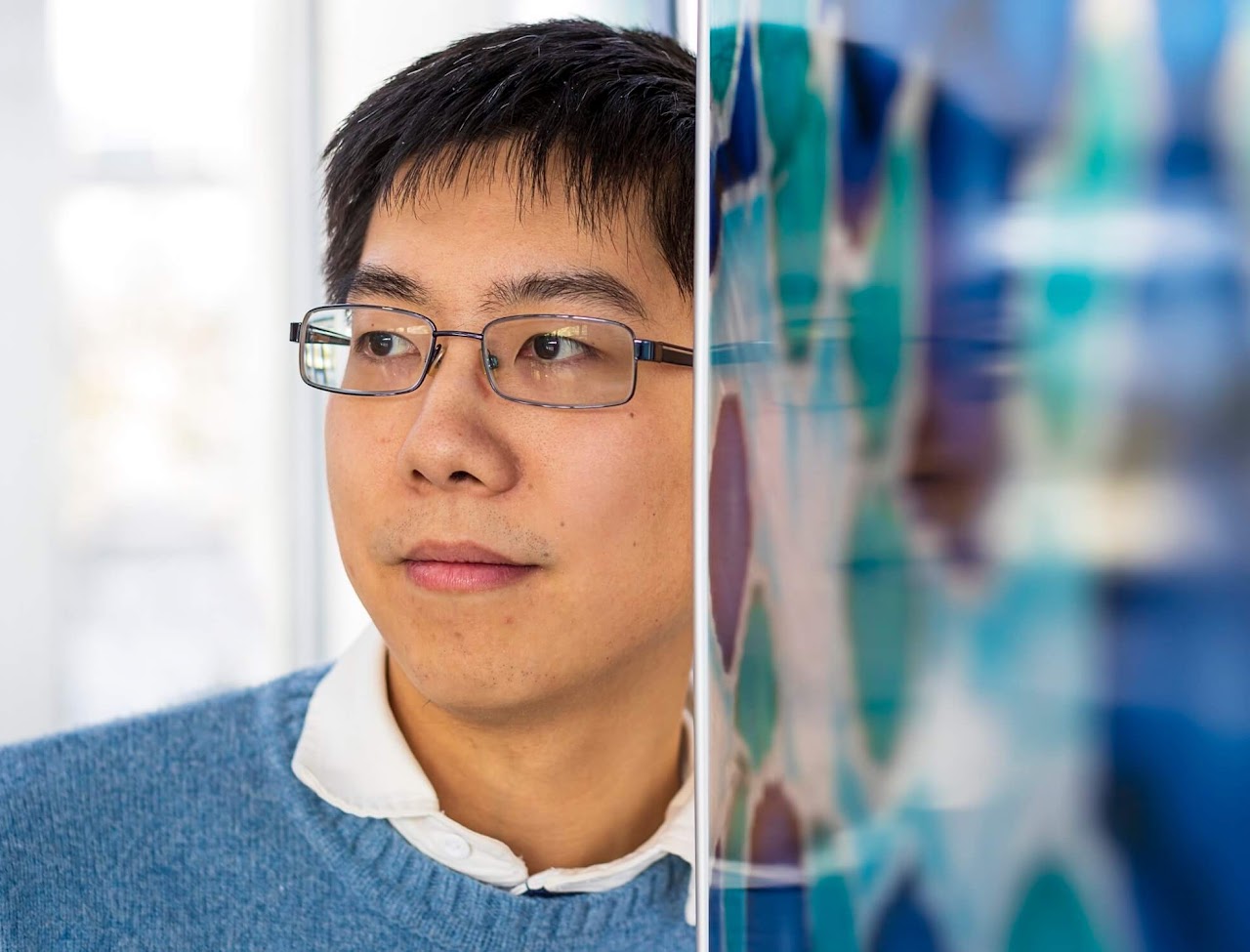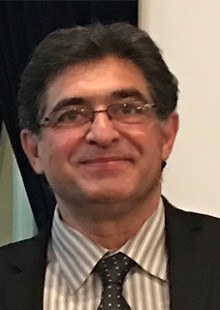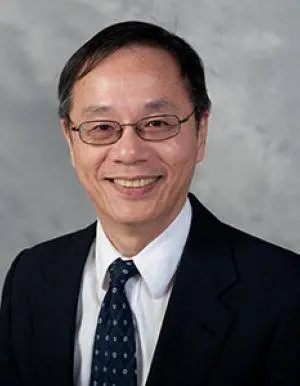
Victor Fung

Victor Fung's profile picture
victorfung@gatech.edu

Victor Fung is an Assistant Professor in the School of Computational Science and Engineering. Prior to this position, he was a Wigner Fellow and a member of the Nanomaterials Theory Insitute in the Center for Nanophase Materials Sciences at Oak Ridge National Laboratory. A physical chemist by training, Fung now works at the intersection of scientific artificial intelligence, computing, and materials science/chemistry.

Assistant Professor of Computational Science and Engineering
Office
E1354B | CODA Building, 756 W Peachtree St NW, Atlanta, GA 30308
Additional Research
  • Quantum chemistry
  • Surrogate models for quantum chemistry
  • Data-driven inverse design
  • Chemically-informed machine learning
  • High-throughput computational simulations
Google Scholar
https://scholar.google.com/citations?hl=en&user=2QsddMIAAAAJ&view_op=list_works&sortby=pubdate

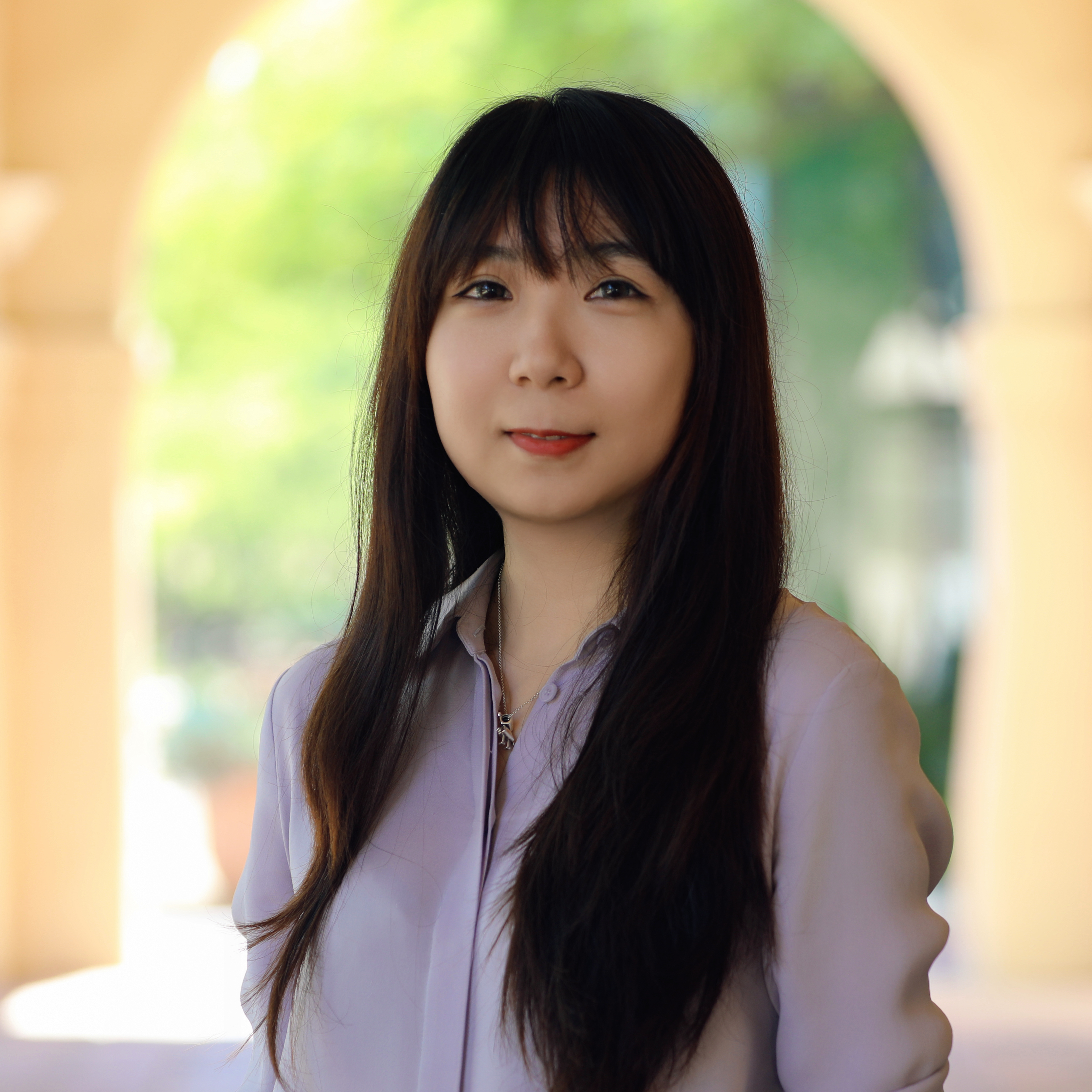
Lu Gan

Lu Gan's profile picture
lgan@gatech.edu

Lu Gan joined the Daniel Guggenheim School of Aerospace Engineering at the Georgia Institute of Technology as an Assistant Professor in January 2024. She leads the Lu's Navigation and Autonomous Robotics (Lunar) Lab at Georgia Tech, and is on the core faculty of the Institute for Robotics and Intelligent Machines. Her research interests include robot perception, robot learning, and autonomous navigation. Her group explores the use of computer vision, machine learning, estimation, probabilistic inference, kinematics and dynamics to develop autonomous systems in ground, air, and space applications.

She holds a B.S. in Automation from the University of Electronic Science and Technology of China, an M.S. in Control Engineering from Beihang University, and received her M.S. and Ph.D. in Robotics from the University of Michigan, Ann Arbor. Before joining Georgia Tech, she had a two-year appointment as a Postdoctoral Scholar at the Graduate Aerospace Laboratories of the California Institute of Technology and the Center for Autonomous Systems and Technologies at Caltech.

Assistant Professor - School of Aerospace Engineering
Office
Guggenheim 448A
Additional Research
  • Computer Vision
  • Perception & Navigation
  • Robot Autonomy
  • Flight Mechanics & Controls
  • Human-Robot Interaction
Google Scholar
https://scholar.google.com/citations?hl=en&user=mVY8wE8AAAAJ&view_op=list_works&sortby=pubdate

May Dongmei Wang

May Dongmei Wang's profile picture
maywang@bme.gatech.edu

May Dongmei Wang, Ph.D., is The Wallace H Coulter Distinguished Faculty Fellow, professor of BME, ECE and CSE, Director of Biomedical Big Data Initiative, and Georgia Distinguished Cancer Scholar. She is also Petit Institute Faculty Fellow, Kavli Fellow, Fellow of AIMBE, Fellow of IEEE, and Fellow of IAMBE. She received BEng from Tsinghua University China and MS/PhD from Georgia Institute of Technology (GIT). Dr. Wang’s research and teaching are in Biomedical Big Data and AI-Driven Biomedical Health Informatics and Intelligent Reality (IR) for predictive, personalized, and precision health. She has published over 270 referred journal and conference proceeding articles (13,500+ GS-Citations) and delivered over 280 invited and keynote lectures. Dr. Wang’s research has been supported by NIH, NSF, CDC, GRA, GCC, VA, Children’s Healthcare of Atlanta, Enduring Heart Foundation, Wallace Coulter Foundation, Carol Ann and David Flanagan Foundation, Shriner’s Hospitals, Microsoft Research, HP, UCB, and Amazon.

Dr. Wang chairs IEEE Engineering in Medicine and Biology Society (EMBS) BHI-Technical Community and ACM Special Interest Group in Bioinformatics (SIGBio), and is the Senior Editor of IEEE Journal of Biomedical & Health Informatics (IF=7.02), and Associate Editor for IEEE Transactions on BME, and IEEE Review of BME. She was IEEE EMBS Distinguished Lecturer and PNAS (Proceeding of National Academy of Sciences) Emerging Area Editor. During the past decade, Dr. Wang has been a standing panelist for NIH Study Sections, NSF Smart and Connect Health, and Brain Canada, and has co-chaired and helped organize more than 10 conferences by IEEE Engineering in Medicine and Biologics  Gordon Research Conferences, ACM Special Interest Groups in Bioinformatics, and IEEE Future Directions.

Dr. Wang received GIT Outstanding Faculty Mentor for Undergrad Research Award and Emory University MilliPub Award for a high-impact paper cited over 1,000 times. She was selected into 2022 Georgia Tech LeadingWomen Program and 2021 Georgia Tech Provost Emerging Leaders Program. Previously, she was Carol Ann and David Flanagan Distinguished Faculty Fellow, GIT Biomedical Informatics Program Co-Director in ACTSI, and Bioinformatics and Biocomputing Core Director in NIH/NCI-Sponsored U54 Center for Cancer Nanotechnology Excellence.

Professor of BME, ECE, and CSE
The Wallace H. Coulter Distinguished Faculty Fellow
Director of Biomedical Big Data Initiative and Georgia Distinguished Cancer Scholar, Petit Institute Faculty Fellow, Kavli Fellow
AIMBE Fellow, IAMBE Fellow, IEEE Fellow Board of Directors of American Board of AI in Medicine,
Georgia Institute of Technology and Emory University
Phone
404-385-2954
Office
UAW 4106
Additional Research
  • Artificial Intelligence
  • Bioinformatics
  • Health & Life Sciences
Research Focus Areas
Google Scholar
https://scholar.google.com/citations?user=iCx27kUAAAAJ&hl=en&oi=sra

Hang Lu

Hang Lu's profile picture
hang.lu@gatech.edu

Hang Lu received her B.S. from the University of Illinois, Urbana-Champaign and her M.S.C.E.P and Ph.D. from the Massachusetts Institute of Technology. She is currently the Associate Dean for Research and Innovation in the College of Engineering and C. J. "Pete" Silas Chair, School of Chemical & Biomolecular Engineering at the Georgia Institute of Technology. Lu's research interests involve the interface of engineering and biology and her lab, the Lu Fluidics Group, is conducting research at these interface levels. The Lu Fluidics Group engineers BioMEMS (Bio Micro-Electro-Mechanical System) and microfluidic devices to address questions in neuroscience, cell biology, and biotechnology that are difficult to answer using conventional techniques.

Faces of Research - Profile Article

Associate Dean for Research and Innovation, College of Engineering
C. J. "Pete" Silas Chair, School of Chemical and Biomolecular Engineering
Phone
404.894.8473
Office
EBB 3017
Additional Research

Microfluidic systems for high-throughput screens and image-based genetics and genomicsSystems biology: large-scale experimentation and data miningMicrotechnologies for optical stimulation and optical recordingBig data, machine vision, automationDevelopmental neurobiology, behavioral neurobiology, systems neuroscienceCancer, immunology, embryonic development, stem cells

Google Scholar
https://scholar.google.com/citations?hl=en&user=DDKNuYgAAAAJ&view_op=list_works&sortby=pubdate

Annalisa Bracco

Annalisa Bracco's profile picture
abracco@gatech.edu

Dr. Annalisa Bracco is a professor at Georgia Tech with extensive background in computational fluid dynamics and physical oceanography. Her research interests include coastal ocean circulation, with focus on meso- and submesoscale processes, ocean predictability and inverse dynamics, impacts of physical forcing on ecosystems, and climate model validation. Her group has been involved in field collections during the Deepwater Horizon spill (July/Aug. 2010) and was back in the Gulf in the summer of 2011.

Associate Chair and Professor; Earth and Atmospheric Sciences
Additional Research
  • Data Mining
  • Climate Modeling
  • Computational Fluid Dynamics
Research Focus Areas

Wei Xu

Wei Xu's profile picture
wei.xu@cc.gatech.edu

Wei Xu is an associate professor in the School of Interactive Computing at the Georgia Institute of Technology. Xu received her Ph.D. in Computer Science from New York University, and her B.S. and M.S. from Tsinghua University. Her research interests are in natural language processing, machine learning, and social media. Her recent work focuses on text generation, stylistics, information extraction, robustness and controllability of machine learning models, and reading and writing assistive technology. She is a recipient of the NSF CAREER Award, CrowdFlower AI for Everyone Award, Criteo Faculty Research Award, and Best Paper Award at COLING'18. She has also received funds from DARPA and IARPA and is part of the Machine Learning Center and NSF AI CARING Institute at Georgia Tech.

Associate Professor
Additional Research

Social Media

Google Scholar
https://scholar.google.com/citations?hl=en&user=BfOdG-oAAAAJ&view_op=list_works&sortby=pubdate

Suhas Jain

Suhas Jain's profile picture
suhasjain@gatech.edu

Suhas S. Jain is an Assistant Professor in the Woodruff School of Mechanical Engineering at Georgia Tech. He received his bachelor’s from NIT-Karnataka (India) in 2014, M.S. and Ph.D. from Stanford University in 2018 and 2022, respectively, all in mechanical engineering. Before coming to Georgia Tech, he was a postdoctoral fellow at the Center for Turbulence Research, Stanford University (2022-2023), a researcher at the Institute of Fluid Dynamics, Helmholtz-Zentrum Dresden-Rossendorf, Germany (2014-2015), and a project assistant at the Indian Institute of Science (2015-2016).

His research interests include computational modeling of fluid flows (multiphase flows; turbulent flows; compressible flows; and fluid-structure interaction) with a current focus on modeling atomization, sprays, and phase change for propulsion applications; ice accretion and aerodynamics for sustainable energy and aerospace design; and air-sea interaction modeling for understanding climate change; and modeling of fluid-solid and solid-solid systems for biomedical and high-speed applications. Through the integration of numerical modeling, high-performance computing, and data-driven approaches, Suhas and his group aim to address key challenges in these areas.

Assistant Professor
Additional Research
  • Computational Modeling
  • Machine Learning

Milos Prvulovic

Milos Prvulovic's profile picture
milos@cc.gatech.edu
Milos Prvulovic, Ph.D., is a professor in the School of Computer Science, College of Computing at the Georgia Institute of Technology. His research focuses on hardware and software support for program monitoring, debugging, and security. His research of side-channel emmanations and side-channel attacks has led to widespread interest from professional societies, the media and additional reserach sponsors -- most recently attracting a $9.4 million award from the Defense Advanced Research Projects Agency (DARPA) for continued study. In general, the goal of his research is to make both hardware and software more reliable and secure. Prvulovic is a senior member of Association of Computing Machinery (ACM) and Institute of Electrical and Electronics Engineers (IEEE), served as the chair of the IEEE Technical Committee on Microprogramming and Microarchitecture in 2016, and is a member of the Steering Committee for the ACM/IEEE MICRO conference. Prvulovic received his doctorate from the University of Illinois at Urbana-Champaign.
Professor
Phone
404.385.6364
Office
KACB 2332

Hamid Garmestani

Hamid Garmestani's profile picture
hamid.garmestani@mse.gatech.edu

Hamid Garmestani is a professor in the School of Materials Science and Engineering at the Georgia Institute of Technology. He received his education from Cornell University (Ph.D. 1989 in Theoretical and Applied Mechanics) and the University of Florida (B.S. 1982 in Mechanical Engineering, M.S. 1984 in Materials Science and Engineering). After serving a year as a post-doctoral fellow at Yale University, he joined the Mechanical Engineering Department at Florida State University (FAMU-FSU College of Engineering) in 1990. 

Primary research and teaching interests include microstructure/property relationship in textured polycrystalline materials, composites, superplastic, magnetic and thin film layered structures. He uses phenomenological and statistical mechanics models in a computational framework to investigate microstructure and texture (micro-texture) evolution during processing and predict effective properties (mechanical, transport and magnetic). His present research interests are processing of fuel cell materials and modeling of their transport and mechanical properties.

Garmestani has been the recipient of a research award (FAR) through NASA in  1997. He received the Superstar in  Research award in 1999 by FSU-CRC.  He  has also been the recipient of the Engineering Research Award at the FAMU-FSU College of Engineering, Spring 2000. He is a member of the editorial board of the International Journal of Plasticity and board of reviewers for journal of Metal Transaction.  He is presently funded through NSF (MRD), NASA, Air Force and the Army.

Professor, School of Materials Science and Engineering
Phone
404.385.4495
Office
Love 361
Additional Research
  • Computational mechanics
  • Micro and nanomechanics
  • Electrical charge storage and transport
  • Fuel Cells
Google Scholar
https://scholar.google.com/citations?hl=en&user=P2kgdO0AAAAJ&view_op=list_works&sortby=pubdate

Fan Zhang

Fan Zhang's profile picture
fan.zhang@me.gatech.edu

Dr. Fan Zhang received her Ph.D. in Nuclear Engineering and M.S. in Statistics from UTK in 2019. She is the recipient of the 2021 Ted Quinn Early Career Award from the American Nuclear Society and joined the Woodruff School in July, 2021. She is actively involved with multiple international collaborations on improving nuclear cybersecurity through the International Atomic Energy Agency (IAEA) and the DOE Office of International Nuclear Security (INS). Dr. Zhang’s research primarily focuses on the cybersecurity of nuclear facilities, online monitoring & fault detection using data analytics methods, instrumentation & control, and nuclear systems modeling & simulation. She has developed multiple testbeds using both simulators and physical components to investigate different aspects of cybersecurity as well as process health management.

Assistant Professor; School of Mechanical Engineering
Phone
404.894.5735
Office
Boggs 371
Additional Research

Research interests include instrumentation & control, autonomous control, cybersecurity, online monitoring, fault detection, prognostics, risk assessment, nuclear system simulation, data-driven models, and artificial intelligence applications.  

Google Scholar
https://scholar.google.com/citations?hl=en&user=9sPScawAAAAJ&view_op=list_works&sortby=pubdate