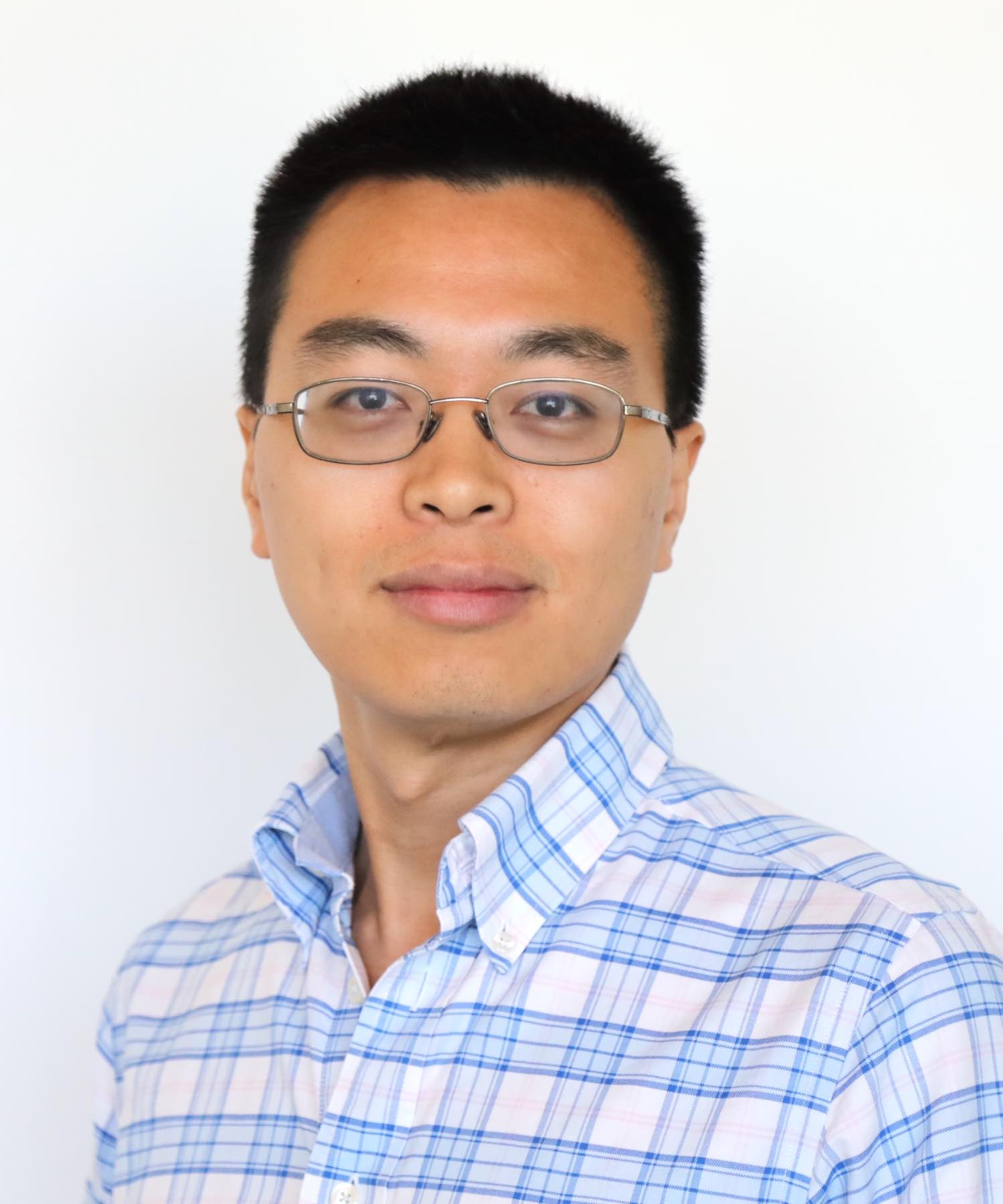
Peng Chen

Peng Chen's profile picture
pchen402@gatech.edu

Dr. Chen is an Assistant Professor in the School of Computational Science and Engineering. Previously he was a Research Scientist at the Oden Institute for Computational Engineering and Sciences at the University of Texas at Austin. Dr. Chen’s research is in the multidisciplinary fields of computational mathematics, data science, scientific machine learning, and parallel computing with various applications in materials, energy, health, and natural hazard. Specifically, his research focuses on developing fast, scalable, and parallel computational methods for integrating data and models under high-dimensional uncertainty to make (1) statistical model learning via Bayesian inference, (2) reliable system prediction with uncertainty quantification, (3) efficient data acquisition through optimal experimental design, and (4) robust control and design by stochastic optimization.

Assistant Professor
Office
CODA | E1350B
Additional Research
  • Bayesian Inference
  • Infectious Diseases
  • Optimal Experimental Design
  • Plasma Fusion
  • Stochastic Optimization
  • Uncertainty Quantification
Google Scholar
https://scholar.google.com/citations?hl=en&user=AaVPa5kAAAAJ&view_op=list_works&sortby=pubdate

Zsolt Kira

Zsolt Kira's profile picture
zkira@gatech.edu

I am an Assistant Professor at the School of Interactive Computing in the College of Computing. I am also affiliated with the Georgia Tech Research Institute and serve as an Associate Director of ML@GT which is the machine learning center recently created at Georgia Tech. Previously I was a Research Scientist at SRI International Sarnoff in Princeton, and before that received my Ph.D. in 2010 with Professor Ron Arkin as my advisor. I lead the RobotIcs Perception and Learning (RIPL) lab. My areas of research specifically focus on the intersection of learning methods for sensor processing and robotics, developing novel machine learning algorithms and formulations towards solving some of the more difficult perception problems in these areas. I am especially interested in moving beyond supervised learning (un/semi/self-supervised and continual/lifelong learning) as well as distributed perception (multi-modal fusion, learning to incorporate information across a group of robots, etc.).

Assistant Professor; School of Interactive Computing
Research Faculty; Georgia Tech Research Institute
Associate Director; Machine Learning @ GT
Director; RobotIcs Perception and Learning (RIPL) Lab
Office
CODA room S1181B
Additional Research
  • Artificial Intelligence
  • Machine Learning
  • Perception
  • Robotics
Research Focus Areas
Google Scholar
https://scholar.google.com/citations?hl=en&user=2a5XgNAAAAAJ&view_op=list_works&sortby=pubdate

Larry Heck

Larry Heck's profile picture
larryheck@gatech.edu

Larry P. Heck is a Professor with a joint appointment in the Schools of Electrical and Computer Engineering and Interactive Computing at the Georgia Institute of Technology. He holds the Rhesa S. Farmer Distinguished Chair of Advanced Computing Concepts and is a Georgia Research Alliance Eminent Scholar. His received the BSEE from Texas Tech University (1986), and MSEE and PhD EE from the Georgia Institute of Technology (1989,1991). He is a Fellow of the IEEE, inducted into the Academy of Distinguished Engineering Alumni at Georgia Tech and received the Distinguished Engineer Award from the Texas Tech University. He was a Senior Research Engineer with SRI (1992-98), VP of R&D at Nuance (1998-2005), VP of Search and Advertising Sciences at Yahoo! (2005-2009), Chief Scientist of the Microsoft Speech products and Distinguished Engineer in Microsoft Research (2009-2014), Principal Scientist with Google Research (2014-2017), CEO of Viv Labs and SVP at Samsung (2017-2021).

Professor
Rhesa Screven Farmer Jr., Advanced Computing Concepts Chair
Georgia Research Alliance Eminent Scholar
University, College, and School/Department
Google Scholar
https://scholar.google.com/citations?user=33ZWJmEAAAAJ&hl=en

Alex Endert

Alex Endert's profile picture
endert@gatech.edu

Alex Endert is an Associate Professor in the School of Interactive Computing at Georgia Tech. He directs the Visual Analytics Lab, where he works with his students to design and study how interactive visual tools help people make sense of data and AI. His lab often tests these advances in domains, including intelligence analysis, cyber security, decision-making, manufacturing safety, and others. His lab receives generous support from sponsors, including NSF, DOD, DHS, DARPA, DOE, and industry. In 2018, he received a CAREER award from the National Science Foundation for his work on visual analytics by demonstration. He received his Ph.D. in Computer Science from Virginia Tech in 2012. In 2013, his work on Semantic Interaction was awarded the IEEE VGTC VPG Pioneers Group Doctoral Dissertation Award, and the Virginia Tech Computer Science Best Dissertation Award.

Assistant Professor
Phone
404-385-4477
Additional Research

Visual Analytics

Irfan Essa

Irfan Essa's profile picture
irfan@cc.gatech.edu

Irfan Essa is a Professor in the School of Interactive Computing and Senior Associate Dean in the College of Computing (CoC), at the Georgia Institute of Technology. Professor Essa works in the areas of Computer Vision, Artificial Intelligence, Machine Learning, Robotics, Computer Graphics, and Social Computing, with potential impact on Content Creation, Analysis and Production (e.g., Computational Photography & Video, Image-based Modeling and Rendering, etc.) Human Computer Interaction, Artificial Intelligence, Computational Behavioral/Social Sciences, and Computational Journalism research.He has published over 150 scholarly articles in leading journals and conference venues on these topics and several of his papers have also won best paper awards. He has been awarded the National Science Foundation CAREER Award and was elected an IEEE Fellow. He has held extended research consulting positions with Disney Research and Google Research and also was an Adjunct Faculty Member at Carnegie Mellon's Robotics Institute. He joined Georgia Tech in 1996 after his earning his Master's (1990), Ph.D. (1994), and holding a research faculty position at the Massachusetts Institute of Technology Media Lab (1988-1996).

Senior Associate Dean; College of Computing
Professor; School of Interactive Computing
Phone
404.894.6856
Additional Research

Healthcare Security; Machine Learning; Mobile & Wireless Communications; Computer Vision and Robotics; Computer Graphics and Animation; Computational Photography and Video; Intelligent and Aware Environments; Digital Special Effects; Computational Journalism; Social Computing

Research Focus Areas

Sudheer Chava

Sudheer Chava's profile picture
sudheer.chava@scheller.gatech.edu

Sudheer Chava, Ph.D, is an associate director of the Institute for Information Security & Privacy for the area of risk management, and professor of finance at Scheller College of Business at the Georgia Institute of Technology. He also serves as finance area coordinator at Scheller and as the director of the nationally top 10 ranked Master of Science in Quantitative and Computational Finance (QCF) program at Georgia Tech (a joint program by the School of Mathematics, Industrial and Systems Engineering, and Scheller).  Dr. Chava has taught a variety of courses at the undergraduate, masters, MBA and Ph.D. levels, including derivatives, risk management, valuation, credit risk, financial technology ("fintech"), and management of financial institutions. He also has taught both theoretical and empirical finance doctoral courses and is a faculty advisor to multiple doctoral students. Dr. Chava's main research interests are risk management, credit risk and financial institutions. He has extensively published on these topics in the leading finance journals such as the Journal of Finance, Journal of Financial Economics, Review of Financial Studies, Journal of Monetary Economics, Journal of Financial and Quantitative Analysis, and Management Science. His research won a Ross Award for the best paper published in Finance Research Letters in 2008, was a finalist for the Brattle Prize for the best paper published in Journal of Finance in 2008, and was nominated for the Goldman Sachs Award for the best paper for published in Review of Finance during 2004.  Dr. Chava is the recipient of multiple external research grants such as FDIC-CFR Fellowship, Morgan Stanley Research grant, Financial Service Exchange Research grant, Q-group Research Award (2010, 2012) and GARP Research Award. He has presented his research at finance conferences such as AFA, WFA, EFA, Federal Reserve Banks and at many universities in the United States and abroad. Chava received his Ph.D. from Cornell University in 2003. Prior to that he earned an MBA degree from the Indian Institute of Management – Bangalore, an undergraduate degree in Computer Science Engineering, and worked as a fixed-income analyst at a leading investment bank in India. In 2014, he was awarded the Linda and Lloyd L. Byars Award for faculty research excellence at Georgia Tech and he has also received multiple research awards and fellowships at Texas A&M University.

Alton M. Costley Chair and Professor of Finance
Associate Director - Risk Management, Institute for Information Security & Privacy
Phone
404.894.4371
Office
Scheller 4125
Additional Research
  • Quantitative & Computational Finance
  • IT Economics
Research Focus Areas
University, College, and School/Department
Google Scholar
https://scholar.google.com/citations?hl=en&user=AXYf-i8AAAAJ&view_op=list_works&sortby=pubdate

Xiaoming Huo

 Xiaoming Huo's profile picture
xiaoming.huo@isye.gatech.edu

Xiaoming Huo is an A. Russell Chandler III Professor in the H. Milton Stewart School of Industrial and Systems Engineering at Georgia Tech. Dr. Huo's research interests include statistical theory, statistical computing, and issues related to data analytics. He has made numerous contributions on topics such as sparse representation, wavelets, and statistical problems in detectability. His papers appeared in top journals, and some of them are highly cited. He is a senior member of IEEE since May 2004. 

Professor
Research Focus Areas

Gil Weinberg

Gil Weinberg's profile picture
gilw@gatech.edu

Gil Weinberg is a professor and the founding director of Georgia Tech Center for Music Technology, where he leads the Robotic Musicianship group. His research focuses on developing artificial creativity and musical expression for robots and augmented humans. Among his projects are a marimba playing robotic musician called Shimon that uses machine learning for Jazz improvisation, and a prosthetic robotic arm for amputees that restores and enhances human drumming abilities. Weinberg presented his work worldwide in venues such as The Kennedy Center, The World Economic Forum, Ars Electronica, Smithsonian Cooper-Hewitt Museum, SIGGRAPH, TED-Ed, DLD and others. His music was performed with Orchestras such as Deutsches Symphonie-Orchester Berlin, the National Irish Symphony Orchestra, and the Scottish BBC Symphony while his research has been disseminated through numerous journal articles and patents. Dr. Weinberg received his MS and Ph.D. degrees in Media Arts and Sciences from MIT and his BA from the interdisciplinary program for fostering excellence in Tel Aviv University.

Professor; School of Music
Coordinator | M.S. & Ph.D. Programs; School of Music
Director; Center for Music Technology
Phone
404.894.8939
Additional Research
  • Music Technology
  • Computer Music
  • Developing Artificial Creativity and Musical Expression for Robots and Augmented Humans
University, College, and School/Department
Google Scholar
https://scholar.google.com/citations?hl=en&user=-fyk-8UAAAAJ&view_op=list_works&sortby=pubdate

Aaron Stebner

Aaron Stebner's profile picture
aaron.stebner@gatech.edu

Aarn Stebner works at the intersection of manufacturing, machine learning, materials, and mechanics. He joined the Georgia Tech faculty as an associate professor of Mechanical Engineering and Materials Science and Engineering in 2020.

Previously, he was the Rowlinson Associate Professor of Mechanical Engineering and Materials Science at the Colorado School of Mines (2013 – 2020), a postdoctoral scholar at the Graduate Aerospace Laboratories of the California Institute of Technology (2012 – 2013), a Lecturer in the Segal Design Institute at Northwestern University (2009 – 2012), a Research Scientist at Telezygology Inc. establishing manufacturing and “internet of things” technologies for shape memory alloy-secured latching devices (2008-2009), a Research Fellow at the NASA Glenn Research Center developing smart materials technologies for morphing aircraft structures (2006 – 2008), and a Mechanical Engineer at the Electric Device Corporation in Canfield, OH developing manufacturing and automation technologies for the circuit breaker industry (1995 – 2000).

Associate Professor, School of Mechanical Engineering and Materials Science and Engineering
Phone
404.894.5167
Google Scholar
https://scholar.google.com/citations?hl=en&user=OpRg9IsAAAAJ&view_op=list_works&sortby=pubdate

Vigor Yang

Vigor Yang's profile picture
vigor.yang@aerospace.gatech.edu

Vigor Yang earned his Ph.D. from the California Institute of Technology in 1984. After serving for one year as a research fellow in Jet Propulsion at Caltech, he joined the Pennsylvania State University in August 1985, becoming the John L. and Genevieve H. McCain Chair in Engineering in 2006. In 2009, he began his tenure as the William R.T. Oakes Professor Chair at the Daniel Guggenheim School of Aerospace Engineering at the Georgia Tech. He retired from the chair position and returned to teaching and research in August of 2018

Yang’s research encompasses a wide spectrum of topics, including (1) data-enabled design and data science; (2) combustion dynamics in propulsion and power-generation systems;(3) multi-fidelity modeling and simulations of fluid flows and combustion; (4) combustion of energetic materials; (5) high-pressure transport phenomena, thermodynamics and combustion, and (6) nano technologies for propulsion and energetic applications. He has established, as the principal or co-principal investigator, more than 70 research projects, including nine (9) DoD-MURI projects. He has published 10 comprehensive volumes and numerous technical papers on combustion, propulsion, energetics, and data science. He was the recipient of  the Air-Breathing Propulsion Award (2005), the Pendray Aerospace Literature Award (2008), the Propellants and Combustion Award (2009), and the von Karman Lectureship in Astronautics Award (2016) from the American Institute of Aeronautics and Astronautics (AIAA); the Worcester Reed Warner Medal (2014) from the American Society of Mechanical Engineers (ASME); and the Lifetime Achievement Award (2014) from the Joint Army, Navy, NASA, and Air Force (JANNAF) Interagency Propulsion Committee.

Yang was the editor-in-chief of the AIAA Journal of Propulsion and Power (2001-2009) and the JANNAF Journal of Propulsion and Energetics (2009-2012). He is currently a co-editor of the Aerospace Book Series of the Cambridge University Press (2010-).  He serves, or has served, on a large number of steering committees and review/advisory boards for government agencies and universities in the U.S. and abroad. A member of the U.S. National Academy of Engineering and an academician of Academia Sinica, Dr. Yang is a fellow of the AIAA, ASME, and Royal Aeronautical Society (RAeS).

Regents Professor
Additional Research
  • Combustion
  • Energy
  • Hydrogen Production &  Utilization