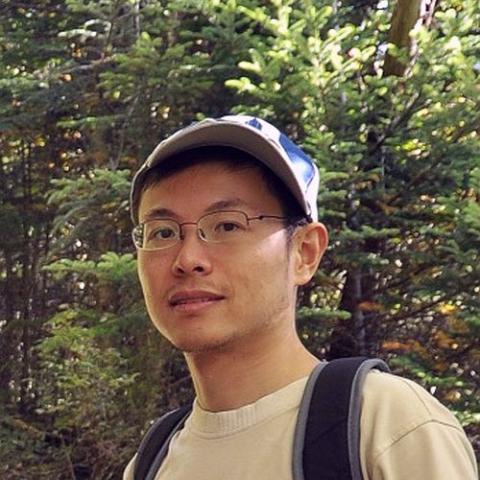
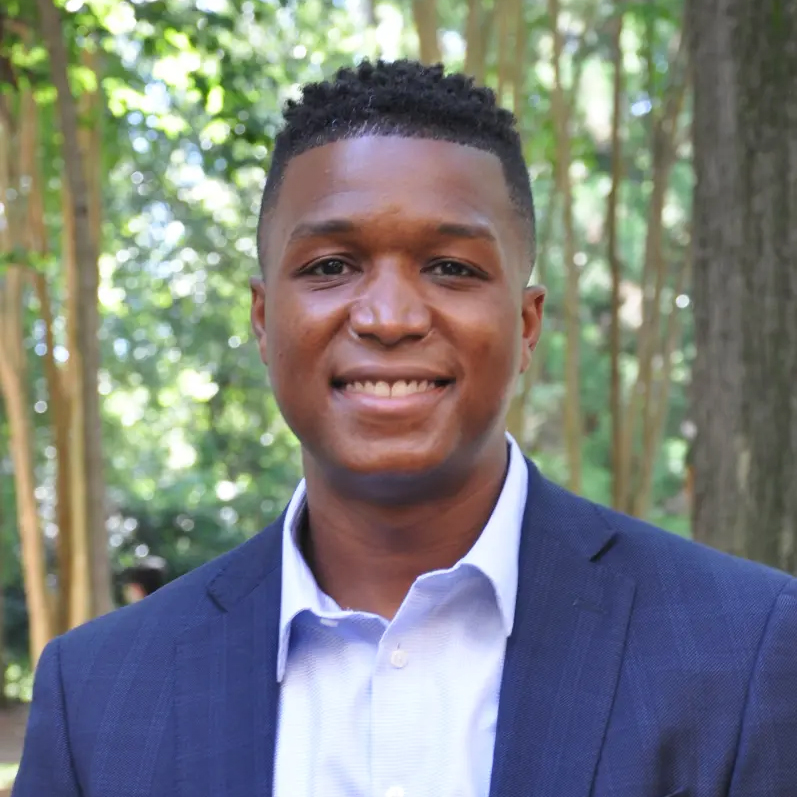
Molei Tao

Molei Tao's profile picture
mtao@gatech.edu

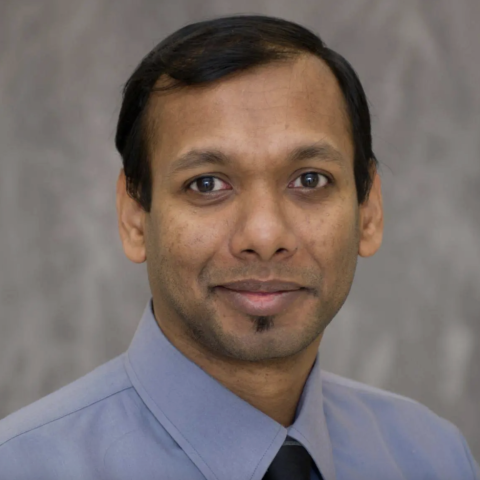
Molei Tao received B.S. in Math & Physics in 2006 from Tsinghua Univ. (Beijing) and Ph.D. in Control & Dynamical Systems with a minor in Physics in 2011 from Caltech (advisor: Houman Owhadi, co-advisor: Jerry Marsden). Afterwards, he worked as a postdoc in Computing & Mathematical Sciences at Caltech from 2011 to 2012, and then as a Courant Instructor at NYU from 2012 to 2014. From 2014 on, he has been an assistant, and then associate professor in School of Math at Georgia Tech. He is a recipient of W.P. Carey Ph.D. Prize in Applied Mathematics (2011), American Control Conference Best Student Paper Finalist (2013), NSF CAREER Award (2019), AISTATS best paper award (2020), IEEE EFTF-IFCS Best Student Paper Finalist (2021), Cullen-Peck Scholar Award (2022), GT-Emory AI.Humanity Award (2023), a Plenary Speaker at Georgia Scientific Computing Symposium (2024), a Keynote Speaker at (2024) International Conference on Scientific Computing and Machine Learning, SONY Faculty Innovation Award (2024), Best Poster Award at 2024 international conference “Recent Advances and Future Directions for Sampling” held at Yale, and Richard Duke Fellowship (2025).

Professor, School of Mathematics
Phone
(404) 894-8380;
Additional Research
  • Energy Harvesting
  • Smart Infrastructure

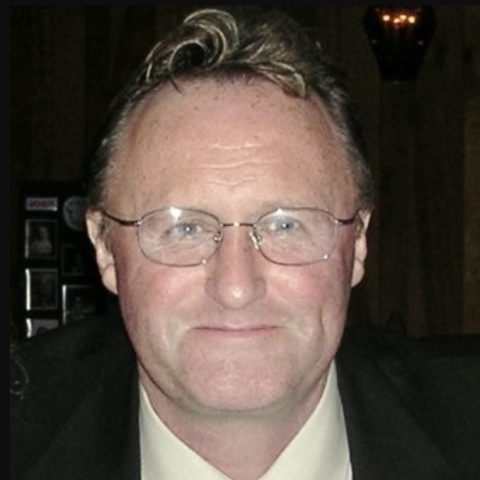
Frank Southworth

Frank Southworth's profile picture
frank.southworth@ce.gatech.edu

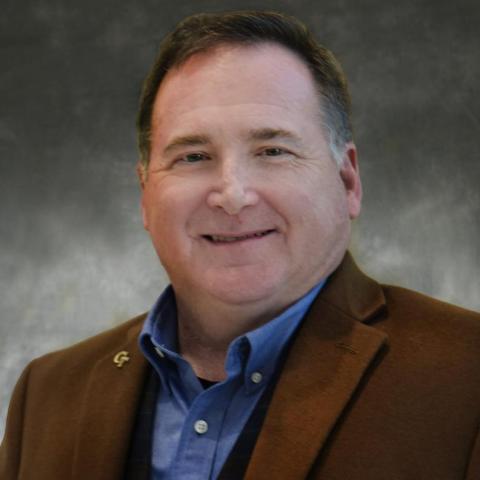
Dr. Southworth joined the Georgia Tech faculty in February 2012. Prior to joining Tech, Dr. Southworth spent 28 years as an employee of the US Department of Energy's Oak Ridge National Laboratory located in East Tennessee, leaving ORNL as a Distinguished R&D Staff member in December of 2011. Prior to joining ORNL in 1984 he was a faculty member in the Civil Engineering Department at the University of Illinois in Urbana-Champaign, and before that he was a research officer in the Institute for Transport Studies at the University of Leeds in England. Dr Southworth has published extensively on transportation planning topics, and been involved in the management of a number of large transportation data and modeling projects that have produced widely used datasets and software tools. While at ORNL he received a number of awards for his research contributions. Most of this research has been for federal agencies, including the Environmental Protection Agency, the Agency for International Development, and various branches of the Departments of Agriculture, Commerce, Defense, Energy, Homeland Security and Transportation. He has also carried out research for, among others, the National Science Foundation, the Transportation Research Board, the Brookings Institution, the Pew Center for Global Climate Change, the Tennessee Valley Authority, and the Georgia, New York, and Tennessee State Departments of Transportation. He regularly serves on regional and national review panels dealing with data, statistical and mathematical modeling issues in both freight and passenger transportation.

Research

Freight and passenger demand and supply modeling, Sustainable transportation systems and their supply chains, Transportation planning methods, Electric vehicle markets and policies, Public transit system planning and cost-benefit analysis, Land-use transportation interaction, Energy efficient urban form

Adjunct Principal Research Scientist, School of Civil and Environmental Engineering
Phone
(404) 894-0171
Additional Research

Smart Infrastructure

University, College, and School/Department

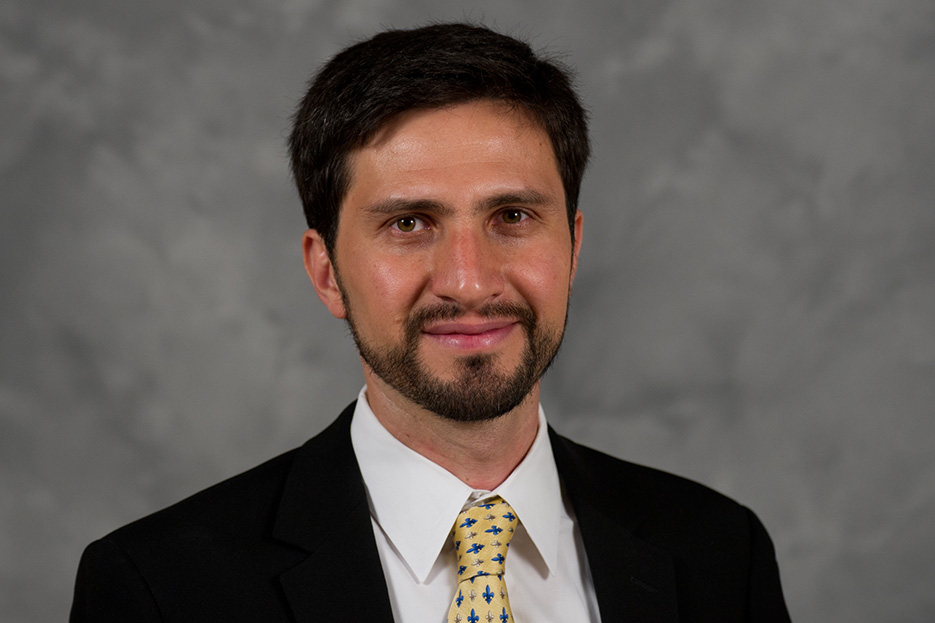
Baabak Ashuri

Baabak Ashuri's profile picture
baabak.ashuri@coa.gatech.edu

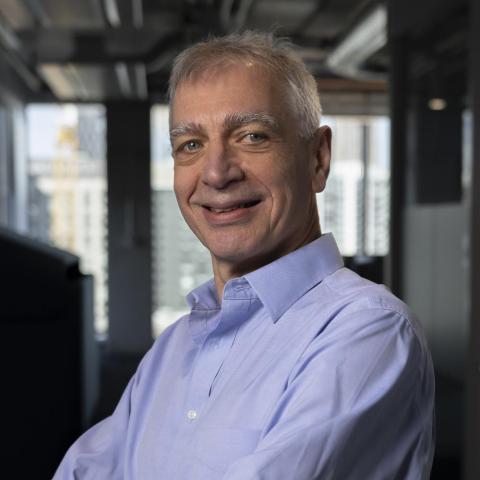
Baabak Ashuri is Executive Director of the Professional Master’s in Occupational Safety and Health (PMOSH), Professor of Civil and Environmental Engineering, Professor of Building Construction, and Fellow of the Brook Byers Institute for Sustainable Systems (BBISS) at Georgia Tech.  Dr. Ashuri’s research has advanced theoretical foundations and applications of data analytics, economic decision analysis, and quantitative methods for infrastructure systems and construction engineering and management, allowing other researchers to use his findings for enhancing the performance of infrastructure operations on several subdomains directly related to pre-construction decisions, e.g., artificial intelligence (AI) and design automation, alternative contracting methods (ACMs), infrastructure finance and public-private partnership (P3), and energy technology investments. Dr. Ashuri has 242 publications in these fields, including 86 refereed journal articles, 103 peer-reviewed conference papers, 50 research reports and guidebooks, 1 co-edited book, and 2 referred book chapters. Dr. Ashuri secured a funding amount of over $17M from the National Science Foundation (NSF), Federal Highway Administration (FHWA), Department of Energy (DOE), Build America Beurre (BAC), Georgia Department of Transportation (Georgia DOT), South Carolina Department of Transportation (SCDOT), Construction Industry Institute (CII), Royal Institution of Chartered Surveyors (RICS), Southeast Transportation Consortium (STC), Louisiana Transportation Research Center (LTRC), Turner Construction, and Perkins + Will, to name a few. Dr. Ashuri received many awards including the American Society of Civil Engineers (ASCE) (Thomas Fitch Rowland paper award), the American Association of State Highway and Transportation Officials (AASHTO) High Value Research “Sweet Sixteen” Award, and the Design-Build Institute of America (DBIA) (Distinguished Leadership – Faculty). Dr. Ashuri has chaired the ASCE Construction Research Council (CRC) and served on the ASCE Construction Institute (CI) Board of Governors. Dr. Ashuri serves as the Southern Region Director of the USDOT Build America Center (BAC), which leads cutting-edge research on the use of innovative financing, funding, and project delivery solutions.

Professor, School of Civil and Environmental Engineering, School of Building Construction
Phone
(404) 385-7608
Additional Research

Building Technologies; System Design & Optimization

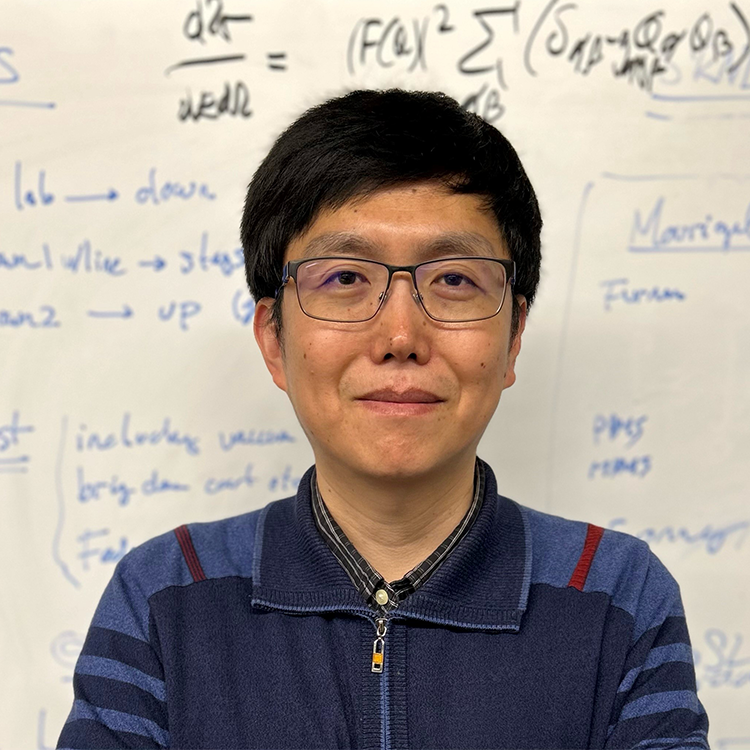
Zhigang Jiang

Zhigang Jiang's profile picture
zhigang.jiang@physics.gatech.edu

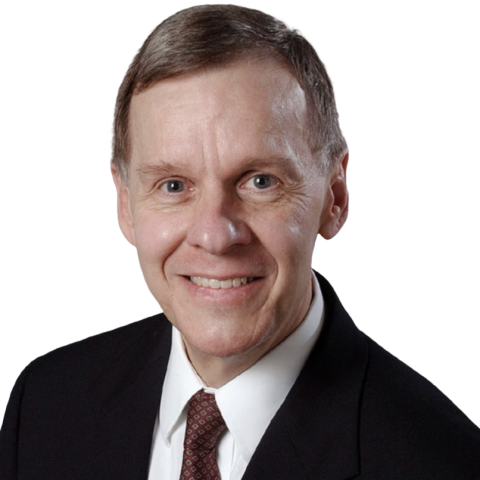
Zhigang Jiang received his B.S. in physics in 1999 from Beijing University and his Ph.D. in 2005 from Northwestern University. He was also a postdoctoral research associate at Columbia University jointly with Princeton University and NHMFL from 2005 till 2008. Jiang is interested in the quantum transport and infrared optical properties of low dimensional condensed matter systems. The current ongoing projects include: (1) infrared spectroscopy study of graphene and topological insulators, (2) spin transport in graphene devices, and (3) Andreev reflection spectroscopy of candidate topological superconductors.

Professor, School of Physics
Initiative Lead, Georgia Tech Quantum Alliance
Phone
404.385.3906
Office
Boggs B-18
Additional Research

quantum materials; nanoelectronics; Graphene; Epitaxial Growth

University, College, and School/Department
Google Scholar
https://scholar.google.com/citations?hl=en&user=6MNSoU8AAAAJ&view_op=list_works&sortby=pubdate

Angshuman Guin

Angshuman Guin's profile picture
angshuman.guin@ce.gatech.edu

Dr. Angshuman Guin, is a Principal Research Engineer in the School of Civil and Environmental Engineering at the Georgia Institute of Technology. He returned to his alma mater to become a faculty member in 2007 after working in the industry for a brief period. Dr. Guin’s research is focused on finding an answer to the question: How do we enable and empower systems managers, researchers and users to make effective, data-driven decisions? His research attempts to find answers through innovations in the development of effective means of data collection, quality assurance, and processing to convert these data into informative metrics across a range of time-scales from near real time to decades. Dr. Guin's current research projects at Georgia Tech are broadly in the area of Freeway Operations, Connected and Autonomous Vehicles, Intelligent Transportation Systems (ITS), Transportation Safety, Traffic Simulation and Data Management. Dr. Guin has presented his work in several international conferences and his work has been published in well recognized peer reviewed journals. He also serves on several standing committees of the Transportation Research Board including the committees on Information Systems and Technology, and Human Factors of Infrastructure Design and Operations and, in the past, has served on the committees on Highway Traffic Monitoring and Transportation Safety Management. He has served on the review committee of several journals including the IEEE Transactions on Intelligent Transportation Systems, the ASCE Journal of Transportation Engineering and the Transportation Research Records of the TRB. In addition to maintaining an active research portfolio, Dr. Guin is a strong advocate of translating research into practice and is the co-founder of InstaData Systems, a data analytics company. 

Research

Intelligent Transportation Systems, Freeway Traffic Operations, Transportation Safety, Simulation, Connected and Autonomous Vehicle, Smart Cities, Big Data, Machine Learning and Deep Learning

Senior Research Engineer, School of Civil and Environmental Engineering
Phone
(404) 894-5830
Additional Research

Electric Vehicles

University, College, and School/Department

Randall Guensler

Randall Guensler
randall.guensler@ce.gatech.edu

Randall Guensler is a Professor in the School of Civil and Environmental Engineering at the Georgia Institute of Technology. After working for the California Air Resources Board for seven years, and completing his Ph.D. in Civil Engineering at the University of California at Davis, Dr. Guensler joined Georgia Tech in 1994. During his years with the State of California, Dr. Guensler worked for four years in Compliance Assistance and for three years in the Executive Office, evaluating the design and implementation of transportation control measures by regional air quality management agencies. Since arriving at Georgia Tech, Dr. Guensler's main research focus has been the development of new monitoring and modeling tools to assess the air quality impacts of transportation policies. Dr. Guensler was the Chairman of the Transportation Research Board committee on Transportation and Air Quality from 1997 to 2002. From 1995 to 2001, Dr. Guensler served on the Environmental Protection Agency's Mobile Source Technical Advisory Subcommittee. Over the past ten years, he has served on various National Academy of Sciences committees and panels charged with the assessment of vehicle emissions impacts and identification of research needs. Dr. Guensler is the director of Commute Atlanta, a $2.3 million joint value pricing initiative sponsored by the Federal Highway Administration and Georgia Department of Transportation. Commute Atlanta includes the collection and analysis of second-by-second vehicle speed, position, and engine operating data from 470 vehicles in representative Atlanta households. The researchers have monitored more than 1.4 million vehicle trips (more than 350,000 vehicle-miles per month). In 2005, the Commute Atlanta households began participating in road pricing experiments (cent/mile pricing, as well as real-time congestion pricing). Dr. Guensler's research team is assessing consumer response to these pricing mechanisms. A secondary focus of the research is the enhancement of monitoring technologies and services to support future transportation planning, safety, and operations policy initiatives. Development of tools for data management, data analysis, and privacy protection became major research activities. Secondary research has also included analysis of speeding, journey to work route choice, trip chaining, activity-based demand, household tripmaking variability, household and vehicle range of travel, long-distance travel, freeway operations, engine load, start and soak distributions, transit bus operations, etc.

Research

Dr. Guensler's research focuses on transportation systems analysis, travel behavior modeling, and sustainable transportation strategies. His work involves the development and application of data-driven methodologies to understand and improve mobility, traffic operations, and environmental impacts of transportation networks. He investigates the integration of emerging transportation technologies and policies to enhance efficiency and sustainability in urban and regional transportation systems. His research actively involves collaboration with students at both undergraduate and graduate levels.

Education

Ph.D., Civil Engineering, Transportation

University of California, Davis

1993

M.S., Civil/Environmental Engineering

University of California, Davis

1989  

B.S., Individualized Engineering (Civil Engineering, Urban Planning, Environ. Studies)

University of California, Davis

1985


Teaching

Dr. Guensler's teaching interests encompass transportation engineering and planning, with an emphasis on traffic operations, transportation systems analysis, and energy/emissions modeling. He engages both undergraduate and graduate students in foundational and advanced courses that address transportation infrastructure, travel behavior, and the societal impacts of transportation technologies. Professor Guensler also integrates quantitative methods and policy considerations into his instruction to prepare students for multidisciplinary challenges in civil engineering.

Publications

  1. Lu, H., D. Kim, H. Liu, T. Xia, W. Reichard, M.O. Rodgers, R. Guensler (2024). Sensitivity of AERMOD (v21112) RLINEXT Dispersion Model Outputs by Source Type to Variability in Single Noise Barrier Height and Separation Distance. Atmospheric Pollution Research. https://doi.org/10.1016/j.apr.2024.102318. December 2024.
  2. Passmore, R., K.E. Watkins, and R. Guensler (2024). Using Shortest Path Routing to Assess Cycling Networks. https://doi.org/10.1016/j.jtrangeo.2024.103864. Journal of Transport Geography. Volume 117. May 2024.
  3. Lu, H., and R. Guensler (2024). MOVES-Matrix 3.0: On-Road Energy and Emission Modeling with High-Performance Supercomputing. Research Report from the National Center for Sustainable Transportation. October 2024.
  4. Lu, H, D Hunsaker, Z Liu, A Puppala, M McGurk, A Guin, R Guensler, Vehicle Occupancy, Vehicle Throughput, and Person Throughput Assessment of Atlanta’s HOV Managed Lane Facilities, 2025
  5. Xu, X, HC Yang, H Laarabi, C Poliziani, A Birky, K Jeong, H Lu, ..., Improving commercial truck fleet composition in emission modeling using 2021 US VIUS data, International Journal of Sustainable Transportation 19 (12), 1162-1180, 2025
Professor, School of Civil and Environmental Engineering
Phone
(404) 894-0405
Additional Research

Electric Vehicles; Smart Infrastructure

University, College, and School/Department

Pascal Van Hentenryck

Pascal Van Hentenryck's profile picture
pascal.vanhentenryck@isye.gatech.edu

Pascal Van Hentenryck is an A. Russell Chandler III Chair and Professor in the H. Milton Stewart School of Industrial and Systems Engineering at Georgia Tech. Prior to this appointment, he was a professor of Computer Science at Brown University for about 20 years, he led the optimization research group (about 70 people) at National ICT Australia (NICTA) (until its merger with CSIRO), and was the Seth Bonder Collegiate Professor of Engineering at the University of Michigan. Van Hentenryck is also an Honorary Professor at the Australian National University.

Van Hentenryck is a Fellow of AAAI (the Association for the Advancement of Artificial Intelligence) and INFORMS (the Institute for Operations Research and Management Science). He has been awarded two honorary doctoral degrees from the University of Louvain and the university of Nantes, the IFORS Distinguished Lecturer Award, the Philip J. Bray Award for teaching excellence in the physical sciences at Brown University, the ACP Award for Research Excellence in Constraint Programming, the ICS INFORMS Prize for Research Excellence at the Intersection of Computer Science and Operations Research, and an NSF National Young Investigator Award. He received a Test of Time Award (20 years) from the Association of Logic Programming and numerous best paper awards, including at IJCAI and AAAI. Van Hentenryck has given plenary/semi-plenary talks at the International Joint Conference on Artificial Intelligence (twice), the International Symposium on Mathematical Programming, the SIAM Optimization Conference, the Annual INFORMS Conference, NIPS, and many other conferences. Van Hentenryck is program co-chair of the AAAI’19 conference, a premier conference in Artificial Intelligence.

Van Hentenryck’s research focuses in Artificial Intelligence, Data Science, and Operations Research. His current focus is to develop methodologies, algorithms, and systems for addressing challenging problems in mobility, energy systems, resilience, and privacy. In the past, his research focused on optimization and the design and implementation of innovative optimization systems, including the CHIP programming system (a Cosytec product), the foundation of all modern constraint programming systems and the optimization programming language OPL (now an IBM Product). Van Hentenryck has also worked on computational biology, numerical analysis, and programming languages, publishing in premier journals in these areas.

Van Hentenryck runs the Seth Bonder summer Camp in Computational and Data Science for middle- and high-school students every summer. 

Director, AI Institute for Advances in Optimization
A. Russell Chandler III Chair, School of Industrial and Systems Engineering
Professor, School of Industrial and Systems Engineering
Phone
(404) 385-5538
Additional Research

Electric Vehicles

Chip White

Chip White's profile picture
cwhite@isye.gatech.edu
Schneider National Chair in Transportation and Logistics
Professor, School of Industrial and Systems Engineering
Phone
(404) 894-2301
Additional Research

Smart Infrastructure; System Design & Optimization

Joe F. Bozeman III

Joe F. Bozeman III's profile picture
joe.bozeman@ce.gatech.edu
Assistant Professor, Civil and Environmental Engineering, Public Policy
SEI Lead: Ethics in Energy Transition
Additional Research

industrial ecology; climate change adaptation and mitigation strategies; sociodemographic impacts of the food-energy-water nexus; ethical applications in energy and environmental systems; urban carbon management strategies; life cycle assessment; scenario analysis; and survey administration; addressing the complex and ‘wicked’ challenges of our time

Thomas Fuller

Thomas Fuller's profile picture
tom.fuller@chbe.gatech.edu

Tom Fuller is Professor of Chemical Engineering at the Georgia Tech. Dr. Fuller received a BS from the University of Utah in Chemical Engineering in 1982. Dr. Fuller then served for five years in the U.S. Navy working as a Nuclear Engineer. In 1992 he obtained a Ph.D. from UC, Berkeley also in Chemical Engineering. 

Subsequently, Dr. Fuller developed advanced lithium batteries while working as a postdoctoral fellow at Lawrence Berkeley National Laboratory. He then moved to United Technologies. He was responsible for technology development, design, assembly, and test of cell stacks for UTC Fuel Cells. 

His research group at Georgia Tech is focused on durability challenges for electrochemical systems. For the last eight years Dr. Fuller has been a Technical Editor for the Journal of the Electrochemical Society. In 2009 Dr. Fuller was named a Fellow of the Electrochemical Society.

Professor, School of Chemical and Biomolecular Engineering
Phone
(404) 894-2898
Additional Research

Electric Vehicles; Energy Storage; Hydrogen; Modeling; Materials Failure and Reliability; Energy Conversion; Energy Storage; Batteries; fuel cells

University, College, and School/Department
Google Scholar
https://scholar.google.com/citations?hl=en&user=I1RqBRoAAAAJ&view_op=list_works&sortby=pubdate