Terry Sturm

Terry Sturm
terry.sturm@ce.gatech.edu

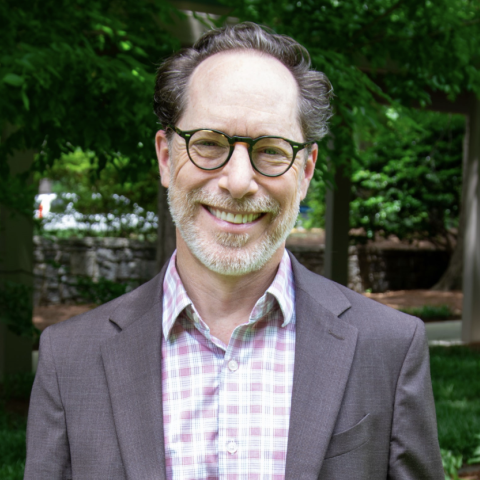
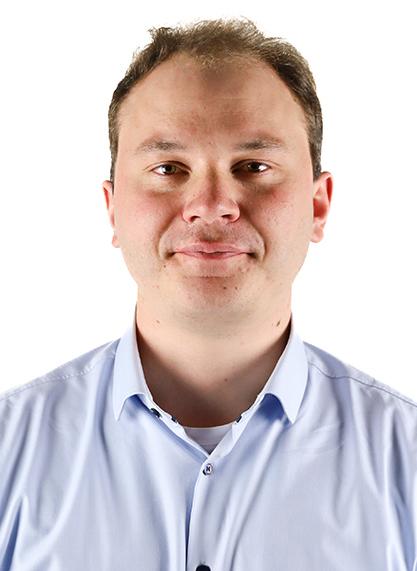
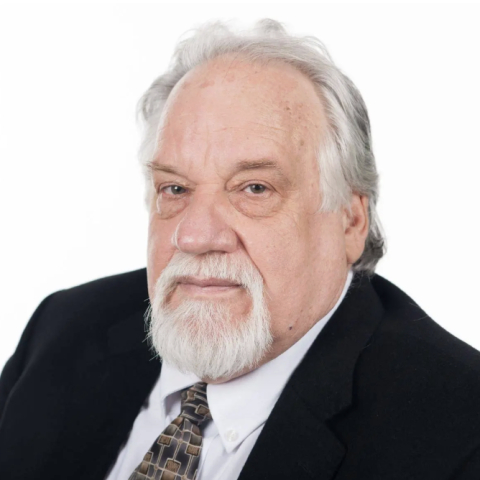
Dr. Terry W. Sturm received B.S. and M.S. degrees in civil engineering from the University of Illinois and a Ph.D. in mechanics and hydraulics from the University of Iowa at the Iowa Institute of Hydraulic Research. A licensed professional engineer (PE), he holds the rank of professor in the School of Civil and Environmental Engineering at the Georgia Institute of Technology where he teaches a graduate course sequence in open channel hydraulics and sediment transport. In addition, he has taught continuing education courses on river hydraulics, culvert design, and bridge scour. His most recent experimental research centers around the sediment-water interface in natural watercourses and the hydrodynamic processes that occur there such as flow resistance, cohesive sediment resuspension, and local bridge and spillway scour. He is the author of numerous research publications on thermal hydraulics, open channel flow resistance, compound channel hydraulics, bridge abutment scour, and resuspension of cohesive sediments, and he has written a textbook on open channel hydraulics published by McGraw-Hill which is in its second edition. Dr. Sturm's research has been supported by agencies such as the National Academy of Sciences, National Science Foundation, U.S. Geological Survey, Georgia Department of Transportation, Federal Highway Administration, Environmental Protection Agency, and the U. S. Army Corps of Engineers. In 2008, Dr. Sturm was named the Georgia Engineer of the Year in Education by the Georgia Engineering Alliance. He is a Life Member of ASCE, and he served from 2010 to 2014 as Chief Editor of the ASCE Journal of Hydraulic Engineering. In 2013, Dr. Sturm received the ASCE-EWRI Hunter Rouse Hydraulic Engineering Award.

Research

Hydraulic structures, Open channel flow resistance, Compound channel hydraulics, Sediment transport, Erosion control at construction sites, Scour around bridge foundations, Cohesive sediment re-suspension

Professor Emeritus, School of Civil and Environmental Engineering
Phone
(404) 894-2218
Additional Research

Smart Infrastructure; Climate/Environment

University, College, and School/Department

Brian Stone

Brian Stone's profile picture
stone@gatech.edu

Brian Stone is a key expert in energy utilization, conservation, climate change, and social and environmental impacts.

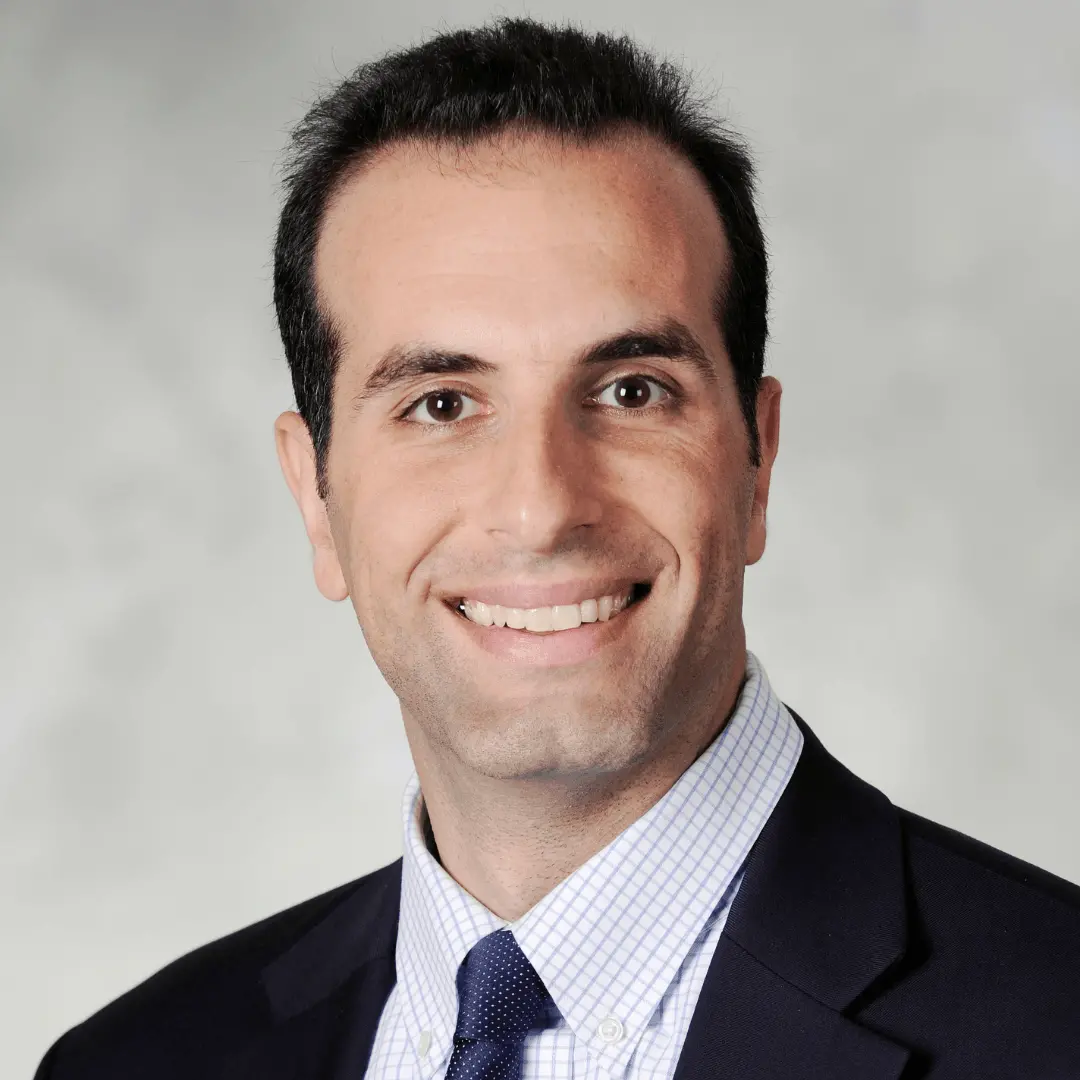
Brian Stone Jr. is a Professor in the School of City and Regional Planning at the Georgia Institute of Technology, where he teaches urban environmental planning and directs the Urban Climate Lab. Stone’s program of research is focused on urban scale drivers of climate change and has been supported by the National Science Foundation, US Centers for Disease Control and Prevention, and US Environmental Protection Agency. His work on urbanization and climate change is regularly featured in The New York Times, The Washington Post, and on National Public Radio. He is author of The City and the Coming Climate: Climate Change in the Places We Live, which received a Choice Outstanding Academic Title Award, and the recently published Radical Adaptation: Transforming Cities for a Climate Changed World (Cambridge University Press). Stone holds degrees in environmental management and urban planning from Duke University and the Georgia Institute of Technology.

Biography:

Brian Stone Jr., Ph.D., is a Professor in the School of City and Regional Planning at the Georgia Institute of Technology, where he teaches in the area of urban environmental planning and design. Stone's program of research is focused on the spatial drivers of urban environmental phenomena, with an emphasis on urban scale climate change, and is supported by the National Science Foundation, U.S. Centers for Disease Control and Prevention, and U.S. Environmental Protection Agency.

He is Director of the Urban Climate Lab at Georgia Tech. Stone's work on urbanization and climate change has been featured on CNN and National Public Radio, and in print media outlets such as The New York Times and The Washington Post.

He is author of Radical Adaptation: Transforming Cities for a Climate Changed World (Cambridge University Press, 2024) and The City and the Coming Climate: Climate Change in the Places We Live (Cambridge University Press), which received a Choice Outstanding Academic Title Award for 2012. Stone holds degrees in environmental management and planning from Duke University and the Georgia Institute of Technology.

Teaching Interest:

Professor Stone's teaching interests focus on the role of the built environment in amplifying or moderating environmental impacts such as extreme heat, flooding, and associated health effects. He regularly teaches classes on environmental planning, climate change management, and planning theory.

Research Interest:

Professor Stone's research focuses on the spatial drivers of urban environmental phenomena, with a particular emphasis on urban-scale climate change. He is Director of the Georgia Tech Urban Climate Lab.

List of Recent Scholarly Work:

Gronlund, Carina, Hondula, David, Mallen, Evan, O’Neill, Marie, Rajput, Mayuri, Krayenhoff, Scott, Broadbent, Ashley, Grijalva, Santiago, Larsen, Larissa, Harlan, Sharon, Stone, Brian. 2025. Advancing extreme heat risk assessments to better capture individually-experienced temperatures: A new approach to describe individual and subgroup vulnerabilities. Environmental Health Perspectives, in press.  

Huang, Kangning, Stone, Brian, Guan, Cheng, Liang, Jiayong. 2025. “Declining urban density attenuates rising population-weighted exposure to surface heat extremes.” Nature Scientific Reports, 15: 13860.

Jiang, Timothy, Krayenhoff, Scott, Martilli, Alberto, Nazarian, Negin, Stone, Brian, Voogt, James 2025. “Prioritizing urban heat adaptation infrastructure based on multiple outcomes: Comfort, health and energy.” Proceedings of the National Academy of Sciences, 122: e2411144122.

Stone, Brian. 2024. Radical Adaptation: Transforming Cities for a Climate Changed World. New York: Cambridge University Press.

Dey, Shuv, Mallen, Evan, Stone, Brian, Joshi, Yogendra. 2024. “Using Multiscale Atmospheric Modeling to Explore the Impact of Surface Albedo on Anthropogenic Heat Release.” Journal of Heat and Mass Transfer, 146: 052901-1-052901-12.

Stone, Brian, Mallen, Evan, Gronlund, Carina, Hondula, David, O’Neil, Marie, Rajput, Mayuri, Grijalva, Santiago, Lanza, Kevin, Harlon, Sharon, Larsen, Larissa, Augenbroe, Godfried, Krayenhoff, Scott, Broadbent, Ashley, Georgescu, Matei. 2023. “How Blackouts During Heat Waves Amplify Climate Risk.” Environmental Science & Technology, 57: 8245-8255.

Professor, School of City & Regional Planning
Director, Urban Climate Lab
Phone
(404) 894-6488
Additional Research

City and Regional Planning; Climate/Environment; System Design & Optimization

Morris Cohen

Morris Cohen's profile picture
mcohen@gatech.edu

Morris Cohen received his B.S. and Ph.D. degrees in Electrical Engineering from Stanford University in 2003 and 2010, respectively, and served as a research scientist until August 2013. From September 2012 until August 2013, Dr. Cohen was appointed as AAAS Science and Technology Policy Fellow at the National Science Foundation. 

In Fall 2013, he joined the faculty in the School of ECE. He is a winner of the NSF CAREER Award in 2017, the ONR Young Investigator Award in 2015, and was chosen for the Santimay Basu Prize in 2014, an award given once per 3 years to an under-35 scientist by the International Union of Radio Science (URSI). 

Dr. Cohen is interested in the natural electricity of the Earth, including lightning, the electrically charged upper atmosphere, and the radiation-filled space environment. He uses radio waves at low frequencies measured all around the world to understand them, and develops resulting practical applications. His group also works on novel techniques to generate low frequency waves with nonconventional electrically-short antennas. He is an author of more than 60 journal publications. He employs a “flipped classroom” model in some of his courses to make the experience more active and engaging. 

He enjoys hiking, cooking, and traveling the world for work and play with his family.

Associate Professor, School of Electrical and Computer Engineering
Phone
(404) 894-8415
Office
VL W511
Additional Research

Electronics

Rick Trebino

Rick Trebino's profile picture
rick.trebino@physics.gatech.edu

Education

B.A. in Physics from Harvard University 1977

M.S. in Applied Physics from Stanford University 1979

Ph.D. in Applied Physics from Stanford University 1983

Honors & Awards

2013: Fellow of the Society of Photo-Instrumentation Engineers

2010: Finalist in the Bertholdt Leibinger Prize competition for the most innovative optics invention

2010: Prism Award for the best optics invention of 2009 for the BOA pulse compressor

2009: Optical Society of America’s top optics developments of 2009 for measurements of superluminal Bessel pulses

2008: Awarded Fellow of the American Association for the Advancement of Science

2006: Fellow of the American Physical Society

2005: Circle of Excellence Award for the invention of a short-pulse GRENOUILLE

2003: R&D 100 Award for one of the top 100 technical inventions of the year for the invention of GRENOUILLE (A highly simplified ultrashort pulse measurement device)

2003: Best Optics Paper of the Year (Optical Society of America)

2000-2002 LEOS Distinguished Lecture

1999 Edgerton Prize of the SPIE

1995 Sandia National Laboratories Award for Exceptional Technical Accomplishments

1999 OSA Fellow

1997 Sandia National Laboratories Award for the Invention of Efficient, Exact Achromatic Phase-Matching

1996 Sandia National Laboratories Award for the Invention of Frequencey-Resolved Optical Gatting

1995 Sandia National Laboratories Award for Exceptional Technical Accomplishments

1995 Sandia National Laboratories Citation for Meritorious Achievement

1994 Sandia National Laboratories Award for Technical Excellence and Leadership

Research

The development of more powerful devices for manipulating and measuring potentially very complex light with ultrafast variations.

 Over 200 publications; see www.frog.gatech.edu/prose.html.

Books

 Frequency-Resolved Optical Gating: The Measurement of Ultrashort Laser Pulses, Kluwer Academic Publishers, Boston, 2002

Papers

  1. ·  J. Cohen, P. Bowlan, V. Chauhan, and R. Trebino, "Measuring temporally complex ultrashort pulses using multiple-delay crossed-beam spectral interferometry," Opt. Expr., 18(7), 6583 (2010).
  2. ·  P. Bowlan, H. Valtna-Lukner, M. Lõhmus, P. Piksarv, P. Saari, and R. Trebino, "Measurement of the spatio-temporal field of ultrashort Bessel-X pulses," Opt. Lett., 34(15), 2276, (2009).
  3. ·  R. Trebino, P. Bowlan, P. Gabolde, X. Gu, S. Akturk, and M. Kimmel, "Simple devices for measuring complex pulses," Laser & Photon. Rev., 3, 314 (2009).
  4. ·  M.A. Coughlan, M. Plewicki, S.M. Weber, P. Bowlan, R. Trebino, and R.J. Levis, "Specified electric-field construction from shaped pulses: The specific method," Opt. Expr., (2009).
  5. ·  D. Lee, P. Gabolde, and R. Trebino. "Toward single-shot measurement of broadband ultrafast continuum." J. Opt. Soc. Am. B, 25, A25 (2008).
Professor, School of Physics
Phone
(404) 385-1223
Additional Research

Electronics

University, College, and School/Department

Johannes Milz

Johannes Milz's profile picture
johannes.milz@isye.gatech.edu

Johannes Milz is an Assistant Professor in the H. Milton Stewart School of Industrial and Systems Engineering. His research focuses on optimization under uncertainty and optimal control of uncertain systems, with a strong emphasis on sustainability applications. By addressing large-scale optimization challenges in physics-based models under uncertainty, he aims to contribute to the development of sustainable energy systems, such as renewable tidal energy farms. Dr. Milz is also dedicated to open science; he develops reproducible numerical simulations and shares them publicly, making his results accessible to a broad group of researchers and practitioners. Prior to joining ISyE, he was a postdoctoral researcher at the Technical University of Munich, where he earned his Ph.D. in Applied Mathematics in 2021.

Assistant Professor, School of Industrial Systems Engineering
Office
Groseclose 444
Additional Research

Resource assessment and design of renewable marine energy systems, especially tidal energy. 

David Taylor

David Taylor's profile picture
david.taylor@gatech.edu

Education

  • Ph.D., Electrical Engineering, University of Illinois, Urbana‑Champaign
  • M.S., Electrical Engineering, University of Illinois, Urbana‑Champaign
  • B.S., Electrical Engineering, University of Tennessee, Knoxville

Research Interests

Professor Taylor’s research spans the theory and application of control systems, with emphasis on electromechanics, electromobility, robotics, and sensing. His recent research includes ultrasonic and radio frequency sensing for localization, powertrain optimization for energy efficiency and transient performance in hybrid and electric vehicles, perception and control for human driven and fully autonomous vehicles, and smart charging schemes for electric vehicles considering electric grid impact.

Teaching Interests

Professor Taylor’s teaching focuses on Control System Design, a course emphasizing state-space control algorithms and their implementation on microcontroller devices. Lab projects expose students to both theoretical foundations and practical applications. He also co-leads the EcoCAR cross-disciplinary student team that participates in funded Advanced Vehicle Technology Competitions. This team receives industry training as they design, build, and test efficient powertrains and autonomous driving features.

Publications

  • P. Barsa, K. Cunningham and D. Taylor, “Design of an adaptive cruise controller with integral action and feedforward compensation,” Proceedings of the IEEE/AIAA Transportation Electrification Conference and Electric Aircraft Technologies Symposium, 2025.
  • K. Cunningham, P. Barsa and D. Taylor, “Optimized acceleration and braking for dual motor all-wheel-drive electric vehicles,” Proceedings of the IEEE/AIAA Transportation Electrification Conference and Electric Aircraft Technologies Symposium, 2025.
  • C. Viteri, K. Sastry, M. Leamy and D. Taylor, “Smart charging of electric vehicle fleets with solar power and energy storage,” Proceedings of the IEEE/AIAA Transportation Electrification Conference and Electric Aircraft Technologies Symposium, 2025.
  • L. Leon, P. Barsa and D. Taylor, “Comparative assessment of motion trajectories for electric vehicles considering time and energy,” Proceedings of the 50th Annual Conference of the IEEE Industrial Electronics Society, 2024.
  • D. Dickson, K. Cunningham and D. Taylor, “Loss-minimizing operation of vehicle powertrains with front and rear electric drive units,” Proceedings of the 50th Annual Conference of the IEEE Industrial Electronics Society, 2024.
Professor, School of Electrical and Computer Engineering
Phone
(404) 894-8910
Additional Research

Electric Vehicles

Deepak Divan

Deepak Divan's profile picture
deepak.divan@ece.gatech.edu
Director, Intelligent Power Infrastructure Consortium
Phone
(404) 385-4036
Additional Research

Utilities; Electric Vehicles; Electrical Grid

Russell Gentry

Russell Gentry's profile picture
russell.gentry@coa.gatech.edu

Russell Gentry is professor of architecture and civil engineering (by courtesy) and a licensed structural engineer. He teaches graduate courses in building structures, computationally-driven fabrication and construction, and building integration. He is affiliated with the design computing faculty in the School of Architecture and the structural engineering and mechanics of materials faculty in the School of Civil Engineering. 

Gentry is the chair of ASTM D30.10, Composites for Civil Structures and an expert on the development of test methods for composite materials. He is a fellow of the International Institute for Fiber Composites (IIFC). He is the Georgia Tech principal investigator on the NSF-sponsored international initiative to develop alternative uses for decommissioned composite wind turbine blades. 

Gentry is the acting director of the Digital Building Laboratory (DBL), an applied research lab in the College of Design, focusing on computational design, building information modeling, and information technology in the AEC industry. He serves as the associate dean for faculty in the College of Design.

Professor, College of Design
Associate Dean for Faculty, College of Design
Acting Director, Digital Building Lab
Phone
(404) 894-3845
Additional Research

Building Technologies

Walter de Heer

Walter de Heer's profile picture
eheer@physics.gatech.edu

Walter Alexander “Walt” de Heer is a Dutch physicist and nanoscience researcher known for discoveries in the electronic shell structure of metal clusters, magnetism in transition metal clusters, field emission and ballistic conduction in carbon nanotubes, and graphene-based electronics.

De Heer earned a doctoral degree in Physics from the University of California, Berkeley in 1986 under the supervision of Walter D. Knight. He worked at the École Polytechnique Fédérale de Lausanne in Switzerland from 1987 to 1997, and is currently a Regents' Professor of Physics at the Georgia Institute of Technology. He directs the Epitaxial Graphene Laboratory in the School of Physics and leads the Epitaxial Graphene Interdisciplinary Research Group at the Georgia Tech Materials Research Science and Engineering Center.

Regents' Professor, School of Physics
Phone
(404) 894-7879
Additional Research

Electronics; Carbon Nanotubes; Epitaxial Growth; Graphene; Nanomaterials; quantum materials

University, College, and School/Department
Google Scholar
https://scholar.google.com/citations?hl=en&user=klW4cOMAAAAJ&view_op=list_works&sortby=pubdate