Sam Shelton

Sam Shelton's profile picture
sam.shelton@energy.gatech.edu

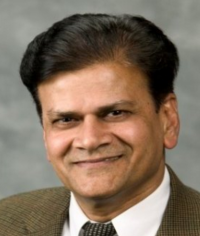
Dr. Sam Shelton is a nationally recognized expert in energy systems. He is the founding director of the Georgia Tech Strategic Energy Institute, an interdisciplinary technology development-based resource. The institute is actively engaged with industry to facilitate near-term, high-impact solutions to national and regional energy challenges. As a professor for 35 years, he developed in-class and web delivered undergraduate and graduate level energy technology courses. He taught 30,000 students enrolled in a MOOCs course, Energy 101, with a focus on energy supplies, independence, economics, and society’s demands. 

His primary research focus has been the development and commercialization of sustainable energy technology. He has received over $30 million in R&D funding for this work. Dr. Shelton holds eight patents in sustainable energy technologies and founded two companies developing, manufacturing and marketing energy-efficient products. Starting in the 1980s, he was among the pioneers developing commercial solar energy technologies and the assessment of offshore wind farms. His favorite hobby is flying experimental airplanes

Director Emeritus
Additional Research

Thermal Systems; Wind; System Design & Optimization; Biofuels

IRI And Role

Suresh Sharma

Suresh Sharma's profile picture
suresh1.sharma@gatech.edu

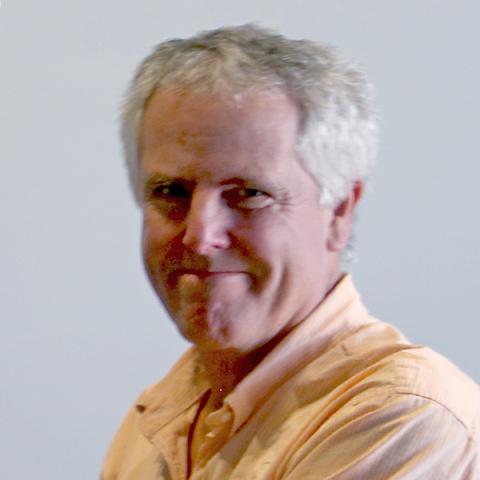
Over past three decades, Suresh has led a remarkably rich professional journey to unleash human potential through innovation, entrepreneurship, mentoring and leadership. Today, he applies his deep global business expertise to foster 21st century ecosystems to “industrialize innovation” for economic growth. Inspired by his hands-on experiences he authored “The 3rd American Dream” (2014); an insightful business book illustrating building blocks for growth that enable transformation at individual, societal and national level. A former GE-executive, he is a clear and pragmatic thought-leader. Starting his early career as a Naval Aviation Officer, his work experience includes industrial manufacturing, R&D and business operations in UK, USA, India and other countries. He has worked at British Aerospace, Rolls-Royce, MATRA, NASA, and General Electric. During 90s, he received international recognition for pioneering roles in globalization of GE while setting up global facilities in over 15 countries. Later, he co-authored his first best-seller book: ‘Global Outsourcing’ (2005) – still a reference work in many executive-MBA programs. 

Entrepreneur in Residence
Phone
(404) 385-5387
Additional Research

Electrical Grid

University, College, and School/Department

Lukas Graber

Lukas Graber's profile picture
lukas.graber@ece.gatech.edu

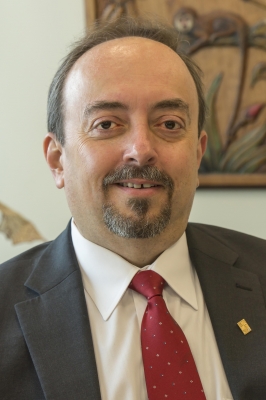
Lukas Graber received his M.S. and Ph.D. degrees in electrical engineering from ETH Zurich in 2002 and 2009 respectively. He conducted the experimental part of his M.S. research project on transient recovery voltage in the high voltage laboratories of Bonneville Power Administration, Portland, Oregon. His Ph.D. research focused on SF6 leakage detection in gas insulated switchgear and was awarded with the ETG Innovation Prize. Before he joined Georgia Tech in 2015, he worked several years at the Center for Advanced Power System, Florida State University - initially as a post-doctoral research associate and later as a research faculty member. His focus was on superconducting power cables and fault current limiters, ultra-fast mechanical switchgear, short circuit forces in substations, and grounding aspects of power distribution on future all-electric Navy ships. He authored and coauthored 40+ publications in journals and conference proceedings and holds several patents. Besides fundamental and applied research projects, he is also interested in commercialization aspects of new technologies. He is a guest technical editor for special issues of the IEEE Transactions on Applied Superconductivity. In his free time, he likes to tinker with audio electronics, play the trumpet, scuba dive in Floridian waters, and paraglide in mountain ranges around the world.

Education

  • Dr. sc., Electrical Engineering, ETH Zürich, 2009
  • Dipl. El.-Ing., Electrical Engineering, ETH Zürich, 2002

Research Interests

Graber's research focuses on advanced computer architecture and embedded systems, examining efficient hardware-software co-design and heterogeneous computing platforms. His work explores performance optimization, system reliability, and scalability in modern computing devices. The research program actively engages graduate and undergraduate students in developing novel methodologies to address challenges in high-performance and low-power computing environments.

Gas insulated switchgear High-speed vacuum switchgear High temperature superconductivity: Power systems applications Cryogenic dielectrics

Teaching Interests

Graber's teaching interests include foundational and advanced courses in electrical and computer engineering, with an emphasis on digital design, computer architecture, and systems integration. He is committed to providing rigorous undergraduate and graduate instruction that bridges theoretical concepts with practical applications. His teaching approach fosters critical thinking and problem-solving skills essential for innovation in engineering disciplines.

Distinctions & Awards

ETG Innovation Prize 2010, Electrosuisse Best Paper Award 2009 , 2nd prize, SEV Bulletin Member, Electrosuisse Member, Cryogenics Society of America Senior Member, IEEE

Publications

  • KY Chuong, Y Liu, T Forbes, MB Frye, L Graber, LM Garten, Determining the effect of bismuth oxide on the microstructure and electrical response of cold-sintered ZnO varistors, Journal of the American Ceramic Society 109(1), e70406, 2026
  • Z Jin, AJC Feliciano, SM Neall, Y Liu, MS Al Hossain, M Pothuri, C Park, ..., Development of a Hydropneumatic Actuator for Supercritical Fluid Circuit Breakers, IEEE 70th Holm Conference on Electrical Contacts (HLM), 1-4, 2025
  • Q Yang, A Llanos, K Schoder, L Graber, A Nonlinear Inductor-Based Near-Zero Current Sensing Method and Active Commutation Strategy for a Hybrid dc Circuit Breaker, ECCE 2025, 1-5, 2025
  • Y Mo, AJC Feliciano, Z Jin, L Graber, B Ge, High Voltage-Rated, Supercritical CO2-Insulated Electrostatic Machine Concept, ECCE 2025, 1-8, 2025
  • L Graber, S GHOSH, GJ Langston, T Uhrik, K Kalaitzidou, N STINGELIN, ..., Metal-organic thermoset polymers, US Patent App. 19/225,325, 2025
Assistant Professor, School of Electrical and Computer Engineering
Phone
(404) 894-2726
Additional Research

Electrical Grid; Electronics

James Mulholland

James Mulholland's profile picture
james.mulholland@ce.gatech.edu

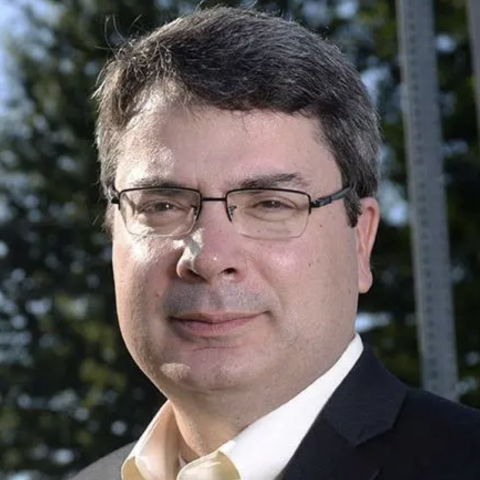
Jim Mulholland is a Professor in the School of Civil & Environmental Engineering at Georgia Tech. He received a B.S. in Mechanical Engineering from Cornell in 1979, M.S. in Mechanical Engineering from Stanford in 1981, and Ph.D. in Chemical Engineering from M.I.T. in 1992. Between M.S. and Ph.D., he worked for an energy R&D firm and as a research engineer at EPA's air research center. He has been on the faculty in the Environmental Engineering Program at Georgia Tech since 1993. His research includes study of the formation and control of air pollutants, in particular organic combustion byproducts, and air quality data analysis for use in epidemiologic studies.

Research

Combustion byproduct formation and control, Incineration, Thermochemistry of polycyclic aromatic hydrocarbons and chlorinated aromatic species, Molecular modeling, Spatio-temporal analysis of ambient air pollutants

Associate Chair for Graduate Programs and Research Innovation
Professor, School of Civil and Environmental Engineering
Phone
(404) 894-1695
Additional Research

Climate/Environment; Combustion

University, College, and School/Department

Adam Steinberg

Adam Steinberg's profile picture
adam.steinberg@gatech.edu

Dr. Adam Steinberg is the Pratt & Whitney Chair and professor in the Daniel Guggenheim School of Aerospace Engineering at Georgia Tech, with an adjunct appointment in the School of Mechanical Engineering. Dr. Steinberg also serves as the Secretary of the Faculty, which is a leadership position in Georgia Tech’s faculty governance. He previously served as the Associate Chair for Graduate Programs in the Aerospace Engineering School. Prior to joining Georgia Tech, Dr. Steinberg was on the faculty of the University of Toronto Institute for Aerospace Studies (2011-2018) and a research scientist at the German Aerospace Center (2009-2011).

Teaching Interests

Professor Steinberg’s teaching interests focus on undergraduate and graduate instruction in aerospace engineering fundamentals, including fluid dynamics, thermodynamics, propulsion, combustion, and experimental methods. He emphasizes a rigorous understanding of the theoretical basis of aerospace systems, integrating analytical and computational methods to prepare students for advanced study and professional practice. His pedagogy encourages student engagement through problem-solving that applies theory to realistic situations.

Research Interests

Professor Steinberg is the Director of the Ben T. Zinn Combustion Laboratory -- one of the largest academic combustion research facilities in the world. His research focuses on overcoming the scientific and technical barriers facing future aerospace propulsion and energy conversion devices. Working closely with government and industry, his research group develops and applies advanced laser-based measurement techniques that help unravel the coupled thermal, fluid, and chemical process occurring in these devices. Topics of interest include laser-based diagnostics, combustion, gas turbine engines and augmenters, supersonic and hypersonic propulsion, chemical rockets, detonations, space electric propulsion and plasmas, and multi-phase flows.

Research

Lab/Collaborations:

  • Ben T. Zinn Combustion Laboratory

Disciplines:

  • Aerodynamics & Fluid Mechanics
  • Propulsion & Combustion

AE Multidisciplinary Research Areas:

  • Sustainable Transportation and Energy Systems

Education

  • B.A.Sc. in engineering science from the University of Toronto (2004),
  • M.S.E in aerospace engineering from the University of Michigan (2006);
  • Ph.D. in aerospace engineering from the University of Michigan (2009).

Distinctions & Awards

Chair of the AIAA Propellants & Combustion Technical Committee; Combustion Institute Fellow; Associate Editor of Combustion and Flame; AIAA Associate Fellow; Combustion Institute Research Excellence Award (2020); Provost Teaching and Learning Fellow (2019); Canada Research Chair (2017); Hiroshi Tsuji Early Career Research Award (2016); McCharles Prize for Early Career Research Distinction (2016); Ontario Early Researcher Award (2015).

Recent Publications

  • C. W. Godbold, C. Segatori, C. J. Mueller, C. Genzale, A. Piano, A. M. Steinberg, “Impact of pilot injections on ducted fuel injection performance,” International Journal of Engine Research, In Press (2025)
  • E. R. Jans, S. P. Kearney, A. M. Steinberg, M. K. Matzen, N. P. Brown, “Single-shot femtosecond laser-induced breakdown spectroscopy in low-density gases,” Journal of Applied Physics, 138(12) (2025)
  • K. Teav, H. Jean-Ruel, A. M. Steinberg, “Performance loss and recovery of virtually imaged phased arrays with imperfect mirror parallelism,” Applied Optics, 64(26):7834 (2025)
  • A. Jain, I. M. Obi, V. Salazar, M. Kodali, K. Venkatesan, Y. C. Mazumdar, A. M. Steinberg, “Characterization of a lean premixed prevaporized combustor with conventional and sustainable fuel,” AIAA Journal (2025)
  • D. Purushotham, C. H. Lim, A. M. Steinberg, D. Ranjan, J. C. Oefelein, “Joint numerical and experimental investigation of turbulent mixing in a supercritical CO2 shear layer,” Journal of Fluid Mechanics, 1008:A17 (2025).
Pratt & Whitney Chair, Guggenheim School of Aerospace Engineering
Secretary of Georgia Tech Faculty
Director, Ben T. Zinn Combustion Laboratory
Phone
(404) 894-1130
Additional Research

Combustion

Patricia Mokhtarian

Patricia Mokhtarian's profile picture
patmokh@gatech.edu

Patricia Mokhtarian is a Regents Professor and the Clifford and William Greene, Jr. Professor of Civil and Environmental Engineering (CEE) at the Georgia Institute of Technology.  Prior to joining Georgia Tech in 2013, she served 23 years on the CEE faculty at the University of California, Davis, after spending several years in regional transportation planning and consulting in Southern California.  Prof. Mokhtarian has specialized in the study of attitudinal influences on travel behavior for more than 45 years, and has authored or co-authored nearly 200 peer-reviewed journal articles, as well as numerous book chapters and research reports.  She is among the most highly-cited scholars in travel behavior research, with more than 41,000 citations and an h-index of 98 (Google Scholar). She is a past Chair of the International Association for Travel Behaviour Research, and received a Lifetime Achievement Award from that society in 2021.  Prof. Mokhtarian was elected to the US National Academy of Engineering in 2024, and serves on the editorial boards of ten transportation journals.

Research

A key research interest has been the impact of telecommunications technology on travel behavior (particularly teleworking adoption and impacts). Additional interests include the influence of the built environment on travel behavior, accounting for self-selection biases in modeling behavior, attitudes toward travel itself, time use and multitasking, incorporating attitudes into practice-oriented travel demand forecasting models, impacts of autonomous vehicles, congestion-response behavior, and subjective well-being.

Education

Ph.D., Northwestern University, 1981

M.S., Northwestern University, 1977

B.A., Florida State University, 1975

Teaching

At the undergraduate level, Prof. Mokhtarian teaches upper-division probability and statistics, and at the graduate level she teaches statistical analysis, survey (questionnaire) design and analysis, and discrete choice modeling.

Distinctions & Awards

  • Invited speaker, endowed lecture series: “How Much Do Attitudinal Variables Improve Travel Demand Models?  Evaluation Using an Overlap Sample from an Attitude-rich Survey and the 2017 National Household Travel Survey”. University of Michigan, Department of Civil & Environmental Engineering Richart-Woods Lecture, February 13, 2025.
  • Appointed Regents’ Professor, Georgia Institute of Technology, 2024.
  • Elected to the National Academy of Engineering, 2024.
  • In 2024, my student Dr. Xinyi Wang received the prestigious and competitive Eric I. Pas Dissertation Prize of the International Association for Travel Behaviour Research, given to the best doctoral thesis in travel behavior in the world, among those completed in calendar year 2023.
  • Best PhD Thesis Award to my student Dr. Xinyi Wang, Sigma Xi, Georgia Institute of Technology, 2024.
  • Best PhD Thesis Award to my student Dr. Xinyi Wang, School of Civil and Environmental Engineering, Georgia Institute of Technology, 2023.
  • “Latent class model with an error structure: Investigating potential unobserved associations between latent segmentation and behavior generation” (by Sung Hoo Kim and Patricia L. Mokhtarian) selected for the Outstanding Paper Award of Committee AEP 35 (The Effects of Information and Communication Technologies on Transportation Choices) of the Transportation Research Board, 2024 Annual Meeting.
  • One of six members (and the only woman) of the inaugural class of Northwestern University Transportation Center Fellows, recognizing “impactful contributions to the transportation profession in research, policy, practice or education, and special connections to the Transportation Center and Northwestern University”, November 17, 2023.
  • My students won the (U.S.) Council of University Transportation Centers Wootan Awards for Outstanding PhD Dissertation in Policy & Planning (F. Atiyya Shaw) and Outstanding MS Thesis in Policy & Planning (Xinyi Wang), in 2021.
  • International Association for Travel Behaviour Research 2021 Lifetime Achievement Award, given to someone who has “made fundamental and sustained contributions to travel behaviour research for a substantial period (typically at least 25 years) up to the present time”; is “widely known, at the very least among the IATBR community”; and has “influenced the field through her/his writings, teaching, service, and nurturing of younger professionals”, June 2, 2021 online, and December 14, 2022 in person.
  • Outstanding Industry Contributor Award, “given to an individual who in embodying the Zephyr Principles, has selflessly contributed to the good of the industry through the body of their work”, bestowed by the Zephyr Foundation (https://zephyrtransport.org/), a non-profit dedicated to “advancing rigorous transportation and land use decision-making for the public good by advocating for and supporting improved travel analysis, and facilitating its implementation”, March 24, 2021.
  • Clifford and William Greene, Jr. Professorship, School of Civil and Environmental Engineering, Georgia Institute of Technology, 2021 – present.
  • Named a National Associate of the National Academies of Sciences, Engineering, and Medicine, February 5, 2020.
Regents' Professor, School of Civil and Environmental Engineering
Clifford and William Greene, Jr. Professor, School of Civil and Environmental Engineering
Phone
(404) 385-1443
Additional Research

Electric Vehicles; Smart Infrastructure

University, College, and School/Department

Michael Hunter

Michael Hunter's profile picture
michael.hunter@ce.gatech.edu

Dr. Hunter is a Professor in the School of Civil and Environmental Engineering at Georgia Institute of Technology. His primary teaching and research interests are in transportation operations and design, specializing in adaptive signal control, traffic simulation, and arterial corridor operations. Dr. Hunter obtained his B.S. in Civil Engineering from Rensselaer Polytechnic University (1992), his M.S. in Civil Engineering from the University of Texas at Austin (1994), and his Ph.D. in Civil Engineering from the University of Texas at Austin (2003). After obtaining his M.S. he worked as a transportation engineer for several years at the Sear-Brown Group in Rochester, NY.

Dr. Hunter has been highly active in research, teaching, and service. He has been principal investigator of sponsored research for a variety of sponsors including local, state, and federal agencies, and industry. Dr. Hunter has led two significant transportation research centers, the Georgia Transportation Institute (GTI, 2012 to present) and the National Center for Transportation Systems Productivity and Management (NCTSPM, 2012 to 2017). Dr. Hunter is actively researching simulation, digital twins, connected and autonomous vehicles, signal control optimization with AI, smart cities, connected infrastructure, and disruptive and emerging technologies within the transportation systems context.  

Research

Dr. Hunter has extensive research experience in simulation, digital twins, hardware-in-the-loop-simulation, and software-in-the-loop-simulation. His projects have explored the modeling of arterials, freeways, corridors, and parking facilities.  He has extensively studied adaptive control, emerging technologies, signal optimization with AI and Reinforcement Learning, etc. His efforts have included two real-time corridor digital twin models, one in Atlanta, GA, and one in Chattanooga, TN. He has studied emergency vehicle preemption and transit priority, including multi-agent Reinforcement Learning (DQN and PPO) optimization. Dr. Hunter has developed traffic flow simulations for capturing the effect of aggressive human driver interaction with autonomous vehicles on traffic. Dr. Hunter has also undertaken numerous efforts in the development and analysis of performance metrics. He has conducted safety research, studying the impact of various safety treatments, such as the mode of flash at an intersection, don't block the box treatments, innovating signage and lane markings, etc.

Education

Ph.D., Civil Engineering, The University of Texas at Austin, 2003

M.S., Civil Engineering, The University of Texas at Austin, 1994

B.S., Civil Engineering, Rensselaer Polytechnic Institute, 1992

Associate of Science, Engineering Science, Hudson Valley Community College, 1990

Teaching

Dr. Hunter’s teaching is practice focused, teaching at the undergraduate and graduate level. Topics in his courses include transportation safety, operations, design, and planning. Dr. Hunter stresses engineering fundamentals, innovation, and intuition, as well as exploring the application of emerging methods such as AI and RL.  His courses stress the importance of the design user, that is, ensuring that our transportation operations and design are focused on the strengths and capabilities of the people that use the transportation system, whether driving a vehicle, crossing the street, riding a bicycle or scooter, or riding transit. Recently, Dr. Hunter developed a new course merging a common simulation tool utilized in practice with fundamental concepts, pulling away the black box nature of many simulation tools.

Distinctions & Awards

  • Winner of the Transportation Research Board D. Grant Mickle Award (2019)
  • Best Paper Award – Transportation Research Board, Operational Effects of Geometrics Committee, AHB65. (2019)
  • Mobility Award. City of Atlanta’s North Avenue Smart Corridor Project (Project Co-PI). Smart City Expo World Congress. Barcelona. November 2018. (2018)
  • Best Abstract Award, PTV America’s User Group Meeting (2011)
  • Best Paper Award, Principles of Advanced and Distributed Simulation Conference (2010)
  • Transportation Research Board Operational Effects of Geometrics Committee, Best Paper Award (2010)

Publications

  1. Mers, B., M. Hunter, K. Watkins. Demographic Breakdown of Transit Rider Satisfaction. Transportation Research Record, Journal of the Transportation Research Board, Sage Publications, 2678 (6), 656-666. June 2024.
  2. Saroj, A., S. Roy, A. Guin, M. Hunter. Impact of Connected Corridor Volume Data Imputations on Digital Twin Performance Measures. International Journal of Transportation Science and Technology. Elsevier. June 2023. 
  3. Guin, G., K. Robinson, H. Unthank, S. Roy, and M. Hunter. Impact of Restricted Crossing U-Turns on Vehicular Emission, Transportation Research Record, Journal of the Transportation Research Board, Sage Publications, May 2023.
  4. Manjunatha, P., S. Roy, L. Elefteriadou, A. Guin, and M. Hunter. Evaluation of the Operational Effects of Autonomous and Connected Vehicles through Microsimulation. Transportation Research Record, Journal of the Transportation Research Board, Sage Publications, December 2022.  
  5. Saroj, S., A. Guin, and M. Hunter. Development of a Connected Corridor Real-Time Data-Driven Traffic Digital Twin Simulation Model. Journal of Transportation Engineering, Part A: Systems. American Society of Civil Engineers, Volume 147, Issue 12, Dec 2021.
Professor, School of Civil and Environmental Engineering
Phone
(404) 385-1243
Additional Research

Electric Vehicles; Smart Infrastructure
University, College, and School/Department

Anita Pavadore

Anita Pavadore's profile picture
anita.pavadore@gtri.gatech.edu

Pavadore is the division chief of the Embedded System Vulnerability Division within GTRI's Cybersecurity, Information Protection, and Hardware Evaluation Research Laboratory (CIPHER). Pavadore founded the Embedded System Vulnerability Division in 2010 and is responsible for the group's strategic planning, technical leadership, business development, and operations. 

Pavadore, who has been with GTRI since 1985, has expertise in vulnerability analysis of military communications systems. Her division performs cyber vulnerability assessments and has a strong background in reverse engineering and vulnerability analysis of embedded system software, hardware, and communication protocols. She is the primary author on more than 50 technical publications and has presented at multi-national conferences. Pavadore holds an M.S. in Electrical Engineering from Tech.

Division Chief, NVD-CIPHER
Phone
(404) 407-6582
Additional Research

Cyber Technology

GTRI
Geogia Tech Research Institute