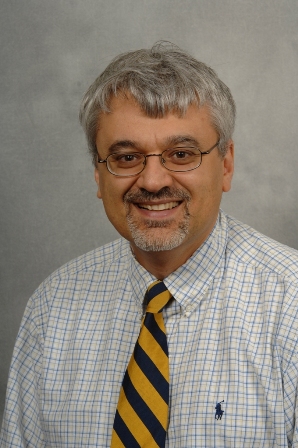
Wassim M. Haddad

Wassim M.  Haddad's profile picture
wm.haddad@aerospace.gatech.edu
Wassim M. Haddad received the B.S., M.S., and Ph.D. degrees in mechanical engineering from Florida Tech in 1983, 1984, and 1987. Since 1994, he has been with the School of Aerospace Engineering at Georgia Tech, where he holds the rank of professor, the David Lewis Chair in Dynamical Systems and Control, and Chair of the Flight Mechanics and Control Discipline. He also holds a joint professor appointment with the School of Electrical and Computer Engineering at Georgia Tech. He is the co-founder, chairman of the board, and chief scientific advisor of Autonomous Healthcare, where from August 2012 to June 2015 he served as the president and chief executive officer. Dr. Haddad has made numerous contributions to the development of nonlinear control theory and its application to aerospace, electrical, and biomedical engineering. His transdisciplinary research in systems and control is documented in over 630 archival journal and conference publications, and seven books in the areas of science, mathematics, medicine, and engineering. Dr. Haddad is an National Science Foundation Presidential Faculty Fellow; a member of the Academy of Nonlinear Sciences; an IEEE Fellow; and the recipient of the 2014 AIAA Pendray Aerospace Literature Award.
Professor of Aerospace Engineering; David S. Lewis Professor of Dynamical Systems and Control
Additional Research
Defense / National Security; Healthcare Security; Large-Scale or Distributed Systems
Research Focus Areas

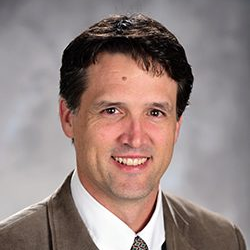
Christopher E. Carr

Christopher E. Carr's profile picture
cecarr@gatech.edu

Christopher E. Carr is an engineer/scientist with training in aero/astro, electrical engineering, medical physics, and molecular biology. At Georgia Tech he is an Assistant Professor in the Daniel Guggenheim School of Aerospace Engineering with a secondary appointment in the School of Earth and Atmospheric Sciences. He is a member of the Space Systems Design Lab (SSDL) and runs the Planetary eXploration Lab (PXL). He serves as the Principal Investigator (PI) or Science PI for several life detection instrument and/or astrobiology/space biology projects, and is broadly interested in searching for and expanding the presence of life beyond Earth while enabling a sustainable human future. He previously served as a Research Scientist at MIT in the Department of Earth, Atmospheric and Planetary Sciences and a Research Fellow at the Massachusetts General Hospital in the Department of Molecular Biology. He serves as a Scott M. Johnson Fellow in the U.S. Japan Leadership Program.

Assistant Professor
School of Aerospace Engineering
School of Earth and Atmospheric Sciences
Phone
617-216-5012
Office
ESM 107B

Karen M. Feigh

Karen M. Feigh's profile picture
karen.feigh@gatech.edu

Karen M. Feigh is a Professor at Georgia Tech's Daniel Guggenheim School of Aerospace Engineering with a courtesy appointment in the School of Interactive Computing. As the director of the Georgia Tech Cognitive Engineering Center, she leads a research and education program focused on the computational cognitive modeling and design of cognitive work support systems and technologies to improve the performance of socio-technical systems. She is responsible for undergraduate and graduate level instruction in the areas of flight dynamics, human reliability analysis methods, human factors, human-automation interaction and cognitive engineering. Feigh has over 14 years of relevant research and design experience in fast-time air traffic simulation, ethnographic studies, airline operation control centers, synthetic vision systems for helicopters, expert systems for air traffic control towers, human extra-vehicular activities in space, and the impact of context on undersea warfighters. Recently her work has focused on human-autonomy teaming and the human experience of machine learning across a number of domains.

Feigh has served as both Co-PI and PI on a number of FAA, NIA, ONR, NSF and NASA sponsored projects. As part of her research, Feigh has published 35 scholarly papers in the field of Cognitive Engineering with primary emphasis on the aviation industry. She serves as an Associate Editor for the Journal of Cognitive Engineering and Decision Making. She previously served as the Chair to the Human Factor and Ergonomics Society’s Cognitive Engineering and Decision Making Technical Group, and on the National Research Council’s Aeronautics and Space Engineering Board (ASEB).

Professor & Associate Chair for Research; School of Aerospace Engineering
Director; Georgia Tech Cognitive Engineering Center
Phone
404.385.7686
Office
MK 321-3
Additional Research

Cognitive engineering; human factors; adaptive automation

Research Focus Areas
Google Scholar
https://scholar.google.com/citations?hl=en&user=y1cHmVMAAAAJ&view_op=list_works&sortby=pubdate

Brian Gunter

Brian Gunter's profile picture
brian.gunter@ae.gatech.edu

Brian Gunter is an Assistant Professor in Aerospace Engineering at the Georgia Institute of Technology. He received his B.S. in mechanical engineering from Rice University, and later his M.S. and Ph.D. in aerospace engineering from the University of Texas at Austin, specializing in orbital mechanics. Prior to joining Georgia Tech, Gunter was on the faculty of the Delft University of Technology (TU-Delft) in the Netherlands, as a member of the Physical and Space Geodesy section. His research activities involve various aspects of spacecraft missions and their applications, such as investigations into current and future laser altimetry missions, monitoring changes in the polar ice sheets using satellite data, applications of satellite constellations/formations, and topics surrounding kinematic orbit determination. He has been responsible for both undergraduate and graduate courses on topics such as satellite orbit determination, Earth and planetary observation, scientific applications of GPS, and space systems design. He is currently a member of the AIAA Astrodynamics Technical Committee, and also serves as the Geodesy chair for the Fall AGU Meeting Program Committee. He has received a NASA group achievement award for his work on the GRACE mission, and he is also a former recipient of a NASA Earth System Science Graduate Fellowship. He is a member of the American Institute of Aeronautics and Astronautics (AIAA), the American Geophysical Union (AGU), and the International Association of Geodesy (IAG).

Education

  • B.S., Mechanical Engineering, 1994, Rice University
  • M.S., Aerospace Engineering, 2000, The University of Texas at Austin;
  • Ph.D., Aerospace Engineering, 2004, The University of Texas at Austin;

Distinctions & Awards

Elected in 2020 to the status of Associate Fellow of the American Institute of Aeronautics and Astronautics; Visiting Research Fellow, Newcastle University, Newcastle-Upon-Tyne, UK, 2011; NASA Earth System Science Graduate Fellowship, 2002-2004; NASA Group Achievement Award, GRACE Project Team, 2004; Dolores Zohr b Liebmann Graduate Fellowship, 2000-2003; Earl Wright Endowed Presidential Scholarship in Engineering, 2000-2001

Associate Professor
Phone
404.385.2345
Office
ESM 205
Additional Research

satellite geodesy; space systems; orbital mechanics; Earth and planetary observation; remote sensing

Research Focus Areas
Google Scholar
https://scholar.google.com/citations?hl=en&user=ba8fWHIAAAAJ&view_op=list_works&sortby=pubdate

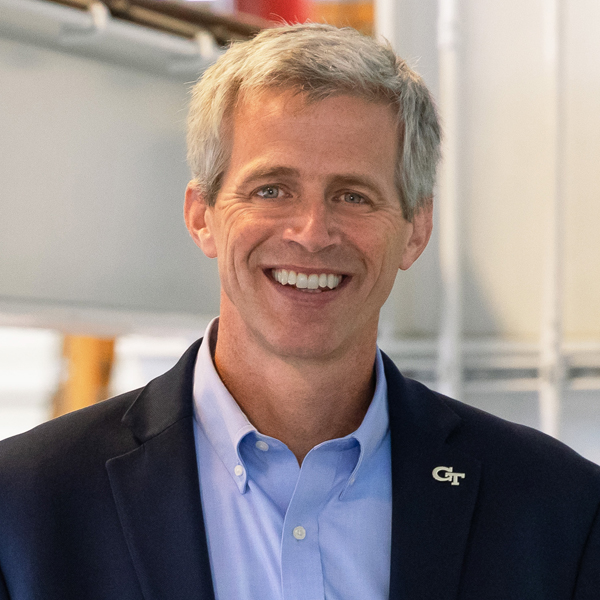
Timothy Charles Lieuwen

Timothy Charles Lieuwen's profile picture
tim.lieuwen@aerospace.gatech.edu

Tim Lieuwen is the executive vice president for Research at the Georgia Institute of Technology. In this role, he oversees the Institute’s $1.4+ billion portfolio of research, economic development, and sponsored activities. This includes leadership of the Georgia Tech Research Institute (GTRI), the Enterprise Innovation Institute, 11 interdisciplinary research institutes (IRIs), and related research administrative support units.

In his 25-plus years at Georgia Tech, Lieuwen earned his master’s and Ph.D. degrees in mechanical engineering (1996 and 1999, respectively) and has held multiple leadership positions. He has been the executive director of the Strategic Energy Institute (SEI) and served as the interim chair of the Daniel Guggenheim School of Aerospace Engineering in 2023.

Lieuwen has received numerous honors and recognition for his work in clean energy systems and policy, national security, and regional economic development. Additionally, he has been awarded the titles of Regents’ Professor and the David S. Lewis, Jr. Chair in AE. He is also a member of the National Academy of Engineering and is a fellow of the American Society of Mechanical Engineers and the American Institute of Aeronautics and Astronautics.

Executive Vice President for Research (EVPR)
Regents' Professor, Guggenheim School of Aerospace Engineering
Phone
(404) 894-8885
Office
Carnegie 020
Additional Research

Acoustics; Fluid Mechanics; Combustion; Signal Processing

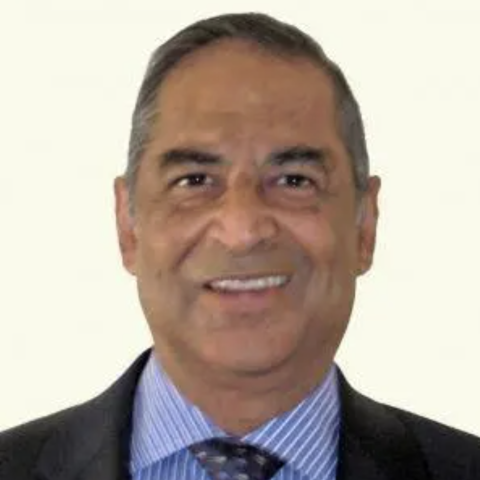
Lakshmi Sankar

Lakshmi Sankar's profile picture
sankar@aerospace.gatech.edu

Professor Sankar is a Regents Professor and Sikorsky Professor in the Guggenheim School of Aerospace Engineering at the Georgia Institute of Technology. As Director of the School's Computational Fluid Dynamics Lab, he leads a research and education program focused on the modeling and simulation of unsteady viscous flow around aircraft, helicopters, horizontal axis wind turbines, and turbo-machinery components. He teaches undergraduate and graduate level courses in the areas of aerodynamics, helicopter theory, wind energy, aerodynamic design, and computational aerodynamics. Prior to joining the Georgia Tech faculty in 1982, Dr. Sankar worked at Lockheed Martin in Marietta, GA. While at Lockheed, he contributed to the development of 2-D and 3-D flow analyses that solve 3-D unsteady transonic flow over airfoils, wing-alone, wing-body, and complete aircraft configurations. He also extended 2-D transonic design methodologies to 3-D transonic wing and wing-body configurations. He also worked closely with researchers at Ford Motor Co on 3-D Navier-Stokes simulations of next generation automobile configurations. Dr. Sankar is the author or co-author of more than 400 technical publications in the fields of spatially and temporally high-order algorithm development, 3-D unsteady transonic flow over aircraft configurations, helicopter aerodynamics, compressor stall and surge, and aerodynamic design. He is an AIAA Fellow, a Technical Fellow of the American Helicopter Society, and a member of the American Society of Mechanical Engineers.

Teaching Interests

Professor Sankar's teaching interests encompass fundamental aerospace engineering and mechanical engineering topics at both undergraduate and graduate levels. These include solid mechanics, structural analysis, composite materials, and fracture mechanics. His instruction emphasizes the integration of theoretical principles with practical applications to prepare students for advanced study and professional practice. He is committed to engaging students through research-informed teaching and fostering critical thinking skills in engineering mechanics and materials behavior.

Research Interests

Professor Sankar's research focuses on the mechanics of materials and structures with particular emphasis on the behavior and failure of advanced composites and multifunctional materials. His work includes the development of micromechanical models, characterization of damage and fracture processes, and the study of multifunctional materials under mechanical and environmental loading. He applies computational and experimental methods to understand material response and to inform the design of lightweight, durable aerospace structures.

Research

Lab/Collaborations:

  • Vertical Lift Research Center of Excellence (VLRCOE)
  • Computational Fluid Dynamics Laboratory (CFD)
  • Center for 21st Century Universities

Disciplines:

  • Aerodynamics & Fluid Mechanics

AE Multidisciplinary Research Areas:

  • Large-Scale Computations, Data, and Analytics

Education

  • Education Ph.D., Aerospace Engineering, Georgia Institute of Technology, 1977.
  • MSAE, Aerospace Engineering, Georgia Institute of Technology, 1975.
  • B. Tech., Aeronautical Engineering, Indian Institute of Technology, Madras, India, 1973.

Distinctions & Awards

o Fellow, AIAA

o Technical Fellow, AHS 

o Georgia Tech Award for Development of Graduate Research Assistants, 1997 

o Sigma Gamma Tau Most valuable Professor Award 2005, 2006, 2007, 2015 

o NASA Group Achievement Award, UH60 Airloads Workshop, June 2007 

Regents' Professor, Guggenheim School of Aerospace Engineering
Director, Computational Fluid Dynamics Lab
Phone
(404) 894-3014
Additional Research

Wind

Research Focus Areas

Jerry Seitzman

Jerry Seitzman's profile picture
jerry.seitzman@aerospace.gatech.edu

Dr. Seitzman joined Georgia Tech in 1994. He has expertise in the fields of optical flow diagnostics and sensors, combustion and combustion control, high temperature gas dynamics, laser spectroscopy, flow-field imaging and solid propellant combustion. He has authored more than 150 papers on these subjects. His experience includes development of optical sensors and diagnostics based on planar laser-induced fluorescence, line-of-sight absorption, chemiluminescence, particle image velocimetry, Raman scattering and laser-induced incandescence of soot, and their application in systems ranging from laboratory flames to high pressure combustors. Dr. Seitzman helped pioneer the development of planar laser-induced fluorescence (PLIF) and laser-induced incandescence as quantitative measurement techniques, and optical sensing of flame emission for active combustion control. The applications for this work include aircraft and spacecraft propulsion, ground-based power production, and heating systems.

Teaching Interests

Professor Seitzman's teaching interests include core aerospace engineering subjects with emphasis on propulsion, thermodynamics, fluid mechanics, physical gas dynamics, combustion processes and technical communications at both undergraduate and graduate levels. His instruction integrates fundamental engineering principles and practical applications. He actively involves students in problem-solving and critical analysis to foster a deeper understanding of these subjects.

Research Interests

Professor Seitzman's research centers on  combustion, optical flow diagnostics and sensors, and high temperature gas dynamics, and involves both experimental and modeling approaches. His work aims to improve the robustness, reliability and emissions performance of combustion-based propulsion systems and energy conversion devices,  as well as improving experimental techniques used to measure reacting and compressible flow fields. Research efforts engage both graduate and undergraduate students in advancing knowledge and developing novel methods in these areas.

Research

Lab/Collaborations:

  • Ben T. Zinn Combustion Laboratory

Disciplines:

  • Propulsion & Combustion
  • Aerodynamics & Fluid Mechanics

AE Multidisciplinary Research Areas:

  • Sustainable Transportation and Energy Systems

Education

B.S., Mechanical Engineering, 1982, University of Texas at Austin; M.S., Mechanical Engineering, 1983, Stanford University; Ph.D., Mechanical Engineering, 1991, Stanford University;

Distinctions & Awards

AIAA Associate Fellow; Associate Editor of AIAA Journal of Propulsion and Power; School of Aerospace Engineering Most Valuable Faculty Award (6 times in last 11 years); NASA/DoD UAPT Outstanding Researcher (2007); Billiee Pendleton-Parker Faculty Freshman Partner of the Year (2004); National Science Foundation CAREER Award (1995);

Recent Publications

  • R. K. Bompelly and J. Seitzman, “Lean Blowout Proximity Sensing in a Low Emission Liquid-Fueled Combustor, Combustion Science and Technology 1-27, https://doi.org/10.1080/00102202.2024.2372433.
  • M. L. Passarelli, S. E. Wonfor, A. X. Zheng, S. R. Manikandan, Y. C. Mazumdar, J. M. Seitzman, A. M. Steinberg, H. Bower, J. Hong, K. Venkatesan and M. Benjamin, “Experimental Characterization of a Lean Prevaporized Premixed Combustor for Supersonic Transport Applications,” AIAA 2022-2347, https://doi.org/10.2514/6.2022-2347.
  • E. Goh , T. Lieuwen and J. Seitzman, “Finite Entrainment Effects on Nitrogen Oxide (NOx) Emissions in Staged Combustors, Combustion and Flame 230, https://doi.org/10.1016/j.combustflame.2021.111434.
  • S. Adusumilli and J. Seitzman, “Laminar Flame Speed Measurements of Ethylene at High Preheat Temperatures and for Diluted Oxidizers,” Combustion and Flame 233, https://doi.org/10.1016/j.combustflame.2021.111564.
  • Y. Tang, M. Hassanaly, V. Raman, B. Sforzo, J. Seitzman, “Probabilistic Modeling of Forced Ignition of Alternative Jet Fuels,” Proc. Combust. Inst., 38, The Combustion Institute, https://doi.org/10.1016/j.proci.2020.06.309.
Professor, Guggenheim School of Aerospace Engineering
Phone
(404) 894-0013
Additional Research

Combustion

Joe Oefelein

Joe Oefelein's profile picture
joseph.oefelein@ae.gatech.edu

Dr. Joseph Oefelein is a professor in the Daniel Guggenheim School of Aerospace Engineering at the Georgia Institute of Technology. He joined the faculty at Georgia Tech. in the fall of 2017, after a 17-year career at Sandia National Laboratories, Combustion Research Facility, where he served as a distinguished member of technical staff. Prior to this, he served as a research associate in the Department of Mechanical Engineering at Stanford University. He is actively engaged in research on a broad range of topics in simulation and modeling of advanced propulsion, power, and related systems. His expertise is interdisciplinary, with focus on the theory and analysis of complex fluid flows where turbulence interacts with a multitude of strongly coupled fluid dynamic, thermodynamic, transport, chemical, multiphase, and/or heat transfer processes. He is an expert in the area of supercritical fluid phenomena and has extensive experience in the development and application of the Large Eddy Simulation (LES) technique, Computational Fluid Dynamics (CFD), and high-performance massively-parallel computing. He is active in a number of professional societies including The Combustion Institute, American Physical Society (APS), American Institute of Aeronautics and Astronautics (AIAA), American Society of Mechanical Engineers (ASME), and Society of Automotive Engineers (SAE). He is an associate editor for the Journal of Propulsion and Power, and a member and past chair of the AIAA Propellants and Combustion Technical Committee. He also serves on the editorial board of The Combustion Institute and as an associate editor for the Proceedings of The Combustion Institute. Dr. Oefelein has been a principal investigator for a broad range of sponsored research projects funded by the United States  Department of Energy, Department of Defense (e.g., AFOSR, AFRL, DARPA, SERDP), National Aeronautics and Space Administration (e.g., MSFC, LaRC), and National Science Foundation. He has also established significant collaborations with key industry leaders in the aerospace and transportation sectors. The portfolio of projects involves research across a broad range of topics while also providing a crucial link between basic and applied research.

Teaching Interests

Professor Oefelein’s teaching interests encompass fundamental and advanced topics in aerospace engineering with a focus on combustion, propulsion, and fluid dynamics. He is dedicated to instructing both undergraduate and graduate students, emphasizing the underlying physical principles and practical applications within energy conversion and propulsion systems. His teaching approach aims to integrate theory and experiment, fostering a comprehensive understanding of aerospace propulsion phenomena.

Research Interests

Professor Oefelein’s research centers on combustion and propulsion sciences, particularly involving reactive flow dynamics and multiphase flow physics. His work includes high-fidelity simulations and experimental investigations to understand turbulent combustion, thermochemical processes, and fluid-structure interactions relevant to aerospace propulsion systems. This research seeks to advance knowledge of energy conversion mechanisms and contribute to the development of efficient and clean propulsion technologies.

Research

Lab/Collaborations:

  • Ben T. Zinn Combustion Laboratory

Disciplines:

  • Propulsion & Combustion

AE Multidisciplinary Research Areas:

  • Large-Scale Computations, Data, and Analytics
  • Sustainable Transportation and Energy Systems

Education

  • Ph.D. Mechanical Engineering, The Pennsylvania State University, 1997
  • M.S. Mechanical Engineering, The Pennsylvania State University, 1992
  • B.S. Mechanical Engineering (Highest Honors), Rutgers University, 1989

Recent Publications

  • Preethi V. Mysore, Joseph Oefelein, Evaluation of Wall Modeling Approaches for Transition of Hypersonic Boundary Layers, 2026
     DOI: 10.2514/6.2026-0944.
  • Dhruv Purushotham, Chang Hyeon Lim, Adam M. Steinberg, Devesh Ranjan, Joseph C. Oefelein, Joint numerical and experimental investigation of turbulent mixing in a supercritical CO2 shear layer, Journal of Fluid Mechanics, 2025 DOI: 10.1017/jfm.2025.71.
  • Kyle A. Schau, Joseph C. Oefelein. Numerical Analysis of Wave Characteristics in a Methane-Oxygen Rotating Detonation Engine. AIAA Journal, 2022.
  • Umesh Unnikrishnan, Joseph C. Oefelein, Vigor Yang. Subgrid modeling of the filtered equation of state with application to real-fluid turbulent mixing at supercritical pressures. Physics of Fluids, 2022.
  • Guilhem Lacaze, Thomas Schmitt, Anthony Ruiz, Joseph C. Oefelein. Comparison of energy-, pressure- and enthalpy-based approaches for modeling supercritical flows. Computers & Fluids, 2019.
Professor, Guggenheim School of Aerospace Engineering
Phone
(404) 894-0199
Additional Research

Conventional Energy

Research Focus Areas

Adam Steinberg

Adam Steinberg's profile picture
adam.steinberg@gatech.edu

Dr. Adam Steinberg is the Pratt & Whitney Chair and professor in the Daniel Guggenheim School of Aerospace Engineering at Georgia Tech, with an adjunct appointment in the School of Mechanical Engineering. Dr. Steinberg also serves as the Secretary of the Faculty, which is a leadership position in Georgia Tech’s faculty governance. He previously served as the Associate Chair for Graduate Programs in the Aerospace Engineering School. Prior to joining Georgia Tech, Dr. Steinberg was on the faculty of the University of Toronto Institute for Aerospace Studies (2011-2018) and a research scientist at the German Aerospace Center (2009-2011).

Teaching Interests

Professor Steinberg’s teaching interests focus on undergraduate and graduate instruction in aerospace engineering fundamentals, including fluid dynamics, thermodynamics, propulsion, combustion, and experimental methods. He emphasizes a rigorous understanding of the theoretical basis of aerospace systems, integrating analytical and computational methods to prepare students for advanced study and professional practice. His pedagogy encourages student engagement through problem-solving that applies theory to realistic situations.

Research Interests

Professor Steinberg is the Director of the Ben T. Zinn Combustion Laboratory -- one of the largest academic combustion research facilities in the world. His research focuses on overcoming the scientific and technical barriers facing future aerospace propulsion and energy conversion devices. Working closely with government and industry, his research group develops and applies advanced laser-based measurement techniques that help unravel the coupled thermal, fluid, and chemical process occurring in these devices. Topics of interest include laser-based diagnostics, combustion, gas turbine engines and augmenters, supersonic and hypersonic propulsion, chemical rockets, detonations, space electric propulsion and plasmas, and multi-phase flows.

Research

Lab/Collaborations:

  • Ben T. Zinn Combustion Laboratory

Disciplines:

  • Aerodynamics & Fluid Mechanics
  • Propulsion & Combustion

AE Multidisciplinary Research Areas:

  • Sustainable Transportation and Energy Systems

Education

  • B.A.Sc. in engineering science from the University of Toronto (2004),
  • M.S.E in aerospace engineering from the University of Michigan (2006);
  • Ph.D. in aerospace engineering from the University of Michigan (2009).

Distinctions & Awards

Chair of the AIAA Propellants & Combustion Technical Committee; Combustion Institute Fellow; Associate Editor of Combustion and Flame; AIAA Associate Fellow; Combustion Institute Research Excellence Award (2020); Provost Teaching and Learning Fellow (2019); Canada Research Chair (2017); Hiroshi Tsuji Early Career Research Award (2016); McCharles Prize for Early Career Research Distinction (2016); Ontario Early Researcher Award (2015).

Recent Publications

  • C. W. Godbold, C. Segatori, C. J. Mueller, C. Genzale, A. Piano, A. M. Steinberg, “Impact of pilot injections on ducted fuel injection performance,” International Journal of Engine Research, In Press (2025)
  • E. R. Jans, S. P. Kearney, A. M. Steinberg, M. K. Matzen, N. P. Brown, “Single-shot femtosecond laser-induced breakdown spectroscopy in low-density gases,” Journal of Applied Physics, 138(12) (2025)
  • K. Teav, H. Jean-Ruel, A. M. Steinberg, “Performance loss and recovery of virtually imaged phased arrays with imperfect mirror parallelism,” Applied Optics, 64(26):7834 (2025)
  • A. Jain, I. M. Obi, V. Salazar, M. Kodali, K. Venkatesan, Y. C. Mazumdar, A. M. Steinberg, “Characterization of a lean premixed prevaporized combustor with conventional and sustainable fuel,” AIAA Journal (2025)
  • D. Purushotham, C. H. Lim, A. M. Steinberg, D. Ranjan, J. C. Oefelein, “Joint numerical and experimental investigation of turbulent mixing in a supercritical CO2 shear layer,” Journal of Fluid Mechanics, 1008:A17 (2025).
Pratt & Whitney Chair, Guggenheim School of Aerospace Engineering
Secretary of Georgia Tech Faculty
Director, Ben T. Zinn Combustion Laboratory
Phone
(404) 894-1130
Additional Research

Combustion