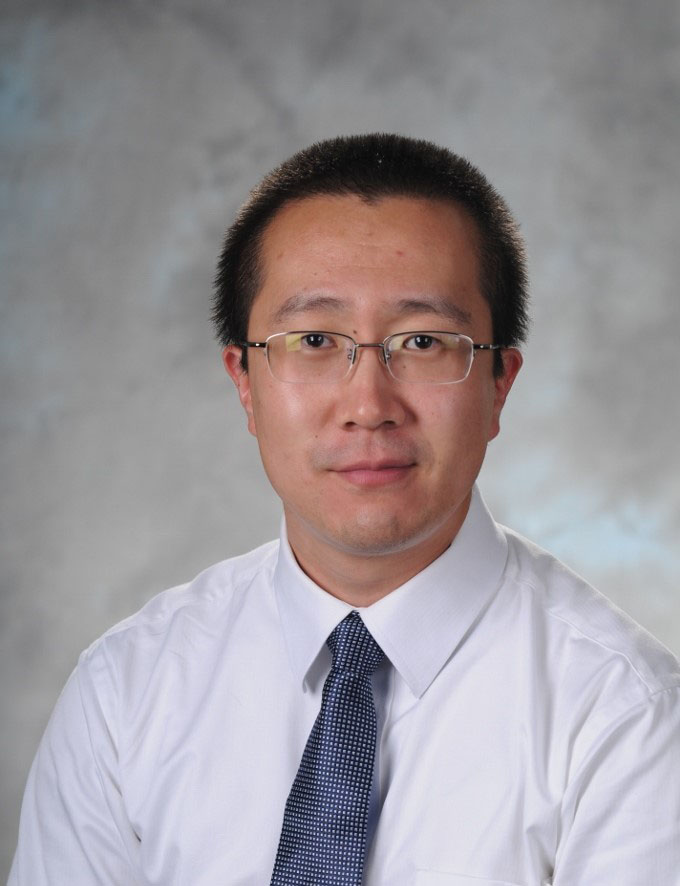
Wenting Sun

Wenting  Sun's profile picture
wenting.sun@aerospace.gatech.edu

Education

  • B.E., Engineering Physics, 2005, Tsinghua University
  • M.E., Engineering Physics, 2007, Tsinghua University
  • Ph.D., Mechanical and Aerospace Engineering, 2013, Princeton University

Background

Prof. Wenting Sun received his B.E. and M.E. degrees from Tsinghua University, Beijing in 2005 and 2007, respectively, and his Ph.D. degree from Princeton University in 2013. He joined Georgia Tech in July 2013. Dr. Sun’s research spans on combustion simulation, combustion kinetics, and plasma/ozone assisted combustion. He develops new numerical algorithms to accelerate large scale CFD simulation using predictive kinetic models. His work on plasma/ozone assisted combustion is to induce plasma generated species into combustion system to enable combustion at extreme conditions. Dr. Sun has developed a high pressure shock tube with unique capability allowing investigation of combustion kinetics for future power generation systems.

Research

  • Dr. Sun’s research spans on combustion simulation, combustion kinetics of conventional and alternative fuels, and new combustion technologies to enhance combustion process. Key to his research is developing new numerical algorithms to accelerate large scale CFD simulation using predictive kinetic models. His work on plasma/ozone assisted combustion is to induce plasma generated species into combustion system to enable combustion at extreme conditions, such as those in supersonic combustion Ramjet engines hypersonic propulsion. Dr. Sun has developed a high pressure shock tube with unique capability allowing investigation of combustion kinetics at supercritical carbon dioxide conditions for the next generation of power generation systems. The new supercritical carbon dioxide oxy-combustion power generation system features high efficiency and almost 100% carbon capture, which will change the landscape of power generation. He also developed a novel super rapid combustion machine to study fundamental turbulence/autoignition interaction to improve combustion models.

(1) Kinetic Model Reduction and Dynamic Adaptive Kinetics for Turbulent Combustion

High-fidelity simulation of combustion systems is a critical element for combustor and engine design. However, to model a combustion system, a chemical kinetic model including hundreds, even thousands, of species and reactions are needed to describe the fuel oxidation and heat release process. For each species in the kinetic model, one ordinary differential equation needs to be solved. The complicated kinetic model makes high-fidelity simulation very challenging and even prohibited because of the limitation of the needed computation power. For example, for large-scale simulations such as LES or DNS, using a predictive detailed kinetic model is prohibited. Thus, there exists a gap between the development of a detailed, predictive combustion kinetic model and high-fidelity large-scale simulation. We work on developing new algorithms to enable and accelerate large scale numerical simulations on combustion with predictive kinetic models. Recently, we  developed a new algorithm GPS (Global Pathway Selection) methond for kinetic model reduction to decrease the number of species in the detailed kinetic model efficiently from hundreds/thousands to tens through the analysis of element flux. Therefore, the reduced predictive kinetic models can be employed by LES or DNS for high-fidelity simulation. This algorithm constructs element flux graphs for considered elements, for example, C, O, and H for hydrocarbon combustion systems. Based on the constructed element flux graphs, important species which transfer significant element flux can be selected in the kinetic model. The global pathways for selected species can be identified by searching the shortest paths with the constructed element flux graphs. In this way, a reduced kinetic model can be constructed for use in complex CFD simulation. For given accuracy, the smaller the number of species needed in the reduced model, the more efficient the reduced kinetic model is, with the added benefit of considerably shorter simulation time. The GPS software and source code can be download here.

To further reduce the computation time of large-scale high-fidelity simulation, we developed a new numerical framework for DNS of turbulent combustion. The principle behind this multidisciplinary work is that different regions in the computation domain have different thermodynamic states; so only a small portion of species in the kinetic model needed to be calculated in the simulation. Therefore, different regions at different times can employ different reduced kinetic models generated on-the-fly with a much smaller number of species to further accelerate the simulation. The new framework was demonstrated using a canonical turbulent premixed flame employing a real jet fuel kinetic model (see plots blow). With high accuracy, the new numerical framework provides a significant speed-up of computation and the total CPU time is reduced by a factor of approximately 20. This new numerical framework enabled DNS with predictive kinetic models with good accuracy and parallel scalability.

The new regime-independent framework for 3D DNS of turbulent combustion with detailed kinetics is developed by incorporating on-the-fly adaptive kinetics (OAK), correlated transport (CoTran) techniques, and an efficient point-implicit ODE solver (ODEPIM) into a conventional DNS platform. All three methods are modified and optimized to adapt to 3D turbulent combustion and parallel high performance computing (HPC). A canonical turbulent premixed flame configuration corresponding to the thin reaction-zone regime is considered, where an initially planar premixed flame front interacts with a decaying isotropic turbulence. The computational domain consists of a cube with length 0.015 m. With the new numerical frame work, calculation of chemistry can be accelerated 46 times, calculation of transport can be accelerated 72 times, and overall acceleration of calculation is 20 times. See our publication here.

With the new capability enabled by the above-mentioned new numerical frame work, we further investigated the sensitivity of DNS predictions to chemical kinetic models. DNS of a canonical temporally evolving turbulent non-premixed flame was conducted using two different kinetic models. This simulation would not have been possible without the newly developed numerical framework discussed above. It was found that at laminar conditions, the two kinetic models provided very close predictions on combustion properties such as autoignition delays, flame speeds, and extinction strain rates. However, at turbulent conditions, different predictions were observed. The temperature predicted by these two kinetic models can vary by as much as 100 K. Detailed systematic analysis revealed that the sensitivity to the chemical kinetic models was magnified by the effects of unsteadiness and turbulence. This study has resolved an important question faced by the combustion community for a long time, that a different selection of kinetic models affects the prediction of DNS of turbulent combustion even though the kinetic models behave similarly at laminar conditions. See our related publication here.

(2) Ozone Assisted Combustion

Plasma/ozone-assisted combustion is a promising technique to improve engine performance, increase lean burn flame stability, reduce emissions, and enhance low temperature fuel oxidation and processing. Plasma/ozone-assisted combustion takes advantage of the dramatically different kinetics between plasma/ozone and combustion to enhance and control the combustion process. We work on using plasma generated species to enhance and control combustion process. One ongoing project is to study the effect of ozone addition on combustion.

One well known reaction pathway to enhance combustion by ozone addition through ozone decomposition (O3àO2+O). Different from conventional understanding in which ozone was known to enhance flame speeds owing to its unique capability to release atomic oxygen (O3àO+O2)  at elevated temperature conditions, We also discovered that ozone (through ozonolysis reactions) can induce explosive reactions at extremely low temperature conditions (even at room temperature) in combustion systems with unsaturated hydrocarbons, such as ethylene. It is common sense that combustion only occurs at high temperature conditions and can only be initiated by ignitors producing a high temperature environment. However, by taking advantage of ozonolysis reactions,(e.g., C2H4+O3àCH2O+H2+CO2, typically studied in atmosphere chemistry community regarding ozone layer depletion and pollution) autoignition was demonstrated at room temperature conditions. A new autoignition-assisted flame stabilization mechanism was also reported by us. Our work on ozone-enhanced combustion bridges the study in the atmosphere chemistry community and in the combustion community. It will provide a solution to enable low-temperature combustion and combustion at near limiting conditions for the development of advanced engines. This research also has the potential to develop a new aerated fuel injection technique and a fuel coking removal technique, therefore changing the cycle efficiency.

In this experiment, ozone is doped into synthetic air and ethylene is used as fuel to create autoigniting environment in diffusion jet flame. the flame dynamics of autoigniting flame is investigated. Figure below shows high speed images right after the fuel jet was turned on. Ozonolysis reactions between O3 and C2H4 produce large amount of CH2O and release heat. The chemiluminescence measurement indicates the formation of a cloud of CH2O, then an auignition kernel occured inside the CH2O cloud. In such a environment, flame could propagate orders of magnitude faster than its corresponding laminar flame speed.

(3) High Pressure Combustion Kinetics

Recently, we developed a new and unique high pressure shock tube to study high pressure combustion kinetics. It enables measurement of critical fundamental combustion parameters in a completely new pressure region, especially those associated with combustion at a supercritical carbon dioxide (sCO2) condition suitable for a future power generation system. This is a regime where combustion kinetics has never been explored before. The sCO2 power cycle has higher efficiency and allows almost 100% carbon capture with no NOx emission (Zero Carbon Natural Gas, selected as 10 breakthroughs technologies in 2018 by MIT Technology Review). Once successful, this technique will potentially change the landscape of ground power generation. However, the sCO2 power cycle requires the combustor to run in the pressure range of 100 atm to 300 atm with high CO2 concentration, which is completely different from the operating regime of conventional gas turbines. For the first time in this field, we obtained autoignition delay of CH4/O2/CO2 autoignition delays at 100±7 atm at the sCO2 condition as shown in the plot below. Comparison with selected kinetic models shows that GRI 3.0 which is widely used in industries has been proven to have large deviation from experiments at sCO2 condition.

(4) Combustion Instability Control Using Plasma

In this project, we use non-equilibrium nanosecond pulsed plasma to control combustion instability. At a condition close to lean blowoff, flame starts to oscillate (a) and finally blows off with further decrease of equivalence ratio. With plasma activation, the lean blowoff limits can be significantly extended and flame can be stablized without osscilation (a'). At certain conditions, plasma also change the morphology of flames (b) and (b').

Distinctions & Awards

Bernard Lewis Fellowship, the Combustion Institute, 2012

Distinguished Paper, the 33rd International Symposium on Combustion, 2011

Selected Publications

[1]. W. Sun, Y. Ju, “Non-equilibrium plasma-assisted combustion: A review of recent progress” 2013 Journal of Plasma and Fusion Research, 89(4), 209-219 (invited paper)

[2]. B. Brumfield, W. Sun, Y. Ju, G. Wysocki “Detection of HO2 by Faraday rotation spectroscopy” 2013 J. Phys. Chem. Lett. 4(6), 872-876

[3]. W. Sun, S. H. Won, T. Ombrello, C. Carter, Y. Ju, “Direct ignition and the S-curve transition by in situ nano-second pulsed discharge in methane/oxygen/helium counterflow flame” 2013 Proceedings of the Combustion Institute, 34, 847-855

[4]. H. Guo, W. Sun, F. M. Haas, T. Farouk, F. Dryer, Y. Ju, “Measurements of H2O2 in low temperature dimethyl ether oxidation” 2013 Proceedings of the Combustion Institute, 34, 573-581

[5]. W. Sun, M. Uddi, S. H. Won, T. Ombrello, C. Carter, Y. Ju, “Kinetic effects of non-equilibrium plasma-assisted methane oxidization on diffusion flame extinction limits” 2012 Combustion and Flame, 159(1) 221-229

Professor, Guggenheim School of Aerospace Engineering
Phone
(404) 894-0524
Additional Research

Combustion

Jechiel Jagoda

Jechiel Jagoda's profile picture
jeff.jagoda@aerospace.gatech.edu

Dr. Jagoda joined the Georgia Institute of Technology in 1979 after three years at the Centre National de La Recherche Scientifique, Mulhouse, France and the Technical University of Munich, F. R. Germany. His prime research interests lie in the area of combustion and propulsion with special emphasis on combustion diagnostics, unsteady and pulse combustion, micro-combustors, low NOx combustors and combustion control. He has extensive experience in optical diagnostics including Schlieren imaging, laser Doppler velocimetry, phase Doppler velocimetry, as well as Rayleigh, Raman and Mic scattering. Dr. Jagoda has published 54 refereed publications, numerous non_refereed papers and given over 100 presentations at national and international meetings. He is a member of Sigma Xi and The Combustion Institute and has served a three-year term on the Technical Committee for Propellants and Combustion of the AIAA. He serves as a reviewer for several journals and sponsoring agencies. He was a member of the Program Subcommittee for the 19th and 22nd through 31st Symposia (International) on Combustion.

Teaching Interests

Professor Jagoda's teaching interests include core aerospace engineering courses at the undergraduate and graduate levels, emphasizing the fundamental principles of aerospace structures, dynamics, and materials. His instruction integrates theoretical foundations and practical applications, fostering a comprehensive understanding of aerospace engineering concepts. Professor Jagoda is committed to developing student capabilities through a blend of lectures, problem-solving sessions, and project-based learning experiences.

Research Interests

Professor Jagoda's research focuses on the mechanics and behavior of advanced aerospace materials and structures. His work involves investigating the mechanical properties, durability, and failure mechanisms of materials used in aerospace applications. Emphasis is placed on experimental and computational methods to understand material responses under various loading conditions, aiming to improve structural performance and reliability in aerospace systems.

Research

Lab/Collaborations:

  • Ben T. Zinn Combustion Laboratory
  • Strategic Energy Institute (SEI)

Disciplines:

  • Propulsion & Combustion
  • Aerodynamics & Fluid Mechanics

AE Multidisciplinary Research Areas:

  • Sustainable Transportation and Energy Systems

Education

B.Sc. Physics, Imperial College of Science & Technology, University of London (1971); Ph.D., Combustion Physics, Imperial College of Science & Technology, University of London (1976);

Distinctions & Awards

Associate Fellow of the AIAA; Sigma Xi Junior Faculty Research Award, 1985; School of Aerospace Engineering Most Valuable Professor Award, 1985 and 1988;

Professor Emeritus, Guggenheim School of Aerospace Engineering
Phone
(404) 894.3060
Additional Research

Combustion

Jonnalagadda V R Prasad

Jonnalagadda V R Prasad's profile picture
jvr.prasad@aerospace.gatech.edu

Dr. J.V.R. Prasad is a professor in the School of Daniel Guggenheim School of Aerospace Engineering at the Georgia Institute of Technology working in the area of flight mechanics and control. He received his B.Tech degree from the Indian Institute of Technology, Madras, India and his M.S and Ph.D. degrees from the Georgia Institute of Technology, Atlanta, USA. He is currently a co-principal investigator and the associate director for the US Army, Navy and NASA sponsored Vertical Lift Rotorcraft Center of Excellence (VLRCOE) program at Georgia Tech. He has extensive research and design experience in rotorcraft system modeling and control, propulsion system modeling and control, and autonomous air vehicle modeling and control. He published parts of four books, sixty refereed journal papers, more than 250 conference papers and 80 research project reports. He has 18 invention disclosures and five patents to his credit. He is a recipient of the 2009 Melville Medal award from the American Society of Mechanical Engineers (ASME) and the 2015 Aero Lion Technologies Outstanding Journal Paper award from the International Journal of Unmanned Systems. He served as the editor-in-chief of the Journal of the American Helicopter Society (AHS), chair of the Handling Qualities and UAV Tech Committees of the AHS, and as member and secretary of the Atmospheric. Flight Mechanics Technical Committee of the American Institute of Aeronautics and Astronautics (AIAA). He currently serves as a member of the editorial board for the International Journal on Mathematical Modeling and Simulation and the advisory board for the International Journal of Unmanned Systems. He is a Fellow of the AIAA, a Technical Fellow of the AHS and a member of the ASME.

Professor; School of Aerospace Engineering
Associate Director; Vertical Lift Research Center of Excellence
Phone
404.894.3043
Office
Knight 421A
Additional Research

Flight Mechanics & Controls

Research Focus Areas
IRI And Role

Glenn Lightsey

Glenn Lightsey's profile picture
glenn.lightsey@gatech.edu

E. Glenn Lightsey is the John W. Young Chair Professor in the Daniel Guggenheim School of Aerospace Engineering at Georgia Tech. He currently serves on the executive committee for the Space Research Initiative at Georgia Tech. Previously, he was the director of the Space Systems Design Lab from 2016-2023 and Center for Space Technology And Research at Georgia Tech from 2019-2023. 

Lightsey’s research program focuses on the technology of small satellites, including: guidance, navigation, and control systems; attitude determination and control; formation flying, satellite swarms, and cooperative control; proximity operations and unmanned spacecraft rendezvous; space based Global Positioning System receivers; radionavigation; propulsion; satellite operations; and space systems engineering. His group has built and operated several spacecraft for government sponsors. 

Lightsey has co-authored more than 180 technical articles and publications, including four book chapters. He is an AIAA Fellow and a Founding Member of the AIAA Small Satellite Technical Committee. He is Associate Editor-in-Chief of the Journal of Small Satellites. In the past he served as Associate Editor of the AIAA Journal of Guidance, Control, and Dynamics and Associate Editor of the AIAA Journal of Spacecraft and Rockets. Lightsey was previously employed at the University of Texas at Austin and NASA’s Goddard Space Flight Center.

John W. Young Chair Professor, Daniel Guggenheim School of Aerospace Engineering
Member, Space Research Initiative Steering Committee
Phone
404.385.4146
Office
ESM 110A/B
Additional Research
  • Small Satellites
  • Guidance and Control
  • Spacecraft Technology
Research Focus Areas
Google Scholar
https://scholar.google.com/citations?hl=en&user=EFUhzfYAAAAJ&view_op=list_works&sortby=pubdate

Dimitri Mavris

Dimitri Mavris's profile picture
dimitri.mavris@aerospace.gatech.edu

Dimitri Mavris is a Regents’ Professor, Boeing Professor of Advanced Aerospace Systems Analysis, and an S.P. Langley Distinguished Professor. He also serves as the director of the Aerospace Systems Design Laboratory (ASDL) and executive director of the Professional Master’s in Applied Systems Engineering (PMASE). Dr. Mavris received his B.S., M.S., and Ph.D. in aerospace engineering from the Georgia Institute of Technology. His primary areas of research interest include: advanced design methods, aircraft conceptual and preliminary design, air-breathing propulsion design, multi-disciplinary analysis, design and optimization, system of systems, and non-deterministic design theory. Dr. Mavris has actively pursued closer ties between the academic and industrial communities in order to foster research opportunities and tailor the aerospace engineering curriculum towards meeting the future needs of the US aerospace industry. He has also co-authored with his students in excess of 1,000 publications. During his tenure at Georgia Tech, Dr. Mavris has chaired and served in several Technical and Program Committees for the American Institute of Aeronautics and Astronautics (AIAA) and served on the AIAA Board of Directors and Institute Development Committee. He is the President of the International Council of the Aeronautical Sciences (ICAS). He is the Georgia Tech technical point of contact for the FAA Center of Excellence for Alternative Jet Fuels & Environment (ASCENT), the Georgia Tech site director for the FAA Partnership to Enhance General Aviation Safety, Accessibility, and Sustainability (PEGASAS), and the principal investigator for the Airbus/Georgia Tech Center for MBSE-enabled Overall Aircraft Design and the Siemens Center of Excellence for Simulation and Digital Twin.

Regents' Professor, Guggenheim School of Aerospace Engineering
Boeing Professor of Advanced Aerospace Systems Analysis
Director, Aerospace Systems Design Laboratory
Executive Director, Professional Master’s in Applied Systems Engineering (PMASE)
Phone
(404) 894-1557
Additional Research

System Design & Optimization

Marilyn Smith

Marilyn Smith's profile picture
marilyn.smith@ae.gatech.edu

Marilyn Smith is a Professor in the School of Daniel Guggenheim School of Aerospace Engineering at the Georgia Institute of Technology. She is director of Georgia Tech's Vertical Lift Research Center of Excellence (VLRCOE), where she leads a seven-university team of experts in vertical lift research for the U.S. Army, U.S. Navy and NASA. She has partnered with the Georgia Tech Research Institute (GTRI) to successfully win multiple research funding mechanisms for both organizations that total more than $200 million dollars. As the director of the AE School's Computational Nonlinear Computational Aeroelasticity Lab, Prof. Smith leads an internationally recognized and award-winning research team in the areas of unsteady aerodynamics and computational aeroelasticity using Computational Fluid Dynamics (CFD) across rotary-wing, fixed wing and launch vehicles, as well as sustainable energy. As a member of the NASA FUN3D development team, Prof. Smith contributes to state-of-the-art unstructured algorithm development, in particular for overset, moving frames. As an affiliate of the Aerospace Systems Design Lab (ASDL), she helps to integrate high performance computing with the design process. Prof. Smith is the author or co-author of more than 200 technical publications, and her research products are in active use by the US Government and other organizations, including the Drone Racing League. She is active internationally on three NATO AVT Panels investigating nonlinear gusts behaviors on UAVs and collaboration of experimental/computational aerodynamics. She is on Board of Directors of the Vertical Lift Consortium (VLC) and the Vertical Flight Society (VFS). She is also the Deputy Technical Director for Aeromechanics for the VFS. Prof. Smith has demonstrated her leadership as ARO Dynamic Stall Workshop Chair (2019); 70th AHS Annual Forum Technical Chairperson (2014); 69th AHS Annual Forum Technical Deputy Chairperson (2013); and 2014 Overset Grid Symposium (OGS) Chairperson. She was a member on the first International Aeroelastic Prediction Workshop Organizing Committee and is a member of the OGS organizing committee. Prof. Smith has been a guest expert in aviation for National Geographic, PBS, and NPR, as well as local television and numerous publications.

Professor, Guggenheim School of Aerospace Engineering
Director, Vertical Lift Research Center of Excellence
Phone
404.894.3065
Office
Weber 202
Additional Research

aeroelasticity; aerodynamics; computational fluid dynamics

Research Focus Areas
Google Scholar
https://scholar.google.com/citations?hl=en&user=lEKsoQIAAAAJ&view_op=list_works&sortby=pubdate

Vigor Yang

Vigor Yang's profile picture
vigor.yang@aerospace.gatech.edu

Vigor Yang earned his Ph.D. from the California Institute of Technology in 1984. After serving for one year as a research fellow in Jet Propulsion at Caltech, he joined the Pennsylvania State University in August 1985, becoming the John L. and Genevieve H. McCain Chair in Engineering in 2006. In 2009, he began his tenure as the William R.T. Oakes Professor Chair at the Daniel Guggenheim School of Aerospace Engineering at the Georgia Tech. He retired from the chair position and returned to teaching and research in August of 2018

Yang’s research encompasses a wide spectrum of topics, including (1) data-enabled design and data science; (2) combustion dynamics in propulsion and power-generation systems;(3) multi-fidelity modeling and simulations of fluid flows and combustion; (4) combustion of energetic materials; (5) high-pressure transport phenomena, thermodynamics and combustion, and (6) nano technologies for propulsion and energetic applications. He has established, as the principal or co-principal investigator, more than 70 research projects, including nine (9) DoD-MURI projects. He has published 10 comprehensive volumes and numerous technical papers on combustion, propulsion, energetics, and data science. He was the recipient of  the Air-Breathing Propulsion Award (2005), the Pendray Aerospace Literature Award (2008), the Propellants and Combustion Award (2009), and the von Karman Lectureship in Astronautics Award (2016) from the American Institute of Aeronautics and Astronautics (AIAA); the Worcester Reed Warner Medal (2014) from the American Society of Mechanical Engineers (ASME); and the Lifetime Achievement Award (2014) from the Joint Army, Navy, NASA, and Air Force (JANNAF) Interagency Propulsion Committee.

Yang was the editor-in-chief of the AIAA Journal of Propulsion and Power (2001-2009) and the JANNAF Journal of Propulsion and Energetics (2009-2012). He is currently a co-editor of the Aerospace Book Series of the Cambridge University Press (2010-).  He serves, or has served, on a large number of steering committees and review/advisory boards for government agencies and universities in the U.S. and abroad. A member of the U.S. National Academy of Engineering and an academician of Academia Sinica, Dr. Yang is a fellow of the AIAA, ASME, and Royal Aeronautical Society (RAeS).

Regents Professor
Additional Research
  • Combustion
  • Energy
  • Hydrogen Production &  Utilization 

Lu Gan

Lu Gan's profile picture
lgan@gatech.edu

Lu Gan joined the Daniel Guggenheim School of Aerospace Engineering at the Georgia Institute of Technology as an Assistant Professor in January 2024. She leads the Lu's Navigation and Autonomous Robotics (Lunar) Lab at Georgia Tech, and is on the core faculty of the Institute for Robotics and Intelligent Machines. Her research interests include robot perception, robot learning, and autonomous navigation. Her group explores the use of computer vision, machine learning, estimation, probabilistic inference, kinematics and dynamics to develop autonomous systems in ground, air, and space applications.

She holds a B.S. in Automation from the University of Electronic Science and Technology of China, an M.S. in Control Engineering from Beihang University, and received her M.S. and Ph.D. in Robotics from the University of Michigan, Ann Arbor. Before joining Georgia Tech, she had a two-year appointment as a Postdoctoral Scholar at the Graduate Aerospace Laboratories of the California Institute of Technology and the Center for Autonomous Systems and Technologies at Caltech.

Assistant Professor - School of Aerospace Engineering
Office
Guggenheim 448A
Additional Research
  • Computer Vision
  • Perception & Navigation
  • Robot Autonomy
  • Flight Mechanics & Controls
  • Human-Robot Interaction
Google Scholar
https://scholar.google.com/citations?hl=en&user=mVY8wE8AAAAJ&view_op=list_works&sortby=pubdate

Elizabeth Qian

Elizabeth Qian's profile picture
elizabeth.qian@aerospace.gatech.edu

Elizabeth Qian joined the Daniel Guggenheim School in November 2022. She holds a joint appointment at Georgia Tech as Assistant Professor in the Schools of Aerospace Engineering and Computational Science and Engineering. Her interdisciplinary research develops new computational methods to enable engineering design and decision-making for complex systems. Her specialties are in developing efficient surrogate models through model reduction and scientific machine learning, and in developing multifidelity approaches to accelerate expensive computations in uncertainty quantification, optimization, and control. 

Elizabeth previously held a postdoctoral appointment as von Karman Instructor at Caltech in the Department of Computing + Mathematical Sciences. She has been the recipient of many awards, including a Caltech-wide award for teaching bestowed by the undergraduate student body, the 2020 SIAM Student Paper Prize, the Fannie and John Hertz Foundation Fellowship, and the NSF Graduate Research Fellowship. She is also an alumna of the U.S. Fulbright student program. She earned her PhD, SM, and SB degrees from the MIT Department of Aeronautics & Astronautics.

Assistant Professor, Guggenheim School of Aerospace Engineering
Additional Research

Flight Mechanics & Controls Propulsion & Combustion Systems Design & OptimizationLarge-Scale Computations, Data, and Analytics

IRI And Role

Mitchell Walker II

Mitchell Walker II's profile picture
mitchell.walker@ae.gatech.edu

Dr. Walker's primary research interests lie in electric propulsion, plasma physics, and hypersonic aerodynamics/plasma interaction. He has extensive design and testing experience with Hall thrusters and ion engines. Dr. Walker has performed seminal work in Hall thruster clustering, vacuum chamber facility effects, plasma-material interactions, and electron emission from carbon nanotubes. His current research activities involve both theoretical and experimental work in advanced spacecraft propulsion systems, diagnostics (including THz time-domain spectroscopy and Thomson scattering), plasma physics, helicon plasma sources, magnetoplasmadynamic thrusters, and pulsed inductive thrusters. Dr. Walker also teaches the undergraduate Jet & Rocket Propulsion course, as well as the graduate level Rocket Propulsion, Electric Propulsion, and Gasdynamics courses.

Professor, Guggenheim School of Aerospace Engineering
William R.T. Oakes, Jr. School Chair and Professor
Phone
404-385-2757
Office
Tech Tower 307
Additional Research

Energy Harvesting; Thermal Systems