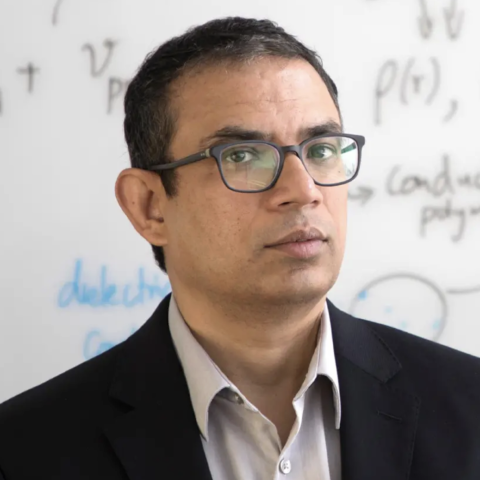
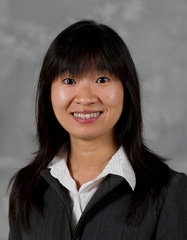
Rampi Ramprasad

Rampi Ramprasad's profile picture
rampi.ramprasad@mse.gatech.edu

Ramprasad joined the School of Materials Science and Engineering at Georgia Tech in February 2018. Prior to joining Georgia Tech, he was the Centennial Term Professor of Materials Science and Engineering at the University of Connecticut. He joined the University of Connecticut in Fall 2004 after a 6-year stint with Motorola’s R&D laboratories at Tempe, AZ. Ramprasad received his B. Tech. in Metallurgical Engineering at the Indian Institute of Technology, Madras, India, an M.S. degree in Materials Science and Engineering at the Washington State University, and a Ph.D. degree also in Materials Science and Engineering at the University of Illinois, Urbana-Champaign.

Ramprasad’s area of expertise is in the development and utilization of computational and data-driven (machine learning) methods aimed at the design and discovery of new materials. Materials classes under study include polymers, metals and ceramics (mainly dielectrics and catalysts), and application areas include energy production and energy storage. Prof. Ramprasad’s research has been funded by the Office of Naval Research (ONR), the National Science Foundation (NSF), the Department of Energy (DOE), the Army Research Office (ARO), and Toyota Research Institute (TRI). He has lead a ONR-sponsored Multi-disciplinary University Research Initiative (MURI) in the past to accelerate the discovery of polymeric capacitor dielectrics for energy storage, and is presently leading another MURI aimed at the understanding and design of dielectrics tolerant to enormous electric fields.

Ramprasad is a Fellow of the American Physical Society, an elected member of the Connecticut Academy of Science and Engineering, and the recipient of the Alexander von Humboldt Fellowship and the Max Planck Society Fellowship for Distinguished Scientists.

Michael E. Tennenbaum Family Chair, Materials Science and Engineering
Georgia Research Alliance Eminent Scholar in Energy Sustainability
Phone
404.385.2471
Office
Love 366
Additional Research
  • Data Analytics
  • Materials discovery
  • Energy Storage
  • Modeling
  • Electronic Materials
  • Electronics
University, College, and School/Department

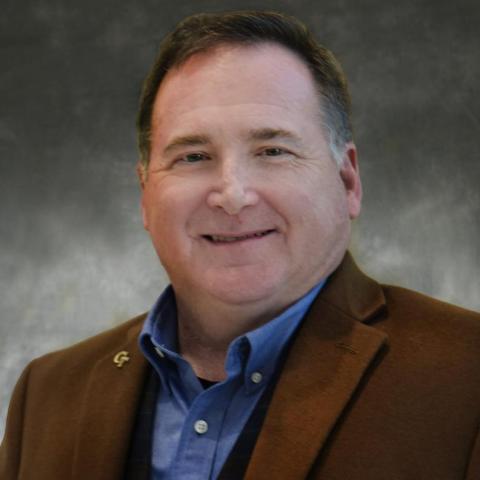
Randall Guensler

Randall Guensler
randall.guensler@ce.gatech.edu

Randall Guensler is a Professor in the School of Civil and Environmental Engineering at the Georgia Institute of Technology. After working for the California Air Resources Board for seven years, and completing his Ph.D. in Civil Engineering at the University of California at Davis, Dr. Guensler joined Georgia Tech in 1994. During his years with the State of California, Dr. Guensler worked for four years in Compliance Assistance and for three years in the Executive Office, evaluating the design and implementation of transportation control measures by regional air quality management agencies. Since arriving at Georgia Tech, Dr. Guensler's main research focus has been the development of new monitoring and modeling tools to assess the air quality impacts of transportation policies. Dr. Guensler was the Chairman of the Transportation Research Board committee on Transportation and Air Quality from 1997 to 2002. From 1995 to 2001, Dr. Guensler served on the Environmental Protection Agency's Mobile Source Technical Advisory Subcommittee. Over the past ten years, he has served on various National Academy of Sciences committees and panels charged with the assessment of vehicle emissions impacts and identification of research needs. Dr. Guensler is the director of Commute Atlanta, a $2.3 million joint value pricing initiative sponsored by the Federal Highway Administration and Georgia Department of Transportation. Commute Atlanta includes the collection and analysis of second-by-second vehicle speed, position, and engine operating data from 470 vehicles in representative Atlanta households. The researchers have monitored more than 1.4 million vehicle trips (more than 350,000 vehicle-miles per month). In 2005, the Commute Atlanta households began participating in road pricing experiments (cent/mile pricing, as well as real-time congestion pricing). Dr. Guensler's research team is assessing consumer response to these pricing mechanisms. A secondary focus of the research is the enhancement of monitoring technologies and services to support future transportation planning, safety, and operations policy initiatives. Development of tools for data management, data analysis, and privacy protection became major research activities. Secondary research has also included analysis of speeding, journey to work route choice, trip chaining, activity-based demand, household tripmaking variability, household and vehicle range of travel, long-distance travel, freeway operations, engine load, start and soak distributions, transit bus operations, etc.

Research

Dr. Guensler's research focuses on transportation systems analysis, travel behavior modeling, and sustainable transportation strategies. His work involves the development and application of data-driven methodologies to understand and improve mobility, traffic operations, and environmental impacts of transportation networks. He investigates the integration of emerging transportation technologies and policies to enhance efficiency and sustainability in urban and regional transportation systems. His research actively involves collaboration with students at both undergraduate and graduate levels.

Education

Ph.D., Civil Engineering, Transportation

University of California, Davis

1993

M.S., Civil/Environmental Engineering

University of California, Davis

1989  

B.S., Individualized Engineering (Civil Engineering, Urban Planning, Environ. Studies)

University of California, Davis

1985


Teaching

Dr. Guensler's teaching interests encompass transportation engineering and planning, with an emphasis on traffic operations, transportation systems analysis, and energy/emissions modeling. He engages both undergraduate and graduate students in foundational and advanced courses that address transportation infrastructure, travel behavior, and the societal impacts of transportation technologies. Professor Guensler also integrates quantitative methods and policy considerations into his instruction to prepare students for multidisciplinary challenges in civil engineering.

Publications

  1. Lu, H., D. Kim, H. Liu, T. Xia, W. Reichard, M.O. Rodgers, R. Guensler (2024). Sensitivity of AERMOD (v21112) RLINEXT Dispersion Model Outputs by Source Type to Variability in Single Noise Barrier Height and Separation Distance. Atmospheric Pollution Research. https://doi.org/10.1016/j.apr.2024.102318. December 2024.
  2. Passmore, R., K.E. Watkins, and R. Guensler (2024). Using Shortest Path Routing to Assess Cycling Networks. https://doi.org/10.1016/j.jtrangeo.2024.103864. Journal of Transport Geography. Volume 117. May 2024.
  3. Lu, H., and R. Guensler (2024). MOVES-Matrix 3.0: On-Road Energy and Emission Modeling with High-Performance Supercomputing. Research Report from the National Center for Sustainable Transportation. October 2024.
  4. Lu, H, D Hunsaker, Z Liu, A Puppala, M McGurk, A Guin, R Guensler, Vehicle Occupancy, Vehicle Throughput, and Person Throughput Assessment of Atlanta’s HOV Managed Lane Facilities, 2025
  5. Xu, X, HC Yang, H Laarabi, C Poliziani, A Birky, K Jeong, H Lu, ..., Improving commercial truck fleet composition in emission modeling using 2021 US VIUS data, International Journal of Sustainable Transportation 19 (12), 1162-1180, 2025
Professor, School of Civil and Environmental Engineering
Phone
(404) 894-0405
Additional Research

Electric Vehicles; Smart Infrastructure

University, College, and School/Department

Steven Biegalski

Steven Biegalski's profile picture
steven.biegalski@me.gatech.edu

Steven Biegalski is the Chair of Nuclear and Radiological Engineering and Medical Physics Program at Georgia Institute of Technology. He has three degrees in nuclear engineering from University of Maryland, University of Florida, and University of Illinois, respectively. Early in his career Dr. Biegalski was the Director of Radionuclide Operations at the Center for Monitoring Research. In this position Dr. Biegalski led international efforts to develop and implement radionuclide effluent monitoring technologies. This work supported both US national capabilities and international treaties. Dr. Biegalski was a faculty member at The University of Texas at Austin for 15 years and held the position of Reactor Director for The University of Texas at Austin TRIGA reactor for over a decade. He has advised 25 Ph.D. students to graduation and holds Professional Engineering licenses in the states of Texas and Virginia.


Program Chair, Nuclear and Radiological Engineering and Medical Physics
Phone
(404) 894-3718
Additional Research

Nuclear

University, College, and School/Department

Ari Glezer

Ari Glezer's profile picture
ari.glezer@me.gatech.edu

Dr. Glezer began at Tech in 1992 as an Associate Professor. He was named to the Woodruff Chair in Thermal Systems in 2002. Prior, he was an Assistant and Associate Professor at the University of Arizona.

Teaching Interests

Professor Glezer's teaching interests encompass core mechanical engineering subjects at both undergraduate and graduate levels, including fluid mechanics, aerodynamics, heat transfer, and energy systems. His courses emphasize fundamental principles, analytical methods, and experimental techniques. He fosters an interactive learning environment and actively engages graduate and undergraduate students in research-driven projects to deepen their understanding of fluid dynamics and energy conversion.

Research Interests

Professor Glezer's research focuses on fluid mechanics and aerodynamics with an emphasis on flow control, fluid-structure interactions, and energy transport phenomena. His work explores the fundamental physics of turbulence, vortex dynamics, and aerodynamic performance enhancement, employing experimental and computational approaches to address challenges in aerodynamics, propulsion systems, energy systems, and thermal management.

Recent Publications

  • Nichols, D. A., Vukasinovic, B., and Glezer, A., “On the Formation of a Ground Vortex In Crossflow,” J. Fluid Mech., 1012, 2025. 
  • Peterson, C. J., Vukasinovic, B., and Glezer, A., “The Evolution and Scaling of Controlled Flow Separation at the Inlet of a Diverging Channel,” Exp. Fluids, 66, 2025. 
  • Burrows, T.J., Vukasinovic, B., Glezer, A., Lakebrink, M.T., and Mani, M., “Controlled Flow in a Serpentine Diffuser with a Cowl Inlet,” J. Aircraft, 62, 2025.
  • Vukasinovic, B., Funk, R. B., and Glezer, A., “Circulation Control using Arrays of Fluidically Oscillating Jets,” AIAA J., 63, 2025.
  • Boziuk, T. R., Smith, M. K., and Glezer, A., “Dynamics of Vapor Bubble Condensation under Directional Ultrasonic Actuation,” Phys. Fluids, 35, 2023.
Professor, Woodruff School of Mechanical Engineering
Woodruff Chair, Thermal Systems
Phone
404.894.3266
Office
Love Building, Room 239
Additional Research

Wind; Fluid Mechanics and Heat Transfer; Combustion; and Energy Systems; Fluid mechanics; turbulent shear flows; flow control; diagnostics

Research Focus Areas
University, College, and School/Department

Spyros Pavlostathis

Spyros Pavlostathis's profile picture
spyros.pavlostathis@ce.gatech.edu

Dr. Spyros G. Pavlostathis is Professor Emeritus of Environmental Engineering at the School of Civil and Environmental Engineering, Georgia Institute of Technology, Atlanta, GA. A recipient of the Fulbright Scholarship, Dr. Pavlostathis completed his MS and Ph.D. in Environmental Engineering at Cornell University after obtaining his Diploma in Agricultural Engineering at the Agricultural University of Athens, Greece. He is also the recipient of an Honorary Doctorate Degree from the Hellenic Open University, Greece. Dr. Pavlostathis is a Board Certified Environmental Engineer Member of the American Academy of Environmental Engineers and Scientists (AAEES), and a Fellow of International Water Association (IWA), Water Environment Federation (WEF), and American Society of Civil Engineers (ASCE).

Dr. Pavlostathis is internationally recognized for his research and expertise in the areas of environmental biotechnology and bioprocess engineering. His recent research focused on bioenergy production via co-digestion of high-strength waste and municipal sludge, as well as bioelectrochemical systems for hydrogen production and the upgrade of anaerobic digestion biogas. His research was funded by NSF, EPA, USDA, DOE, USGS, DOD, SERDP, EPRI, NY State ERDA, State of Georgia TIP, as well as numerous industrial foundations, municipalities and companies. Dr. Pavlostathis has published over 200 peer-reviewed papers and authored over 250 publications including books or book chapters. Dr. Pavlostathis has organized or chaired over 50 conferences and conference sessions and frequently serves as a consultant, invited speaker and panelist on behalf of city, county, state and federal agencies in the US and abroad. An active member of several professional organizations, Dr. Pavlostathis has served on the Editorial Boards of the Journal of Environmental Engineering, Water Science & Technology, Biotechnology Letters, Journal of Hazardous Materials, Water Environment Research, Water Quality Research Journal, and Environment International.

Dr. Pavlostathis is the recipient of numerous fellowships, awards and distinctions. Throughout his academic career, Dr. Pavlostathis has been a dedicated educator of future environmental engineers, teaching at both the undergraduate and graduate level. Committed to the mission of teaching, he was actively engaged in the development of curriculum and was involved in the advisement of both graduate and undergraduate engineering students. In recognition of his experience and high standing in the education of aspiring engineers he has been invited to give over 50 short courses and lectures both nationally and worldwide. He has served abroad as an evaluator of engineering curricula and programs, as well as an external thesis reviewer. Through his research activities, he has mentored 23 post-doctoral fellows and visiting scholars, 17 Ph.D. and 25 MS students, who have gone on to work in consulting, state and federal regulatory agencies, as well as academia, and provided many research opportunities for undergraduate students.

Research

  • Environmental biotechnology and bioprocess engineering for the bioremediation of contaminated natural systems and the treatment of industrial and municipal wastewater
  • Fate and biotransformation of recalcitrant organic compounds and emerging environmental contaminants
  • Disinfectant-induced antibiotic resistance
  • Bioenergy and biofuels from biomass and waste streams
  • Microbial fuel cell and bioelectrochemical technology
  • Kinetics, modeling and simulation of biotransformation and biotreatment processes

Education

  • Ph.D.: Environmental Engineering (Major)/Biochemical Engineering (Minor), Cornell University, 1985
  • M.S.:  Environmental Engineering (Major)/Agricultural Waste Management (Minor), Cornell University, 1982
  • Diploma: Agricultural Engineering, Agricultural University of Athens, Greece, 1974

Distinctions & Awards

(2013 onwards)

  • Georgia Institute of Technology/School of Civil & Environmental Engineering – Sustained Research Award (2013)
  • Association of Environmental Engineers and Scientists (AEES), Georgia Institute of Technology – Outstanding Faculty Award (2014)
  • Co-advisor, Georgia Institute of Technology/AEES Best Ph.D. Thesis Award (P. Sun; 2014)
  • Co-advisor, ACS/Division of Environmental Chemistry – Graduate Student Best Paper Award (P. Sun; 2014)
  • Honorary Professorship in Innovative Pollution Control and Resources Reuse, Chinese Ministry of Education (111 Program); Tongji University, College of Environmental Science & Engineering, Shanghai, P. R. China (2014 – 2017)
Professor, School of Civil and Environmental Engineering
Phone
(404) 894-9367
Additional Research

Energy Storage; Biofuels

Research Focus Areas
University, College, and School/Department

Larry Heck

Larry Heck's profile picture
larryheck@gatech.edu

Larry P. Heck is a Professor with a joint appointment in the Schools of Electrical and Computer Engineering and Interactive Computing at the Georgia Institute of Technology. He holds the Rhesa S. Farmer Distinguished Chair of Advanced Computing Concepts and is a Georgia Research Alliance Eminent Scholar. His received the BSEE from Texas Tech University (1986), and MSEE and PhD EE from the Georgia Institute of Technology (1989,1991). He is a Fellow of the IEEE, inducted into the Academy of Distinguished Engineering Alumni at Georgia Tech and received the Distinguished Engineer Award from the Texas Tech University. He was a Senior Research Engineer with SRI (1992-98), VP of R&D at Nuance (1998-2005), VP of Search and Advertising Sciences at Yahoo! (2005-2009), Chief Scientist of the Microsoft Speech products and Distinguished Engineer in Microsoft Research (2009-2014), Principal Scientist with Google Research (2014-2017), CEO of Viv Labs and SVP at Samsung (2017-2021).

Professor
Rhesa Screven Farmer Jr., Advanced Computing Concepts Chair
Georgia Research Alliance Eminent Scholar
University, College, and School/Department
Google Scholar
https://scholar.google.com/citations?user=33ZWJmEAAAAJ&hl=en

Mary Ann Weitnauer

Mary Ann Weitnauer's profile picture
mary.ann.weitnauer@ece.gatech.edu
Associate Chair-Academic; Senior Associate Chair
Phone
404-894-9482
Additional Research

Wireless Communication; Cooperative Diversity; Distributed MIMO; MAC and Routing for Wireless Multi-Hop Networks; Millimeter Wave Communications

University, College, and School/Department

Thomas Fuller

Thomas Fuller's profile picture
tom.fuller@chbe.gatech.edu

Tom Fuller is Professor of Chemical Engineering at the Georgia Tech. Dr. Fuller received a BS from the University of Utah in Chemical Engineering in 1982. Dr. Fuller then served for five years in the U.S. Navy working as a Nuclear Engineer. In 1992 he obtained a Ph.D. from UC, Berkeley also in Chemical Engineering. 

Subsequently, Dr. Fuller developed advanced lithium batteries while working as a postdoctoral fellow at Lawrence Berkeley National Laboratory. He then moved to United Technologies. He was responsible for technology development, design, assembly, and test of cell stacks for UTC Fuel Cells. 

His research group at Georgia Tech is focused on durability challenges for electrochemical systems. For the last eight years Dr. Fuller has been a Technical Editor for the Journal of the Electrochemical Society. In 2009 Dr. Fuller was named a Fellow of the Electrochemical Society.

Professor, School of Chemical and Biomolecular Engineering
Phone
(404) 894-2898
Additional Research

Electric Vehicles; Energy Storage; Hydrogen; Modeling; Materials Failure and Reliability; Energy Conversion; Energy Storage; Batteries; fuel cells

University, College, and School/Department
Google Scholar
https://scholar.google.com/citations?hl=en&user=I1RqBRoAAAAJ&view_op=list_works&sortby=pubdate

Nga Lee (Sally) Ng

Nga Lee (Sally) Ng's profile picture
ng@chbe.gatech.edu

Dr. Ng is the Love Family Professor in the School of Chemical & Biomolecular Engineering and the School of Earth & Atmospheric Sciences at the Georgia Institute of Technology. She earned her Ph.D. in Chemical Engineering from the California Institute of Technology and was a postdoctoral scientist at Aerodyne Research Inc.

Dr. Ng’s research focuses on the understanding of the chemical mechanisms of aerosol formation and composition, as well as their health effects. Her group combines laboratory chamber studies and ambient field measurements to study aerosols and air quality using advanced mass spectrometry techniques. Dr. Ng leads the establishment of the first, high time-resolution, long-term aerosol measurement network in the U.S.: Atmospheric Science and Chemistry mEasurement NeTwork (ASCENT), for characterization of aerosol chemical composition and physical properties, and their impacts on climate, human health, and ecosystems.

Love Family Professor, School of Chemical & Biomolecular Engineering, School of Earth & Atmospheric Sciences
SEI Senior Advisor: Energy & Health
Phone
(404) 385-2148
Office
ES&T 2222
Additional Research

Climate/Environment

Research Focus Areas
University, College, and School/Department

Juan-Pablo Correa-Baena

Juan-Pablo Correa-Baena's profile picture
jpcorrea@gatech.edu

Juan-Pablo Correa-Baena is an Assistant Professor and the Goizueta Junior Faculty Rotating Chair in the School of Materials Science and Engineering at the Georgia Institute of Technology in Atlanta, USA.

His group focuses on understanding and control of crystallographic structure and effects on electronic dynamics at the nanoscale of low-cost semiconductors for optoelectronic applications. Juan-Pablo’s group works on advanced deposition techniques, with emphasis on low-cost and high throughput, as well as advanced characterization methods that include synchrotron-based mapping and imaging approaches with nanoscale resolution.

His research program at Georgia Tech has attracted funding from the Department of Energy and the Department of Defense, which funds cutting-edge research on new materials for solar energy conversion.

His work has been cited over 28,000 times (h-index of 59) making him a top cited researcher as recognized by the Web of Science Group, Highly Cited Researchers-cross-field (2019, 2021) and Chemistry (2020), and Nature Index, Leading early career researcher in materials science (2019).

Associate Professor, Materials Science and Engineering
IMS/SEI Initiative Lead: Materials for Solar Energy Harvesting and Conversion
University, College, and School/Department