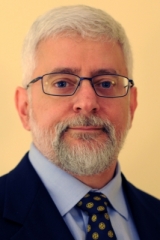
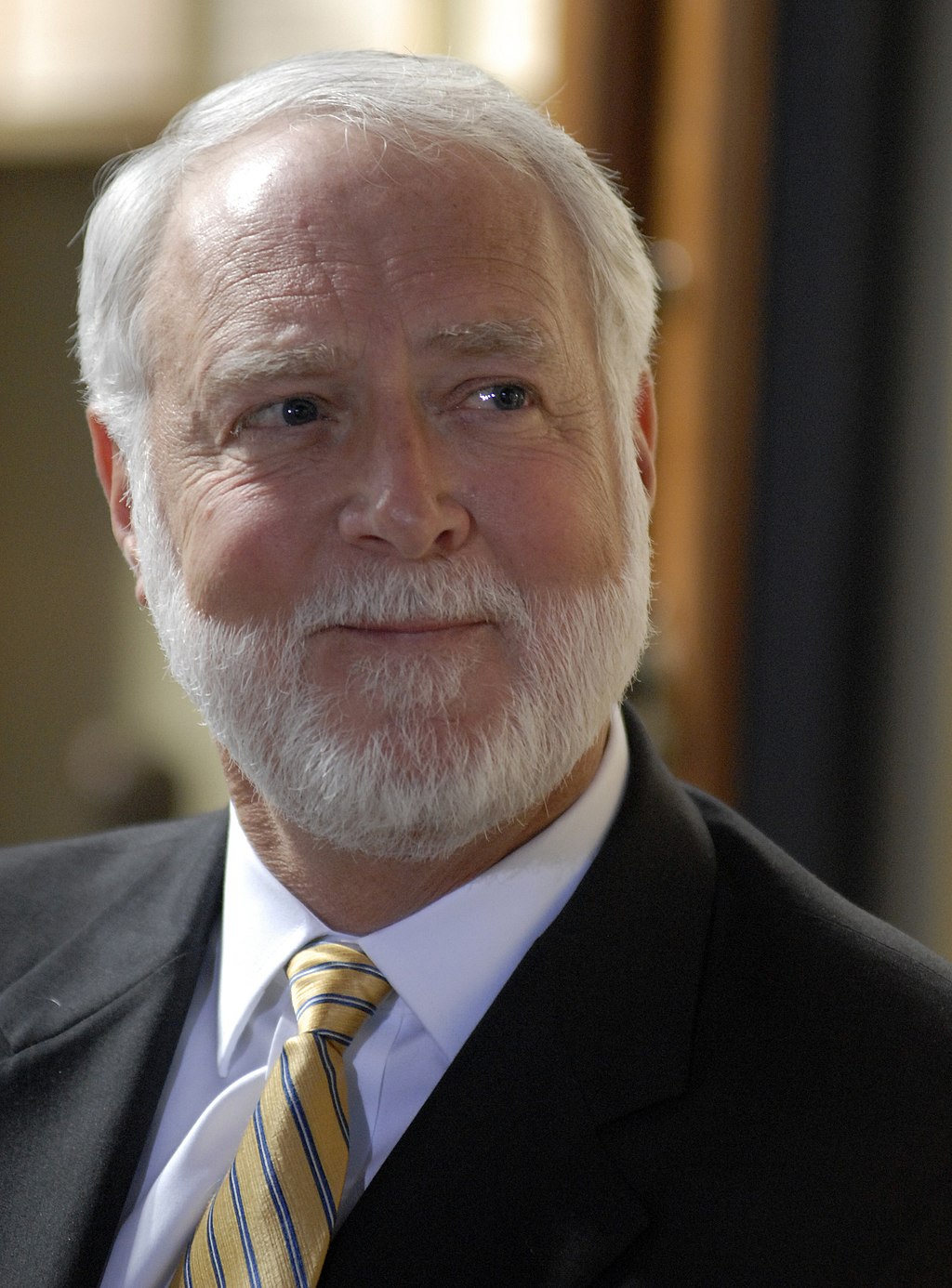
Thomas Conte

Thomas Conte's profile picture
conte@gatech.edu

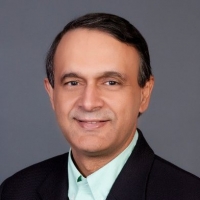
Tom Conte holds a joint appointment in the Schools of Electrical & Computer Engineering and Computer Science at the Georgia Institute of Technology. He is the founding director of the Center for Research into Novel Computing Hierarchies (CRNCH). His research is in the areas of computer architecture and compiler optimization, with emphasis on manycore architectures, microprocessor architectures, back-end compiler code generation, architectural performance evaluation and embedded computer system architectures.

Professor, School of Electrical & Computer Engineering and School of Computer Science
Phone
(404) 385-7657
Office
Klaus 2334
Additional Research
  • Computer Architecture
  • Compiler Optimization

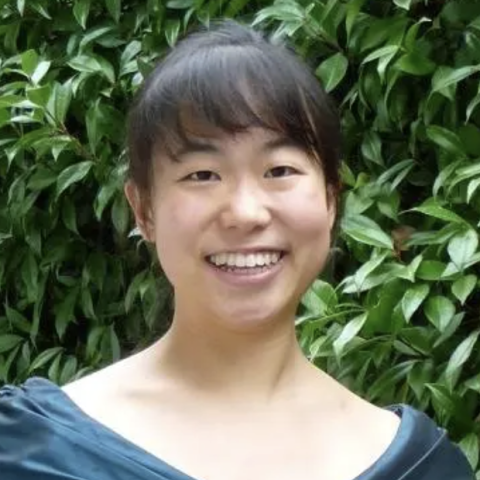
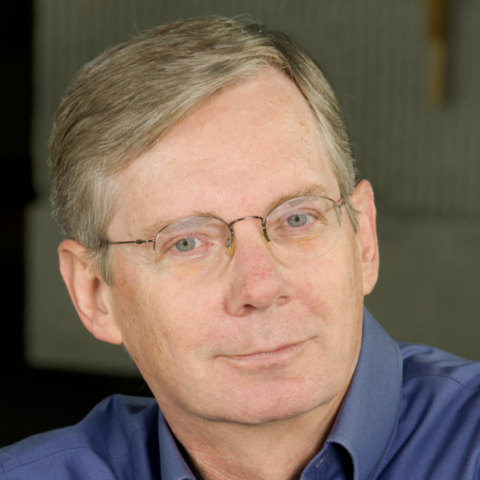
Johannes Milz

Johannes Milz's profile picture
johannes.milz@isye.gatech.edu

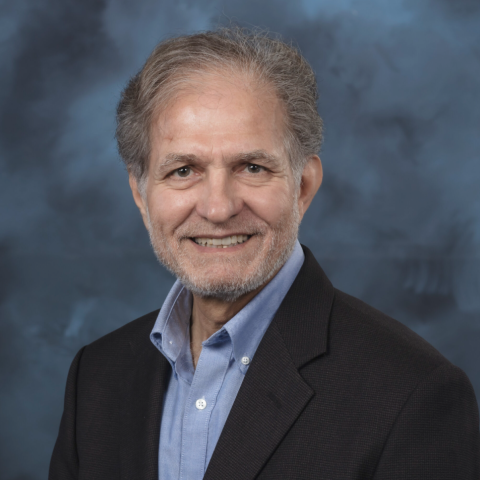
Johannes Milz is an Assistant Professor in the H. Milton Stewart School of Industrial and Systems Engineering. His research focuses on optimization under uncertainty and optimal control of uncertain systems, with a strong emphasis on sustainability applications. By addressing large-scale optimization challenges in physics-based models under uncertainty, he aims to contribute to the development of sustainable energy systems, such as renewable tidal energy farms. Dr. Milz is also dedicated to open science; he develops reproducible numerical simulations and shares them publicly, making his results accessible to a broad group of researchers and practitioners. Prior to joining ISyE, he was a postdoctoral researcher at the Technical University of Munich, where he earned his Ph.D. in Applied Mathematics in 2021.

Assistant Professor, School of Industrial Systems Engineering
Office
Groseclose 444
Additional Research

Resource assessment and design of renewable marine energy systems, especially tidal energy. 

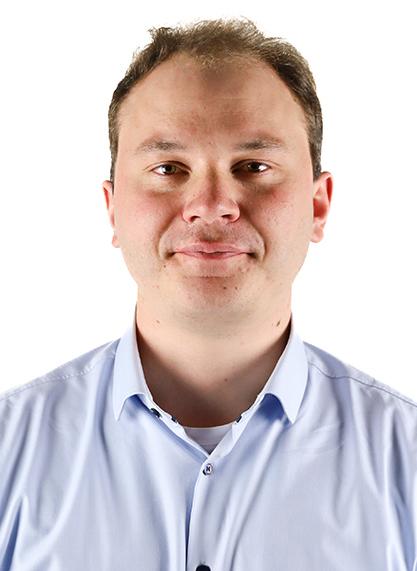
David Taylor

David Taylor's profile picture
david.taylor@gatech.edu

Education

  • Ph.D., Electrical Engineering, University of Illinois, Urbana‑Champaign
  • M.S., Electrical Engineering, University of Illinois, Urbana‑Champaign
  • B.S., Electrical Engineering, University of Tennessee, Knoxville

Research Interests

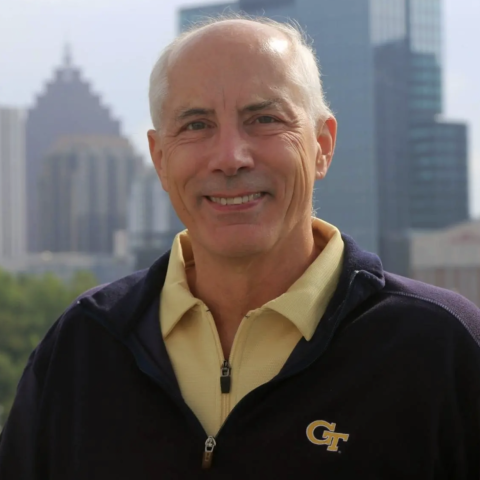
Professor Taylor’s research spans the theory and application of control systems, with emphasis on electromechanics, electromobility, robotics, and sensing. His recent research includes ultrasonic and radio frequency sensing for localization, powertrain optimization for energy efficiency and transient performance in hybrid and electric vehicles, perception and control for human driven and fully autonomous vehicles, and smart charging schemes for electric vehicles considering electric grid impact.

Teaching Interests

Professor Taylor’s teaching focuses on Control System Design, a course emphasizing state-space control algorithms and their implementation on microcontroller devices. Lab projects expose students to both theoretical foundations and practical applications. He also co-leads the EcoCAR cross-disciplinary student team that participates in funded Advanced Vehicle Technology Competitions. This team receives industry training as they design, build, and test efficient powertrains and autonomous driving features.

Publications

  • P. Barsa, K. Cunningham and D. Taylor, “Design of an adaptive cruise controller with integral action and feedforward compensation,” Proceedings of the IEEE/AIAA Transportation Electrification Conference and Electric Aircraft Technologies Symposium, 2025.
  • K. Cunningham, P. Barsa and D. Taylor, “Optimized acceleration and braking for dual motor all-wheel-drive electric vehicles,” Proceedings of the IEEE/AIAA Transportation Electrification Conference and Electric Aircraft Technologies Symposium, 2025.
  • C. Viteri, K. Sastry, M. Leamy and D. Taylor, “Smart charging of electric vehicle fleets with solar power and energy storage,” Proceedings of the IEEE/AIAA Transportation Electrification Conference and Electric Aircraft Technologies Symposium, 2025.
  • L. Leon, P. Barsa and D. Taylor, “Comparative assessment of motion trajectories for electric vehicles considering time and energy,” Proceedings of the 50th Annual Conference of the IEEE Industrial Electronics Society, 2024.
  • D. Dickson, K. Cunningham and D. Taylor, “Loss-minimizing operation of vehicle powertrains with front and rear electric drive units,” Proceedings of the 50th Annual Conference of the IEEE Industrial Electronics Society, 2024.
Professor, School of Electrical and Computer Engineering
Phone
(404) 894-8910
Additional Research

Electric Vehicles

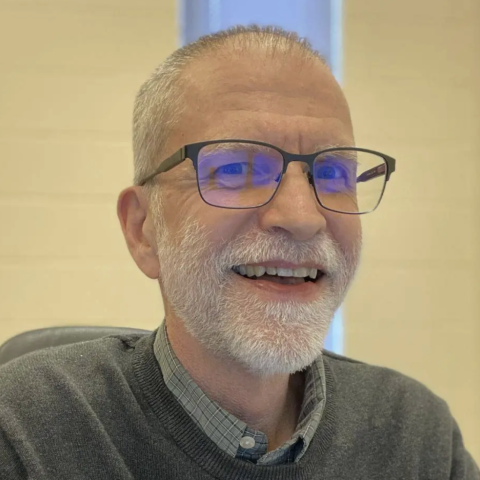
Deepak Divan

Deepak Divan's profile picture
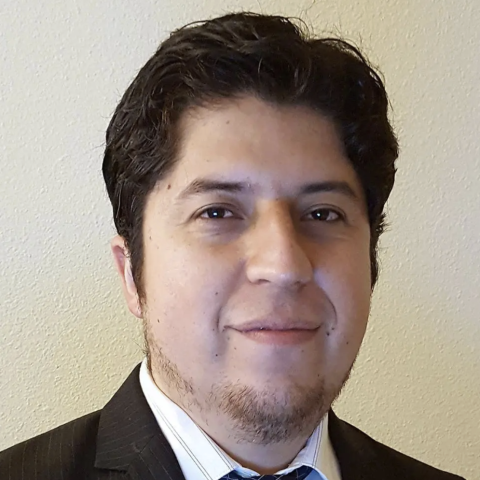
deepak.divan@ece.gatech.edu
Director, Intelligent Power Infrastructure Consortium
Phone
(404) 385-4036
Additional Research

Utilities; Electric Vehicles; Electrical Grid

Costas Tsouris

Costas Tsouris's profile picture
costas.tsouris@ce.gatech.edu

Biography

Costas Tsouris is a chemical engineer with a Diploma of Engineering from the Aristotle University of Thessaloniki-Greece, and Masters and Ph.D. degrees from Syracuse University. Since 1992, he has worked in the Chemical Technology, Nuclear Science and Technology, Environmental Sciences, and Energy and Transportation Science Divisions at the Oak Ridge National Laboratory (ORNL). He is currently a Joint Faculty with Georgia Institute of Technology and ORNL.

Research

Separations and chemical processing: Chemical conversions and separations, Process intensification, process innovation: Novel reactors, novel processes, separations enhanced by electric and magnetic fields, combined reaction/separation with applications in biofuels production, Separations for energy applications: electrosorption of ions and electrical double-layer formation in energy storage devices, nuclear fuel reprocessing, liquid extraction, phase separation, Conventional and biofuel cells: Performance characterization via electrochemical impedance spectroscopy and neutron imaging, Carbon capture and storage: CO2 capture and storage (CCS), integrated assessment of CCS, Role of gas hydrates in energy problems: a means for carbon storage in the deep ocean, a source of natural gas, a method for water desalination, Transport and fate of biological and inorganic particles in the environment: colloidal and surface interaction forces

Affiliate
Phone
(404) 894-9366
Additional Research

Separations Technology

Research Focus Areas
University, College, and School/Department

Armistead Russell

Armistead Russell's profile picture
ted.russell@ce.gatech.edu

Prof. Armistead (Ted) Russell is the Howard T. Tellepsen Chair and Regents’ Professor of Civil and Environmental Engineering at Georgia Tech, where his research is aimed at better understanding the dynamics of air pollutants at urban and regional scales and assessing their impacts on health and the environment to develop approaches to design strategies to effectively  improve air quality.  He earned his M.S. and Ph.D. degrees in Mechanical Engineering at the California Institute of Technology, conducting his research at Caltech’s Environmental Quality Laboratory.  His B.S. is from Washington State University. Dr. Russell was a member of EPA’s Clean Air Science Advisory Committee (CASAC) and a member of the National Research Council’s Board on Environmental Studies and Toxicology.    He has served on and chaired multiple NASEM committees.  He chaired the CASAC NOx-SOx, Secondary NAAQS review panel, the Ambient Air Monitoring Methods Subcommittee and the Council on Clean Air Compliance Analysis’ Air Quality Modeling Subcommittee. 

Research

Professor Russell’s research interests are conducting fundamental and applied studies on air quality modeling, health effects of air pollutants, aerosol dynamics, environmental economics and control strategy design, atmospheric chemistry, computer modeling and numerical methods, including application of emerging artificial intelligence approaches to improving air quality and environmental management globally.

Education

Ph.D., California Institute of Technology, 1985

M.S., California Institute of Technology, 1980

B.S., Washington State University, 1979

Teaching

Professor Russell’s teaching interests include environmental engineering principles and their application to critical issues, air quality and the formation, fate and impacts of air pollution, and mathematical methods in environmental engineering.

Distinctions & Awards

  • Dixy Lee Ray Medal, ASME (2025)
  • Arthur Stern Distinguished Paper Award, Journal of Air and Waste Management (2023)
  • Foreign Fellow, Canadian Academy of Engineering (2023)
  • Environmental Science and Technology, Super-Reviewer (2021)
  • Frank A. Chambers Excellence in Air Pollution Control Award, Air and Waste Management Association (2020)
Regents' Professor, School of Civil and Environmental Engineering
Howard T. Tellepsen Chair, School of Civil and Environmental Engineering
Phone
(404) 894-3079
Additional Research

Climate/Environment

Research Focus Areas
University, College, and School/Department

Jorge Macedo

Jorge Macedo's profile picture
jorge.macedo@ce.gatech.edu

Jorge Macedo, Ph.D., P.E., is an Associate Professor in the School of Civil and Environmental Engineering at the Georgia Institute of Technology, where he has been a faculty member since 2018 and currently holds the Frederick Olmsted Early Career Professorship. His research focuses on extreme events engineering, with an emphasis on earthquakes, mining geotechnics, and AI-driven, physics-informed engineering to advance performance-based assessments of critical infrastructure.

His cross-disciplinary research program has been supported by the National Science Foundation (NSF), the United States Geological Survey (USGS), state agencies including the Georgia Department of Transportation (GDOT) and the Illinois Department of Transportation (IDOT), as well as industry partners. In 2022, Dr. Macedo received the prestigious NSF CAREER Award for his work at the intersection of mining geotechnics and data science. He has also received the Young Researcher Award from the International Society of Soil Mechanics and Geotechnical Engineering (ISSMGE), along with multiple research and teaching awards from Georgia Tech and other institutions. In addition to his academic work, Dr. Macedo has extensive industry experience, serving as a subject matter expert (SME) and member of International Technical Review Boards (ITRBs) for major global mining projects. He currently serves as an Associate Editor for Earthquake Spectra and the ASCE Journal of Geotechnical and Geoenvironmental Engineering (JGGE), among other professional service roles.

Research

Dr. Macedo’s research focuses on extreme events engineering, with an emphasis on earthquakes, mining geotechnics, and AI-driven, physics-informed engineering to advance performance-based assessments of critical infrastructure.

Teaching

Dr. Macedo teaches several undergraduate and graduate courses focused on geosystems, data science, and extreme events engineering. He developed and leads a data analytics course that introduces students to foundational concepts in data science and artificial intelligence. He is also a strong advocate for innovative pedagogical approaches that effectively communicate engineering concepts to non-engineering audiences.

Distinctions & Awards

  • Selected global chair for the TC221 (Tailings and Mine Waste) committee of the International Society of Soil Mechanics and Geotechnical Engineering.
  • Selected by the Frontiers in Built Environment Journal as a Rising Star in Civil and Environmental Engineering.
  • 2023 Young Researcher Award, International Society for Soil Mechanics and Geotechnical Engineering -TC203 Committee.
  • 2023 Knight Piesold Research Award
  • 2023 Georgia Tech CEE Bill Schutz Junior Faculty Teaching Award for Outstanding Teaching.
  • 2022 NSF CAREER award, National Science Foundation, United States.
  • 2022 Frederick L. Olmsted Early Career Professorship, Georgia Tech.
  • 2022 CEE Young Faculty Research Award, Georgia Tech.
  • 2021 Outstanding Reviewer, ASCE/JGGE Journal.
  • Outstanding Graduate Student Instructor Award, University of California Berkeley.
  • 2014 Excellence Award for Doctoral Studies, Peruvian Government.
  • 2014 Jane Lewis Ph.D. Fellowship, University of California Berkeley.
  • 2013 Jane Lewis M.S. Fellowship, University of California Berkeley.
  • 2007 “Eduardo de Habich” Award. Summa Cum Laude, National University of Engineering, Peru.

Publications

  1. *Macedo, J., Abrahamson, N. (2026). Magnitude thresholds to evaluate the damage from induced-seismicity earthquakes to earth dyke structures. Frontiers in Built Environment Journal, Rising Stars in Geotechnical Engineering issue. Accepted for Publication.
  2. *Macedo, J., Torres, P., Santamarina, C. (2026). On the potential of nuclear magnetic resonance for assessing water content and saturation in mine tailings. Journal of Geotechnical and Geoenvironmental Engineering (ASCE/JGGE). Accepted for publication.
  3. *Bokkisa, V., Macedo, J., Arduino, P. (2026). On the integration of an ACST-based bounding surface model. Computer and Geotechnics (COGE) International Journal. https://doi.org/10.1016/j.compgeo.2026.107911.
  4. *Arnold, C., Macedo, J., Bray, J. (2026). Insights on the cyclic response of plastic and nonplastic mine tailings. Soil Dynamics and Earthquake Engineering (SDEE) Journal. https://doi.org/10.1016/j.soildyn.2025.109814.
  5. *Arnold, C., Macedo, J., Bray, J., Moug, D., Atalay, F., Bassal, P., Liu, C., Bikçe, M., Durgunoğlu, T. (2025). Field characterization of areas in İskenderun affected by liquefaction during the 2023 Kahramanmaraş earthquake. Earthquake Spectra (EERI) journal. https://doi.org/10.1177/87552930251378227
  6. *Liu. C., Macedo, J., Abrahamson, N.,  Kottke, A. (2025). A nonergodic ground motion model for Turkiye. Bulletin of Seismological Society of America (BSSA) Journal. https://doi.org/10.1785/0120250142
  7. *Liu, C., Macedo, J., Rodriguez, A. (2025). Leveraging Physics-Informed Neural Networks in Geotechnical Earthquake Engineering: An Assessment on Seismic Site Response Analyses. Computer and Geotechnics (COGE) International Journal. https://doi.org/10.1016/j.compgeo.2025.107137
  8. *Bokkisa, V., Macedo, J. (2025). Challenges in NorSand to model CSD stress paths and proposed modifications. Canadian Geotechnical Journal. https://doi.org/10.1139/cgj-2024-0546
  9. *Bokkisa, V., Macedo, J. (2025). Influence of anisotropic consolidation on the instability of loose granular soils under undrained and drained loading. Canadian Geotechnical Journal. https://doi.org/10.1139/cgj-2023-0683.
  10. *Liu. C., Macedo, J., Abrahamson, N., Lacour, M., Gullerce, Z., Kottke, A., Ozacar, A. (2025). Modeling Path Effects Due to 3D Velocity Structure for Nonergodic Ground-Motion Models: A Case Study Using Turkish Ground-Motion Data. Bulletin of Seismological Society of America (BSSA) Journal. https://doi.org/10.1785/0120240055

Research Gate profile


Associate Professor, School of Civil and Environmental Engineering
Phone
(404) 894-3052
Additional Research

Geosystems

University, College, and School/Department

G. Wayne Clough

G. Wayne Clough's profile picture
wayne.clough@ce.gatech.edu

Gerald Wayne Clough is President Emeritus of the Georgia Institute of Technology (Georgia Tech) and former Secretary of the Smithsonian Institution. A graduate of Georgia Tech in civil engineering, he was the first alumnus to serve as President of the Institute. 

The Clough Undergraduate Learning Commons, which officially opened its doors in August 2011, is named in his honor. Clough has garnered many other awards and honors, including the title of President Emeritus, two Norman Medals, eight honorary degrees, and membership in the National Science Board.

After earning his doctorate, Clough began his academic career as an assistant professor at Duke University in 1969. He joined the faculty at Stanford University in 1974 first as an associate professor and then later as full professor. In 1982, he joined the faculty of Virginia Tech as a professor of civil engineering and served as head of their Department of Civil Engineering for seven years. In 1990, Clough became dean of the Virginia Tech College of Engineering. Clough continued his research and instruction of graduate students at Virginia Tech in addition to his administrative responsibilities. Clough's research focused on geotechnical engineering, including earthquake studies, numerical analysis, soil structure interaction, in-situ testing, and underground openings. In 1993, he became provost and vice president for academic affairs at the University of Washington. Clough cofounded the United States Universities Council of Geotechnical Engineering Research (USUCGER), and served as the organization's first president during 1993.

Secretary Emeritus, Smithsonian Institution
President Emeritus
Phone
(404) 385-2755
Additional Research

Climate/Environment

Research Focus Areas
University, College, and School/Department

William Drummond

William  Drummond's profile picture
bill.drummond@coa.gatech.edu

Biography:

William J. (Bill) Drummond is an associate professor in the College of Design at the Georgia Institute of Technology (Atlanta, Georgia), and directs the Georgia Tech Master of Science degree in Geographic Information Science and Technology.

He graduated from Duke University summa cum laude and Phi Beta Kappa, majoring in history. He then earned a Master of Divinity degree from Gordon-Conwell Theological Seminary and a biblical studies Master of Theology degree from Union Presbyterian Seminary in Richmond, Virginia. After serving for two years as minister of a North Carolina Presbyterian church, he earned a PhD in City and Regional Planning from the University of North Carolina at Chapel Hill. 

He has taught at Georgia Tech since 1987. Over the last several years his courses have included climate change planning, land conservation, sustainable urban development, socioeconomic GIS, programming for GIS, and PhD quantitative research methods.

His current research includes work on population forecasting with advanced time-series models, the relationship between urban form and greenhouse gas emissions, and new methods of estimating building-level and neighborhood-level greenhouse gas emissions.

In his spare time he enjoys running, church activities, and, of course, ACC basketball.

Teaching Interest:

I teach primarily methods and geographic information systems classes, including Socioeconomic GIS, Climate Change Analytics, and a PhD-level statistics class. On occasion I teach Land Conservation, Introduction to Climate Change Planning, and Sustainable Urban Development.

Research Interest:

My primary research interest is in climate change mitigation. I work on climate-related projects funded by the U.S Department of Energy, the Atlanta Regional Commission, the state of Georgia Environmental Protection Division, and the Ray C. Anderson Foundation.

List of Recent Scholarly Work:

My recent scholarly products have been tools and analyses related to climate change.  I am the lead developer for the Drawdown Georgia GHG Emissions Trackers (https://drawdownga.org/tracker), which estimate local GHG emissions at the county and municipal level across the state of Georgia.  I provided technical analyses for the state of Georgia's first climate action plan (https://www.epa.gov/system/files/documents/2024-03/georgia_psverp.pdf) and the Atlanta Regional Commission's Comprehensive Climate Action Plan (not yet publicly available).

Degrees with Year of Award:

Ph.D., December 1989.  University of North Carolina, Chapel Hill, North Carolina, Doctor of Philosophy, Department of City and Regional Planning.  Advisor: Edward J. Kaiser
    
Th.M., May 1980.  Union Theological Seminary, Richmond, Virginia.  Master of Theology.
    
M.Div., May 1979.  Gordon-Conwell Theological Seminary, South Hamilton, Massachusetts.  Master of Divinity, summa cum laude.
    
A.B., May 1975.  Duke University, Durham, North Carolina.  Bachelor of Arts (History), summa cum laude, Phi Beta Kappa.

Associate Professor, School of City and Regional Planning
MS-GIST Program Director, Associate Director, Center for Geographic Information Systems
Phone
(404) 894-2350
Additional Research

City and Regional Planning; Climate/Environment