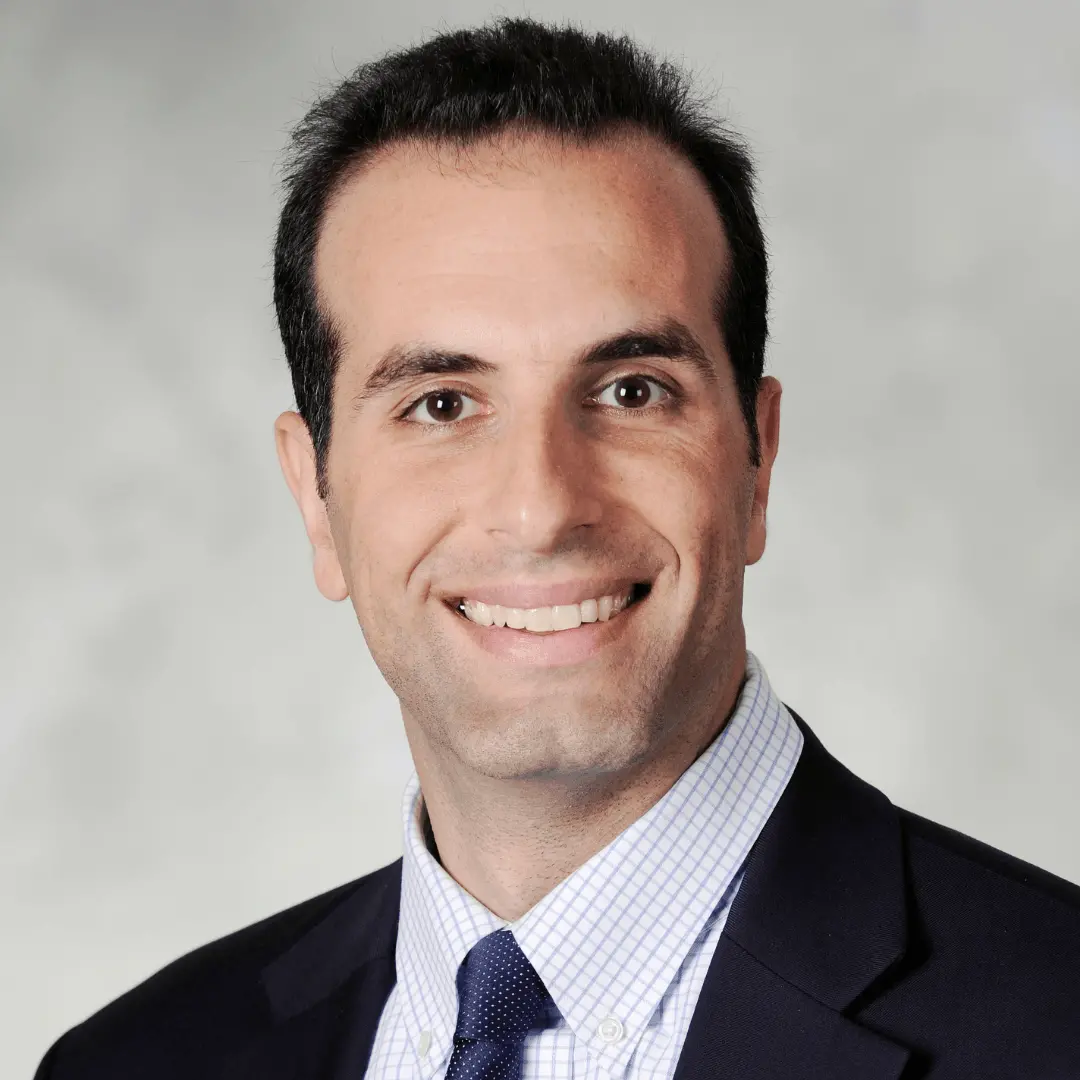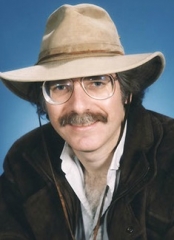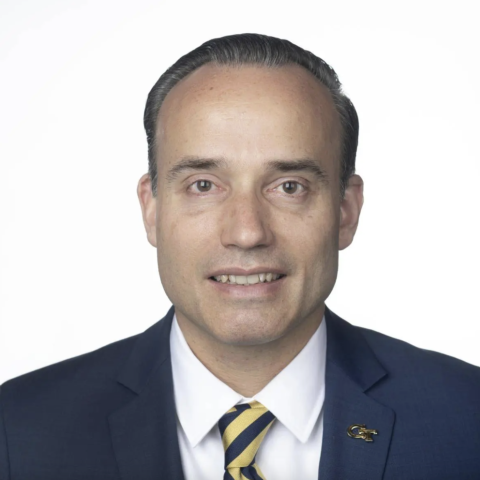
Hermann Fritz

Hermann Fritz's profile picture
fritz@gatech.edu

Biography

Dr. Hermann Fritz is a professor of civil engineering at the Georgia Institute of Technology (Georgia Tech). He is an expert on coastal hazards, such as tsunamis, hurricane storm surge and storm waves, landslides and submarine volcanic eruptions. Dr. Fritz has led or participated in more than a dozen post-disaster reconnaissance campaigns encompassing tsunami, hurricane, landslide, and earthquake events. Tsunami Surveys: 2004 Indian Ocean (Indonesia, Sri Lanka, Maldives, Somalia, Madagascar, Oman, Yemen, Comoros), 2006 Java, 2007 Solomon Islands and Peru, 2009 Samoa, American Samoa, and Tonga, 2010 Solomon Islands, Haiti, Chile, and Mentawai Islands, 2011 Japan, 2012 El Salvador, 2013 Solomon Islands, 2014 and 2015 Chile, 2017 Greenland, 2018 Sulawesi and Krakatau. Hurricane Surveys: 2005 Hurricane Katrina, 2007 Tropical Cyclone Gonu (Oman), 2008 Tropical Cyclone Nargis (Myanmar), 2013 Typhoon Haiyan (Philippines), 2015 Tropical Cyclone Pam (Vanuatu), 2017 Hurricane Nate. Dr. Fritz's research centers on fluid dynamic aspects of natural hazards as well as their mitigation and coastal protection. Dr. Fritz obtained his Doctorate degree (Dr. sc. ETH Zurich) in 2002 from the Swiss Federal Institute of Technology in Zurich (Switzerland).

Research

Dr. Fritz has developed a strong research effort covering experimental (both field and laboratory) and computational methods in fluid dynamics, hydraulics and geophysics. His research focuses on coastal hazards such as tsunamis, hurricanes, landslides, and volcanoes. Dr. Fritz’s work encompasses non-linear and breaking water waves; subaerial and submarine mass flows such as landslides, avalanches, island collapses, and submarine volcanic eruptions; floods, river engineering and morphologic processes; hydraulic and coastal structures such as seawalls, breakwaters, levees and dams along with their failure and breaching mechanisms; hydropower, wave, tidal and ocean current energy. His research is significantly enhancing the hazard prevention, mitigation and protection of coastal and mountainous areas on a truly global scale.

Education

Ph.D. in Civil Engineering (Dr. sc. techn. ETH)

ETH (Swiss Federal Institute of Technology) 2002

M.S. in Civil Engineering (Dipl.-Ing. ETH)

ETH (Swiss Federal Institute of Technology) 1997

Teaching

Professor Fritz’ teaching focuses on civil and environmental engineering at undergraduate and graduate levels, emphasizing dynamics, fluid mechanics, hydraulic engineering, coastal hazards, coastal structures, and experimental methods. His instruction integrates fundamental principles with practical applications to prepare students for research and professional practice. Professor Fritz is committed to fostering student engagement through hands-on learning and critical thinking in courses related to hydraulic and coastal engineering.

Distinctions & Awards

  • Plinius Medal, Natural Hazards Division, European Geosciences Union (EGU), 2014
  • CIOS Honor Roll
  • Excellence in Research Award, CEE, Georgia Tech, 2005
  • Research Excellence Award, Georgia Tech Savannah, 2005
Professor, School of Civil and Environmental Engineering
Phone
(404) 385-1803
Additional Research

Water; Wind

Research Focus Areas
University, College, and School/Department

Brian Stone

Brian Stone's profile picture
stone@gatech.edu

Brian Stone is a key expert in energy utilization, conservation, climate change, and social and environmental impacts.

Brian Stone Jr. is a Professor in the School of City and Regional Planning at the Georgia Institute of Technology, where he teaches urban environmental planning and directs the Urban Climate Lab. Stone’s program of research is focused on urban scale drivers of climate change and has been supported by the National Science Foundation, US Centers for Disease Control and Prevention, and US Environmental Protection Agency. His work on urbanization and climate change is regularly featured in The New York Times, The Washington Post, and on National Public Radio. He is author of The City and the Coming Climate: Climate Change in the Places We Live, which received a Choice Outstanding Academic Title Award, and the recently published Radical Adaptation: Transforming Cities for a Climate Changed World (Cambridge University Press). Stone holds degrees in environmental management and urban planning from Duke University and the Georgia Institute of Technology.

Biography:

Brian Stone Jr., Ph.D., is a Professor in the School of City and Regional Planning at the Georgia Institute of Technology, where he teaches in the area of urban environmental planning and design. Stone's program of research is focused on the spatial drivers of urban environmental phenomena, with an emphasis on urban scale climate change, and is supported by the National Science Foundation, U.S. Centers for Disease Control and Prevention, and U.S. Environmental Protection Agency.

He is Director of the Urban Climate Lab at Georgia Tech. Stone's work on urbanization and climate change has been featured on CNN and National Public Radio, and in print media outlets such as The New York Times and The Washington Post.

He is author of Radical Adaptation: Transforming Cities for a Climate Changed World (Cambridge University Press, 2024) and The City and the Coming Climate: Climate Change in the Places We Live (Cambridge University Press), which received a Choice Outstanding Academic Title Award for 2012. Stone holds degrees in environmental management and planning from Duke University and the Georgia Institute of Technology.

Teaching Interest:

Professor Stone's teaching interests focus on the role of the built environment in amplifying or moderating environmental impacts such as extreme heat, flooding, and associated health effects. He regularly teaches classes on environmental planning, climate change management, and planning theory.

Research Interest:

Professor Stone's research focuses on the spatial drivers of urban environmental phenomena, with a particular emphasis on urban-scale climate change. He is Director of the Georgia Tech Urban Climate Lab.

List of Recent Scholarly Work:

Gronlund, Carina, Hondula, David, Mallen, Evan, O’Neill, Marie, Rajput, Mayuri, Krayenhoff, Scott, Broadbent, Ashley, Grijalva, Santiago, Larsen, Larissa, Harlan, Sharon, Stone, Brian. 2025. Advancing extreme heat risk assessments to better capture individually-experienced temperatures: A new approach to describe individual and subgroup vulnerabilities. Environmental Health Perspectives, in press.  

Huang, Kangning, Stone, Brian, Guan, Cheng, Liang, Jiayong. 2025. “Declining urban density attenuates rising population-weighted exposure to surface heat extremes.” Nature Scientific Reports, 15: 13860.

Jiang, Timothy, Krayenhoff, Scott, Martilli, Alberto, Nazarian, Negin, Stone, Brian, Voogt, James 2025. “Prioritizing urban heat adaptation infrastructure based on multiple outcomes: Comfort, health and energy.” Proceedings of the National Academy of Sciences, 122: e2411144122.

Stone, Brian. 2024. Radical Adaptation: Transforming Cities for a Climate Changed World. New York: Cambridge University Press.

Dey, Shuv, Mallen, Evan, Stone, Brian, Joshi, Yogendra. 2024. “Using Multiscale Atmospheric Modeling to Explore the Impact of Surface Albedo on Anthropogenic Heat Release.” Journal of Heat and Mass Transfer, 146: 052901-1-052901-12.

Stone, Brian, Mallen, Evan, Gronlund, Carina, Hondula, David, O’Neil, Marie, Rajput, Mayuri, Grijalva, Santiago, Lanza, Kevin, Harlon, Sharon, Larsen, Larissa, Augenbroe, Godfried, Krayenhoff, Scott, Broadbent, Ashley, Georgescu, Matei. 2023. “How Blackouts During Heat Waves Amplify Climate Risk.” Environmental Science & Technology, 57: 8245-8255.

Professor, School of City & Regional Planning
Director, Urban Climate Lab
Phone
(404) 894-6488
Additional Research

City and Regional Planning; Climate/Environment; System Design & Optimization

Farzad Rahnema

Farzad Rahnema's profile picture
farzad.rahnema@nre.gatech.edu

Dr. Farzad Rahnema is a Georgia Power Company Distinguished Professor of Nuclear Engineering and Director of the Computational Reactor and Medical Physics (CRMP) Laboratory at Georgia Institute of Technology. Prior to joining Georgia Tech, he was at General Electric Nuclear Energy for 11 years. His responsibilities included GE’s 3-D Core Simulator PANACEA used for reactor core design and as the engine for the 3D MONICORE system for monitoring operating Boiling Water Reactors. He led the development of 3 versions (v.8-10) of the simulator. He has published over 240 peer reviewed technical articles.

He is a Fellow of the American Nuclear Society (ANS), Editor-Designate of the Nuclear Science and Engineering journal, a member of the Editorial Advisory Board of Annals of Nuclear Energy and Nuclear Technology, and a member of the External Advisory Board of the Ohio State University Nuclear Engineering Program.

He was the recipient of the 2019 ANS Gerald C. Pomraning Memorial Award for outstanding contributions toward the advancement of the fields of mathematics and computation in support of advancing the understanding of these topics of interest to the American Nuclear Society (ANS) membership.

He served as the Chair of the Georgia Tech Nuclear & Radiological Engineering and Medical Physics (NRE/MP) Programs (7/2002-6/2016) and Chair of the Honors and Award Committee of the ANS Mathematics and Computation Division (MCD). He also served as the Chair of the MCD (twice) and the Reactor Physics Division (RPD). His principal research interest is in the areas of theoretical and computational radiation transport and reactor physics with an emphasis on resolving the grand challenges and current major issues in high fidelity modeling and simulation (M&S) of nuclear systems.

Research

  • Nuclear and Radiological Engineering/Medical Physics; Perturbation and variational methods, theoretical and computational radiation transport and reactor physics methods and code development with applications to reactor core analysis, nuclear security and detection, and radiotherapy calculations

Distinctions

  • Editor, Nuclear Science and Engineering journal
  • Editorial Advisory Board member, Annals of Nuclear Energy and Nuclear Technology journals
  • Guest Editor/Co-guest Editor, Annals of Nuclear Energy, Nuclear Technology, and Transport Theory and Statistical Physics journals
  • American Nuclear Society
  • Fellow, 2003
  • Mathematics and Computation Division Chair, 2010-2011 and 1999-2000
  • Reactor Physic Division Chair, 2007-2008
  • Member, External Advisory Board of the Ohio State University Nuclear Engineering Program
  • Southeastern Universities Nuclear Research Institute for Science and Education (SUNRISE) Founding Chair, 2006-2010
  • 16th International Conference on Transport Theory Organizing Committee Chair, 1999


Awards

  • Recipient of the 2019 ANS Gerald C. Pomraning Memorial Award for outstanding contributions toward the advancement of the fields of mathematics and computation in support of advancing the understanding of these topics of interest to the American Nuclear Society (ANS) membership.

Patent

  • Boundary Condition Adjustment Methods and Systems, U. S. Patent 7,676,015B2, with Ben Forget, March 9, 2010.
     

Representative Publications

  • Kyle Remley and Farzad Rahnema, “Development and Assessment of a Parallel Computing Implementation of the Coarse Mesh Radiation Transport (COMET) Method,”Ann. Nucl. Energy, 114, 288-300 (2018).
  • Farzad Rahnema and Dingkang Zhang, “Continuous Energy Coarse Mesh Transport (COMET) Method,” Ann. Nucl. Energy, 115, 601-610 (2018).
  • Dingkang Zhang and Farzad Rahnema, “A Stylized 3D Advanced High Temperature Reactor (AHTR) Benchmark Problem,” Ann. Nucl. Energy, 120, 178-185 (2018).
  • Dingkang Zhang and Farzad Rahnema, “Continuous-Energy COMET Solution to the Stylized AHTR Benchmark Problem,” Ann. Nucl. Energy, 121 ,284-294 (2018).
  • Farzad Rahnema, Xiaodong Sun, Bojan Petrovic, David Diamond, Stephen Bajorek, Yujun Guo, Gradon Yoder, Dingkang Zhang, and Paul Burke, “Phenomena identification and categorization by the required level of multiphysics coupling in FHR modeling and simulation,” Ann. Nucl. Energy, 121, 540-551 (2018).
  • Farzad Rahnema, David Diamond, Dumitru Serghiuta, and Paul Burke, “Phenomena, Gaps, and Issues for Neutronics Modeling and Simulation of FHRs,” Ann. Nucl. Energy, 123 ,172-179 (2019).
Georgia Power Company Distinguished Professor, Woodruff School of Mechanical Engineering
Director, Computational Reactor and Medical Physics (CRMP) Laboratory
Phone
(404) 894-3731
Additional Research

Nuclear

University, College, and School/Department

S. Mostafa Ghiaasiaan

S. Mostafa Ghiaasiaan's profile picture
mghiaasiaan@me.gatech.edu

Education

  • Ph.D., University of California, Los Angeles, 1983
  • M.Sc., Imperial College of Science, Technology and Medicine, University of London, England, 1978
  • B.S., Aryamehr (Sharif) University of Technology, Tehran, Iran, 1977

Teaching Interests

Professor Ghiaasiaan’s teaching interests include undergraduate and graduate courses in thermodynamics, heat transfer, fluid mechanics, and multiphase flow. He emphasizes fundamental principles and their applications to energy systems, aiming to develop students’ analytical and problem-solving skills. His instruction integrates experimental, computational, and theoretical approaches, involving both undergraduate and graduate students in research-related activities.

Research Interests

Professor Ghiaasiaan’s research focuses on multiphase flow and heat transfer phenomena in energy systems and thermal management. His work addresses experimental and theoretical studies of cryogenics and cryocoolers, two-phase flows, boiling, condensation, and miniature scale transport processes, with applications in power generation, refrigeration, and thermal systems design. He actively involves students in advancing understanding of complex flow and heat transfer mechanisms through innovative experimental methods and modeling.

Recent Publications

  • Majumdar, A., LeClair, A, Hartwig, J., Ghiaasiaan, S.M. Two-dimensional network flow modeling of no-vent tank filling of a cryogenic tank with thermodynamic vent system assisted injector, Cryogenics. 146, 104004, 2025.
  • Ghavami, A., Ghiaasiaan, S.M.  Thermal conductivity of some ceramic materials at cryogenic temperature, ASME J. Heat Transfer, 145, 043501, 2023. 
  • Perrella, M., Ghiaasiaan, S.M. Hydrodynamic resistance parameters of regenerator filler materials at cryogenic temperatures, Cryogenics, 117, 103320, 2021.
  • Baldwin, M.R., Ghavami, A., Ghiaasiaan, S.M., Majumdar, A.A., Pool boiling in liquid hydrogen, liquid methane and liquid oxygen: a review of available data and predictive tools, Cryogenics, 115, 103240, 2021.
  • Baldwin, M.R., Ghavami, A., Ghiaasiaan, S.M., Majumdar, A.A., Flow boiling in liquid hydrogen, liquid methane and liquid oxygen: a review of available data and predictive tools, Cryogenics, 116, 103298, 2021.
Professor, Woodruff School of Mechanical Engineering
Phone
(404) 894-3746
Additional Research

Nuclear; Thermal Systems

University, College, and School/Department

Martin Maldovan

Martin Maldovan's profile picture
maldovan@gatech.edu

Martin Maldovan is an associate professor in the School of Chemical and Biomolecular Engineering and the School of Physics at the Georgia Institute of Technology. He received his Ph.D. at the Massachusetts Institute of Technology (MIT) in the Department of Materials Science and Engineering. He was also a postdoctoral associate and research scientist at MIT.  Maldovan’s group is developing novel heat and mass transport processes as an enabling technology for energy converter materials and devices, micro and nanoelectronics, chemical and biological separations, and catalysis. His group focuses on designing, predicting, and controlling heat and mass transfer in rationally engineered systems with length scales ranging from macro to nano, to advance new paradigms for energy saving materials and devices.  

Associate Professor, School of Chemical and Biomolecular Engineering and School of Physics
Phone
404.385.3753
Office
ES&T L1226
Additional Research

Thermal Management; Energy Storage; Energy Conversion; Thermal Systems

University, College, and School/Department
Google Scholar
https://scholar.google.com/citations?hl=en&user=kEMlX3sAAAAJ&view_op=list_works&sortby=pubdate

Morris Cohen

Morris Cohen's profile picture
mcohen@gatech.edu

Morris Cohen received his B.S. and Ph.D. degrees in Electrical Engineering from Stanford University in 2003 and 2010, respectively, and served as a research scientist until August 2013. From September 2012 until August 2013, Dr. Cohen was appointed as AAAS Science and Technology Policy Fellow at the National Science Foundation. 

In Fall 2013, he joined the faculty in the School of ECE. He is a winner of the NSF CAREER Award in 2017, the ONR Young Investigator Award in 2015, and was chosen for the Santimay Basu Prize in 2014, an award given once per 3 years to an under-35 scientist by the International Union of Radio Science (URSI). 

Dr. Cohen is interested in the natural electricity of the Earth, including lightning, the electrically charged upper atmosphere, and the radiation-filled space environment. He uses radio waves at low frequencies measured all around the world to understand them, and develops resulting practical applications. His group also works on novel techniques to generate low frequency waves with nonconventional electrically-short antennas. He is an author of more than 60 journal publications. He employs a “flipped classroom” model in some of his courses to make the experience more active and engaging. 

He enjoys hiking, cooking, and traveling the world for work and play with his family.

Associate Professor, School of Electrical and Computer Engineering
Phone
(404) 894-8415
Office
VL W511
Additional Research

Electronics

Xing Xie

Xing Xie's profile picture
xing.xie@ce.gatech.edu

 Xing Xie is the Carlton S. Wilder Assistant Professor in the School of Civil and Environmental Engineering at Georgia Institute of Technology. Prior to joining Georgia Tech, he was a post-doctoral scholar at California Institute of Technology. He received his B.S. (2006) and M.S. (2008) degrees in Environmental Science & Engineering from Tsinghua University, and a second M.S. degree (2012) in Materials Science & Engineering and a Ph.D. degree (2014) in Civil & Environmental Engineering from Stanford University. His research focuses on the applications of innovative materials for sustainable and reliable water and energy. He has worked on many projects related to water treatment and reuse, microbial detection and quantification, energy and resource recovery, energy storage, etc. He has published more than 60 peer-reviewed articles with more than 6,000 citations

Carlton S. Wilder Junior Professor, School of Civil and Environmental Engineering
Assistant Professor, School of Civil and Environmental Engineering
Phone
404.894.9723
Office
ES&T 3236
Additional Research

Water & wastewater treatment; Energy & resources recovery; Energy storage; Salinity energy & desalination; self-sustained sanitation; Oil-water separation; Environmental monitoring

Google Scholar
https://scholar.google.com/citations?user=XiHhfOkAAAAJ&hl=en

Chengzhi Shi

Chengzhi Shi's profile picture
chengzhi.shi@me.gatech.edu

Dr. Shi joined Georgia Tech in August 2018 as an assistant professor. Prior, he worked as a graduate student researcher at the Department of Mechanical Engineering of the University of California, Berkeley and Materials Science Division of Lawrence Berkeley National Laboratory focusing on the study of acoustic angular momentum and the design and realization of acoustic metamaterials and high-speed acoustic communication. His Ph.D. dissertation (2018) focuses on the development of acoustic metamaterials and the physics of the angular momentum of sound. Prior to his Ph.D. study at the Department of Mechanical Engineering of the University of California, Berkeley, Dr. Shi completed his M.S. degree in mechanical engineering at the University of Michigan-Shanghai Jiao Tong University Joint Institute in Shanghai, China. His M.S. thesis (2013) focuses on the dynamics and vibration of cyclically symmetric rotating mechanical systems.

Assistant Professor
Phone
404-894-2558
Office
003 Love Manufacturing Building
Additional Research

Acoustic wave interactions with different cells including neurons, and imaging and treatment techniques resulted from the interactions.

Margaret Kosal

Margaret Kosal's profile picture
margaret.kosal@inta.gatech.edu

Margaret E. Kosal's research explores the relationships among technology, strategy, and governance. Her research focuses on two, often intersecting, areas: reducing the threat of weapons of mass destruction (WMD) and understanding the role of emerging technologies for security. Her work aims to understand and explain the role of technology and technological diffusion for national security at strategic and operational levels. In the changing post-Cold War environment, the most advanced military power no longer guarantees national or international security in a globalized world in which an increasing number of nation-states and non-state actors have access to new and potentially devastating dual-use capabilities. The long-term goals of her work are to understand the underlying drivers of technological innovation and how technology affects national security and modern warfare. She is interested in both the scholarly, theoretical level discourse and in the development of new strategic approaches and executable policy options to enable US dominance and to limit the proliferation of unconventional weapons. On the question of understanding the impact of emerging technology on national and international security her research considers what role will nanotechnology, cognitive science, biotechnology, and converging sciences have on states, non-state actors, balance of power, deterrence postures, security doctrines, nonproliferation regimes, and programmatic choices. Through examination of these real applications on the science (benign and defensive) and potential (notional) offensive uses of nanotechnology, she seeks to develop a model to probe the security implications of this emerging technology. The goal of the research is not to predict new specific technologies but to develop a robust analytical framework for assessing the impact of new technology on national and international security and identifying policy measures to prevent or slow proliferation of new technology - the next generation “WMD” - for malfeasant intentions. Kosal is the author of Nanotechnology for Chemical and Biological Defense (Springer Academic Publishers, 2009), which explores scenarios and strategies regarding the benefits and potential proliferation threats of nanotechnology and other emerging sciences for international security. She is also Director of the Sam Nunn Security Fellows Program and Co-Director of the Program on Emerging Technology within the Center for International Strategy, Technology, and Policy (CISTP).  Kosal was recently appointed Adjunct Scholar to the Modern War Institute at the US Military Academy/West Point. From 2012-2013, she as a senior advisor to the Chief of Staff of the US Army as part of his inaugural Strategic Studies Group (SSG). Before joining the Sam Nunn School of International Affairs, she was Science and Technology Advisor within the Office of the Secretary of Defense (OSD). Kosal also served as the first liaison to the Biological and Chemical Defense Directorate at the Defense Threat Reduction Agency (DTRA). She has been recognized for her leadership across the U.S. federal government, specifically for efforts to coordinate across the DoD as part of the interagency Nonproliferation and Arms Control Technology Working Group, reporting to the National Security Council (NSC), and as member of the interagency federal group charged with leading the National Nanotechnology Initiative (NNI). Kosal was nominated to and led the U.S. involvement in the NATO Nanotechnology for Defense Working Group. Her awards include the 2015 CETL/BP Junior Faculty Teaching Excellence Award, 2014 Georgia Tech Junior Faculty Outstanding Undergraduate Research Mentor Award, 2012 Ivan Allen Jr Legacy Award, 2010 INTAGO Faculty Award, CETL Class of 1969 Teaching Scholar, the OSD Award for Excellence, 2007 UIUC Alumni Association Recent Alumni Award, the President’s Volunteer Service Award, American Association for the Advancement of Science (AAAS) Defense Policy Fellow, and the Society of Porphyrins and Phthalocyanines Dissertation Research Award. Currently, she serves on the editorial board of the scholarly journals Studies in Conflict and Terrorism, the Journal of Strategic Security, the Journal of Defense Management, and Global Security: Health Science and Policy. Education: Ph.D., Chemistry, University of Illinois at Urbana-Champaign B.S., Chemistry, University of Southern California Awards and Distinctions: Senior Adjunct Scholar to the Modern War Institute at the U.S. Military Grand Challenges Faculty Fellow, AY2015-2016 & AY 2016-2017 2015-2016 CETL Class of 1969 Teaching Scholar 2015 CETL/BP Junior Faculty Teaching Excellence Award Gold Star Award in Recognition of the Highest Level of Accomplishment in Research, Ivan Allen College of Liberal Arts Dean Griffith Teaching Recognition – “Thank a Teacher” Award 2014 Georgia Tech Junior Faculty Outstanding Undergraduate Research Mentor Award Ivan Allen Jr. Legacy Faculty Award, 2012 INTAGO Faculty of the Year, 2010 Office of the Secretary of Defense Award for Excellence, 2007 University of Illinois at Urbana-Champaign Recent Alumni Award, 2007 President’s Volunteer Service Award, 2007 American Associatio for the Advancement of Science (AAAS) Science & Technology Fellowship, 2005-2007 American Chemical Society’s Chemical and Engineering News Top 2002 Supramolecular Chemistry research paper Areas of Expertise: Biotechnology Emerging Technology Military Nanotechnology National Security Nonproliferation Nuclear Weapons Terrorism US Foreign & Defense Policy

Professor, Sam Nunn School of International Affairs
Director, Sam Nunn Security Program
Editor-in-Chief, Politics and the Life Sciences
Phone
404-894-9664
Office
Habersham 303
Additional Research

Defense / National Security; Cyber Technology; Policy/Economics

Google Scholar
https://scholar.google.com/scholar?hl=en&q=margaret+Kosal&btnG=&as_sdt=1,11&as_sdtp=&oq=margaret

Rick Trebino

Rick Trebino's profile picture
rick.trebino@physics.gatech.edu

Education

B.A. in Physics from Harvard University 1977

M.S. in Applied Physics from Stanford University 1979

Ph.D. in Applied Physics from Stanford University 1983

Honors & Awards

2013: Fellow of the Society of Photo-Instrumentation Engineers

2010: Finalist in the Bertholdt Leibinger Prize competition for the most innovative optics invention

2010: Prism Award for the best optics invention of 2009 for the BOA pulse compressor

2009: Optical Society of America’s top optics developments of 2009 for measurements of superluminal Bessel pulses

2008: Awarded Fellow of the American Association for the Advancement of Science

2006: Fellow of the American Physical Society

2005: Circle of Excellence Award for the invention of a short-pulse GRENOUILLE

2003: R&D 100 Award for one of the top 100 technical inventions of the year for the invention of GRENOUILLE (A highly simplified ultrashort pulse measurement device)

2003: Best Optics Paper of the Year (Optical Society of America)

2000-2002 LEOS Distinguished Lecture

1999 Edgerton Prize of the SPIE

1995 Sandia National Laboratories Award for Exceptional Technical Accomplishments

1999 OSA Fellow

1997 Sandia National Laboratories Award for the Invention of Efficient, Exact Achromatic Phase-Matching

1996 Sandia National Laboratories Award for the Invention of Frequencey-Resolved Optical Gatting

1995 Sandia National Laboratories Award for Exceptional Technical Accomplishments

1995 Sandia National Laboratories Citation for Meritorious Achievement

1994 Sandia National Laboratories Award for Technical Excellence and Leadership

Research

The development of more powerful devices for manipulating and measuring potentially very complex light with ultrafast variations.

 Over 200 publications; see www.frog.gatech.edu/prose.html.

Books

 Frequency-Resolved Optical Gating: The Measurement of Ultrashort Laser Pulses, Kluwer Academic Publishers, Boston, 2002

Papers

  1. ·  J. Cohen, P. Bowlan, V. Chauhan, and R. Trebino, "Measuring temporally complex ultrashort pulses using multiple-delay crossed-beam spectral interferometry," Opt. Expr., 18(7), 6583 (2010).
  2. ·  P. Bowlan, H. Valtna-Lukner, M. Lõhmus, P. Piksarv, P. Saari, and R. Trebino, "Measurement of the spatio-temporal field of ultrashort Bessel-X pulses," Opt. Lett., 34(15), 2276, (2009).
  3. ·  R. Trebino, P. Bowlan, P. Gabolde, X. Gu, S. Akturk, and M. Kimmel, "Simple devices for measuring complex pulses," Laser & Photon. Rev., 3, 314 (2009).
  4. ·  M.A. Coughlan, M. Plewicki, S.M. Weber, P. Bowlan, R. Trebino, and R.J. Levis, "Specified electric-field construction from shaped pulses: The specific method," Opt. Expr., (2009).
  5. ·  D. Lee, P. Gabolde, and R. Trebino. "Toward single-shot measurement of broadband ultrafast continuum." J. Opt. Soc. Am. B, 25, A25 (2008).
Professor, School of Physics
Phone
(404) 385-1223
Additional Research

Electronics

University, College, and School/Department