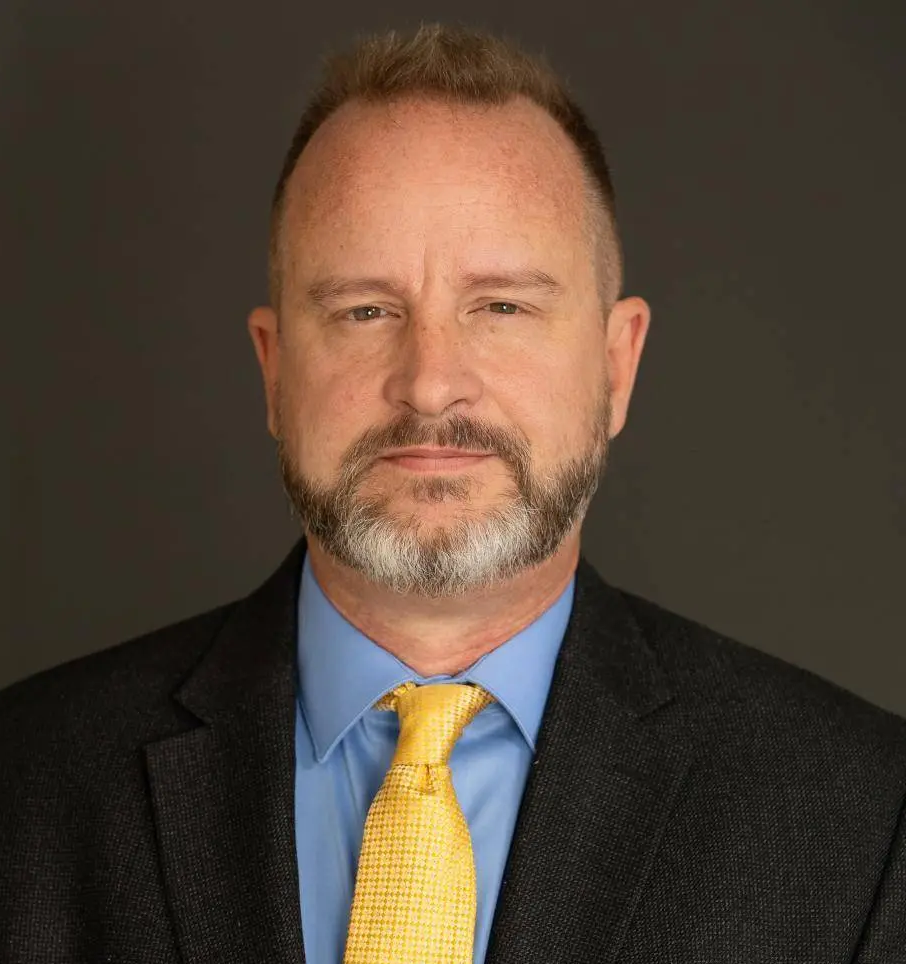
William Drummond

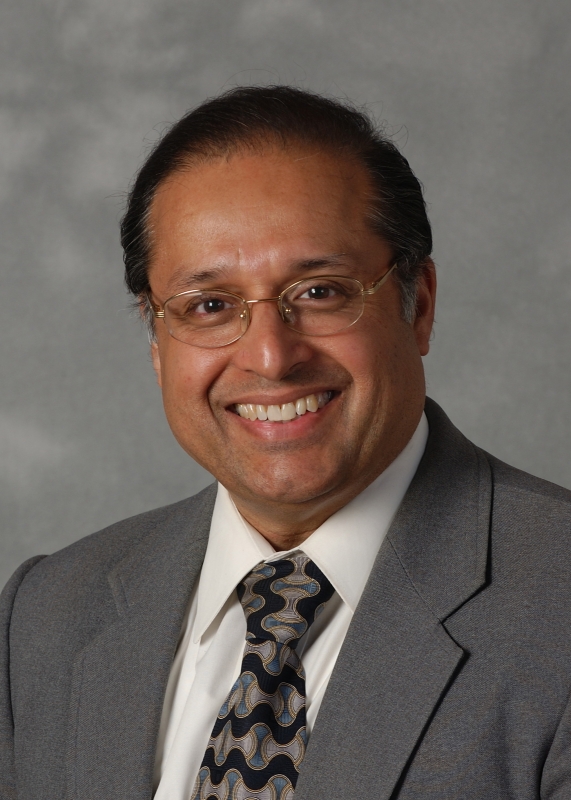
William  Drummond's profile picture
bill.drummond@coa.gatech.edu

Biography:

William J. (Bill) Drummond is an associate professor in the College of Design at the Georgia Institute of Technology (Atlanta, Georgia), and directs the Georgia Tech Master of Science degree in Geographic Information Science and Technology.

He graduated from Duke University summa cum laude and Phi Beta Kappa, majoring in history. He then earned a Master of Divinity degree from Gordon-Conwell Theological Seminary and a biblical studies Master of Theology degree from Union Presbyterian Seminary in Richmond, Virginia. After serving for two years as minister of a North Carolina Presbyterian church, he earned a PhD in City and Regional Planning from the University of North Carolina at Chapel Hill. 

He has taught at Georgia Tech since 1987. Over the last several years his courses have included climate change planning, land conservation, sustainable urban development, socioeconomic GIS, programming for GIS, and PhD quantitative research methods.

His current research includes work on population forecasting with advanced time-series models, the relationship between urban form and greenhouse gas emissions, and new methods of estimating building-level and neighborhood-level greenhouse gas emissions.

In his spare time he enjoys running, church activities, and, of course, ACC basketball.

Teaching Interest:

I teach primarily methods and geographic information systems classes, including Socioeconomic GIS, Climate Change Analytics, and a PhD-level statistics class. On occasion I teach Land Conservation, Introduction to Climate Change Planning, and Sustainable Urban Development.

Research Interest:

My primary research interest is in climate change mitigation. I work on climate-related projects funded by the U.S Department of Energy, the Atlanta Regional Commission, the state of Georgia Environmental Protection Division, and the Ray C. Anderson Foundation.

List of Recent Scholarly Work:

My recent scholarly products have been tools and analyses related to climate change.  I am the lead developer for the Drawdown Georgia GHG Emissions Trackers (https://drawdownga.org/tracker), which estimate local GHG emissions at the county and municipal level across the state of Georgia.  I provided technical analyses for the state of Georgia's first climate action plan (https://www.epa.gov/system/files/documents/2024-03/georgia_psverp.pdf) and the Atlanta Regional Commission's Comprehensive Climate Action Plan (not yet publicly available).

Degrees with Year of Award:

Ph.D., December 1989.  University of North Carolina, Chapel Hill, North Carolina, Doctor of Philosophy, Department of City and Regional Planning.  Advisor: Edward J. Kaiser
    
Th.M., May 1980.  Union Theological Seminary, Richmond, Virginia.  Master of Theology.
    
M.Div., May 1979.  Gordon-Conwell Theological Seminary, South Hamilton, Massachusetts.  Master of Divinity, summa cum laude.
    
A.B., May 1975.  Duke University, Durham, North Carolina.  Bachelor of Arts (History), summa cum laude, Phi Beta Kappa.

Associate Professor, School of City and Regional Planning
MS-GIST Program Director, Associate Director, Center for Geographic Information Systems
Phone
(404) 894-2350
Additional Research

City and Regional Planning; Climate/Environment

Russell Gentry

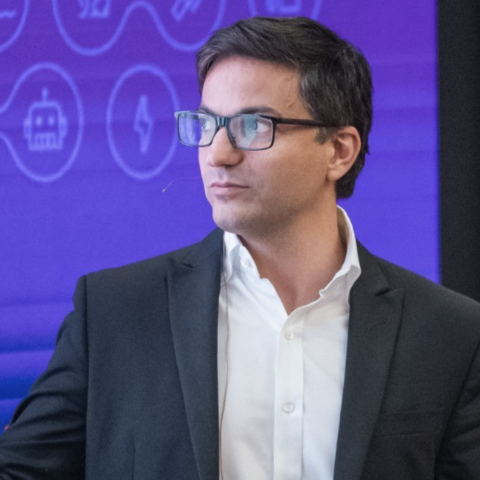
Russell Gentry's profile picture
russell.gentry@coa.gatech.edu

Russell Gentry is professor of architecture and civil engineering (by courtesy) and a licensed structural engineer. He teaches graduate courses in building structures, computationally-driven fabrication and construction, and building integration. He is affiliated with the design computing faculty in the School of Architecture and the structural engineering and mechanics of materials faculty in the School of Civil Engineering. 

Gentry is the chair of ASTM D30.10, Composites for Civil Structures and an expert on the development of test methods for composite materials. He is a fellow of the International Institute for Fiber Composites (IIFC). He is the Georgia Tech principal investigator on the NSF-sponsored international initiative to develop alternative uses for decommissioned composite wind turbine blades. 

Gentry is the acting director of the Digital Building Laboratory (DBL), an applied research lab in the College of Design, focusing on computational design, building information modeling, and information technology in the AEC industry. He serves as the associate dean for faculty in the College of Design.

Professor, College of Design
Associate Dean for Faculty, College of Design
Acting Director, Digital Building Lab
Phone
(404) 894-3845
Additional Research

Building Technologies

Tony Giarrusso

Tony Giarrusso's profile picture
tonyg@gatech.edu

Biography:

Tony Giarrusso is a Principal Research Scientist and Associate Director of the Center for Spatial Planning Analytics and Visualization in the College of Design at the Georgia Institute of Technology in Atlanta, Ga. His teaching, research, and consulting activities focus on GIS-based planning solutions for land conservation, coastal and marine resource management, urban planning and environmental protection. Over the past twenty-four years, Mr. Giarrusso has been Principal Investigator or Co-Principal Investigator on more than 30 research projects, with research sponsors including the National Oceanic and Atmospheric Administration (NOAA), the State of Georgia (DNR and DHR), The Nature Conservancy, The Trust for Public Land, Morehouse School of Medicine, The Diane Fossey Gorilla Fund International, and the City of Atlanta. 

Apart from his research activities, Mr. Giarrusso has been an instructor at Georgia Tech for the last twenty-one years, primarily teaching introductory GIS classes to undergraduates.

Teaching Interest:

Professor Giarrusso's teaching is focused on Geographic Information Systems (GIS), remote sensing, urban planning, and sustainable development. He primarily teaches at the undergraduate level. He is co-lead of the Rwanda Study Abroad in Sustainable Development, an embedded study abroad program offered during spring break. He also co-teaches a VIP class on Assistive Technologies in Sub-Saharan Africa.

Research Interest:

Professor Giarrusso's research interests is focused on the use of GIS and Remote Sensing as planning decision-support for local and state government, primarily focused on environmental and land use issues.

List of Recent Scholarly Work:

Recent Research Articles:

1. Alice Favero, Matthew Realff, Maria Lucas, Anthony Giarrusso, and Karl Lang (2023), Geo-Spatial Economic Assessment of the Potential Development of Bioenergy Combined with Direct Air Carbon Capture (BEDAC) in the USA.
Environmental Science & Technology 2023 57 (51), 21681-21690 https://pubs.acs.org/doi/10.1021/acs.est.3c06975

2. Evans, Kathryn A.; Giarrusso, Anthony J.; and Zaparanick, David (2023), Perpetual Protection for Atlanta’s High-Quality Forested Land in the City, Cities and the Environment (CATE): Vol. 13: Iss. 1, Article 29.

3. Fahr, S., Powell, J., Favero, A., Giarrusso, A.J., Lively, R.P. and Realff, M.J. (2022), Assessing the physical potential capacity of direct air capture with integrated supply of low-carbon energy sources. Greenhouse Gas Sci Technol, 12: 170-188. https://doi.org/10.1002/ghg.2136

4. Portela G.T., Leong T., Webster A.,Giarrusso A.J., Fridkin S., Ray S., Swerdlow D. (2021), Immergluck L. Risk factors for non-invasive (skin and soft tissue) and invasive Staphylococcus aureus infections among children and adults living in southeastern USA: a retrospective cohort study BMJ https://bmjopen.bmj.com/content/12/8/e059327.info

Recent Research Projects:

1. Georgia's Coastal Canopy - https://experience.arcgis.com/experience/a24f7f9055174d35adb15dab8116a734
2. Georgia's Changing Forest - https://experience.arcgis.com/experience/8a8fe7ff6b5d4113929d7a5f20044be6
3. Georgia Historic and Projected Land Cover Database - https://arcg.is/11bTaq
4. Thrive Regional Infrastructure Portal (TRIP) - https://trip-thrive-geohub.hub.arcgis.com/
5. Atlanta's Urban Tree Canopy - https://geospatial.gatech.edu/AtlantaUTC/
6. Georgia Wetlands Restoration Access Portal (G-WRAP) - https://geospatial.gatech.edu/G-WRAP/


Degrees with Year of Award:

Masters of City Planning (2000) -Georgia Institute of Technology    
Bachelor of Science in Biology (1993) - Georgia State University

Professor of the Practice, School of City & Regional Planning
Associate Director, Center for Georgraphic Information Systems
Director, Bachelor of Science in Urban Planning and Spatial Analytics
Phone
(404) 894-0127
Additional Research

System Design & Optimization

University, College, and School/Department

A.P. "Sakis" Meliopoulos
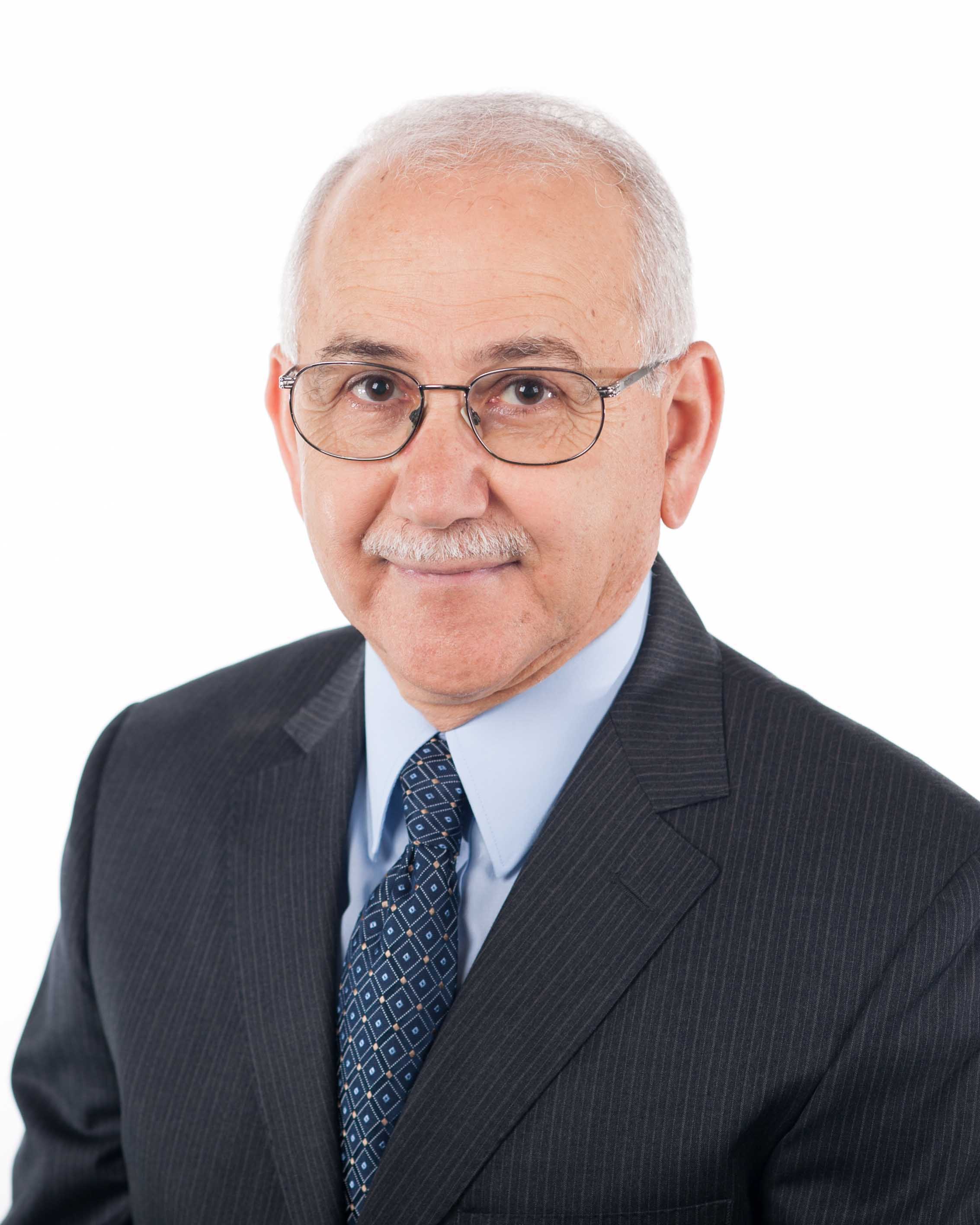
A.P. "Sakis" Meliopoulos's profile picture
sakis.m@gatech.edu

A.P. "Sakis" Meliopoulos, Ph.D., is the Georgia Power Distinguished Professor in the School of Electrical & Computer Engineering at Georgia Tech and serves as Associate Director of Cyber-Physical Systems for the Institute for Information Security & Privacy. Meliopoulos helped the development of the power program at Georgia Tech by contributing to the modernization of existing courses, introducing new courses, initiating research activities, and developing continuing education programs and the Power System Certificate program. Meliopoulos is the co-inventor, with George Cokkinides, of the Smart Ground Multimeter and the Macrodyne PMU-based Harmonic Measurement System for transmission networks. In his most recent research activities, he has introduced new approaches for modeling large scale power grids based on quadratization and the utilization of this approach to a variety of protection and control of the future power system integrated with distributed generation, renewable energy sources, and power electronic subsystems and interfaces. He has introduced the concept of the SuperCalibrator, a new approach that enables fully distributed state estimation and root cause disturbance analysis. This technology is expected to make a huge impact on the way we presently monitor and control the power grid. Presently, Meliopoulos leads four field demonstration projects on four different utilities: USVI-WAPA, NYPA, Southern Company, and PG&E. He has applied the quadratized approach for high fidelity analysis, stability and control of integrated systems consisting of the power grid, and power electronics interfaced distributed generation and renewables (the μGRID model). He is leading an EPRI-sponsored effort to develop "settingless" protection methods utilizing recent technologies of merging units and GPS-synchronized measurements. He has developed a state-of-the-art synchrophasor laboratory with multiple capabilities: (a) characterization of PMUs, (b) testing of PDCs, (c) autonomous monitoring and control using GPS-synchronized measurements, and (d) testing of protective functions that require GPS synchronization. Meliopoulos holds three patents, published three books, and published over 270 technical papers. For his research achievements, he was elected Fellow of the IEEE in 1993. In addition, he has received the IEEE-IAS Society Field Award in 2005 (IEEE-IAS Richard Kaufman Award), and the 2010 George Montefiore Institute Award (Belgium). He was named the Georgia Power Distinguished Professor in 2006. He serves as the site director for the NSF I/URC PSERC, he is the academic administrator of the Power System Certificate program, and the chairman of the Georgia Tech Protective Relaying Conference and the Fault and Disturbance Analysis Conference. He attended the National Technical University of Athens, Greece, where he earned the Diploma in Electrical and Mechanical Engineering in 1972. He then attended Georgia Tech where he earned his MSEE (1974) and Ph.D. (1976) degrees. He joined Georgia Tech's faculty of Electrical Engineering in 1976.

Georgia Power Distinguished Professor, School of Electrical & Computer Engineering
Associate Director, Cyber-Physical Systems
Phone
404.894.2926
Office
VL E164
Additional Research

Large-Scale or Distributed Systems
Ajeet Rohatgi

Ajeet Rohatgi's profile picture
ajeet.rohatgi@ece.gatech.edu

Ajeet Rohatgi received the B.S. (E.E.) degree from Indian Institute of Technology in 1971, the M.S. (Materials Engineering) from Virginia Polytechnic Institute and State University in 1973, and the Ph.D. in Metallurgy and Materials Science from Lehigh University in 1977. He joined the Westinghouse Research and Development Center in Pittsburgh, Pennsylvania in 1977 and became a Westinghouse Fellow while working on the science and technology of photovoltaic and microelectronic devices. Rohatgi joined the ECE faculty at Georgia Tech in 1985 and started a program on photovoltaics, which has become one of the best in the country. He has become an internationally recognized leader in photovoltaics. He is the founding director of the first university-based DOE Center of Excellence in Photovoltaic Research and Education. He is the author of more than 300 publications and holds 10 U.S. patents. Rohatgi has received numerous awards and distinctions from professional societies and Georgia Tech. He is the founder and CTO for Suniva.

Regents' Professor, School of Electrical and Computer Engineering
John H. Weitnauer, Jr. Chair, College of Engineering
Georgia Research Alliance Eminent Scholar
Phone
404.894.7692
Office
VL W121
Additional Research

silicon devices; solar cells; dielectrics; Compund Semiconductors; solar energy

Google Scholar
https://scholar.google.com/citations?hl=en&user=qJ98P7EAAAAJ&view_op=list_works&sortby=pubdate

Gleb Yushin

Gleb Yushin's profile picture
gleb.yushin@mse.gatech.edu

Gleb Yushin is a Professor at the School of Materials Science and Engineering at Georgia Institute of Technology and a Co-Founder of several companies, including Sila Nanotechnologies, Inc.. For his contributions to materials science, Yushin has received numerous awards and recognitions, including Kavli Fellow Award, R&D 100 Award (Y-Carbon's application), Honda Initiation Grant Award, National Science Foundation CAREER Award, Air Force Office of Scientific Research Young Investigator Award, and several distinctions from National Aeronautics and Space Administration (NASA), such as Nano 50 Award. Dr. Yushin has co-authored over 30 patents and patent applications, over 100 invited presentations and seminars and over 100 publications on nanostructured Electronic Materials related applications, including papers in Science, Nature Materials and other leading journals. His current research is focused on advancing energy storage materials and devices for electronics, transportation and grid applications.

Professor, School of Materials Science and Engineering
Phone
404.385.3261
Office
Love 371
Additional Research

CharacterizationMeasurementsPhotovoltaicsPolymersProcessing, Fabrication, & ManufacturingSynthesis

Google Scholar
https://scholar.google.com/citations?hl=en&user=TwX62mwAAAAJ&view_op=list_works&sortby=pubdate

Mark Styczynski

Mark Styczynski's profile picture
mark.styczynski@chbe.gatech.edu

Mark Styczynski is an Associate Professor in the School of Chemical & Biomolecular Engineering at the Georgia Institute of Technology (Georgia Tech), doing research at the interface of synthetic and systems biology as applied to metabolic systems. His synthetic biology work focuses on the development of low-cost, minimal-equipment biosensors for the diagnosis of nutritional deficiencies in the developing world. His systems biology work uses computational and experimental methods to characterize metabolic dynamics and regulation using metabolomics data. He has received young investigator awards from the NSF, DARPA, and ORAU. He has won multiple department-and institute-level teaching awards at Georgia Tech. He founded and was the first president of the Metabolomics Association of North America (MANA), and is a Council Member in the Engineering BiologyResearch Consortium.

Professor, School of Chemical and Biomolecular Engineering
Phone
404-894-2825
Office
EBB 4013
Additional Research

Modelling and controlling metabolic dynamics and regulation (metabolic engineering). Biofuels. Systems biology-based experimental and bioinformatics analysis of metabolism Synthetic biology for the development of biosensors and diagnostics The main focus of theStyczynski groupis the experimental and computational study of the dynamics and regulation of metabolism, with ultIMaTe applications in metabolic engineering, biotechnology, and biosensors/diagnostics.

Google Scholar
https://scholar.google.com/scholar?q=Mark+P+Styczynski&hl=en

Constance Crozier

Constance Crozier's profile picture
constance.crozier@isye.gatech.edu

I am an Assistant Professor at Georgia Tech ISyE. My research concerns the control and operation of decarbonized power systems, particularly with the integration of flexible loads such as electric vehicles. I got my Ph.D. from the University of Oxford in the Energy and Power Group, and completed my postdoc in the GRIFFIN Lab at CU Boulder.

Assistant Professor, School of Industrial Systems Engineering
Additional Research

Power systems and Electric vehicles

Research Focus Areas

Saman Zonouz

Saman Zonouz's profile picture
szonouz6@gatech.edu

Saman Zonouz is an Associate Professor at the Schools of Cybersecurity and Privacy (SCP), and Electrical and Computer Engineering (ECE) at Georgia Tech. Previously, he was a faculty at Rutgers University. His research focuses on security and privacy research problems in cyber-physical systems including the attack detection and response capabilities using techniques from systems security and control theory. Saman's research has been awarded by Presidential Early Career Awards for Scientists and Engineers (PECASE), NSF CAREER Award in Cyber-Physical Systems (CPS), Significant Research in Cyber Security by the National Security Agency (NSA), and Faculty Fellowship Award by Air Force Office of Scientific Research (AFOSR). Saman obtained his Ph.D. in Computer Science from the University of Illinois at Urbana-Champaign in 2011. 

Associate Professor, School of Cybersecurity and Privacy, School of Electrical and Computer Engineering

Jechiel Jagoda

Jechiel Jagoda's profile picture
jeff.jagoda@aerospace.gatech.edu

Dr. Jagoda joined the Georgia Institute of Technology in 1979 after three years at the Centre National de La Recherche Scientifique, Mulhouse, France and the Technical University of Munich, F. R. Germany. His prime research interests lie in the area of combustion and propulsion with special emphasis on combustion diagnostics, unsteady and pulse combustion, micro-combustors, low NOx combustors and combustion control. He has extensive experience in optical diagnostics including Schlieren imaging, laser Doppler velocimetry, phase Doppler velocimetry, as well as Rayleigh, Raman and Mic scattering. Dr. Jagoda has published 54 refereed publications, numerous non_refereed papers and given over 100 presentations at national and international meetings. He is a member of Sigma Xi and The Combustion Institute and has served a three-year term on the Technical Committee for Propellants and Combustion of the AIAA. He serves as a reviewer for several journals and sponsoring agencies. He was a member of the Program Subcommittee for the 19th and 22nd through 31st Symposia (International) on Combustion.

Teaching Interests

Professor Jagoda's teaching interests include core aerospace engineering courses at the undergraduate and graduate levels, emphasizing the fundamental principles of aerospace structures, dynamics, and materials. His instruction integrates theoretical foundations and practical applications, fostering a comprehensive understanding of aerospace engineering concepts. Professor Jagoda is committed to developing student capabilities through a blend of lectures, problem-solving sessions, and project-based learning experiences.

Research Interests

Professor Jagoda's research focuses on the mechanics and behavior of advanced aerospace materials and structures. His work involves investigating the mechanical properties, durability, and failure mechanisms of materials used in aerospace applications. Emphasis is placed on experimental and computational methods to understand material responses under various loading conditions, aiming to improve structural performance and reliability in aerospace systems.

Research

Lab/Collaborations:

  • Ben T. Zinn Combustion Laboratory
  • Strategic Energy Institute (SEI)

Disciplines:

  • Propulsion & Combustion
  • Aerodynamics & Fluid Mechanics

AE Multidisciplinary Research Areas:

  • Sustainable Transportation and Energy Systems

Education

B.Sc. Physics, Imperial College of Science & Technology, University of London (1971); Ph.D., Combustion Physics, Imperial College of Science & Technology, University of London (1976);

Distinctions & Awards

Associate Fellow of the AIAA; Sigma Xi Junior Faculty Research Award, 1985; School of Aerospace Engineering Most Valuable Professor Award, 1985 and 1988;

Professor Emeritus, Guggenheim School of Aerospace Engineering
Phone
(404) 894.3060
Additional Research

Combustion