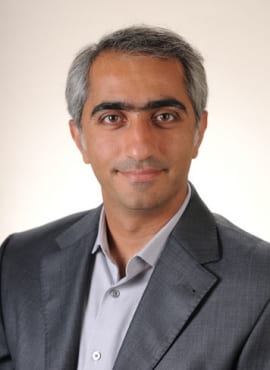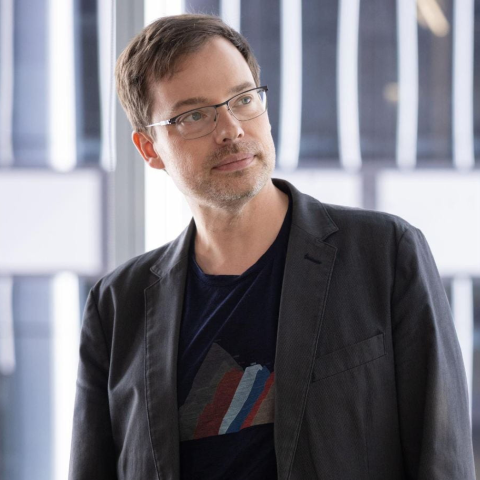
Kamran Paynabar

Kamran Paynabar's profile picture
kamran.paynabar@isye.gatech.edu

Kamran Paynabar is the Fouts Family Early Career Professor and Associate Professor in the H. Milton Stewart School of Industrial and Systems Engineering at Georgia Tech. He received his B.Sc. and M.Sc. in Industrial Engineering from Iran in 2002 and 2004, respectively, and his Ph.D. in Industrial and Operations Engineering from The University of Michigan in 2012. He also holds an M.A. in Statistics from The University of Michigan. His research interests comprise both applied and methodological aspects of machine-learning and statistical modeling integrated with engineering principles. He is a recipient of the INFORMS Data Mining Best Student Paper Award, the Best Application Paper Award from IIE Transactions, the Best QSR refereed paper from INFORMS, and the Best Paper Award from POMS. He has been recognized with the Georgia Tech campus level 2014 CETL/BP Junior Faculty Teaching Excellence Award and the Provost Teaching and Learning Fellowship. He served as the chair of QSR of INFORMS, and the president of QCRE of IISE.

Assistant Professor
Phone
404.385.3141
Office
Groseclose Building, Room 436
Additional Research
  • Aerospace
  • Artificial Intelligence
  • Automotive
  • Big Data Analytics
  • Biobased Materials

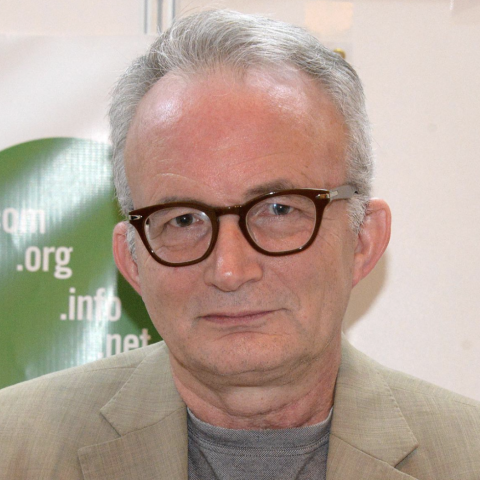
Milton Mueller

Milton Mueller's profile picture
milton@gatech.edu

Milton Mueller is an internationally prominent scholar specializing in the political economy of information and communication. The author of seven books and scores of journal articles, his work informs not only public policy but also science and technology studies, law, economics, communications, and international studies. His books Networks and States: The global politics of Internet governance (MIT Press, 2010) and Ruling the Root: Internet Governance and the Taming of Cyberspace (MIT Press, 2002) are acclaimed scholarly accounts of the global governance regime emerging around the Internet. Mueller’s research employs the theoretical tools of institutional economics, STS and political economy, as well as historical, qualitative and quantitative methods. Mueller’s prominence in scholarship is matched by his prominence in policy practice. He is the co-founder and co-director of the Internet Governance Project (IGP), a policy analysis center for global Internet governance. Since its founding in 2004, IGP has played a prominent role in shaping global Internet policies and institutions such as ICANN and the Internet Governance Forum. He has participated in proceedings and policy development activities of ICANN, the International Telecommunications Union (ITU), the National Telecommunications and Information Administration (NTIA) and regulatory proceedings in the European Commission, China, Hong Kong and New Zealand. He has served as an expert witness in prominent legal cases related to domain names and telecommunication policy. He was recently elected to the advisory committee of the American Registry for Internet Numbers (ARIN), and appointed in 2014 to the IANA Stewardship Coordination Group. Mueller has also been a practical institution-builder in the scholarly world, where he led the creation of the Global Internet Governance Academic Network (GigaNet), an international association of scholars.

Professor, School of Public Policy
Program Director, MS in Cybersecurity Policy
Phone
404.385.4281
Office
DM Smith 302
Additional Research
  • AI Governance
  • Cybersecurity Public Policy
  • Energy Delivery & Storage
  • Policy & Economics
University, College, and School/Department

Bjarne Kreitz

Portrait of Bjarne Kreitz
bkreitz3@gatech.edu

Bjarne Kreitz is an incoming Assistant Professor of Chemical Engineering at Georgia Tech. Kreitz received a B.Sc. and M.Sc. in Chemical Engineering from Clausthal University of Technology (Germany). He obtained his Dr.-Ing. in Chemical Engineering from Clausthal University of Technology under the supervision of Prof. Thomas Turek, working on the microkinetic investigation of the transient methanation with experiments and multiscale modeling. 

Kreitz conducted postdoctoral work at Brown University with Prof. Franklin Goldsmith with a Feodor Lynen Postdoctoral Scholarship from the Alexander von Humboldt Foundation. Before joining Brown, he worked briefly as a postdoc at the Karlsruhe Institute of Technology (Germany) in the group of Prof. Olaf Deutschmann.

Assistant Professor, School of Chemical and Biomolecular Engineering
Additional Research
  • Complex Systems
  • Energy and Sustainability
Google Scholar
https://scholar.google.com/citations?hl=en&user=yuUYl_EAAAAJ&view_op=list_works&sortby=pubdate

Julia Yang

Portrait of Julia Yang
jhyang@gatech.edu

Julia Yang, Ph.D. is an Assistant Professor in the School of Chemical and Biomolecular Engineering at Georgia Tech. Her research has enabled fundamental understanding of battery materials by advancing computational approaches to resolve transport in disordered electrodes and explain reactivity in organic electrolytes. She is a co-author on more than 14 publications and four patents, a recipient of the Harvard University Center for the Environment Fellowship (2022-2024), and a NextProf Nexus alum (2023). She is deeply committed to educating the next generation of diverse minds by prioritizing equity, inclusivity, and belonging, starting from within the classroom and beyond. 

Prof. Yang received her B.S. in Materials Science and Engineering, with an additional major in Physics, from Carnegie Mellon University and her Ph.D. in Materials Science and Engineering from U.C. Berkeley as an NDSEG Fellow under the guidance of Prof. Gerbrand Ceder. During her graduate studies, she was an AI Resident with X, the Moonshot Factory. She led postdoctoral work at Harvard University as an Environmental Fellow working with Prof. Boris Kozinsky and collaborating with Prof. Ah-Hyung Alissa Park. 

Assistant Professor, School of Chemical and Biomolecular Engineering
Office
Bunger-Henry 303
Additional Research
  • Computational Chemistry
  • Organic Electronics
Google Scholar
https://scholar.google.com/citations?hl=en&user=GUYnP_cAAAAJ&view_op=list_works&sortby=pubdate

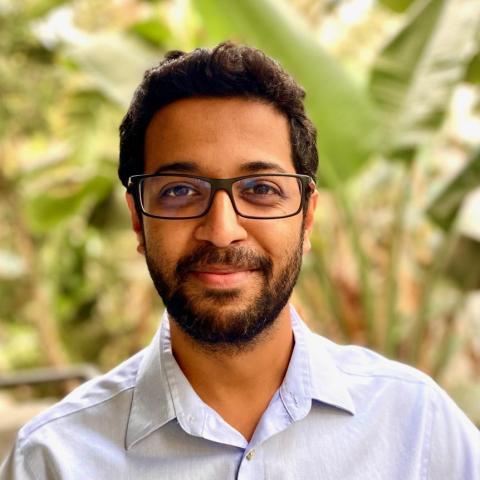
Saumya Jain

Saumya Jain's profile picture
sjain738@gatech.edu

Saumya Jain is an Assistant Professor in the School of Biological Sciences. He received a B.Tech and an M.Tech in Biochemical Engineering and Biotechnology from the Indian Institute of Technology, Delhi and a Ph.D. in Molecular and Cellular Biology from the University of Arizona. He conducted postdoctoral work at the University of California, Los Angeles as a Helen Hay Whitney Fellow in the lab of Dr. Larry Zipursky. His research focuses on the regulation of gene expression in developing nervous systems across space and time.

Animal brains consist of a vast number of neurons (~100 billion in humans, ~100 million in mice), and thousands of neuron-types. These neurons generated at different times and locations in the developing brain come together in precise ways to form specific connections (~100 trillion connections in the human brain). Even subtle defects in wiring are associated with conditions such as autism, schizophrenia and epilepsy. How does biology ensure the assembly of such a complex structure? A key piece of this puzzle is ensuring that the right set of genes are expressed at the right time and in the right place. The Jain lab is trying to address the following questions: 1) How are the timing and cell-type specificity of gene expression controlled in developing neurons to ensure proper circuit formation? 2) How are these mechanisms perturbed in neurodevelopmental disorders? To address these questions, the lab applies single-cell genomics, genetics and molecular biology approaches in the developing mouse and fruit fly visual systems.

Assistant Professor
Phone
4043858531
Office
EBB 3015
Additional Research
  • Bioinformatics
  • Computational Genomics
  • Neuroscience


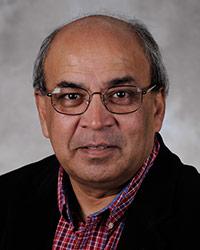
Ashok Goel

Ashok Goel's profile picture
ashok.goel@cc.gatech.edu

Ashok Goel is a Professor of Computer Science in the School of Interactive Computing at Georgia Institute of Technology in Atlanta, USA. He obtained his Ph.D. from The Ohio State University. At Georgia Tech, he is also the Director of the Ph.D. Program in Human-Centered Computing, a Co-Director of the Center for Biologically Inspired Design, and a Fellow of Brook Byers Institute for Sustainable Systems. For more than thirty years, Ashok has conducted research into artificial intelligence, cognitive science and human-centered computing, with a focus on computational design, modeling and creativity. His recent work has explored design thinking, analogical thinking and systems thinking in biological inspired design (https://www.youtube.com/watch?v=wiRDQ4hr9i8), and his research is now developing virtual research assistants for modeling biological systems. Ashok teaches a popular course on knowledge-based AI as part of Georgia Tech's program on Online Masters of Science in Computer Science. He has pioneered the development of virtual teaching assistants, such as Jill Watson, for answering questions in online discussion forums (https://www.youtube.com/watch?v=WbCguICyfTA). Chronicle of Higher Education recently called virtual assistants exemplified by Jill Watson as one of the most transformative educational technologies in the digital era. Ashok is the Editor-in-Chief of AAAI's AI Magazine.

Professor; School of Interactive Computing
Director| Ph.D. program in Human-Centered Computing; College of Computing
Co-Director; Center for Biologically Inspired Design
Fellow; Brook Byers Institute for Sustainable Systems
Office
GVU/TSRB
Additional Research
  • Artificial Intelligence
  • Cognitive Science
  • Computational Design
  • Computational Creativity
  • Educational Technology
  • Design Science
  • Learning Science and Technology
  • Human-Centered Computing
Google Scholar
https://scholar.google.com/citations?hl=en&user=VjNg25EAAAAJ&view_op=list_works&sortby=pubdate

Alan Ritter

Associate Professor Alan Ritter
alan.ritter@cc.gatech.edu

Alan Ritter is an associate professor in the School of Interactive Computing at Georgia Tech. His research interests include natural language processing, information extraction, and machine learning. He completed his Ph.D. at the University of Washington and was a postdoctoral fellow in the Machine Learning Department at Carnegie Mellon.  His research aims to solve challenging technical problems that can help machines learn to read vast quantities of text with minimal supervision.  His work has been featured in the press including WIRED, TNW and VentureBeat.  Alan is the recipient of an NSF CAREER, an Amazon Research Award, a Sony Faculty Innovation Award, and several paper awards presented at the Annual Meeting of the Association for Computational Linguistics.

Associate Professor
Office
CODA 1157B
Additional Research
  • AI
  • Large Language Models
  • Natural Language Processing
Google Scholar
https://scholar.google.com/citations?hl=en&user=unXtH3IAAAAJ&view_op=list_works&sortby=pubdate

Alberto Dainotti

Associate Professor Alberto Dainotti
dainotti@gatech.edu

Alberto Dainotti is an Associate Professor in the School of Computer Science at the College of Computing at Georgia Tech where is the Director of the Internet Intelligence Lab. His research is at the intersection of Internet measurement, data science and cybersecurity. He is interested in understanding when and how Internet infrastructure can fail and proposing remedies. To this end, he develops methods and builds near-real-time streaming data analytics systems (IODA, BGPStream, GRIP) that combine diverse data to monitor and improve Internet infrastructure security and reliability. He is also interested in understanding political motivations and implications of Internet cybersecurity events and phenomena. Before joining Georgia Tech, he was an Associate Research Scientist and Principal Investigator at CAIDA, the Center for Applied Internet Data Analysis at the San Diego Supercomputer Center, University of California San Diego. He received my Ph.D. in Computer Engineering and Systems at University of Napoli "Federico II", Italy, in 2008.

Associate Professor
Phone
Office
Klaus Advanced Computing Building, #3336
Additional Research
  • Data Analytics
  • Internet Data Science
  • Internet & Democracy
  • Networking, Systems, Security
  • Network Measurements


Google Scholar
https://scholar.google.com/citations?hl=en&user=oZNdAREAAAAJ&view_op=list_works&sortby=pubdate

Vijay Ganesh

Vijay Ganesh, Professor of Computer Science
vganesh@gatech.edu

Dr. Vijay Ganesh is a professor of computer science at the Georgia Institute of Technology. Prior to joining Georgia Tech in 2023, Vijay was a professor at the University of Waterloo in Canada from 2012 to 2023 and a research scientist at the Massachusetts Institute of Technology from 2007 to 2012. Vijay completed his PhD in computer science from Stanford University in 2007. Vijay's primary area of research is the theory and practice of SAT/SMT solvers, and their application in AI, software engineering, security, mathematics, and physics. In this context he has led the development of many SAT/SMT solvers, most notably, STP, Z3str4, AlphaZ3, MapleSAT, and MathCheck. He has also proved several decidability and complexity results in the context of first-order theories. More recently he has started working on topics at the intersection of learning and reasoning, especially the use of machine learning for efficient solvers, and the use of solvers aimed at making AI more trustworthy, secure, and robust. For his research, Vijay has won over 30 awards, honors, and medals to-date, including an ACM Impact Paper Award at ISSTA 2019, ACM Test of Time Award at CCS 2016, and a Ten-Year Most Influential Paper citation at DATE 2008.

Professor
Office
Klaus Advanced Computing Building, Room 2320
Additional Research
  • AI for Scientific and Mathematical Discovery
  • Automated Reasoning - SAT/SMT Solvers and Provers
  • NeuroSymbolic AI via Reasoning and Learning
  • Secure and Trustworthy AI and Machine Learning
Google Scholar
https://scholar.google.com/citations?hl=en&user=YP23eR0AAAAJ&view_op=list_works&sortby=pubdate

N Apurva Ratan Murty

N Apurva Ratan Murty's profile picture
ratan@gatech.edu

Ratan is an Assistant Professor of Cognition and Brain Science in the School of Psychology at Georgia Tech, and the Director of the Murty Lab (murtylab.com). He obtained his PhD from Indian Institute of Science (IISc) Bangalore and was a postdoctoral researcher in the Kanwisher and DiCarlo labs at MIT before moving to Georgia Tech. Research in the Murty Lab aims to uncover the neural codes and algorithms that enable us to see. The central theme of the lab's work is to integrate biological vision with artificial models of vision. The lab combines the benefits of closed-loop experimental testing (using 3T/7T human functional-MRI) with cutting-edge computational methods (like deep neural networks, generative algorithms, and AI interpretability) toward a new computationally precise understanding of human vision. This research also guides the development of neurally mechanistic biologically constrained models aimed to uncover a better understanding of the neurobiological changes that underlie perceptual abnormalities such as agnosias.

Assistant Professor
Office
131, JS Coon Building
Research Focus Areas