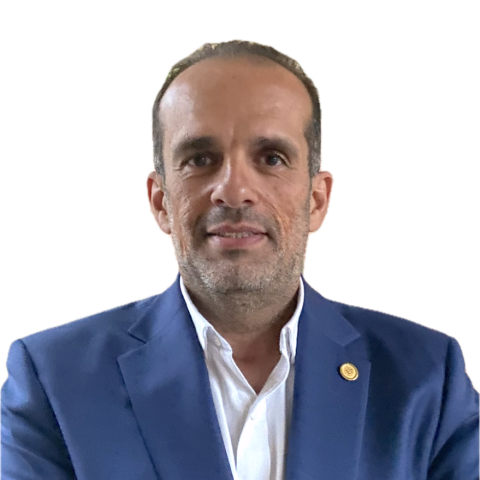
Ghassan AlRegib

Ghassan AlRegib's profile picture
alregib@gatech.edu

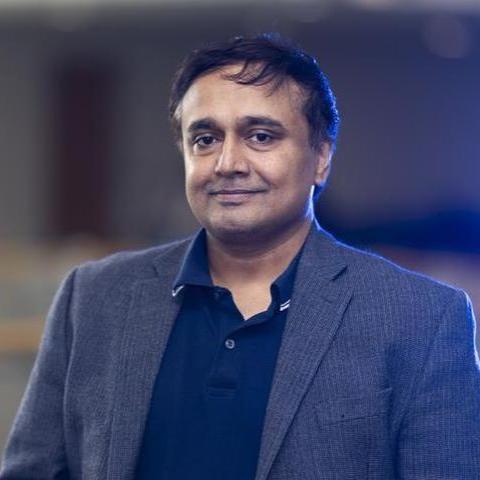
Prof. AlRegib is currently the John and Marilu McCarty Chair Professor in the School of Electrical and Computer Engineering at the Georgia Institute of Technology. His group is the Omni Lab for Intelligent Visual Engineering and Science (OLIVES) at Georgia Tech. In 2012, he was named the Director of Georgia Tech’s Center for Energy and Geo Processing (CeGP). He is the director of the Center for Signal and Information Processing (CSIP). He also served as the Director of Georgia Tech’s Initiatives and Programs in MENA between 2015 and 2018. He has authored and co-authored more than 300 articles in international journals and conference proceedings. He has been issued several U.S. patents and invention disclosures. He is a Fellow of the IEEE.

Prof. AlRegib received the ECE Outstanding Graduate Teaching Award in 2001 and both the CSIP Research and the CSIP Service Awards in 2003. In 2008, he received the ECE Outstanding Junior Faculty Member Award. In 2017, he received the 2017 Denning Faculty Award for Global Engagement. He and his students received the Beat Paper Award in ICIP 2019. He received the 2024 ECE Distinguished Faculty Achievement Award at Georgia Tech. He and his students received the Best Paper Award in ICIP 2019 and the 2023 EURASIP Best Paper Award for Image communication Journal.

Prof. AlRegib participated in a number of activities. He has served as Technical Program co-Chair for ICIP 2020 and ICIP 2024. He served two terms as a member of the IEEE SPS Technical Committees on Multimedia Signal Processing (MMSP) and Image, Video, and Multidimensional Signal Processing (IVMSP), 2015-2017 and 2018-2020. He was a member of the Editorial Boards of both the IEEE Transactions on Image Processing (TIP), 2009-2022, and the Elsevier Journal Signal Processing: Image Communications, 2014-2022. He was a member of the editorial board of the Wireless Networks Journal (WiNET), 2009-2016 and the IEEE Transaction on Circuits and Systems for Video Technology (CSVT), 2014-2016. He was an Area Chair for ICME 2016/17 and the Tutorial Chair for ICIP 2016. He served as the chair of the Special Sessions Program at ICIP’06, the area editor for Columns and Forums in the IEEE Signal Processing Magazine (SPM), 2009–12, the associate editor for IEEE SPM, 2007-09, the Tutorials co-chair in ICIP’09, a guest editor for IEEE J-STSP, 2012, a track chair in ICME’11, the co-chair of the IEEE MMTC Interest Group on 3D Rendering, Processing, and Communications, 2010-12, the chair of the Speech and Video Processing Track at Asilomar 2012, and the Technical Program co-Chair of IEEE GlobalSIP, 2014. He lead a team that organized the IEEE VIP Cup, 2017 and the 2023 IEEEE VIP Cup. He delivered short courses and several tutorials at international events such as BigData, NeurIPS, ICIP, ICME, CVPR, AAAI, and WACV.

In the Omni Lab for Intelligent Visual Engineering and Science (OLIVES), he and his group work on robust and interpretable machine learning algorithms, uncertainty and trust, and human in the loop algorithms. The group studies interventions into AI systems to enhance their trustworthiness. The group has demonstrated their work on a wide range of applications such as Autonomous Systems, Medical Imaging, and Subsurface Imaging. The group is interested in advancing the fundamentals as well as the deployment of such systems in real-world scenarios. His research group is working on projects related to machine learning, image and video processing, image and video understanding, subsurface imaging, perception in visual data processing, healthcare intelligence, and video analytics. The primary applications of the research span from Autonomous Vehicles to Portable AI-based Ophthalmology and Eye Exam and from Microscopic Imaging to Seismic Interpretation. The group was the first to introduce modern machine learning to seismic interpretation.

In 2024, and after more than three years of continuous work, he co-founded Georgia Tech’s AI Makerspace. The AI Makerspace is a resource for the entire campus community to access AI. Its purpose is to democratize access to AI. Together with his team, they are developing tools and services for the AI Makerspace via a VIP Team called AI Makerspace Nexus. In addition, he created two AI classes from scratch with innovative hands-on exercises using the AI Makerspace. One class is the ECE4252/8803 FunML class (Fundamentals of Machine Learning) where students learn the basics of Machine Learning as well as eight weeks of Deep learning both mathematically and using hands-on exercises on real-world data. The second class is a sophomore-level AI Foundations class (AI First) that teaches any student from any college the basics of AI such as data literacy, learning, decision, planning, and ethics using theory and hands-on exercises on the AI Makerspace. Prof. AlRegib wrote two textbooks for both classes.

Prof. AlRegib has provided services and consultation to several firms, companies, and international educational and R&D organizations. He has been a witness expert in a number of patents infringement cases and Inter Partes Review (IRP) cases.

John and Marilu McCarty Chair Professor, School of Electrical and Computer Engineering
Center Director
Phone
404-894-7005
Office
Centergy-One Room 5224
Additional Research
  • Machine learning
  • Trustworthy AI
  • Explainable AI (XAI)
  • Robust Learning Systems
  • Multimodal Learning
  • Annotations Diversity in AI Systems
Google Scholar
https://scholar.google.com/citations?hl=en&user=7k5QSdoAAAAJ&view_op=list_works

Jacob Abernethy

Jacob Abernethy's profile picture
prof@gatech.edu

Jacob Abernethy is an Associate Professor in the College of Computing at Georgia Tech. He started his faculty career in the Department of Electrical Engineering and Computer Science at the University of Michigan. He completed his Ph.D. in Computer Science at the University of California at Berkeley, and then spent two years as a Simons postdoctoral fellow at the CIS department at UPenn. Abernethy's primary interest is in Machine Learning, with a particular focus in sequential decision making, online learning, online algorithms and adversarial learning models. He did his Master's degree at TTI-C, and his Bachelor's Degree at MIT.

Director for Student Engagement, IDEaS

Sudhakar Pamidighantam

Sudhakar Pamidighantam's profile picture
spamidig@gatech.edu

Dr. Pamidighantam is associate director of the ARTISAN center under the Institute for Data Engineering and Science at the Georgia Institute of Technology. Dr. Pamidighantam had been a senior research scientist at Indiana University, Cyberinfrastructure Integration Research Center and NCSA at the University of Illinois at Urbana-Champaign supporting computational chemistry and science gateways development in support of molecular sciences faculty.

Associate Director – ARTISAN
Principal Research Scientist
Additional Research

computational chemistry

University, College, and School/Department
Google Scholar
https://scholar.google.com/citations?hl=en&user=xlNkBCQAAAAJ&view_op=list_works&sortby=pubdate

Vijay Ganesh

Vijay Ganesh, Professor of Computer Science
vganesh@gatech.edu

Dr. Vijay Ganesh is a professor of computer science at the Georgia Institute of Technology. Prior to joining Georgia Tech in 2023, Vijay was a professor at the University of Waterloo in Canada from 2012 to 2023 and a research scientist at the Massachusetts Institute of Technology from 2007 to 2012. Vijay completed his PhD in computer science from Stanford University in 2007. Vijay's primary area of research is the theory and practice of SAT/SMT solvers, and their application in AI, software engineering, security, mathematics, and physics. In this context he has led the development of many SAT/SMT solvers, most notably, STP, Z3str4, AlphaZ3, MapleSAT, and MathCheck. He has also proved several decidability and complexity results in the context of first-order theories. More recently he has started working on topics at the intersection of learning and reasoning, especially the use of machine learning for efficient solvers, and the use of solvers aimed at making AI more trustworthy, secure, and robust. For his research, Vijay has won over 30 awards, honors, and medals to-date, including an ACM Impact Paper Award at ISSTA 2019, ACM Test of Time Award at CCS 2016, and a Ten-Year Most Influential Paper citation at DATE 2008.

Professor
Office
Klaus Advanced Computing Building, Room 2320
Additional Research
  • AI for Scientific and Mathematical Discovery
  • Automated Reasoning - SAT/SMT Solvers and Provers
  • NeuroSymbolic AI via Reasoning and Learning
  • Secure and Trustworthy AI and Machine Learning
Google Scholar
https://scholar.google.com/citations?hl=en&user=YP23eR0AAAAJ&view_op=list_works&sortby=pubdate

Jeff Skolnick

Jeff Skolnick's profile picture
skolnick@gatech.edu
Regents’ Professor, School of Biological Sciences
Director, Center for the Study of Systems Biology
Mary and Maisie Gibson Chair & GRA Eminent Scholar in Computational Systems Biology
Additional Research
  • Computational Biology
  • Health & Life Sciences
Research Focus Areas
University, College, and School/Department

Charles David Sherrill

Charles David Sherrill's profile picture
sherrill@gatech.edu

Research in the Sherrill group focuses on the development of ab initio electronic structure theory and its application to problems of broad chemical interest, including the influence of non-covalent interactions in drug binding, biomolecular structure, organic crystals, and organocatalytic transition states. We seek to apply the most accurate quantum models possible for a given problem, and we specialize in generating high-quality datasets for testing new methods or machine-learning purposes. We have developed highly efficient algorithms and software to perform symmetry-adapted perturbation theory (SAPT) computations of intermolecular interactions, and we have used this software to analyze the nature of non-covalent pi-interactions in terms of electrostatics, London dispersion forces, induction/polarization, and short range exchange-repulsion. 

Regents Professor, School Chemistry and Biochemistry
Interim Executive Director, Institute for Data Engineering and Science
Associate Director for Research and Education, Institute for Data Engineering and Science
Phone
404.894.4037
Office
MS&E 2100N
Additional Research
  • Computational Materials Science
  • Computational Chemistry
  • High-Performance Computing
  • Machine Learning
Research Focus Areas
University, College, and School/Department
Google Scholar
https://scholar.google.com/citations?hl=en&user=PN-rzYUAAAAJ&view_op=list_works&sortby=pubdate

Umakishore Ramachandran

Umakishore Ramachandran's profile picture
rama@gatech.edu

Kishore Ramachandran received his Ph.D. in Computer Science from the University of Wisconsin, Madison in 1986, and has been on the faculty of Georgia Tech since then. He led the definition of the curriculum and the implementation for an online MS program in Computer Science (OMSCS) using MOOC technology for the College of Computing, which is currently providing an opportunity for students world-wide (with an enrollment of over 10,000) to pursue a low-cost graduate education in computer science. He has served as the Director of STAR Center from 2007 to 2014, and as the Director of Korean Programs for the College of Computing from 2007 to 2011. Ramachandran has also served as the Chair of the Core Computing Division within the College of Computing. His research interests are in architectural design, programming, and analysis of parallel and distributed systems. Currently, he is leading a project that deals with large-scale situation awareness using distributed camera networks and multi-modal sensing with applications to surveillance, connected vehicles, and transportation. He is the recipient of an NSF PYI Award in 1990, the Georgia Tech doctoral thesis advisor award in 1993, the College of Computing Outstanding Senior Research Faculty award in 1996, the College of Computing Dean's Award in 2003 and 2014, the College of Computing William "Gus'' Baird Teaching Award in 2004, the "Peter A. Freeman Faculty Award" from the College of Computing in 2009 and in 2013, the Outstanding Faculty Mentor Award from the College of Computing in 2014, and became an IEEE Fellow in 2014.

Thrust Lead for Cloud Computing, IDEaS
Professor
University, College, and School/Department

Giri Krishnan

Placeholder for headshot
giri@gatech.edu

Dr Krishnan is research professor in the Georgia Tech’s Interdisciplinary Research Institute, Institute for Data Engineering and Science, School of Computational Science and Engineering, College of Computing. He is an associate director of the Center for AI in Science and Engineering. His current interest is in developing AI methods for computational science problems across many domains. He is a computational neuroscientist by training, with past work spanning across a wide range of computational modeling and AI methods. His group's current focus is on generative methods for computational workflow, neural approaches for accelerating compute intensive problems and applying interpretable methods to scientific AI for advancing scientific understanding.

Prior to joining Georgia Tech, he was research scientist at UC San Diego and his research involved developing large-scale modeling of the brain to study sleep, memory and learning. In addition, he has contributed towards neuro-inspired AI and neuro-symbolic approaches. He is broadly interested in the emergence of intelligent behavior from neural computations in the brain and AI systems. 

Dr Krishnan has more than 50 publications and his research has been supported by multiple grants from NIH and NSF. He is passionate about open-science and reproducible science and strongly believes that progress in science requires reproducibility.

Associate Director, Center for Artificial Intelligence in Science and Engineering (ARTISAN)
Principal Research Scientist
Phone
404.894.2132
Office
CODA Building
Additional Research
  • AI : Deep learning
  • Neuro-symbolic Approaches
  • Geosciences
  • Molecular Dynamics
  • Neuroscience : Theoretical and computational modeling
Research Focus Areas
Google Scholar
https://scholar.google.com/citations?hl=en&user=IGsdszkAAAAJ&view_op=list_works&sortby=pubdate

Suresh Marru

Suresh Marru's profile picture
smarru@gatech.edu

Suresh Marru is a research professor dedicated to advancing science and engineering through AI and cyberinfrastructure. Over the past two decades, he has focused on accelerating and democratizing computational science. His work includes the development of science gateways and the pioneering of the Apache Airavata distributed systems framework.

In his current role as the Director of Georgia Tech's ARTISAN Center, his team is at the forefront of pioneering efforts to integrate AI into diverse scientific domains. His group is dedicated to bridging the gap between theory, experimentation, and computation by fostering open-source integration frameworks. These frameworks automate research processes, optimize complex models, and integrate disparate scientific data with simulation engines.

Collaboration is at the heart of Suresh’s ethos. He has had the privilege of working alongside brilliant scientists and technologists, contributing to groundbreaking research in domains such as geosciences, neuroscience, and molecular dynamics. These collaborations have not only accelerated scientific discovery but have also offered valuable insights into the potential of AI in scientific innovation.

Beyond his professional endeavors, Suresh is deeply passionate about open science and open-source software. He also believes in building synergies between academia and industry. He has played an instrumental role in a series of tech startups. Currently, he serves as the Chief Technology Officer at Folia, a company dedicated to unleashing the power of annotations.

Director, Georgia Tech Center for Artificial Intelligence in Science and Engineering (ARTISAN)
Research Professor, Institute for Data Engineering and Science (IDEaS)
Phone
405.816.1686
Office
CODA 12th Floor | #1217
Additional Research

Atmospheric SciencesComputer ModelingCyberinfrastructureData Fusion and IntegrationOpen Science Integration FrameworksScience Gateway Frameworks

Google Scholar
https://scholar.google.com/citations?hl=en&user=FVWrKb0AAAAJ&view_op=list_works&sortby=pubdate