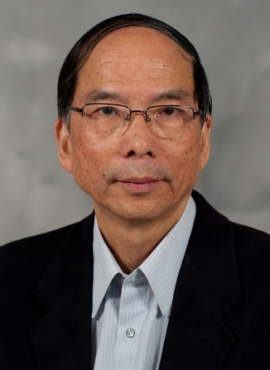
Jeff Wu

Jeff Wu's profile picture
jeff.wu@isye.gatech.edu

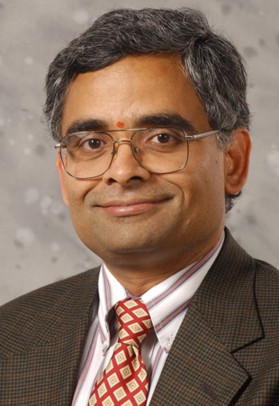
C. F. Jeff Wu is the Coca-Cola Chair in Engineering Statistics and Professor in the H. Milton School of Industrial and Systems Engineering at Georgia Tech.

He was elected a Member of the National Academy of Engineering (2004), and a Member (Academician) of Academia Sinica (2000). A Fellow of the Institute of Mathematical Statistics (1984), the American Statistical Association (1985), the American Society for Quality (2002), and the Institute for Operations Research and Management Sciences (2009). He received the COPSS (Committee of Presidents of Statistical Societies) Presidents' Award in 1987, which was given to the best researcher under the age of 40 per year and was commissioned by five statistical societies. His other major awards include the 2011 COPSS Fisher Lecture, the 2012 Deming Lecture (plenary lectures during the annual Joint Statistical Meetings), the Shewhart Medal (2008) from ASQ, and the Pan Wenyuan Technology Award (2008). In 2016 he received the (inaugural) Akaike Memorial Lecture Award. In 2017 he received the George Box Medal from ENBIS. In 2020 he won The Class of 1934 Distinguished Professor Award and the Sigma Xi Monie A. Ferst Award both at Georgia Institute of Technology. He has won numerous other awards, including the Wilcoxon Prize, the Brumbaugh Award (twice), the Jack Youden Prize (twice), and the Honoree of the 2008 Quality and Productivity Research Conference. He was the 1998 P. C. Mahalanobis Memorial Lecturer at the Indian Statistical Institutes and an Einstein Visiting Professor at the Chinese Academy of Sciences (CAS). He is an Honorary Professor at several institutions, including the CAS and National Tsinghua University. He received an honorary doctor (honoris causa) of mathematics at the University of Waterloo in 2008.

He was formerly the H. C. Carver Professor of Statistics and Professor of Industrial and Operations Engineering at the University of Michigan, 1993-2003 and the GM/NSERC Chair in Quality and Productivity at the University of Waterloo in 1988-1993. In his 1997 inaugural lecture for the Carver Chair, he coined the term data science and advocated that statistics be renamed data science and statistician to data scientist. Before Waterloo, he taught in the Statistics Department at the University of Wisconsin from 1977-1988. He got his BS in Mathematics from National Taiwan University in 1971 and Ph.D. in Statistics from the University of California, Berkeley (1973-1976).

His work is widely cited in professional journals as well as in magazines, including a feature article about his work in Canadian Business and a special issue of Newsweek on quality. He has served as editor or associate editor for several major statistical journals like Annals of Statistics, Journal of American Statistical Association, Technometrics, and Statistica Sinica. Professor Wu has published more than 185 research articles in peer review journals. He has supervised 50 Ph.D.'s, out of which more than 25 are teaching in major research departments or institutions in statistics, engineering, or business in US/Canada/Asia/Europe. Among them, there are 21 Fellows of ASA, IMS, ASQ, IAQ and IIE, three editors of Technometrics, and one editor of JQT. He co-authors with Mike Hamada the book "Experiments: Planning, Analysis, and Optimization" (Wiley, 2nd Ed, 2009, 716 pages) and with R. Mukerjee the book "A Modern Theory of Factorial Designs" (Springer, 2006).

Coca-Cola Chair in Engineering Statistics and Professor
Phone
404.894.2301
Office
ISyE Main Building, Room 233

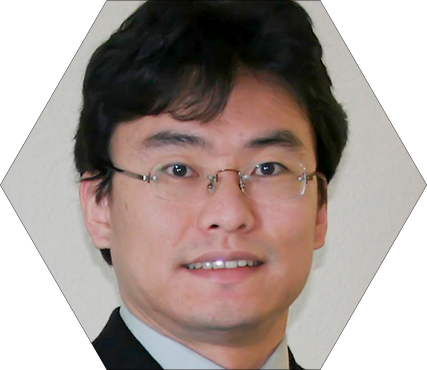
Seung-Kyum Choi

Seung-Kyum Choi's profile picture
seungkyum.choi@me.gatech.edu

Seung-Kyum Choi directly began at Georgia Tech in Fall 2006 as an assistant professor. Prior to joining Georgia Tech, he was a research assistant at Wright State University, conducting research on uncertainty quantification techniques for the analytical certification of complex engineered systems.  

Associate Professor, Woodruff School of Mechanical Engineering
Phone
404.894.9218
Office
MARC 260
Additional Research

Additive/Advanced Manufacturing; Computer-Aided Engineering; Materials Failure and Reliability; Modeling; Uncertainty Modeling

Research Focus Areas
Google Scholar
https://scholar.google.com/citations?hl=en&user=p90igT8AAAAJ&view_op=list_works&sortby=pubdate

Richard Neu

Richard Neu's profile picture
rick.neu@me.gatech.edu

Neu's research involves the understanding and prediction of the fatigue behavior of materials and closely related topics, typically when the material must resist degradation and failure in harsh environments. Specifically, he has published in areas involving thermomechanical fatigue, fretting fatigue, creep and environmental effects, viscoplastic deformation and damage development, and related constitutive and finite-element modeling with a particular emphasis on the role of the materials microstructure on the physical deformation and degradation processes. He has investigated a broad range of structural materials including steels, titanium alloys, nickel-base superalloys, metal matrix composites, molybdenum alloys, high entropy alloys, medical device materials, and solder alloys used in electronic packaging. His research has widespread applications in aerospace, surface transportation, power generation, machinery components, medical devices, and electronic packaging. His work involves the prediction of the long-term reliability of components operating in extreme environments such as the hot section of a gas turbine system for propulsion or energy generation. His research is funded by some of these industries as well as government funding agencies.

Professor, School of Materials Science and Engineering, Woodruff School of Mechanical Engineering
Director, Mechanical Properties Characterization Facility
Phone
404.894.3074
Office
MRDC 4104
Additional Research

Nanomaterials; micro and nanomechanics; Thermoelectric Materials; fracture and fatigue

Research Focus Areas
Google Scholar
https://scholar.google.com/citations?hl=en&user=60ZYazgAAAAJ&view_op=list_works&sortby=pubdate

Sundaresan Jayaraman

Sundaresan Jayaraman's profile picture
sundaresan.jayaraman@mse.gatech.edu

Sundaresan Jayaraman is a professor in the School of Materials Science and Engineering at the Georgia Institute of Technology. He is also the Founding Director of the Kolon Center for Lifestyle Innovation established at Georgia Tech in October 2016. A pioneer in bringing about convergence between textiles and computing, Jayaraman’s research has led to the paradigm of “Fabric is the Computer.” He is a leader in studying and defining the roles of engineering design, manufacturing and materials technologies in public policy for the nation. 

Jayaraman and his research students have made significant contributions in the following areas: (i) Smart Textile-based Wearable Systems; (ii) Computer-aided Manufacturing, Automation and Enterprise Architecture Modeling; (iii) Engineering Design and Analysis of Intelligent Textile Structures and Processes; (iv) Design and Development of Knowledge Based Systems (KBS) for textiles and apparel; and (v) Design and Development of Respiratory Protection Systems. His group's research has led to the realization of the world's first Wearable Motherboard™, also known as the “Smart Shirt” (www.smartshirt.gatech.edu). This invention was featured in a Special Issue of LIFE Magazine entitled Medical Miracles for the New Millennium (Fall 1998) as One of the 21 Breakthroughs that Could Change Your Life in the 21st Century. The first Smart Shirt is now part of the Archives of the Smithsonian Museum in Washington, DC. 

Prior to Georgia Tech, Jayaraman had the privilege of working with Dan Bricklin and Bob Frankston, the Co-Creators of the world’s first spreadsheet – VisiCalc®. VisiCalc was the first “killer app” that transformed the computing industry by bringing computing to the masses through the proliferation of personal computers. During his PhD, he was involved in the design and development of TK!Solver, the world’s first equation-solving program from Software Arts, Inc., Cambridge, MA. He worked there as a Product Manager and then at Lotus Development Corporation (makers of 1-2-3®) in Cambridge, MA. 

Jayaraman is a recipient of the 1989 Presidential Young Investigator Award from NSF for his research in the area of computer aided manufacturing and enterprise architecture. In September 1994, he was elected a Fellow of the Textile Institute, (UK). His publications include a textbook on computer-aided problem solving published by McGraw-Hill in 1991, ten U.S. patents, and numerous refereed journal papers, and book chapters. As Principal Investigator, he has received nearly $16Million in research funding from a variety of sources including NSF, DARPA, DoD, NIST, CDC, and industry. Dr. Jayaraman served as Technical Editor, Information Technology, for ATI Magazine (now Textile World) from 1995-2003. From May 2000 to October 2004, he was an Editor of the Journal of the Textile Institute and is currently on the Editorial Advisory Board.

Jayaraman is a founding member of the IOM Standing Committee on Personal Protective Equipment in the Workplace (2005-2013). From December 2008 to February 2011, he served on the Board on Manufacturing and Engineering Design of the National Academies. In February 2011, he became a founding member of the National Materials and Manufacturing Board of the National Academies. He has also served on nine Study Committees for the National Academy of Medicine (formerly Institute of Medicine) and the National Research Council of the National Academies. He is also a founding member of the IEEE Technical Committee on Biomedical Wearable Systems (2004 –2008). In October 2000, Jayaraman received the Georgia Technology Research Leader Award from the State of Georgia. He received The 2018 Textile Institute Research Publication Award for the most outstanding paper published in 2018 in the Journal of the Textile Institute. In December 2019, he received the Inaugural Distinguished Alumni Award from A.C. College of Technology, Chennai, India.

Professor, School of Materials Science and Engineering
Phone
404.894.2461
Office
MRDC 4411
Additional Research

Biomedical Devices; wearable devices; smart textiles; Innovation; Industrial Engineering

Google Scholar
https://scholar.google.com/citations?hl=en&user=CBhd_qQAAAAJ&view_op=list_works&sortby=pubdate

Christopher J. Saldaña

Christopher J. Saldaña's profile picture
christopher.saldana@me.gatech.edu

Dr. Christopher Saldaña began working at Georgia Tech in 2014. Prior, Dr. Saldaña previously held the Harold and Inge Marcus Career Professorship at the Pennsylvania State University and worked as a research engineer at M4 Sciences Corporation. Dr. Saldaña has also previously held visiting affiliations/positions with the US Air Force Research Laboratory, the Indian Institute of Science (Bangalore, India), Technische Universität Dortmund (Dortmund, Germany), Autodesk, and Sandia National Laboratories. He has received several awards, including an NSF CAREER award, the Robert J. Hocken SME Outstanding Young Manufacturing Engineer award and an R&D100 Technology Award. He serves as an Associate Editor for IISE Transactions (Design and Manufacturing) and serves on the Editorial Boards of Manufacturing Letters, Computer Aided Design and Applications, and the ASTM Journal of Smart and Sustainable Manufacturing.

Ring Family Professor
Associate Professor
Phone
404-385-3735
Office
GTMI, Room 259
Additional Research

Additive/Advanced Manufacturing; Composites; Bio-Inspired Materials; Computer-Aided Engineering; Advanced Characterization

Google Scholar
https://scholar.google.com/citations?hl=en&user=kbB1jUkAAAAJ&view_op=list_works&sortby=pubdate

Nagi Gebraeel

Nagi Gebraeel's profile picture
nagi.gebraeel@isye.gatech.edu

Professor Nagi Gebraeel is the Georgia Power Early Career Professor and Professor in the H. Milton Stewart School of Industrial and Systems Engineering at Georgia Tech. He received his MS and PhD from Purdue University in 1998 and 2003, respectively.

Dr. Gebraeel's research interests lie at the intersection of Predictive Analytics and Machine Learning in IoT enabled maintenance, repair and operations (MRO) and service logistics. His key focus is on developing fundamental statistical learning algorithms specifically tailored for real-time equipment diagnostics and prognostics, and optimization models for subsequent operational and logistical decision-making in IoT ecosystems. Dr. Gebraeel also develops cyber-security algorithms intended to protect IoT-enabled critical assets from ICS-type cyberattacks (cyberattacks that target Industrial Control Systems). From the standpoint of application domains, Dr. Gebraeel has general interests in manufacturing, power generation, and service-type industries. Applications in Deep Space missions are a recent addition to his research interests, specifically, developing Self-Aware Deep Space Habitats through NASA's HOME Space Technology Research Institute.

Dr. Gebraeel leads Predictive Analytics and Intelligent Systems (PAIS) research group at Georgia Tech's Supply Chain and Logistics Institute. He also directs activities and testing at the Analytics and Prognostics Systems laboratory at Georgia Tech's Manufacturing Institute. Formerly, Dr. Gebraeel served as an associate director at Georgia Tech's Strategic Energy Institute (from 2014 until 2019) where he was responsible for identifying and promoting research initiatives and thought-leadership at the intersection of Data Science and Energy applications. He was also the former president of the Institute of Industrial and Systems Engineers (IISE) Quality and Reliability Engineering Division, and is currently a member of the Institute for Operations Research and the Management Sciences (INFORMS), and IISE (since 2005).

Georgia Power Associate Professor, School of Industrial Systems Engineering
Phone
404.894.0054
Office
Groseclose Building, Room 327
Additional Research
  • Data Mining
  • IoT
  • Sensor-based Prognostics & Degradation Modeling
  • Reliability Engineering
  • Service Logistics
  • System Design & Optimization
  • Cyber/ Information Technology
Research Focus Areas

Saman Zonouz

Saman Zonouz's profile picture
szonouz6@gatech.edu

Saman Zonouz is an Associate Professor in the School of Cybersecurity and Privacy and the School of Electrical and Computer Engineering at Georgia Tech, where he directs the Cyber-Physical Security Lab (CPSec) and the Cyber-Physical Systems track of Georgia Tech's Online Master of Science in Cybersecurity. His research develops the theory and tools needed to build provably dependable and secure cyber-physical systems, spanning formal verification and reverse engineering of embedded control firmware, physics-aware attack detection and forensics, and real-time intrusion response that draws on both systems security and control theory. His group applies this work to robotic and autonomous platforms, including unmanned aerial vehicles, robotic ground vehicles, and in-vehicle networks, as well as to additive manufacturing, industrial controllers, and power-grid infrastructure. A complementary line of work on trustworthy and efficient AI includes learning-based robot motion planning and robust, compressed deep neural networks for embedded and edge deployment. He teaches courses such as “Cybersecurity of Drones” (Cybersecurity of Autonomous Vehicles), and Introduction to Cyber-Physical Systems Security. 

Zonouz's research has been supported by NSF, DOE, DOW, DHS, ONR, ARPA-E, ARPA-H, and industry partners. He is a recipient of the Presidential Early Career Award for Scientists and Engineers (PECASE), the NSF CAREER Award in Cyber-Physical Systems, the NSA Significant Research in Cyber Security award, the Air Force Office of Scientific Research Faculty Fellowship, and a Google Security Hall of Fame award; his work has also received a Distinguished Paper Award at ACM CCS 2024 and the Outstanding Mid-Career Faculty Research Award from Georgia Tech's College of Computing. He received his Ph.D. in Computer Science from the University of Illinois at Urbana-Champaign and his B.Sc. in Computer Engineering from Sharif University of Technology, where he also competed internationally in RoboCup robot soccer, and won world Championship in Rescue League in Japan, Osaka 2005.

Associate Professor, School of Cybersecurity and Privacy, School of Electrical and Computer Engineering
Director, Georgia Tech’s Online Master of Science in Cybersecurity - Cyber-Physical Systems Track
Office
Coda E0964B
Additional Research
  • Cyber-physical systems security and resilience
  • Security of unmanned aerial vehicles, robotic vehicles, and autonomous systems
  • Embedded control firmware analysis: reverse engineering, formal verification, and physics-based attestation
  • Physics-aware intrusion detection and response for robots and industrial controllers
  • Automotive and in-vehicle network (CAN) security
  • Secure and trustworthy additive and AI-driven manufacturing
Google Scholar
https://scholar.google.com/citations?hl=en&user=kgFnNewAAAAJ&view_op=list_works&sortby=pubdate

Pascal Van Hentenryck

Pascal Van Hentenryck's profile picture
pascal.vanhentenryck@isye.gatech.edu

Pascal Van Hentenryck is an A. Russell Chandler III Chair and Professor in the H. Milton Stewart School of Industrial and Systems Engineering at Georgia Tech. Prior to this appointment, he was a professor of Computer Science at Brown University for about 20 years, he led the optimization research group (about 70 people) at National ICT Australia (NICTA) (until its merger with CSIRO), and was the Seth Bonder Collegiate Professor of Engineering at the University of Michigan. Van Hentenryck is also an Honorary Professor at the Australian National University.

Van Hentenryck is a Fellow of AAAI (the Association for the Advancement of Artificial Intelligence) and INFORMS (the Institute for Operations Research and Management Science). He has been awarded two honorary doctoral degrees from the University of Louvain and the university of Nantes, the IFORS Distinguished Lecturer Award, the Philip J. Bray Award for teaching excellence in the physical sciences at Brown University, the ACP Award for Research Excellence in Constraint Programming, the ICS INFORMS Prize for Research Excellence at the Intersection of Computer Science and Operations Research, and an NSF National Young Investigator Award. He received a Test of Time Award (20 years) from the Association of Logic Programming and numerous best paper awards, including at IJCAI and AAAI. Van Hentenryck has given plenary/semi-plenary talks at the International Joint Conference on Artificial Intelligence (twice), the International Symposium on Mathematical Programming, the SIAM Optimization Conference, the Annual INFORMS Conference, NIPS, and many other conferences. Van Hentenryck is program co-chair of the AAAI’19 conference, a premier conference in Artificial Intelligence.

Van Hentenryck’s research focuses in Artificial Intelligence, Data Science, and Operations Research. His current focus is to develop methodologies, algorithms, and systems for addressing challenging problems in mobility, energy systems, resilience, and privacy. In the past, his research focused on optimization and the design and implementation of innovative optimization systems, including the CHIP programming system (a Cosytec product), the foundation of all modern constraint programming systems and the optimization programming language OPL (now an IBM Product). Van Hentenryck has also worked on computational biology, numerical analysis, and programming languages, publishing in premier journals in these areas.

Van Hentenryck runs the Seth Bonder summer Camp in Computational and Data Science for middle- and high-school students every summer. 

Director, AI Institute for Advances in Optimization
A. Russell Chandler III Chair, School of Industrial and Systems Engineering
Professor, School of Industrial and Systems Engineering
Phone
(404) 385-5538
Additional Research

Electric Vehicles

Ari Glezer

Ari Glezer's profile picture
ari.glezer@me.gatech.edu

Dr. Glezer began at Tech in 1992 as an Associate Professor. He was named to the Woodruff Chair in Thermal Systems in 2002. Prior, he was an Assistant and Associate Professor at the University of Arizona.

Teaching Interests

Professor Glezer's teaching interests encompass core mechanical engineering subjects at both undergraduate and graduate levels, including fluid mechanics, aerodynamics, heat transfer, and energy systems. His courses emphasize fundamental principles, analytical methods, and experimental techniques. He fosters an interactive learning environment and actively engages graduate and undergraduate students in research-driven projects to deepen their understanding of fluid dynamics and energy conversion.

Research Interests

Professor Glezer's research focuses on fluid mechanics and aerodynamics with an emphasis on flow control, fluid-structure interactions, and energy transport phenomena. His work explores the fundamental physics of turbulence, vortex dynamics, and aerodynamic performance enhancement, employing experimental and computational approaches to address challenges in aerodynamics, propulsion systems, energy systems, and thermal management.

Recent Publications

  • Nichols, D. A., Vukasinovic, B., and Glezer, A., “On the Formation of a Ground Vortex In Crossflow,” J. Fluid Mech., 1012, 2025. 
  • Peterson, C. J., Vukasinovic, B., and Glezer, A., “The Evolution and Scaling of Controlled Flow Separation at the Inlet of a Diverging Channel,” Exp. Fluids, 66, 2025. 
  • Burrows, T.J., Vukasinovic, B., Glezer, A., Lakebrink, M.T., and Mani, M., “Controlled Flow in a Serpentine Diffuser with a Cowl Inlet,” J. Aircraft, 62, 2025.
  • Vukasinovic, B., Funk, R. B., and Glezer, A., “Circulation Control using Arrays of Fluidically Oscillating Jets,” AIAA J., 63, 2025.
  • Boziuk, T. R., Smith, M. K., and Glezer, A., “Dynamics of Vapor Bubble Condensation under Directional Ultrasonic Actuation,” Phys. Fluids, 35, 2023.
Professor, Woodruff School of Mechanical Engineering
Woodruff Chair, Thermal Systems
Phone
404.894.3266
Office
Love Building, Room 239
Additional Research

Wind; Fluid Mechanics and Heat Transfer; Combustion; and Energy Systems; Fluid mechanics; turbulent shear flows; flow control; diagnostics

Research Focus Areas
University, College, and School/Department

Aaron Stebner

Aaron Stebner's profile picture
aaron.stebner@gatech.edu

Aarn Stebner works at the intersection of manufacturing, machine learning, materials, and mechanics. He joined the Georgia Tech faculty as an associate professor of Mechanical Engineering and Materials Science and Engineering in 2020.

Previously, he was the Rowlinson Associate Professor of Mechanical Engineering and Materials Science at the Colorado School of Mines (2013 – 2020), a postdoctoral scholar at the Graduate Aerospace Laboratories of the California Institute of Technology (2012 – 2013), a Lecturer in the Segal Design Institute at Northwestern University (2009 – 2012), a Research Scientist at Telezygology Inc. establishing manufacturing and “internet of things” technologies for shape memory alloy-secured latching devices (2008-2009), a Research Fellow at the NASA Glenn Research Center developing smart materials technologies for morphing aircraft structures (2006 – 2008), and a Mechanical Engineer at the Electric Device Corporation in Canfield, OH developing manufacturing and automation technologies for the circuit breaker industry (1995 – 2000).

Associate Professor, School of Mechanical Engineering and Materials Science and Engineering
Phone
404.894.5167
Google Scholar
https://scholar.google.com/citations?hl=en&user=OpRg9IsAAAAJ&view_op=list_works&sortby=pubdate