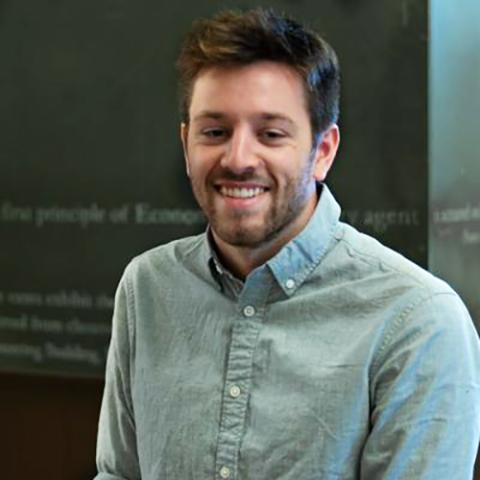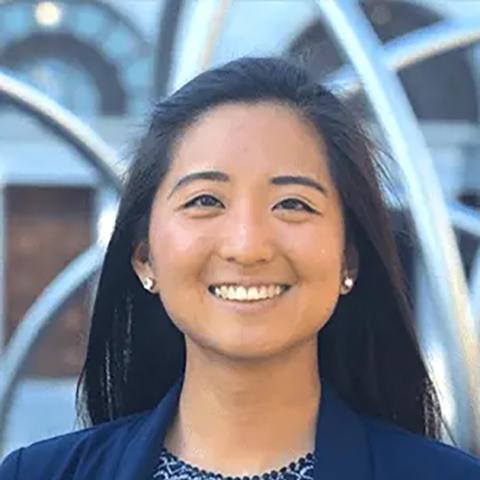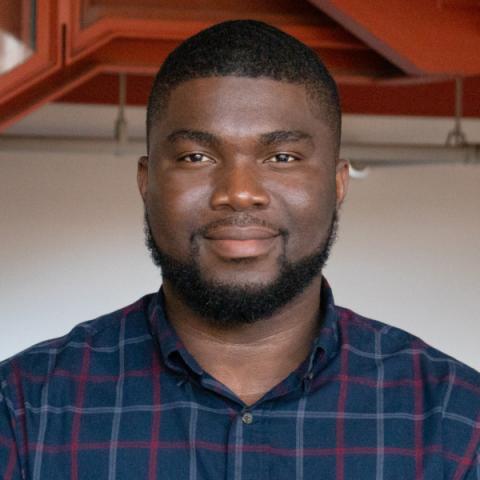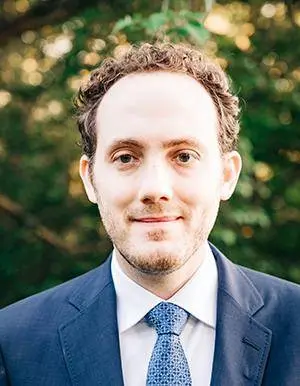
Patrick Kastner

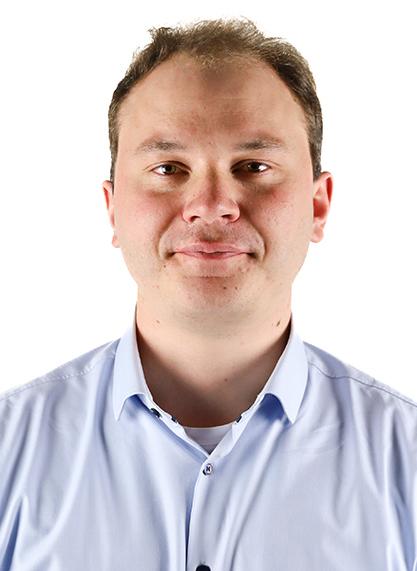
Patrick Kastner's profile picture
pkastner3@gatech.edu

Patrick Kastner is a researcher and educator specializing in environmental performance simulation and decarbonization of buildings and cities, and directs the Sustainable Urban Systems Lab at Georgia Tech. He is an Assistant Professor at the School of Architecture and holds a courtesy appointment with the H. Milton Stewart School of Industrial and Systems Engineering.

His goal is to empower urban decision-makers with software tools that place sustainability at the forefront of the profession. He leads a Vertically Integrated Project titled Surrogate Modeling for Urban Regeneration (SMUR), which attracts a diverse group of students ranging from sophomore to graduate level, representing various engineering disciplines and other related fields across Georgia Tech.

He earned his Ph.D. and M.S. in Systems Science and Engineering from Cornell University in 2022. During his doctoral research, he developed Eddy3D, a microclimate modeling software toolkit for Rhino & Grasshopper, now adopted by leading institutions in both academia and practice. He previously taught at Cornell and UPenn.

Originally from Germany, Kastner holds an M.S. in Sustainable Building Science from TU Munich, and a B.S. in Energy Engineeringfrom FAU Erlangen-Nuremberg. While in Munich, he was fortunate enough to study at the Center for Digital Technology and Management and enjoyed his time leading the operations team at TEDxTUM.
Assistant Professor, School of Architecture
Adjunct Assistant Professor — H. Milton Stewart School of Industrial and Systems Engineering Director of the Sustainable Urban Systems Lab
University, College, and School/Department

Anthony Harding

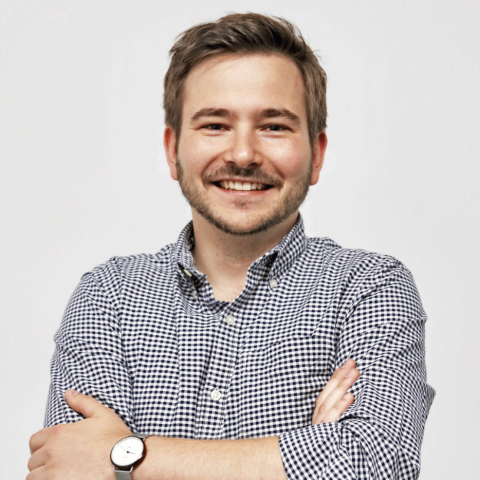
Portrait of Anthony Harding
aharding6@gatech.edu

Anthony Harding is an environmental economist with research interests at the intersection of innovative technologies and climate policy. He uses economic theory and applied econometrics to analyze the extent of socioeconomic risks from climate change, how policy and technologies can moderate these risks, and what impacts, intended or otherwise, policies may have. Before returning to Georgia Tech, Harding was a postdoctoral fellow at Harvard University’s Kennedy School of Government. He earned his Ph.D. in Economics from the School of Economics and a B.S. in Mathematics and Physics from Rensselaer Polytechnic Institute.

Assistant Professor
Additional Research
  • Climate Economics
  • Environmental Economics
  • Energy Economics
IRI And Role
University, College, and School/Department

Katherine Graham

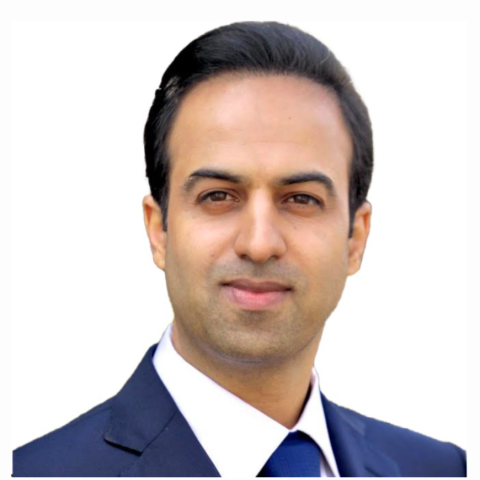
Portrait of Katy Graham.
kgraham61@gatech.edu

Dr. Graham joined Georgia Tech as an Assistant Professor in January 2023. She completed a President’s Postdoctoral Fellowship at Georgia Tech, and completed her MS and PhD in Environmental Engineering and Science at Stanford University. Prior to that, she received her undergraduate degree at the University of Michigan in Chemical Engineering.

Dr. Graham’s research interests focus on the fate and transport of pathogens and antimicrobial resistance genes in the built and natural environments. Her previous research projects have focused on wastewater-based epidemiology, quantitative microbial risk assessment (QMRA), and the removal of pathogens in green stormwater infrastructure. Her lab aims to use molecular biology, microbiology, and modeling tools to address issues of water, climate, and health domestically and internationally.

Assistant Professor
Additional Research
  • Microbial water quality
  • Water, sanitation, and hygiene
  • Public health and risk assessment
  • Environmental virology
  • One Health
IRI And Role

Julia Yang

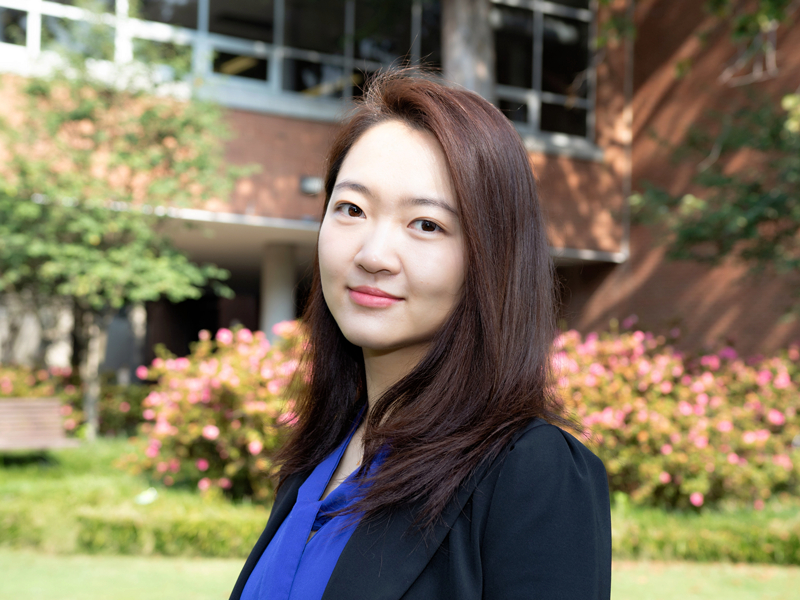
Portrait of Julia Yang
jhyang@gatech.edu

Julia Yang, Ph.D. is an Assistant Professor in the School of Chemical and Biomolecular Engineering at Georgia Tech. Her research has enabled fundamental understanding of battery materials by advancing computational approaches to resolve transport in disordered electrodes and explain reactivity in organic electrolytes. She is a co-author on more than 14 publications and four patents, a recipient of the Harvard University Center for the Environment Fellowship (2022-2024), and a NextProf Nexus alum (2023). She is deeply committed to educating the next generation of diverse minds by prioritizing equity, inclusivity, and belonging, starting from within the classroom and beyond. 

Prof. Yang received her B.S. in Materials Science and Engineering, with an additional major in Physics, from Carnegie Mellon University and her Ph.D. in Materials Science and Engineering from U.C. Berkeley as an NDSEG Fellow under the guidance of Prof. Gerbrand Ceder. During her graduate studies, she was an AI Resident with X, the Moonshot Factory. She led postdoctoral work at Harvard University as an Environmental Fellow working with Prof. Boris Kozinsky and collaborating with Prof. Ah-Hyung Alissa Park. 

Assistant Professor, School of Chemical and Biomolecular Engineering
Office
Bunger-Henry 303
Additional Research
  • Computational Chemistry
  • Organic Electronics
Google Scholar
https://scholar.google.com/citations?hl=en&user=GUYnP_cAAAAJ&view_op=list_works&sortby=pubdate

Ebenezer Fanijo

Ebenezer Fanijo's profile picture
ebenezer.fanijo@design.gatech.edu

Fanijo’s research centres around sustainable and smart-resilient buildings/civil infrastructure with a particular interest in decarbonizing infrastructure using novel low-carbon construction materials and alternative energy sources. Buildings contribute to more than one-third (39%) of the global energy-related CO2 emissions and 35% of global energy consumption, mainly from manufacturing, building materials and transportation. As such, advanced research on developing innovative construction materials is urgently required to address the carbon emissions from materials and construction processes of buildings' life cycle. His research approach includes examining the fresh properties and rheology, early-age cracking, microstructure evaluation, mechanical and durability performance, and life cycle assessment of building systems (particularly cementitious composites) made with these sustainable construction materials. 

He has also conducted research across different disciplines, including cementitious and concrete composites; corrosion monitoring and mitigation; concrete durability; green concrete technology using recycled and by-product materials; 3D printing of cementitious materials; highway pavement; geopolymers; fibre-reinforced concrete; advanced sensing technologies and automation; and non-destructive structural monitoring and evaluation. 

Fanijo received his B.S. in Building Construction with first-class honours from the Obafemi Awolowo University, Nigeria. In 2019, He earned an M.S. in Civil Engineering from the University of Idaho. Subsequently, he got his PhD in Civil Engineering (with a simultaneous Master’s degree – MEng in Material Science and Engineering) from Virginia Tech in 2022. He has worked on numerous funded research projects and published in various peer-reviewed journals and proceedings. Fanijo has also received numerous national and international awards for his excellence in research, with his recent NSBE Golden Torch Award recognized as the graduate student of the year 2022. 

At Georgia Tech, he is passionate about teaching construction materials and methods and their critical role in the design and construction of buildings. Fanijo developed and currently teaching the Construction Materials and Methods Course so that Building Construction students can have in-depth knowledge of building materials and systems, their properties, and their intrinsic relationship to structural systems and environmental performance. He also develops and teaches courses on Green Construction Technology, Concrete Durability and Sustainable Construction Materials and Techniques. 

Fanijo is a Professional Engineer (P.E.) and LEED Green Associate with more than five years of working experience in the construction sector.

Assistant Professor, School of Building Construction
Office
Caddell Building, 223

Micah Ziegler

Micah Ziegler 's profile picture
micah.ziegler@gatech.edu

Dr. Micah S. Ziegler is an assistant professor in the School of Chemical and Biomolecular Engineering and the School of Public Policy.

Dr. Ziegler evaluates sustainable energy and chemical technologies, their impact, and their potential. His research helps to shape robust strategies to accelerate the improvement and deployment of technologies that can enable a global transition to sustainable and equitable energy systems. His approach relies on collecting and curating large empirical datasets from multiple sources and building data-informed models. His work informs research and development, public policy, and financial investment.

Dr. Ziegler conducted postdoctoral research at the Institute for Data, Systems, and Society at the Massachusetts Institute of Technology. At MIT, he evaluated established and emerging energy technologies, particularly energy storage. To determine how to accelerate the improvement of energy storage technologies, he examined how rapidly and why they have changed over time. He also studied how energy storage could be used to integrate solar and wind resources into a reliable energy system.

Dr. Ziegler earned a Ph.D. in Chemistry from the University of California, Berkeley and a B.S. in Chemistry, summa cum laude, from Yale University. In graduate school, he primarily investigated dicopper complexes in order to facilitate the use of earth-abundant, first-row transition metals in small molecule transformations and catalysis. Before graduate school, he worked in the Climate and Energy Program at the World Resources Institute (WRI). At WRI, he explored how to improve mutual trust and confidence among parties developing international climate change policy and researched carbon dioxide capture and storage, electricity transmission, and international energy technology policy. Dr. Ziegler was also a Luce Scholar assigned to the Business Environment Council in Hong Kong, where he helped advise businesses on measuring and managing their environmental sustainability.

Dr. Ziegler is a member of AIChE and ACS, and serves on the steering committee of Macro-Energy Systems. His research findings have been highlighted in media, including The New York Times, Nature, The Economist, National Geographic, BBC Newshour, NPR’s Marketplace, and ABC News.

Assistant Professor, School of Chemical and Biomolecular Engineering, School of Public Policy
SEI Lead: Energy Storage
Phone
404.894.5991
Office
ES&T 2228
Additional Research
  • Energy
  • Materials and Nanotechnology
  • Sustainable Engineering
Google Scholar
https://scholar.google.com/citations?hl=en&user=tMFMFdUAAAAJ&view_op=list_works&sortby=pubdate

Johannes Milz

Johannes Milz's profile picture
johannes.milz@isye.gatech.edu

Johannes Milz is an Assistant Professor in the H. Milton Stewart School of Industrial and Systems Engineering. His research focuses on optimization under uncertainty and optimal control of uncertain systems, with a strong emphasis on sustainability applications. By addressing large-scale optimization challenges in physics-based models under uncertainty, he aims to contribute to the development of sustainable energy systems, such as renewable tidal energy farms. Dr. Milz is also dedicated to open science; he develops reproducible numerical simulations and shares them publicly, making his results accessible to a broad group of researchers and practitioners. Prior to joining ISyE, he was a postdoctoral researcher at the Technical University of Munich, where he earned his Ph.D. in Applied Mathematics in 2021.

Assistant Professor, School of Industrial Systems Engineering
Office
Groseclose 444
Additional Research

Resource assessment and design of renewable marine energy systems, especially tidal energy. 

Yiyi He

Yiyi He's profile picture
yiyi.he@design.gatech.edu

Yiyi He is an assistant professor in the School of City and Regional Planning (SCaRP) at the College of Design at Georgia Tech. Her research centers on the interdisciplinary fields of urban planning, GIScience, climate science, and artificial intelligence. She is interested in building a better understanding of the uncertainty and asymmetric impacts of climate-change-induced extreme weather events (e.g., flooding, wildfires, extreme heat) on critical components of the built environment (e.g., lifeline infrastructure networks, vulnerable neighborhoods). She leverages data-driven approaches, such as GIS, network science, hyperspectral remote sensing, machine learning, and spatial statistics to tackle complex challenges in climate change and resilience research and to inform more intelligent planning and policy directives.

Her previous work involves using 3D hydrodynamic flood models to simulate flooding under different climate change scenarios and analyze the impact of both coastal and inland flooding on critical infrastructure networks. She received her bachelor’s degree from Nanjing University and her master’s and Ph.D. degree from UC Berkeley.

Assistant Professor, School of City and Regional Planning
Additional Research
  • GI Science Network Science
  • Environmental Planning
Google Scholar
https://scholar.google.com/citations?hl=en&user=xoUOI-wAAAAJ&view_op=list_works&sortby=pubdate