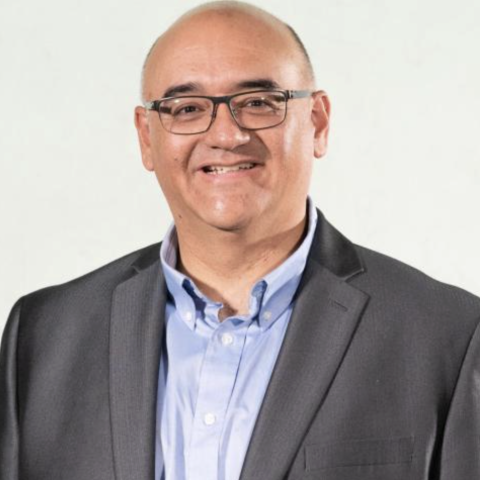
Zhiqun Lin

Zhiqun Lin's profile picture
zhiqun.lin@mse.gatech.edu

Zhiqun Lin is currently Professor of Materials Science and Engineering at the Georgia Institute of Technology. His research focuses on nanostructured functional materials (NanoFM). An extensive list of materials currently under investigation in his group includes polymer-based nanocomposites, block copolymers, polymer blends, conjugated polymers, quantum dots (rods, tetrapods, wires), magnetic nanocrystals, metallic nanocrystals, semiconductor metal oxide nanocrystals, ferroelectric nanocrystals, multiferroic nanocrystals, upconversion nanocrystals, thermoelectric nancrystals, core/shell nanoparticles (nanorods), hollow nanocrystals, Janus nanocrystals, nanopores, nanotubes, hierarchically structured and assembled materials, and semiconductor organic-inorganic nanohybrids.

The goal of his research is to understand the fundamentals of these nanostructured materials. His group intends to create these nanostructures in a precisely controllable manner and to exploit the structure-property relationships in the development of multifunctional materials for potential use in energy conversion (e.g., solar cells, photocatalysis, and hydrogen generation) and storage (e.g., batteries), electronics, optics, optoelectronics, magnetic materials and devices, nanotechnology, and biotechnology.

Professor, Materials Science and Engineering
Phone
404.385.4404
Office
MOSE 3100K
Additional Research

Nanocomposites; Polymeric Composites; Polymers; Nanocrystals; Self-Assembly; Solar Cells; Batteries; Composites; Nanostructures; Electronics; Energy Storage

IRI And Role
Google Scholar
https://scholar.google.com/citations?hl=en&user=7NT8lAEAAAAJ&view_op=list_works&sortby=pubdate

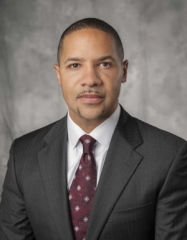
Peter Loutzenhiser

Peter Loutzenhiser's profile picture
peter.loutzenhiser@me.gatech.edu

Professor Loutzenhiser’s research centers on experimental and theoretical investigations in heat and mass transfer, multiphase fluid flow, and energy systems within the framework of solar thermochemistry. His work explores the fundamental physics of convective processes and phase change phenomena, aiming to improve efficiency and control in thermal management and energy conversion technologies. The research approach typically combines experimental methods with analytical and computational modeling to advance understanding in mechanical and thermal sciences.

Recent Publications

  • S Kaur, AR Clendenen, A Aleksandrov, BM Jones, WJ Ready, TM Orlando, PG. Loutzenhiser, “Pseudo-viscous modeling of transport in dense granular flows for thermal energy storage applications,” Acta Astronautica 239 (2026) 570-580
  • NP Nguyen, M Caulfield, G Colton, D Ranjan, KB Han, PG Loutzenhiser, “Pseudo-viscous modeling of transport in dense granular flows for thermal energy storage applications,” Powder Technology 460 (2025) 121044
  • TP Farr, BM Jones, TM Orlando, PG Loutzenhiser, “Thermal extraction of H2O(s) from lunar regolith simulant with concentrated solar irradiation: Experimental analysis,” Acta Astronautica 233 (2025) 360-368
  • S Kaur, WJ Ready, TM Orlando, PG Loutzenhiser, “Metal and metalloid production from lunar regolith simulants via carbothermal reduction: Thermodynamic and experimental analyses,” Acta Astronautica 232 (2025) 479-492
  • SY Jeong, D Ranjan, ZM Zhang, PG Loutzenhiser, R Chen, “Exploring irradiated granular flows with rapid heating for concentrated solar thermal energy collection and storage” iScience 28 (2025) 1-9
Professor, Woodruff School of Mechanical Engineering
Interim Director of Graduate Studies, Woodruff School of Mechanical Engineering
Phone
(404) 894-3012
Additional Research

Energy Storage; Gasification; Hydrogen; Solar

University, College, and School/Department

Randall Guensler

Randall Guensler
randall.guensler@ce.gatech.edu

Randall Guensler is a Professor in the School of Civil and Environmental Engineering at the Georgia Institute of Technology. After working for the California Air Resources Board for seven years, and completing his Ph.D. in Civil Engineering at the University of California at Davis, Dr. Guensler joined Georgia Tech in 1994. During his years with the State of California, Dr. Guensler worked for four years in Compliance Assistance and for three years in the Executive Office, evaluating the design and implementation of transportation control measures by regional air quality management agencies. Since arriving at Georgia Tech, Dr. Guensler's main research focus has been the development of new monitoring and modeling tools to assess the air quality impacts of transportation policies. Dr. Guensler was the Chairman of the Transportation Research Board committee on Transportation and Air Quality from 1997 to 2002. From 1995 to 2001, Dr. Guensler served on the Environmental Protection Agency's Mobile Source Technical Advisory Subcommittee. Over the past ten years, he has served on various National Academy of Sciences committees and panels charged with the assessment of vehicle emissions impacts and identification of research needs. Dr. Guensler is the director of Commute Atlanta, a $2.3 million joint value pricing initiative sponsored by the Federal Highway Administration and Georgia Department of Transportation. Commute Atlanta includes the collection and analysis of second-by-second vehicle speed, position, and engine operating data from 470 vehicles in representative Atlanta households. The researchers have monitored more than 1.4 million vehicle trips (more than 350,000 vehicle-miles per month). In 2005, the Commute Atlanta households began participating in road pricing experiments (cent/mile pricing, as well as real-time congestion pricing). Dr. Guensler's research team is assessing consumer response to these pricing mechanisms. A secondary focus of the research is the enhancement of monitoring technologies and services to support future transportation planning, safety, and operations policy initiatives. Development of tools for data management, data analysis, and privacy protection became major research activities. Secondary research has also included analysis of speeding, journey to work route choice, trip chaining, activity-based demand, household tripmaking variability, household and vehicle range of travel, long-distance travel, freeway operations, engine load, start and soak distributions, transit bus operations, etc.

Research

Dr. Guensler's research focuses on transportation systems analysis, travel behavior modeling, and sustainable transportation strategies. His work involves the development and application of data-driven methodologies to understand and improve mobility, traffic operations, and environmental impacts of transportation networks. He investigates the integration of emerging transportation technologies and policies to enhance efficiency and sustainability in urban and regional transportation systems. His research actively involves collaboration with students at both undergraduate and graduate levels.

Education

Ph.D., Civil Engineering, Transportation

University of California, Davis

1993

M.S., Civil/Environmental Engineering

University of California, Davis

1989  

B.S., Individualized Engineering (Civil Engineering, Urban Planning, Environ. Studies)

University of California, Davis

1985


Teaching

Dr. Guensler's teaching interests encompass transportation engineering and planning, with an emphasis on traffic operations, transportation systems analysis, and energy/emissions modeling. He engages both undergraduate and graduate students in foundational and advanced courses that address transportation infrastructure, travel behavior, and the societal impacts of transportation technologies. Professor Guensler also integrates quantitative methods and policy considerations into his instruction to prepare students for multidisciplinary challenges in civil engineering.

Publications

  1. Lu, H., D. Kim, H. Liu, T. Xia, W. Reichard, M.O. Rodgers, R. Guensler (2024). Sensitivity of AERMOD (v21112) RLINEXT Dispersion Model Outputs by Source Type to Variability in Single Noise Barrier Height and Separation Distance. Atmospheric Pollution Research. https://doi.org/10.1016/j.apr.2024.102318. December 2024.
  2. Passmore, R., K.E. Watkins, and R. Guensler (2024). Using Shortest Path Routing to Assess Cycling Networks. https://doi.org/10.1016/j.jtrangeo.2024.103864. Journal of Transport Geography. Volume 117. May 2024.
  3. Lu, H., and R. Guensler (2024). MOVES-Matrix 3.0: On-Road Energy and Emission Modeling with High-Performance Supercomputing. Research Report from the National Center for Sustainable Transportation. October 2024.
  4. Lu, H, D Hunsaker, Z Liu, A Puppala, M McGurk, A Guin, R Guensler, Vehicle Occupancy, Vehicle Throughput, and Person Throughput Assessment of Atlanta’s HOV Managed Lane Facilities, 2025
  5. Xu, X, HC Yang, H Laarabi, C Poliziani, A Birky, K Jeong, H Lu, ..., Improving commercial truck fleet composition in emission modeling using 2021 US VIUS data, International Journal of Sustainable Transportation 19 (12), 1162-1180, 2025
Professor, School of Civil and Environmental Engineering
Phone
(404) 894-0405
Additional Research

Electric Vehicles; Smart Infrastructure

University, College, and School/Department

Andy Sun

Andy Sun's profile picture
andy.sun@isye.gatech.edu

Andy Sun is an Affiliate Associate Professor in the H. Milton Stewart School of Industrial and Systems Engineering at Georgia Tech.

Dr. Sun has a wide range of interests in both theory and applications of deterministic optimization and optimization under uncertainty.

  • On the deterministic side, Dr. Sun's recent research has focused on solving nonconvex optimization problems with a network structure, e.g. optimizing network flows with a nonconvex flow law, nonconvex quadratic programming on a graph, consensus optimization, and market matching. Dr. Sun has also been working on developing distributed algorithms for solving these nonconvex problems with convergence guarantees. Dr. Sun is also very interested in the problem of certifying the existence and uniqueness of solutions of polynomial systems with network structures using complex analysis and algebraic geometric methods. Dr. Sun has recently been interested in optimization with dynamical constraints, again with connection to network flow problems, where the flows are described by ODEs or PDEs.
  • On the uncertainty side, Dr. Sun has developed the first efficient algorithm for solving two-stage robust optimization problems that are much faster than Benders decomposition, cutting plane methods for multistage robust linear optimization much scalable than duality approach, models for decision-dependent uncertainty, and recently a fast exact algorithm (SDDiP) for multistage stochastic integer programming. His team is working toward developing efficient algorithms for multistage robust and stochastic programs with integer decisions.
  • On the application side, Dr. Sun has extensively worked on core optimization problems for electric power system operations and planning, and collaborated with major utility companies and system operators in the US. Dr. Sun's work on robust optimization for the Unit Commitment problem and strong convexification for optimal power flow problems have attracted substantial interests and follow-up research both in industry and academia.

Dr. Sun got his undergraduate degree from Tsinghua University in Beijing (major in Electronic Engineering), master degree in Media Arts and Sciences from MIT (working on analog computation and analog integrated circuit design), and doctoral degree in Operations Research from MIT. After PhD, Dr. Sun did a one-year postdoc at the IBM T. J. Watson Research Center in Yorktown Heights, NY.

Awards and Honors

  • Student Award: Alvaro Lorca, INFORMS George B. Dantzig Dissertation Award, Finalist 2017
  • INFORMS Energy, Natural Resources, and Environment (ENRE) Best Paper in Energy, First Place 2017
  • INFORMS Energy, Natural Resources, and Environment (ENRE) Best Paper in Energy, Second Place 2016
  • INFORMS Junior Faculty Interests Group (JFIG) Paper Competition, 3rd Place. 2014
  • Student Award: Hongfan Chen, INFORMS Undergraduate Research Award, First Place 2014
Anderson-Interface Early Career Professor
Associate Professor
Phone
(404) 385-7571
Additional Research

Electrical Grid

Steven Biegalski

Steven Biegalski's profile picture
steven.biegalski@me.gatech.edu

Steven Biegalski is the Chair of Nuclear and Radiological Engineering and Medical Physics Program at Georgia Institute of Technology. He has three degrees in nuclear engineering from University of Maryland, University of Florida, and University of Illinois, respectively. Early in his career Dr. Biegalski was the Director of Radionuclide Operations at the Center for Monitoring Research. In this position Dr. Biegalski led international efforts to develop and implement radionuclide effluent monitoring technologies. This work supported both US national capabilities and international treaties. Dr. Biegalski was a faculty member at The University of Texas at Austin for 15 years and held the position of Reactor Director for The University of Texas at Austin TRIGA reactor for over a decade. He has advised 25 Ph.D. students to graduation and holds Professional Engineering licenses in the states of Texas and Virginia.


Program Chair, Nuclear and Radiological Engineering and Medical Physics
Phone
(404) 894-3718
Additional Research

Nuclear

University, College, and School/Department

Henry La Pierre

Henry La Pierre's profile picture
la_pierre@chemistry.gatech.edu
Professor, School of Chemistry & Biochemistry
SEI Lead: Nuclear Initiative
Phone
(404) 385-3258
Additional Research

Nuclear

Santiago Grijalva

Santiago Grijalva's profile picture
sgrijalva@ece.gatech.edu

Dr. Grijalva joined the Georgia Institute of Technology in the summer of 2009 as Associate Professor of Electrical and Computer Engineering. He is the Director of the Advanced Computational Electricity Systems (ACES) Laboratory, where he conducts research on real-time power system control, informatics, and economics, and renewable energy integration in power. From 2012-2015, Dr. Grijalva served as the Strategic Energy Institute (SEI) Associate Director for Electricity Systems, responsible for coordinating large efforts on electricity research and policy at Georgia Tech. Dr. Grijalva received the Electrical Engineer degree from EPN-Ecuador in 1994, the M.S. Certificate in Information Systems from ESPE-Ecuador in 1997, and the M.S. and Ph.D. degrees in Electrical Engineering from the University of Illinois at Urbana-Champaign in 1999 and 2002, respectively. He was a post-doctoral fellow in Power and Energy Systems at the University of Illinois from 2003 to 2004. From 1995 to 1997, he was with the Ecuadorian National Center for Energy Control (CENACE) as engineer and manager of the Real-Time EMS Software Department. From 2002 to 2009, he was with PowerWorld Corporation as a senior software architect and developer of innovative real-time and optimization applications used today by utilities, control centers, and universities in more than 60 countries. Dr. Grijalva is a leading researcher on ultra-reliable architectures for critical energy infrastructures. He has pioneered work on de-centralized and autonomous power system control, renewable energy integration in power, and unified network models and applications. He is currently the principal investigator of various future electricity grid research projects for the US Department of Energy, ARPA-E, EPRI, PSERC as well as other Government organizations, research consortia, and industrial sponsors. Research interests: Power system and smart grid computation De-centralized and autonomous power control architectures Ultra-reliable electricity internetworks Seamless integration of large-scale renewable energy Electricity markets design and power system economics

Georgia Power Distinguished Professor, School of Electrical and Computer Engineering
Phone
(404) 894-2974
Office
VL E284
Additional Research
  • AI for Power Generation
  • Electrical Grid
  • Energy Storage
  • System Design & Optimization

Christine Conwell

Christine Conwell's profile picture
cconwell@gatech.edu

A principal research scientist, Christine Conwell serves as the director of planning and operations since 2020 and served as the interim executive director of the Strategic Energy Institute (SEI) between September 2024 to January 2026. At SEI, Conwell oversees strategic and annual planning within SEI and partners with campus researchers and units to create and execute strategic programs and events. Most recently, she led the development of a new five-year action plan and launched a signature initiative to build energy-focused research partnerships with historically Black colleges and universities and minority-serving institutions.  

Before her role at SEI, Conwell was managing director of the $40 million NSF-NASA Center for Chemical Evolution (CCE) in the School of Chemistry and Biochemistry, where she oversaw daily operations, fostered collaborations between 12 universities and other partners, and developed outreach and educational programs. Annually, she worked with more than 80 faculty, postdoctoral researchers, and students and advised on key opportunities to maximize the center's impact. She served as a key leader within CCE’s management team and, in 2020, she was awarded Georgia Tech’s prestigious Outstanding Achievement in the Research Enterprise Award for her leadership.

Conwell holds a B.S. in molecular biology and chemistry from Westminster College in Pennsylvania and a Ph.D. in biochemistry from Georgia Tech. She has authored several peer-reviewed manuscripts, book chapters, and grants on her research in DNA biophysics and non-viral gene delivery, and was a postdoctoral recipient of the NIH Ruth Kirschstein National Research Service Award. During her time at Georgia Tech, Conwell has served as a member of the Research Faculty Senate and the Faculty Executive Board, and she was selected as a member of the fifth Leading Women at Georgia Tech cohort.

Director of Planning and Operations, Strategic Energy Institute
Principal Research Scientist
Additional Research

Oil/Gas

IRI And Role
University, College, and School/Department

Thomas Fuller

Thomas Fuller's profile picture
tom.fuller@chbe.gatech.edu

Tom Fuller is Professor of Chemical Engineering at the Georgia Tech. Dr. Fuller received a BS from the University of Utah in Chemical Engineering in 1982. Dr. Fuller then served for five years in the U.S. Navy working as a Nuclear Engineer. In 1992 he obtained a Ph.D. from UC, Berkeley also in Chemical Engineering. 

Subsequently, Dr. Fuller developed advanced lithium batteries while working as a postdoctoral fellow at Lawrence Berkeley National Laboratory. He then moved to United Technologies. He was responsible for technology development, design, assembly, and test of cell stacks for UTC Fuel Cells. 

His research group at Georgia Tech is focused on durability challenges for electrochemical systems. For the last eight years Dr. Fuller has been a Technical Editor for the Journal of the Electrochemical Society. In 2009 Dr. Fuller was named a Fellow of the Electrochemical Society.

Professor, School of Chemical and Biomolecular Engineering
Phone
(404) 894-2898
Additional Research

Electric Vehicles; Energy Storage; Hydrogen; Modeling; Materials Failure and Reliability; Energy Conversion; Energy Storage; Batteries; fuel cells

University, College, and School/Department
Google Scholar
https://scholar.google.com/citations?hl=en&user=I1RqBRoAAAAJ&view_op=list_works&sortby=pubdate

Mitchell Walker II

Mitchell Walker II's profile picture
mitchell.walker@ae.gatech.edu

Dr. Walker's primary research interests lie in electric propulsion, plasma physics, and hypersonic aerodynamics/plasma interaction. He has extensive design and testing experience with Hall thrusters and ion engines. Dr. Walker has performed seminal work in Hall thruster clustering, vacuum chamber facility effects, plasma-material interactions, and electron emission from carbon nanotubes. His current research activities involve both theoretical and experimental work in advanced spacecraft propulsion systems, diagnostics (including THz time-domain spectroscopy and Thomson scattering), plasma physics, helicon plasma sources, magnetoplasmadynamic thrusters, and pulsed inductive thrusters. Dr. Walker also teaches the undergraduate Jet & Rocket Propulsion course, as well as the graduate level Rocket Propulsion, Electric Propulsion, and Gasdynamics courses.

Professor, Guggenheim School of Aerospace Engineering
William R.T. Oakes, Jr. School Chair and Professor
Phone
404-385-2757
Office
Tech Tower 307
Additional Research

Energy Harvesting; Thermal Systems