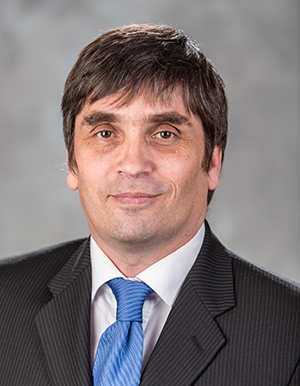
Sheldon Jeter

Sheldon Jeter's profile picture
sheldon.jeter@me.gatech.edu

Dr. Jeter's research background includes systems and theoretical thermo-dynamics, and heat and mass transfer, thermal and fluid energy systems, engineering education, and advanced engineering thermodynamics. He began at Tech in 1978 as a Research Engineer.

Research

Dr. Jeter's research interests include both basic and applied research. His basic research is focused on two-phase heat and mass transfer, such as the experimental investigation of heat transfer to boiling liquids, whereas his theoretical basic research includes work on the thermodynamics of mixtures and radiation.

Dr. Jeter's applied research is largely devoted to improving the performance of existing energy systems and developing innovative energy systems, particularly fluid and thermal energy systems.

Distinctions & Awards

  • Registered Professional Engineer in Georgia

Patents

  • Electrode Arrangement for Electrohydrodynamic Enhancement of Heat and Mass Transfer, with S.I. Abdel-Khalik, U.S. Patent No. 6,374,909, April 23, 2002.
  • A Film Pump for Applying a Monolayer Film Over Water Surfaces, U. S. Patent No. 5,558,845, with M. T. Pauken and S. I. Abdel-Khalik, October 1996.
  • Loop Timing Chain, U. S. Patent 4,027,792, June 7, 1977
  • Tufting Needle, U. S. Patent 4,015551, April 5, 1977

Representative Publications

  • F. F. Abedelall, et al. 2005. Pressure Drop Caused by Abrupt Flow Area Changes in Small Channels. Experimental Thermal and Fluid Science 29, 425-434.
  • S. M. Jeter and Hany A. M. Al-Ansary. 2004. Numerical and Experimental Analysis of Single-Phase and Two-Phase Flow in Ejectors. The International Journal of HVAC Research 10(4), 521-538.
  • S. M. Jeter, C. C. Pascual and S. I. Abdel-Khalik. 2002. Visualization of Boiling Bubble Dynamics Using a Flat Uniformly Heated Transparent Surface. International Journal of Heat and Mass Transfer 45, 691-696.
  • R. M. Stoddard, et al. 2002. Onset of Flow Instability and Critical Heat Flux in Thin Horizontal Annuli. Experimental Thermal and Fluid Sciences 26, 1-14.
  • T. M. Remley, et al. 2001. Validation of EHD-Enhanced Nucleate Boiling Correlations. ASHRAE Transactions 107, 326-336.
Associate Professor, Woodruff School of Mechanical Engineering
Phone
(404) 894-3211
Additional Research

Energy Storage; Solar; Thermal Systems

University, College, and School/Department

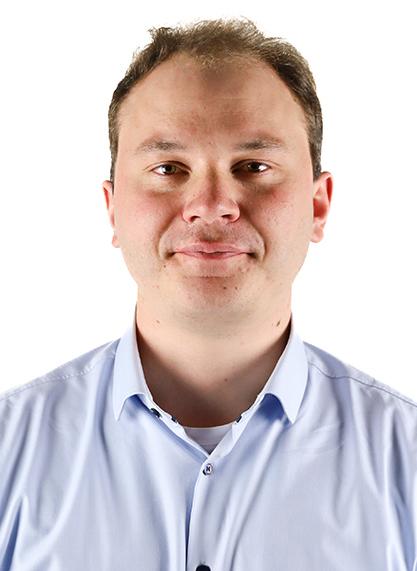
Wenting Sun

Wenting  Sun's profile picture
wenting.sun@aerospace.gatech.edu

Education

  • B.E., Engineering Physics, 2005, Tsinghua University
  • M.E., Engineering Physics, 2007, Tsinghua University
  • Ph.D., Mechanical and Aerospace Engineering, 2013, Princeton University

Background

Prof. Wenting Sun received his B.E. and M.E. degrees from Tsinghua University, Beijing in 2005 and 2007, respectively, and his Ph.D. degree from Princeton University in 2013. He joined Georgia Tech in July 2013. Dr. Sun’s research spans on combustion simulation, combustion kinetics, and plasma/ozone assisted combustion. He develops new numerical algorithms to accelerate large scale CFD simulation using predictive kinetic models. His work on plasma/ozone assisted combustion is to induce plasma generated species into combustion system to enable combustion at extreme conditions. Dr. Sun has developed a high pressure shock tube with unique capability allowing investigation of combustion kinetics for future power generation systems.

Research

  • Dr. Sun’s research spans on combustion simulation, combustion kinetics of conventional and alternative fuels, and new combustion technologies to enhance combustion process. Key to his research is developing new numerical algorithms to accelerate large scale CFD simulation using predictive kinetic models. His work on plasma/ozone assisted combustion is to induce plasma generated species into combustion system to enable combustion at extreme conditions, such as those in supersonic combustion Ramjet engines hypersonic propulsion. Dr. Sun has developed a high pressure shock tube with unique capability allowing investigation of combustion kinetics at supercritical carbon dioxide conditions for the next generation of power generation systems. The new supercritical carbon dioxide oxy-combustion power generation system features high efficiency and almost 100% carbon capture, which will change the landscape of power generation. He also developed a novel super rapid combustion machine to study fundamental turbulence/autoignition interaction to improve combustion models.

(1) Kinetic Model Reduction and Dynamic Adaptive Kinetics for Turbulent Combustion

High-fidelity simulation of combustion systems is a critical element for combustor and engine design. However, to model a combustion system, a chemical kinetic model including hundreds, even thousands, of species and reactions are needed to describe the fuel oxidation and heat release process. For each species in the kinetic model, one ordinary differential equation needs to be solved. The complicated kinetic model makes high-fidelity simulation very challenging and even prohibited because of the limitation of the needed computation power. For example, for large-scale simulations such as LES or DNS, using a predictive detailed kinetic model is prohibited. Thus, there exists a gap between the development of a detailed, predictive combustion kinetic model and high-fidelity large-scale simulation. We work on developing new algorithms to enable and accelerate large scale numerical simulations on combustion with predictive kinetic models. Recently, we  developed a new algorithm GPS (Global Pathway Selection) methond for kinetic model reduction to decrease the number of species in the detailed kinetic model efficiently from hundreds/thousands to tens through the analysis of element flux. Therefore, the reduced predictive kinetic models can be employed by LES or DNS for high-fidelity simulation. This algorithm constructs element flux graphs for considered elements, for example, C, O, and H for hydrocarbon combustion systems. Based on the constructed element flux graphs, important species which transfer significant element flux can be selected in the kinetic model. The global pathways for selected species can be identified by searching the shortest paths with the constructed element flux graphs. In this way, a reduced kinetic model can be constructed for use in complex CFD simulation. For given accuracy, the smaller the number of species needed in the reduced model, the more efficient the reduced kinetic model is, with the added benefit of considerably shorter simulation time. The GPS software and source code can be download here.

To further reduce the computation time of large-scale high-fidelity simulation, we developed a new numerical framework for DNS of turbulent combustion. The principle behind this multidisciplinary work is that different regions in the computation domain have different thermodynamic states; so only a small portion of species in the kinetic model needed to be calculated in the simulation. Therefore, different regions at different times can employ different reduced kinetic models generated on-the-fly with a much smaller number of species to further accelerate the simulation. The new framework was demonstrated using a canonical turbulent premixed flame employing a real jet fuel kinetic model (see plots blow). With high accuracy, the new numerical framework provides a significant speed-up of computation and the total CPU time is reduced by a factor of approximately 20. This new numerical framework enabled DNS with predictive kinetic models with good accuracy and parallel scalability.

The new regime-independent framework for 3D DNS of turbulent combustion with detailed kinetics is developed by incorporating on-the-fly adaptive kinetics (OAK), correlated transport (CoTran) techniques, and an efficient point-implicit ODE solver (ODEPIM) into a conventional DNS platform. All three methods are modified and optimized to adapt to 3D turbulent combustion and parallel high performance computing (HPC). A canonical turbulent premixed flame configuration corresponding to the thin reaction-zone regime is considered, where an initially planar premixed flame front interacts with a decaying isotropic turbulence. The computational domain consists of a cube with length 0.015 m. With the new numerical frame work, calculation of chemistry can be accelerated 46 times, calculation of transport can be accelerated 72 times, and overall acceleration of calculation is 20 times. See our publication here.

With the new capability enabled by the above-mentioned new numerical frame work, we further investigated the sensitivity of DNS predictions to chemical kinetic models. DNS of a canonical temporally evolving turbulent non-premixed flame was conducted using two different kinetic models. This simulation would not have been possible without the newly developed numerical framework discussed above. It was found that at laminar conditions, the two kinetic models provided very close predictions on combustion properties such as autoignition delays, flame speeds, and extinction strain rates. However, at turbulent conditions, different predictions were observed. The temperature predicted by these two kinetic models can vary by as much as 100 K. Detailed systematic analysis revealed that the sensitivity to the chemical kinetic models was magnified by the effects of unsteadiness and turbulence. This study has resolved an important question faced by the combustion community for a long time, that a different selection of kinetic models affects the prediction of DNS of turbulent combustion even though the kinetic models behave similarly at laminar conditions. See our related publication here.

(2) Ozone Assisted Combustion

Plasma/ozone-assisted combustion is a promising technique to improve engine performance, increase lean burn flame stability, reduce emissions, and enhance low temperature fuel oxidation and processing. Plasma/ozone-assisted combustion takes advantage of the dramatically different kinetics between plasma/ozone and combustion to enhance and control the combustion process. We work on using plasma generated species to enhance and control combustion process. One ongoing project is to study the effect of ozone addition on combustion.

One well known reaction pathway to enhance combustion by ozone addition through ozone decomposition (O3àO2+O). Different from conventional understanding in which ozone was known to enhance flame speeds owing to its unique capability to release atomic oxygen (O3àO+O2)  at elevated temperature conditions, We also discovered that ozone (through ozonolysis reactions) can induce explosive reactions at extremely low temperature conditions (even at room temperature) in combustion systems with unsaturated hydrocarbons, such as ethylene. It is common sense that combustion only occurs at high temperature conditions and can only be initiated by ignitors producing a high temperature environment. However, by taking advantage of ozonolysis reactions,(e.g., C2H4+O3àCH2O+H2+CO2, typically studied in atmosphere chemistry community regarding ozone layer depletion and pollution) autoignition was demonstrated at room temperature conditions. A new autoignition-assisted flame stabilization mechanism was also reported by us. Our work on ozone-enhanced combustion bridges the study in the atmosphere chemistry community and in the combustion community. It will provide a solution to enable low-temperature combustion and combustion at near limiting conditions for the development of advanced engines. This research also has the potential to develop a new aerated fuel injection technique and a fuel coking removal technique, therefore changing the cycle efficiency.

In this experiment, ozone is doped into synthetic air and ethylene is used as fuel to create autoigniting environment in diffusion jet flame. the flame dynamics of autoigniting flame is investigated. Figure below shows high speed images right after the fuel jet was turned on. Ozonolysis reactions between O3 and C2H4 produce large amount of CH2O and release heat. The chemiluminescence measurement indicates the formation of a cloud of CH2O, then an auignition kernel occured inside the CH2O cloud. In such a environment, flame could propagate orders of magnitude faster than its corresponding laminar flame speed.

(3) High Pressure Combustion Kinetics

Recently, we developed a new and unique high pressure shock tube to study high pressure combustion kinetics. It enables measurement of critical fundamental combustion parameters in a completely new pressure region, especially those associated with combustion at a supercritical carbon dioxide (sCO2) condition suitable for a future power generation system. This is a regime where combustion kinetics has never been explored before. The sCO2 power cycle has higher efficiency and allows almost 100% carbon capture with no NOx emission (Zero Carbon Natural Gas, selected as 10 breakthroughs technologies in 2018 by MIT Technology Review). Once successful, this technique will potentially change the landscape of ground power generation. However, the sCO2 power cycle requires the combustor to run in the pressure range of 100 atm to 300 atm with high CO2 concentration, which is completely different from the operating regime of conventional gas turbines. For the first time in this field, we obtained autoignition delay of CH4/O2/CO2 autoignition delays at 100±7 atm at the sCO2 condition as shown in the plot below. Comparison with selected kinetic models shows that GRI 3.0 which is widely used in industries has been proven to have large deviation from experiments at sCO2 condition.

(4) Combustion Instability Control Using Plasma

In this project, we use non-equilibrium nanosecond pulsed plasma to control combustion instability. At a condition close to lean blowoff, flame starts to oscillate (a) and finally blows off with further decrease of equivalence ratio. With plasma activation, the lean blowoff limits can be significantly extended and flame can be stablized without osscilation (a'). At certain conditions, plasma also change the morphology of flames (b) and (b').

Distinctions & Awards

Bernard Lewis Fellowship, the Combustion Institute, 2012

Distinguished Paper, the 33rd International Symposium on Combustion, 2011

Selected Publications

[1]. W. Sun, Y. Ju, “Non-equilibrium plasma-assisted combustion: A review of recent progress” 2013 Journal of Plasma and Fusion Research, 89(4), 209-219 (invited paper)

[2]. B. Brumfield, W. Sun, Y. Ju, G. Wysocki “Detection of HO2 by Faraday rotation spectroscopy” 2013 J. Phys. Chem. Lett. 4(6), 872-876

[3]. W. Sun, S. H. Won, T. Ombrello, C. Carter, Y. Ju, “Direct ignition and the S-curve transition by in situ nano-second pulsed discharge in methane/oxygen/helium counterflow flame” 2013 Proceedings of the Combustion Institute, 34, 847-855

[4]. H. Guo, W. Sun, F. M. Haas, T. Farouk, F. Dryer, Y. Ju, “Measurements of H2O2 in low temperature dimethyl ether oxidation” 2013 Proceedings of the Combustion Institute, 34, 573-581

[5]. W. Sun, M. Uddi, S. H. Won, T. Ombrello, C. Carter, Y. Ju, “Kinetic effects of non-equilibrium plasma-assisted methane oxidization on diffusion flame extinction limits” 2012 Combustion and Flame, 159(1) 221-229

Professor, Guggenheim School of Aerospace Engineering
Phone
(404) 894-0524
Additional Research

Combustion

Zhuomin Zhang

Zhuomin Zhang
zhuomin.zhang@me.gatech.edu

Teaching Interests

Professor Zhang’s teaching interests include core mechanical engineering subjects with an emphasis on thermal sciences, energy conversion, and heat transfer. His instruction spans undergraduate and graduate levels, aiming to build foundational knowledge and practical skills. Professor Zhang integrates current research insights into his teaching to enhance student learning and engagement in topics related to thermal management and energy systems.

Research Interests

Professor Zhang’s research focuses on thermal sciences with an emphasis on heat transfer, energy conversion, and sustainable energy technologies. His work explores microscale and nanoscale heat transfer phenomena, thermal management in energy systems, and the development of materials and methods for improved energy efficiency. The research program actively involves both graduate and undergraduate students, fostering multidisciplinary approaches to address challenges in thermal engineering.

Recent Publications

  • W Sun, ZM Zhang, Z Jacob, Superconducting Coherence Peak in Near-Field Radiative Heat Transfer, arXiv preprint arXiv:2503.06391, 2025
  • SY Jeong, D Ranjan, ZM Zhang, PG Loutzenhiser, Exploring irradiated granular flows with rapid heating for concentrated solar thermal energy collection and storage, iScience 28 (4), 2025
  • ZM Zhang, P Bohm, AK Menon, Entropic analysis of the maximum output power of thermoradiative cells, ASME Journal of Heat and Mass Transfer 147 (5), 052801, 2025
  • ANMF Islam, SM Ghiaasiaan, ZM Zhang, Thermodynamic Limit of Electroluminescent Refrigeration Devices, Entropy 27 (5), 496, 2025
  • P Bohm, AK Menon, ZM Zhang, Fundamental advantages of multijunction thermoradiative cells, Journal of Applied Physics 137 (22), 2025
Professor, Woodruff School of Mechanical Engineering
Phone
(404) 385-4225
Additional Research

Thermal Systems

Farzad Rahnema

Farzad Rahnema's profile picture
farzad.rahnema@nre.gatech.edu

Dr. Farzad Rahnema is a Georgia Power Company Distinguished Professor of Nuclear Engineering and Director of the Computational Reactor and Medical Physics (CRMP) Laboratory at Georgia Institute of Technology. Prior to joining Georgia Tech, he was at General Electric Nuclear Energy for 11 years. His responsibilities included GE’s 3-D Core Simulator PANACEA used for reactor core design and as the engine for the 3D MONICORE system for monitoring operating Boiling Water Reactors. He led the development of 3 versions (v.8-10) of the simulator. He has published over 240 peer reviewed technical articles.

He is a Fellow of the American Nuclear Society (ANS), Editor-Designate of the Nuclear Science and Engineering journal, a member of the Editorial Advisory Board of Annals of Nuclear Energy and Nuclear Technology, and a member of the External Advisory Board of the Ohio State University Nuclear Engineering Program.

He was the recipient of the 2019 ANS Gerald C. Pomraning Memorial Award for outstanding contributions toward the advancement of the fields of mathematics and computation in support of advancing the understanding of these topics of interest to the American Nuclear Society (ANS) membership.

He served as the Chair of the Georgia Tech Nuclear & Radiological Engineering and Medical Physics (NRE/MP) Programs (7/2002-6/2016) and Chair of the Honors and Award Committee of the ANS Mathematics and Computation Division (MCD). He also served as the Chair of the MCD (twice) and the Reactor Physics Division (RPD). His principal research interest is in the areas of theoretical and computational radiation transport and reactor physics with an emphasis on resolving the grand challenges and current major issues in high fidelity modeling and simulation (M&S) of nuclear systems.

Research

  • Nuclear and Radiological Engineering/Medical Physics; Perturbation and variational methods, theoretical and computational radiation transport and reactor physics methods and code development with applications to reactor core analysis, nuclear security and detection, and radiotherapy calculations

Distinctions

  • Editor, Nuclear Science and Engineering journal
  • Editorial Advisory Board member, Annals of Nuclear Energy and Nuclear Technology journals
  • Guest Editor/Co-guest Editor, Annals of Nuclear Energy, Nuclear Technology, and Transport Theory and Statistical Physics journals
  • American Nuclear Society
  • Fellow, 2003
  • Mathematics and Computation Division Chair, 2010-2011 and 1999-2000
  • Reactor Physic Division Chair, 2007-2008
  • Member, External Advisory Board of the Ohio State University Nuclear Engineering Program
  • Southeastern Universities Nuclear Research Institute for Science and Education (SUNRISE) Founding Chair, 2006-2010
  • 16th International Conference on Transport Theory Organizing Committee Chair, 1999


Awards

  • Recipient of the 2019 ANS Gerald C. Pomraning Memorial Award for outstanding contributions toward the advancement of the fields of mathematics and computation in support of advancing the understanding of these topics of interest to the American Nuclear Society (ANS) membership.

Patent

  • Boundary Condition Adjustment Methods and Systems, U. S. Patent 7,676,015B2, with Ben Forget, March 9, 2010.
     

Representative Publications

  • Kyle Remley and Farzad Rahnema, “Development and Assessment of a Parallel Computing Implementation of the Coarse Mesh Radiation Transport (COMET) Method,”Ann. Nucl. Energy, 114, 288-300 (2018).
  • Farzad Rahnema and Dingkang Zhang, “Continuous Energy Coarse Mesh Transport (COMET) Method,” Ann. Nucl. Energy, 115, 601-610 (2018).
  • Dingkang Zhang and Farzad Rahnema, “A Stylized 3D Advanced High Temperature Reactor (AHTR) Benchmark Problem,” Ann. Nucl. Energy, 120, 178-185 (2018).
  • Dingkang Zhang and Farzad Rahnema, “Continuous-Energy COMET Solution to the Stylized AHTR Benchmark Problem,” Ann. Nucl. Energy, 121 ,284-294 (2018).
  • Farzad Rahnema, Xiaodong Sun, Bojan Petrovic, David Diamond, Stephen Bajorek, Yujun Guo, Gradon Yoder, Dingkang Zhang, and Paul Burke, “Phenomena identification and categorization by the required level of multiphysics coupling in FHR modeling and simulation,” Ann. Nucl. Energy, 121, 540-551 (2018).
  • Farzad Rahnema, David Diamond, Dumitru Serghiuta, and Paul Burke, “Phenomena, Gaps, and Issues for Neutronics Modeling and Simulation of FHRs,” Ann. Nucl. Energy, 123 ,172-179 (2019).
Georgia Power Company Distinguished Professor, Woodruff School of Mechanical Engineering
Director, Computational Reactor and Medical Physics (CRMP) Laboratory
Phone
(404) 894-3731
Additional Research

Nuclear

University, College, and School/Department

S. Mostafa Ghiaasiaan

S. Mostafa Ghiaasiaan's profile picture
mghiaasiaan@me.gatech.edu

Education

  • Ph.D., University of California, Los Angeles, 1983
  • M.Sc., Imperial College of Science, Technology and Medicine, University of London, England, 1978
  • B.S., Aryamehr (Sharif) University of Technology, Tehran, Iran, 1977

Teaching Interests

Professor Ghiaasiaan’s teaching interests include undergraduate and graduate courses in thermodynamics, heat transfer, fluid mechanics, and multiphase flow. He emphasizes fundamental principles and their applications to energy systems, aiming to develop students’ analytical and problem-solving skills. His instruction integrates experimental, computational, and theoretical approaches, involving both undergraduate and graduate students in research-related activities.

Research Interests

Professor Ghiaasiaan’s research focuses on multiphase flow and heat transfer phenomena in energy systems and thermal management. His work addresses experimental and theoretical studies of cryogenics and cryocoolers, two-phase flows, boiling, condensation, and miniature scale transport processes, with applications in power generation, refrigeration, and thermal systems design. He actively involves students in advancing understanding of complex flow and heat transfer mechanisms through innovative experimental methods and modeling.

Recent Publications

  • Majumdar, A., LeClair, A, Hartwig, J., Ghiaasiaan, S.M. Two-dimensional network flow modeling of no-vent tank filling of a cryogenic tank with thermodynamic vent system assisted injector, Cryogenics. 146, 104004, 2025.
  • Ghavami, A., Ghiaasiaan, S.M.  Thermal conductivity of some ceramic materials at cryogenic temperature, ASME J. Heat Transfer, 145, 043501, 2023. 
  • Perrella, M., Ghiaasiaan, S.M. Hydrodynamic resistance parameters of regenerator filler materials at cryogenic temperatures, Cryogenics, 117, 103320, 2021.
  • Baldwin, M.R., Ghavami, A., Ghiaasiaan, S.M., Majumdar, A.A., Pool boiling in liquid hydrogen, liquid methane and liquid oxygen: a review of available data and predictive tools, Cryogenics, 115, 103240, 2021.
  • Baldwin, M.R., Ghavami, A., Ghiaasiaan, S.M., Majumdar, A.A., Flow boiling in liquid hydrogen, liquid methane and liquid oxygen: a review of available data and predictive tools, Cryogenics, 116, 103298, 2021.
Professor, Woodruff School of Mechanical Engineering
Phone
(404) 894-3746
Additional Research

Nuclear; Thermal Systems

University, College, and School/Department

Martin Maldovan

Martin Maldovan's profile picture
maldovan@gatech.edu

Martin Maldovan is an associate professor in the School of Chemical and Biomolecular Engineering and the School of Physics at the Georgia Institute of Technology. He received his Ph.D. at the Massachusetts Institute of Technology (MIT) in the Department of Materials Science and Engineering. He was also a postdoctoral associate and research scientist at MIT.  Maldovan’s group is developing novel heat and mass transport processes as an enabling technology for energy converter materials and devices, micro and nanoelectronics, chemical and biological separations, and catalysis. His group focuses on designing, predicting, and controlling heat and mass transfer in rationally engineered systems with length scales ranging from macro to nano, to advance new paradigms for energy saving materials and devices.  

Associate Professor, School of Chemical and Biomolecular Engineering and School of Physics
Phone
404.385.3753
Office
ES&T L1226
Additional Research

Thermal Management; Energy Storage; Energy Conversion; Thermal Systems

University, College, and School/Department
Google Scholar
https://scholar.google.com/citations?hl=en&user=kEMlX3sAAAAJ&view_op=list_works&sortby=pubdate

Johannes Milz

Johannes Milz's profile picture
johannes.milz@isye.gatech.edu

Johannes Milz is an Assistant Professor in the H. Milton Stewart School of Industrial and Systems Engineering. His research focuses on optimization under uncertainty and optimal control of uncertain systems, with a strong emphasis on sustainability applications. By addressing large-scale optimization challenges in physics-based models under uncertainty, he aims to contribute to the development of sustainable energy systems, such as renewable tidal energy farms. Dr. Milz is also dedicated to open science; he develops reproducible numerical simulations and shares them publicly, making his results accessible to a broad group of researchers and practitioners. Prior to joining ISyE, he was a postdoctoral researcher at the Technical University of Munich, where he earned his Ph.D. in Applied Mathematics in 2021.

Assistant Professor, School of Industrial Systems Engineering
Office
Groseclose 444
Additional Research

Resource assessment and design of renewable marine energy systems, especially tidal energy. 

Deepak Divan

Deepak Divan's profile picture
deepak.divan@ece.gatech.edu
Director, Intelligent Power Infrastructure Consortium
Phone
(404) 385-4036
Additional Research

Utilities; Electric Vehicles; Electrical Grid

Jorge Macedo

Jorge Macedo's profile picture
jorge.macedo@ce.gatech.edu

Jorge Macedo, Ph.D., P.E., is an Associate Professor in the School of Civil and Environmental Engineering at the Georgia Institute of Technology, where he has been a faculty member since 2018 and currently holds the Frederick Olmsted Early Career Professorship. His research focuses on extreme events engineering, with an emphasis on earthquakes, mining geotechnics, and AI-driven, physics-informed engineering to advance performance-based assessments of critical infrastructure.

His cross-disciplinary research program has been supported by the National Science Foundation (NSF), the United States Geological Survey (USGS), state agencies including the Georgia Department of Transportation (GDOT) and the Illinois Department of Transportation (IDOT), as well as industry partners. In 2022, Dr. Macedo received the prestigious NSF CAREER Award for his work at the intersection of mining geotechnics and data science. He has also received the Young Researcher Award from the International Society of Soil Mechanics and Geotechnical Engineering (ISSMGE), along with multiple research and teaching awards from Georgia Tech and other institutions. In addition to his academic work, Dr. Macedo has extensive industry experience, serving as a subject matter expert (SME) and member of International Technical Review Boards (ITRBs) for major global mining projects. He currently serves as an Associate Editor for Earthquake Spectra and the ASCE Journal of Geotechnical and Geoenvironmental Engineering (JGGE), among other professional service roles.

Research

Dr. Macedo’s research focuses on extreme events engineering, with an emphasis on earthquakes, mining geotechnics, and AI-driven, physics-informed engineering to advance performance-based assessments of critical infrastructure.

Teaching

Dr. Macedo teaches several undergraduate and graduate courses focused on geosystems, data science, and extreme events engineering. He developed and leads a data analytics course that introduces students to foundational concepts in data science and artificial intelligence. He is also a strong advocate for innovative pedagogical approaches that effectively communicate engineering concepts to non-engineering audiences.

Distinctions & Awards

  • Selected global chair for the TC221 (Tailings and Mine Waste) committee of the International Society of Soil Mechanics and Geotechnical Engineering.
  • Selected by the Frontiers in Built Environment Journal as a Rising Star in Civil and Environmental Engineering.
  • 2023 Young Researcher Award, International Society for Soil Mechanics and Geotechnical Engineering -TC203 Committee.
  • 2023 Knight Piesold Research Award
  • 2023 Georgia Tech CEE Bill Schutz Junior Faculty Teaching Award for Outstanding Teaching.
  • 2022 NSF CAREER award, National Science Foundation, United States.
  • 2022 Frederick L. Olmsted Early Career Professorship, Georgia Tech.
  • 2022 CEE Young Faculty Research Award, Georgia Tech.
  • 2021 Outstanding Reviewer, ASCE/JGGE Journal.
  • Outstanding Graduate Student Instructor Award, University of California Berkeley.
  • 2014 Excellence Award for Doctoral Studies, Peruvian Government.
  • 2014 Jane Lewis Ph.D. Fellowship, University of California Berkeley.
  • 2013 Jane Lewis M.S. Fellowship, University of California Berkeley.
  • 2007 “Eduardo de Habich” Award. Summa Cum Laude, National University of Engineering, Peru.

Publications

  1. *Macedo, J., Abrahamson, N. (2026). Magnitude thresholds to evaluate the damage from induced-seismicity earthquakes to earth dyke structures. Frontiers in Built Environment Journal, Rising Stars in Geotechnical Engineering issue. Accepted for Publication.
  2. *Macedo, J., Torres, P., Santamarina, C. (2026). On the potential of nuclear magnetic resonance for assessing water content and saturation in mine tailings. Journal of Geotechnical and Geoenvironmental Engineering (ASCE/JGGE). Accepted for publication.
  3. *Bokkisa, V., Macedo, J., Arduino, P. (2026). On the integration of an ACST-based bounding surface model. Computer and Geotechnics (COGE) International Journal. https://doi.org/10.1016/j.compgeo.2026.107911.
  4. *Arnold, C., Macedo, J., Bray, J. (2026). Insights on the cyclic response of plastic and nonplastic mine tailings. Soil Dynamics and Earthquake Engineering (SDEE) Journal. https://doi.org/10.1016/j.soildyn.2025.109814.
  5. *Arnold, C., Macedo, J., Bray, J., Moug, D., Atalay, F., Bassal, P., Liu, C., Bikçe, M., Durgunoğlu, T. (2025). Field characterization of areas in İskenderun affected by liquefaction during the 2023 Kahramanmaraş earthquake. Earthquake Spectra (EERI) journal. https://doi.org/10.1177/87552930251378227
  6. *Liu. C., Macedo, J., Abrahamson, N.,  Kottke, A. (2025). A nonergodic ground motion model for Turkiye. Bulletin of Seismological Society of America (BSSA) Journal. https://doi.org/10.1785/0120250142
  7. *Liu, C., Macedo, J., Rodriguez, A. (2025). Leveraging Physics-Informed Neural Networks in Geotechnical Earthquake Engineering: An Assessment on Seismic Site Response Analyses. Computer and Geotechnics (COGE) International Journal. https://doi.org/10.1016/j.compgeo.2025.107137
  8. *Bokkisa, V., Macedo, J. (2025). Challenges in NorSand to model CSD stress paths and proposed modifications. Canadian Geotechnical Journal. https://doi.org/10.1139/cgj-2024-0546
  9. *Bokkisa, V., Macedo, J. (2025). Influence of anisotropic consolidation on the instability of loose granular soils under undrained and drained loading. Canadian Geotechnical Journal. https://doi.org/10.1139/cgj-2023-0683.
  10. *Liu. C., Macedo, J., Abrahamson, N., Lacour, M., Gullerce, Z., Kottke, A., Ozacar, A. (2025). Modeling Path Effects Due to 3D Velocity Structure for Nonergodic Ground-Motion Models: A Case Study Using Turkish Ground-Motion Data. Bulletin of Seismological Society of America (BSSA) Journal. https://doi.org/10.1785/0120240055

Research Gate profile


Associate Professor, School of Civil and Environmental Engineering
Phone
(404) 894-3052
Additional Research

Geosystems

University, College, and School/Department

Tony Giarrusso

Tony Giarrusso's profile picture
tonyg@gatech.edu

Biography:

Tony Giarrusso is a Principal Research Scientist and Associate Director of the Center for Spatial Planning Analytics and Visualization in the College of Design at the Georgia Institute of Technology in Atlanta, Ga. His teaching, research, and consulting activities focus on GIS-based planning solutions for land conservation, coastal and marine resource management, urban planning and environmental protection. Over the past twenty-four years, Mr. Giarrusso has been Principal Investigator or Co-Principal Investigator on more than 30 research projects, with research sponsors including the National Oceanic and Atmospheric Administration (NOAA), the State of Georgia (DNR and DHR), The Nature Conservancy, The Trust for Public Land, Morehouse School of Medicine, The Diane Fossey Gorilla Fund International, and the City of Atlanta. 

Apart from his research activities, Mr. Giarrusso has been an instructor at Georgia Tech for the last twenty-one years, primarily teaching introductory GIS classes to undergraduates.

Teaching Interest:

Professor Giarrusso's teaching is focused on Geographic Information Systems (GIS), remote sensing, urban planning, and sustainable development. He primarily teaches at the undergraduate level. He is co-lead of the Rwanda Study Abroad in Sustainable Development, an embedded study abroad program offered during spring break. He also co-teaches a VIP class on Assistive Technologies in Sub-Saharan Africa.

Research Interest:

Professor Giarrusso's research interests is focused on the use of GIS and Remote Sensing as planning decision-support for local and state government, primarily focused on environmental and land use issues.

List of Recent Scholarly Work:

Recent Research Articles:

1. Alice Favero, Matthew Realff, Maria Lucas, Anthony Giarrusso, and Karl Lang (2023), Geo-Spatial Economic Assessment of the Potential Development of Bioenergy Combined with Direct Air Carbon Capture (BEDAC) in the USA.
Environmental Science & Technology 2023 57 (51), 21681-21690 https://pubs.acs.org/doi/10.1021/acs.est.3c06975

2. Evans, Kathryn A.; Giarrusso, Anthony J.; and Zaparanick, David (2023), Perpetual Protection for Atlanta’s High-Quality Forested Land in the City, Cities and the Environment (CATE): Vol. 13: Iss. 1, Article 29.

3. Fahr, S., Powell, J., Favero, A., Giarrusso, A.J., Lively, R.P. and Realff, M.J. (2022), Assessing the physical potential capacity of direct air capture with integrated supply of low-carbon energy sources. Greenhouse Gas Sci Technol, 12: 170-188. https://doi.org/10.1002/ghg.2136

4. Portela G.T., Leong T., Webster A.,Giarrusso A.J., Fridkin S., Ray S., Swerdlow D. (2021), Immergluck L. Risk factors for non-invasive (skin and soft tissue) and invasive Staphylococcus aureus infections among children and adults living in southeastern USA: a retrospective cohort study BMJ https://bmjopen.bmj.com/content/12/8/e059327.info

Recent Research Projects:

1. Georgia's Coastal Canopy - https://experience.arcgis.com/experience/a24f7f9055174d35adb15dab8116a734
2. Georgia's Changing Forest - https://experience.arcgis.com/experience/8a8fe7ff6b5d4113929d7a5f20044be6
3. Georgia Historic and Projected Land Cover Database - https://arcg.is/11bTaq
4. Thrive Regional Infrastructure Portal (TRIP) - https://trip-thrive-geohub.hub.arcgis.com/
5. Atlanta's Urban Tree Canopy - https://geospatial.gatech.edu/AtlantaUTC/
6. Georgia Wetlands Restoration Access Portal (G-WRAP) - https://geospatial.gatech.edu/G-WRAP/


Degrees with Year of Award:

Masters of City Planning (2000) -Georgia Institute of Technology    
Bachelor of Science in Biology (1993) - Georgia State University

Professor of the Practice, School of City & Regional Planning
Associate Director, Center for Georgraphic Information Systems
Director, Bachelor of Science in Urban Planning and Spatial Analytics
Phone
(404) 894-0127
Additional Research

System Design & Optimization

University, College, and School/Department