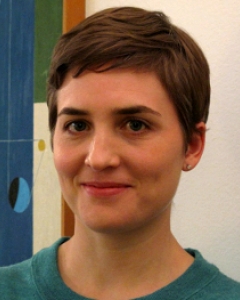
James Stroud

James Stroud's profile picture
stroud@gatech.edu

Educational Experience:
Ph.D., Ecology & Evolution, Florida International University, B.Sc. (Hons), Zoology with Conservation, University of Wales
Research Interests:
Evolutionary ecology, community ecology, species interactions, microevolution, macroevolution, herpetology, global change biology, climate change, invasive species, functional morphology


Overview:
Welcome to the Stroud Lab!

Our goal is to understand the ecological and evolutionary processes responsible for driving patterns of biodiversity across space and time. To do that, we study the evolutionary ecology of lizards: a fascinating and hyper-diverse group of organisms.

Our approach is highly multidisciplinary, integrating ecology, evolution, behavior, physiology, biomechanics, and natural history. To do this, we combine field studies in the wild with macro-ecological and evolutionary analyses.

For more information on our key research themes please take a look at our website (above; soon to be updated) and please get in contact if any of our research interests you!

Assistant Professor
Google Scholar
https://scholar.google.com/citations?user=2QdWvJ4AAAAJ&hl=en&oi=sra

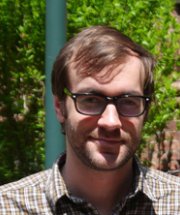
Eric Gaucher

Eric Gaucher's profile picture
eric.gaucher@biology.gatech.edu

Gaucher was guided in biochemistry by Peter Tipton and Bayesian Theory by George Smith. Gaucher subsequently earned his Ph.D. from the University of Florida under the tutelage of Steve Benner and Michael Miyamoto.[1] Gaucher received the Walter M. Fitch Award from the Society for Molecular Biology and Evolution for his graduate work.[2] He then did postdoctoral work with NASA's Astrobiology Institute in conjunction with a National Research Council Fellowship. After the two-year fellowship, Gaucher served as President of the Foundation for Applied Molecular Evolution.

Gaucher was hired as an Associate Professor by the Georgia Institute of Technology in 2008 [1][3][4] The Gaucher group conducts basic and applied research at the interface of molecular evolution and synthetic biology. As of February 2016, his h-index, as calculated by Google Scholar, is 25.[5]

Gaucher is also the founder and president of the early-stage biotechnology company General Genomics. His company exploits novel platforms to engineer proteins for the biomedical and industrial sectors.

Adjunct Associate Professor
Phone
404-385-3265
Office
EBB 5013
Additional Research
Our laboratory has diverse research interests including: evolutionary synthetic biology, molecular biology, comparative genomics, computational biology, bioinformatics, biomedicine, molecular evolution and origins of life, and evolution and engineering of protein thermostability.
Google Scholar
https://scholar.google.com/citations?user=IrX5ZzQAAAAJ&hl=en&oi=sra

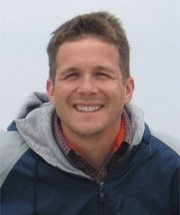
Annalise Paaby

Annalise Paaby's profile picture
paaby@gatech.edu

After studying ecology as a biology major at Swarthmore College, Annalise Paaby learned fly pushing as a technician for Steve DiNardo and then discovered evolutionary genetics as a tech for Paul Schmidt. She joined Paul’s lab as a graduate student and earned her Ph.D. from the University of Pennsylvania in 2009. In 2015, Paaby completed her postdoctoral training with Matt Rockman at New York University and began her appointment at Georgia Tech.

Assistant Professor
Phone
404-385-4588
Office
EBB 3011
Additional Research
Our lab explores major questions in evolution and quantitative genetics. We work with the nematode wormC. elegansand relatedCaenorhabditisspecies. Current projects include exploring how cryptic alleles in embryogenesis depend on genetic background, how development evolves over time, and the role of molecular mechanisms in trait determination and evolution. We are also interested in how the environment influences trait expression and imposes selection in natural populations, and are conducting field collection trips in the nearby Appalachian foothills.
Research Focus Areas
Google Scholar
https://scholar.google.com/citations?user=Ft1eQWUAAAAJ&hl=en

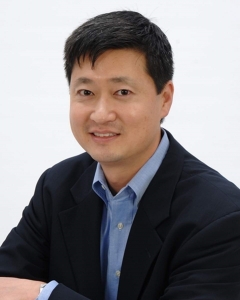
Patrick McGrath

Patrick McGrath's profile picture
patrick.mcgrath@biology.gatech.edu

Patrick McGrath's research group is interested in understanding the genetic basis of heritable behavioral variation. In the current age, it has become cheap and easy to catalog the set of genetic differences between two individuals. But which genetic differences are responsible for generating differences in innate behaviors, including liability to neurological diseases such as autism, bipolar disease, and schizophrenia? How do these causative genetic variants modify a nervous system? Besides their role in disease, genetic variation is the substrate for natural selection. To understand how behavior evolves, we must understand how it varies.

Associate Professor
Phone
404-385-0071
Office
EBB 3013
Additional Research
Mostbiological traits have a strong genetic, or heritable, component. Understanding how genetic variation influences these phenotypes will be important for understanding common, heritable diseases like autism.However, the genetic architecture controlling most biological traits is incredibly complex - hundreds of interacting genes and variants combine in unknown ways to create phenotype.The McGrath lab is interested in using fundamentalmechanistic studies inC. elegansto identify, predict, and understand how genetic variation impacts the function of the nervous system.We are studying laboratory adapted strains and harnessing directed evolution experiments to understand how genetic changes affect development, reproduction, and lifespan. We combine quantitative genetics, CRISPR/Cas9, genomics, and computational approaches to address these questions.We believe this work will lead to insights into evolution, multigenic disease, and systems biology.
Google Scholar
https://scholar.google.com/citations?user=tbbfR50AAAAJ&hl=en

Brian Hammer

Brian Hammer's profile picture
brian.hammer@biology.gatech.edu

Brian Hammer's lab studies molecular mechanisms important for microbial interactions. Bacteria are genetically encoded with regulatory networks to integrate external information that tailors gene expression to particular niches. Bacteria use chemical signals to orchestrate behaviors that facilitate both cooperation and conflict with members of the communities they inhabit. The group uses genetics and genomics, biochemistry, bioinformatics, and ecological approaches with a focus on the waterborne pathogen Vibrio cholerae.

Associate Professor
Phone
404-385-7701
Office
Cherry Emerson 223
Additional Research
Microbiology, quorum sensing, regulatory small RNAs, signal transduction, host-pathogen interactions, microbial biofilms. Our lab studies molecular mechanisms important for microbial interactions. Bacteria are genetically encoded with regulatory networks to integrate external information that tailors gene expression to particular niches. Bacteria use chemical signals to orchestrate behaviors that facilitate both cooperation and conflict with members of the communities they inhabit. We use genetics and genomics, biochemistry, bioinformatics, and ecological approaches with a focus on the waterborne pathogenVibrio cholerae.
Google Scholar
https://scholar.google.com/citations?user=2iu5LzQAAAAJ&hl=en

Todd Streelman

Todd Streelman's profile picture
todd.streelman@biology.gatech.edu

Streelman grew up in Chestertown Md, where he developed a keen interest in the outdoors. He graduated with a BS in Biology from Bucknell University. While there, he attended a semester (plus one cold winter-mester) at the Marine Biological Laboratory in Woods Hole Massachusetts — where a chance encounter with Les Kaufman, Karel Liem, a few jars of pickled fish and a dental X-ray technician led to his lifelong love of cichlids. Streelman won the Pangburn Scholar-Athlete award (lacrosse) at BU. As a PhD student with Stephen Karl, Streelman developed approaches to identify, clone and sequence multiple, independent single-copy nuclear loci to reconstruct accurate phylogenies for cichlid fishes and their relatives. These phylogenies changed perspective about how these species groups evolved, and allowed new and improved inference about the evolutionary history of key ecological traits. Multi-locus phylogenies are now the standard in the field. 

As a postdoc in Tom Kocher’s lab and then a young investigator at Georgia Tech, Streelman worked on the first unbiased quantitative genetic (QTL) studies in Malawi cichlids, some of the first such studies in evolutionary systems. In particular, work showed that adaptive features of the cichlid jaw and the striking orange-blotch color polymorphism had a simple genetic basis.  

Streelman was an Alfred P. Sloan Foundation Postdoctoral Fellow, an Alfred P. Sloan Foundation Faculty Research Fellow and a NSF CAREER Awardee.  

Over the past two decades as an independent investigator, with support from the NSF, NIH and the Human Frontier Science Program, Streelman’s group has pioneered genomic and molecular biology approaches in the Malawi cichlid system to solve problems difficult to address in traditional model organisms. Major projects include (i) tooth and taste bud patterning and regeneration; (ii) the underpinnings of complex behavior; and (iii) developmental diversification of the face and brain.  

Generally, we are captivated by context-dependent traits like development and behavior because they must be executed in space and time with exquisite control. We analyze and manipulate genomes and development in multiple species of Malawi cichlids, spanning divergence in embryonic/adult traits and behavior – and collaborate with folks studying these same traits in zebrafish, mouse and human. In 2014, Streelman helped to coordinate a large effort to sequence the genomes of five East African cichlids, including one from Lake Malawi. This was a landmark for our research community and has recast attention to genome-wide approaches. We are motivated by the prospect to dissect evolutionary change with genetic and cellular precision.  

In his free time, Streelman likes mountaineering, skipping rocks and pickling.

Professor and Chair
Phone
404-894-3700
Office
EBB 3007
Additional Research
Researchers in the Streelman lab use the cichlid fish model to address fundamental questions in ecology and evolution. We are fascinated by context-dependent processes like embryonic development, the regeneration of organs and complex behavior. Context-dependency is interesting because it reveals new rules of biological systems that are not necessarily operational during homeostasis. For instance, recent results suggest that stem-like cells in the brain may tune the evolution of male social behavior. We raise cichlids from Lake Malawi in custom fish facilities at Georgia Tech. We invent automated assays to quantify behavior, we sequence genomes and the transcriptomes of cells, and we collaborate with computational scientists, engineers and colleagues working in zebrafish, mouse and human. Members of the lab are keen to learn new things by working together, compelled by mechanism and comparative approaches.
Research Focus Areas
Google Scholar
https://scholar.google.com/citations?user=-aJZjvYAAAAJ&hl=en

Young-Hui Chang

Young-Hui Chang's profile picture
yh.chang@ap.gatech.edu

Young-Hui Chang is a professor in the School of Biological Sciences, Associate Dean of Faculty for College of Sciences, and director of research in the Georgia Tech Comparative Neuromechanics Lab where he studies the neuromechanics of movement in humans and other animals. Chang’s aim is to understand fundamental principles by which we control our movements as we move through our physical environment. This requires knowledge of the neural control of movement, the biomechanics of our musculoskeletal system, and the physics of our environmental interactions. The team also studies how our body adapts to acute and chronic changes. This involves processes of motor learning that are involved in everything from clinical rehabilitation to elite sports performance.

Professor
Phone
404-894-9993
Office
1309 B
Additional Research

Biomechanics

Neural signaling

Neuromechanics

Google Scholar
https://scholar.google.com/citations?user=97Xv4U4AAAAJ&hl=en&oi=ao

Greg Gibson

Greg Gibson's profile picture
greg.gibson@biology.gatech.edu

Greg Gibson is Professor of Biology and Director of the Center for Integrative Genomics at Georgia Tech. He received his BSc majoring in Genetics from the University of Sydney (Australia) and PhD in Developmental Genetics from the University of Basel. After transitioning to quantitative genetic research as a Helen Hay Whitney post-doctoral fellow at Stanford University, he initiated a program of genomic research as a David and Lucille Packard Foundation Fellow at the University of Michigan. He joined the faculty at Georgia Tech in Fall of 2009, after ten years at North Carolina State University where he developed tools for quantitative gene expression profiling and genetic dissection of development in the fruitfly Drosophila. He is now collaborating with the Center for Health Discovery and Well Being on integrative genomic analyses of the cohort. Dr Gibson is an elected Fellow of the American Association for the Advancement of Science, and serves as Section Editor for Natural Variation for PLoS Genetics. He has authored a prominent text-book, a "Primer of Genome Science" as well as a popular book about genetics and human health, "It Takes a Genome".

Professor
Director, Center for Integrative Genomics
Adjunct Professor, School of Medicine, Emory University
Phone
404-385-2343
Office
EBB 2115A
Additional Research
Quantitative Evolutionary Genetics. After 15 years working on genomic approaches to complex traits in Drosophila, my group has spent much of the past 10 years focusing on human quantitative genetics. We start with the conviction that genotype-by-environment and genotype-by-genotype interactions are important influences at the individual level (even though they are almost impossible to detect at the population level). We use a combination of simulation studies and integrative genomics approaches to study phenomena such as cryptic genetic variation (context-dependent genetic effects) and canalization (evolved robustness) with the main focus currently on disease susceptibility.​ Immuno-Transcriptomics.As one of the early developers of statistical approaches to analysis of gene expression data, we have a long-term interest in applications of transcriptomics in ecology, evolution, and lately disease progression. Since blood is the mostaccessible human tissue, we've examined how variation is distributed within and among populations, across inflammatory and auto-immune states, and asked how it relates to variation in immune cell types. Our axes-of-variation framework provides a new way of monitoring lymphocyte, neutrophil, monocyte and reticulocyte profiles from whole peripheral blood. Most recently we have also been collaborating on numerous studies of specific tissues or purified cell types in relation to such diseases as malaria, inflammatory bowel disease, juvenile arthritis, lupus, and coronary artery disease. Predictive Health Genomics. Personalized genomic medicine can be divided into two domains: precision medicine and predictive health. We have been particularly interested in the latter, asking how environmental exposures and gene expression, metabolomic and microbial metagenomics profiles can be integrated with genomesequencing or genotyping to generate health risk assessments. A future direction is incorporation of electronic health records into genomic analyses of predictive health. Right now it is easier to predict the weather ten years in advance than loss of well-being, but we presume that preventative medicine is a big part of the future of healthcare.​
Google Scholar
https://scholar.google.com/citations?user=e4_ZXcwAAAAJ&hl=en&oi=ao

Yuhong Fan

Yuhong Fan's profile picture
yuhong.fan@biology.gatech.edu
Associate Professor
Georgia Research Alliance Distinguished Scholar
Phone
404-385-1312
Office
Petit Biotechnology Building, Office 2313
Additional Research
  • Bioinformatics
  • Chromatin
  • Epigenetics,  Epigenomics & Epidrugs
  • Gene Expression
  • Stem Cell Biology
  • Stem Cell Differentiation
Google Scholar
http://scholar.google.com/citations?hl=en&user=ESfeLxQAAAAJ&view_op=list_works&pagesize=100

Julia Kubanek

Julia Kubanek's profile picture
julia.kubanek@biosci.gatech.edu

Julia Kubanek serves as Georgia Tech’s Vice President for Interdisciplinary Research and is a professor in the School of Biological Sciences and the School of Chemistry and Biochemistry. In this role, she oversees and supports interdisciplinary activities at Georgia Tech including the Interdisciplinary Research Institutes (IRIs); the Pediatric Technology Center (PTC), the Novelis Innovation Hub; the Center for Advanced Brain Imaging (CABI); and the Global Center for Medical Innovation (GCMI). She also partners across the institute on developing and advancing new research initiatives based on student and faculty interests, expertise, and societal need.

Kubanek has held several previous leadership roles at Georgia Tech, including Associate Dean for Research in the College of Sciences and Associate Chair in the School of Biological Sciences. She joined the faculty at Georgia Tech in 2001. Her areas of research interest include chemical signaling among organisms (especially in aquatic systems), natural products chemistry, metabolomics, chemical biology, and drug discovery. She has authored approximately 100 research articles on marine plankton and coral reef chemical ecology, and on the discovery, mechanism of action, and biosynthesis of marine natural products. She was awarded the NSF CAREER Award in 2002, the Presidential Early Career Award for Scientists and Engineers (PECASE) in 2004, and was elected Fellow of the American Association for the Advancement of Science (AAAS) in 2012. In 2016, she served as chair of the Gordon Research Conference in Marine Natural Products; since 2016, she has chaired the Scientific Advisory Board of the Max Planck Institute for Chemical Ecology. Kubanek received her B.Sc. in Chemistry from Queen’s University, Canada, in 1991 and her Ph.D. in at the University of British Columbia in 1998, and performed postdoctoral research at the University of California – San Diego and the University of North Carolina at Wilmington.

Professor
Vice President of Interdisciplinary Research
Phone
404-894-8424
Office
ES&T 2242
Additional Research

All organisms use chemicals to assess their environment and to communicate with others. Chemical cues for defense, mating, habitat selection, and food tracking are crucial, widespread, and structurally and functionally diverse. Yet our knowledge of chemical signaling is patchy, especially in marine environments. In our research we ask, "How do marine organisms use chemicals to solve critical problems of competition, disease, predation, and reproduction?" Our group uses an integrated approach to understand how chemical cues function in ecological interactions, working from molecular to community levels. We also use ecological insights to guide discovery of novel pharmaceuticals and molecular probes. In collaboration with other scientists, our most significant scientific achievements to date are: 1) characterizing the unusual molecular structures of antimicrobial defenses that protect algae from pathogens and which show promise to treat human disease; 2) understanding that competition among single-celled algae (phytoplankton) is mediated by a complex interplay of chemical cues that affect harmful algal bloom dynamics; 3) unraveling the molecular modes of action of antimalarial natural products towards developing new treatments for drug-resistant infectious disease; 4) discovering that progesterone signaling and quorum sensing are key pathways in the alternating sexual and asexual reproductive strategy of microscopic invertebrate rotifers - animals whose evolutionary history was previously thought to preclude either cooperative behavior (quorum sensing) typically associated with bacteria and hormonal regulation via progesterone typically seen in vertebrates; 5) identifying a novel aversivechemoreception pathway in predatory fish thatresults inrapid recognition and rejectionofchemically defended foods, thereby protecting these foods (prey) from predators. Ongoing projects include: 1) Waterborne chemical cues in the marine plankton: a systems biology approach (including metabolomics); 2) Exploration, conservation, and development of marine biodiversity in Fiji and the Solomon Islands (including drug discovery, mechanisms of action, and chemical ecology); 3) The role of sensory environment and predator chemical signal properties in determining non-consumptive effect strength in cascading interactions on oyster reefs; 4) Regulation of red tide toxicity by chemical cues from marine zooplankton; 5) Chemoreception of prey chemical defenses on tropical coral reefs.

Google Scholar
https://scholar.google.com/citations?user=AxeeT2wAAAAJ&hl=en&oi=ao