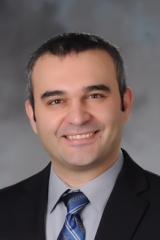
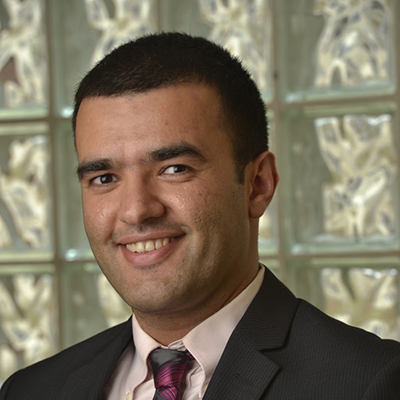
Manos Antonakakis

Manos Antonakakis's profile picture
manos@gatech.edu

Dr. Manos Antonakakis (PhD’12) is an Associate Professor in the School of Electrical and Computer Engineering (ECE) and an adjunct faculty member in the College of Computing (CoC), at the Georgia Institute of Technology. He is responsible for the Astrolavos Lab, where students conduct research in the areas of Attack Attribution, Network Security and Privacy, Intrusion Detection, and Data Mining. In May 2012, he received his Ph.D. in Computer Science from Georgia Tech.

Before joining the Georgia Tech ECE faculty ranks, Dr. Antonakakis held the Chief Scientist role at Damballa. He currently serves as the co-chair of the Academic Committee for the Messaging Anti-Abuse Working Group (MAAWG). In his tenure at Georgia Tech ECE, Dr. Antonakakis has raised several tens of millions in research funding as Primary Investigator from government agencies and the private sector. He is the author of several U.S. patents and more than 20 academic publications in top academic conferences. He has served as a program committee member for all top tier security conferences.

Associate Professor, School of Electrical and Computer Engineering
Dean's Professorship
Phone
(404) 385-2534
Office
Klaus 3366
Additional Research

Cyber Technology

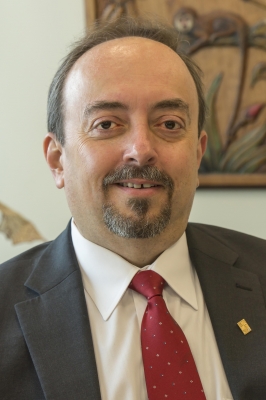
Lukas Graber

Lukas Graber's profile picture
lukas.graber@ece.gatech.edu

Lukas Graber received his M.S. and Ph.D. degrees in electrical engineering from ETH Zurich in 2002 and 2009 respectively. He conducted the experimental part of his M.S. research project on transient recovery voltage in the high voltage laboratories of Bonneville Power Administration, Portland, Oregon. His Ph.D. research focused on SF6 leakage detection in gas insulated switchgear and was awarded with the ETG Innovation Prize. Before he joined Georgia Tech in 2015, he worked several years at the Center for Advanced Power System, Florida State University - initially as a post-doctoral research associate and later as a research faculty member. His focus was on superconducting power cables and fault current limiters, ultra-fast mechanical switchgear, short circuit forces in substations, and grounding aspects of power distribution on future all-electric Navy ships. He authored and coauthored 40+ publications in journals and conference proceedings and holds several patents. Besides fundamental and applied research projects, he is also interested in commercialization aspects of new technologies. He is a guest technical editor for special issues of the IEEE Transactions on Applied Superconductivity. In his free time, he likes to tinker with audio electronics, play the trumpet, scuba dive in Floridian waters, and paraglide in mountain ranges around the world.

Education

  • Dr. sc., Electrical Engineering, ETH Zürich, 2009
  • Dipl. El.-Ing., Electrical Engineering, ETH Zürich, 2002

Research Interests

Graber's research focuses on advanced computer architecture and embedded systems, examining efficient hardware-software co-design and heterogeneous computing platforms. His work explores performance optimization, system reliability, and scalability in modern computing devices. The research program actively engages graduate and undergraduate students in developing novel methodologies to address challenges in high-performance and low-power computing environments.

Gas insulated switchgear High-speed vacuum switchgear High temperature superconductivity: Power systems applications Cryogenic dielectrics

Teaching Interests

Graber's teaching interests include foundational and advanced courses in electrical and computer engineering, with an emphasis on digital design, computer architecture, and systems integration. He is committed to providing rigorous undergraduate and graduate instruction that bridges theoretical concepts with practical applications. His teaching approach fosters critical thinking and problem-solving skills essential for innovation in engineering disciplines.

Distinctions & Awards

ETG Innovation Prize 2010, Electrosuisse Best Paper Award 2009 , 2nd prize, SEV Bulletin Member, Electrosuisse Member, Cryogenics Society of America Senior Member, IEEE

Publications

  • KY Chuong, Y Liu, T Forbes, MB Frye, L Graber, LM Garten, Determining the effect of bismuth oxide on the microstructure and electrical response of cold-sintered ZnO varistors, Journal of the American Ceramic Society 109(1), e70406, 2026
  • Z Jin, AJC Feliciano, SM Neall, Y Liu, MS Al Hossain, M Pothuri, C Park, ..., Development of a Hydropneumatic Actuator for Supercritical Fluid Circuit Breakers, IEEE 70th Holm Conference on Electrical Contacts (HLM), 1-4, 2025
  • Q Yang, A Llanos, K Schoder, L Graber, A Nonlinear Inductor-Based Near-Zero Current Sensing Method and Active Commutation Strategy for a Hybrid dc Circuit Breaker, ECCE 2025, 1-5, 2025
  • Y Mo, AJC Feliciano, Z Jin, L Graber, B Ge, High Voltage-Rated, Supercritical CO2-Insulated Electrostatic Machine Concept, ECCE 2025, 1-8, 2025
  • L Graber, S GHOSH, GJ Langston, T Uhrik, K Kalaitzidou, N STINGELIN, ..., Metal-organic thermoset polymers, US Patent App. 19/225,325, 2025
Assistant Professor, School of Electrical and Computer Engineering
Phone
(404) 894-2726
Additional Research

Electrical Grid; Electronics

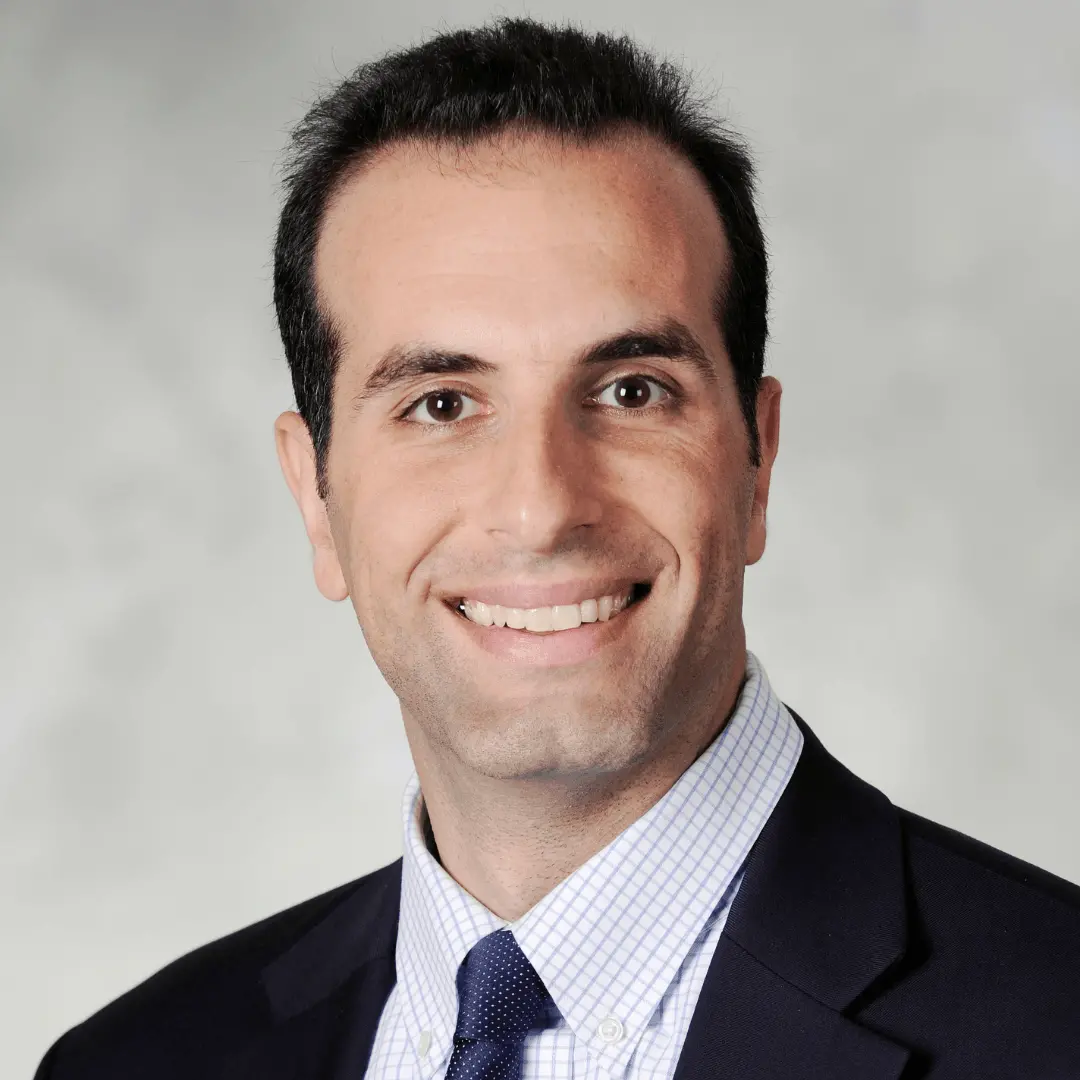
Morris Cohen

Morris Cohen's profile picture
mcohen@gatech.edu

Morris Cohen received his B.S. and Ph.D. degrees in Electrical Engineering from Stanford University in 2003 and 2010, respectively, and served as a research scientist until August 2013. From September 2012 until August 2013, Dr. Cohen was appointed as AAAS Science and Technology Policy Fellow at the National Science Foundation. 

In Fall 2013, he joined the faculty in the School of ECE. He is a winner of the NSF CAREER Award in 2017, the ONR Young Investigator Award in 2015, and was chosen for the Santimay Basu Prize in 2014, an award given once per 3 years to an under-35 scientist by the International Union of Radio Science (URSI). 

Dr. Cohen is interested in the natural electricity of the Earth, including lightning, the electrically charged upper atmosphere, and the radiation-filled space environment. He uses radio waves at low frequencies measured all around the world to understand them, and develops resulting practical applications. His group also works on novel techniques to generate low frequency waves with nonconventional electrically-short antennas. He is an author of more than 60 journal publications. He employs a “flipped classroom” model in some of his courses to make the experience more active and engaging. 

He enjoys hiking, cooking, and traveling the world for work and play with his family.

Associate Professor, School of Electrical and Computer Engineering
Phone
(404) 894-8415
Office
VL W511
Additional Research

Electronics

Thomas Conte

Thomas Conte's profile picture
conte@gatech.edu

Tom Conte holds a joint appointment in the Schools of Electrical & Computer Engineering and Computer Science at the Georgia Institute of Technology. He is the founding director of the Center for Research into Novel Computing Hierarchies (CRNCH). His research is in the areas of computer architecture and compiler optimization, with emphasis on manycore architectures, microprocessor architectures, back-end compiler code generation, architectural performance evaluation and embedded computer system architectures.

Professor, School of Electrical & Computer Engineering and School of Computer Science
Phone
(404) 385-7657
Office
Klaus 2334
Additional Research
  • Computer Architecture
  • Compiler Optimization

David Taylor

David Taylor's profile picture
david.taylor@gatech.edu

Education

  • Ph.D., Electrical Engineering, University of Illinois, Urbana‑Champaign
  • M.S., Electrical Engineering, University of Illinois, Urbana‑Champaign
  • B.S., Electrical Engineering, University of Tennessee, Knoxville

Research Interests

Professor Taylor’s research spans the theory and application of control systems, with emphasis on electromechanics, electromobility, robotics, and sensing. His recent research includes ultrasonic and radio frequency sensing for localization, powertrain optimization for energy efficiency and transient performance in hybrid and electric vehicles, perception and control for human driven and fully autonomous vehicles, and smart charging schemes for electric vehicles considering electric grid impact.

Teaching Interests

Professor Taylor’s teaching focuses on Control System Design, a course emphasizing state-space control algorithms and their implementation on microcontroller devices. Lab projects expose students to both theoretical foundations and practical applications. He also co-leads the EcoCAR cross-disciplinary student team that participates in funded Advanced Vehicle Technology Competitions. This team receives industry training as they design, build, and test efficient powertrains and autonomous driving features.

Publications

  • P. Barsa, K. Cunningham and D. Taylor, “Design of an adaptive cruise controller with integral action and feedforward compensation,” Proceedings of the IEEE/AIAA Transportation Electrification Conference and Electric Aircraft Technologies Symposium, 2025.
  • K. Cunningham, P. Barsa and D. Taylor, “Optimized acceleration and braking for dual motor all-wheel-drive electric vehicles,” Proceedings of the IEEE/AIAA Transportation Electrification Conference and Electric Aircraft Technologies Symposium, 2025.
  • C. Viteri, K. Sastry, M. Leamy and D. Taylor, “Smart charging of electric vehicle fleets with solar power and energy storage,” Proceedings of the IEEE/AIAA Transportation Electrification Conference and Electric Aircraft Technologies Symposium, 2025.
  • L. Leon, P. Barsa and D. Taylor, “Comparative assessment of motion trajectories for electric vehicles considering time and energy,” Proceedings of the 50th Annual Conference of the IEEE Industrial Electronics Society, 2024.
  • D. Dickson, K. Cunningham and D. Taylor, “Loss-minimizing operation of vehicle powertrains with front and rear electric drive units,” Proceedings of the 50th Annual Conference of the IEEE Industrial Electronics Society, 2024.
Professor, School of Electrical and Computer Engineering
Phone
(404) 894-8910
Additional Research

Electric Vehicles

Deepak Divan

Deepak Divan's profile picture
deepak.divan@ece.gatech.edu
Director, Intelligent Power Infrastructure Consortium
Phone
(404) 385-4036
Additional Research

Utilities; Electric Vehicles; Electrical Grid

A.P. "Sakis" Meliopoulos

A.P. "Sakis" Meliopoulos's profile picture
sakis.m@gatech.edu

A.P. "Sakis" Meliopoulos, Ph.D., is the Georgia Power Distinguished Professor in the School of Electrical & Computer Engineering at Georgia Tech and serves as Associate Director of Cyber-Physical Systems for the Institute for Information Security & Privacy. Meliopoulos helped the development of the power program at Georgia Tech by contributing to the modernization of existing courses, introducing new courses, initiating research activities, and developing continuing education programs and the Power System Certificate program. Meliopoulos is the co-inventor, with George Cokkinides, of the Smart Ground Multimeter and the Macrodyne PMU-based Harmonic Measurement System for transmission networks. In his most recent research activities, he has introduced new approaches for modeling large scale power grids based on quadratization and the utilization of this approach to a variety of protection and control of the future power system integrated with distributed generation, renewable energy sources, and power electronic subsystems and interfaces. He has introduced the concept of the SuperCalibrator, a new approach that enables fully distributed state estimation and root cause disturbance analysis. This technology is expected to make a huge impact on the way we presently monitor and control the power grid. Presently, Meliopoulos leads four field demonstration projects on four different utilities: USVI-WAPA, NYPA, Southern Company, and PG&E. He has applied the quadratized approach for high fidelity analysis, stability and control of integrated systems consisting of the power grid, and power electronics interfaced distributed generation and renewables (the μGRID model). He is leading an EPRI-sponsored effort to develop "settingless" protection methods utilizing recent technologies of merging units and GPS-synchronized measurements. He has developed a state-of-the-art synchrophasor laboratory with multiple capabilities: (a) characterization of PMUs, (b) testing of PDCs, (c) autonomous monitoring and control using GPS-synchronized measurements, and (d) testing of protective functions that require GPS synchronization. Meliopoulos holds three patents, published three books, and published over 270 technical papers. For his research achievements, he was elected Fellow of the IEEE in 1993. In addition, he has received the IEEE-IAS Society Field Award in 2005 (IEEE-IAS Richard Kaufman Award), and the 2010 George Montefiore Institute Award (Belgium). He was named the Georgia Power Distinguished Professor in 2006. He serves as the site director for the NSF I/URC PSERC, he is the academic administrator of the Power System Certificate program, and the chairman of the Georgia Tech Protective Relaying Conference and the Fault and Disturbance Analysis Conference. He attended the National Technical University of Athens, Greece, where he earned the Diploma in Electrical and Mechanical Engineering in 1972. He then attended Georgia Tech where he earned his MSEE (1974) and Ph.D. (1976) degrees. He joined Georgia Tech's faculty of Electrical Engineering in 1976.

Georgia Power Distinguished Professor, School of Electrical & Computer Engineering
Associate Director, Cyber-Physical Systems
Phone
404.894.2926
Office
VL E164
Additional Research

Large-Scale or Distributed Systems

Ajeet Rohatgi

Ajeet Rohatgi's profile picture
ajeet.rohatgi@ece.gatech.edu

Ajeet Rohatgi received the B.S. (E.E.) degree from Indian Institute of Technology in 1971, the M.S. (Materials Engineering) from Virginia Polytechnic Institute and State University in 1973, and the Ph.D. in Metallurgy and Materials Science from Lehigh University in 1977. He joined the Westinghouse Research and Development Center in Pittsburgh, Pennsylvania in 1977 and became a Westinghouse Fellow while working on the science and technology of photovoltaic and microelectronic devices. Rohatgi joined the ECE faculty at Georgia Tech in 1985 and started a program on photovoltaics, which has become one of the best in the country. He has become an internationally recognized leader in photovoltaics. He is the founding director of the first university-based DOE Center of Excellence in Photovoltaic Research and Education. He is the author of more than 300 publications and holds 10 U.S. patents. Rohatgi has received numerous awards and distinctions from professional societies and Georgia Tech. He is the founder and CTO for Suniva.

Regents' Professor, School of Electrical and Computer Engineering
John H. Weitnauer, Jr. Chair, College of Engineering
Georgia Research Alliance Eminent Scholar
Phone
404.894.7692
Office
VL W121
Additional Research

silicon devices; solar cells; dielectrics; Compund Semiconductors; solar energy

Google Scholar
https://scholar.google.com/citations?hl=en&user=qJ98P7EAAAAJ&view_op=list_works&sortby=pubdate

Saman Zonouz

Saman Zonouz's profile picture
szonouz6@gatech.edu

Saman Zonouz is an Associate Professor at the Schools of Cybersecurity and Privacy (SCP), and Electrical and Computer Engineering (ECE) at Georgia Tech. Previously, he was a faculty at Rutgers University. His research focuses on security and privacy research problems in cyber-physical systems including the attack detection and response capabilities using techniques from systems security and control theory. Saman's research has been awarded by Presidential Early Career Awards for Scientists and Engineers (PECASE), NSF CAREER Award in Cyber-Physical Systems (CPS), Significant Research in Cyber Security by the National Security Agency (NSA), and Faculty Fellowship Award by Air Force Office of Scientific Research (AFOSR). Saman obtained his Ph.D. in Computer Science from the University of Illinois at Urbana-Champaign in 2011. 

Associate Professor, School of Cybersecurity and Privacy, School of Electrical and Computer Engineering