Saad Bhamla

Saad Bhamla's profile picture
saadb@chbe.gatech.edu

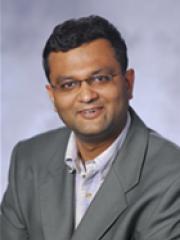
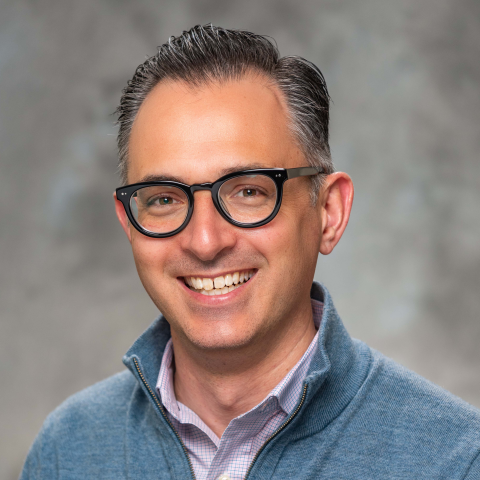
Saad Bhamla studies biomechanics across species to engineer knowledge and tools that inspire curiosity.

Saad Bhamla is an assistant professor of biomolecular engineering at Georgia Tech. A self-proclaimed "tinkerer," his lab is a trove of discoveries and inventions that span biology, physics and engineering. His current projects include studying the hydrodynamics of insect urine, worm blob locomotion and ultra-low-cost devices for global health. His work has appeared in the New York Times, the Economist, CNN, Wired, NPR, the Wall Street Journal and more.

Saad is a prolific inventor and his most notable inventions includes a 20-cent paper centrifuge, a 23-cent electroporator, and the 96-cent hearing aid. Saad's work is recognised by numerous awards including a NIH R35 Outstanding Investigator Award, NSF CAREER Award, CTL/BP Junior Faculty Teaching Excellence Award, and INDEX: Design to Improve Life Award. Saad is also a National Geographic Explorer and a TED speaker. Newsweek recognized Saad as 1 of 10 Innovators disrupting healthcare.

Saad is a co-founder of Piezo Therapeutics.

Outside of the lab, Saad loves to go hiking with his partner and two dogs (Ollie and Bella).

Assistant Professor
Phone
404-894-2856
Office
ES&T L1224
Additional Research
  • Biotechnology
  • Complex Systems
  • Materials and Nanotechnology
Google Scholar
https://scholar.google.com/citations?user=1tRXS9gAAAAJ&hl=en

Johnna Temenoff

Johnna Temenoff headshot
johnna.temenoff@bme.gatech.edu

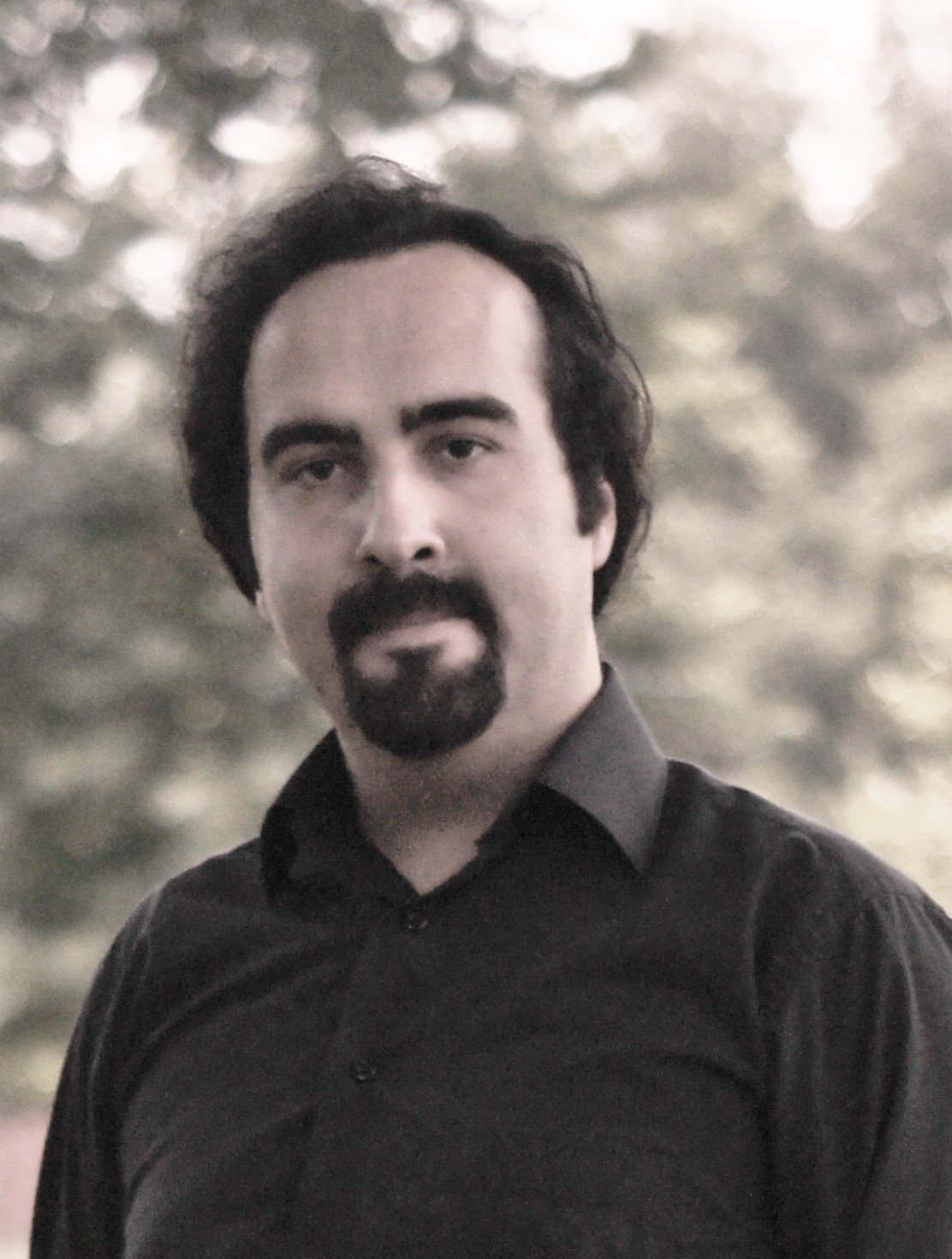
Dr. Johnna S. Temenoff is the Carol Ann and David D. Flanagan Professor at the Coulter Department of Biomedical Engineering at Georgia Tech/Emory University. She is also currently the Director of the NSF Engineering Research Center in Cell Manufacturing Technologies (CMaT) and the Director of the Marcus Center for Therapeutic Cell Characterization and Manufacturing (MC3M). Scientifically, Dr. Temenoff is interested in scaling culture of therapeutic cells and tailoring the molecular interactions between glycosaminoglycans and proteins/cells for use in regenerative medicine applications.  Her laboratory focuses primarily on promoting repair after injuries to the tissues of the shoulder, including cartilage, tendon, and muscle.

Dr. Temenoff has been honored with several prestigious awards, such as the NSF CAREER Award, Arthritis Foundation Investigator Award, and Society for Biomaterials (SFB) Clemson Award for Contributions to the Literature, and was named to the College of Fellows of the American Institute for Medical and Biological Engineers (AIMBE), as a Fellow of the Biomedical Engineering Society (BMES), as a Fellow of the International Academy of Medical and Biological Engineering (IAMBE) and as a Fellow of Biomaterials Science and Engineering, International Union of Societies for Biomaterials Science and Engineering (IUSBSE).  She has co-authored a highly successful introductory textbook - Biomaterials: The Intersection of Biology and Materials Science, by J.S. Temenoff and A.G. Mikos (now in a 2nd edition), for which Dr. Temenoff and Dr. Mikos were awarded the American Society for Engineering Education’s Meriam/Wiley Distinguished Author Award for best new engineering textbook. 

Carol Ann and David D. Flanagan Professorship II
Director, NSF Engineering Research Center for CMaT
Marcus Center for Therapeutic Cell Characterization and Manufacturing (MC3M)
Phone
404-385-5026
Office
Petit 2305
Google Scholar
https://scholar.google.com/citations?user=DfhHdN8AAAAJ&hl=en&oi=ao

Chaitanya Deo

Chaitanya Deo's profile picture
chaitanya.deo@nre.gatech.edu

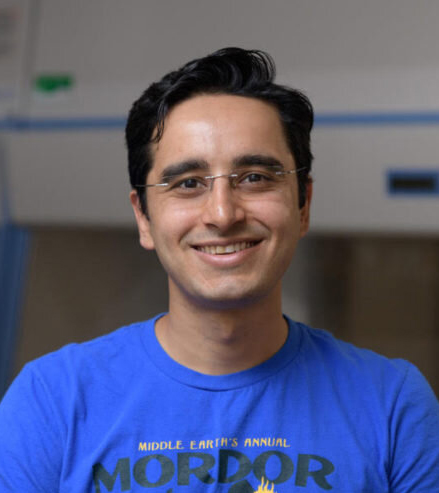
Dr. Deo came to Georgia Tech in August 2007 as an Assistant Professor of Nuclear and Radiological Engineering. Prior, he was a postdoctoral research associate in the Materials Science and Technology Division of the Los Alamos National Laboratory. He studied radiation effects in structural materials (iron and ferritic steels) and nuclear fuels (uranium dioxide). He also obtained research experience at Princeton University (Mechanical Engineering), Lawrence Livermore National Laboratory, and Sandia National Laboratories.

Professor, Woodruff School of Mechanical Engineering
Phone
(404) 385.4928
Additional Research
  • Nuclear Thermal Systems
  • Materials In Extreme Environments
  • Computational mechanics
  • Materials Failure and Reliability
  • Ferroelectronic Materials
  • Materials Data Sciences

Antonio Facchetti

Antonio Facchetti's profile picture
afacchetti6@gatech.edu

Antonio Facchetti obtained his Laurea degree in Chemistry cum laude and a Ph.D in Chemical Sciences from the University of Milan. In 2022 he joined the School of Material Science and Engineering at Georgia Tech. He is a co-founder and the Chief Technology Officer of Flexterra Corporation.

Facchetti has published more than 600 research articles, 14 book chapters, and holds more than 120 patents (H-index 141). He received the 2009 Italian Chemical Society Research Prize, the team IDTechEx Printed Electronics Europe 2010 Award, the corporate 2011 Flextech Award. In 2010 was elected a Kavli Fellow, in 2012 a Fellow of the American Association for the Advanced of Science (AAAS), in 2013 Fellow of the Materials Research Society, in 2015 he became a Fellow of the Royal Society of Chemistry, and in 2016 a Fellow of the ACS Polymeric Materials Science and Engineering. In 2010 he was selected among the "TOP 100 MATERIALS SCIENTISTS OF THE PAST DECADE (2000-2010)" by Thomson Reuters and in 2015-2023 recognized as a Highly Cited Scientist. In 2016 he has been elected a Fellow of the National Academy of Inventors and was awarded the 2016 ACS Award for Creative Invention. In 2017 he was awarded the Giulio Natta Gold Medal from the Italian Chemical Society for his work on polymeric materials and in 2019 he was inducted into the Advanced Materials Hall of Fame. In 2025 he was elected to the National Academy of Engineering. Facchetti’s research interests include organic semiconductors and dielectrics for thin-film and electrochemical transistors, metal oxides, conducting polymers, molecular electronics, sensors, batteries, and photovoltaics.

Professor
Hightower Chair in Materials Science and Engineering
Office
MRDC 4515
Google Scholar
https://scholar.google.com/citations?hl=en&user=oQ9ZPFkAAAAJ&view_op=list_works…

W. Hong Yeo

W. Hong Yeo's profile picture
woonhong.yeo@me.gatech.edu

Dr. Yeo holds the titles of G.P. "Bud" Peterson and Valerie H. Peterson Endowed Professor, as well as Harris Saunders Jr. Endowed Professor, in the Woodruff School of Mechanical Engineering and the Coulter Department of Biomedical Engineering at Georgia Tech. He is also the director of the Wearable Intelligent Systems and Healthcare Center (WISH Center) and the KIAT-Georgia Tech Semiconductor Electronics Center (K-GTSEC). Dr. Yeo's research focuses on understanding the fundamentals of soft materials, deformable mechanics, interfacial physics, manufacturing, and the integration of hard and soft materials for the development of biomedical systems. He earned his Ph.D. in mechanical engineering and genome sciences from the University of Washington in Seattle and subsequently worked as a postdoctoral research fellow at the University of Illinois at Urbana-Champaign. With over 180 peer-reviewed publications, Dr. Yeo has contributed to many prestigious journals, including Nature Materials, Nature Machine Intelligence, Nature Communications, and Science Advances. He is an IEEE Senior Member and has received numerous awards, including the Visiting Professorship from the Institute Jean Lamour at the Université de Lorraine in France, the Lucy G. Moses Lectureship Award at the Mount Sinai School of Medicine, the NIH Trailblazer Young Investigator Award, the IEEE Outstanding Engineer Award, the Emory School of Medicine Research Award, the Imlay Innovation Award, the American Heart Association Innovative Project Award, the Sensors Young Investigator Award, the Med-X Young Investigator Award, and the Outstanding Service Award from the Korea Institute for Advancement of Technology, as well as the Outstanding Yonsei Scholar Award. Dr. Yeo is also the founder of two startup companies: Huxley Medical, Inc. and WisMedical, Inc.

Professor, Woodruff School of Mechanical Engineering
Faculty, Wallace H. Coulter Department of Biomedical Engineering
Director, WISH Center
Phone
404.894.9425
Office
Marcus Nano 4133
Additional Research

Human-machine interface; hybrid materials; bio-MEMS; Soft robotics. Flexible Electronics; Human-machine interface; hybrid materials; Electronic Systems, Devices, Components, & Packaging; bio-MEMS; Soft robotics. Yeo's research in the field of biomedical science and bioengineering focuses on the fundamental and applied aspects of biomolecular interactions, soft materials, and nano-microfabrication for the development of nano-biosensors and soft bioelectronics.

Google Scholar
https://scholar.google.com/citations?hl=en&user=ryhsv18AAAAJ&view_op=list_works&sortby=pubdate

Amirali Aghazadeh

Amirali Aghazadeh's profile picture
aaghazadeh3@gatech.edu

Amirali Aghazadeh is an Assistant Professor in the School of Electrical and Computer Engineering and also program faculty of Machine Learning, Bioinformatics, and Bioengineering Ph.D. programs. He has affiliations with the Institute for Data Engineering and Science (IDEAS) and Institute for Bioengineering and Biosciences. Before joining Georgia Tech, Aghazaeh was a postdoc at Stanford and UC Berkeley and completed his Ph.D. at Rice University. His research focuses on developing machine learning and deep learning solutions for protein and small molecular design and engineering.
 

Assistant Professor
Phone
713-257-5758
Office
CODA S1209
Google Scholar
https://scholar.google.com/citations?hl=en&user=87wBxzUAAAAJ&view_op=list_works&sortby=pubdate

Ali Adibi

Ali Adibi's profile picture
adibi@ece.gatech.edu

Ali Adibi is the director for the Center for Advanced Processing-tools for Electromagnetic/acoustics Xtals (APEX) at the Georgia Institute of Technology. He received his B.S.E.E. from Shiraz University (Iran) in 1990, and received his M.S.E.E. and Ph.D. degrees from the Georgia Institute of Technology (1994) and the California Institute of Technology (2000), respectively. His Ph.D. research resulted in a breakthrough in persistent holographic storage in photorefractive crystals.

Adibi worked as a postdoctoral scholar at the California Institute of Technology from 1999 to 2000. In 2000, he joined the faculty of the School of Electrical and Computer Engineering at the Georgia Institute of Technology, where he is now an associate professor.

Adibi has a wide range of research interests in both theoretical and experimental aspects of photonic devices and materials. His research has resulted in more than 50 journal and more than 100 conference publications, as well as several invention disclosures and patents.

Adibi has received several prestigious awards, including the Presidential Early Career Award for Scientists and Engineers (PECASE) from the White House, CAREER Award from the National Science Foundation (NSF), and Packard Fellowship from the David and Lucile Packard Foundation. Adibi has been the conference chair for several conferences, including the "Photonic Crystal Materials and Devices" conference in the Photonics West Meeting. He has served as a technical committee member for several conferences organized by IEEE, Optical Society of America (OSA), and The International Society for Optical Engineering (SPIE). He is a senior member of IEEE and a member of Sigma Xi, OSA, SPIE, and ASM. He is also the chair of the IEEE LEOS Atlanta Chapter.

Professor, School of Electrical and Computer Engineering
Director, Center for Advanced Processing-tools for Electromagnetic/acoustics Xtals (APEX)
Phone
404.385.2738
Office
Bunger-Henry 105
Additional Research

Nanostructured Materials, biosensors, Integrated photonics, silicon devices

Research Focus Areas
Google Scholar
https://scholar.google.com/citations?hl=en&user=JjCg2CMAAAAJ&view_op=list_works&sortby=pubdate

Michael Filler

Michael Filler's profile picture
michael.filler@chbe.gatech.edu

Michael Filler is a professor and the Traylor Faculty Fellow in the School of Chemical and Biomolecular Engineering at the Georgia Institute of Technology. He earned his undergraduate and graduate degrees from Cornell University and Stanford University, respectively, prior to completing postdoctoral studies at the California Institute of Technology. Filler has been recognized for his research and teaching with the National Science Foundation CAREER Award, Georgia Tech Sigma Xi Young Faculty Award, CETL/BP Junior Faculty Teaching Excellence Award, and AVS Dorothy M. and Earl S. Hoffman Award. Filler also heads Nanovation, a forum to address the big questions, big challenges, and big opportunities of nanotechnology.

Professor and Traylor Faculty Fellow, School of Chemical and Biomolecular Engineering
Director, The Filler Lab
Phone
404.894.0430
Office
Marcus 2135
Additional Research

Integrated photonics, carbon nanotubes, nanomanufacturing, thermal management, silicon devices

Google Scholar
https://scholar.google.com/citations?hl=en&user=5nt6qx8AAAAJ&view_op=list_works&sortby=pubdate

Alper Erturk

Alper Erturk's profile picture
alper.erturk@me.gatech.edu

Erturk began at Georgia Tech in May 2011 as an Assistant Professor, he was promoted to Associate Professor with tenure in 2016 and became a full Professor in 2019. Prior to joining Georgia Tech, he worked as a Research Scientist in the Center for Intelligent Material Systems and Structures at Virginia Tech (2009-2011). His postdoctoral research interests included theory and experiments of smart structures for applications ranging from aeroelastic energy harvesting to bio-inspired actuation. His Ph.D. dissertation (2009) was centered on experimentally validated electromechanical modeling of piezoelectric energy harvesters using analytical and approxIMaTe analytical techniques. Prior to his Ph.D. studies in Engineering Mechanics at Virginia Tech, Erturk completed his M.S. degree (2006) in Mechanical Engineering at METU with a thesis on analytical and semi-analytical modeling of spindle-tool dynamics in machining centers for predicting chatter stability and identifying interface dynamics between the assembly components.

Woodruff Professor, Woodruff School of Mechanical Engineering
Phone
404.385.1394
Office
Love 126
Additional Research

Structural Dynamics; Vibrations; Smart Materials & Structures; Energy Harvesting; Acoustic Metamaterials; Acoustics and Dynamics; Smart materials; Piezoelectronic Materials; Metamaterials; Energy Harvesting

Research Focus Areas
Google Scholar
https://scholar.google.com/citations?hl=en&user=OwypZqcAAAAJ&view_op=list_works&sortby=pubdate

Valerie Thomas

Valerie Thomas's profile picture
valerie.thomas@isye.gatech.edu

Valerie Thomas is the Anderson-Interface Chair of Natural Systems and Professor in the H. Milton School of Industrial and Systems Engineering, with a joint appointment in the School of Public Policy. 

Dr. Thomas's research interests are energy and materials efficiency, sustainability, industrial ecology, technology assessment, international security, and science and technology policy. Current research projects include low carbon transportation fuels, carbon capture, building construction, and electricity system development. Dr. Thomas is a Fellow of the American Association for the Advancement of Science, and of the American Physical Society. She has been an American Physical Society Congressional Science Fellow, a Member of the U.S. EPA Science Advisory Board, and a Member of the USDA/DOE Biomass Research and Development Technical Advisory Committee. 

She has worked at Princeton University in the Princeton Environmental Institute and in the Center for Energy and Environmental Studies, and at Carnegie Mellon University in the Department of Engineering and Public Policy.

Dr. Thomas received a B. A. in physics from Swarthmore College and a Ph.D. in theoretical physics from Cornell University.

Anderson-Interface Chair of Natural Systems
Professor, School of Industrial and Systems Engineering
RBI Initiative Lead: Sustainability Analysis
Phone
(404) 894-0390
Additional Research

Hydrogen Transport/Storage; Biofuels; ClIMaTe/Environment; Electric Vehicles; System Design & Optimization; Energy and Materials Efficiency; Sustainability; Industrial Ecology; Technology Assessment; Science and Technology Policy