Matthew Oliver

Matthew Oliver's profile picture
matthew.oliver@econ.gatech.edu

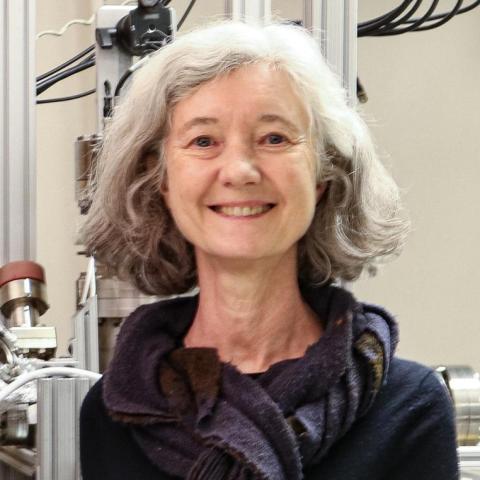
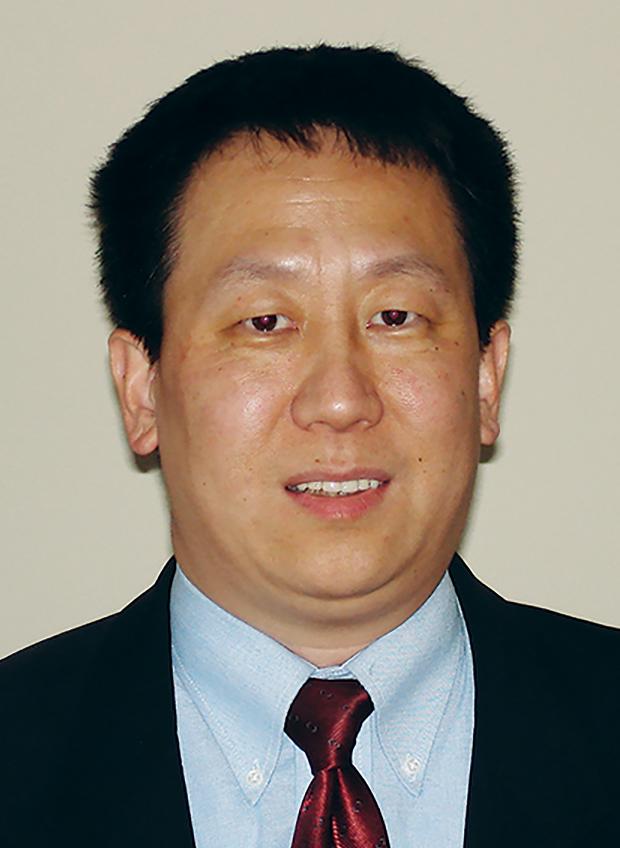
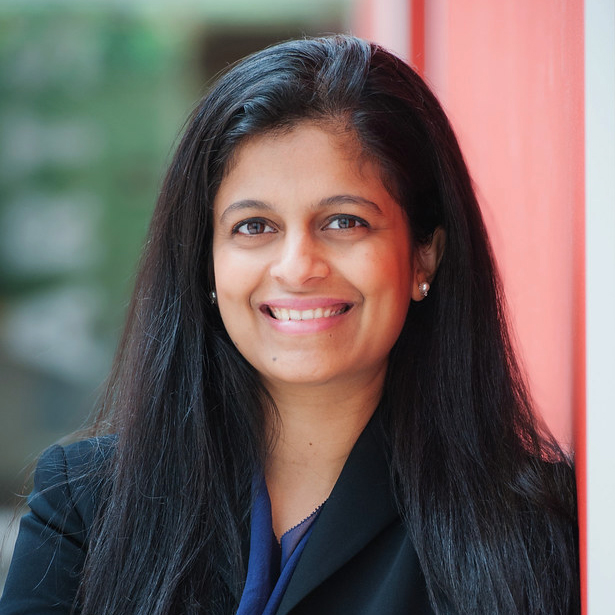
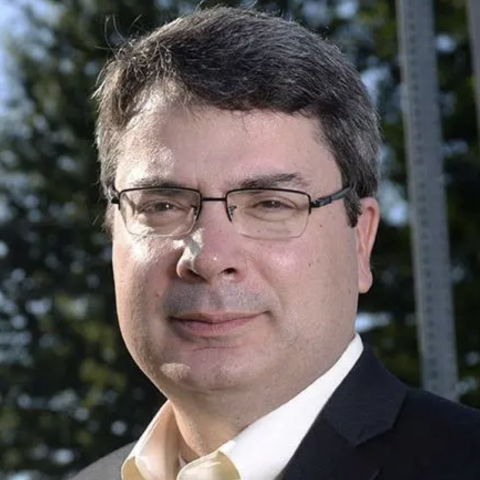
Matthew E. Oliver hails from Memphis, TN. He received his bachelor’s degree in Economics from the University of Memphis in 2008, and his PhD in Economics from the University of Wyoming in 2013.  His primary fields of expertise are energy economics, environmental and natural resource economics, and industrial organization and regulation. Dr. Oliver’s research interests focus primarily on the regulation of energy resources and energy infrastructure. Much of his past work has dealt with natural gas markets and interstate pipelines. More recently, his research has focused on the market effects of rapid deployment of renewable energy technologies (e.g., wind and solar photovoltaics). Additionally, he has published (and ongoing) research on other topics such as the links between energy resource development, environment, and economic growth, and the economics of climate change. Since joining Georgia Tech in 2013, Dr. Oliver has taught various courses in energy and environmental economics, microeconomics, and macroeconomics.

Education:

  • Ph.D., University of Wyoming
  • B.A., University of Memphis

Areas of
Expertise:

  • Energy Economics
Associate Professor, School of Economics
Phone
(404) 894-0491
Research Focus Areas

Srinivas Peeta

Srinivas Peeta's profile picture
srinivas.peeta@ce.gatech.edu

Dr. Srinivas Peeta is the Frederick R. Dickerson Chair and Professor in the School of Civil and Environmental Engineering and the H. Milton Stewart School of Industrial and Systems Engineering at Georgia Institute of Technology. He is also Principal Research Faculty at the Georgia Tech Research Institute. He is the Co-Editor-in-Chief of the journal Transportation Research Part B: Methodological. Dr. Peeta is a Distinguished Alumnus of the Indian Institute of Technology (Madras) and an American Society of Civil Engineers (ASCE) Fellow. He received his B.Tech., M.S., and Ph.D. degrees from the Indian Institute of Technology (Madras), Caltech, and The University of Texas at Austin, respectively. Prior to Georgia Tech, Dr. Peeta was the Jack and Kay Hockema Professor in Civil Engineering at Purdue University up to 2018. From 2006 to 2018, he served as the founding Director of the NEXTRANS Center, formerly the U.S. Department of Transportation’s (USDOT’s) Federal Region 5 University Transportation Center (UTC). He was also the founding Associate Director of USDOT’s Center for Connected and Automated Transportation (CCAT), the Region 5 UTC, from 2016 to 2018. Dr. Peeta was a past Chair (2007-2013) of the Transportation Network Modeling Committee of the Transportation Research Board (TRB) of the National Academies.

Dr. Peeta has authored over 515 technical publications, including over 450 in peer-reviewed journals and conference proceedings. He has over 600 talks/lectures in several countries, including 165 invited talks. He has received over $56 million in research funding. Dr. Peeta is on the Editorial Advisory Boards of the Journal of Intelligent Transportation Systems, Transportmetrica B: Transport Dynamics, Journal of Blockchain and Intelligent Computing, Frontiers in Built Environments, and Transportation in Developing Economies. He is an Advisory Board member of Korean Society of Civil Engineering’s Journal of Civil Engineering. Some of his recognitions include the INFORMS Transportation Science Best Dissertation Award (1994), U.S. NSF CAREER Award (1997), ASCE Walter Huber Research Prize (2009), TRB Blue Ribbon Committee Award (2013), and several paper awards from conferences (ASCE, IEEE, TRB, ACM) and journals. Several of his students have received best dissertation/thesis awards from professional organizations such as CUTC, IATBR and COTA. His research interests broadly span transportation and infrastructure systems, and multiple methodological areas. His work in the area of dynamic traffic assignment represents a standard for research reference, and has guided the U.S. Department of Transportation’s development of a deployable architecture for real-time route guidance in large-scale transportation systems equipped with advanced information dissemination technologies.

Research

Professor Peeta’s research interests are multidisciplinary and span several methodological domains related to transportation and infrastructure systems, and the role of emerging technologies. His research focuses on the development of advanced optimization and control methods, AI/ML techniques, econometric and behavioral approaches, driving simulator-based environments, and system-of-systems paradigms for complex transportation systems. His research also explores the roles of autonomy, automation, connectivity, electrification, shared mobility, and information and communication systems for the movement of people and freight. His work includes modeling, analysis, and management of traffic and transportation networks, with an emphasis on dynamic traffic assignment, real-time traffic control, human-machine interactions, mixed-traffic environments, vehicle-human-infrastructure interactions, and intelligent transportation systems. The research integrates concepts from operations research, systems engineering, behavior and psychological theories, and transportation analytics to improve efficiency, reliability, and sustainability of transportation infrastructure.

Education

Ph.D. in Civil Engineering

The University of Texas at Austin

1994

M.S. in Civil Engineering

California Institute of Technology

1989

B.Tech. in Civil Engineering

Indian Institute of Technology – Madras

1988


Teaching

Professor Peeta’s teaching is centered on transportation systems engineering and operations research topics at both undergraduate and graduate levels. His instruction encompasses transportation systems analysis, traffic flow theory, transportation network modeling, transportation demand modeling, optimization techniques, and intelligent transportation systems. Professor Peeta emphasizes a rigorous quantitative approach and practical problem-solving skills in his courses, aiming to prepare students for analytical and decision-making challenges in transportation engineering. In recent years, his courses have had an additional focus on the roles of emerging transformative technologies and emerging AI/ML methods in transportation systems.

Distinctions & Awards

  • 2026 Co-Editor-in-Chief, Transportation Research, Part B
  • 2025 ACM SIGSPATIAL Best Paper Award; Spatial Intelligence for Smart and Connected Communities
  • 2025 TRB AEP35 Best Paper Award; Committee on Effects of Information and Communication Technologies on Travel Choices
  • 2024 Fellow, American Society of Civil Engineering
Frederick R. Dickerson Chair
Professor, School of Civil and Environmental Engineering
University, College, and School/Department

Claire Berger

Claire Berger's profile picture
cb299@gatech.edu

Claire Berger is Director of Research at the French National Center for Scientific Research - Néel Institute working at the Georgia Institute of Technology in W. A. de Heer’s group. She obtained the PhD in Physics from the University of Grenoble, France, with a dissertation on the electronic properties of AlMn quasicrystals. She then moved to a postdoc position at the Centre d’Etudes Atomiques, where she produced and studied amorphous films, and was hired as a researcher at the CNRS ‘s Laboratory for Study of Electronic Properties of Solids (LEPES), in Grenoble. She focused the first part of her carrier on electronic properties of quasicrystalline materials grown and characterized at LEPES. She contributed to the experimental evidence for a metal-insulator transition in these metal- based compounds. 

At Georgia Tech, her current scientific interests are primarily nanoscience and electronic property of graphene-based systems. She co-authored the first article demonstrating the two dimensional properties of graphene and proposing graphene for electronics, and together with Walt de Heer and Phil First she co-authored the first patent for graphene electronics (2003). 

She is co-author of more than 200 publications in international journals, has a citation index of 10,880 and an H index of 41.

Professor of the Practice, School of Physics
Phone
(404) 385-1685
University, College, and School/Department

Yu Ding

Yu Ding's profile picture
yu.ding@isye.gatech.edu

Dr. Yu Ding is the Anderson-Interface Chair and Professor in the H. Milton School of Industrial and Systems Engineering at Georgia Tech. Prior to joining Georgia Tech in 2023, he was the Mike and Sugar Barnes Professor of Industrial and Systems Engineering at Texas A&M University. While at Texas A&M, he also served as Associate Department Head for Graduate Affairs of the Department of Industrial and Systems Engineering between 2012 and 2016 and Associate Director for Research Engagement of Texas A&M Institute of Data Science between 2020 and 2023. He received his B.S. in Precision Engineering from the University of Science and technology of China in 1993, a M.S. in Precision Engineering from Tsinghua University in 1996, a second M.S. in Mechanical from Penn State in 1998, and his Ph.D. in Mechanical Engineering from the University of Michigan in 2001.

Dr. Ding is the author of the CRC Press book, Data Science for Wind Energy, and a co-author of the Springer Nature book, Data Science for Nano Image Analysis. Dr. Ding received the 2019 IISE Technical Innovation Award and 2022 INFORMS Impact Prize for his data science innovations impacting wind energy applications. Dr. Ding is a Fellow of IISE (2015) and ASME (2016). He has served as editor or associate editor for several major engineering data science journals, and is currently serving as the 14th Editor in Chief of IISE Transactions, for the term of 2021-2024.

Anderson-Interface Chair and Professor, School of Industrial Systems Engineering
Phone
404-894-7562
Office
Groseclose 346
Additional Research

Data Science, Manufacturing Applications

Research Focus Areas

Anjali Thomas

Anjali Thomas's profile picture
anjalitb3@gatech.edu

Anjali Thomas is an Associate Professor in the Sam Nunn School of International Affairs and Director of the Nunn School Program in Global Development. Her research focuses on the political economy of development, and employs quantitative analyses of data derived from India and other developing country contexts. Her specific substantive interests include the politics of service provision, democratic institutions and the link between climate change and local level politics. Prior to joining the faculty at Georgia Tech, Anjali was a faculty member in the Department of Political Science at the University of British Columbia in Vancouver. She obtained her Ph.D. from New York University in 2010.

Associate Professor, Sam Nunn School of International Affairs
Director, Nunn School Program in Global Development
Research Focus Areas

Patricia Mokhtarian

Patricia Mokhtarian's profile picture
patmokh@gatech.edu

Patricia Mokhtarian is a Regents Professor and the Clifford and William Greene, Jr. Professor of Civil and Environmental Engineering (CEE) at the Georgia Institute of Technology.  Prior to joining Georgia Tech in 2013, she served 23 years on the CEE faculty at the University of California, Davis, after spending several years in regional transportation planning and consulting in Southern California.  Prof. Mokhtarian has specialized in the study of attitudinal influences on travel behavior for more than 45 years, and has authored or co-authored nearly 200 peer-reviewed journal articles, as well as numerous book chapters and research reports.  She is among the most highly-cited scholars in travel behavior research, with more than 41,000 citations and an h-index of 98 (Google Scholar). She is a past Chair of the International Association for Travel Behaviour Research, and received a Lifetime Achievement Award from that society in 2021.  Prof. Mokhtarian was elected to the US National Academy of Engineering in 2024, and serves on the editorial boards of ten transportation journals.

Research

A key research interest has been the impact of telecommunications technology on travel behavior (particularly teleworking adoption and impacts). Additional interests include the influence of the built environment on travel behavior, accounting for self-selection biases in modeling behavior, attitudes toward travel itself, time use and multitasking, incorporating attitudes into practice-oriented travel demand forecasting models, impacts of autonomous vehicles, congestion-response behavior, and subjective well-being.

Education

Ph.D., Northwestern University, 1981

M.S., Northwestern University, 1977

B.A., Florida State University, 1975

Teaching

At the undergraduate level, Prof. Mokhtarian teaches upper-division probability and statistics, and at the graduate level she teaches statistical analysis, survey (questionnaire) design and analysis, and discrete choice modeling.

Distinctions & Awards

  • Invited speaker, endowed lecture series: “How Much Do Attitudinal Variables Improve Travel Demand Models?  Evaluation Using an Overlap Sample from an Attitude-rich Survey and the 2017 National Household Travel Survey”. University of Michigan, Department of Civil & Environmental Engineering Richart-Woods Lecture, February 13, 2025.
  • Appointed Regents’ Professor, Georgia Institute of Technology, 2024.
  • Elected to the National Academy of Engineering, 2024.
  • In 2024, my student Dr. Xinyi Wang received the prestigious and competitive Eric I. Pas Dissertation Prize of the International Association for Travel Behaviour Research, given to the best doctoral thesis in travel behavior in the world, among those completed in calendar year 2023.
  • Best PhD Thesis Award to my student Dr. Xinyi Wang, Sigma Xi, Georgia Institute of Technology, 2024.
  • Best PhD Thesis Award to my student Dr. Xinyi Wang, School of Civil and Environmental Engineering, Georgia Institute of Technology, 2023.
  • “Latent class model with an error structure: Investigating potential unobserved associations between latent segmentation and behavior generation” (by Sung Hoo Kim and Patricia L. Mokhtarian) selected for the Outstanding Paper Award of Committee AEP 35 (The Effects of Information and Communication Technologies on Transportation Choices) of the Transportation Research Board, 2024 Annual Meeting.
  • One of six members (and the only woman) of the inaugural class of Northwestern University Transportation Center Fellows, recognizing “impactful contributions to the transportation profession in research, policy, practice or education, and special connections to the Transportation Center and Northwestern University”, November 17, 2023.
  • My students won the (U.S.) Council of University Transportation Centers Wootan Awards for Outstanding PhD Dissertation in Policy & Planning (F. Atiyya Shaw) and Outstanding MS Thesis in Policy & Planning (Xinyi Wang), in 2021.
  • International Association for Travel Behaviour Research 2021 Lifetime Achievement Award, given to someone who has “made fundamental and sustained contributions to travel behaviour research for a substantial period (typically at least 25 years) up to the present time”; is “widely known, at the very least among the IATBR community”; and has “influenced the field through her/his writings, teaching, service, and nurturing of younger professionals”, June 2, 2021 online, and December 14, 2022 in person.
  • Outstanding Industry Contributor Award, “given to an individual who in embodying the Zephyr Principles, has selflessly contributed to the good of the industry through the body of their work”, bestowed by the Zephyr Foundation (https://zephyrtransport.org/), a non-profit dedicated to “advancing rigorous transportation and land use decision-making for the public good by advocating for and supporting improved travel analysis, and facilitating its implementation”, March 24, 2021.
  • Clifford and William Greene, Jr. Professorship, School of Civil and Environmental Engineering, Georgia Institute of Technology, 2021 – present.
  • Named a National Associate of the National Academies of Sciences, Engineering, and Medicine, February 5, 2020.
Regents' Professor, School of Civil and Environmental Engineering
Clifford and William Greene, Jr. Professor, School of Civil and Environmental Engineering
Phone
(404) 385-1443
Additional Research

Electric Vehicles; Smart Infrastructure

University, College, and School/Department

Michael Hunter

Michael Hunter's profile picture
michael.hunter@ce.gatech.edu

Dr. Hunter is a Professor in the School of Civil and Environmental Engineering at Georgia Institute of Technology. His primary teaching and research interests are in transportation operations and design, specializing in adaptive signal control, traffic simulation, and arterial corridor operations. Dr. Hunter obtained his B.S. in Civil Engineering from Rensselaer Polytechnic University (1992), his M.S. in Civil Engineering from the University of Texas at Austin (1994), and his Ph.D. in Civil Engineering from the University of Texas at Austin (2003). After obtaining his M.S. he worked as a transportation engineer for several years at the Sear-Brown Group in Rochester, NY.

Dr. Hunter has been highly active in research, teaching, and service. He has been principal investigator of sponsored research for a variety of sponsors including local, state, and federal agencies, and industry. Dr. Hunter has led two significant transportation research centers, the Georgia Transportation Institute (GTI, 2012 to present) and the National Center for Transportation Systems Productivity and Management (NCTSPM, 2012 to 2017). Dr. Hunter is actively researching simulation, digital twins, connected and autonomous vehicles, signal control optimization with AI, smart cities, connected infrastructure, and disruptive and emerging technologies within the transportation systems context.  

Research

Dr. Hunter has extensive research experience in simulation, digital twins, hardware-in-the-loop-simulation, and software-in-the-loop-simulation. His projects have explored the modeling of arterials, freeways, corridors, and parking facilities.  He has extensively studied adaptive control, emerging technologies, signal optimization with AI and Reinforcement Learning, etc. His efforts have included two real-time corridor digital twin models, one in Atlanta, GA, and one in Chattanooga, TN. He has studied emergency vehicle preemption and transit priority, including multi-agent Reinforcement Learning (DQN and PPO) optimization. Dr. Hunter has developed traffic flow simulations for capturing the effect of aggressive human driver interaction with autonomous vehicles on traffic. Dr. Hunter has also undertaken numerous efforts in the development and analysis of performance metrics. He has conducted safety research, studying the impact of various safety treatments, such as the mode of flash at an intersection, don't block the box treatments, innovating signage and lane markings, etc.

Education

Ph.D., Civil Engineering, The University of Texas at Austin, 2003

M.S., Civil Engineering, The University of Texas at Austin, 1994

B.S., Civil Engineering, Rensselaer Polytechnic Institute, 1992

Associate of Science, Engineering Science, Hudson Valley Community College, 1990

Teaching

Dr. Hunter’s teaching is practice focused, teaching at the undergraduate and graduate level. Topics in his courses include transportation safety, operations, design, and planning. Dr. Hunter stresses engineering fundamentals, innovation, and intuition, as well as exploring the application of emerging methods such as AI and RL.  His courses stress the importance of the design user, that is, ensuring that our transportation operations and design are focused on the strengths and capabilities of the people that use the transportation system, whether driving a vehicle, crossing the street, riding a bicycle or scooter, or riding transit. Recently, Dr. Hunter developed a new course merging a common simulation tool utilized in practice with fundamental concepts, pulling away the black box nature of many simulation tools.

Distinctions & Awards

  • Winner of the Transportation Research Board D. Grant Mickle Award (2019)
  • Best Paper Award – Transportation Research Board, Operational Effects of Geometrics Committee, AHB65. (2019)
  • Mobility Award. City of Atlanta’s North Avenue Smart Corridor Project (Project Co-PI). Smart City Expo World Congress. Barcelona. November 2018. (2018)
  • Best Abstract Award, PTV America’s User Group Meeting (2011)
  • Best Paper Award, Principles of Advanced and Distributed Simulation Conference (2010)
  • Transportation Research Board Operational Effects of Geometrics Committee, Best Paper Award (2010)

Publications

  1. Mers, B., M. Hunter, K. Watkins. Demographic Breakdown of Transit Rider Satisfaction. Transportation Research Record, Journal of the Transportation Research Board, Sage Publications, 2678 (6), 656-666. June 2024.
  2. Saroj, A., S. Roy, A. Guin, M. Hunter. Impact of Connected Corridor Volume Data Imputations on Digital Twin Performance Measures. International Journal of Transportation Science and Technology. Elsevier. June 2023. 
  3. Guin, G., K. Robinson, H. Unthank, S. Roy, and M. Hunter. Impact of Restricted Crossing U-Turns on Vehicular Emission, Transportation Research Record, Journal of the Transportation Research Board, Sage Publications, May 2023.
  4. Manjunatha, P., S. Roy, L. Elefteriadou, A. Guin, and M. Hunter. Evaluation of the Operational Effects of Autonomous and Connected Vehicles through Microsimulation. Transportation Research Record, Journal of the Transportation Research Board, Sage Publications, December 2022.  
  5. Saroj, S., A. Guin, and M. Hunter. Development of a Connected Corridor Real-Time Data-Driven Traffic Digital Twin Simulation Model. Journal of Transportation Engineering, Part A: Systems. American Society of Civil Engineers, Volume 147, Issue 12, Dec 2021.
Professor, School of Civil and Environmental Engineering
Phone
(404) 385-1243
Additional Research

Electric Vehicles; Smart Infrastructure

University, College, and School/Department

Eunhwa Yang

Eunhwa Yang's profile picture
eunhwa.yang@design.gatech.edu

Eunhwa Yang is an associate professor at the School of Building Construction, researching the reciprocal relationship between the built environment and human outcomes across various settings, including workplaces, university campuses, and homes. She employs Bronfenbrenner’s ecological systems theory, which proposes that human outcomes are constantly influenced by the nested structures of environments. Her contributions include workplace studies, facility operation and maintenance, sustainable building practices and operations, and cognitive aging-in-place. Eunhwa's work supports a diverse range of stakeholders, including office workers, university students, and older adults, as well as facility managers/owners, corporate real estate directors, and designers, in identifying optimal spatial design, usage, and operation.

Eunhwa has been actively involved with the International Facility Management Association (IFMA) and CoreNet Global. She has received a young researcher's best paper award and a workshop grant from International Association for People-Environmental Studies (IAPS) and multiple fellowships from the International Facility Management Association (IFMA). Eunhwa has taught and developed facility management-related courses at GT. She is an advocate of utilizing and exploring diverse teaching methods, including active learning, experiential learning, and service learning. She was a fellow at the Center for Teaching and Learning at GT and the Center for Teaching Excellence at Cornell and led workshops on student engagement, collaborative learning, and rubric development. Her master’s and doctoral students have been recognized in the field, winning the IFMA Foundation scholarships and CoreNet Global Academic Challenges. Eunhwa holds an MS in Building Construction and Facility Management from Georgia Tech and a Ph.D. in Human Behavior and Design from Cornell University.

Teaching Interest:

Dr. Yang’s teaching focuses on the principles of facility management service delivery; building operation and maintenance and their associated data analytics; safety and environmental issues that protect and promote occupant health and well-being; and research methods.

Research Interest:

Dr. Yang’s research can be organized into four primary threads: 1) workplace management and strategies for workplace optimization/efficiency, 2) smart facility operation and maintenance through data integration and post-occupancy evaluation (POE), 3) the adoption of sustainable building practices and operations, and 4) design and construction for aging and aging-in-place. Her research has made theoretical, methodological, and practical contributions to these topics, addressing human outcomes and the built environment in various settings, such as workplaces, university campuses, and homes.

List of Recent Scholarly Work:

1. Bilau, I., Koo, B., Fu, E., Chau, W., Kwon, H., & Yang, E. (2025). Visual accessibility through open shelving: Impacts on cognitive load, motivation, physical activity, and user perception in older adults with mild cognitive impairment. Journal of Aging and Environment, 1–28. https://doi.org/10.1080/26892618.2025.2576213

2. Shagar, M., Zeng, Q., Baru, A., Yang, E., & Pishdad, P. (2025). Systematic review of residential indoor environmental quality assessment surveys and the development of an exemplary novel survey identifying and analyzing tool. Building and Environment, 284, 113448. https://doi.org/10.1016/j.buildenv.2025.113448

3. Ma, J.H., Erdogmus, E., & Yang, E. (2025). A user-centered building design approach using immersive virtual reality and discrete choice modeling. Building and Environment, 284, 113400. https://doi.org/10.1016/j.buildenv.2025.113400  

4. Koo, B., Bilau, I., Rodriguez, A. D., Yang, E., & Kwon, H. (2025). Quantifying mild cognitive impairments in older adults using multi-model wearable sensor data in a kitchen environment. medRxiv: the preprint server for health sciences. https://doi.org/10.1101/2025.05.24.25328107

5. Machary, H., Motamed Rastegar, R., Gholami, Y., Yang, E., Little, E., Burke, M. A. M., Bilau, I., DuBose, J., & Zimring, C. (2025). Cognitive-aging-in-place: Home design factors influencing instrumental activities of daily living for older adults facing mild cognitive impairment. Journal of Aging and Environment, 1-27. https://doi.org/10.1080/26892618.2025.2506060

6. Yang, E., Chen, C., Li, K., Guo, K., Hua, Y., & Zhang, L. (2025). Challenges and strategies for energy performance contracting: A critical review. Journal of Building Design and Environment, 3(1), 202510. https://doi.org/10.70401/jbde.2025.0001

7. Zhang, X., Wang, Y., Yang, E., Xu, S., & Yu, Y. (2025). Sale to list ratio, for sale inventory, sale count, and housing value. International Journal of Housing Markets and Analysis, 18(2), 416-432. https://doi.org/10.1108/IJHMA-08-2023-0113

8. Zhang, X., Yang, E., & Wang, Y. (2025). Time series observation of relationship between United States private residential construction spending and its indicators. International Journal of Housing Markets and Analysis, 18(2), 317-333. https://doi.org/10.1108/IJHMA-07-2023-0096

9. Zhang, X., & Yang, E. (2025). Observation of relationship between housing value and the number of building permits in the United States using time series method. International Journal of Housing Markets and Analysis, 18(1), 106-122. https://doi.org/10.1108/IJHMA-06-2023-0085

10. Zhang, X., Yang, E., Huang, L., & Wang, Y. (2025). Incremental population density improvement via missing middle housing under density-based and form-based zoning ordinances. International Journal of Housing Markets and Analysis, 18(1), 87-105. https://doi.org/10.1108/IJHMA-06-2023-0074

11. Ma, J. H., Erdogmus, E., Kangisser, S. J., & Yang, E. (2025). A comparative analysis of the effectiveness of immersive virtual reality on end-user design review. Building and Environment, 267, 112237. https://doi.org/10.1016/j.buildenv.2024.112237


Degrees with Year of Award:

Ph.D. in Human Behavior and Design, Cornell University, February 2016
M.S. in Building Construction and Facility Management, Georgia Institute of Technology, December 2009
B.S. in Architectural Engineering, SungKyunKwan University, February 2005

Areas of Expertise

  • Energy efficiency in tenanted properties
  • Green leasing
  • Stakeholder engagement
  • Data analytics and facility management
  • Optimization of facility operation and maintenance
  • Healthy workplaces: occupant satisfaction, health, and well-being
  • Workplace strategies
  • Coworking spaces
Associate Professor, School of Building Construction
Phone
(404) 894-7103
Additional Research

Building Technologies