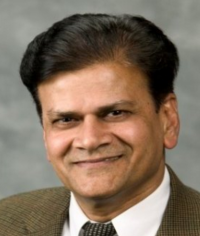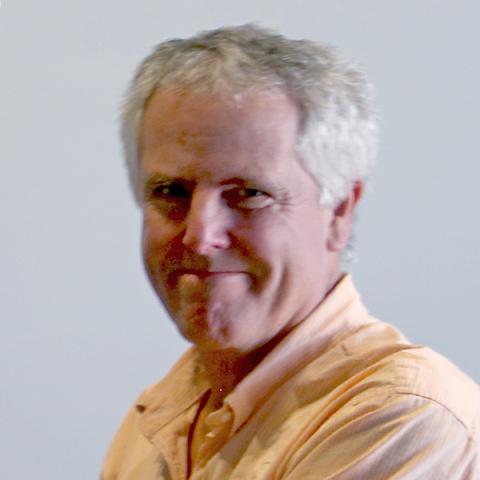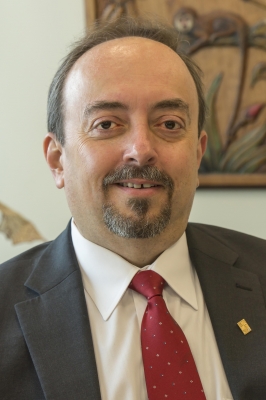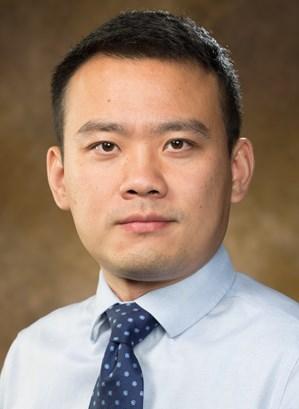
Xiao Liu

Xiao Liu's profile picture
xiao.liu@isye.gatech.edu

Dr. Xiao Liu is the David M. McKenney Family Associate Professor at the H. Milton Stewart School of Industrial and Systems Engineering (ISyE), and Faculty Director of the Brook Byers Institute for Sustainable Systems (BBISS), Georgia Institute of Technology. Before joining Georgia Tech, he held the Research Staff Member position at the IBM Thomas J. Watson Research Center, New York and Singapore, and was the John L. Imhoff Endowed Chair and Assistant Professor at the Department of Industrial Engineering, University of Arkansas. He received the Climate Tech Fellowship from the New York Climate Exchange. His research focuses on statistical methods and machine learning in engineering/scientific domain knowledge intensive environments.  His work has appeared in Engineering, Applied Math and Statistics journals (e.g., JASA, Technometrics, SIAM Journal on Scientific Computing, AIAA Journals, IISE Transactions, IEEE Transactions, AOAS, etc.), and has been recognized by various academic societies (e.g., the Statistics in the Physical and Engineering Sciences (SPES) award from the American Statistical Association, IBM Outstanding Technical Achievement Award, Best Refereed Paper Award by the QSR seciton of INFORMS, etc.). Dr. Liu's research has primarily been supported by the National Science Foundation, including the NSF CAREER award.  Dr. Liu served as the President of the Data Analytics & Information Systems division of IISE, and the Program co-Chair for the 2025 IISE Annual Conference & Expo. He is currently on the Editorial Board and an Associate Editor of multiple journals, such as Technometrics, IISE Transactions, QREI and IJRQSE. 

Research

Dr. Liu's research focuses on statistical methods and machine learning in engineering/scientific domain knowledge intensive environments.  His work has appeared in Engineering, Applied Math and Statistics journals (e.g., JASA, Technometrics, SIAM Journal on Scientific Computing, AIAA Journals, IISE Transactions, IEEE Transactions, AOAS, etc.), and has been recognized by academic societies (e.g., the Statistics in the Physical and Engineering Sciences (SPES) award from the American Statistical Association, IBM Outstanding Technical Achievement Award, Best Refereed Paper Award by the QSR seciton of INFORMS, etc.). Dr. Liu's research has primarily been supported by the National Science Foundation, including the NSF CAREER award.  

Teaching

Professor Liu's teaching interests include core industrial and systems engineering courses at both undergraduate and graduate levels, emphasizing data analytics, optimization, and decision-making methodologies. His instruction aims to develop students' analytical and computational skills critical for solving complex systems problems. Professor Liu integrates theoretical foundations with practical applications to prepare students for research and professional challenges in industrial engineering and related disciplines. 

Representative Publications

Selected (Recent) Publications:

  • Liu, X., Feng, J.Y., and Liu, X.C., (2026), "Adapting Projection-Based Reduced-Order Models using Projected Gaussian Process", SIAM Journal on Scientific Computing (accepted). arXiv: 2410.14090. Article Link.
  • Wei, G.Z., Qiu, F., and Liu, X., (2025), “Convolutional Non-Homogeneous Poisson Process and its Application to Wildfire Ignition Risk Quantification for Power Delivery Networks”, Technometrics, 67, 11-22. Article Link. (also on arXiv:2301.00067).
  • Wei, G.Z., Krishnan, V., Xie, Y., Sengupata, M., Zhang, Y.C., Liao, H.T., and Liu, X., (2024), "A Statistical Model for Multi-Source Remote-Sensing Data Streams of Wildfire Aerosols Optical Depth," INFORMS Journal on Data Science, 3, 162-178. Article Link. (also on arXiv: 2206.11766).
  • Liu, X., Yeo, K. M., Lu, S. Y. (2022), “Statistical Modeling for Spatio-Temporal Data from Stochastic Convection-Diffusion Processes”, Journal of the American Statistical Association (Theory and Methods), 117, 1482-1499. Article Link. code. (also on arXiv: 1910.10375).
  • Liu, X.C., Hwang, Y., Phan, D., Klein, L. Liu, X., Yeo, K., (2025), "Sparse Sensor Allocation for Inverse Problems of Detecting Sparse Leaking Emission Sources", IISE Transactions, arXiv:2509.05559.
  • Liu, X.C., Liu, X., Kaman, T, Lu, X., and Lin, G. (2023), “Statistical Learning for Nonlinear Dynamical Systems with Applications to Aircraft-UAV Collisions”, Technometrics, 65, 564-578. Article Link. 
Faculty Director for Resilience and AI
David M. McKenney Family Associate Professor, School of Industrial Systems Engineering
Office
Groseclose 339
Additional Research

Domain-aware data-driven methodologies for scientific and engineering applications, environment and energy, urban resilience, applied statistics, system informatics and reliability engineering, model interactions between solar energy production and wildfires.


Research Focus Areas

Joe Oefelein

Joe Oefelein's profile picture
joseph.oefelein@ae.gatech.edu

Dr. Joseph Oefelein is a professor in the Daniel Guggenheim School of Aerospace Engineering at the Georgia Institute of Technology. He joined the faculty at Georgia Tech. in the fall of 2017, after a 17-year career at Sandia National Laboratories, Combustion Research Facility, where he served as a distinguished member of technical staff. Prior to this, he served as a research associate in the Department of Mechanical Engineering at Stanford University. He is actively engaged in research on a broad range of topics in simulation and modeling of advanced propulsion, power, and related systems. His expertise is interdisciplinary, with focus on the theory and analysis of complex fluid flows where turbulence interacts with a multitude of strongly coupled fluid dynamic, thermodynamic, transport, chemical, multiphase, and/or heat transfer processes. He is an expert in the area of supercritical fluid phenomena and has extensive experience in the development and application of the Large Eddy Simulation (LES) technique, Computational Fluid Dynamics (CFD), and high-performance massively-parallel computing. He is active in a number of professional societies including The Combustion Institute, American Physical Society (APS), American Institute of Aeronautics and Astronautics (AIAA), American Society of Mechanical Engineers (ASME), and Society of Automotive Engineers (SAE). He is an associate editor for the Journal of Propulsion and Power, and a member and past chair of the AIAA Propellants and Combustion Technical Committee. He also serves on the editorial board of The Combustion Institute and as an associate editor for the Proceedings of The Combustion Institute. Dr. Oefelein has been a principal investigator for a broad range of sponsored research projects funded by the United States  Department of Energy, Department of Defense (e.g., AFOSR, AFRL, DARPA, SERDP), National Aeronautics and Space Administration (e.g., MSFC, LaRC), and National Science Foundation. He has also established significant collaborations with key industry leaders in the aerospace and transportation sectors. The portfolio of projects involves research across a broad range of topics while also providing a crucial link between basic and applied research.

Teaching Interests

Professor Oefelein’s teaching interests encompass fundamental and advanced topics in aerospace engineering with a focus on combustion, propulsion, and fluid dynamics. He is dedicated to instructing both undergraduate and graduate students, emphasizing the underlying physical principles and practical applications within energy conversion and propulsion systems. His teaching approach aims to integrate theory and experiment, fostering a comprehensive understanding of aerospace propulsion phenomena.

Research Interests

Professor Oefelein’s research centers on combustion and propulsion sciences, particularly involving reactive flow dynamics and multiphase flow physics. His work includes high-fidelity simulations and experimental investigations to understand turbulent combustion, thermochemical processes, and fluid-structure interactions relevant to aerospace propulsion systems. This research seeks to advance knowledge of energy conversion mechanisms and contribute to the development of efficient and clean propulsion technologies.

Research

Lab/Collaborations:

  • Ben T. Zinn Combustion Laboratory

Disciplines:

  • Propulsion & Combustion

AE Multidisciplinary Research Areas:

  • Large-Scale Computations, Data, and Analytics
  • Sustainable Transportation and Energy Systems

Education

  • Ph.D. Mechanical Engineering, The Pennsylvania State University, 1997
  • M.S. Mechanical Engineering, The Pennsylvania State University, 1992
  • B.S. Mechanical Engineering (Highest Honors), Rutgers University, 1989

Recent Publications

  • Preethi V. Mysore, Joseph Oefelein, Evaluation of Wall Modeling Approaches for Transition of Hypersonic Boundary Layers, 2026
     DOI: 10.2514/6.2026-0944.
  • Dhruv Purushotham, Chang Hyeon Lim, Adam M. Steinberg, Devesh Ranjan, Joseph C. Oefelein, Joint numerical and experimental investigation of turbulent mixing in a supercritical CO2 shear layer, Journal of Fluid Mechanics, 2025 DOI: 10.1017/jfm.2025.71.
  • Kyle A. Schau, Joseph C. Oefelein. Numerical Analysis of Wave Characteristics in a Methane-Oxygen Rotating Detonation Engine. AIAA Journal, 2022.
  • Umesh Unnikrishnan, Joseph C. Oefelein, Vigor Yang. Subgrid modeling of the filtered equation of state with application to real-fluid turbulent mixing at supercritical pressures. Physics of Fluids, 2022.
  • Guilhem Lacaze, Thomas Schmitt, Anthony Ruiz, Joseph C. Oefelein. Comparison of energy-, pressure- and enthalpy-based approaches for modeling supercritical flows. Computers & Fluids, 2019.
Professor, Guggenheim School of Aerospace Engineering
Phone
(404) 894-0199
Additional Research

Conventional Energy

Research Focus Areas

Omar Asensio

Omar Asensio's profile picture
asensio@pubpolicy.gatech.edu

Omar I. Asensio is an Associate Professor in the Jimmy and Rosalynn Carter School of Public Policy and the Director of the Data Science & Policy Lab at Georgia Tech. During the 2023-2024 academic year, he was a fellow at the Institute for Business in Global Society at Harvard Business School. Professor Asensio’s research focuses on climate and electrification strategies at the intersection of technology, AI, and sustainability. He employs large-scale data, field experiments, and human-in-the-loop AI systems to address innovation challenges in energy systems, transportation, and human mobility. He contributed to the zero emission vehicles (ZEV) policy guidance for COP26 and the Glasgow Climate Pact.

Prof. Asensio is a member of the U.S. National Academies of Sciences, Engineering, and Medicine (NASEM) New Voices 2021 cohort, which recognizes early- to-mid career leaders for exceptional contributions to science, engineering and medicine. He is a two-time former chair of the Natural Resource, Energy, and Environmental Policy section of APPAM, and is the recipient of the 2023 Faculty Excellence in Research Award from the Ivan Allen College. At Georgia Tech, he is a Brook Byers Institute for Sustainable Systems (BBISS) Fellow and a faculty affiliate of the Institute for Data Engineering & Science (IDEaS), the Machine Learning Center, and the Strategic Energy Institute (SEI).

Professor Asensio has received multiple awards for his research, including the National Science Foundation CAREER Award, the Alliance for Research on Corporate Sustainability (ARCS) Emerging Scholar Award, and the Research Impact on Practice Award (RIPA) from the Academy of Management’s Organizations & the Natural Environment Division (ONE-NBS). His work has been published in leading journals such as Nature Energy, Nature Sustainability, and PNAS. 

Professor Asensio’s research and teaching have been supported by awards from the National Science Foundation, Microsoft, ESRI, the U.S. State Department’s Diplomacy Lab, and the U.S. Department of Energy. His work has informed policy advisory communications for the U.S. National Academy of Sciences, the UK government, the United Nations Economic Commission for Latin America and the Caribbean, and the IndiaAI initiative. His research has been featured in popular press, including Bloomberg, Scientific American, Motor Trend, Fast Company, NPR’s All Things Considered, Yahoo! News, The Huffington Post, and the Washington Post.

Dr. Asensio serves as Associate Editor of Data & Policy journal published by Cambridge University Press. He earned his doctorate in Environmental Science & Engineering with specialties in Economics from UCLA.

Associate Professor, School of Public Policy
Additional Research
  • Cyber/ Information Technology
  • Strategic Planning
  • Building Technologies
  • Electric Vehicles
  • Policy/Economics
  • Public Policy
  • Energy Efficiency and Conservation

Suresh Sharma

Suresh Sharma's profile picture
suresh1.sharma@gatech.edu

Over past three decades, Suresh has led a remarkably rich professional journey to unleash human potential through innovation, entrepreneurship, mentoring and leadership. Today, he applies his deep global business expertise to foster 21st century ecosystems to “industrialize innovation” for economic growth. Inspired by his hands-on experiences he authored “The 3rd American Dream” (2014); an insightful business book illustrating building blocks for growth that enable transformation at individual, societal and national level. A former GE-executive, he is a clear and pragmatic thought-leader. Starting his early career as a Naval Aviation Officer, his work experience includes industrial manufacturing, R&D and business operations in UK, USA, India and other countries. He has worked at British Aerospace, Rolls-Royce, MATRA, NASA, and General Electric. During 90s, he received international recognition for pioneering roles in globalization of GE while setting up global facilities in over 15 countries. Later, he co-authored his first best-seller book: ‘Global Outsourcing’ (2005) – still a reference work in many executive-MBA programs. 

Entrepreneur in Residence
Phone
(404) 385-5387
Additional Research

Electrical Grid

University, College, and School/Department

Lukas Graber

Lukas Graber's profile picture
lukas.graber@ece.gatech.edu

Lukas Graber received his M.S. and Ph.D. degrees in electrical engineering from ETH Zurich in 2002 and 2009 respectively. He conducted the experimental part of his M.S. research project on transient recovery voltage in the high voltage laboratories of Bonneville Power Administration, Portland, Oregon. His Ph.D. research focused on SF6 leakage detection in gas insulated switchgear and was awarded with the ETG Innovation Prize. Before he joined Georgia Tech in 2015, he worked several years at the Center for Advanced Power System, Florida State University - initially as a post-doctoral research associate and later as a research faculty member. His focus was on superconducting power cables and fault current limiters, ultra-fast mechanical switchgear, short circuit forces in substations, and grounding aspects of power distribution on future all-electric Navy ships. He authored and coauthored 40+ publications in journals and conference proceedings and holds several patents. Besides fundamental and applied research projects, he is also interested in commercialization aspects of new technologies. He is a guest technical editor for special issues of the IEEE Transactions on Applied Superconductivity. In his free time, he likes to tinker with audio electronics, play the trumpet, scuba dive in Floridian waters, and paraglide in mountain ranges around the world.

Education

  • Dr. sc., Electrical Engineering, ETH Zürich, 2009
  • Dipl. El.-Ing., Electrical Engineering, ETH Zürich, 2002

Research Interests

Graber's research focuses on advanced computer architecture and embedded systems, examining efficient hardware-software co-design and heterogeneous computing platforms. His work explores performance optimization, system reliability, and scalability in modern computing devices. The research program actively engages graduate and undergraduate students in developing novel methodologies to address challenges in high-performance and low-power computing environments.

Gas insulated switchgear High-speed vacuum switchgear High temperature superconductivity: Power systems applications Cryogenic dielectrics

Teaching Interests

Graber's teaching interests include foundational and advanced courses in electrical and computer engineering, with an emphasis on digital design, computer architecture, and systems integration. He is committed to providing rigorous undergraduate and graduate instruction that bridges theoretical concepts with practical applications. His teaching approach fosters critical thinking and problem-solving skills essential for innovation in engineering disciplines.

Distinctions & Awards

ETG Innovation Prize 2010, Electrosuisse Best Paper Award 2009 , 2nd prize, SEV Bulletin Member, Electrosuisse Member, Cryogenics Society of America Senior Member, IEEE

Publications

  • KY Chuong, Y Liu, T Forbes, MB Frye, L Graber, LM Garten, Determining the effect of bismuth oxide on the microstructure and electrical response of cold-sintered ZnO varistors, Journal of the American Ceramic Society 109(1), e70406, 2026
  • Z Jin, AJC Feliciano, SM Neall, Y Liu, MS Al Hossain, M Pothuri, C Park, ..., Development of a Hydropneumatic Actuator for Supercritical Fluid Circuit Breakers, IEEE 70th Holm Conference on Electrical Contacts (HLM), 1-4, 2025
  • Q Yang, A Llanos, K Schoder, L Graber, A Nonlinear Inductor-Based Near-Zero Current Sensing Method and Active Commutation Strategy for a Hybrid dc Circuit Breaker, ECCE 2025, 1-5, 2025
  • Y Mo, AJC Feliciano, Z Jin, L Graber, B Ge, High Voltage-Rated, Supercritical CO2-Insulated Electrostatic Machine Concept, ECCE 2025, 1-8, 2025
  • L Graber, S GHOSH, GJ Langston, T Uhrik, K Kalaitzidou, N STINGELIN, ..., Metal-organic thermoset polymers, US Patent App. 19/225,325, 2025
Assistant Professor, School of Electrical and Computer Engineering
Phone
(404) 894-2726
Additional Research

Electrical Grid; Electronics

James Mulholland

James Mulholland's profile picture
james.mulholland@ce.gatech.edu

Jim Mulholland is a Professor in the School of Civil & Environmental Engineering at Georgia Tech. He received a B.S. in Mechanical Engineering from Cornell in 1979, M.S. in Mechanical Engineering from Stanford in 1981, and Ph.D. in Chemical Engineering from M.I.T. in 1992. Between M.S. and Ph.D., he worked for an energy R&D firm and as a research engineer at EPA's air research center. He has been on the faculty in the Environmental Engineering Program at Georgia Tech since 1993. His research includes study of the formation and control of air pollutants, in particular organic combustion byproducts, and air quality data analysis for use in epidemiologic studies.

Research

Combustion byproduct formation and control, Incineration, Thermochemistry of polycyclic aromatic hydrocarbons and chlorinated aromatic species, Molecular modeling, Spatio-temporal analysis of ambient air pollutants

Associate Chair for Graduate Programs and Research Innovation
Professor, School of Civil and Environmental Engineering
Phone
(404) 894-1695
Additional Research

Climate/Environment; Combustion

University, College, and School/Department

Paige Clayton

Paige Clayton's profile picture
paigeclayton@gatech.edu

Paige Clayton is an Assistant Professor in the School of City and Regional Planning at Georgia Tech. She is also affiliated with the CREATE Economic Development Research Center at UNC Kenan-Flagler Business School’s Kenan Institute of Private Enterprise. Dr. Clayton joined Georgia Tech in 2020 after completing her Ph.D. in Public Policy at the University of North Carolina at Chapel Hill with a concentration on entrepreneurship and innovation, regional economic development, and science and technology policy. At the University of North Carolina, Dr. Clayton received the Nancy W. Stegman Fellowship and the Dissertation Completion Fellowship. During her PhD, she held visiting positions at SKEMA Business School (Sophia Antipolis, France) and at UCLA’s Department of Geography. 

Dr. Clayton’s research focuses on regional patterns of economic development and how entrepreneurship and innovation influence local economies. Key themes include entrepreneurial support organizations, social network analysis, entrepreneurial ecosystems, university technology transfer, research & development, and institutions, and the connections between these factors which help support local entrepreneurship and innovation. Her research has been published in Research Policy, Industrial & Corporate Change, Academy of Management Perspectives, the Journal of Technology Transfer, Industrial Labor & Relations Review, International Regional Science Review, and the Oxford Handbook on Entrepreneurship and Collaboration, among others. 

Paige is an alumna of Georgia Tech’s School of Public Policy and a native Atlantan.

Assistant Professor, School of City & Regional Planning
Additional Research

City and Regional PlanningPolicy & EconomicsClimate Change 

Adam Steinberg

Adam Steinberg's profile picture
adam.steinberg@gatech.edu

Dr. Adam Steinberg is the Pratt & Whitney Chair and professor in the Daniel Guggenheim School of Aerospace Engineering at Georgia Tech, with an adjunct appointment in the School of Mechanical Engineering. Dr. Steinberg also serves as the Secretary of the Faculty, which is a leadership position in Georgia Tech’s faculty governance. He previously served as the Associate Chair for Graduate Programs in the Aerospace Engineering School. Prior to joining Georgia Tech, Dr. Steinberg was on the faculty of the University of Toronto Institute for Aerospace Studies (2011-2018) and a research scientist at the German Aerospace Center (2009-2011).

Teaching Interests

Professor Steinberg’s teaching interests focus on undergraduate and graduate instruction in aerospace engineering fundamentals, including fluid dynamics, thermodynamics, propulsion, combustion, and experimental methods. He emphasizes a rigorous understanding of the theoretical basis of aerospace systems, integrating analytical and computational methods to prepare students for advanced study and professional practice. His pedagogy encourages student engagement through problem-solving that applies theory to realistic situations.

Research Interests

Professor Steinberg is the Director of the Ben T. Zinn Combustion Laboratory -- one of the largest academic combustion research facilities in the world. His research focuses on overcoming the scientific and technical barriers facing future aerospace propulsion and energy conversion devices. Working closely with government and industry, his research group develops and applies advanced laser-based measurement techniques that help unravel the coupled thermal, fluid, and chemical process occurring in these devices. Topics of interest include laser-based diagnostics, combustion, gas turbine engines and augmenters, supersonic and hypersonic propulsion, chemical rockets, detonations, space electric propulsion and plasmas, and multi-phase flows.

Research

Lab/Collaborations:

  • Ben T. Zinn Combustion Laboratory

Disciplines:

  • Aerodynamics & Fluid Mechanics
  • Propulsion & Combustion

AE Multidisciplinary Research Areas:

  • Sustainable Transportation and Energy Systems

Education

  • B.A.Sc. in engineering science from the University of Toronto (2004),
  • M.S.E in aerospace engineering from the University of Michigan (2006);
  • Ph.D. in aerospace engineering from the University of Michigan (2009).

Distinctions & Awards

Chair of the AIAA Propellants & Combustion Technical Committee; Combustion Institute Fellow; Associate Editor of Combustion and Flame; AIAA Associate Fellow; Combustion Institute Research Excellence Award (2020); Provost Teaching and Learning Fellow (2019); Canada Research Chair (2017); Hiroshi Tsuji Early Career Research Award (2016); McCharles Prize for Early Career Research Distinction (2016); Ontario Early Researcher Award (2015).

Recent Publications

  • C. W. Godbold, C. Segatori, C. J. Mueller, C. Genzale, A. Piano, A. M. Steinberg, “Impact of pilot injections on ducted fuel injection performance,” International Journal of Engine Research, In Press (2025)
  • E. R. Jans, S. P. Kearney, A. M. Steinberg, M. K. Matzen, N. P. Brown, “Single-shot femtosecond laser-induced breakdown spectroscopy in low-density gases,” Journal of Applied Physics, 138(12) (2025)
  • K. Teav, H. Jean-Ruel, A. M. Steinberg, “Performance loss and recovery of virtually imaged phased arrays with imperfect mirror parallelism,” Applied Optics, 64(26):7834 (2025)
  • A. Jain, I. M. Obi, V. Salazar, M. Kodali, K. Venkatesan, Y. C. Mazumdar, A. M. Steinberg, “Characterization of a lean premixed prevaporized combustor with conventional and sustainable fuel,” AIAA Journal (2025)
  • D. Purushotham, C. H. Lim, A. M. Steinberg, D. Ranjan, J. C. Oefelein, “Joint numerical and experimental investigation of turbulent mixing in a supercritical CO2 shear layer,” Journal of Fluid Mechanics, 1008:A17 (2025).
Pratt & Whitney Chair, Guggenheim School of Aerospace Engineering
Secretary of Georgia Tech Faculty
Director, Ben T. Zinn Combustion Laboratory
Phone
(404) 894-1130
Additional Research

Combustion