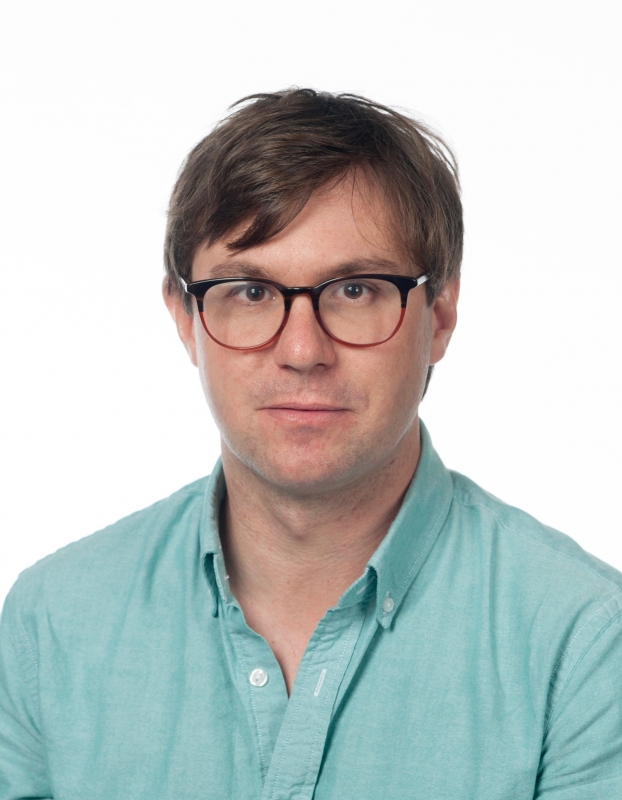
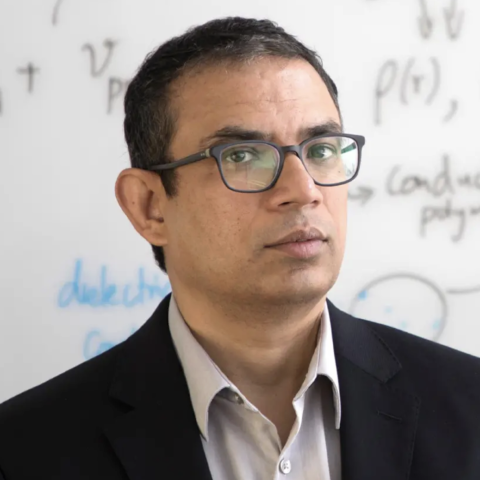
Martin Mourigal

Martin Mourigal's profile picture
mourigal@gatech.edu

Martin Mourigal received the B.S in aterials from Ecole des Mines de Nancy in 2004. He later received his M.S. and Ph.D. in physics from Ecole Polytechnique Federale (EPFL) located in Lausanne, Switzerland in 2007 and 2011, respectively. He was also a postdoctoral research fellow in John Hopkins University from 2011 until 2014. He joined Georgia Tech in 2015 and is currently the Dunn Family Professor in the School of Physics. Mourigal's lab focuses on the study of collective electronic and magnetic phenomena in quantum materials. His research exploits the unique strengths of neutron and X-ray scattering to probe the organization and the dynamics of matter at the nanoscale. 

In addition to his own lab research, Mourigal is the co-director of the Georgia Tech Quantum Alliance, a university wide program that will work towards solving problems in optimization, cryptography, and artificial intelligence. Mourigal was awarded the Cullen Peck Faculty Scholar Award from Georgia Tech in 2019. He was also awarded the National Science Foundation CAREER Award for excellence as a young educator and researcher in 2018.

Dunn Family Professor, School of Physics
Initiative Lead, Georgia Tech Quantum Alliance
Phone
404.385.5669
Office
Howey C202
Additional Research
  • Quantum Materials
  • Micro and Nanomechanics
  • Ferroelectronic Materials
  • Materials Data Sciences
  • Electronics
University, College, and School/Department
Google Scholar
https://scholar.google.com/citations?hl=en&user=utYY3jYAAAAJ&view_op=list_works&sortby=pubdate

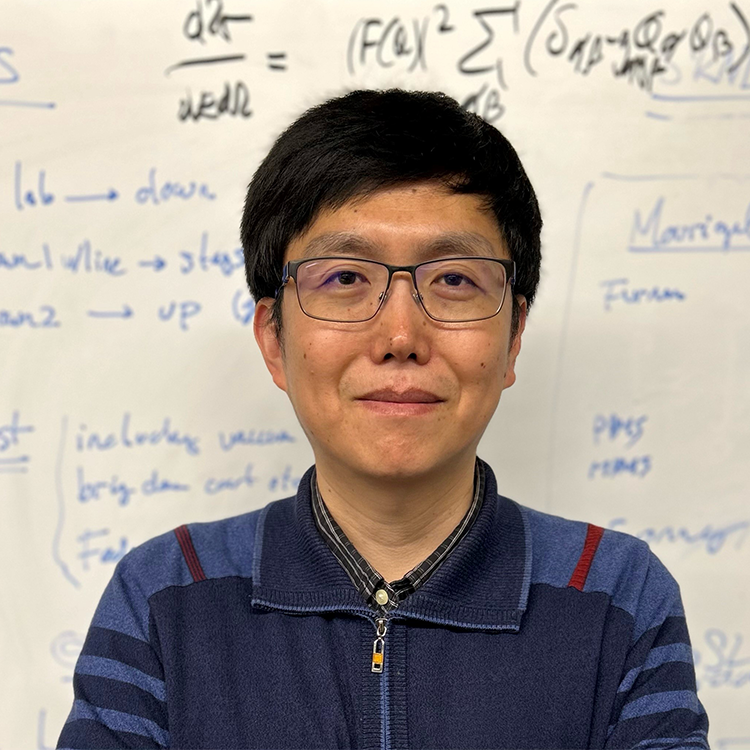
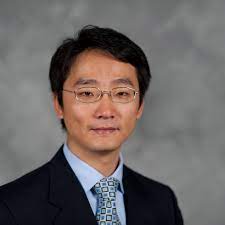
Zhigang Jiang

Zhigang Jiang's profile picture
zhigang.jiang@physics.gatech.edu

Zhigang Jiang received his B.S. in physics in 1999 from Beijing University and his Ph.D. in 2005 from Northwestern University. He was also a postdoctoral research associate at Columbia University jointly with Princeton University and NHMFL from 2005 till 2008. Jiang is interested in the quantum transport and infrared optical properties of low dimensional condensed matter systems. The current ongoing projects include: (1) infrared spectroscopy study of graphene and topological insulators, (2) spin transport in graphene devices, and (3) Andreev reflection spectroscopy of candidate topological superconductors.

Professor, School of Physics
Initiative Lead, Georgia Tech Quantum Alliance
Phone
404.385.3906
Office
Boggs B-18
Additional Research

quantum materials; nanoelectronics; Graphene; Epitaxial Growth

University, College, and School/Department
Google Scholar
https://scholar.google.com/citations?hl=en&user=6MNSoU8AAAAJ&view_op=list_works&sortby=pubdate

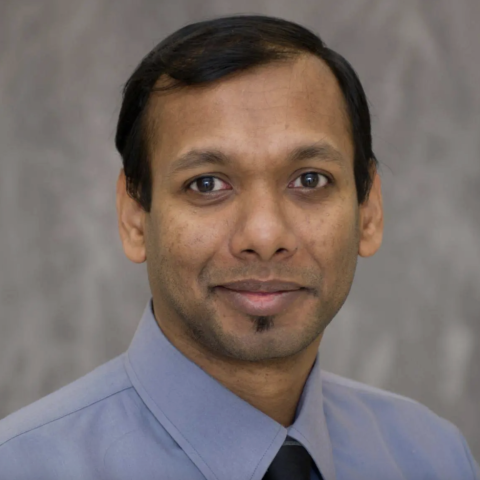
Angshuman Guin

Angshuman Guin's profile picture
angshuman.guin@ce.gatech.edu

Dr. Angshuman Guin, is a Principal Research Engineer in the School of Civil and Environmental Engineering at the Georgia Institute of Technology. He returned to his alma mater to become a faculty member in 2007 after working in the industry for a brief period. Dr. Guin’s research is focused on finding an answer to the question: How do we enable and empower systems managers, researchers and users to make effective, data-driven decisions? His research attempts to find answers through innovations in the development of effective means of data collection, quality assurance, and processing to convert these data into informative metrics across a range of time-scales from near real time to decades. Dr. Guin's current research projects at Georgia Tech are broadly in the area of Freeway Operations, Connected and Autonomous Vehicles, Intelligent Transportation Systems (ITS), Transportation Safety, Traffic Simulation and Data Management. Dr. Guin has presented his work in several international conferences and his work has been published in well recognized peer reviewed journals. He also serves on several standing committees of the Transportation Research Board including the committees on Information Systems and Technology, and Human Factors of Infrastructure Design and Operations and, in the past, has served on the committees on Highway Traffic Monitoring and Transportation Safety Management. He has served on the review committee of several journals including the IEEE Transactions on Intelligent Transportation Systems, the ASCE Journal of Transportation Engineering and the Transportation Research Records of the TRB. In addition to maintaining an active research portfolio, Dr. Guin is a strong advocate of translating research into practice and is the co-founder of InstaData Systems, a data analytics company. 

Research

Intelligent Transportation Systems, Freeway Traffic Operations, Transportation Safety, Simulation, Connected and Autonomous Vehicle, Smart Cities, Big Data, Machine Learning and Deep Learning

Senior Research Engineer, School of Civil and Environmental Engineering
Phone
(404) 894-5830
Additional Research

Electric Vehicles

University, College, and School/Department

Kevin Caravati

Kevin Caravati's profile picture
kevin.caravati@gtri.gatech.edu

Mr. Caravati is a Principal and Founder of Applied Plasma Arc Technologies, LLC and a Senior Research Scientist and Professional Geologist at the Georgia Tech Research Institute (GTRI), the applied research arm of the Georgia Institute of Technology. He received his Bachelor’s degree in Geology from the University of Dayton, Ohio, and a Master of Science in Geology-Hydrogeology track from the University of South Florida in Tampa, Florida. He earned a Master’s degree in Business Administration (International Business) from the Stetson School of Business and Economics at Mercer University in Atlanta. He began work with GTRI in 2002.

Mr. Caravati served as a Hydrogeologist, Project Manager, and Project Director for a wide range of water resources and water quality projects in the United States, Mexico and England. He has led numerous water resource investigations that included delineating watersheds using aerial imagery and GIS tools, well installation and testing programs, monitoring and field data collection programs, and developing ground water flow and contaminant transport models for predictive studies. Since 2008, he served as Director of the Environmental Safety and Occupational Health Programs at GTRI, and as Program Manager for environmental engineering research for a global services provider. Mr. Caravati also served as a research lead in Georgia Tech’s Plasma Arc Research Facility. 

Mr. Caravati’s areas of research include the design and prototyping of dry sanitation systems; testing of chemical and biological sensor systems for environmental applications; modeling of renewable energy systems for rural areas; water supply and wastewater studies for sustainability and energy efficiency; and water resource investigations for rural watersheds in developing countries. He serves as a Research Advisor to Georgia Tech’s Engineering Students Without Borders chapter, and in 2007 he led or participated in projects in Angola, Bolivia, and Yellowstone National Park, and served in an advisory capacity for projects in Kenya, Japan, Korea, Guam, and Ireland.

GTRI Liaison for Sustainability Research
Principal Research Scientist
Manager, Energy and Sustainability Research Program
Phone
(404) 407-8058
Additional Research

Solar

Research Focus Areas
GTRI
Geogia Tech Research Institute

Laurence Jacobs

Laurence Jacobs's profile picture
laurence.jacobs@coe.gatech.edu

Laurence J. Jacobs is associate dean for academic affairs in the College of Engineering at the Georgia Institute of Technology, professor of civil and environmental engineering, and professor of mechanical engineering. Jacobs received his Ph.D. in engineering mechanics from Columbia University and joined the faculty of Georgia Tech in 1988. Prior to receiving his Ph.D., he worked for two years in the aerospace industry and for one year as a structural engineer.

Professor Jacobs’ research focuses on the development of quantitative methodologies for the nondestructive evaluation and life prediction of structural materials. This includes the application of nonlinear ultrasound for the characterization of fatigue, creep, stress-corrosion, thermal embrittlement and radiation damage in metals. His work in cement-based materials includes the application of linear and nonlinear ultrasonic techniques to quantify microstructure and progressive micro-cracking in concrete.

Jacobs’ publications have been cited more than 4900 times with an h-index of 39 (Google Scholar), 31 (Scopus) or 28 (Web of Science) and he is a Fellow of the ASME. Professor Jacobs’ research has been funded by DOE, NSF, ONR, AFOSR, DARPA, NASA, US DOT, Georgia DOT, Exxon-Mobil, EPRI, Sandia National Lab and GE. He has been the PI or co-PI on over $8M worth of contracts since 1990. Jacobs has graduated 16 Ph.D. students (5 women and 2 African Americans) and 65 M.S. thesis students.

Professor, School of Civil and Environmental Engineering and Woodruff School of Mechanical Engineering
Associate Dean for Academic Affairs, College of Engineering
Phone
404.894.2344
Office
Mason 2132A
Additional Research

Acoustics and dynamics, structural health monitoring, structural materials

Research Focus Areas
Google Scholar
https://scholar.google.com/citations?hl=en&user=5q1HqdwAAAAJ&view_op=list_works&sortby=pubdate

Rampi Ramprasad

Rampi Ramprasad's profile picture
rampi.ramprasad@mse.gatech.edu

Ramprasad joined the School of Materials Science and Engineering at Georgia Tech in February 2018. Prior to joining Georgia Tech, he was the Centennial Term Professor of Materials Science and Engineering at the University of Connecticut. He joined the University of Connecticut in Fall 2004 after a 6-year stint with Motorola’s R&D laboratories at Tempe, AZ. Ramprasad received his B. Tech. in Metallurgical Engineering at the Indian Institute of Technology, Madras, India, an M.S. degree in Materials Science and Engineering at the Washington State University, and a Ph.D. degree also in Materials Science and Engineering at the University of Illinois, Urbana-Champaign.

Ramprasad’s area of expertise is in the development and utilization of computational and data-driven (machine learning) methods aimed at the design and discovery of new materials. Materials classes under study include polymers, metals and ceramics (mainly dielectrics and catalysts), and application areas include energy production and energy storage. Prof. Ramprasad’s research has been funded by the Office of Naval Research (ONR), the National Science Foundation (NSF), the Department of Energy (DOE), the Army Research Office (ARO), and Toyota Research Institute (TRI). He has lead a ONR-sponsored Multi-disciplinary University Research Initiative (MURI) in the past to accelerate the discovery of polymeric capacitor dielectrics for energy storage, and is presently leading another MURI aimed at the understanding and design of dielectrics tolerant to enormous electric fields.

Ramprasad is a Fellow of the American Physical Society, an elected member of the Connecticut Academy of Science and Engineering, and the recipient of the Alexander von Humboldt Fellowship and the Max Planck Society Fellowship for Distinguished Scientists.

Michael E. Tennenbaum Family Chair, Materials Science and Engineering
Georgia Research Alliance Eminent Scholar in Energy Sustainability
Phone
404.385.2471
Office
Love 366
Additional Research
  • Data Analytics
  • Materials discovery
  • Energy Storage
  • Modeling
  • Electronic Materials
  • Electronics
University, College, and School/Department

Randall Guensler

Randall Guensler
randall.guensler@ce.gatech.edu

Randall Guensler is a Professor in the School of Civil and Environmental Engineering at the Georgia Institute of Technology. After working for the California Air Resources Board for seven years, and completing his Ph.D. in Civil Engineering at the University of California at Davis, Dr. Guensler joined Georgia Tech in 1994. During his years with the State of California, Dr. Guensler worked for four years in Compliance Assistance and for three years in the Executive Office, evaluating the design and implementation of transportation control measures by regional air quality management agencies. Since arriving at Georgia Tech, Dr. Guensler's main research focus has been the development of new monitoring and modeling tools to assess the air quality impacts of transportation policies. Dr. Guensler was the Chairman of the Transportation Research Board committee on Transportation and Air Quality from 1997 to 2002. From 1995 to 2001, Dr. Guensler served on the Environmental Protection Agency's Mobile Source Technical Advisory Subcommittee. Over the past ten years, he has served on various National Academy of Sciences committees and panels charged with the assessment of vehicle emissions impacts and identification of research needs. Dr. Guensler is the director of Commute Atlanta, a $2.3 million joint value pricing initiative sponsored by the Federal Highway Administration and Georgia Department of Transportation. Commute Atlanta includes the collection and analysis of second-by-second vehicle speed, position, and engine operating data from 470 vehicles in representative Atlanta households. The researchers have monitored more than 1.4 million vehicle trips (more than 350,000 vehicle-miles per month). In 2005, the Commute Atlanta households began participating in road pricing experiments (cent/mile pricing, as well as real-time congestion pricing). Dr. Guensler's research team is assessing consumer response to these pricing mechanisms. A secondary focus of the research is the enhancement of monitoring technologies and services to support future transportation planning, safety, and operations policy initiatives. Development of tools for data management, data analysis, and privacy protection became major research activities. Secondary research has also included analysis of speeding, journey to work route choice, trip chaining, activity-based demand, household tripmaking variability, household and vehicle range of travel, long-distance travel, freeway operations, engine load, start and soak distributions, transit bus operations, etc.

Research

Dr. Guensler's research focuses on transportation systems analysis, travel behavior modeling, and sustainable transportation strategies. His work involves the development and application of data-driven methodologies to understand and improve mobility, traffic operations, and environmental impacts of transportation networks. He investigates the integration of emerging transportation technologies and policies to enhance efficiency and sustainability in urban and regional transportation systems. His research actively involves collaboration with students at both undergraduate and graduate levels.

Education

Ph.D., Civil Engineering, Transportation

University of California, Davis

1993

M.S., Civil/Environmental Engineering

University of California, Davis

1989  

B.S., Individualized Engineering (Civil Engineering, Urban Planning, Environ. Studies)

University of California, Davis

1985


Teaching

Dr. Guensler's teaching interests encompass transportation engineering and planning, with an emphasis on traffic operations, transportation systems analysis, and energy/emissions modeling. He engages both undergraduate and graduate students in foundational and advanced courses that address transportation infrastructure, travel behavior, and the societal impacts of transportation technologies. Professor Guensler also integrates quantitative methods and policy considerations into his instruction to prepare students for multidisciplinary challenges in civil engineering.

Publications

  1. Lu, H., D. Kim, H. Liu, T. Xia, W. Reichard, M.O. Rodgers, R. Guensler (2024). Sensitivity of AERMOD (v21112) RLINEXT Dispersion Model Outputs by Source Type to Variability in Single Noise Barrier Height and Separation Distance. Atmospheric Pollution Research. https://doi.org/10.1016/j.apr.2024.102318. December 2024.
  2. Passmore, R., K.E. Watkins, and R. Guensler (2024). Using Shortest Path Routing to Assess Cycling Networks. https://doi.org/10.1016/j.jtrangeo.2024.103864. Journal of Transport Geography. Volume 117. May 2024.
  3. Lu, H., and R. Guensler (2024). MOVES-Matrix 3.0: On-Road Energy and Emission Modeling with High-Performance Supercomputing. Research Report from the National Center for Sustainable Transportation. October 2024.
  4. Lu, H, D Hunsaker, Z Liu, A Puppala, M McGurk, A Guin, R Guensler, Vehicle Occupancy, Vehicle Throughput, and Person Throughput Assessment of Atlanta’s HOV Managed Lane Facilities, 2025
  5. Xu, X, HC Yang, H Laarabi, C Poliziani, A Birky, K Jeong, H Lu, ..., Improving commercial truck fleet composition in emission modeling using 2021 US VIUS data, International Journal of Sustainable Transportation 19 (12), 1162-1180, 2025
Professor, School of Civil and Environmental Engineering
Phone
(404) 894-0405
Additional Research

Electric Vehicles; Smart Infrastructure

University, College, and School/Department

Andy Sun

Andy Sun's profile picture
andy.sun@isye.gatech.edu

Andy Sun is an Affiliate Associate Professor in the H. Milton Stewart School of Industrial and Systems Engineering at Georgia Tech.

Dr. Sun has a wide range of interests in both theory and applications of deterministic optimization and optimization under uncertainty.

  • On the deterministic side, Dr. Sun's recent research has focused on solving nonconvex optimization problems with a network structure, e.g. optimizing network flows with a nonconvex flow law, nonconvex quadratic programming on a graph, consensus optimization, and market matching. Dr. Sun has also been working on developing distributed algorithms for solving these nonconvex problems with convergence guarantees. Dr. Sun is also very interested in the problem of certifying the existence and uniqueness of solutions of polynomial systems with network structures using complex analysis and algebraic geometric methods. Dr. Sun has recently been interested in optimization with dynamical constraints, again with connection to network flow problems, where the flows are described by ODEs or PDEs.
  • On the uncertainty side, Dr. Sun has developed the first efficient algorithm for solving two-stage robust optimization problems that are much faster than Benders decomposition, cutting plane methods for multistage robust linear optimization much scalable than duality approach, models for decision-dependent uncertainty, and recently a fast exact algorithm (SDDiP) for multistage stochastic integer programming. His team is working toward developing efficient algorithms for multistage robust and stochastic programs with integer decisions.
  • On the application side, Dr. Sun has extensively worked on core optimization problems for electric power system operations and planning, and collaborated with major utility companies and system operators in the US. Dr. Sun's work on robust optimization for the Unit Commitment problem and strong convexification for optimal power flow problems have attracted substantial interests and follow-up research both in industry and academia.

Dr. Sun got his undergraduate degree from Tsinghua University in Beijing (major in Electronic Engineering), master degree in Media Arts and Sciences from MIT (working on analog computation and analog integrated circuit design), and doctoral degree in Operations Research from MIT. After PhD, Dr. Sun did a one-year postdoc at the IBM T. J. Watson Research Center in Yorktown Heights, NY.

Awards and Honors

  • Student Award: Alvaro Lorca, INFORMS George B. Dantzig Dissertation Award, Finalist 2017
  • INFORMS Energy, Natural Resources, and Environment (ENRE) Best Paper in Energy, First Place 2017
  • INFORMS Energy, Natural Resources, and Environment (ENRE) Best Paper in Energy, Second Place 2016
  • INFORMS Junior Faculty Interests Group (JFIG) Paper Competition, 3rd Place. 2014
  • Student Award: Hongfan Chen, INFORMS Undergraduate Research Award, First Place 2014
Anderson-Interface Early Career Professor
Associate Professor
Phone
(404) 385-7571
Additional Research

Electrical Grid

Aaron Levine

Aaron Levine's profile picture
aaron.levine@pubpolicy.gatech.edu

Aaron D. Levine is Associate Dean for Research and Outreach in the Ivan Allen College of Liberal Arts and Professor in the School of Public Policy at Georgia Tech. He also holds an appointment as a Guest Researcher in the Division of Reproductive Health at the Centers for Disease Control and Prevention. He is a member of the leadership team for the NSF Engineering Research Center for Cell Manufacturing Technologies (CMaT), leading ethics and policy research for the center. He seved as Co-Director for CMaT's Engineering Workforce Development activities from 2017 to 2022. His research focuses on the intersection between public policy and bioethics. Much of his work has examined the development of stem cell science, particularly research using human embryonic stem cells, and the translation of novel cell therapies. He also writes extensively on the oversight of contentious areas of medicine, such as assisted reproductive technology. In 2012, he received a NSF CAREER award to examine the impact of ethical controversy on graduate science education and the development of scientific careers.  He serves as Vice-Chair for Bioethics on the International Society for Cell & Genel Therapy’s Committee on the Ethics of Cell and Gene Therapy and recently completed a three-year term as an elected member of the Board of Directors of the American Society for Bioethics and Humanities. He is also a long-time member of the International Society for Stem Cell Research, the Association for Public Policy Analysis and Management, and the American Association for the Advancement of Science.

Aaron has a long-standing interest in science communication and is the author of Cloning: A Beginner's Guide (Oneworld Publications, 2007), an accessible introduction to the science of cloning and embryonic stem cells and the ethical and policy controversies this science inspires. He was an AAAS Leshner Leadership Institute Public Engagement Fellow for 2019-2020. You can follow Aaron on twitter at @aarondlevine.

He completed his Ph.D. in Public Affairs at Princeton University, where his dissertation research examined the impact of public policy on the development of human embryonic stem cell science.  He also holds an M. Phil. from the University of Cambridge, where, as a Churchill Scholar, he studied computational biology at the Sanger Centre and developed algorithms to help analyze the human genome sequence, and a B.S. in Biology from the University of North Carolina at Chapel Hill, where he was a Morehead Scholar.

Professor, School of Public Policy
Associate Dean for Research and Outreach, Ivan Allen College of Liberal Arts
Phone
404-385-3329
Office
DM Smith 216
Additional Research

The impact of ethical controversy on scientific research, with a particular emphasis on emerging biomedical technologies.Recent work has focused on a range of issues related to stem cell policy (including state-level science policy and the rise of unproven stem cell therapies) as well as the oversight of assisted reproduction.

Google Scholar
http://scholar.google.com/citations?user=PPRGxBgAAAAJ&hl=en