Yu Ding

Yu Ding's profile picture
yu.ding@isye.gatech.edu

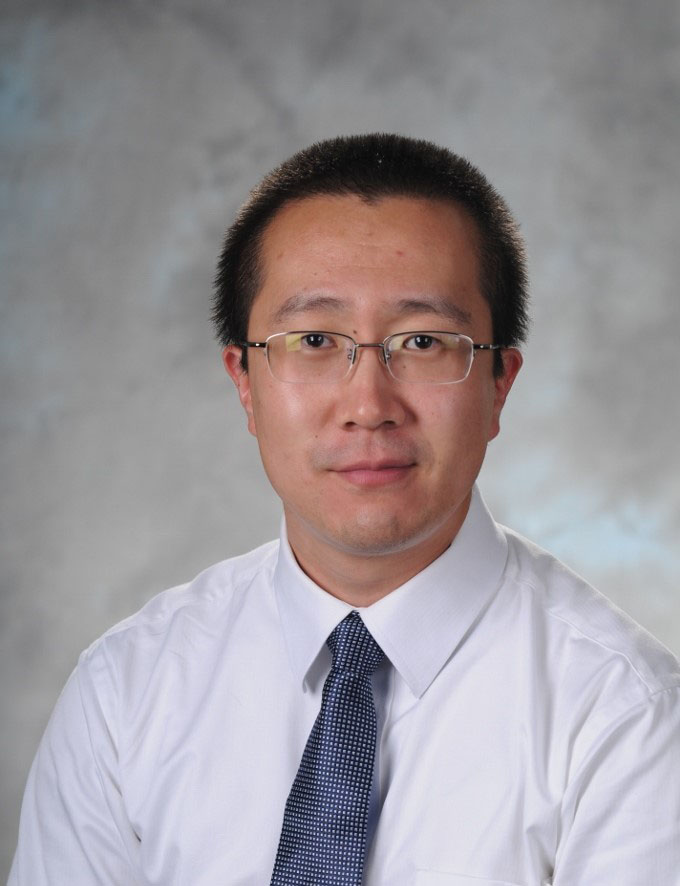
Dr. Yu Ding is the Anderson-Interface Chair and Professor in the H. Milton School of Industrial and Systems Engineering at Georgia Tech. Prior to joining Georgia Tech in 2023, he was the Mike and Sugar Barnes Professor of Industrial and Systems Engineering at Texas A&M University. While at Texas A&M, he also served as Associate Department Head for Graduate Affairs of the Department of Industrial and Systems Engineering between 2012 and 2016 and Associate Director for Research Engagement of Texas A&M Institute of Data Science between 2020 and 2023. He received his B.S. in Precision Engineering from the University of Science and technology of China in 1993, a M.S. in Precision Engineering from Tsinghua University in 1996, a second M.S. in Mechanical from Penn State in 1998, and his Ph.D. in Mechanical Engineering from the University of Michigan in 2001.

Dr. Ding is the author of the CRC Press book, Data Science for Wind Energy, and a co-author of the Springer Nature book, Data Science for Nano Image Analysis. Dr. Ding received the 2019 IISE Technical Innovation Award and 2022 INFORMS Impact Prize for his data science innovations impacting wind energy applications. Dr. Ding is a Fellow of IISE (2015) and ASME (2016). He has served as editor or associate editor for several major engineering data science journals, and is currently serving as the 14th Editor in Chief of IISE Transactions, for the term of 2021-2024.

Anderson-Interface Chair and Professor, School of Industrial Systems Engineering
Phone
404-894-7562
Office
Groseclose 346
Additional Research

Data Science, Manufacturing Applications

Research Focus Areas

Patricia Mokhtarian

Patricia Mokhtarian's profile picture
patmokh@gatech.edu

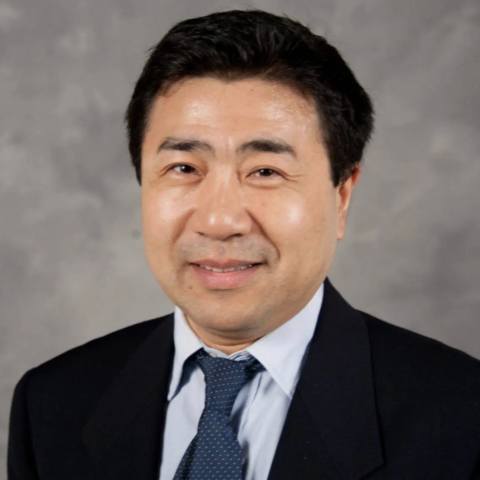
Patricia Mokhtarian is a Regents Professor and the Clifford and William Greene, Jr. Professor of Civil and Environmental Engineering (CEE) at the Georgia Institute of Technology.  Prior to joining Georgia Tech in 2013, she served 23 years on the CEE faculty at the University of California, Davis, after spending several years in regional transportation planning and consulting in Southern California.  Prof. Mokhtarian has specialized in the study of attitudinal influences on travel behavior for more than 45 years, and has authored or co-authored nearly 200 peer-reviewed journal articles, as well as numerous book chapters and research reports.  She is among the most highly-cited scholars in travel behavior research, with more than 41,000 citations and an h-index of 98 (Google Scholar). She is a past Chair of the International Association for Travel Behaviour Research, and received a Lifetime Achievement Award from that society in 2021.  Prof. Mokhtarian was elected to the US National Academy of Engineering in 2024, and serves on the editorial boards of ten transportation journals.

Research

A key research interest has been the impact of telecommunications technology on travel behavior (particularly teleworking adoption and impacts). Additional interests include the influence of the built environment on travel behavior, accounting for self-selection biases in modeling behavior, attitudes toward travel itself, time use and multitasking, incorporating attitudes into practice-oriented travel demand forecasting models, impacts of autonomous vehicles, congestion-response behavior, and subjective well-being.

Education

Ph.D., Northwestern University, 1981

M.S., Northwestern University, 1977

B.A., Florida State University, 1975

Teaching

At the undergraduate level, Prof. Mokhtarian teaches upper-division probability and statistics, and at the graduate level she teaches statistical analysis, survey (questionnaire) design and analysis, and discrete choice modeling.

Distinctions & Awards

  • Invited speaker, endowed lecture series: “How Much Do Attitudinal Variables Improve Travel Demand Models?  Evaluation Using an Overlap Sample from an Attitude-rich Survey and the 2017 National Household Travel Survey”. University of Michigan, Department of Civil & Environmental Engineering Richart-Woods Lecture, February 13, 2025.
  • Appointed Regents’ Professor, Georgia Institute of Technology, 2024.
  • Elected to the National Academy of Engineering, 2024.
  • In 2024, my student Dr. Xinyi Wang received the prestigious and competitive Eric I. Pas Dissertation Prize of the International Association for Travel Behaviour Research, given to the best doctoral thesis in travel behavior in the world, among those completed in calendar year 2023.
  • Best PhD Thesis Award to my student Dr. Xinyi Wang, Sigma Xi, Georgia Institute of Technology, 2024.
  • Best PhD Thesis Award to my student Dr. Xinyi Wang, School of Civil and Environmental Engineering, Georgia Institute of Technology, 2023.
  • “Latent class model with an error structure: Investigating potential unobserved associations between latent segmentation and behavior generation” (by Sung Hoo Kim and Patricia L. Mokhtarian) selected for the Outstanding Paper Award of Committee AEP 35 (The Effects of Information and Communication Technologies on Transportation Choices) of the Transportation Research Board, 2024 Annual Meeting.
  • One of six members (and the only woman) of the inaugural class of Northwestern University Transportation Center Fellows, recognizing “impactful contributions to the transportation profession in research, policy, practice or education, and special connections to the Transportation Center and Northwestern University”, November 17, 2023.
  • My students won the (U.S.) Council of University Transportation Centers Wootan Awards for Outstanding PhD Dissertation in Policy & Planning (F. Atiyya Shaw) and Outstanding MS Thesis in Policy & Planning (Xinyi Wang), in 2021.
  • International Association for Travel Behaviour Research 2021 Lifetime Achievement Award, given to someone who has “made fundamental and sustained contributions to travel behaviour research for a substantial period (typically at least 25 years) up to the present time”; is “widely known, at the very least among the IATBR community”; and has “influenced the field through her/his writings, teaching, service, and nurturing of younger professionals”, June 2, 2021 online, and December 14, 2022 in person.
  • Outstanding Industry Contributor Award, “given to an individual who in embodying the Zephyr Principles, has selflessly contributed to the good of the industry through the body of their work”, bestowed by the Zephyr Foundation (https://zephyrtransport.org/), a non-profit dedicated to “advancing rigorous transportation and land use decision-making for the public good by advocating for and supporting improved travel analysis, and facilitating its implementation”, March 24, 2021.
  • Clifford and William Greene, Jr. Professorship, School of Civil and Environmental Engineering, Georgia Institute of Technology, 2021 – present.
  • Named a National Associate of the National Academies of Sciences, Engineering, and Medicine, February 5, 2020.
Regents' Professor, School of Civil and Environmental Engineering
Clifford and William Greene, Jr. Professor, School of Civil and Environmental Engineering
Phone
(404) 385-1443
Additional Research

Electric Vehicles; Smart Infrastructure

University, College, and School/Department

Michael Hunter

Michael Hunter's profile picture
michael.hunter@ce.gatech.edu

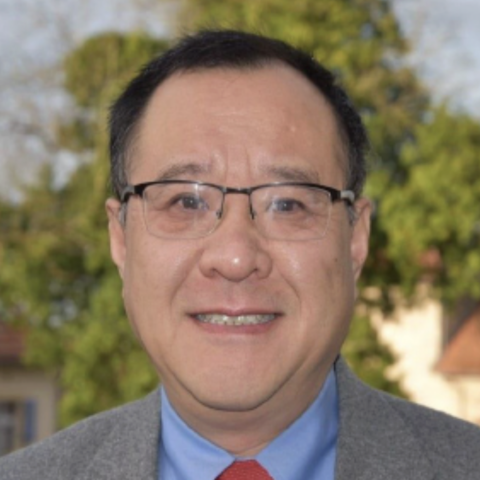
Dr. Hunter is a Professor in the School of Civil and Environmental Engineering at Georgia Institute of Technology. His primary teaching and research interests are in transportation operations and design, specializing in adaptive signal control, traffic simulation, and arterial corridor operations. Dr. Hunter obtained his B.S. in Civil Engineering from Rensselaer Polytechnic University (1992), his M.S. in Civil Engineering from the University of Texas at Austin (1994), and his Ph.D. in Civil Engineering from the University of Texas at Austin (2003). After obtaining his M.S. he worked as a transportation engineer for several years at the Sear-Brown Group in Rochester, NY.

Dr. Hunter has been highly active in research, teaching, and service. He has been principal investigator of sponsored research for a variety of sponsors including local, state, and federal agencies, and industry. Dr. Hunter has led two significant transportation research centers, the Georgia Transportation Institute (GTI, 2012 to present) and the National Center for Transportation Systems Productivity and Management (NCTSPM, 2012 to 2017). Dr. Hunter is actively researching simulation, digital twins, connected and autonomous vehicles, signal control optimization with AI, smart cities, connected infrastructure, and disruptive and emerging technologies within the transportation systems context.  

Research

Dr. Hunter has extensive research experience in simulation, digital twins, hardware-in-the-loop-simulation, and software-in-the-loop-simulation. His projects have explored the modeling of arterials, freeways, corridors, and parking facilities.  He has extensively studied adaptive control, emerging technologies, signal optimization with AI and Reinforcement Learning, etc. His efforts have included two real-time corridor digital twin models, one in Atlanta, GA, and one in Chattanooga, TN. He has studied emergency vehicle preemption and transit priority, including multi-agent Reinforcement Learning (DQN and PPO) optimization. Dr. Hunter has developed traffic flow simulations for capturing the effect of aggressive human driver interaction with autonomous vehicles on traffic. Dr. Hunter has also undertaken numerous efforts in the development and analysis of performance metrics. He has conducted safety research, studying the impact of various safety treatments, such as the mode of flash at an intersection, don't block the box treatments, innovating signage and lane markings, etc.

Education

Ph.D., Civil Engineering, The University of Texas at Austin, 2003

M.S., Civil Engineering, The University of Texas at Austin, 1994

B.S., Civil Engineering, Rensselaer Polytechnic Institute, 1992

Associate of Science, Engineering Science, Hudson Valley Community College, 1990

Teaching

Dr. Hunter’s teaching is practice focused, teaching at the undergraduate and graduate level. Topics in his courses include transportation safety, operations, design, and planning. Dr. Hunter stresses engineering fundamentals, innovation, and intuition, as well as exploring the application of emerging methods such as AI and RL.  His courses stress the importance of the design user, that is, ensuring that our transportation operations and design are focused on the strengths and capabilities of the people that use the transportation system, whether driving a vehicle, crossing the street, riding a bicycle or scooter, or riding transit. Recently, Dr. Hunter developed a new course merging a common simulation tool utilized in practice with fundamental concepts, pulling away the black box nature of many simulation tools.

Distinctions & Awards

  • Winner of the Transportation Research Board D. Grant Mickle Award (2019)
  • Best Paper Award – Transportation Research Board, Operational Effects of Geometrics Committee, AHB65. (2019)
  • Mobility Award. City of Atlanta’s North Avenue Smart Corridor Project (Project Co-PI). Smart City Expo World Congress. Barcelona. November 2018. (2018)
  • Best Abstract Award, PTV America’s User Group Meeting (2011)
  • Best Paper Award, Principles of Advanced and Distributed Simulation Conference (2010)
  • Transportation Research Board Operational Effects of Geometrics Committee, Best Paper Award (2010)

Publications

  1. Mers, B., M. Hunter, K. Watkins. Demographic Breakdown of Transit Rider Satisfaction. Transportation Research Record, Journal of the Transportation Research Board, Sage Publications, 2678 (6), 656-666. June 2024.
  2. Saroj, A., S. Roy, A. Guin, M. Hunter. Impact of Connected Corridor Volume Data Imputations on Digital Twin Performance Measures. International Journal of Transportation Science and Technology. Elsevier. June 2023. 
  3. Guin, G., K. Robinson, H. Unthank, S. Roy, and M. Hunter. Impact of Restricted Crossing U-Turns on Vehicular Emission, Transportation Research Record, Journal of the Transportation Research Board, Sage Publications, May 2023.
  4. Manjunatha, P., S. Roy, L. Elefteriadou, A. Guin, and M. Hunter. Evaluation of the Operational Effects of Autonomous and Connected Vehicles through Microsimulation. Transportation Research Record, Journal of the Transportation Research Board, Sage Publications, December 2022.  
  5. Saroj, S., A. Guin, and M. Hunter. Development of a Connected Corridor Real-Time Data-Driven Traffic Digital Twin Simulation Model. Journal of Transportation Engineering, Part A: Systems. American Society of Civil Engineers, Volume 147, Issue 12, Dec 2021.
Professor, School of Civil and Environmental Engineering
Phone
(404) 385-1243
Additional Research

Electric Vehicles; Smart Infrastructure

University, College, and School/Department

Anita Pavadore

Anita Pavadore's profile picture
anita.pavadore@gtri.gatech.edu

Pavadore is the division chief of the Embedded System Vulnerability Division within GTRI's Cybersecurity, Information Protection, and Hardware Evaluation Research Laboratory (CIPHER). Pavadore founded the Embedded System Vulnerability Division in 2010 and is responsible for the group's strategic planning, technical leadership, business development, and operations. 

Pavadore, who has been with GTRI since 1985, has expertise in vulnerability analysis of military communications systems. Her division performs cyber vulnerability assessments and has a strong background in reverse engineering and vulnerability analysis of embedded system software, hardware, and communication protocols. She is the primary author on more than 50 technical publications and has presented at multi-national conferences. Pavadore holds an M.S. in Electrical Engineering from Tech.

Division Chief, NVD-CIPHER
Phone
(404) 407-6582
Additional Research

Cyber Technology

GTRI
Geogia Tech Research Institute

Sheldon Jeter

Sheldon Jeter's profile picture
sheldon.jeter@me.gatech.edu

Dr. Jeter's research background includes systems and theoretical thermo-dynamics, and heat and mass transfer, thermal and fluid energy systems, engineering education, and advanced engineering thermodynamics. He began at Tech in 1978 as a Research Engineer.

Research

Dr. Jeter's research interests include both basic and applied research. His basic research is focused on two-phase heat and mass transfer, such as the experimental investigation of heat transfer to boiling liquids, whereas his theoretical basic research includes work on the thermodynamics of mixtures and radiation.

Dr. Jeter's applied research is largely devoted to improving the performance of existing energy systems and developing innovative energy systems, particularly fluid and thermal energy systems.

Distinctions & Awards

  • Registered Professional Engineer in Georgia

Patents

  • Electrode Arrangement for Electrohydrodynamic Enhancement of Heat and Mass Transfer, with S.I. Abdel-Khalik, U.S. Patent No. 6,374,909, April 23, 2002.
  • A Film Pump for Applying a Monolayer Film Over Water Surfaces, U. S. Patent No. 5,558,845, with M. T. Pauken and S. I. Abdel-Khalik, October 1996.
  • Loop Timing Chain, U. S. Patent 4,027,792, June 7, 1977
  • Tufting Needle, U. S. Patent 4,015551, April 5, 1977

Representative Publications

  • F. F. Abedelall, et al. 2005. Pressure Drop Caused by Abrupt Flow Area Changes in Small Channels. Experimental Thermal and Fluid Science 29, 425-434.
  • S. M. Jeter and Hany A. M. Al-Ansary. 2004. Numerical and Experimental Analysis of Single-Phase and Two-Phase Flow in Ejectors. The International Journal of HVAC Research 10(4), 521-538.
  • S. M. Jeter, C. C. Pascual and S. I. Abdel-Khalik. 2002. Visualization of Boiling Bubble Dynamics Using a Flat Uniformly Heated Transparent Surface. International Journal of Heat and Mass Transfer 45, 691-696.
  • R. M. Stoddard, et al. 2002. Onset of Flow Instability and Critical Heat Flux in Thin Horizontal Annuli. Experimental Thermal and Fluid Sciences 26, 1-14.
  • T. M. Remley, et al. 2001. Validation of EHD-Enhanced Nucleate Boiling Correlations. ASHRAE Transactions 107, 326-336.
Associate Professor, Woodruff School of Mechanical Engineering
Phone
(404) 894-3211
Additional Research

Energy Storage; Solar; Thermal Systems

University, College, and School/Department

Marc Weissburg

Marc Weissburg's profile picture
marc.weissburg@biology.gatech.edu
Professor, School of Biological Sciences
Brook Byers Professor
Phone
404.894.8433
Office
ES&T 2238
Additional Research

Bio-inspired materials

Research Focus Areas
Google Scholar
https://scholar.google.com/citations?hl=en&user=z5dzCHUAAAAJ&view_op=list_works&sortby=pubdate

Rebecca A. Watts Hull

Rebecca A. Watts Hull's profile picture
rwattshull@gatech.edu

Rebecca Watts Hull is assistant director, faculty development for sustainability education initiatives for the Center for Teaching and Learning (CTL), with a courtesy appointment in the School of History and Sociology. Rebecca works with faculty to incorporate Education for Sustainable Development into their course design and teaching practices. She partners with other units to lead strategic initiatives related to sustainability education, including Sustainability Next’s Education for Sustainable Development implementation plan. Prior to her current role, Rebecca served as a Service Learning and Partnerships Specialist with the Center for Serve-Learn-Sustain (SLS), and she continues to collaborate closely with Georgia Tech's community-based learning initiatives. She facilitates the "Scaling up Sustainability Across the Curriculum Community of Practice" of the Association for the Advancement of Sustainability in Higher Education (AASHE) which supports collaboration among sustainability education professionals at dozens of colleges and universities. Rebecca also serves on AASHE's Advisory Council and STARS Steering Committee. Before her work at Georgia Tech, Rebecca held sustainability and educational leadership roles in the public, private and nonprofit sectors with responsibilities that included faculty development, science and environmental curriculum design, and community-based environmental education and advocacy. Rebecca earned an M.S. and Ph.D. from Georgia Tech in History and Sociology of Technology and Science, focusing her research on social movements and organizational change, and holds an M.S. in Natural Resources and Environment from the University of Michigan. She has taught Sustainability Leadership at Emory University, Environment and Sustainability Studies at Agnes Scott College, and American Environmental History, Social Movements, Community Organizing, and Organizing for Social Change at Georgia Tech.

Assistant Director
Senior Academic Professional
Faculty Development for Sustainability Education Initiatives, Center for Teaching and Learning
Research Focus Areas
University, College, and School/Department

Martial Taillefert

Martial Taillefert's profile picture
martial.taillefert@eas.gatech.edu

Awards

Outstanding Undergraduate Research mentor, Georgia Tech, 2007 Petroleum Research Fund, Young Investigator Award, 2004 CAREER Award from NSF, 2003

Education

Ph.D., Civil Engineering, Northwestern University, 1997 M.S., Analytical Chemistry, University of Geneva, 1993 B.S., Chemistry, University of Geneva, 1991

Research

Geochemistry of freshwater and marine environments Geomicrobiology In situ measurements in sediments Analytical speciation of trace metals Interactions between chemical and biological processes at redox interfaces Dynamic biogeochemical modeling (reactive transport)

Research Keywords

Biogeochemistry Climate, Oceanography, and Weather

Professor, School of Earth and Atmospheric Sciences
Associate Chair for Graduate Studies, School of Earth and Atmospheric Sciences
Phone
404.894.6043
Additional Research

Climate Environment

Research Focus Areas

Wenting Sun

Wenting  Sun's profile picture
wenting.sun@aerospace.gatech.edu

Education

  • B.E., Engineering Physics, 2005, Tsinghua University
  • M.E., Engineering Physics, 2007, Tsinghua University
  • Ph.D., Mechanical and Aerospace Engineering, 2013, Princeton University

Background

Prof. Wenting Sun received his B.E. and M.E. degrees from Tsinghua University, Beijing in 2005 and 2007, respectively, and his Ph.D. degree from Princeton University in 2013. He joined Georgia Tech in July 2013. Dr. Sun’s research spans on combustion simulation, combustion kinetics, and plasma/ozone assisted combustion. He develops new numerical algorithms to accelerate large scale CFD simulation using predictive kinetic models. His work on plasma/ozone assisted combustion is to induce plasma generated species into combustion system to enable combustion at extreme conditions. Dr. Sun has developed a high pressure shock tube with unique capability allowing investigation of combustion kinetics for future power generation systems.

Research

  • Dr. Sun’s research spans on combustion simulation, combustion kinetics of conventional and alternative fuels, and new combustion technologies to enhance combustion process. Key to his research is developing new numerical algorithms to accelerate large scale CFD simulation using predictive kinetic models. His work on plasma/ozone assisted combustion is to induce plasma generated species into combustion system to enable combustion at extreme conditions, such as those in supersonic combustion Ramjet engines hypersonic propulsion. Dr. Sun has developed a high pressure shock tube with unique capability allowing investigation of combustion kinetics at supercritical carbon dioxide conditions for the next generation of power generation systems. The new supercritical carbon dioxide oxy-combustion power generation system features high efficiency and almost 100% carbon capture, which will change the landscape of power generation. He also developed a novel super rapid combustion machine to study fundamental turbulence/autoignition interaction to improve combustion models.

(1) Kinetic Model Reduction and Dynamic Adaptive Kinetics for Turbulent Combustion

High-fidelity simulation of combustion systems is a critical element for combustor and engine design. However, to model a combustion system, a chemical kinetic model including hundreds, even thousands, of species and reactions are needed to describe the fuel oxidation and heat release process. For each species in the kinetic model, one ordinary differential equation needs to be solved. The complicated kinetic model makes high-fidelity simulation very challenging and even prohibited because of the limitation of the needed computation power. For example, for large-scale simulations such as LES or DNS, using a predictive detailed kinetic model is prohibited. Thus, there exists a gap between the development of a detailed, predictive combustion kinetic model and high-fidelity large-scale simulation. We work on developing new algorithms to enable and accelerate large scale numerical simulations on combustion with predictive kinetic models. Recently, we  developed a new algorithm GPS (Global Pathway Selection) methond for kinetic model reduction to decrease the number of species in the detailed kinetic model efficiently from hundreds/thousands to tens through the analysis of element flux. Therefore, the reduced predictive kinetic models can be employed by LES or DNS for high-fidelity simulation. This algorithm constructs element flux graphs for considered elements, for example, C, O, and H for hydrocarbon combustion systems. Based on the constructed element flux graphs, important species which transfer significant element flux can be selected in the kinetic model. The global pathways for selected species can be identified by searching the shortest paths with the constructed element flux graphs. In this way, a reduced kinetic model can be constructed for use in complex CFD simulation. For given accuracy, the smaller the number of species needed in the reduced model, the more efficient the reduced kinetic model is, with the added benefit of considerably shorter simulation time. The GPS software and source code can be download here.

To further reduce the computation time of large-scale high-fidelity simulation, we developed a new numerical framework for DNS of turbulent combustion. The principle behind this multidisciplinary work is that different regions in the computation domain have different thermodynamic states; so only a small portion of species in the kinetic model needed to be calculated in the simulation. Therefore, different regions at different times can employ different reduced kinetic models generated on-the-fly with a much smaller number of species to further accelerate the simulation. The new framework was demonstrated using a canonical turbulent premixed flame employing a real jet fuel kinetic model (see plots blow). With high accuracy, the new numerical framework provides a significant speed-up of computation and the total CPU time is reduced by a factor of approximately 20. This new numerical framework enabled DNS with predictive kinetic models with good accuracy and parallel scalability.

The new regime-independent framework for 3D DNS of turbulent combustion with detailed kinetics is developed by incorporating on-the-fly adaptive kinetics (OAK), correlated transport (CoTran) techniques, and an efficient point-implicit ODE solver (ODEPIM) into a conventional DNS platform. All three methods are modified and optimized to adapt to 3D turbulent combustion and parallel high performance computing (HPC). A canonical turbulent premixed flame configuration corresponding to the thin reaction-zone regime is considered, where an initially planar premixed flame front interacts with a decaying isotropic turbulence. The computational domain consists of a cube with length 0.015 m. With the new numerical frame work, calculation of chemistry can be accelerated 46 times, calculation of transport can be accelerated 72 times, and overall acceleration of calculation is 20 times. See our publication here.

With the new capability enabled by the above-mentioned new numerical frame work, we further investigated the sensitivity of DNS predictions to chemical kinetic models. DNS of a canonical temporally evolving turbulent non-premixed flame was conducted using two different kinetic models. This simulation would not have been possible without the newly developed numerical framework discussed above. It was found that at laminar conditions, the two kinetic models provided very close predictions on combustion properties such as autoignition delays, flame speeds, and extinction strain rates. However, at turbulent conditions, different predictions were observed. The temperature predicted by these two kinetic models can vary by as much as 100 K. Detailed systematic analysis revealed that the sensitivity to the chemical kinetic models was magnified by the effects of unsteadiness and turbulence. This study has resolved an important question faced by the combustion community for a long time, that a different selection of kinetic models affects the prediction of DNS of turbulent combustion even though the kinetic models behave similarly at laminar conditions. See our related publication here.

(2) Ozone Assisted Combustion

Plasma/ozone-assisted combustion is a promising technique to improve engine performance, increase lean burn flame stability, reduce emissions, and enhance low temperature fuel oxidation and processing. Plasma/ozone-assisted combustion takes advantage of the dramatically different kinetics between plasma/ozone and combustion to enhance and control the combustion process. We work on using plasma generated species to enhance and control combustion process. One ongoing project is to study the effect of ozone addition on combustion.

One well known reaction pathway to enhance combustion by ozone addition through ozone decomposition (O3àO2+O). Different from conventional understanding in which ozone was known to enhance flame speeds owing to its unique capability to release atomic oxygen (O3àO+O2)  at elevated temperature conditions, We also discovered that ozone (through ozonolysis reactions) can induce explosive reactions at extremely low temperature conditions (even at room temperature) in combustion systems with unsaturated hydrocarbons, such as ethylene. It is common sense that combustion only occurs at high temperature conditions and can only be initiated by ignitors producing a high temperature environment. However, by taking advantage of ozonolysis reactions,(e.g., C2H4+O3àCH2O+H2+CO2, typically studied in atmosphere chemistry community regarding ozone layer depletion and pollution) autoignition was demonstrated at room temperature conditions. A new autoignition-assisted flame stabilization mechanism was also reported by us. Our work on ozone-enhanced combustion bridges the study in the atmosphere chemistry community and in the combustion community. It will provide a solution to enable low-temperature combustion and combustion at near limiting conditions for the development of advanced engines. This research also has the potential to develop a new aerated fuel injection technique and a fuel coking removal technique, therefore changing the cycle efficiency.

In this experiment, ozone is doped into synthetic air and ethylene is used as fuel to create autoigniting environment in diffusion jet flame. the flame dynamics of autoigniting flame is investigated. Figure below shows high speed images right after the fuel jet was turned on. Ozonolysis reactions between O3 and C2H4 produce large amount of CH2O and release heat. The chemiluminescence measurement indicates the formation of a cloud of CH2O, then an auignition kernel occured inside the CH2O cloud. In such a environment, flame could propagate orders of magnitude faster than its corresponding laminar flame speed.

(3) High Pressure Combustion Kinetics

Recently, we developed a new and unique high pressure shock tube to study high pressure combustion kinetics. It enables measurement of critical fundamental combustion parameters in a completely new pressure region, especially those associated with combustion at a supercritical carbon dioxide (sCO2) condition suitable for a future power generation system. This is a regime where combustion kinetics has never been explored before. The sCO2 power cycle has higher efficiency and allows almost 100% carbon capture with no NOx emission (Zero Carbon Natural Gas, selected as 10 breakthroughs technologies in 2018 by MIT Technology Review). Once successful, this technique will potentially change the landscape of ground power generation. However, the sCO2 power cycle requires the combustor to run in the pressure range of 100 atm to 300 atm with high CO2 concentration, which is completely different from the operating regime of conventional gas turbines. For the first time in this field, we obtained autoignition delay of CH4/O2/CO2 autoignition delays at 100±7 atm at the sCO2 condition as shown in the plot below. Comparison with selected kinetic models shows that GRI 3.0 which is widely used in industries has been proven to have large deviation from experiments at sCO2 condition.

(4) Combustion Instability Control Using Plasma

In this project, we use non-equilibrium nanosecond pulsed plasma to control combustion instability. At a condition close to lean blowoff, flame starts to oscillate (a) and finally blows off with further decrease of equivalence ratio. With plasma activation, the lean blowoff limits can be significantly extended and flame can be stablized without osscilation (a'). At certain conditions, plasma also change the morphology of flames (b) and (b').

Distinctions & Awards

Bernard Lewis Fellowship, the Combustion Institute, 2012

Distinguished Paper, the 33rd International Symposium on Combustion, 2011

Selected Publications

[1]. W. Sun, Y. Ju, “Non-equilibrium plasma-assisted combustion: A review of recent progress” 2013 Journal of Plasma and Fusion Research, 89(4), 209-219 (invited paper)

[2]. B. Brumfield, W. Sun, Y. Ju, G. Wysocki “Detection of HO2 by Faraday rotation spectroscopy” 2013 J. Phys. Chem. Lett. 4(6), 872-876

[3]. W. Sun, S. H. Won, T. Ombrello, C. Carter, Y. Ju, “Direct ignition and the S-curve transition by in situ nano-second pulsed discharge in methane/oxygen/helium counterflow flame” 2013 Proceedings of the Combustion Institute, 34, 847-855

[4]. H. Guo, W. Sun, F. M. Haas, T. Farouk, F. Dryer, Y. Ju, “Measurements of H2O2 in low temperature dimethyl ether oxidation” 2013 Proceedings of the Combustion Institute, 34, 573-581

[5]. W. Sun, M. Uddi, S. H. Won, T. Ombrello, C. Carter, Y. Ju, “Kinetic effects of non-equilibrium plasma-assisted methane oxidization on diffusion flame extinction limits” 2012 Combustion and Flame, 159(1) 221-229

Professor, Guggenheim School of Aerospace Engineering
Phone
(404) 894-0524
Additional Research

Combustion

Jingfeng Wang

Jingfeng Wang's profile picture
jingfeng.wang@ce.gatech.edu

Biography

Dr. Jingfeng Wang is a professor in the School of Civil and Environmental Engineering. He obtained a BS in 1984 and a MS in 1987 from Peking University. He received his Sc.D. (Ph.D.) in Hydrometeorology from Massachusetts Institute of Technology (MIT) in February 1997. Dr. Wang was a Post-Doctoral Associate from February 1997 to January 2000, a Research Associate from February 2000 to February 2009 at MIT, and an Assistant Researcher from March 2009 to August 2011 at University of California at Irvine. Dr. Wang was a Principal Research Engineer from September 2011 to July 2012 at Georgia Tech.  Dr. Wang joined Georgia Tech faculty as an Associate Professor in 2012 and earned tenure in 2018. Dr. Wang was an Honorary Visiting Professor at Flinders University, Australia, May – July 2016. 

Research

Dr. Wang's research fields include foundations and models of global water-energy-carbon cycles, non-equilibrium thermodynamics of heat and radiation transfer, Amazon deforestation and regional climate dynamics, and Bayesian probability and statistics.  

Education

  1. Sc.D.             Massachusetts Institute of Technology      1997 
  2. M.S.              Peking University                                             1987 
  3. B.S.               Peking University                                             1984  

Teaching

Dr. Wang teaches undergraduate and graduate courses in Hydrology and co-teaches Vertically-Integrated-Projects (VIP).  

Distinctions & Awards

  • Plenary Speaker, 2nd Global Evapotranspiration Symposium, 2023 
  • AGU Editors’ Citation for Excellence in Refereeing for Earth and Space Science, 2020 
  • AGU’s Outstanding Reviewers, 2018 
  • Warren Lecturer, University of Minnesota, 2018 
  • Overseas Scholarships, Tsinghua University, China, 2017 
  • Visiting International Research Fellowship, Flinders University, Australia, 2016 

Publications

  1. Cho, K., Abraham, S., Kumar, S. V., and Wang, J. (2025), Remote Sensing of Live Fuel Moisture for Wildfires Using SMAP Satellite Observations, Geophysical Research Letters, 52, e2025GL117025. https://doi.org/10.1029/2025GL117025  
  2. Zhou, W., L. Zhang, A. Y. Sheshukov, J. Wang, M. Zhu, K. Sargsyan, D. Xu, D. Liu, T. Zhang, V. Mazepa, A. Sokolov, V. Valdayskikh, A. Vasiliev, V. N. Tran, & V. Ivanov (2025), A Novel Framework to Project the Permafrost Fate with Explicit Quantification of Soil Property and Future Climate Uncertainties, Journal of Geophysical Research - Earth Surface, 130, e2024JF008168. https://doi.org/10.1029/2024JF008168  
  3. Kim, T., Zhou, W., Tran, V. N., Zhang, L., Wang, J., Zhu, M., Sheshukov, A. V., Zhang, T., Liu, D., Mazepa, V. S., Sokolov, A. A., Valdayskikh, V. V., and Ivanov, V. I. (2025), Biases in radiative flux observations due to precipitation across the Arctic forest-tundra ecotone, Agricultural and Forest Meteorology, 74, 110814. https://doi.org/10.1016/j.agrformet.2025.110814  
  4. Farooq, U., Liu, H., Zhang, Q., Wang, J., Shen, L. (2025), Global Lake Evaporation Estimates by Integrating Penman Method with Equilibrium Temperature Approach, Journal of Hydrometeorology, 26 (9), 1301 – 1313. https://doi.org/10.1175/JHM-D-24-0146.1  
  5. Sun, H., Fu, L., Wang, W., Xue, J., Wang, J., Liao, W., Li, H., Sun, X., Yang, Y., Wang, J., Zhang, H., Chen, F., Zheng, Q., Meng, C., Zhang, W. (2025), Explore the relationship between Bowen ratio and Evapotranspiration in Wetlands using the Maximum Entropy Production Model, Journal of Hydrology, 661, Part B, 133586. https://doi.org/10.1016/j.jhydrol.2025.133586  
Associate Professor, School of Civil and Environmental Engineering
Phone
(404) 385-4653
Additional Research

Water

Research Focus Areas
University, College, and School/Department