Sharon Murphy (retired)

smurphy77@gatech.edu
Research Associate I
Phone
(404) 385-4198
IRI And Role


Paige Clayton is an Assistant Professor in the School of City and Regional Planning at Georgia Tech. She is also affiliated with the CREATE Economic Development Research Center at UNC Kenan-Flagler Business School’s Kenan Institute of Private Enterprise. Dr. Clayton joined Georgia Tech in 2020 after completing her Ph.D. in Public Policy at the University of North Carolina at Chapel Hill with a concentration on entrepreneurship and innovation, regional economic development, and science and technology policy. At the University of North Carolina, Dr. Clayton received the Nancy W. Stegman Fellowship and the Dissertation Completion Fellowship. During her PhD, she held visiting positions at SKEMA Business School (Sophia Antipolis, France) and at UCLA’s Department of Geography.
Dr. Clayton’s research focuses on regional patterns of economic development and how entrepreneurship and innovation influence local economies. Key themes include entrepreneurial support organizations, social network analysis, entrepreneurial ecosystems, university technology transfer, research & development, and institutions, and the connections between these factors which help support local entrepreneurship and innovation. Her research has been published in Research Policy, Industrial & Corporate Change, Academy of Management Perspectives, the Journal of Technology Transfer, Industrial Labor & Relations Review, International Regional Science Review, and the Oxford Handbook on Entrepreneurship and Collaboration, among others.
Paige is an alumna of Georgia Tech’s School of Public Policy and a native Atlantan.
City and Regional PlanningPolicy & EconomicsClimate Change
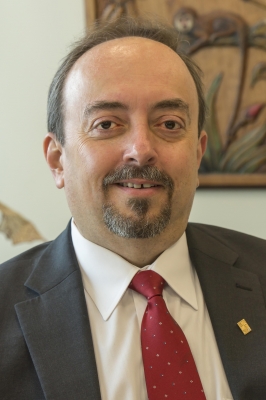

Dr. Adam Steinberg is the Pratt & Whitney Chair and professor in the Daniel Guggenheim School of Aerospace Engineering at Georgia Tech, with an adjunct appointment in the School of Mechanical Engineering. Dr. Steinberg also serves as the Secretary of the Faculty, which is a leadership position in Georgia Tech’s faculty governance. He previously served as the Associate Chair for Graduate Programs in the Aerospace Engineering School. Prior to joining Georgia Tech, Dr. Steinberg was on the faculty of the University of Toronto Institute for Aerospace Studies (2011-2018) and a research scientist at the German Aerospace Center (2009-2011).
Teaching Interests
Professor Steinberg’s teaching interests focus on undergraduate and graduate instruction in aerospace engineering fundamentals, including fluid dynamics, thermodynamics, propulsion, combustion, and experimental methods. He emphasizes a rigorous understanding of the theoretical basis of aerospace systems, integrating analytical and computational methods to prepare students for advanced study and professional practice. His pedagogy encourages student engagement through problem-solving that applies theory to realistic situations.
Research Interests
Professor Steinberg is the Director of the Ben T. Zinn Combustion Laboratory -- one of the largest academic combustion research facilities in the world. His research focuses on overcoming the scientific and technical barriers facing future aerospace propulsion and energy conversion devices. Working closely with government and industry, his research group develops and applies advanced laser-based measurement techniques that help unravel the coupled thermal, fluid, and chemical process occurring in these devices. Topics of interest include laser-based diagnostics, combustion, gas turbine engines and augmenters, supersonic and hypersonic propulsion, chemical rockets, detonations, space electric propulsion and plasmas, and multi-phase flows.
Research
Lab/Collaborations:
Disciplines:
AE Multidisciplinary Research Areas:
Education
Distinctions & Awards
Chair of the AIAA Propellants & Combustion Technical Committee; Combustion Institute Fellow; Associate Editor of Combustion and Flame; AIAA Associate Fellow; Combustion Institute Research Excellence Award (2020); Provost Teaching and Learning Fellow (2019); Canada Research Chair (2017); Hiroshi Tsuji Early Career Research Award (2016); McCharles Prize for Early Career Research Distinction (2016); Ontario Early Researcher Award (2015).
Recent Publications
Combustion
Electronics
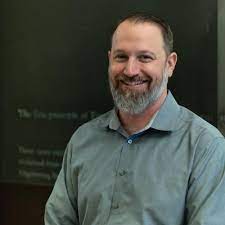
Matthew E. Oliver hails from Memphis, TN. He received his bachelor’s degree in Economics from the University of Memphis in 2008, and his PhD in Economics from the University of Wyoming in 2013. His primary fields of expertise are energy economics, environmental and natural resource economics, and industrial organization and regulation. Dr. Oliver’s research interests focus primarily on the regulation of energy resources and energy infrastructure. Much of his past work has dealt with natural gas markets and interstate pipelines. More recently, his research has focused on the market effects of rapid deployment of renewable energy technologies (e.g., wind and solar photovoltaics). Additionally, he has published (and ongoing) research on other topics such as the links between energy resource development, environment, and economic growth, and the economics of climate change. Since joining Georgia Tech in 2013, Dr. Oliver has taught various courses in energy and environmental economics, microeconomics, and macroeconomics.
Education:
Areas of
Expertise:
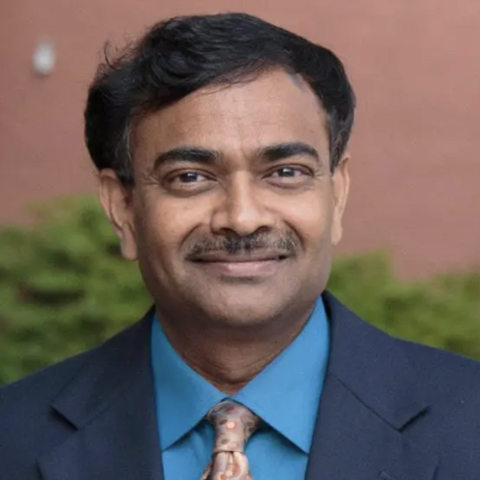
Dr. Srinivas Peeta is the Frederick R. Dickerson Chair and Professor in the School of Civil and Environmental Engineering and the H. Milton Stewart School of Industrial and Systems Engineering at Georgia Institute of Technology. He is also Principal Research Faculty at the Georgia Tech Research Institute. He is the Co-Editor-in-Chief of the journal Transportation Research Part B: Methodological. Dr. Peeta is a Distinguished Alumnus of the Indian Institute of Technology (Madras) and an American Society of Civil Engineers (ASCE) Fellow. He received his B.Tech., M.S., and Ph.D. degrees from the Indian Institute of Technology (Madras), Caltech, and The University of Texas at Austin, respectively. Prior to Georgia Tech, Dr. Peeta was the Jack and Kay Hockema Professor in Civil Engineering at Purdue University up to 2018. From 2006 to 2018, he served as the founding Director of the NEXTRANS Center, formerly the U.S. Department of Transportation’s (USDOT’s) Federal Region 5 University Transportation Center (UTC). He was also the founding Associate Director of USDOT’s Center for Connected and Automated Transportation (CCAT), the Region 5 UTC, from 2016 to 2018. Dr. Peeta was a past Chair (2007-2013) of the Transportation Network Modeling Committee of the Transportation Research Board (TRB) of the National Academies.
Dr. Peeta has authored over 515 technical publications, including over 450 in peer-reviewed journals and conference proceedings. He has over 600 talks/lectures in several countries, including 165 invited talks. He has received over $56 million in research funding. Dr. Peeta is on the Editorial Advisory Boards of the Journal of Intelligent Transportation Systems, Transportmetrica B: Transport Dynamics, Journal of Blockchain and Intelligent Computing, Frontiers in Built Environments, and Transportation in Developing Economies. He is an Advisory Board member of Korean Society of Civil Engineering’s Journal of Civil Engineering. Some of his recognitions include the INFORMS Transportation Science Best Dissertation Award (1994), U.S. NSF CAREER Award (1997), ASCE Walter Huber Research Prize (2009), TRB Blue Ribbon Committee Award (2013), and several paper awards from conferences (ASCE, IEEE, TRB, ACM) and journals. Several of his students have received best dissertation/thesis awards from professional organizations such as CUTC, IATBR and COTA. His research interests broadly span transportation and infrastructure systems, and multiple methodological areas. His work in the area of dynamic traffic assignment represents a standard for research reference, and has guided the U.S. Department of Transportation’s development of a deployable architecture for real-time route guidance in large-scale transportation systems equipped with advanced information dissemination technologies.
Research
Professor Peeta’s research interests are multidisciplinary and span several methodological domains related to transportation and infrastructure systems, and the role of emerging technologies. His research focuses on the development of advanced optimization and control methods, AI/ML techniques, econometric and behavioral approaches, driving simulator-based environments, and system-of-systems paradigms for complex transportation systems. His research also explores the roles of autonomy, automation, connectivity, electrification, shared mobility, and information and communication systems for the movement of people and freight. His work includes modeling, analysis, and management of traffic and transportation networks, with an emphasis on dynamic traffic assignment, real-time traffic control, human-machine interactions, mixed-traffic environments, vehicle-human-infrastructure interactions, and intelligent transportation systems. The research integrates concepts from operations research, systems engineering, behavior and psychological theories, and transportation analytics to improve efficiency, reliability, and sustainability of transportation infrastructure.
Education
Ph.D. in Civil Engineering
The University of Texas at Austin
1994
M.S. in Civil Engineering
California Institute of Technology
1989
B.Tech. in Civil Engineering
Indian Institute of Technology – Madras
1988
Teaching
Professor Peeta’s teaching is centered on transportation systems engineering and operations research topics at both undergraduate and graduate levels. His instruction encompasses transportation systems analysis, traffic flow theory, transportation network modeling, transportation demand modeling, optimization techniques, and intelligent transportation systems. Professor Peeta emphasizes a rigorous quantitative approach and practical problem-solving skills in his courses, aiming to prepare students for analytical and decision-making challenges in transportation engineering. In recent years, his courses have had an additional focus on the roles of emerging transformative technologies and emerging AI/ML methods in transportation systems.
Distinctions & Awards
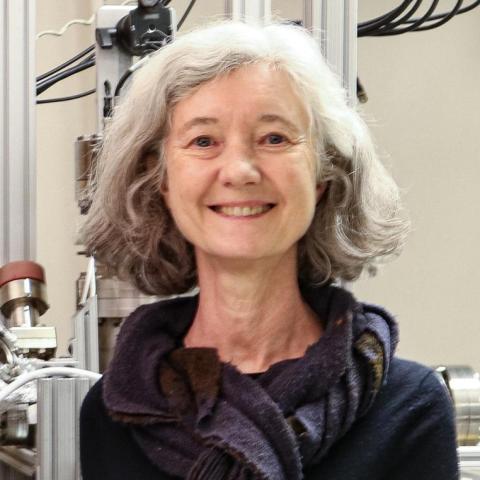
Claire Berger is Director of Research at the French National Center for Scientific Research - Néel Institute working at the Georgia Institute of Technology in W. A. de Heer’s group. She obtained a Ph.D. in Physics from the University of Grenoble, France, with a dissertation on the electronic properties of AlMn quasicrystals. She then moved to a postdoc position at the Centre d’Etudes Atomiques, where she produced and studied amorphous films, and was hired as a researcher at the CNRS ‘s Laboratory for Study of Electronic Properties of Solids (LEPES), in Grenoble. She focused the first part of her carrier on electronic properties of quasicrystalline materials grown and characterized at LEPES. She contributed to the experimental evidence for a metal-insulator transition in these metal- based compounds.
At Georgia Tech, her current scientific interests are primarily nanoscience and electronic property of graphene-based systems. She co-authored the first article demonstrating the two dimensional properties of graphene and proposing graphene for electronics, and together with Walt de Heer and Phil First she co-authored the first patent for graphene electronics (2003).
She is co-author of more than 200 publications in international journals, has a citation index of 10,880 and an H index of 41.
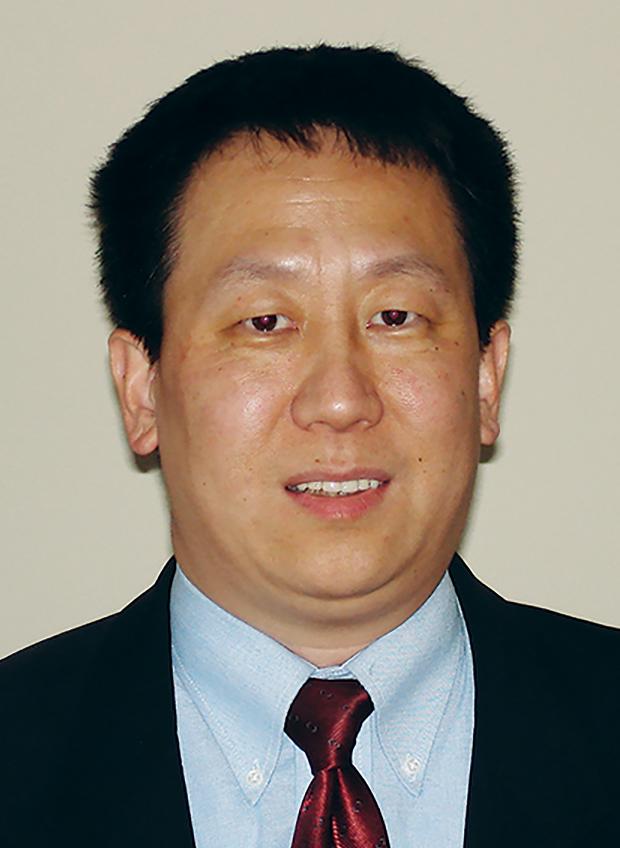
Dr. Yu Ding is the Anderson-Interface Chair and Professor in the H. Milton School of Industrial and Systems Engineering at Georgia Tech. Prior to joining Georgia Tech in 2023, he was the Mike and Sugar Barnes Professor of Industrial and Systems Engineering at Texas A&M University. While at Texas A&M, he also served as Associate Department Head for Graduate Affairs of the Department of Industrial and Systems Engineering between 2012 and 2016 and Associate Director for Research Engagement of Texas A&M Institute of Data Science between 2020 and 2023. He received his B.S. in Precision Engineering from the University of Science and technology of China in 1993, a M.S. in Precision Engineering from Tsinghua University in 1996, a second M.S. in Mechanical from Penn State in 1998, and his Ph.D. in Mechanical Engineering from the University of Michigan in 2001.
Dr. Ding is the author of the CRC Press book, Data Science for Wind Energy, and a co-author of the Springer Nature book, Data Science for Nano Image Analysis. Dr. Ding received the 2019 IISE Technical Innovation Award and 2022 INFORMS Impact Prize for his data science innovations impacting wind energy applications. Dr. Ding is a Fellow of IISE (2015) and ASME (2016). He has served as editor or associate editor for several major engineering data science journals, and is currently serving as the 14th Editor in Chief of IISE Transactions, for the term of 2021-2024.
Data Science, Manufacturing Applications

Patricia Mokhtarian is a Regents Professor and the Clifford and William Greene, Jr. Professor of Civil and Environmental Engineering (CEE) at the Georgia Institute of Technology. Prior to joining Georgia Tech in 2013, she served 23 years on the CEE faculty at the University of California, Davis, after spending several years in regional transportation planning and consulting in Southern California. Prof. Mokhtarian has specialized in the study of attitudinal influences on travel behavior for more than 45 years, and has authored or co-authored nearly 200 peer-reviewed journal articles, as well as numerous book chapters and research reports. She is among the most highly-cited scholars in travel behavior research, with more than 41,000 citations and an h-index of 98 (Google Scholar). She is a past Chair of the International Association for Travel Behaviour Research, and received a Lifetime Achievement Award from that society in 2021. Prof. Mokhtarian was elected to the US National Academy of Engineering in 2024, and serves on the editorial boards of ten transportation journals.
Research
A key research interest has been the impact of telecommunications technology on travel behavior (particularly teleworking adoption and impacts). Additional interests include the influence of the built environment on travel behavior, accounting for self-selection biases in modeling behavior, attitudes toward travel itself, time use and multitasking, incorporating attitudes into practice-oriented travel demand forecasting models, impacts of autonomous vehicles, congestion-response behavior, and subjective well-being.
Education
Ph.D., Northwestern University, 1981
M.S., Northwestern University, 1977
B.A., Florida State University, 1975
Teaching
At the undergraduate level, Prof. Mokhtarian teaches upper-division probability and statistics, and at the graduate level she teaches statistical analysis, survey (questionnaire) design and analysis, and discrete choice modeling.
Distinctions & Awards
Electric Vehicles; Smart Infrastructure