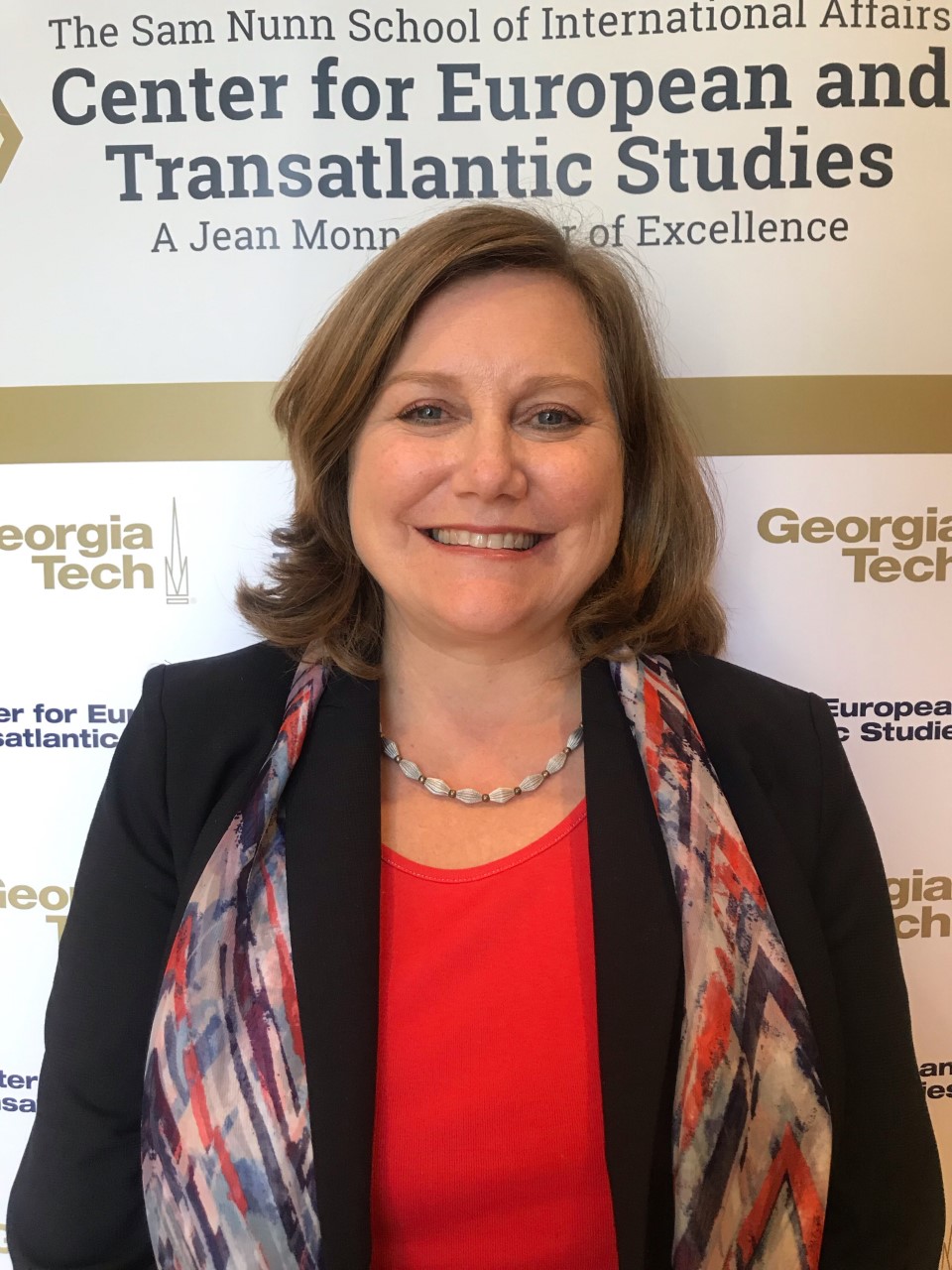
Martha Grover

Martha Grover's profile picture
martha.grover@chbe.gatech.edu

Grover’s research activities in process systems engineering focus on understanding macromolecular organization and the emergence of biological function. Discrete atoms and molecules interact to form macromolecules and even larger mesoscale assemblies, ultimately yielding macroscopic structures and properties. A quantitative relationship between the nanoscale discrete interactions and the macroscale properties is required to design, optimize, and control such systems; yet in many applications, predictive models do not exist or are computationally intractable.

The Grover group is dedicated to the development of tractable and practical approaches for the engineering of macroscale behavior via explicit consideration of molecular and atomic scale interactions. We focus on applications involving the kinetics of self-assembly, specifically those in which methods from non-equilibrium statistical mechanics do not provide closed form solutions. General approaches employed include stochastic modeling, model reduction, machine learning, experimental design, robust parameter design, and estimation.

Professor, School of Chemical and Biomolecular Engineering
James Harris Faculty Fellow, School of Chemical and Biomolecular Engineering
Member, NSF/NASA Center for Chemical Evolution
Phone
404.894.2878
Office
ES&T 1228
Additional Research

Colloids; Crystallization; Organic and Inorganic Photonics and Electronics; Polymers; Discrete atoms and molecules interact to form macromolecules and even larger mesoscale assemblies, ultIMaTely yielding macroscopic structures and properties. A quantitative relationship between the nanoscale discrete interactions and the macroscale properties is required to design, optimize, and control such systems; yet in many applications, predictive models do not exist or are computationally intractable. The Grover group is dedicated to the development of tractable and practical approaches for the engineering of macroscale behavior via explicit consideration of molecular and atomic scale interactions. We focus on applications involving the kinetics of self-assembly, specific those in which methods from non-equilibrium statistical mechanics do not provide closed form solutions. General approaches employed include stochastic modeling, model reduction, machine learning, experimental design, robust parameter design, estIMaTion, and optimal control, monitoring and control for nuclear waste processing and polymer organic electronics
Google Scholar
https://scholar.google.com/citations?hl=en&user=PgpLoqIAAAAJ&view_op=list_works&sortby=pubdate

Seung Soon Jang

Seung Soon Jang's profile picture
SeungSoon@mse.gatech.edu

Seung Soon Jang joined the School of Materials Science and Engineering at the Georgia Institute of Technology in July 2007. Jang worked at Samsung Electronics and the Materials and Process Simulation Center (MSC) at CalTech performing various researches in nanoelectronics, fuel cell, and interfacial systems as a director of Supramolecular Technology for six years.

His research interest includes computations and theories to characterize and design nanoscale systems based on the molecular architecture-property relationship, which are especially relevant to molecular electronics, molecular machines, fuel cell technology and biotechnology.

Professor, School of Materials Science and Engineering
Director, Computational NanoBio Technology Lab
Phone
404.385.3356
Office
Love 351
Additional Research

Jang's research interest is to characterize and design nanoscale systems based on the molecular architecture-property relationship using computations and theories, which are especially relevant to designing new biomaterials for drug delivery and tissue engineering. Currently, he is focusing on 1) NanoBio-mechanics for DNA, lipid bilayer, and hydrogel systems; 2) Molecular interaction of Alzheimer proteins with various small molecules. Dr. Jang is also interested in various topics such as nanoelectronics, nanostructured energy technologies for fuel cell, battery and photovoltaic devices.;Computational mechanics; Nanostructured Materials; Polymeric composites; Biomaterials; Fuel Cells; Delivery and Storage

Google Scholar
https://scholar.google.com/citations?hl=en&user=SW0u-asAAAAJ&view_op=list_works&sortby=pubdate

Timothy Charles Lieuwen

Timothy Charles Lieuwen's profile picture
tim.lieuwen@aerospace.gatech.edu

Tim Lieuwen is the executive vice president for Research at the Georgia Institute of Technology. In this role, he oversees the Institute’s $1.4+ billion portfolio of research, economic development, and sponsored activities. This includes leadership of the Georgia Tech Research Institute (GTRI), the Enterprise Innovation Institute, 11 interdisciplinary research institutes (IRIs), and related research administrative support units.

In his 25-plus years at Georgia Tech, Lieuwen earned his master’s and Ph.D. degrees in mechanical engineering (1996 and 1999, respectively) and has held multiple leadership positions. He has been the executive director of the Strategic Energy Institute (SEI) and served as the interim chair of the Daniel Guggenheim School of Aerospace Engineering in 2023.

Lieuwen has received numerous honors and recognition for his work in clean energy systems and policy, national security, and regional economic development. Additionally, he has been awarded the titles of Regents’ Professor and the David S. Lewis, Jr. Chair in AE. He is also a member of the National Academy of Engineering and is a fellow of the American Society of Mechanical Engineers and the American Institute of Aeronautics and Astronautics.

Executive Vice President for Research (EVPR)
Regents' Professor, Guggenheim School of Aerospace Engineering
Phone
(404) 894-8885
Office
Carnegie 020
Additional Research

Acoustics; Fluid Mechanics; Combustion; Signal Processing

Michael Rodgers

Michael Rodgers
michael.rodgers@ce.gatech.edu

Dr. Rodgers is the director of the Georgia Tech Air Quality Laboratory, holding academic and/or research appointments in the Georgia Tech Schools of Civil and Environmental Engineering, Earth and Atmospheric Sciences, and Public Policy. Dr. Rodgers has a long and distinguished record in air quality research, serving as principal investigator on research projects totaling more than $20 million since 1988 including numerous projects on field and laboratory measurements of pollutants and instrument development and intercomparison. Current activities include managing projects GRASP (Georgia Rural Aerosol Sampling Program) and ON-RAMP (On-Road Ammonia Measurement Program) both of which focus on particulate emissions, conversion and fate. In the area of mobile source emissions, he directs Georgia Tech's efforts in vehicle remote sensing and model validation and is Co-Principal Investigator on the development of the MEASURE model. Dr. Rodgers serves on EPA�s Mobile Source Technical Advisory Subcommittee and Emissions Modeling Workgroup, the U.S. Technical Advisory Group to the International Standards Organization, ASTM International�s Committee D-22 on the Analysis of Atmospheres as well a numerous other technical and policy advisory committees.

Research

Modeling and simulation of vehicle activity and emissions, Statistical analysis of vehicle emissions data, Environmental policy analysis, Laboratory and field measurements of gaseous and particulate pollutants including vehicle remote sensing and instrumented vehicles

Emeritus Regents Researcher, School of Civil and Environmental Engineering
Director, Georgia Tech Air Quality Laboratory
Phone
(404) 385-0569
Additional Research

Climate/Environment; Electric Vehicles; Smart Infrastructure

University, College, and School/Department

John Tien

John Tien's profile picture

The Hon. John Tien is a distinguished external fellow at the Georgia Tech Strategic Energy Institute and the Georgia Tech Research Institute. He is also a distinguished professor of the practice in both the Sam Nunn School of International Affairs and the School of Cybersecurity and Privacy and a senior fellow at the Belfer Center for Science and International Affairs at the Harvard Kennedy School. 

Before joining Georgia Tech, Tien was deputy secretary of the U.S. Department of Homeland Security (DHS) from 2021 to 2023. In that role, he was the DHS chief operating officer, overseeing a budget of $105 billion and facilities in all 50 U.S. states and all territories as well as more than 3,000 personnel stationed overseas in more than 75 countries. 

Alongside the secretary of Homeland Security, Deputy Secretary Tien led the policy development, operational oversight, and risk management of the department’s statutory mission areas and subordinate agencies, including cybersecurity and protection of America’s critical physical and cyber infrastructure; disaster preparedness and recovery; supply chain optimization, border security, and free and fair trade; air, pipeline, and rail security; maritime physical and cyber security; citizenship and immigration services; protection of senior officials and safeguarding the U.S. financial system; and counter-narcotics production and trafficking. 

In his broader policy administration role, Deputy Secretary Tien served as a member of the National Security Council’s Deputies Committee, the board of the National Counterterrorism Center, and the President’s Management Council. 

Upon his retirement from DHS in 2023, he was awarded two of DHS’ highest civilian awards: the DHS Distinguished Service Medal, and the United States Coast Guard Distinguished Public Service Medal. 

Tien previously served in the Obama administration as a National Security Council (NSC) senior director for Afghanistan and Pakistan, the Bush administration as an NSC director for Iraq, and the Clinton administration as a White House Fellow for the United States Trade Representative. 

From 2011 to 2021, he held various senior leadership positions at Citigroup as a managing director in their Citi Retail Services and Global Consumer Bank organizations. Before Citigroup, he was a U.S. Army officer, retiring at the rank of colonel. His Army career included commanding an 1,100-soldier armored task force in combat in Iraq, serving overseas for nearly a decade, and teaching political science at West Point. Col. Tien’s military awards and decorations include the Bronze Star Medal, Combat Action Badge, and Valorous Unit Award. 

Tien is now serving on the corporate board of directors for Union Pacific Railroad, on the Carter Presidential Center’s Board of Councilors, and as a founding board member of the Avalon Action Alliance, a nonprofit focused on nationally scaling proven healthcare programs to help heal veterans and first responders who struggle with depression, PTSD, and traumatic brain injury. He is also an executive partner and ambassador for the Master’s in Business for Veterans program at Emory University’s Goizueta Business School. 

Tien holds a B.S. in civil engineering from the United States Military Academy at West Point and an M.A. in philosophy, politics, and economics from Oxford University, where he was a Rhodes Scholar. He is a life member of the Council on Foreign Relations. He lives with his wife Tracy in Atlanta and volunteers with and supports numerous local civic institutions including the High Museum of Art.

Distinguished External Fellow / Professor of the Practice
IRI And Role

Vicki Birchfield

Vicki Birchfield's profile picture
vicki.birchfield@inta.gatech.edu

Vicki L. Birchfield is a Professor in The Sam Nunn School of International Affairs at Georgia Tech, Co-Director of the Center for European and Transatlantic Studies and Director of the study abroad program on the European Union and Transatlantic Relations. Dr. Birchfield received a DES from the Graduate Institute of International Studies from the University of Geneva, Switzerland (1993) and a Ph.D. in Political Science from the University of Georgia (2000). She is the author of Income Inequality in Capitalist Democracies: The Interplay of Values and Institutions(Penn State University Press 2008), Triangular Diplomacy among the United States, The European Union, and The Russian Federation: Responses to the Crisis in Ukraine (Palgrave Macmillan 2017) co-edited with Alsadair Young, Reporting at the Southern Borders: Journalism and Public Debates in the US and the EU co-edited with Giovanna Dell'Orto (Routledge 2014) and Toward a Common EU Energy Policy: Problems, Progress, and Prospects(Palgrave Macmillan 2011) co-edited with John S. Duffield. She has published articles in International Studies Quarterly, European Journal of Political Research, the Review of International Studies, Journal of European Public Policy, British Journal of Politics and International Relations, Globalizations, and the Review of International Political Economy. Her research and teaching specializations are European politics, the European Union, comparative politics, and international political economy. Other research and intellectual interests include the interplay of capitalism and democracy, social movements and the politics of globalization, and transatlantic relations. She has been a visiting scholar at Sciences Po, Paris and the University of Bordeaux and in 2012 was bestowed the honor of “Chevalier dans l’Ordre National du Mérite” (Knight in the National Order of Merit) by the French government.

Associate Professor, Sam Nunn School of International Affairs
Co-Director, Center for European and Transatlantic Studies
Phone
(404)385-0604
Research Focus Areas

Willie Belton

Willie Belton's profile picture
willie.belton@econ.gatech.edu

Dr. Belton is an Associate Professor and Director of Undergraduate Programs in the School of Economics. Professor Belton’s initial training and research focus was on issues of monetary policy and how policy design and implementation impacts the cyclical behavior of the macro-economy. Currently, Professor Belton is involved in multidisciplinary analysis which examines the impact of political, cultural, and economic institutions on downstream outcomes of income distribution, business development, and social behavior. This research brings together issues of public policy, international affairs and economics to examine and developed much more broad theories of economic, political, and social development across ethnic groups and nation-states.

Director of Undergraduate Programs, School of Economics
Associate Professor, School of Economics
Phone
(404) 894-4903
Office
Old CE Building, Room 238
Research Focus Areas

Paul Mayne

Paul Mayne's profile picture
paul.mayne@ce.gatech.edu

Professor Paul W. Mayne is an international researcher with a focus on in-situ testing, geotechnical site characterization, foundation systems, and the evaluation of soil & rock properties. Particular interests include the use, conduct, and interpretation of the cone penetrometer, seismic piezocone, and flat dilatometer, evaluation of shallow and deep foundation systems, and ground modification techniques. From 1977-1987, Paul served in geotechnical consulting practice in the Washington DC-Virginia-Maryland region. After receiving a doctorate from Cornell University, he joined the civil & environmental engineering faculty at Georgia Tech in 1990. He served as the Geosystems Engineering Team Leader from 2000 to 2010, 2012-2014, and 2016. During his residency at GT, Paul served as the chair (2001-2013) of the ISSMGE Technical Committee TC 102 (formerly TC16): Ground Property Characterization by In-Situ Tests (http://www.webforum.com/tc102) and later served as ISSMGE Vice President for North America (www.issmge.org). With Dr. Peter Robertson, Dr. Mayne hosted and co-edited the two-volume proceedings entitled Geotechnical Site Characterization (ISC-1, 1998) held in Atlanta. In 2000, he co-edited the ASCE GSP No. 97 entitled Innovations & Applications in Geotechnical Site Characterization for the Geo-Institute conference held in Denver. He is the senior author of the National Highway Institute manual on Subsurface Investigations: Geotechnical Site Characterization (2002) and a co-author on the FHWA Geotechnical Engineering Circular (2002) on Evaluation of Soil & Rock Properties and GSP 124 GeoSupport 2004 on foundations. In September 2004, the 2nd Intl. Conf. on Site Characterization (ISC) held in Portugal resulted in the two-volume proceedings: Geotechnical & Geophysical Site Characterization, for which he was a co-editor. Paul served as senior editor for GSP 138 on Site Characterization & Modeling at the 2005 ASCE GeoFrontiers Conference in Austin. Dr. Mayne was selected by the National Academies to prepare the NCHRP Synthesis 368 on the Cone Penetration Test (2007) which is available at:www.trb.org.  He co-edited the proceedings Geotechnical & Geophysical Site Characterization 2008 (ISC-3, Taipei, 2008) and served as host chair and co-editor for two volumes entitled:  Deformational Characteristics of Geomaterials (2008).  In 2009, he prepared GeoEngineering Design Using the CPT for ConeTec. Together with Dr. Peter K. Robertson, Paul co-edited the 3-volume proceedings for the Second International Symposium on Cone Penetration Testing (CPT’10) that was held in Huntington Beach/CA (www.usucger.org).  He also co-edited the proceedings for the 4th International Conference on Site Characterization (ISC-4) held in Pernambuco, Brazil (2012). Most recently, Paul contributed 4 of the 11 chapters to the new NCHRP 258 Document Subsurface Investigations Manual (2019) published by the National Academies Press for the Transportation Research Board (www.trb.org). Dr. Mayne has delivered international lectures, including a number of invited keynotes presentations, and participated in over 125 continuing education courses.  Paul Mayne is an active member of ASCE, ASTM, TRB, USUCGER, DFI, ADSC, CGS, and ISSMGE and has served as a recent consultant on projects located in the USA, Canada, Australia, Europe, and Asia. He is licensed as a professional registered engineering in Virginia. He is married, has one daughter, and plays bass guitar. 

Research

In-situ testing, Site characterization, Geotechnical parameter identification, Foundation systems, Soil properties determination, Geostatic stress state, Ground improvement by dynamic compaction and plasma arc vitrification

Professor Emeritus, School of Civil and Environmental Engineering
Phone
(404) 894-6226
Additional Research

Geosystems

University, College, and School/Department

Lakshmi Sankar

Lakshmi Sankar's profile picture
sankar@aerospace.gatech.edu

Professor Sankar is a Regents Professor and Sikorsky Professor in the Guggenheim School of Aerospace Engineering at the Georgia Institute of Technology. As Director of the School's Computational Fluid Dynamics Lab, he leads a research and education program focused on the modeling and simulation of unsteady viscous flow around aircraft, helicopters, horizontal axis wind turbines, and turbo-machinery components. He teaches undergraduate and graduate level courses in the areas of aerodynamics, helicopter theory, wind energy, aerodynamic design, and computational aerodynamics. Prior to joining the Georgia Tech faculty in 1982, Dr. Sankar worked at Lockheed Martin in Marietta, GA. While at Lockheed, he contributed to the development of 2-D and 3-D flow analyses that solve 3-D unsteady transonic flow over airfoils, wing-alone, wing-body, and complete aircraft configurations. He also extended 2-D transonic design methodologies to 3-D transonic wing and wing-body configurations. He also worked closely with researchers at Ford Motor Co on 3-D Navier-Stokes simulations of next generation automobile configurations. Dr. Sankar is the author or co-author of more than 400 technical publications in the fields of spatially and temporally high-order algorithm development, 3-D unsteady transonic flow over aircraft configurations, helicopter aerodynamics, compressor stall and surge, and aerodynamic design. He is an AIAA Fellow, a Technical Fellow of the American Helicopter Society, and a member of the American Society of Mechanical Engineers.

Teaching Interests

Professor Sankar's teaching interests encompass fundamental aerospace engineering and mechanical engineering topics at both undergraduate and graduate levels. These include solid mechanics, structural analysis, composite materials, and fracture mechanics. His instruction emphasizes the integration of theoretical principles with practical applications to prepare students for advanced study and professional practice. He is committed to engaging students through research-informed teaching and fostering critical thinking skills in engineering mechanics and materials behavior.

Research Interests

Professor Sankar's research focuses on the mechanics of materials and structures with particular emphasis on the behavior and failure of advanced composites and multifunctional materials. His work includes the development of micromechanical models, characterization of damage and fracture processes, and the study of multifunctional materials under mechanical and environmental loading. He applies computational and experimental methods to understand material response and to inform the design of lightweight, durable aerospace structures.

Research

Lab/Collaborations:

  • Vertical Lift Research Center of Excellence (VLRCOE)
  • Computational Fluid Dynamics Laboratory (CFD)
  • Center for 21st Century Universities

Disciplines:

  • Aerodynamics & Fluid Mechanics

AE Multidisciplinary Research Areas:

  • Large-Scale Computations, Data, and Analytics

Education

  • Education Ph.D., Aerospace Engineering, Georgia Institute of Technology, 1977.
  • MSAE, Aerospace Engineering, Georgia Institute of Technology, 1975.
  • B. Tech., Aeronautical Engineering, Indian Institute of Technology, Madras, India, 1973.

Distinctions & Awards

o Fellow, AIAA

o Technical Fellow, AHS 

o Georgia Tech Award for Development of Graduate Research Assistants, 1997 

o Sigma Gamma Tau Most valuable Professor Award 2005, 2006, 2007, 2015 

o NASA Group Achievement Award, UH60 Airloads Workshop, June 2007 

Regents' Professor, Guggenheim School of Aerospace Engineering
Director, Computational Fluid Dynamics Lab
Phone
(404) 894-3014
Additional Research

Wind

Research Focus Areas