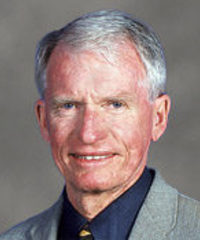
Paul Mayne

Paul Mayne's profile picture
paul.mayne@ce.gatech.edu

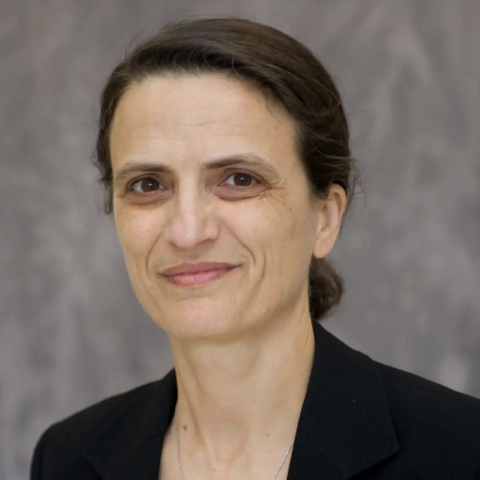
Professor Paul W. Mayne is an international researcher with a focus on in-situ testing, geotechnical site characterization, foundation systems, and the evaluation of soil & rock properties. Particular interests include the use, conduct, and interpretation of the cone penetrometer, seismic piezocone, and flat dilatometer, evaluation of shallow and deep foundation systems, and ground modification techniques. From 1977-1987, Paul served in geotechnical consulting practice in the Washington DC-Virginia-Maryland region. After receiving a doctorate from Cornell University, he joined the civil & environmental engineering faculty at Georgia Tech in 1990. He served as the Geosystems Engineering Team Leader from 2000 to 2010, 2012-2014, and 2016. During his residency at GT, Paul served as the chair (2001-2013) of the ISSMGE Technical Committee TC 102 (formerly TC16): Ground Property Characterization by In-Situ Tests (http://www.webforum.com/tc102) and later served as ISSMGE Vice President for North America (www.issmge.org). With Dr. Peter Robertson, Dr. Mayne hosted and co-edited the two-volume proceedings entitled Geotechnical Site Characterization (ISC-1, 1998) held in Atlanta. In 2000, he co-edited the ASCE GSP No. 97 entitled Innovations & Applications in Geotechnical Site Characterization for the Geo-Institute conference held in Denver. He is the senior author of the National Highway Institute manual on Subsurface Investigations: Geotechnical Site Characterization (2002) and a co-author on the FHWA Geotechnical Engineering Circular (2002) on Evaluation of Soil & Rock Properties and GSP 124 GeoSupport 2004 on foundations. In September 2004, the 2nd Intl. Conf. on Site Characterization (ISC) held in Portugal resulted in the two-volume proceedings: Geotechnical & Geophysical Site Characterization, for which he was a co-editor. Paul served as senior editor for GSP 138 on Site Characterization & Modeling at the 2005 ASCE GeoFrontiers Conference in Austin. Dr. Mayne was selected by the National Academies to prepare the NCHRP Synthesis 368 on the Cone Penetration Test (2007) which is available at:www.trb.org.  He co-edited the proceedings Geotechnical & Geophysical Site Characterization 2008 (ISC-3, Taipei, 2008) and served as host chair and co-editor for two volumes entitled:  Deformational Characteristics of Geomaterials (2008).  In 2009, he prepared GeoEngineering Design Using the CPT for ConeTec. Together with Dr. Peter K. Robertson, Paul co-edited the 3-volume proceedings for the Second International Symposium on Cone Penetration Testing (CPT’10) that was held in Huntington Beach/CA (www.usucger.org).  He also co-edited the proceedings for the 4th International Conference on Site Characterization (ISC-4) held in Pernambuco, Brazil (2012). Most recently, Paul contributed 4 of the 11 chapters to the new NCHRP 258 Document Subsurface Investigations Manual (2019) published by the National Academies Press for the Transportation Research Board (www.trb.org). Dr. Mayne has delivered international lectures, including a number of invited keynotes presentations, and participated in over 125 continuing education courses.  Paul Mayne is an active member of ASCE, ASTM, TRB, USUCGER, DFI, ADSC, CGS, and ISSMGE and has served as a recent consultant on projects located in the USA, Canada, Australia, Europe, and Asia. He is licensed as a professional registered engineering in Virginia. He is married, has one daughter, and plays bass guitar. 

Research

In-situ testing, Site characterization, Geotechnical parameter identification, Foundation systems, Soil properties determination, Geostatic stress state, Ground improvement by dynamic compaction and plasma arc vitrification

Professor Emeritus, School of Civil and Environmental Engineering
Phone
(404) 894-6226
Additional Research

Geosystems

University, College, and School/Department

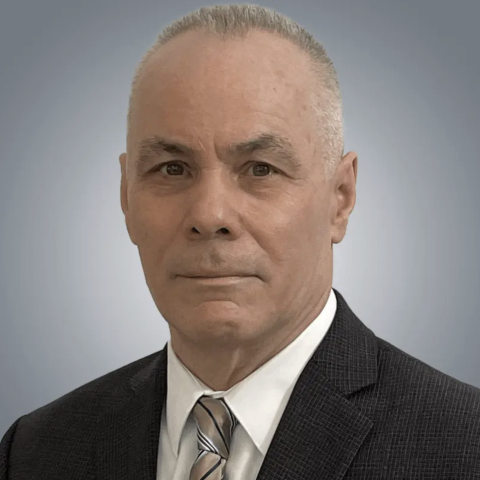
Lakshmi Sankar

Lakshmi Sankar's profile picture
sankar@aerospace.gatech.edu

Professor Sankar is a Regents Professor and Sikorsky Professor in the Guggenheim School of Aerospace Engineering at the Georgia Institute of Technology. As Director of the School's Computational Fluid Dynamics Lab, he leads a research and education program focused on the modeling and simulation of unsteady viscous flow around aircraft, helicopters, horizontal axis wind turbines, and turbo-machinery components. He teaches undergraduate and graduate level courses in the areas of aerodynamics, helicopter theory, wind energy, aerodynamic design, and computational aerodynamics. Prior to joining the Georgia Tech faculty in 1982, Dr. Sankar worked at Lockheed Martin in Marietta, GA. While at Lockheed, he contributed to the development of 2-D and 3-D flow analyses that solve 3-D unsteady transonic flow over airfoils, wing-alone, wing-body, and complete aircraft configurations. He also extended 2-D transonic design methodologies to 3-D transonic wing and wing-body configurations. He also worked closely with researchers at Ford Motor Co on 3-D Navier-Stokes simulations of next generation automobile configurations. Dr. Sankar is the author or co-author of more than 400 technical publications in the fields of spatially and temporally high-order algorithm development, 3-D unsteady transonic flow over aircraft configurations, helicopter aerodynamics, compressor stall and surge, and aerodynamic design. He is an AIAA Fellow, a Technical Fellow of the American Helicopter Society, and a member of the American Society of Mechanical Engineers.

Teaching Interests

Professor Sankar's teaching interests encompass fundamental aerospace engineering and mechanical engineering topics at both undergraduate and graduate levels. These include solid mechanics, structural analysis, composite materials, and fracture mechanics. His instruction emphasizes the integration of theoretical principles with practical applications to prepare students for advanced study and professional practice. He is committed to engaging students through research-informed teaching and fostering critical thinking skills in engineering mechanics and materials behavior.

Research Interests

Professor Sankar's research focuses on the mechanics of materials and structures with particular emphasis on the behavior and failure of advanced composites and multifunctional materials. His work includes the development of micromechanical models, characterization of damage and fracture processes, and the study of multifunctional materials under mechanical and environmental loading. He applies computational and experimental methods to understand material response and to inform the design of lightweight, durable aerospace structures.

Research

Lab/Collaborations:

  • Vertical Lift Research Center of Excellence (VLRCOE)
  • Computational Fluid Dynamics Laboratory (CFD)
  • Center for 21st Century Universities

Disciplines:

  • Aerodynamics & Fluid Mechanics

AE Multidisciplinary Research Areas:

  • Large-Scale Computations, Data, and Analytics

Education

  • Education Ph.D., Aerospace Engineering, Georgia Institute of Technology, 1977.
  • MSAE, Aerospace Engineering, Georgia Institute of Technology, 1975.
  • B. Tech., Aeronautical Engineering, Indian Institute of Technology, Madras, India, 1973.

Distinctions & Awards

o Fellow, AIAA

o Technical Fellow, AHS 

o Georgia Tech Award for Development of Graduate Research Assistants, 1997 

o Sigma Gamma Tau Most valuable Professor Award 2005, 2006, 2007, 2015 

o NASA Group Achievement Award, UH60 Airloads Workshop, June 2007 

Regents' Professor, Guggenheim School of Aerospace Engineering
Director, Computational Fluid Dynamics Lab
Phone
(404) 894-3014
Additional Research

Wind

Research Focus Areas

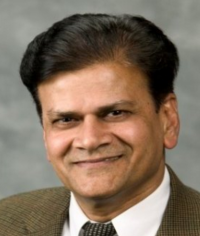
Sotira Yiacoumi

Sotira Yiacoumi's profile picture
sotira.yiacoumi@ce.gatech.edu

Dr. Sotira Z. Yiacoumi is currently a Professor in the School of Civil and Environmental Engineering at the Georgia Institute of Technology. She received a Diploma of Engineering degree from the Aristotle University, Greece, in 1985, and M.S. and Ph.D. degrees from Syracuse University in 1987 and 1992, respectively. After receiving her Ph.D. degree, she joined the School of Civil and Environmental Engineering at the Georgia Institute of Technology as an Assistant Professor and was promoted to the rank of Associate Professor in 1997. Her research interests include colloidal and interfacial phenomena in environmental and energy systems. Her research contributions span the following areas: sorption phenomena, colloidal phenomena, influence of sorption on colloidal behavior, molecular techniques, and novel environmental processes. She has co-authored the book "Kinetics of Metal Ion Adsorption from Aqueous Solutions: Models, Algorithms, and Applications." In 1997, she received a National Science Foundation Career Award, entitled "CAREER: Influence of Sorption Rates on Particle Flocculation Kinetics." She was the chair of the organizing committee for the 77th American Chemical Society Colloid and Surface Science Symposium, which was held at the Georgia Institute of Technology during June 15-18, 2003.

Research

Interfacial and colloidal phenomena in environmental systems, Sorption of metal ions from aqueous solutions, Sorption/desorption of organic compounds from aqueous solutions by natural particles, Colloidal particle interactions in aquatic systems, Bubble interactions in gas/liquid reactive systems, Influence of sorption rates on particle flocculation kinetics

Professor, School of Civil and Environmental Engineering
Phone
(404) 894-2639
Additional Research

Separations Technology; Water

Research Focus Areas
University, College, and School/Department

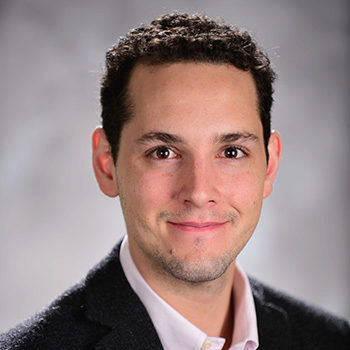
Miguel Granier

Miguel Granier's profile picture
mdgranier@gatech.edu

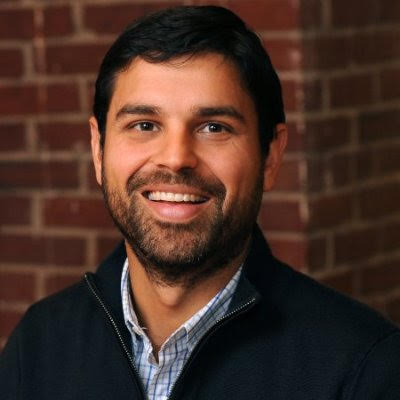
Miguel Granier served as a distinguished external fellow of the Strategic Energy Institute in 2024-2025, and is currently the managing director of Cox Cleantech Accelerator by gener8tor. He has nearly two decades of experience financing businesses from startup to growth stage. As the founder/managing director of Invested Development (ID) and the Impact Factoring Fund (IFF), and founding investment manager for First Light Ventures, he led investments in dozens of startups across nine countries and three continents. Miguel began his career in finance as a loan officer for the global micro-finance organization ACCION and has worked for the insurance giant Fidelity National Financial in New York and the Delter Business Institute in Beijing, China. 

Miguel holds or has held board positions at more than a dozen start-ups, including Growing Energy Labs, Inc (acquired by Hanwha/Q-Cells), Simpa Networks (acquired by Engie), OnFarm (acquired by SWIIM Systems), and iHub (acquired by ccHub). He has also served on the boards of several non-profit organizations, including Greentown Labs, Village Capital, and Global Growers Network. 

Miguel has earned two Masters’ degrees from Georgia Tech in City and Regional Planning and Sustainable Energy and Environmental Management. In addition, he has been an adjunct faculty at the Monterrey Institute of International Studies, Northeastern University, and Georgia Tech. 

Research Focus Areas
IRI And Role

Jerry Seitzman

Jerry Seitzman's profile picture
jerry.seitzman@aerospace.gatech.edu

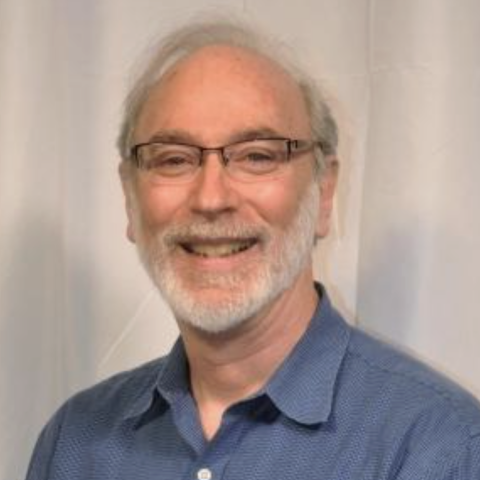
Dr. Seitzman joined Georgia Tech in 1994. He has expertise in the fields of optical flow diagnostics and sensors, combustion and combustion control, high temperature gas dynamics, laser spectroscopy, flow-field imaging and solid propellant combustion. He has authored more than 150 papers on these subjects. His experience includes development of optical sensors and diagnostics based on planar laser-induced fluorescence, line-of-sight absorption, chemiluminescence, particle image velocimetry, Raman scattering and laser-induced incandescence of soot, and their application in systems ranging from laboratory flames to high pressure combustors. Dr. Seitzman helped pioneer the development of planar laser-induced fluorescence (PLIF) and laser-induced incandescence as quantitative measurement techniques, and optical sensing of flame emission for active combustion control. The applications for this work include aircraft and spacecraft propulsion, ground-based power production, and heating systems.

Teaching Interests

Professor Seitzman's teaching interests include core aerospace engineering subjects with emphasis on propulsion, thermodynamics, fluid mechanics, physical gas dynamics, combustion processes and technical communications at both undergraduate and graduate levels. His instruction integrates fundamental engineering principles and practical applications. He actively involves students in problem-solving and critical analysis to foster a deeper understanding of these subjects.

Research Interests

Professor Seitzman's research centers on  combustion, optical flow diagnostics and sensors, and high temperature gas dynamics, and involves both experimental and modeling approaches. His work aims to improve the robustness, reliability and emissions performance of combustion-based propulsion systems and energy conversion devices,  as well as improving experimental techniques used to measure reacting and compressible flow fields. Research efforts engage both graduate and undergraduate students in advancing knowledge and developing novel methods in these areas.

Research

Lab/Collaborations:

  • Ben T. Zinn Combustion Laboratory

Disciplines:

  • Propulsion & Combustion
  • Aerodynamics & Fluid Mechanics

AE Multidisciplinary Research Areas:

  • Sustainable Transportation and Energy Systems

Education

B.S., Mechanical Engineering, 1982, University of Texas at Austin; M.S., Mechanical Engineering, 1983, Stanford University; Ph.D., Mechanical Engineering, 1991, Stanford University;

Distinctions & Awards

AIAA Associate Fellow; Associate Editor of AIAA Journal of Propulsion and Power; School of Aerospace Engineering Most Valuable Faculty Award (6 times in last 11 years); NASA/DoD UAPT Outstanding Researcher (2007); Billiee Pendleton-Parker Faculty Freshman Partner of the Year (2004); National Science Foundation CAREER Award (1995);

Recent Publications

  • R. K. Bompelly and J. Seitzman, “Lean Blowout Proximity Sensing in a Low Emission Liquid-Fueled Combustor, Combustion Science and Technology 1-27, https://doi.org/10.1080/00102202.2024.2372433.
  • M. L. Passarelli, S. E. Wonfor, A. X. Zheng, S. R. Manikandan, Y. C. Mazumdar, J. M. Seitzman, A. M. Steinberg, H. Bower, J. Hong, K. Venkatesan and M. Benjamin, “Experimental Characterization of a Lean Prevaporized Premixed Combustor for Supersonic Transport Applications,” AIAA 2022-2347, https://doi.org/10.2514/6.2022-2347.
  • E. Goh , T. Lieuwen and J. Seitzman, “Finite Entrainment Effects on Nitrogen Oxide (NOx) Emissions in Staged Combustors, Combustion and Flame 230, https://doi.org/10.1016/j.combustflame.2021.111434.
  • S. Adusumilli and J. Seitzman, “Laminar Flame Speed Measurements of Ethylene at High Preheat Temperatures and for Diluted Oxidizers,” Combustion and Flame 233, https://doi.org/10.1016/j.combustflame.2021.111564.
  • Y. Tang, M. Hassanaly, V. Raman, B. Sforzo, J. Seitzman, “Probabilistic Modeling of Forced Ignition of Alternative Jet Fuels,” Proc. Combust. Inst., 38, The Combustion Institute, https://doi.org/10.1016/j.proci.2020.06.309.
Professor, Guggenheim School of Aerospace Engineering
Phone
(404) 894-0013
Additional Research

Combustion

Manos Antonakakis

Manos Antonakakis's profile picture
manos@gatech.edu

Dr. Manos Antonakakis (PhD’12) is an Associate Professor in the School of Electrical and Computer Engineering (ECE) and an adjunct faculty member in the College of Computing (CoC), at the Georgia Institute of Technology. He is responsible for the Astrolavos Lab, where students conduct research in the areas of Attack Attribution, Network Security and Privacy, Intrusion Detection, and Data Mining. In May 2012, he received his Ph.D. in Computer Science from Georgia Tech.

Before joining the Georgia Tech ECE faculty ranks, Dr. Antonakakis held the Chief Scientist role at Damballa. He currently serves as the co-chair of the Academic Committee for the Messaging Anti-Abuse Working Group (MAAWG). In his tenure at Georgia Tech ECE, Dr. Antonakakis has raised several tens of millions in research funding as Primary Investigator from government agencies and the private sector. He is the author of several U.S. patents and more than 20 academic publications in top academic conferences. He has served as a program committee member for all top tier security conferences.

Associate Professor, School of Electrical and Computer Engineering
Dean's Professorship
Phone
(404) 385-2534
Office
Klaus 3366
Additional Research

Cyber Technology

Sam Shelton

Sam Shelton's profile picture
sam.shelton@energy.gatech.edu

Dr. Sam Shelton is a nationally recognized expert in energy systems. He is the founding director of the Georgia Tech Strategic Energy Institute, an interdisciplinary technology development-based resource. The institute is actively engaged with industry to facilitate near-term, high-impact solutions to national and regional energy challenges. As a professor for 35 years, he developed in-class and web delivered undergraduate and graduate level energy technology courses. He taught 30,000 students enrolled in a MOOCs course, Energy 101, with a focus on energy supplies, independence, economics, and society’s demands. 

His primary research focus has been the development and commercialization of sustainable energy technology. He has received over $30 million in R&D funding for this work. Dr. Shelton holds eight patents in sustainable energy technologies and founded two companies developing, manufacturing and marketing energy-efficient products. Starting in the 1980s, he was among the pioneers developing commercial solar energy technologies and the assessment of offshore wind farms. His favorite hobby is flying experimental airplanes

Director Emeritus
Additional Research

Thermal Systems; Wind; System Design & Optimization; Biofuels

IRI And Role

Joe Oefelein

Joe Oefelein's profile picture
joseph.oefelein@ae.gatech.edu

Dr. Joseph Oefelein is a professor in the Daniel Guggenheim School of Aerospace Engineering at the Georgia Institute of Technology. He joined the faculty at Georgia Tech. in the fall of 2017, after a 17-year career at Sandia National Laboratories, Combustion Research Facility, where he served as a distinguished member of technical staff. Prior to this, he served as a research associate in the Department of Mechanical Engineering at Stanford University. He is actively engaged in research on a broad range of topics in simulation and modeling of advanced propulsion, power, and related systems. His expertise is interdisciplinary, with focus on the theory and analysis of complex fluid flows where turbulence interacts with a multitude of strongly coupled fluid dynamic, thermodynamic, transport, chemical, multiphase, and/or heat transfer processes. He is an expert in the area of supercritical fluid phenomena and has extensive experience in the development and application of the Large Eddy Simulation (LES) technique, Computational Fluid Dynamics (CFD), and high-performance massively-parallel computing. He is active in a number of professional societies including The Combustion Institute, American Physical Society (APS), American Institute of Aeronautics and Astronautics (AIAA), American Society of Mechanical Engineers (ASME), and Society of Automotive Engineers (SAE). He is an associate editor for the Journal of Propulsion and Power, and a member and past chair of the AIAA Propellants and Combustion Technical Committee. He also serves on the editorial board of The Combustion Institute and as an associate editor for the Proceedings of The Combustion Institute. Dr. Oefelein has been a principal investigator for a broad range of sponsored research projects funded by the United States  Department of Energy, Department of Defense (e.g., AFOSR, AFRL, DARPA, SERDP), National Aeronautics and Space Administration (e.g., MSFC, LaRC), and National Science Foundation. He has also established significant collaborations with key industry leaders in the aerospace and transportation sectors. The portfolio of projects involves research across a broad range of topics while also providing a crucial link between basic and applied research.

Teaching Interests

Professor Oefelein’s teaching interests encompass fundamental and advanced topics in aerospace engineering with a focus on combustion, propulsion, and fluid dynamics. He is dedicated to instructing both undergraduate and graduate students, emphasizing the underlying physical principles and practical applications within energy conversion and propulsion systems. His teaching approach aims to integrate theory and experiment, fostering a comprehensive understanding of aerospace propulsion phenomena.

Research Interests

Professor Oefelein’s research centers on combustion and propulsion sciences, particularly involving reactive flow dynamics and multiphase flow physics. His work includes high-fidelity simulations and experimental investigations to understand turbulent combustion, thermochemical processes, and fluid-structure interactions relevant to aerospace propulsion systems. This research seeks to advance knowledge of energy conversion mechanisms and contribute to the development of efficient and clean propulsion technologies.

Research

Lab/Collaborations:

  • Ben T. Zinn Combustion Laboratory

Disciplines:

  • Propulsion & Combustion

AE Multidisciplinary Research Areas:

  • Large-Scale Computations, Data, and Analytics
  • Sustainable Transportation and Energy Systems

Education

  • Ph.D. Mechanical Engineering, The Pennsylvania State University, 1997
  • M.S. Mechanical Engineering, The Pennsylvania State University, 1992
  • B.S. Mechanical Engineering (Highest Honors), Rutgers University, 1989

Recent Publications

  • Preethi V. Mysore, Joseph Oefelein, Evaluation of Wall Modeling Approaches for Transition of Hypersonic Boundary Layers, 2026
     DOI: 10.2514/6.2026-0944.
  • Dhruv Purushotham, Chang Hyeon Lim, Adam M. Steinberg, Devesh Ranjan, Joseph C. Oefelein, Joint numerical and experimental investigation of turbulent mixing in a supercritical CO2 shear layer, Journal of Fluid Mechanics, 2025 DOI: 10.1017/jfm.2025.71.
  • Kyle A. Schau, Joseph C. Oefelein. Numerical Analysis of Wave Characteristics in a Methane-Oxygen Rotating Detonation Engine. AIAA Journal, 2022.
  • Umesh Unnikrishnan, Joseph C. Oefelein, Vigor Yang. Subgrid modeling of the filtered equation of state with application to real-fluid turbulent mixing at supercritical pressures. Physics of Fluids, 2022.
  • Guilhem Lacaze, Thomas Schmitt, Anthony Ruiz, Joseph C. Oefelein. Comparison of energy-, pressure- and enthalpy-based approaches for modeling supercritical flows. Computers & Fluids, 2019.
Professor, Guggenheim School of Aerospace Engineering
Phone
(404) 894-0199
Additional Research

Conventional Energy

Research Focus Areas

Suresh Sharma

Suresh Sharma's profile picture
suresh1.sharma@gatech.edu

Over past three decades, Suresh has led a remarkably rich professional journey to unleash human potential through innovation, entrepreneurship, mentoring and leadership. Today, he applies his deep global business expertise to foster 21st century ecosystems to “industrialize innovation” for economic growth. Inspired by his hands-on experiences he authored “The 3rd American Dream” (2014); an insightful business book illustrating building blocks for growth that enable transformation at individual, societal and national level. A former GE-executive, he is a clear and pragmatic thought-leader. Starting his early career as a Naval Aviation Officer, his work experience includes industrial manufacturing, R&D and business operations in UK, USA, India and other countries. He has worked at British Aerospace, Rolls-Royce, MATRA, NASA, and General Electric. During 90s, he received international recognition for pioneering roles in globalization of GE while setting up global facilities in over 15 countries. Later, he co-authored his first best-seller book: ‘Global Outsourcing’ (2005) – still a reference work in many executive-MBA programs. 

Entrepreneur in Residence
Phone
(404) 385-5387
Additional Research

Electrical Grid

University, College, and School/Department