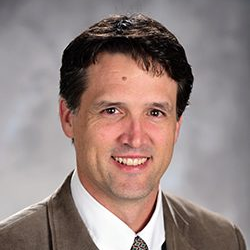
Tansu Celikel
Karen M. Feigh is a Professor at Georgia Tech's Daniel Guggenheim School of Aerospace Engineering with a courtesy appointment in the School of Interactive Computing. As the director of the Georgia Tech Cognitive Engineering Center, she leads a research and education program focused on the computational cognitive modeling and design of cognitive work support systems and technologies to improve the performance of socio-technical systems. She is responsible for undergraduate and graduate level instruction in the areas of flight dynamics, human reliability analysis methods, human factors, human-automation interaction and cognitive engineering. Feigh has over 14 years of relevant research and design experience in fast-time air traffic simulation, ethnographic studies, airline operation control centers, synthetic vision systems for helicopters, expert systems for air traffic control towers, human extra-vehicular activities in space, and the impact of context on undersea warfighters. Recently her work has focused on human-autonomy teaming and the human experience of machine learning across a number of domains.
Feigh has served as both Co-PI and PI on a number of FAA, NIA, ONR, NSF and NASA sponsored projects. As part of her research, Feigh has published 35 scholarly papers in the field of Cognitive Engineering with primary emphasis on the aviation industry. She serves as an Associate Editor for the Journal of Cognitive Engineering and Decision Making. She previously served as the Chair to the Human Factor and Ergonomics Society’s Cognitive Engineering and Decision Making Technical Group, and on the National Research Council’s Aeronautics and Space Engineering Board (ASEB).
Cognitive engineering; human factors; adaptive automation
David Hu is a fluid dynamicist with expertise in the mechanics of interfaces between fluids such as air and water. He is a leading researcher in the biomechanics of animal locomotion. The study of flying, swimming and running dates back hundreds of years, and has since been shown to be an enduring and rich subject, linking areas as diverse as mechanical engineering, mathematics and neuroscience. Hu's work in this area has the potential to impact robotics research. Before robots can interact with humans, aid in minimally-invasive surgery, perform interplanetary exploration or lead search-and-rescue operations, we will need a fundamental physical understanding of how related tasks are accomplished in their biological counterparts. Hu's work in these areas has generated broad interest across the fields of engineering, biology and robotics, resulting in over 30 publications, including a number in high-impact interdisciplinary journals such as Nature, Nature Materials, Proceedings of the National Academy of Sciences as well as popular journals such as Physics Today and American Scientist. Hu is on editorial board member for Nature Scientific Reports, The Journal of Experimental Biology, and NYU Abu Dhabi's Center for Center for Creative Design of Materials. He has won the NSF CAREER award, Lockheed Inspirational Young Faculty award, and best paper awards from SAIC, Sigma Xi, ASME, as well as awards for science education such as the Pineapple Science Prize and the Ig Nobel Prize. Over the years, Hu's research has also played a role in educating the public in science and engineering. He has been an invited guest on numerous television and radio shows to discuss his research, including Good Morning America, National Public Radio, The Weather Channel, and Discovery Channel. His ant research was featured on the cover of the Washington Post in 2011. His work has also been featured in The Economist, The New York Times, National Geographic, Popular Science and Discover His laboratory appeared on 3D TV as part of a nature documentary by 3DigitalVision, "Fire ants: the invincible army," available on Netflix.
Fluid Mechanics: Fluid dynamics, solid mechanics, biomechanics, animal locomotion, and physical applied mathematics. Dr. David Hu's research focuses on fundamental problems of hydrodynamics and elasticity that have bearing on problems in biology. He is interested in the dynamics of interfaces, specifically those associated with fluid-solid and solid-solid interactions. The techniques used in his work include theory, computation, and experiment. He is also interested in pursuing biomimetic technologies based on nature's designs.
My research integrates my work in complex fluids and granular media and the biomechanics of locomotion of organisms and robots to address problems in nonequilibrium systems that involve interaction of matter with complex media. For example, how do organisms like lizards, crabs, and cockroaches cope with locomotion on complex terrestrial substrates (e.g. sand, bark, leaves, and grass). I seek to discover how biological locomotion on challenging terrain results from the nonlinear, many degree of freedom interaction of the musculoskeletal and nervous systems of organisms with materials with complex physical behavior. The study of novel biological and physical interactions with complex media can lead to the discovery of principles that govern the physics of the media. My approach is to integrate laboratory and field studies of organism biomechanics with systematic laboratory studies of physics of the substrates, as well as to create mathematical and physical (robot) models of both organism and substrate. Discovery of the principles of locomotion on such materials will enhance robot agility on such substrates
biomechanics; neuromechanics; granular media; robotics; robophysics
Omer T. Inan received his B.S., M.S., and Ph.D. degrees in Electrical Engineering from Stanford University in 2004, 2005, and 2009, respectively.
He worked at ALZA Corporation in 2006 in the Drug Device Research and Development Group. From 2007-2013, he was chief engineer at Countryman Associates, Inc., designing and developing several high-end professional audio products. From 2009-2013, he was a visiting scholar in the Department of Electrical Engineering at Stanford. In 2013, he joined the School of ECE at Georgia Tech as an assistant professor.
Inan is generally interested in designing clinically relevant medical devices and systems, and translating them from the lab to patient care applications. One strong focus of his research is in developing new technologies for monitoring chronic diseases at home, such as heart failure.
He and his wife were both varsity athletes at Stanford, competing in the discus and javelin throw events respectively.
Matthew Hale joined the School of Electrical and Computer Engineering at Georgia Tech as an Associate Professor in the spring of 2024. His research interests include multi-agent control and optimization, deceptive decision-making, and applications of these methods to drones and other robots. He has received the NSF CAREER Award, ONR YIP, and AFOSR YIP. Prior to joining Georgia Tech, Matthew was Assistant Professor of Mechanical and Aerospace Engineering at the University of Florida. He received his BSE from the University of Pennsylvania, and he received his MS and PhD from Georgia Tech.
After earning bachelor’s and master’s degrees in mechanical engineering from Georgia Tech, Gary McMurray interviewed for a number of jobs. Most were in the defense industry, and the job duties were very specific.
“I joke about one job that was to design fuel pumps for the aft section of cargo planes,” McMurray recalled. “I asked, ‘Well, what if I want to design fuel pumps for the front section?’ They said, ‘No. That’s a different skill set.’”
The job sounded too constraining and unappealing to McMurray, so he continued his job search, interviewing with the Georgia Tech Research Institute (GTRI) in 1989. He had been working in robotics, a relatively new field at the time.

“I was looking for something in robotics, and GTRI was trying to get into robotics,” he said. “They didn’t have anybody working in that field at all, so I was really the first person hired to work in that area. It gave me an opportunity to start from scratch and develop something unique and different. I really enjoyed that.”
Three decades later, McMurray still works at GTRI.
“I wear two hats in the organization,” he said. He is the division chief for the Intelligent Sustainable Technologies Division, and an associate director for the Institute for Robotics and Intelligent Machines (IRIM), working with director Seth Hutchinson.
The Intelligent Sustainable Technologies Division conducts research to improve the human condition through transforming the agricultural and food systems, sustainable use and access to energy and water, and improving workplace safety and pandemic response. IRIM is an umbrella under which robotics researchers, educators, and students from across campus can come together to advance a wide variety of robotics activities at the Institute.
The Intelligent Sustainable Technologies Division has approximately 36 research faculty and 40 students. The unit hires about 10% of all the students at GTRI and maintains close ties with the academic side of campus.
“One of the things I enjoy in my role as a division chief is the ability to set the vision and mission,” McMurray said. “We’re a little bit different from the rest of GTRI because we don’t do the Department of Defense work. We work a lot with the campus, but we also work with other universities on sustainability projects regarding food or energy. The projects have the potential to make a big impact. I describe it as having one foot on the basic research side and one foot on the applied side. We have master’s and Ph.D. students doing cutting-edge basic research, and we’re also building systems and applying research and deploying things into the field.”
The division’s food processing research includes improving yield, food quality, and food safety while minimizing the environmental impact by applying image processing, robotics, biosensors, and environmental treatment technologies. The division also conducts air quality research, including monitoring and reducing the effects of vehicular emissions.
So, what’s the connection between food processing and auto emissions?
“To solve problems in both of those areas we employ general research technologies — robotics, chemical and biological sensing, data analytics, machine learning, systems engineering, and then energy and materials,” McMurray said. “Approaches that work in traditional manufacturing may not work in the food industry. There is no CAD drawing for a boneless chicken breast or a chicken leg. Each one is different. It’s also wet, slippery, and could be spoiled.”
That’s where sensing and data analytics come into play. The same applies to analyzing vehicular emissions.
“When you look at food processing, our work really brings together all of these different skill sets. And then when you look at the data analytics side of air quality emissions, the team has the longest continuous set of data about air quality in the city. This has been the key database that the EPA uses for studying carbon emissions for automobiles,” McMurray said.
After more than 30 years at GTRI, McMurray still gets excited when a plan comes together.
“The most rewarding part of the work is when you can bring together the basic research and the applied, build a system that does something new and novel, put it into the field and test it, and have somebody come back and say, ‘That’s really cool. That worked.’”
Brian Gunter is an Assistant Professor in Aerospace Engineering at the Georgia Institute of Technology. He received his B.S. in mechanical engineering from Rice University, and later his M.S. and Ph.D. in aerospace engineering from the University of Texas at Austin, specializing in orbital mechanics. Prior to joining Georgia Tech, Gunter was on the faculty of the Delft University of Technology (TU-Delft) in the Netherlands, as a member of the Physical and Space Geodesy section. His research activities involve various aspects of spacecraft missions and their applications, such as investigations into current and future laser altimetry missions, monitoring changes in the polar ice sheets using satellite data, applications of satellite constellations/formations, and topics surrounding kinematic orbit determination. He has been responsible for both undergraduate and graduate courses on topics such as satellite orbit determination, Earth and planetary observation, scientific applications of GPS, and space systems design. He is currently a member of the AIAA Astrodynamics Technical Committee, and also serves as the Geodesy chair for the Fall AGU Meeting Program Committee. He has received a NASA group achievement award for his work on the GRACE mission, and he is also a former recipient of a NASA Earth System Science Graduate Fellowship. He is a member of the American Institute of Aeronautics and Astronautics (AIAA), the American Geophysical Union (AGU), and the International Association of Geodesy (IAG).
Education
Distinctions & Awards
Elected in 2020 to the status of Associate Fellow of the American Institute of Aeronautics and Astronautics; Visiting Research Fellow, Newcastle University, Newcastle-Upon-Tyne, UK, 2011; NASA Earth System Science Graduate Fellowship, 2002-2004; NASA Group Achievement Award, GRACE Project Team, 2004; Dolores Zohr b Liebmann Graduate Fellowship, 2000-2003; Earl Wright Endowed Presidential Scholarship in Engineering, 2000-2001
satellite geodesy; space systems; orbital mechanics; Earth and planetary observation; remote sensing
Prof. Pradalier is Associate Professor at GeorgiaTech Lorraine, the French campus of the Georgia Institute of Technology (a.k.a. GeorgiaTech) since September 2012. He defended his “Habilitation à Diriger des Recherches” (Authority to Supervise Research) in 2015 on the topic of “Autonomous Mobile Systems for Long-Term Operations in Spatio-Temporal Environments” at the National Polytechnic Institute of Toulouse (INPT).
His objective is to extend the activity of the CNRS IRL2958 GT-CNRS towards robotics, leveraging on one side the strong robotic research inside CNRS and on the other side the collaboration potential with the Robotics and Intelligent Machines (RIM) laboratory at GTL.
At the IRL, he is now the coordinator of the H2020 BugWright2 project, has been involved in H2020 project Flourish and PF7 project Noptilus, as well as in projects on environmental monitoring.
From November 2007 until December 2012, Dr. Pradalier has been deputy director in the Autonomous Systems Lab at ETH Zürich. In this role, he was the technical coordinator of the V-Charge project (IP, 2010-2014) and also involved in the development of innovative robotic platforms such as autonomous boats for environment monitoring or prototype space rovers funded by the European Space Agency. He is a founding member of the ETH start-up Skybotix, within which he was responsible for software development and integration.
From 2004 to 2007, Dr. Pradalier was a research scientist at CSIRO Australia. He was then involved in the development of software for autonomous large industrial robots and an autonomous underwater vehicle for the monitoring of the Great Barrier Reef, Australia.
He received his Ph.D. in 2004 from the National Polytechnic Institute of Grenoble (INPG) on the topic of autonomous navigation of a small urban mobility system and he is Ingénieur from the National Engineering School for Computer Science and Applied Math in Grenoble (ENSIMAG).
Michael (Mick) West joined ECE from the Georgia Tech Research Institute (GTRI) in 2022. He received his Ph.D. in electrical engineering from the University of Hawaii (UH) in 2006 and has over 28 years of professional experience with over 40 refereed journals and conference papers.

West specializes in the development unmanned systems in extreme environments (under-ice, planetary, deep ocean, polar). He has been an invited speaker for United States Congressional leaders and their staff and top military personnel in the development of roadmaps for advancing current robotics research. He has served as PI on several Unmanned Systems programs developing novel enabling technologies including advanced control and power systems on underwater, ground, air and space platforms. West developed the first-of-its-kind under-ice vehicle, Icefin, in order to gather information about the changing polar ice and provide insight into areas of climate science, as well as biology and planetary science. The vehicle has been deployed over five seasons through the Ross Ice Shelf in Antarctica and provided never before seen images and scientific data of the Antarctic seafloor.
Collaborative Robotics