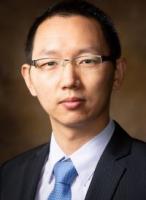
Glen Chou

Glen Chou's profile picture
chou@gatech.edu

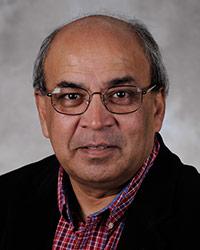
Glen Chou joined Georgia Tech as an assistant professor with a joint appointment in the School of Cybersecurity & Privacy and the School of Aerospace Engineering in November 2024. He directs the Trustworthy Robotics Lab, which designs principled algorithms that can enable general-purpose robots and autonomous systems to operate capably, safely, and securely, while remaining resilient to real-world failures and uncertainty. To achieve this, his research leverages control theory and machine learning, while connecting to optimization, computer vision, formal methods, planning, human-robot interaction, and statistics. Glen is interested in broad applications of autonomy, including robotic manipulation, vision-based navigation, aerospace, and large-scale cyber-physical systems more generally.

Glen is from Northern California. He holds dual B.S. degrees in EECS and ME from UC Berkeley, as well as an M.S. and Ph.D. in ECE from the University of Michigan. Prior to joining Georgia Tech, Glen was a postdoc at MIT CSAIL.

Assistant Professor
Office
CODA E0962B
Additional Research
  • Control theory 
  • Formal methods
  • Human Robot Interaction
  • Machine learning
  • Optimization
  • Perception-based control
IRI And Role
Google Scholar
https://scholar.google.com/citations?hl=en&user=90whi3wAAAAJ&view_op=list_works&sortby=pubdate

Tom Sammon

Tom Sammon's profile picture
tom.sammon@innovate.gatech.edu

Tom Sammon focuses on implementing lean manufacturing practices and helping companies develop capital equipment applications.

Project Manager; Georgia Manufacturing Extension Partnership
Phone
770.301.2100
Additional Research
  • Automation
  • Conveyor Systems
  • Equipment Design
  • Lean Manufacturing
  • Plant Layout and Design
  • Plant Management
  • Project Management
  • Problem Solving
Research Focus Areas
IRI And Role

N Apurva Ratan Murty

N Apurva Ratan Murty's profile picture
ratan@gatech.edu

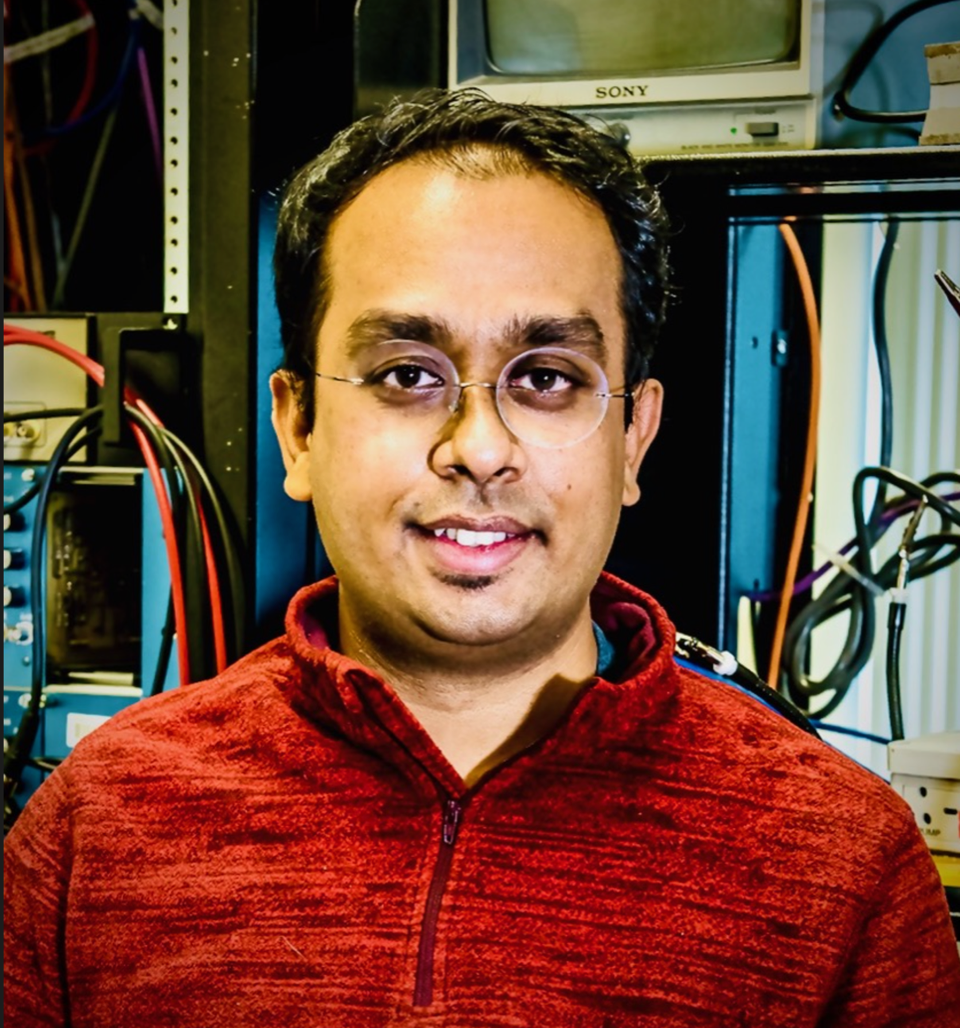
Ratan is an Assistant Professor of Cognition and Brain Science in the School of Psychology at Georgia Tech, and the Director of the Murty Lab (murtylab.com). He obtained his PhD from Indian Institute of Science (IISc) Bangalore and was a postdoctoral researcher in the Kanwisher and DiCarlo labs at MIT before moving to Georgia Tech. Research in the Murty Lab aims to uncover the neural codes and algorithms that enable us to see. The central theme of the lab's work is to integrate biological vision with artificial models of vision. The lab combines the benefits of closed-loop experimental testing (using 3T/7T human functional-MRI) with cutting-edge computational methods (like deep neural networks, generative algorithms, and AI interpretability) toward a new computationally precise understanding of human vision. This research also guides the development of neurally mechanistic biologically constrained models aimed to uncover a better understanding of the neurobiological changes that underlie perceptual abnormalities such as agnosias.

Assistant Professor
Office
131, JS Coon Building
Research Focus Areas

Jun Ueda, Ph.D.

Jun Ueda, Ph.D. 's profile picture
jun.ueda@me.gatech.edu

Jun Ueda received his B.S., M.S., and Ph.D. degrees from Kyoto University, Japan, in 1994, 1996, and 2002 all in Mechanical Engineering. From 1996 to 2000, he was a Research Engineer at the Advanced Technology Research and Development Center, Mitsubishi Electric Corporation, Japan. He was an Assistant Professor of Nara Institute of Science and Technology, Japan, from 2002 to 2008. During 2005-2008, he was a visiting scholar and lecturer in the Department of Mechanical Engineering, Massachusetts Institute of Technology. He joined the G. W. Woodruff School of Mechanical Engineering at the Georgia Institute of Technology as an Assistant Professor in 2008 where he is currently a Professor. He received Fanuc FA Robot Foundation Best Paper Award in 2005, IEEE Robotics and Automation Society Early Academic Career Award in 2009, Advanced Robotics Best Paper Award in 2015, and Nagamori Award in 2021. 

Professor
Phone
404.385.3900
Office
Love 219

Anqi Wu

Anqi Wu's profile picture
anqiwu@gatech.edu

Anqi Wu is an Assistant Professor at the School of Computational Science and Engineering (CSE), Georgia Institute of Technology. She was a Postdoctoral Research Fellow at the Center for Theoretical Neuroscience, the Zuckerman Mind Brain Behavior Institute, Columbia University. She received her Ph.D. degree in Computational and Quantitative Neuroscience and a graduate certificate in Statistics and Machine Learning from Princeton University. Anqi was selected for the 2018 MIT Rising Star in EECS, 2022 DARPA Riser, and 2023 Alfred P. Sloan Fellow. Her research interest is to develop scientifically-motivated Bayesian statistical models to characterize structure in neural data and behavior data in the interdisciplinary field of machine learning and computational neuroscience. She has a general interest in building data-driven models to promote both animal and human studies in the system and cognitive neuroscience.

Assistant Professor
Phone
323-868-1604
Research Focus Areas

Gregory Sawicki

Dr. Gregory S. Sawicki is an Associate Professor at Georgia Tech with appointments in the George W. Woodruff School of Mechanical Engineering and the School of Biological Sciences.
gregory.sawicki@me.gatech.edu

Dr. Gregory S. Sawicki is the Interim Executive Director of the Institute for Robotics and Intelligent Machines and Professor and Joseph Anderer Faculty Fellow at Georgia Tech with appointments in the George W. Woodruff School of Mechanical Engineering and the School of Biological Sciences. He holds a B.S. from Cornell University ('99) and a M.S. in Mechanical Engineering from University of California-Davis ('01). Dr. Sawicki completed his Ph.D. in Human Neuromechanics at the University of Michigan, Ann-Arbor ('07) and was an NIH-funded Post-Doctoral Fellow in Integrative Biology at Brown University ('07-'09). Dr. Sawicki was a faculty member in the Joint Department of Biomedical Engineering at NC State and UNC Chapel Hill from 2009-2017. In summer of 2017, he joined the faculty at Georgia Tech with appointments in Mechanical Engineering 3/4 and Biological Sciences 1/4.

Executive Director of the Institute for Robotics and Intelligent Machines (Interim)
Professor and Joseph Anderer Faculty Fellow; School of Mechanical Engineering & School of Biological Sciences
Director; PoWeR Lab
Phone
404.385.5706
Office
GTMI 411
Additional Research
  • wearable robotics
  • exoskeletons
  • locomotion
  • biomechanics
  • muscle mechanics
Research Focus Areas
Google Scholar
https://scholar.google.com/citations?hl=en&user=Z8WUqgkAAAAJ&view_op=list_works&sortby=pubdate

Walker Byrnes

Walker Byrnes's profile picture
walker.byrnes@gtri.gatech.edu

Education

Masters of Science, Computer Science, Georgia Institute of Technology, 2022

Bachelors of Science, Mechanical Engineering, Georgia Institute of Technology, 2020

Research Expertise

Robot Planning and Control, Embodied Artificial Intelligence, Laboratory Automation, Software Engineering

Selected Publications

Bowles-Welch, A., Byrnes, W., Kanwar, B., Wang, B., Joffe, B., Casteleiro Costa, P., Armenta, M., Xu, J., Damen, N., Zhang, C., Mazumdar, A., Robles, F., Yeago, C., Roy, K., Balakirsky, S. (2021). Artificial Intelligence Enabled Biomanufacturing of Cell Therapies. Georgia Tech Research Institute Internal Research and Development (IRAD) Journal

Byrnes, W., Ahlin, K., Rains, G., & McMurray, G. (2019). Methodology for Stress Identification in Crop Fields Using 4D Height Data. IFAC-PapersOnLine, 52(30), 336–341. https://doi.org/10.1016/j.ifacol.2019.12.562

Byrnes, W., Kanwar, B., Damen, N., Wang, B., Bowles-Welch, A. C., Roy, K., & Balakirsky, S. (2023). Process Development and Manufacturing: A NEEDLE-BASED AUTOSAMPLER FOR BIOREACTOR CELL MEDIA COLLECTION. Cytotherapy, 25(6), S172.

Wang, B., Kanwar, B., Byrnes, W., Costa, P. C., Filan, C., Bowles-Welch, A. C., ... & Roy, K. (2023). Process Development and Manufacturing: DIGITAL TWIN-ENABLED FEEDBACK-CONTROLLED AUTOMATION WITH INTEGRATED PROCESS ANALYTICS FOR BIOMANUFACTURING OF CELL THERAPIES. Cytotherapy, 25(6), S206-S207.

Professional Activities

STEM@GTRI Program Mentor

IEEE Member

Research Engineer I
Phone
404-407-6513
GTRI
Geogia Tech Research Institute

Simon Sponberg

Simon Sponberg's profile picture
simon.sponberg@physics.gatech.edu

During his graduate work at UC, Berkeley, Simon sought to uncover general principles of animal locomotion that reveal control strategies underlying the remarkable stability and maneuverability of movement in nature. His work has demonstrated the importance animals’ natural dynamics for maintaining stability in the absence of neural feedback. His research emphasizes the importance of placing neural control in the appropriate dynamical context using mathematical and physical models. He has collaborated with researchers at four other institutions to transfer these principles to the design of the next generation of bio-inspired legged robots. 

Simon received his Ph.D. in Integrative Biology at UC, Berkeley and has been a Hertz Fellow since 2002. His work has led to fellowships and awards from the National Science Foundation, the University of California, the Woods Hole Marine Biological Institute, the American Physical Society, the Society of Integrative and Comparative Biology, and the International Association of Physics Students. He is also currently affiliated the new Center for Interdisciplinary Bio-Inspiration in Education and Research (CIBER) at Berkeley.

Dunn Family Associate Professor; Physics & Biological Sciences
Director; Agile Systems Lab
Phone
404.385.4053
Office
Howey C205
Additional Research

A central challenge for many organisms is the generation of stable, versatile locomotion through irregular, complex environments. Animals have evolved to negotiate almost every environment on this planet. To do this, animals'nervous systems acquire, process and act upon information. Yet their brains must operate through the mechanics of the body's sensors and actuators to both perceive and act upon the environment. Ourresearch investigates howphysics and physiologyenable locomoting animals to achieve the remarkable stability and maneuverability we see in biological systems. Conceptually, this demands combining neuroscience, muscle physiology, and biomechanics with an eye towards revealing mechanism and principle -- an integrative science of biological movement. This emerging field, termedneuromechanics, does for biology what mechatronics, the integration of electrical and mechanical system design, has done for engineering. Namely, it provides a mechanistic context for the electrical (neuro-) and physical (mechanical) determinants of movement in organisms. Weexplore how animals fly and run stably even in the face of repeated perturbations, how the multifuncationality of muscles arises from their physiological properties, and how the tiny brains of insects organize and execute movement.

Research Focus Areas
University, College, and School/Department
Google Scholar
https://scholar.google.com/citations?user=kKFx7RgAAAAJ&hl=en

Yue Chen

Yue Chen's profile picture
yue.chen@bme.gatech.edu

Yue Chen is an assistant professor in the Department of Biomedical Engineering, GT/Emory. He received his Ph.D. degree in Mechanical Engineering from Vanderbilt University, M.S. in Mechanical Engineering from Hong Kong Polytechnic University, and a B.S. in Vehicle Engineering from Hunan University. His research focused on designing, modeling, and control of continuum robots and apply them in medicine.

Assistant Professor; Department of Biomedical Engineering at Georgia Tech & Emory
Phone
404.894.5586
Office
UAW4105
University, College, and School/Department
Google Scholar
https://scholar.google.com/citations?hl=en&user=dDPQH3oAAAAJ&view_op=list_works&sortby=pubdate

Christopher Rozell

Christopher Rozell's profile picture
crozell@gatech.edu
Professor; School of Electrical and Computer Engineering
Director; Sensory Information Processing Lab
Phone
404.385.7671
Office
Centergy One 5218
Additional Research

Biological and computational vision Theoretical and computational neuroscience High-dimensional data analysis Distributed computing in novel architectures Applications in imaging, remote sensing, and biotechnology Dr. Rozell's research interests focus on the intersection of computational neuroscience and signal processing. One branch of this work aims to understand how neural systems organize and process sensory information, drawing on modern engineering ideas to develop improved data analysis tools and theoretical models. The other branch of this work uses recent insight into neural information processing to develop new and efficient approaches to difficult data analysis tasks.

Google Scholar
http://scholar.google.com/citations?user=JHuo2D0AAAAJ&hl=en&oi=ao