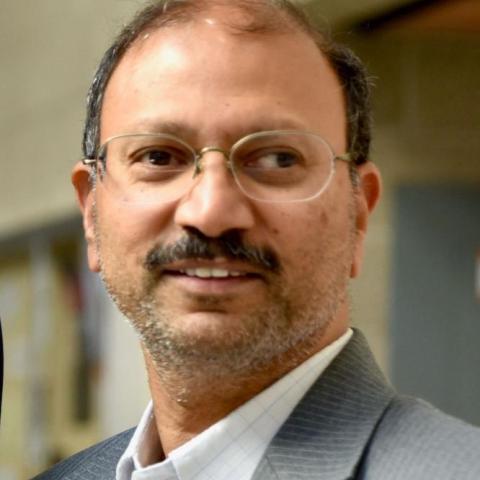
Sudhakar Pamidighantam

Sudhakar Pamidighantam's profile picture
spamidig@gatech.edu

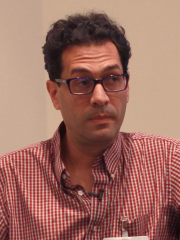
Dr. Pamidighantam is associate director of the ARTISAN center under the Institute for Data Engineering and Science at the Georgia Institute of Technology. Dr. Pamidighantam had been a senior research scientist at Indiana University, Cyberinfrastructure Integration Research Center and NCSA at the University of Illinois at Urbana-Champaign supporting computational chemistry and science gateways development in support of molecular sciences faculty.

Associate Director – ARTISAN
Principal Research Scientist
Additional Research

computational chemistry

University, College, and School/Department
Google Scholar
https://scholar.google.com/citations?hl=en&user=xlNkBCQAAAAJ&view_op=list_works&sortby=pubdate

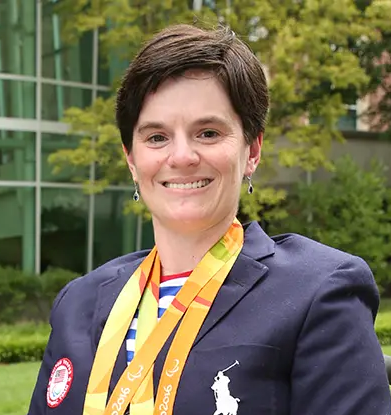
Cassie Mitchell

Cassie Mitchell's profile picture
cassie.mitchell@bme.gatech.edu

Dr. Cassie S. Mitchell is a research engineer, elite athlete, and mentor. She is a current member of the USA Paralympic team and research faculty in the Wallace H. Coulter Department of Biomedical Engineering at Georgia Institute of Technology and Emory University. At age 18 Cassie was afflicted with Devics Neuromyelitis Optica, leaving her as a quadriplegic and with visual impairments. Her faith and philosophy on life has helped her to overcome the resulting challenges. She graduated with a B.S. in Chemical Engineering from Oklahoma State University and a Ph.D. in Biomedical Engineering from GT/Emory. She enjoys mentoring high school and college students as well as new spinal cord injury patients at Shepherd Center Brain and Spinal Cord Rehabilitiation Hospital, Atlanta, Georgia.

Assistant Professor
Office
UAW 3106
Additional Research
  • Data Modeling for Diseases
  • Neuroscience
Research Focus Areas
Google Scholar
https://scholar.google.com/citations?user=FpxAYrgAAAAJ&hl=en

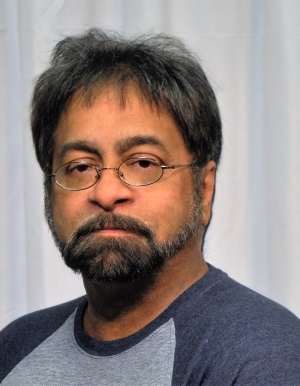
Suresh Menon

Suresh Menon's profile picture
suresh.menon@aerospace.gatech.edu

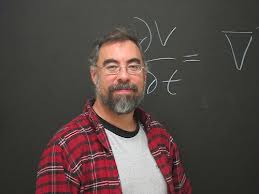
Professor Menon joined Flow Industries, Kent, Washington, as a research scientist, and in 1988, became a senior scientist and program manager for the computational fluid dynamics group in Quest Integrated, Inc. (formerly called Flow Research, Inc.). At Quest, Menon led research teams in various research projects such as the active control of combustion instability in ramjet engines, supersonic mixing studies, vertical takeoff and landing (VTOL) aircraft fluid dynamics, and hypersonic reentry problems. In 1992, he joined Georgia Institute of Technology as an associate professor and became a professor in 1997. He is currently the Hightower Professor of Engineering in Georgia Tech. Professor Menon is a world renowned expert in large-eddy simulation of turbulent reacting and non-reacting flows and has developed unique simulation capabilities to study pollutant formation, ozone depletion in high-altitude aircraft jet plumes and combustion in gas turbine and ramjet engines. He has been (and is currently) a principal investigator for a wide range of research projects funded by NASA, Department of Energy, Air Force Office of Scientific Research, Office of Naval Research, Defense Threat Reduction Agency. His work has been (and is also) supported by many industries including General Electric, Pratt & Whitney, Solar Turbines, Boeing, Safran (France), Hyundai (S. Korea), JAXA (Japan), IHI (Japan) and Rocketdyne-Aerojet. He has published and/or presented over 395 papers. Professor Menon is a Fellow of AAAS, Associate Fellow of AIAA, and a member of the American Physical Society, the American Society of Mechanical Engineers, the Combustion Institute and the Sigma Xi. He is a peer reviewer for numerous archival journals, NASA, NSF, DoD and DOE research proposals.

Professor, Guggenheim School of Aerospace Engineering
Phone
(404) 894-9126
Additional Research
  • Combustion
  • Data Driven Discovery
  • Energy Generation
  • Energy Storage, and Distribution

Jian Luo

Jian Luo's profile picture
jian.luo@ce.gatech.edu

Dr. Jian Luo completed his undergraduate and M.S. studies at Tsinghua University, Beijing, where he received a B.Sc.(Eng.) and a M.S. degree in Environmental Engineering in 1998 and 2000, respectively. He completed his Ph.D. in 2006 in Department of Civil and Environmental Engineering at Stanford University, California. The research Dr. Luo is conducting involves field, theoretical, and computational investigations of flow and reactive transport in subsurface; development and application of geostatistical methods for the spatial and temporal analysis of hydrogeologic and biochemistry data; development of computational algorithms and programs to simulate subsurface flow and reactive transport, and to assess the associated uncertainty; inverse modeling to estimate flow and transport parameters under uncertainty; and use of such computational methods and models to assess subsurface contamination, and to aid the optimal design of groundwater remediation operations.

Professor, School of Civil and Environmental Engineering
Phone
(404) 385-6390
Additional Research
  • Geosystem
  • Water

Andrew Medford

Andrew Medford's profile picture
andrew.medford@chbe.gatech.edu

Dr. Medford is interested in leveraging materials informatics, statistics, and machine learning to maximize the practical impact of fundamental atomic-scale simulations in the field of surface science and catalysis. His research areas include heterogeneous catalysis, oxide surface chemistry, density functional theory, kinetic models, uncertainty quantification, and Bayesian optimization and inference.

Assistant Professor, School of Chemical and Biomolecular Engineering
Phone
(404) 385-5531
Additional Research
  • Catalysis
  • Biochemicals
  • Biorefining
  • Chemistry
  • Sugars
  • Molecular Simulations
  • Computational Biology

Brian Magerko

Brian Magerko's profile picture
magerko@gatech.edu
Professor and Director of Graduate Studies in Digital Media
Additional Research
  • Artificial Intelligence
  • Interactive Narrative
  • Serious Game Design Development
  • Cognitive Architechtures
  • Intelligent Agents
  • Human-Computer Interaction
  • Educational Media
  • Improvisation
  • Cognitive Science
University, College, and School/Department

Agata Rozga

Agata Rozga's profile picture
agata@gatech.edu

Agata Rozga is a psychologist with expertise and 16 years of experience forging a new interdisciplinary research area at the intersection of computing and psychology called computational behavioral science. The research vision is to transform the measurement and understanding of long-term, health-related behavioral trends by leveraging advances in sensing, wearable and mobile technologies, and computational analysis methods. The goal is to develop tools that can lead to better detection and monitoring of health-related trends in everyday settings. 

One thrust of Dr. Rozga’s research has focused on understanding early trajectories and predictors of social communication in children diagnosed with Autism Spectrum Disorder. In her most recent work, she is applying novel computational analysis methods to longitudinal measures of communication to identify different pathways to language in autism, including failure to acquire spoken language by age 5. 

Dr. Rozga’s research has recently expanded to include a thrust focused on Aging and Mild Cognitive Impairment, with an eye toward developing novel, AI-based systems to monitor cognitive and functional decline during everyday activities. A related thrust focuses on developing and evaluating situated AI-based interactive supports to help older adults maintain independence and quality of life 

Dr. Rozga serves as the Director of Translational Research for the Georgia Tech-led NSF National AI Institute for Collaborative Assistance and Responsive Interaction for Networked Groups (AI-CARING). She previously served as Programs and Research Director for the Technology Core of the Cognitive Empowerment Program at the Emory Brain-Health Center, and as Head of Product for Diligent Robotics

Principal Research Scientist
Phone
404-894-2304
Research Affiliations
School of Interactive Computing, AI-CARING, IPaT
Additional Research

HCI; computational behavior science; AI & health; autism; aging

Peter Swire

Peter Swire's profile picture
peter.swire@scheller.gatech.edu

Peter Swire, J.D., is Associate Director of Policy for the Institute for Information Security & Privacy. Swire has been a privacy and cyberlaw scholar, government leader, and practitioner since the rise of the Internet in the 1990's. In 2013, he became the Nancy J. and Lawrence P. Huang Professor of Law and Ethics at the Georgia institute of Technology. Swire teaches in the Scheller College of Business, with appointments by courtesy with the College of Computing and School of Public Policy. He is senior counsel with the law firm of Alston & Bird LLP. Swire served as one of five members of President Obama's Review Group on Intelligence and Communications Technology. Prior to that, he was co-chair of the global Do Not Track process for the World Wide Web Consortium. He is a senior fellow with the Future of Privacy Forum, and a policy fellow with the Center for Democracy and Technology. Under President Clinton, Swire was the chief counselor for privacy in the U.S. Office of Management and Budget -- the only person to date to have U.S. government-wide responsibility for privacy policy. In that role, his activities included being White House coordinator for the HIPAA medical privacy rule, chairing a White House task force on how to update wiretap laws for the Internet age, and helping negotiate the U.S.-E.U. Safe Harbor agreement for trans-border data flows.Under President Obama, he was special assistant to the President for economic policy. Swire is author of five books and numerous scholarly papers. He has testified often before the Congress, and been quoted regularly in the press. He has served on privacy and security advisory boards for companies including Google, IBM, Intel, and Microsoft, as well as a number of start-ups. Swire graduated from Princeton University, summa cum laude, and the Yale Law School, where he was an editor of the Yale Law Journal.

Associate Director, Policy
Phone
404-385-3279
Office
Scheller 4163
Additional Research
Data Security & Privacy
Research Focus Areas
University, College, and School/Department

Ignacio Taboada

Ignacio Taboada's profile picture
itaboada@gatech.edu

We are currently witnessing the birth of a new branch of astrophysics: high-energy astrophysics. With neutrinos we can study the high-energy Universe and peer into environments from where electromagnetic radiation can't escape. The IceCube neutrino observatory is a detector in operation at the geographic south pole. IceCube discovered, in 2013, an extragalactic flux of astrophysical neutrinos. Even though IceCube has identified two neutrino candidate sources: TXS 0506+056 (in 2018) and NGC 1068 (in 2022), the class of objects responsible for the astrophysical flux have not been unequivocally identified. Both these galaxies have Active Nuclei in which a supermassive black hole is being fed material via an accretion disk. Interestingly they are very different looking objects. TXS 0506+056 was seen with two flares of neutrinos and NGC 1068 is steady. TXS 0506+056 is seen mostly in ~50-200 TeV neutrinos, whereas NGC 1068 is seen in 1.5 to 15 TeV neutrinos. NGC 1068 is in our "neighboorhood" but TXS 0506+056 is very far away. 

The Taboada group uses IceCube data to search for astrophysical neutrino sources. Ignacio Taboada is the current spokesperson of the IceCube collaboration.

Professor
Additional Research
  • Big Data Analytics


University, College, and School/Department

Jesse McDaniel

 Jesse McDaniel's profile picture
mcdaniel@gatech.edu

The research in our group bridges the gap between applied electronic structure theory and first-principles molecular simulation to enable predictive computational discovery of new materials and new chemistry. This research relies heavily on sophisticated high-performance and high-throughput computing paradigms, employing modern graphics processing unit (GPU) based computing. A primary focus is electrochemistry and electrochemical energy storage applications, and we seek to develop a fundamental understanding of how redox chemistry and other chemical and physical processes are modulated by strong electric fields. We are interested in chemical reaction mechanisms within highly ionic and heterogeneous environments, and are developing multi-scale modeling approaches to study chemical reactivity in the condensed phase. This method development includes novel QM/MM approaches and machine-learning reactive force fields, which are combined with enhanced sampling molecular dynamics/Monte Carlo techniques. Please see our research group website for more details!

Assistant Professor
Additional Research
  • Energy Efficiency and Conservation
  • High Performance Computing
  • Machine Learning 
University, College, and School/Department